Governor Kashim Shettima of Borno State has described the capture of Sambisa Forest by Nigerian soldiers as the best Christmas and New Year gift the people of the state could have hoped for.
President Muhammadu Buhari in a Christmas message to the nation had announced the capture of Sambisa Forest, the base of the Boko Haram insurgency group, from which it struck terror across the North east.
Governor Shettima, who spoke on Sunday at the re-opening of Maiduguri-Gubio- Kareto-Damasak and Maiduguri -Monguno-Baga roads, observed that the year 2016 witnessed a major breakthrough in the fight against the Boko Haram insurgency.
He described the year as the best in the five years he has been in office, adding that there was no better Christmas and New Year gift to the people of Borno State than the fall of the Sambisa
“I would want to start by declaring, that since I became the Governor of Borno State in over five years, this is the best Christmas season I have witnessed. This is the best December I have witnessed and the year 2016 is my best year so far, as Governor of Borno State. 2016 is, for me, Nigeria’s year of victory and Borno’s year of Hope and Resurrection,” the governor declared.
Shettima noted that it was in 2016 that the people regained access to major towns in Borno State such as Gwoza, Bama, Dikwa, Monguno and Damasak after their liberation from insurgents.
He added: “It is in the year 2016 that major highways began to be re-opened. It is in the year, 2016 that we accelerated our major reconstruction of liberated communities; it is in the year 2016 that IDPs began to return to communities; it is in the year 2016 that we recovered some of our daughters abducted at Government Secondary School, Chibok in 2014; and fellow Nigerians, it is in the year 2016, that the Federal Republic of Nigeria established it’s supremacy over Sambisa, headquarters of the Boko Haram.”
Shettima also spoke about the economic importance of the two roads reopened over the weekend to the public.
“This is an important economic road through which hundreds of trailers convey agricultural produce from farming communities in northern Borno to markets in different parts of Borno State. We are extremely happy to have this road added to the list of other major roads re-opened earlier in 2016.”
He commended President Buhari, the service chiefs, officers and men of the Nigerian Armed Forces for the roles they played in the fight against insurgency.
“Many persons made sacrifices, including giving up their lives for us to have peace and for these roads we are about re-opening, to be freed from the control of insurgents” Shettima said.
Speaking earlier, the Chief of Army Staff, Tukur Buratai, a Lieutenant General, cautioned soldiers against extortion of motorists who would ply the road.
He also advised against inducement of soldiers, maintaining that troops are well taken care of by the Army.
The re-opened roads were closed by the military about two years ago following incessant attacks on motorists and residents by Boko Haram insurgents.
Prior to the commencement of this year’s edition of Internet Governance Forum, IGF, which held in Guadalajara, Mexico, Nigeria’s Communication Minister, Alhaji Adebayo Shittu stoked a fire of controversy.
He announced that telephone services in Nigeria would soon be subjected to additional tax of 9%.
Not a few Nigerians were amused. There was a barrage of negative criticism. Most people complained that the planned tax was another manifestation of President Buhari’s insensitivity to the plight of an already impoverished population.
The controversy gradually subsided. But it didn’t take long for another to be stirred on data service. It was the turn of the Nigerian Communication Commission, NCC, this time.
Much closer to the IGF which commenced Monday December 2, 2016, NCC blew the lid off the rather calm data sales realm to trigger what turned out to be another protracted debate. It announced that the prices of data would go up.
As it happened to Minister Shittu’s offensive against Nigerians, so was NCC immediately confronted with a stern opposition from the people. Perhaps for want of what to say, NCC made efforts to rationalize that the plan to endorse the price hiking for data was in the interest of the small ones among the service providers who may be stifled out of business if that step was not taken.
Thus arose questions that have not been duly addressed: How did NCC, justifiably and responsibly, arrive at this judgment? How would NCC justify its support for the poor taxpayers on whose sweat it’s been thriving?
Most important: What reckoning has NCC for the engagement with stakeholders it claims to conduct? Seriously speaking!
As NCC mustered efforts to defend its unenviable position, identifying as Nigerians for some of us attending the 2016 IGF suddenly became a burden.
Colleagues from other parts of the world kept remarking derisively that Nigeria was always a surprise in spite of its insistence in claiming all of the superlatives relating to development in Africa.
Within oneself, there was no doubting that those given governance responsibilities in this regard need to learn a lot.
Shittu confessed to senators after all that he was not an expert but a mere political office holder when he tried to absolve himself of the NCC blunder. Even this Communications Ministry-NCC’s seeming dissonance isn’t healthy for a nation whose other sectors are not in the best form. What seems to be the biggest revenue earner after oil does not seem to be enjoying the kind of peace and seriousness that could nurture it to optimal earning capability and effective social relevance.
It is rather disappointing that neither the ministry nor the regulatory body took cue from the events of the recent past and even the contemporary ones.
In 1998, Columbia Journalism Review published a cover story, “Will Gates Shut the Papers?” In that report, the magazine recounted the dilemma of newspaper and magazine publishers in the US following the inception of the Internet.
The publishers, at the reported annual congregation, noted that a greater percentage of their advertising accruals were being diverted to online platforms.
They expressed serious concern and felt they need to be seriously creative and supported by all including the government since they would have to inevitably co-habit with the emerging, new media.
The publishers’ worry became the worry of the society especially relevant government functionaries. The media were perceived as an indispensable variable in the democracy mix. Their survival would always be beneficial to the society it was argued.
Subsequently, government agencies deemed it necessary to parcel advertisement out to several of these news media establishments as some kind of support.
When this same experience began to play out in Nigeria, it was not in any way inconspicuous. Indeed, then Governor Fashola of Lagos State, home to the highest number of media houses in Nigeria, acknowledged it in one of his public statements.
However, he merely advised that the media should explore alternative avenues for revenue for survival. Not for him, any likelihood of supporting the media.
Today, big newspaper companies like The Guardian and Thisday have had to shed considerable weight of labour wages. Like Governor Fashola, like NCC, since then till date.
But there is no stopping the incessantly rolling wheel of innovation. At the just-concluded 2016 edition of the IGF, 73-year old Google executive and one of those who saw to the inception of the Internet, Vint Cerf, registered one bold submission.
It was rightly titled “The Internet as an Unfinished Business”. Cerf noted that even for those of them that were part of the beginning of what has turned out to be the most open technology, they could not project what the functionality would be in future.
According to him, it was particularly striking that when Professor Tim Berners Lee finally invented the worldwide web in the early 1990s, he was first ignored.
Incidentally, that appears to be the most dominant feature of the Internet today. He observed that it has been interesting to note how OTTs (Over The Top applications) like WhatsApp and Skype have multiplied, adding that there was no predictable end to this multidimensionality in future.
His advice to everyone at the opening session of the 2016 IGF therefore was that all those given the responsibilities to manage Internet and allied services all over the world should be open to suggestions and even nurture the environment that would encourage volunteers of suggestions.
Throughout the weeklong, multi-sided programme, this writer ruminated over this as a deep and far sighted remark and one that does not seem to resonate with the concerned authorities in Nigeria.
Vint Cerf’s advice was a good reinforcement to the philosophy behind IGF itself. In most parts of the world, stakeholders are almost unanimous on the ideals of internet governance.
Generally, the global best practices also endorsed by the Commonwealth Telecommunications, CTO and others recommend, among others that internet governance actors must necessarily be open and inclusive in their disposition.
They must recognize the fact that as much as governments are important, so are users, the technical community, civil society and the academia. Multistakeholderism in this sense must, in the bid to making more voices heard, be emphatic on equitable participation and inclusiveness.
CTO especially helps to bridge up member countries on trendy practices. Currently, that organisation is undertaking a study on the use of OTTs in relation to both the service providers and the users. It is interesting to note that the findings and recommendations of this research will be ready in the first quarter of 2017.
One then wonders why NCC does not want to take advantage of the CTO’s research efforts before taking a decision on the data services even if it means persuading the said small players?
The Internet Governance Forum is the single, largest, annual global meeting of experts and other numerous stakeholders dedicated to discussing the various dimensions of the applicability of Internet to humanity. It derived from a United Nations Resolution.
Interestingly, the Commonwealth Telecommunication Organisation, CTO, delegate to the 2016 IGF was led by a Nigerian, Shola Taylor. Unmistakably committed to the ideals of the best practices in relation to telecommunication and allied services, he reiterated the indispensability of the ideals at the CTO session to the applause of all attendees. But who could take the message to the relevant authorities in Nigeria? Nigeria’s Ministry of Communication had zero representation.
No less significant is the fact that although scholars around the world have been trying to use the 2016 IGF to strengthen the evolving multidisciplinary, global academic body of the Network of Scholars on Internet Governance, GIGANET.
This writer has been the only university based Nigerian scholar at both IGF 2015 and 2016, courtesy of Ford Foundation and South African based Research ICT Africa supported by IDRC of Canada.
The conspicuous absence of Nigerian scholars from IGF 2016 and even that of 2015 which held in Joao Pessoa, Brazil, brings up the issue of the complete indifference or mutual exclusivity that had characterized the relationship between the Ministry of Communication, NCC and the nation’s universities and polytechnics over the years.
The result: No Nigerian university or polytechnic is a member of the International Telecommunication Union, ITU, since Nigeria became a member in 1960s.
The membership of the organisation is open to academic institutions in the member countries and so, academic institutions from such countries like Cote d’Ivoire and Bangladesh are members.
With this conspicuous absence, how then would the duo of the Ministry of Communication and NCC realize the appropriate consciousness to collaborate on relevant concerns?
As is the case with the academia, so it is with the media. NCC, interestingly is interested in the survival of the small players in the telecommunication sector. But how much of the financial strength of the nation’s media, especially the print media, has been undermined by the inception of the Internet?
No one wants to heap any blame on NCC here but given its centrality to all related developments, being alive to them would only earn NCC, citizens’ better reckoning and better co-habitation with the media.
* Dr. Tunde Akanni, member of the Internet Society, ISOC, is a Journalism teacher at the Lagos State University, LASU, Nigeria.
An environmentalist, Alagoa Morris, has called on relevant government agencies to assess the adverse impact on the environment of a gas plant located in Gbarantoru, Bayelsa State, operated by Shell.
Morris spoke at the weekend following complaints of air pollution by the people of Tombia in Yenagoa Local Government Area of Bayelsa,which has led to breathing difficulties.
The residents alleged that the air pollution emanated from gas emitted by the Shell facility near the community.
After conducting a tour of the area, Morris urged oil and gas industry regulators to monitor the facility and ensure that the provisions of the Environmental Impact Assessment, EIA, were carried out and complied to the letter.
He stated that the EIA Act requires periodic studies to determine the environmental implications of such facilities to prevent a situation where they will adversely affect the environment.
“We have got reports of air pollution, very high temperature caused by gas flare, poor fish catch from the Nun River amongst others,” he said adding that “there is a need for studies by scientific experts to compare results with the baseline studies in the EIA report.”
Such results, he said, would form the basis to request for measures to ameliorate the impact of the operations but he questioned whether there are such reports.
“The questions, do they even have the EIA report which is supposed to be a pubic document.
“The Communities are losing on all fronts as they only bear the adverse effects of oil and gas operations while the benefits in form of social amenities elude them,” he said.
Morris observed that the gas flared in the area and resultant acid rain make rain water unsafe for drinking but regretted that communities surrounding the plant lack access to potable water/
However, the Media Relations Manager of Shell, Precious Okolobo, denied that the air pollution was from te company’s gas processing and gathering facility.
“There is no air pollution from our Gbarantoru plant; the plant is running efficiently,” he said, noting that that a similar occurrence was reported in Port Harcourt where there is no gas plant.
There is a general problem that people do not understand and people have no right to blame SPDC for everything that goes wrong,” Okolobo said.
The Inspector General of Police, IGP, Ibrahim Idris, has set up a special squad to deal with the southern Kaduna killings fuelled by fighting between Fulani herdsmen and villagers, which has lead to the killing of scores of people in the last few months.
Tagged the Joint Tactical Operation Squad, it comprises the Police Mobile Force, Counter Terrorism Unit, Special Anti Robbery Squad, Intelligence Response Team, the IGP Monitoring Unit, Police K9 (Sniffer Dog Section), Police Air Wing and Police Medical Team and would be headquartered in Kafanchan.
Speaking at the flag off of the squad on behalf of the IGP, Habila Joshak, DIG in charge of Operations, said that the move was to ensure that peace and normalcy is restored to Kafanchan and environs.
He said that the squad would be proactive and work with local people to get actionable intelligence that would help in nipping any planned violence in the bud.
“The Squad will be proactive, work on actionable intelligence and carry out massive deployment and twenty four hours surveillance and patrol, continuous raids of identified criminal hideouts, with a view to arrest promptly trouble makers and their sponsors and nip in the bud violent acts and other criminalities in the general area,” the Police chief stated.
He said that the squad would cover the whole of southern Kaduna but would be particularly deployed to “all the communities, towns, villages, vulnerable points, government and private infrastructures and facilities in the area.”
The IGP also stated that helicopters would be used on guided missions and aerial surveillance and would provide intelligence to ground police troops.
He called on traditional rulers, religious leaders, public office holders, politicians, opinion leaders, parents and guardians “to prevail on their subjects, supporters, children and wards to support the police personnel in the discharge of their responsibilities, propagate peace, demonstrate love, forgiveness and tolerance to promote harmonious coexistence with their brothers and fellow citizens, irrespective of religious, ethnic or political inclinations and differences.”
The IGP also assured residents of the area of good people and adequate security and protection of their lives and properties
Flowers laid by sympathizers at the home of the music director in Moscow
A Russian military plane with 92 people on board has crashed into the Black Sea, Russia’s defence ministry says.
The plane disappeared from radar two minutes after taking off from Sochi heading for Latakia in Syria.
Debris and several bodies have been found, with no reports of survivors.
The Tu-154 was carrying soldiers, reporters and 64 members of the famed Alexandrov military music ensemble who were to perform for Russian troops.
President Vladimir Putin has said Monday will be a day of national mourning.
The flight had originated in Moscow and landed at Adler airport in Sochi for refuelling.
The defence ministry said in a statement: “Fragments of the Tu-154 plane of the Russian defence ministry were found 1.5 kilometers from the Black Sea coast of the city of Sochi at a depth of 50 to 70 meters.”
Ministry spokesman, Igor Konashenkov said: “No survivors have been spotted.
Alexandrov Ensemble is the official choir of the Russian armed forces. It was founded in 1928 during the Soviet era.
The group also includes an orchestra and dancers. It takes its name from its first director, Alexander Alexandrov, who wrote the music to the national anthem of the Soviet Union.
An audio recording played on Russian media and said to be of the final conversation between air traffic controllers and the plane reveals no sign of any difficulties being faced by the crew.
Voices remain calm until the plane disappears and the controllers try in vain to re-establish contact.
Reports from the area said flying conditions were favourable.
Konashenkov said the plane was last serviced in September and had undergone more substantial repairs in December 2014. It had an “experienced” pilot.
President Putin has ordered a state commission to look into the crash and sent his condolences to the families and friends of the victims.
The Nigerian Police has reminded the general public that the ban on the use of any form of fireworks, commonly known as “bangers” or “knockouts”, still stands.
In a statement issued by the Police Public Relations Officer, Don Awunah, in Abuja on Friday, the police advised “Parents and guardians … to prevail on their children and wards to desist from these acts that are capable of causing tension, fear and apprehension in their neighbourhood.”
Awunah added that anyone caught violating the directive “will promptly be arrested and prosecuted.”
The Police PRO also stated that Police Force has put in place a robust and elaborate security arrangement and Crime Prevention strategies to ensure crime free Christmas celebration nationwide.
He stated that conventional Policemen and the personnel of the specialized units of the Force including the “Police Mobile Force, Counter Terrorism Unit, Special Protection Unit, Federal Highway Patrol, Explosive Ordinance Department, the armament unit, Sniffer dogs section, the Marine Police and Police Air wing have been deployed to provide effective security and protection of life and property nationwide during the Christmas.”
Awunah said that visible Police presence is already emplaced on the Highways and Major roads across the country.
He added that Police patrol teams and surveillance squads will also be deployed at places of worship, venues of recreation and other public places throughout the period of the festivities.
The police spokesman urged Motorists, Commuters and other road users to cooperate with Police personnel deployed on the highways and major roads across the country.
He further stated: “The Inspector General of Police, IGP Ibrahim K. Idris, NPM, mni has directed the Assistant Inspectors General of Police and Commissioners of Police in charge of Zonal and State commands to personally be on ground to supervise the implementation of the Security arrangement for the Christmas celebration in their various commands.
“The Police officers and men are under strict instructions to be very polite and civil but firm in the discharge of their duty during the period,” he added.
Awunah advised police personnel across the country “to observe and respect the diversity and peculiarity of the people, display courage, show compassion and demonstrate professionalism in their interaction and engagement with the citizenry throughout the period of the celebration.”
The statement directed Police Commissioners in all the states of the federation and the FCT “to intensify on the on-going raids of identified criminal hideouts and flash points in their jurisdictions.”
“Adequate security coverage and protection will be given to government installations and infrastructure, with 24 hours, surveillance and patrol of motor parks, points of departure and entrance, shopping malls, business plaza and other private and public facilities in all states of the country and the FCT,” it added.
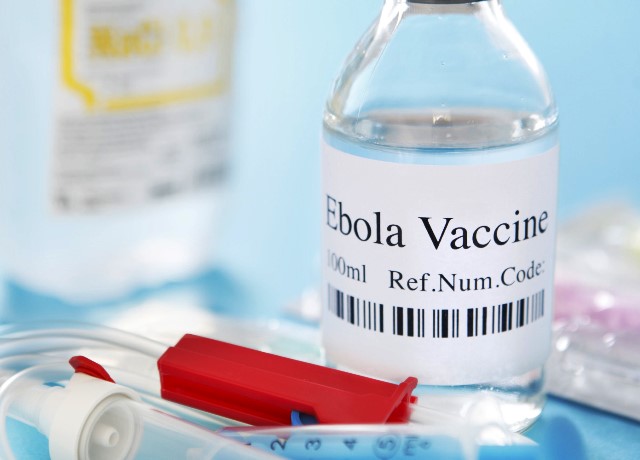
The World Health Organization, W.H.O, has said that a highly effective vaccine that guards against the deadly Ebola virus could be available by 2018.
According to the health body, trials conducted in Guinea, one of the West African countries most affected by an outbreak of Ebola that ended this year, show it offers 100% protection.
The vaccine is now being fast-tracked for regulatory approval.
Its manufacturer, Merck, has made 300,000 doses of the ‘rVSV-ZEBOV’ vaccine available for use should Ebola strike.
GAVI, the global vaccine alliance, provided $5 million for the stockpile.
Results published in The Lancet medical journal show that out of nearly 6,000 people receiving the vaccine, all were free of the virus 10 days later.
In a group of the same size not vaccinated, 23 later developed Ebola.
Only one person who was vaccinated had a serious side effect that the researchers think was caused by the jab. This was a very high temperature and the patient recovered fully.
It is not known how well the vaccine might work in children since this was not tested in the trial.
Jeremy Farrar, the director of British-based medical research institute, the Wellcome Trust, described the findings as “remarkable”.
“Had a vaccine been available earlier in the Ebola epidemic, thousands of lives might have been saved,” Farrar said.
“We have to get ahead of the curve and make promising diagnostics, drugs and vaccines for diseases we know could be a threat in the future.”
The trial was led by the W.H.O in conjuction with Guinea’s health ministry and international groups.
Lead author of the study, Marie-Paule Kieny said the results could help combat future outbreaks.
“While these compelling results come too late for those who lost their lives during West Africa’s Ebola epidemic, they show that when the next Ebola outbreak hits, we will not be defenceless,” Kieny said.
Other drug companies are developing different Ebola vaccines that could be used in the future too.
The Ebola virus was first identified in 1976 but the recent outbreak in West Africa, which killed more than 11,000 people, highlighted the need for a vaccine.
The outbreak began in Guinea in 2013 and spread to Liberia and Sierra Leone.
File: Enugu State Governor, Ifeanyi Ugwuanyi poses with Justice Ngozi Emehelu on her appointment as acting Chief Judge of the State
The Enugu State House of Assembly has confirmed Ngozi Emehelu as the substantive chief judge of the state.
Emehelu has been in an acting capacity since she was appointed about two and a half months ago, following the suspension of the former chief judge, Innocent Umezulike, by the National Judicial Council, NJC.
She was confirmed during the State Assembly plenary session on Friday.
Moving the motion, the Leader of the House, Ikechukwu Ezugwu, described Emehelu as a woman of integrity with an outstanding character.
Ezugwu noted that the judge had been in the legal profession for 35 years, adding that she had served in several election petitions tribunals due to her impeccable character.
“She is a woman of integrity with what we know. We have not had any complaint since she was appointed in acting capacity,” he said.
Onyinye Ugwu, deputy Leader of the House, seconded the motion for the confirmation.
Speaker of the state assembly, Edward Ubosi, then put the motion to a voice vote, after which Emehelu was cconfirmed as substantive chief judge.
She is expected to be sworn in by Gov. Ifeanyi Ugwuanyi, following the confirmation.
Former Enugu State Chief Judge, Umezulike, had been found guilty of misconduct by the NJC; he was subsequently suspended and recommended for removal.
He is also one of the Judges currently being investigated by the Department of State Services, DSS, on allegations of corruption.
The United Nations’ Special Rapporteur on human rights to water and sanitation, Léo Heller, has urged the Lagos State government to ensure that the 2017 budget improves funding for water and sanitation access for the estimated 21 million residents.
Heller said that reports have revealed a huge deficit in the provision of water by government in Lagos State, a situation that is “clearly unacceptable conditions for millions of the megacity’s residents,”
He said “The discussion of the annual budget is a great opportunity for the city to take steps towards delivering people their rights to water and sanitation.
“It is profoundly worrying how many millions of people are exposed to this level of vulnerability.
“There is no question that the city’s water and sanitation sector has deteriorated to this point because of the way it has been managed for many years,” Heller noted.
The UN expert called on the Lagos State government to jettison the Public Private Partnership strategy it had adopted over the years in dealing with issues of water provisions.
He wants the authorities to consider other alternatives “such as boosting the effectiveness of the public service provider, including by adopting appropriate financing schemes and responsibly reducing water losses.”
“For more than a decade, the Government has adopted a hard-line policy according to which the solution would seem to only attract private capital, notably via public-private partnerships (PPPs),” Heller said.
“Numerous civil society groups have urged the Government to guarantee their right to participate in these processes.
“I believe that a participatory process is key to finding an adequate solution. But the alternatives proposed by civil society are not given meaningful consideration, while negotiations to initiate PPPs between public authorities and private investors have reportedly occurred in secret,” he noted.
As the city of Lagos continues to grow, access to clean water and sanitation has worsened.
Current estimates suggest that only 10% of the population has access to water supplied by the state utility, Lagos State Water Corporation, LSWC.
Many residents now resort to drilling their own boreholes, but this practice has grave environmental and health consequences, especially when the holes are dug near soakaways that could contaminate the water.
Others have to pay exorbitant prices to private vendors, who are often unregulated and provide water with no safety guarantees.
Earlier this year, the UN Special Rapporteur contacted the Government of Nigeria, seeking clarification about the water and sanitation situation in Lagos State, but heand had not received a response thus far.
Recall that in October this year, a coalition made up of Civil Society Organisations, Labour Unions and Rights groups unveiled a document titled Lagos Water Crisis: Alternative Roadmap for Water Sector as a solution to the Lagos water crisis.
The document has since been presented to the Lagos government as a workable policy document.
The federal government has denied reports that ‘plastic rice’ was being sold in the country, days after the Nigerian Customs Service said it has confiscated 2.5 tonnes of suspected plastic rice.
Minister of Health, Isaac Adewole, in a message posted on his social media handle, said that tests conducted by the National Agency for Food and Drugs Administration and Control, NAFDAC, found “no evidence” of plastic material.
Lagos State Comptroller of Customs, Haruna Mamudu, had on Wednesday said that the fake rice was intended to be sold during the festive season.
Mamudu had said the rice was very sticky after it was boiled and “only God knows what would have happened” if people ate it. He has however not commented yet on the health minister’s statement.
The Lagos customs chief had called on “economic saboteurs who see yuletide season as a peak period for their nefarious acts to desist from such illegal” business activity.
Journalists who felt the rice, said it looked real but had a faint chemical odour.
It is not clear where the 102 seized sacks of rice came from but rice made from plastic pellets was found in China last year.
The health minister said that NAFDAC would “release detailed findings to public as soon as it concludes investigations”, urging Nigerians to remain calm.
However, there are no evidence that the rice is on sale in markets. Customs officials were investigating but as of now have found nothing.
Nigeria’s custom officials say they seized a total of 102 bags, each containing 25 kilograms branded “Best Tomato Rice”.
Customs officials said they cooked the rice and that the texture was very gummy and it smelled odd, they refused to eat it.
When asked the same question on Twitter, the Health Minister joked: “no way, not without salt in it.”
An unverified video of the rice being cooked has been shared on social media.
In it the cook says the rice catches fire and sticks on the pan.