The Court of Appeal in Abuja has adjourned hearing on the leadership crisis rocking the Peoples Democratic Party, PDP, indefinitely.
Justice Ibrahim Salauwa, leader of the three-man panel of Appeal Court Justices, on Thursday explained that the hearing was being suspended because a similar case was before the Appeal Court division in Port Harcourt, the Rivers State capital.
Akin Olujinmi, counsel to the Ali Modu-Sheriff faction of the PDP had filed an application urging Justice Salauwa and his panel to temporarily hands off the case which was filed by the Ahmed Makarfi faction.
Olujinmi told the court that the Appeal Court in Port Harcourt had already entertained the case and had reserved its judgment.
The appeal is challenging a court judgement delivered by Justice Okon Abang of the Federal High Court in Abuja on June 30, which recognised Modu-Sheriff as the authentic National Chairman of the PDP.
Justice Abang had in the judgement, maintained that Sheriff has the authority to take decisions for the party, including briefing of lawyers to represent the interest of the PDP in court.
The Sheriff-led PDP faction was joined as 1st and 2nd respondents in the appeals, while the Independent National Electoral Commission, INEC, was cited as the 3rd respondent in the three appeals.
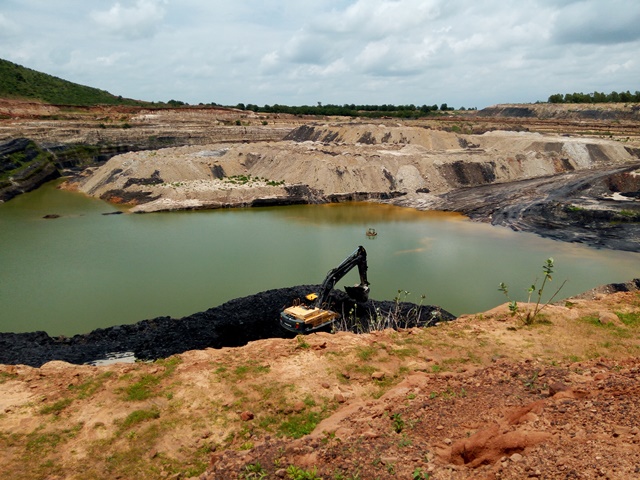
An excavator collects mined coal at the Maiganga coal mine
After years of outcry, occasioned by massive environmental and health hazards, a cement manufacturing company, AshakaCem Plc, has signed a community development agreement with its host communities around Maiganga, in Akko Local Government Area of Gombe State, where a coal mine operated by the company is located.
Managing Director of the company, Rabiu Umar, told newsmen on Thursday that the agreement, which was signed on December 13, at the premises of the company in Gombe, was in line with the provisions of the Nigerian Minerals and Mining Act 2007 and extant regulations 2011.
Umar said the signing of the agreement marks a new beginning in the relationship that exists between the company and its host communities.
“AshakaCem, following the precepts of its sister company Lafarge Africa Plc remained committed to good corporate citizenship and environmental friendliness.
“Fulfilling all statutory and regulatory obligations and striving to exceed expectations in terms of socioeconomic development to her partnering communities is an integral part of the way we run our business,’’ he said.
Recall that icirnigeria had carried out an investigation into the health hazard brought about by the activities of AshakaCem in Maiganga community in Gombe State.
The report which was published in October detailed how residents of Maiganga and its neighbouring towns complained of severe stomach pains and other health issues as a result of contaminated water from the Coal mine belonging to AshakaCem, which flows into the a brook that is incidentally the only source of drinking water for the people.
According to our reporter, “the people started noticing changes in the taste of the water from their only source of drinking water, a brook, in 2009, two years after AshakaCem started mining operations” in 2007.
“You know, a Fulani man hardly falls sick and rarely goes to the hospital,” one of the villagers, who gave his name as Zubairu, told our reporter, “but we noticed more and more people were falling sick and they all complained of stomach pain.”
A medical doctor would advise the villagers to change their source of drinking water.
“I was born here and I grew up here. This is the water everyone depended on and we never had problem with it,” complained 38-year-old Jauro Goma, whose wife also suffered miscarriages.
Goma recalled that they brought the issue to the attention of the management of AshakaCem.
“They came here and assessed the place and promised that they would provide us solar-powered borehole and other things,” he added. Nothing has been heard from the company since then, according to the villagers.
But managing director of AshakaCem, Umar, promised that the new agreement will reflect the company’s environmental policy as well as its commitment to sustainable development and approach to meeting new challenges in environmental protection.
The residents had also complained to our reporter that the Cement factory had reneged on all its promises to the community on resumption of its activities.
Gibar Tsabta, a teacher and head of the Maiganga Community Development Association, said: “They told us we should prepare for enjoyment, as they would build us good houses and roads. They also promised us 60 per cent employment opportunity.”
According to him, “there are only 34 youths from the village employed by the company despite the promise that 60 per cent of the workforce would come from the village. Out of the 34, only five are permanent staff.”
“Go in and see the kind of houses they built for us. Over there is my mattress. It stays outside because it cannot fit into my room,” he lamented.
But after the new agreement was signed on Tuesday, Tsabta told newsmen that the agreement was reached through proper negotiations, as the community representatives were involved in preparing and finalising the document.
“We have put the interest of all stakeholders into consideration in arriving at the document (and) we will remain dedicated to its full implementation to the benefit of all,” Tsabta said.
The chairman assured the concerned communities of better days with increasing and value adding benefits in the agreement.
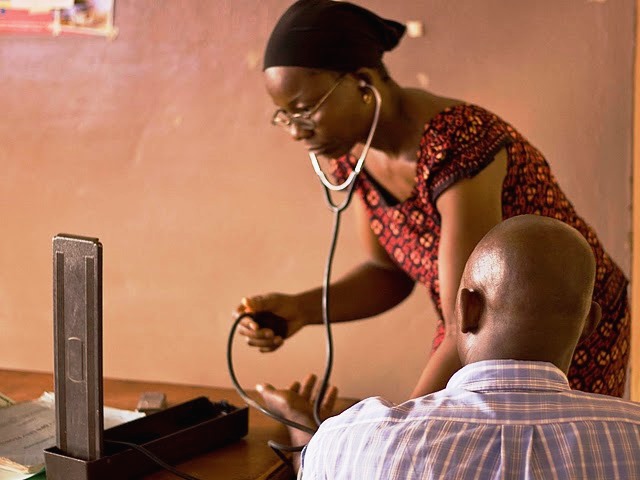
A new research has discovered that the different health financing mechanism being used to finance health services in Nigeria are largely inefficient and could hamper effort to provide access to health care for all Nigerians.
The research carried out by the Health Policy Research Group HPRG, Nigeria revealed that parts of the problems in the health sector are not just lack of sufficient funding but the available funds are not well managed.
The research group led by, Obinna Onwujekwe, a professor at the University of Nigeria undertook three different studies on the funding mechanism of certain Nigerian health programs.
A member of HPRG, Felix Obi who made the copies of the three researches available to www.icirnigeria.org said that they discovered that various funding scenarios show the inadequacy of available funds to meet the needs of the target beneficiaries.
One of the researches, “Financial Feasibility of Using the Basic Health Care Provision Fund to Provide a Basic Minimum Maternal and Child Health Benefit Package in Nigeria,” revealed that the current level of financing will not assure universal health coverage for pregnant women and children.
The Basic Health Care Provision Fund which is a vital part of the National Health Act, stipulates 1% of consolidated revenue to be set aside to pay for a package of basic health.
The researchers examined the Fund’s feasibility using six scenarios providing basic minimum of care in test states of Imo, Kaduna and Niger, and concluded that the Fund would need to be increased at least fourfold to make a difference.
They noted that this 1% consolidated revenue is not enough but should be increased to at least 4%.
This website recalls that even the 1% has not been implemented after two years that the National Health Act was signed into law.
Obi said that, “What we discovered is that in reality, the money is actually too small. If we focus only on 1%, we might not be able to achieve universal health coverage.
“The funds are not enough to cover all potential pregnant women in each state, assuming that the basic minimum benefit package covers only pregnant women, even using 100% of the Fund.”
In another study on the “Political Economy Analysis of Different Health Financing Mechanism in Nigeria,” the researchers recommended that social health insurance should be made mandatory in Nigeria for both public and private sectors. To achieve this, the research recommended that the revised National Health Insurance Scheme Act should be passed and signed into law.
The study concluded that as long as the existing ways of funding healthcare are still largely inefficient, the goal of ensuring access to health care for all Nigerians will not be achieved.
The researchers maintained that the current funding mechanism, such as tax revenue, social health insurance schemes, donor partner funding lack equity and generally not sustainable.
To achieve better outcomes, the research pointed out the need to explore pool funding mechanism to be jointly managed by donors and government rather than the current practice where donor funding is not factored into the national budget.
Meanwhile, Obi said that “Even though we are going through recession, government would have to look for alternative ways of funding health care. Reducing funding to health care will not be to our benefit.”
Obi said the researches were efforts by the academia to support advocacy for health care in Nigeria through evidence generation and providing the evidence to the civil society organizations and the public to improve the health of Nigerians.
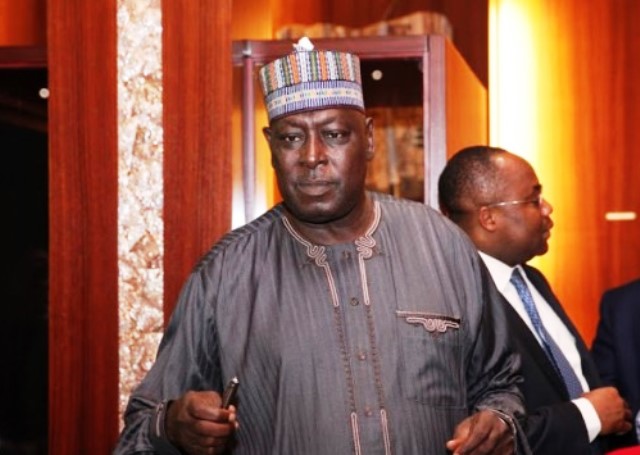
The Senate on Thursday expressed anger and worry over the reaction of the Secretary to the Government of the Federation, Babachir Lawal, regarding the resolution of the upper legislative chamber that the SGF should be removed and prosecuted.
According to lawmakers, for Lawal to have granted a BBC interview in which he described the Senate’s allegation as “rubbish”, was a slight on the integrity of the Senate.
Members of the senate had called for the SGF’s removal following revelations that a company he owned was awarded a contract of over N200 million, to “clear invasive grass species” in Yobe state, by the Presidential Initiative for the North East.”
The SGF had shortly after the presentation of the 2017 budget by President Muhammadu Buhari, told newsmen that the Senate was out to malign him as he was never invited to state his own side of the story before the lawmakers went on air with the report.
Lawal stated that the certificate the senate obtained from the Corporate Affairs Commission, CAC, was fake, insisting that he had resigned as chairman of the said company in August 2015, before he was appointed SGF.
Dino Melaye, who had led the call for Lawal’s removal on Wednesday, expressed disgust that “A mere appointee of the President says that we are liars.”
“If the SGF says the document presented by the CAC is fake, he should produce the original,” he said.
Another lawmaker, Ibn Na’Allah said the recent developments has “largely shown that the SGF does not have the necessary capacity to occupy the post.”
Also contributing to the debate, Chukwuka Utazi noted that “an issue like this must not be swept under the carpet.”
“This position is a responsible position but if we have an irresponsible person there, it becomes a problem,” Utazi added.
Senate President Bukola Saraki sounded more disturbed about the SGF’s reaction to the issue.
“The issue we have here is very serious because it bothers on the integrity of the Senate” Saraki said.
“A matter like this should not be personalized; how can the SGF say we are saying rubbish?”
“We will communicate with the President with necessary document and let’s see what the Executive will do.
“We leave that to the Executive to do what has to be done. We have done our part and we commend you all for your effort,” the Senate President concluded.
72 hours after Nigeria Army authority announced the ban on sales and consumption of illicit drugs and substances at the Giginya barracks mammy market and the entire barrack community in Sokoto, military police has arrested an adamant suspected drug peddler.
The suspect, who was arrested for flouting military directives around the Giginya barrack mammy market perimeter fence with Raymond village, had been handed over to the NDLEA for prosecution.
The statement pronouncing the ban by the Commander, 1 Brigade Nigerian Army, Ginikanwa Nwosu, was signed by the Command Assistant Director, Army Public Relations, Umar Shuaib.
The Brigade Commander also announced the sealing-off of all shops dealing in such items at the mammy market, in cognizance of the ethos and values of the Nigerian Army.
When our Correspondent visited the market, there was full compliance as the once Aba, Abuja, Adamawa and Anambra lines, where the sales and consumption of illicit drugs and substance thrived, is not only a shadow of itself, but deserted.
Aside snooker boards for recreation and games, the only operating shops on Adamawa line – Catch Cold Centre Point Amusement Resort- is now the convergent spot for suspected addicts, where they were seen lamenting and discussing the recent development.
Also, since the announcement of the ban on illicit drugs and substance within the barrack community, vehicular and human hold-up, a common sight at the mammy market entrance has drastically reduced.
This, a source observed will have adverse effect on the “IGR” of the barrack, as every vehicle and motorcycle pay a toll of N50 and N20 respectively, to gain entrance into the mammy market.
The Senate has rejected the nomination of Ibrahim Magu as the substantive chairman of the Economic and Financial Crimes Commission, EFCC.
Spokesman of the Senate, Aliyu Sabi, told members of the Senate Press Corps that the Senate cannot continue with the confirmation hearing of Magu due to a security report sent to it by the Department of State Service, DSS.
Sabi said that the Senate will return the nomination to President Muhammadu Buhari.
“The Senate wishes to inform the public that based on available security report, the Senate cannot proceed with the confirmation of Ibrahim Magu as Chairman of the Economic and Financial Crimes Commission,” the Senate spokesman said
“The nomination of Ibrahim Magu is hereby rejected and has been returned to the President for further action.”
A post on the social media handle of the Senate, however stated that “the Senate confirmed the nomination of the other 4 Members of the EFCC and referred them for further security screening.”
Earlier on Thursday, the process of the EFCC chairman confirmation had thrown the senate into a rowdy session.
The lawmakers were reportedly split into two groups, one in support and the other against the confirmation of Magu.
It was gathered that Senate Majority Leader Ali Ndume engaged in a shouting match with chairman of the Senate committee on the FCT, Dino Melaye, who was said to be against Magu’s confirmation.
The verbal brawl, reports say, almost degenerated into fisticuffs, before journalists were excused out of the chambers and the lawmakers went into a close-door executive session.
You will recall that the Senate has repeatedly delayed the confirmation of Magu as the chairman of the EFCC, even after the presidency wrote a letter to the upper legislative chamber, seeking for an accelerated screening and confirmation exercise.
The letter for Magu’s confirmation was dated June 17, 2016, and signed by Vice President, Yemi Osinbajo, who was then acting on behalf of the President while he was on a 10-day medical vacation in the United Kingdom.
The letter was received at the Senate on June 22 as was clearly shown by the official stamp on it, but was not read on at plenary by Senate President, Bukola Saraki, until July 14.
The senate had earlier scheduled Thursday, December 8, for Magu’s screening and confirmation but on that day it was noticed that the exercise was not featured on the order paper of the Senate.
However, the Senate released a short statement to the effect that the screening exercise had been shifted to December 15.
Magu has remained the acting chairman of the EFCC for more than one year after taking over from the former Chairman, Ibrahim Larmode, who was sacked by President Buhari on November 9, 2015, having been accused of corruption.
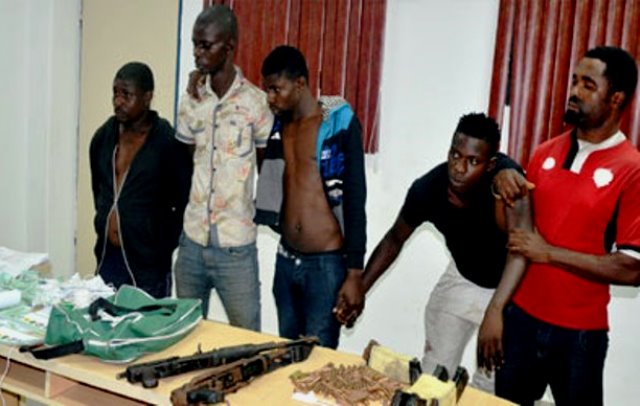
The police has paraded five suspects for allegedly causing violence and hijacking electoral materials during the legislative rerun election that held in Rivers State last Saturday.
Force Public Relations Officer, Don Awunah, noted that many incriminating materials were recovered from the suspects, including one green INEC-branded bag, eight booklets of ballot papers meant for Emohua Local Government Area, and one INEC accreditation incident reports booklet.
Awunah added that one statement of results booklet and one blood-stained All Progressives Congress agent card were also recovered from the suspects.
Weapons recovered from the suspects included, one AK47 rifle, one assault rifle, six magazines and 112 rounds of live ammunition.
The police spokesman gave the names of the suspects as Noble Nwaerema, Dike Deinpiribo, Valentine Alalibo, Onwunari Warmate and Iloke Stephen.
Awunah narrated that one of the suspects, Nwaerema, was arrested on the Election Day, December 10, by operatives of the Rivers State Special Anti-Robbery Squad, SARS, along the Rumusi Elele Road.
He added that the suspect claimed that he was recruited by a youth leader in Itu-Ikwere community alongside eight others imported from a neighbouring state.
“They invaded Emohua Local Government and carted away electoral materials meant for polling units within the area; intelligence report confirmed the electoral materials were taken to a government facility and escorted by armed personnel,” Awunah stated.
He stated further that the other suspects being paraded, namely: Deinpiribo, Alalibo, Warmate and Stephen, belonged to a group of cultists and professional political thugs.
The police spokesman said that the boys claimed to have been hired by one Boma Goodhead who procured two Ak47 rifles and commissioned his driver, one Iryo to convey the weapons in his black Toyota Prado SUV and handed same to the suspects in Degema.
Awunah noted that the suspects were responsible for several armed attacks that took place during the elections in places like Abonnema, Emuoha, Elele, Eteche and Omoku where a police officer was gruesomely killed.
“The rifles and 112 rounds of ammunition were recovered from them, other members of the killer gang fled and detectives are on their trail,” he said.
Awunah also disclosed that some security personnel were arrested for professional misconduct, “actions, inactions, omission and commission that were detrimental to the electoral process.”
The Theatre commander of the military operation in the North East, ‘Operation Lafiya Dole’ has said that troops have rescued 605 persons from the captivity of Boko Haram in the last one week.
Lucky Irabor, a Major General, also said that 15 terrorists were killed in various encounters within the same period.
Irabor made this known during a press conference in Maiduguri on Wednesday, explaining that the rescued victims were made up of 69 adult males, 180 adult females, 227 male children and 129 female children.
He added that with the launch of “operation rescue finale”, the troops were more determined than ever to clear the entire North East of terrorists as well as rescue all those being held hostage.
Irabo stated that the troops have killed several Boko Haram terrorists and recovered many arms and ammunitions at various locations within the theater of operation, while some fleeing Boko Haram insurgents were also arrested in various places.
He added sadly that an officer of the army, a lieutenant colonel, Otobrise Umusu, was killed in one of the attacks last week.
The Army commander explained that Umusu was fatally injured in one of the attacks on his position and died on the way to the hospital.
Irabor called on the general public to be wary of fleeing Boko Haram terrorists who are infiltrating towns and cities seeking menial jobs and looking for ways to wreck havoc on innocent Nigerians.
He once again called on the terrorists to take advantage of the safe haven corridor and surrender their weapons, promising that they will be treated humanely in line with international law.
Secretary to the Government of Federation, Babachir Lawal, has denied the allegations of corruption leveled against him by members of the Senate on Wednesday.
The Senate had demanded the resignation and prosecution of Lawal over the award of a N200 million grass-clearing contract to a company in which the SGF was the executive director until September 2016.
The contract was awarded by the Presidential Initiative for the North East, PINE.
However, reacting to the allegation, the SGF described the Senate’s resolution as an attempt to malign him.
Lawal, who was responding to questions by journalists after the 2017 Budget presentation by President Muhammadu Buhari, insisted that the lawmakers never invited him to hear his own side of the story.
He admitted ownership of the said company, Global Vision Limited, but insisted that he resigned as its chairman on August 18, 2015, way before his appointment as SGF.
“It is very instructive no effort was made to invite me,” he said, adding that “They did the session to malign me.”
“Nigerian politicians have formed the attitude of ‘bring him down by all means.’
President Buhari met with elders from the Niger Delta Region in October
President Muhammadu Buhari has tripled funding for the Niger Delta Amnesty Programme as a way of reaching out to militants who have been bombing oil installations in the region.
The amnesty programme, whose funding was slashed to N20 billion in 2016 has been increased to N65 billion in the 2017 budget.
There have been renewed attacks on oil installations spearheaded by the Niger Delta Avengers and other militant groups that emerged since Buhari took over power from Goodluck Jonathan who comes from the region.
The continued vandalization of oil facilities has affected oil production from 2:2 million barrels per day when Buhari assumed office in May 2015 to about 1:5 million barrels a day presently.
The Nigerian armed forces launched operation “Crocodile Smile” to curb militant activities in the Niger Delta but Buhari has repeatedly maintained that he would explore dialogue in resolving the crisis in the Niger Delta rather than declaring war on the militants.
He recently hosted Niger Delta leaders to the Presidential Villa, Abuja to explore ways of finding solutions to the incessant attacks on oil facilities.
Speaking at the presentation of 2017 budget to the joint session of the National Assembly on Wednesday, Buhari said he was determined to get production back to at least 2.2 million barrels per day.
He said his government would continue to engage the communities in the Niger Delta to ensure that there is minimum disruption to oil production.
He called on the national assembly, state and local governments, traditional rulers, civil society organisations and oil companies to do their part in this engagement.
He said that, “We must all come together to ensure peace reigns in the Niger Delta.”
The president pointed out the need to diversify the economy but noted that oil revenue is needed to revive other sectors of the economy.
He said that, “First we clearly understand the paradox that to diversify from oil we need oil revenues. You may recall that oil itself was exploited by investment from agricultural surpluses. We will now use oil revenues to revive our agriculture and industries.”
Buhari added that his government would continue its ongoing reforms to enhance the efficiency of the management of our oil and gas resources.
He disclosed that “From January 2017, the Federal Government will no longer make provision for Joint Venture cash-calls. Going forward, all Joint Venture operations shall be subjected to a new funding mechanism, which will allow for Cost Recovery.
“This new funding arrangement is expected to boost exploration and production activities, with resultant net positive impact on government revenues which can be allocated to infrastructure, agriculture, solid minerals and manufacturing sectors.”
Buhari, however, said the implementation of the 2016 Budget was hampered by the combination of relatively low oil prices in the first quarter of 2016, and disruptions in crude oil production which led to significant shortfalls in projected revenue, noting that this contributed to the economic slow-down that negatively affected revenue collections by the Federal Inland Revenue Service and the Nigerian Customs Service.
The 2017 Budget is based on a benchmark crude oil price of US$42.5 per barrel, an oil production estimate of 2.2 million barrels per day, and an average exchange rate of N305 to the US dollar.
Oil is expected to contribute N1.985 trillion out of the projected aggregate federal government revenue of N4.94 trillion.
The total proposed budget for 2017 is N7.298 trillion.