The Inspector General of Police, Ibrahim Idris, has commended the acting chairman of the Economic and Financial Crimes Commission, EFCC, Ibrahim Magu, for his courage and commitment to the fight against corruption in Nigeria.
Idris spoke on Monday when he played host to the EFCC boss who led senior officials of the commission on a visit to the Police Headquarters.
“We are proud of you; I have gone through the track records of the EFCC, I am proud of the EFCC under your leadership. I am happy with what you are doing,” the police chief said.
“I appreciate your courage, Be rest assured that as you fight corruption, corruption will fight back; but always know that we are with you and we shall be there for you at all times to ensure that you succeed,” he said.
Speaking earlier, Magu, an Assistant Commissioner of Police, ACP, congratulated the IGP on his appointment and assured him that he would remain a good ambassador of the Nigeria Police Force.
“I will never do anything that would dent the image of the Nigeria police, I shall continue to keep the flag flying,” he stated.
The EFCC boss expressed his admiration for the police profession, saying it was the only profession he loved.
“If it is possible to come back again, I shall get enlisted into the Nigeria Police Force. I can never do any other thing in my life.
Magu called for more institutional support from the police and noted that the institution is a critical stakeholder in the fight against corruption.
“EFCC is still very young; the commission needs the support of the Police which is the mother of all law enforcement agencies in Nigeria”, he said.
He urged the IGP to rally female officers and members of the Police Officers’ Wives Association, POWA, in support of the forthcoming Women Against Corruption, WAC, project which will be flagged –off by the wife of the President, Aisha Buhari, at the International Conference Centre on December 7, 2016.
The IG pledged that the police will support the EFCC to succeed.
The Nigerian Customs Service has seized a 20ft container of cooked and ready to eat food, like Egusi Soup, Jollof Rice, Ogbono, Yam Porridge imported from India at the Tin-Can Island Port in Lagos.
The Customs Area Controller Tin-Can Island Command, Comptroller Bashar Yusuf who disclosed this in a statement on Monday said the container of imported prepared foods have been handed over to the officials of the National Agency for Food and Drug Administration and Control.
He described the scenario as an “aberration”, considering the fact that government granted zero duty for the importation of machinery for the packaging of agricultural products.
Yusuf in a statement by the Public Relations Officer of the Command, Uche Ejesieme, said “Why should indigenous menu be imported into the country at a time when investors are much sought after to boost local industries.”
Meanwhile, the controller said the command generated N25.7bn in November, up from N25.3bn recorded in October.
Yusuf said that the higher revenue was recorded in spite of the recession and low imports.
He said that the command would continue to explore all avenues for maximum revenue collection.
According to him, this is in view of the exigencies of the moment, which placed more responsibilities on the service.
Yusuf urged potential investors to take advantage of the numerous export potential in the country for their socio-economic benefits.
Kaduna State governor, Nasir el Rufai and Ibraheem El-Zakzaky .jpg
The Kaduna State Government in a White Paper has declared the Shiite Islamic Movement of Nigeria, IMN, an unlawful group and illegal association that must be proscribed.
The White Paper was released by the state government on Monday in Kaduna.
Premium Times quoted the White Paper as saying that “For all intent and purpose, the IMN is an insurgent group and ought to be treated as such.”
The White Paper was based on the report of the Judicial Commission of Inquiry into the Zaria clashes of December 2015 where over 300 members of the group were alleged to have been killed by Nigerian soldiers.
Last week, the Federal High Court, Abuja ordered the release of the Shiite leader, Ibraheem El-Zakzaky who has been in detention since the Zaria killing.
However, the White Paper said El-Zakzaky, will be held responsible for all acts carried out by the group’s members.
“Members of the IMN owe absolute loyalty to Sheikh Ibraheem El-Zakzaky,” the white paper states.
“He therefore bears responsibility for all the acts of lawlessness committed by the organisation and should therefore be held responsible, fully investigated and prosecuted.”
Premium Times reports that In the white paper, the state government also indicated it may not prosecute the soldiers involved in the killing of over 300 members of the IMN in December last year, but may leave their prosecution to the federal government.
President Muhammadu Buhari receiving the Liberian President Ellen Johnson Sirleaf
President Muhammadu Buhari has urged African leaders to ensure socio-political stability in their countries to help achieve peace and speedy regional and sub-regional integration in Africa.
Buhari stated this during a joint press briefing with the visiting Liberian President, Ellen Johnson Sirleaf, after a closed-door meeting at the Presidential Villa, Abuja.
He pointed out that the situation in the ECOWAS sub-region was relatively stable but added that there is need to continue to persuade the leaders to pay more attention to security and development.
He said: “The situation in our sub-region is relatively stable but there is the need for us to continue to persuade our colleagues to show appreciation on the efforts the sub-region is doing to make sure that we pay more attention to security and development.
“I have appreciated very much your efforts and I also congratulate you on your successes. I believe you may even go outside the region, to African Union, so that before the AU meeting we try and persuade the leadership of those countries in our sub-region to show more patience and accommodation with politics of their countries,” he added.
Buhari noted that the forthcoming third Dakar International Forum on Peace and Security would discuss some political developments in two countries of the sub-region.
He also praised the Liberian leader for handling the affairs of the ECOWAS diligently and for her efforts in stabilizing Liberia.
“I have to very sincerely congratulate you with the way you have stabilised your country and with the small contributions Nigeria was able to make throughout those difficult times that you went through,” the Nigerian leader stated.
The Liberian leader, who is also the Chairperson of the Heads of State and Government of the ECOWAS nations, said she was in Nigeria to be updated on the focus and challenges of the work of the ECOWAS Commission.
According to her, the visit is also meant enable her meet with the entities of ECOWAS, the Commission, the Parliament and the Courts in preparation for the forthcoming Summit of the Authority of the ECOWAS, slated for Abuja on Dec. 17.
“I’m glad once again to be back in Abuja. I’m using the opportunity of this visit to be updated on the focus and challenges of the work of the ECOWAS Commission, to meet with the entities of ECOWAS, the Commission, the Parliament and the Courts in preparation for the reports I will present at the Summit of the Authority, which will be held here in Abuja, on Dec. 17,” President Sirleaf said.
“But, I’m so grateful that while here, I reached out to the President and asked him for the opportunity to call on him to be able to brief him on some of the findings I have had in my two days of consultation with the commission.
“I also exchange with him some of the developments in our sub-region, political development; economic development, and to get his wise counsel on how we can ensure that we monitor the situation in all the West African countries so as to maintain peace and stability in all of our countries,” she stated.
The federal government has warned that beneficiary of funds to be disbursed through social investment interventions who default in repayments will be sanctioned and denied use of banking facilities in the country.
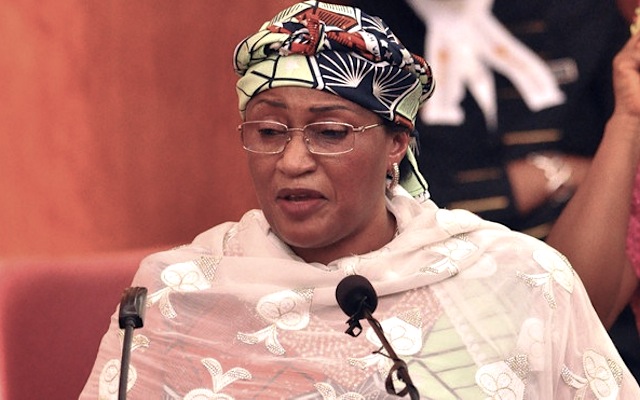
The Minister of Women Affairs, Aisha Jummai Alhassan, gave the warning on Monday during the presentation of ”Government Enterprise and Empowerment Programme, GEEP, and National Women Empowerment Fund, NAWEEF” at the Kano State grassroots town hall meeting, held at the Coronation Hall, Kano
She revealed that the federal government had put together a social investment intervention programme to help cushion the economic hardship faced majority of the people.
She stated further that the intervention scheme comprises of five pillars, namely the Home Grown School Feeding Programme, the Conditional Cash Transfer Programme, the cob Creation programme known as STEM, NAWEEF and GEEP.
The minister stated that the programmes are domiciled with the Ministry of Women Affairs in collaboration with the Bank of Industry, BoI, which is the administering bank for the fund
The GEEP, she noted, is a micro-credit programme for men and women, boys and girls, adding that out of the scheme’s fund, the sum of N1.6 billion had been set aside exclusively for women.
She noted that NAWEEF is exclusively for women who are engaged in productive enterprises, while GEEP is for men and women who are artisans, farmers, market women or entrepreneurs engaged in productive enterprises.
Each beneficiary will get between N10,000 – N100,000 as loan which is repayable in six months with one month grace after disbursement ,before repayment starts.
She added that each beneficiary must belong to a registered association, cooperative, trade or organisation, which must have a minimum of 10 and maximum of 20 members and each group must have a group leader.
The loan, the minister said, will be paid directly into the personal account of beneficiaries and not the group accounts, therefore each applicant in a group must have his or her personal account, which must have a BVN that will be used for verification.
Alhassan said the loans are interest free and no collateral is required adding that the application forms are also free and accounts can be opened in any commercial or microfinance bank of beneficiary’s choice.
One of the defects of both the 1979 and 1999 constitutions is the deliberate denial of any role whatsoever for the traditional rulers.
Pardon me for referring to the constitutions often in my articles. I have to, as long it is the constitution under which we are being governed. If you go through the 1979 and 1999 Constitution, there is not a single role for our traditional rulers. It was not so before.
Section 34 (ii) of the Constitution of the Federal Republic of Nigeria, 1963 states “The Senators representing the Federal Capital Territory shall be:
(a)The Oba of Lagos, who shall be an ex-officio member of the Senate; (b) a Chief selected in such manner as may be prescribed by Parliament by the White-Cap Chiefs and War Chiefs of Lagos from among their own number; and two other persons selected for that purpose in such manner as may be prescribed Parliament.”
Section 4 of the Constitution of Northern Nigerian Law, 1963 states: “There shall be a Legislature for the Region, which shall consist of the Governor, a House of Chiefs and a House of Assembly and which shall have power to make laws for the peace, order and good governance of the Region.”
Section 5 (1) says: The House of Chiefs shall consist of – (a) all first- class Chiefs, who shall be ex-officio members of the House;
(b) ninety-five Chiefs having such qualifications and selected in such manner as may be prescribed by the Legislature of the Region (
(c) an adviser on Moslem law.”
(2) The seat in the House of Chiefs of a Chief other than first- class Chief shall become vacant in such circumstances as may be prescribed by the Legislature of the Region.
(3) In this section— Chief” means any persons who is for the time being recognied by the Governor as a Chief. First-class Chief means any Chief whose officer is for the time being graded as that of a first-class Chief under any law in force in the Region.
Section 4 of the Constitution of Eastern Nigeria Law, 1963 states: There shall be a Legislature for the Region, which shall consist of the Governor, a House of Chiefs and a House Assembly and which shall have power to make laws for the peace, order and good government of the Region.
5 (1) says: Without prejudice to the provisions of sections 9 and 34 of this constitution, the House of Chiefs shall consist
(a) all traditional Rulers, who shall be ex-officio members of the House
(b) first class chiefs appointed to represent provinces in the Region
(c) fifty-five chiefs having such qualifications and selected in such manner as man be prescribed by the legislature of the Region; and
(d) such special members (not exceeding five) having such qualification as may be selected by the Governor, acting in accordance with the advice of the Premier.
(2) The seat in the House of Chiefs of a member other than an ex-officio member shall become vacant in such circumstances as may be prescribed by the Legislature of the other Region.
Section 4 of the Constitution of the Western Nigeria Law, 1963 states: There shall be a Legislature for the Region, which shall consist of the Governor, a House of Chiefs and a House of Assembly and which shall have power to make laws for the peace, order and good governance of the Region.
Section 5 (1) The House of Chiefs shall consist of— (a) the persons for the time being holding such chieftaincies as may be prescribed by the Governor, who shall be ex officio members of the House;
(b) eighty-seven Chiefs having such qualifications and selected in such manner as may be prescribed by the Legislature of the Region;
(c) such Special members, being Chiefs (not exceeding four) as may be selected by the Governor, acting in accordance with the advice of the Premier; and
(d) if he is not a member of the House of Chiefs apart from this paragraph, the President of the House.
(2) (a) The seat in the House of Chiefs of a member other than an ex officio member or a Special Member shall become vacant in such circumstances as may be prescribed by the Legislature of the Region;
(b) The seat in the House of Chiefs of a Special Member, including a Special Member appointed by the Governor at any time before the coming into force of this Constitution, shall become vacant if he is removed from office as a Special Member by the Governor, acting in accordance with the advice of the Premier.
Section 4 the Constitution of Mid-Western Nigeria Act, 1964 states: There shall be a Legislature for the Region, which shall consist of the Governor, a House of Chiefs and a House of Assembly and which shall have power to make laws for the peace, order and good government of the Region.
Section 5—(1) “Without prejudice to the provisions of section 9 of this Constitution, the house shall consist of—- (a) the Oba of Benin, the Olu of Warri and the persons for the time being holding such other chieftaincies as may be prescribed by the Governor, who shall be ex-officio members of the House;
(b) fifty-one Chiefs having such qualification and selected in such manner as may be prescribed by the Legislature of the Region;
(c) such Special Members, being Chiefs, as may be selected by the Governor, acting in accordance with the advice of the Premier; and
(d) four members selected by the Governor, acting in accordance with the advice of the Premier, to represent the interests of groups of persons resident in the special areas within the meaning of subsection (4) of section 14 of this Constitution, being groups whose interests, in the opinion of the Governor acting as aforesaid, are not represented by members of the House of Assembly for constituencies in those areas.
(2) “A person shall not be a member of the House of Chiefs by virtue of paragraph (a) of subsection (1) of this section during any period when he holds office as Governor and the number of persons who are for the time being members of that House by virtue of that paragraph or paragraph (c) of that subsection shall not in the aggregate exceed ten.
(3) “The seat of a member of the House of Chiefs shall become vacant— (a) in the case of member other than the Oba of Benin, the Olu of Warri or a Special Member, in such circumstances as may be prescribed by the Legislature of the Region; and
(b) in the case of a Special member, if he is removed from office as such a member by the Governor, acting in accordance with the advice of the Premier.”
(4) “In this section “Chief” means any person who is for the time beign recognized as a chief under any law in force in the Region.”
If you look at the present 1999 Constitution and the 1979 Constitution, which we operated between 1979 and 1983 you will never find any role for the traditional rulers.
We pretend that they don’t exist yet when we have crisis – be it religious, ethnic, communal, land or political – we run to them for help.
I once asked my friend, Oba Adebiyi Adegboye Adesida, Afunbiowo II, (1950-2013), the Deji of Oyemekun (Akure) during his reign, whether the institution of traditional rulers will go into extinction or not in the face of modern day challenges.
He replied ”never, never. We survived the colonialists, we survived the politicians in the first republic, we survived the military, we are going to be around for a long to come”.
No doubt that institution will be with us for long. They are our only link with our past. As Justice Oliver Wendel Holness (1841-1935) said ”Historic continuity with the past is not a duty, it is only a necessity”.
A constitutional amendment has become desirous so as to give the traditional rulers key roles in governance.
They are the last link with our past, unless we want to assume that we don’t have a past.
Eric Teniola, former Editor of The Punch and a former director at the presidency, resides in Lagos.
The Coalition Against Corrupt Leaders, CACOL, has called on federal government to prosecute officials of revenue generating agencies indicted in an audit report which indicated that N450 billion was not remitted into state coffers.
The coalition in a statement made available by its media coordinator, Wale Salami, also urged the government to ensure that the money is recovered.
CACOL maintained that it was not enough to announce to the public that N450bn was not remitted to the Federal Government from 2010 to 2015, and asked the federal government to ensure that punitive actions are taken against those who failed to stick to operational guidelines.
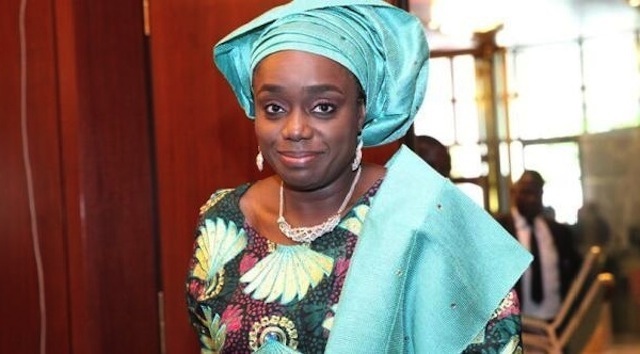
The Minister of Finance, Kemi Adeosun, disclosed on Thursday that the accounts of 33 agencies of government covering 2010 to 2015 had been audited, adding that a total sum of N450bn was recoverable from the agencies.
Some of the agencies are the Central Bank of Nigeria, CBN, Nigeria Shippers’ Council, Nigerian Export Promotion Council, NEPC, National Health Insurance Scheme, NHIS, Nigerian Civil Aviation Authority, NCAA, and Nigerian Communication Commission, NCC.
Others are the Nigerian Postal Service, National Information Technology and Development Agency, Nigerian Television Authority, NTA, Bureau of Public Enterprises, BPE, National Pensions Commission and Nigerian Bulk Electricity Trading Plc.
The list also include the Raw Material Research and Development Council, Nigerian Ports Authority, Nigerian Export Processing Zones Authority, Federal Radio Corporation of Nigeria, FRCN, and the Council for the Regulation of Engineering in Nigeria, COREN.
Although the minister had said those indicted by the audit report would be prosecuted, the coalition maintained that the federal government must immediately involve the EFCC, ICPC and other relevant agencies and sustain the on-going effort with a view of fishing out the culprits to face justice.
The Executive Chairman of CACOL, Debo Adeniran, stated that the revelation was a manifestation of the state of decadence in the public institutions and agencies.
However, the Minister of Finance said a decision had already been taken that the reports on some of the indicted agencies would be taken to the Economic and Financial Crimes Commission, EFCC, while those of the others had been made available to their respective parent ministries.
The minister listed the infractions committed by the agencies to include non-remittance and under-remittance of operating surpluses to the Consolidated Revenue Fund; operating without an approved budget; overstating of budget and spending above budgeted amount; as well as under-reporting of revenues.
The audit report, according to the minister, also revealed that payments were made without invoices and payment receipts, while loans and grants were given to parent ministries without prior approval.
Adeosun said some of the agencies lacked a fixed asset register and maintain inadequate internal audit process with weak internal controls.
Also discovered were the issues of the agencies’ failure to submit audited financial statements; payroll fraud and exaggeration of payroll costs; overpayment of staff salaries and abuse of personnel grants; as well as unapproved monetisation of medical and other allowances.
Meanwhile, Adeosun also pointed out that the Ministry of Finance is not a prosecuting agency, noting, “ours is to investigate and hand over to the relevant agencies.”
In spite of all efforts he made to influence the outcome of the presidential election, The Gambian President, Yahya Jammeh has lost to opposition leader, Adama Barrow.
The head of the Gambian electoral commission, Alieu Momar Njiehe announced on Friday that Barrow got 263,515 to beat Jammeh who polled 212,099 votes.
“Having received 263,515 votes of the total votes cast in the election, I hereby declare Adama Barrow duly elected to serve as president of the Republic of Gambia,” Njiehe said.
He also stated that President Jammeh would accept the result of the election.
The Gambian ruler had cut off the Internet, banned international phone calls, banned protests and reduced political campaigns to two weeks before the poll.
Apparently all that did not stop Barrow, a previously unknown businessman behind whom a coalition parties rallied to challenge Jammeh.
The man who called himself the proud dictator has ruled The Gambia for 22 years since 1994 when he seized power in a coup.
Since he took power, Jammeh had never faced any serious challenge at previous elections, but several political parties came together under a coalition to fight him in this poll, nominating Barrow as their candidate.
Gambians cast their ballot in the election by putting marbles in a drum representing their chosen candidate, as the government reasoned that it better served many voters who were not educated.
Jammeh has not reacted to his defeat. Although the election commission boss said he would concede and congratulate the winner, the unpredictable dictator might refuse to accept the result, a situation that could plunge his country into crisis.
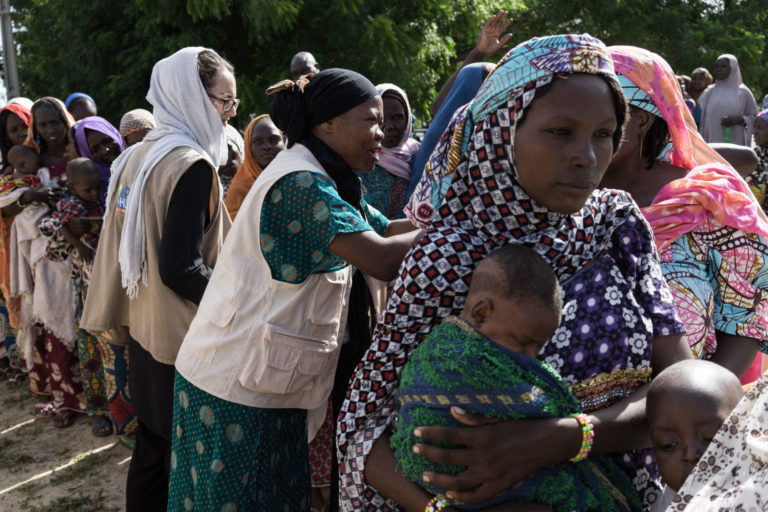
Internally Displaced Persons, IDPs, in Monguno, Borno State
The United Nations Office for the Coordination of Humanitarian Affairs, UNOCHA, is seeking the sum of $1 billion in 2017 to meet the needs of people affected by the crisis in the North east part of the country.
That amount is what is required to implement the 2017 Humanitarian Response Plan for Nigeria and address the needs of almost seven million people, especially in Borno, Adamawa and Yobe, the three most impacted states.
The Deputy Humanitarian Coordinator of OCHA in Nigeria, Peter Lundberg, announced this at a press statement on Friday in Abuja.
Lundberg said that almost seven million people are in dire need of nutrition, food, shelter, health, education, protection, water and sanitation, adding that a projected 5.1 million people would face serious food shortages as the conflict and risk of unexploded improvised devices prevented farmers from planting for a third year in a row.
He described the conflict in the North east as the largest in Africa, while calling on Nigerian Government and international community to step up efforts at funding the humanitarian needs of the affected population.
Lundberg said, “The narrative on this humanitarian crisis can no longer be ignored and we are appealing to the international community to help us prevent the deaths of thousands of innocent civilians over the coming 12 months.
“We welcome the full cooperation of the Government of Nigeria and the initiative behind the Inter-Ministerial Task Force to address the humanitarian situation.
This is the largest crisis on the African continent and I am confident that with the support of the international community and the private sector, we can begin to bring hope to the people of the north-east.”
According to him, during the course of 2016 as the Nigerian Armed Forces pushed into Boko Haram held areas, the scale of the human suffering became more apparent and the humanitarian community scaled up the response.
He said that 75 partners were ready to respond to those in needs at accessible areas in the implementation of the humanitarian response plan.
Nigeria may continue to lose about 177,000 infants below age five annually due to poor administration of pneumonia vaccines.
On Tuesday, November15, 2016 Ramat Useni was getting ready to leave the General Hospital, Koton-Karfe in Kogi State after she had given birth three days earlier.
Her child was supposed to receive Hepatitis B Vaccine, HepB0, immunisation within 24 hours of birth, but Ramat left the hospital without immunising her baby.
The baby will also be due to receive Pneumococcal Conjugate Vaccine, PCV, in six weeks.
Apart from the PCV and Hepatitis B vaccine, the baby is supposed to receive Oral Polio Vaccine, OPV, within the first two weeks after birth under the revised Nigerian immunisation schedule.
But the hospital had told Ramat to go to the Primary Health Centre, PHC, in Ukwo in Konto-Karfe for her baby’s routine immunisation. The General Hospital, Koton-Karfe does not give immunisation.
A midwife at the maternal ward of the hospital, Ajara Mohammed said the hospital stopped routine immunisation more than a year ago because it had no means of storing vaccines.
Ajara said the General Hospital took an average of 20 births weekly but the mothers are all referred to the PHC, Ukwo or any other health centre that undertakes routine immunisation.
She said most mothers complied and accessed the immunisation while others went to their villages and never returned to any health centre until their babies get critically ill.
But Ramat’s husband had made an inquiry and discovered that the PHC only gives immunisation on Thursday, meaning that the Hepatitis B Vaccine, which the baby ought to have received within 24 hours of its birth would not come at least until 72 hours.
Almost two years after baby Collins, the first one to receive the free PVC in Nigeria, thousands of other children born after him in many states have not been receiving the life-saving vaccine that prevents diseases caused by pneumococcal bacteria.
Nigeria launched the introduction of PCV into its childhood routine immunisation on December 22, 2014, in Lokoja, Kogi State, about 65 kilometres away from the General hospital, Koton-Karfe where Ramat had her baby.
PCV prevents Pneumonia, which is a leading cause of death among under-five children in Nigeria, and is considered an effective means of protecting children against many strains of pneumococcal disease.
According to the World Health Organisation, WHO, pneumonia is the single largest infectious cause of death in children worldwide. Pneumonia can be caused by viruses, bacteria, or fungi but can be prevented by immunisation, adequate nutrition and by addressing environmental factors.
Pneumonia is most prevalent in South Asia and Africa and the common symptoms include cough and difficult breathing. WHO estimates that over 800,000 children under age five die from pneumococcal diseases each year with those less than two years of age most affected, especially in developing countries.
In Nigeria, Pneumonia claims the lives of approximately 177,000 under-five children annually. This accounts for 16% of all deaths within this age group.
Combating Pneumonia in Nigeria
The PCV introduction was done in December 2014 in three phases with eleven states, including Katsina, Kaduna, Plateau, Kogi, Anambra, Ebonyi, Ondo and Osun, Edo, Adamawa, and Yobe being the first benefiting states.. Almost all the states in the federation have subsequently integrated PCV into their routine immunisation schedule.
However, investigations by icirinigeria.org revealed that babies born in underserved communities in many states are still not getting the PCV as PHCs in the remote communities either lacked staff or are not functional. This is at least true with the three states of Adamawa, Kogi and Ebonyi visited by our reporters.
However, the Federal Capital Territory, FCT, which introduced the vaccine in June this year seemed to be doing well with PCV as most PHCs visited by our reporter in the six area councils in the territory were administering the vaccine..
The introduction of PCV was expected to save the lives of 35, 000 infants annually in Nigeria. According to the National Primary Health Care Development Agency, NPHCDA, the introduction of PCV could avert an estimated 173,225 deaths by 2018.
This is likely not going to be achieved because the states where PCV was first launched have not been able to reach 80% coverage as envisaged.
More than two million children in Nigeria have so far received their complete vaccinations with PCV since the introduction, but the country has an estimated annual birth cohort of 7.4 million infants.
Last year, Kogi State which was where the PCV was first officially launched had a target to reach 158,274 infants but ended up with only 85,910 infants, just about 54% success rate.
This year the state has made progress but a worrisome trend has been detected. The babies are probably not completing their dosage. Those that receive PCV 1 are far high than those that received PCV 2 and PCV3.
PCV is given three times over four weeks at the baby’s 6th, 10th and 14th weeks.
From January to October this year, 120, 039 babies have received PCV 1 in Kogi State and 101,231 received PCV 2 while 104,984 received PCV 3.
This case of dropout was also prominent in the previous year.
In 2015, 130,798 received PCV1 and 96,433 received PCV 2 while only 85,910 got PCV 3.
A more worrisome development is that those that receive pentavalent vaccine, Penta, are far higher than those that receive PCV.
Under normal circumstance, the number of those that receive PCV should be almost equal to Penta because they are supposed to be administered simultaneously.
This year, from January to October, 119,011 infants have received Penta in Kogi state while PCV uptake recorded only 104,984.
“Ordinarily the time of giving PCV, Penta and OPV are supposed to be the same, if not the same, the difference should be very little,” Theophilus Olorumaye, Kogi State Cold Chain Officer told our reporter. “But we discover that we have a gap between OPV, Penta and PCV. PCV is always lower but the reason we have not established.”
“Last year, it was lower because we did not have PCV for some parts of last year. It has been available this year but still the figures are not adding up.” he added.
The Kogi State Immunisation Officer, John Amaje said he had noticed the problem but they lacked funds to investigate the matter.
“We don’t know if it is data problem or dosage problem but PCV has had the same issue even when we did the first assessment,” John said, adding that “It is not only Kogi but I think about 9 states across the country.”
The PCV Post Introduction Evaluation in Nigeria Report discovered that there is knowledge gap in calculating immunisation indicators such as coverage, drop out and wastage rate in most of the health facilities in the 11 states where the PCV were first introduced.
The report also discovered inadequate cold chain & stores management in some local government areas – many broken down equipment, cold stores doubling as offices, congested dry stores, non-maintenance of equipment, non-use of equipment due to lack of fuel for the generators.
Vaccine storage is a big setback
PCVs are biological products that are sensitive to heat as well as freezing. The Immunisation Training Module for PCV Introduction in Nigeria explained that all vaccines, including PCV, should be stored between 20C to 80C except OPV which can be stored at negative temperatures during long storage periods.
According to the manual, If PCV is frozen, it loses its potency and provides no protection against diseases, and that previously frozen vaccines may also cause “aseptic abscesses.”
The manual noted that PCV contains two doses per vial and have no preservative and must be discarded after six hours of opening.
The challenge of effective storage of the vaccines is common in the three states, which our reporters visited, principally because of power and personnel challenges.
The Federal Capital Territory seemed to have overcome this challenge as most of the health centres visited by our reporter have solar fridges or improved power supply.
A couple with a baby awaiting service at General Hospital, Koton-Karfe
The General Hospital, Koton-Karfe where Ramat delivered her baby has two reasons why it is not giving immunisation – lack of storage facility and inadequate staff.
A midwife in the hospital, Ajara Mohammed, told our reporter that they used to get the vaccines from the cold chain on the immunisation day and return the leftover after the immunisation.
She said they stopped because there were only five staff in the maternity ward and they could not sustain the immunisation because it was tedious going to and fro for the vaccines.
“I’m the only one on the morning shift,” Ajara said. “The other two will take over for afternoon and night shift. One person is on leave and the other person is bereaved.”
She said they could start again if they could get the solar fridge to store the vaccines because they hardly have electricity.
The Cold Chain Officer in Koton-Karfe Local Government, Yunusa Isah, said the local government has 60 health centres but only four have solar fridges to store the vaccines.
All other health centres that render routine immunisation come to the cold chain manned by Yunusa to get the vaccines on their immunisation days and returned what remains. The cold chain also relies on solar fridges to store the vaccines.
Yunusa said, “Some health facilities have no staff, so we try to match those that have staff to run outreaches to those that do not have.”
Evidence gathered by www.icirnigeria.org showed that some of the health workers have not been coming regularly to get the vaccines on their immunisation days or run outreaches to other under-served health centres as they used to.
In Yolde Pate, a rural community on the outskirts of Yola in Adamawa State, a matron in the PHC in the community told our reporter that many of the mothers hardly come to the facility because of the distance and they had not been able to run outreaches to such far locations as they used to because of inadequate staff.
“For good nine months, I have not received salary,” Yunusa said. “Things are so difficult for us. Most of our staff we can’t even query them. We are just working on humanitarian ground.”
The Kogi State Immunisation Officer, John Amaje, said he spent an average of 120 litres of diesel to power the generator at the state’s central store. He said the place gets a maximum of two hours of electricity in a day.
“We run at least eight hours on generator daily,” John said. “We have been struggling to ensure availability of diesel. We are really struggling, trying to cope.”
Misuse of immunisation vehicles and absent health workers
Investigations by this website showed that immunisation vehicles are being converted to official cars by politicians and government officials while many health workers are distracted from their duty posts, partly as due to the economic recession in the country.
Some of the workers are taking advantage of the rice planting season to move to the farm, thus further compromising healthcare delivery in some states.
In Ebonyi state, it was discovered that some caretaker chairmen have converted the Hilux vans purchased to facilitate immunisation services in the local governments into personal use.
A civil servant who cannot be named for fear of victimisation said that council chairmen had taken possession of the vehicles, which they now used to run their personal businesses.
On Thursday, November 17, our reporter confirmed the allegation when he saw the caretaker chairman of Afikpo South Local Government being driven in the Toyota Hilux van for the local government immunisation support services at Osborn La Palm Royal Resort in Abakaliki.
In Kogi and Ebonyi states, the absence of health workers was observed in all the health centres visited by our reporter. The major reason for health workers staying away in Kogi State is because they are owned four months’ salary while others are owned as much as nine months’ salary.
Although in Ebonyi State, the civil servants are not being owned salary, health workers still hardly come to the office.
At Chief Joseph Nwuzor Elechi Comprehensive Hospital, Ugbodo which is supposed to offer a 24-hour service as written on its sign post, our correspondent spent more than an hour from 9.00 am to well after 10am, no single worker in the hospital was seen.
A nursing mother who lives close to the hospital, Ngozi Nwaite told our correspondent that a midwife had to be called on the phone to come to the hospital when she was in labour about a year ago.
At the Ebonyi State Ministry of Health which recently relocated to the new secretariat at Atido in the state capital, Abakaliki.
The only person at the section for immunisation and disease control told our correspondent that the building has not been linked to the power supply and most of them that still come to office came to hang around.
“I am a civil servant and my job is to sit down here until 4.00 pm,” the man who refused to give his name said while sitting close to the window unit of the corridor to receive fresh air.
Ebonyi State has the lowest immunisation uptake in the South east geo-political zone as well as the worst health indices in the zone.
PCV Stock out and cost implication
A nurse at the staff clinic of Abakaliki Local Government, Chinyere Onyejide, confirmed that the last time they had PCV stock out was in February, March and April last year.
She said some of the nursing mothers were called upon to complete their babies’ dosage when they got restocked.
Kogi State Immunisation Officer, John Amaje, also confirmed that the state had a stock out of PCV in 2015 but said that they have not recorded any such case this year.
The PCV stock out last year was nationwide but there is fear of possible vaccine stock out in 2017 and 2018 in view of dwindling funding for vaccines in the country.
Nigeria depends largely on donors to procure its vaccines and the PCV introduction has been supported by the Vaccine Alliance, GAVI, a non- profit organisation that rally funding to purchase vaccines for poor countries.
The country requires about $262 million for vaccines in 2017 and 2018, and as it transits from GAVI support, , it is expected to commit $181 million while GAVI provides the remaining fund.
To avoid vaccine stock out, Nigeria has to make adequate provision in the 2017 budget to meet its commitment. This may not be realistic as only a meagre N9.8 billion was budgeted for vaccines in 2016, although it is higher than the N2.5 billion appropriated in 2015 and N3.6 billion in 2014.
The head of Advocacy and Communications Department, NPHCDA, Eugene Ivase, observed that Nigeria faces an enormous funding gap for the immunisation programme due to the cost of additional vaccines, expanding birth cohort, loss of funding following GAVI graduation and insufficient budgetary allocation to vaccines.
He pointed out that “To fill the gap, Nigeria needs to secure more money for its vaccine programme starting from N29 billion in 2016 and rising to an estimated N63 billion by 2020.
“The government of Nigeria through the NPHCDA has made significant progress in Routine Immunization (RI). However, without adequate funding for vaccines, the RI system will experience setbacks by way of stock-outs that will lead to deaths from vaccine-preventable diseases.”
Chairman of the National Immunisation Financing Task Team, NIFT, Ben Anyene, says, “Without adequate funding for vaccines, the routine immunisation system will experience setbacks such as stockouts of vaccines that will ultimately lead to increased illness and/or deaths from vaccine-preventable diseases.”
Speaking in Abuja ahead of a peer-review workshop in April for officials from five Anglophone countries, Anyene said up to 7.5 million children in need of routine vaccination in Nigeria every year could be affected by the shortage of sustainable financing for immunisation.
Due to funding challenges, another life-saving vaccine, Rotavirus vaccine which was to be introduced into the Nigerian routine immunisation in the third quarter of 2015 has been put on hold till date.
Rotavirus vaccine prevents diarrhoea, which is the second leading disease and cause of death among under-five children.
Unlike PCV which is taken by injection, Rota is taken orally and its current market price in pharmacy stores ranges from N7, 000 to N8, 000 while hospitals charge from N9, 000 to N15,000 for each dose in Abuja. Rota is taken twice over a month interval.
PCV is given free of charge in public health facilities while private hospitals that get their stock from government charge service fee.
In Abuja, www.icirnigeria.org discovered that private hospitals charge from N1, 000 to N1500 for service fee while private hospitals in Lokoja charge between N200 and N500 for a service fee.
“We try to make them understand that the vaccine is free but they say that they want to charge for administrative cost,” Rilwanu Mohammed, the Executive Secretary of FCT Primary Health Care Development Board told our reporter.
Rilwanu said he had given the PCV to 48 private hospitals, which charge a token for service fee while the rest of public hospitals administer the vaccine absolutely free.
Certain private hospitals in Abuja charge as much as N10, 000 to N15, 000 for PCV but an investigation by www.icirnigeria.org discovered that the private hospitals did not get their vaccine from the government but purchased them from the manufacturer.
Pharmacy stores in Abuja are selling PCV between N10, 000 and N12, 000. However, it was learnt that they also buy from the manufacturer.
Two types of PCV are widely available globally – PCV10 and PCV13. Nigeria adopted PCV10, which is manufactured by GlaxoSmithKline of Belgium while Pfizer of United States of America manufactures PCV13.