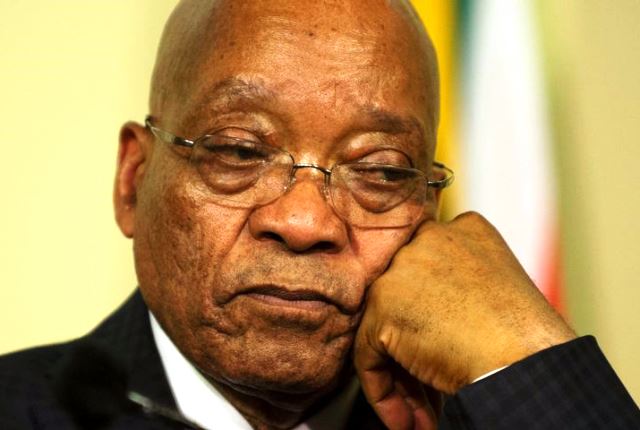
South African President Jacob Zuma will be questioned next week by the African National Congress’ (ANC) integrity commission following persistent allegations of corruption and poor election results, the party said on Friday.
Zuma’s appearance before the panel could deepen divides within the ANC as it gears up for a national conference next year when Zuma, 74, is expected to stand down as party leader.
“He will be having a meeting with the IC,” ANC Secretary General Gwede Mantashe confirmed to Reuters, referring to the integrity commission.
Zuma’s meeting with the commission is expected to be held on Dec. 3 behind closed doors. Members of the ANC have been removed from their posts as a result of the commission’s recommendation.
The ANC formed the commission in 2013 to help protect its image and take “urgent action” to deal with members of the party who face allegations of improper conduct.
The Mail & Guardian newspaper reported on Friday that the commission, headed by anti-apartheid stalwart Andrew Mlangeni, would question Zuma over a slew of corruption scandals and the party’s worst local election results in August.
Mantashe did not say what would be discussed at the meeting.
Several senior members of the ANC have called for Zuma to resign in recent months after scandals rattled markets in Africa’s most industrialized economy and cost the party votes.
A constitutionally-mandated anti-graft watchdog this month called for a judge to investigate allegations that Zuma provided special favors for wealthy friends and allowed them to choose ministerial appointments. Zuma denies any wrongdoing.
In March, the Constitutional Court ordered Zuma to repay some of $16 million of state funds inappropriately spent on enhancing his country home. He has since paid back more than $500,000 as required by the court.
The National Drugs Law and Enforcement Agency, NDLEA, Kano state command said it has secured conviction of 299 suspects, both males and females, while a total of 37.851 kg of hard drugs have been recovered from suspects between January and November this year.
The command further disclosed that it made a recent arrest of three young men carrying 56.6 kg of methamphetamine, carefully concealed inside cartoons, meant for export to Malaysia.
Speaking to journalists in kano on Friday at the state headquarter of NDLEA, the Kano commander , Hamza Umar , said the men disclosed that the substances were for export to Malaysia via Malam Aminu Kano International Airport , Kano.
Umar also gave a breakdown of the arrests and seizure of dangerous drugs made by the command within the period. He said a total of 761 suspects was arrested, which included 755 males and six females.
A total of 37, 851.0 kg of drugs was seized, with Canabis sativa constituting 2,822.913kg while Psychotropic substances are 34,971.418kg. Cocaine is 118.1g, heroine ,7g and ephedrine 24.8kg.
The number of drug users counseled are: 534 males and 8 females.
“It is important to note that NDLEA, had discovered about seven clandestine laboratories in Lagos and the Eastern part of the country, where these substance are produced and arrests were made including foreign nationals,” Umar stated.
At least 31 people have been killed and dozens more injured in a train collision in northern Iran.
Officials say four carriages derailed and two caught fire after an intercity express broke down between stations and was hit by another train early on Friday.
The accident happened in subzero temperatures about 250 kilometres east of the capital, Tehran.
The Iranian State media reports that four of the fatalities were railway employees.
“The bodies of 31 dead have been identified and more than 70 people hospitalized,” State Governor Mohammad Reza Khabbaz told local media.
The governor said that the number of casualties is likely to rise adding that a mechanical failure had forced the intercity express train to stop between stations.
The crash occurred in Iran’s northern province of Semnan, on the main line between Tehran and Mashhad in the north-east.
Red Crescent Director Hassan Shokrollahi said rescue efforts were hampered by the remote location of the crash site.
“Due to the difficulty of access, only our helicopter has managed to reach the scene,” he said.
The injured were taken to hospitals in Semnan and Damghan.
Years of punitive international sanctions against Iran over its controversial nuclear program have seriously affected the country’s infrastructure, including roads and the railway network.
Former Governor of Oyo State, Rashidi Ladoja, who was accused by the Economic and Financial Crimes Commission, EFCC, of fraud to the tune of N4.7 billion, will be formally re-arraigned on December 14.
Justice Mohammed Idris of the Federal High Court Lagos gave the ruling on Friday after he struck out an application by Ladoja’s lawyer seeking for a stay of proceedings.
Ladoja was first arraigned alongside Waheed Akanbi, his former aide in 2008 but the accused persons challenged the competence of the charges filed against them all the way to the Supreme Court.
However, the Supreme Court on April 15, 2015 dismissed their appeal, describing it as incompetent pursuant to the provisions of Order 6 Rule 3(2) of the Supreme Court Rules 1999.
Following the dismissal of the appeal, the EFCC moved to re-open the case and to re-arraign Ladoja and Akanbi before Justice Idris.
The EFCC asked the court to order the arrest of the defendants but Justice Idris declined the application as both accused persons were present in court.
“The court will not make any order for arrest in the light of the appearance of the accused persons in court,” the judge held.
Ladoja’s lawyer, Bolaji Onilenla, also opposed the bid by the EFCC to re-arraign his client, saying that he had gone back to re-list the appeal at the Supreme Court.
He said he re-listed the appeal on October 27, 2016 on the grounds that the appeal was dismissed by the Supreme Court without hearing it.
“What we are saying in effect, My Lord, is that our right of appeal still endures and it cannot be purportedly cut short on the altar of overzealousness of the prosecution to jump-start the trial of the case,” he said.
But in his ruling, Justice Idris struck out the argument, saying that the request to stay proceedings pending the outcome of the re-listed appeal before the Supreme Court was against the provisions of Section 306 of the Administration of Criminal Justice Act, 2015.
He subsequently fixed December 14 for the arraignment of the defendants.
A legal tug-of-war between Ugandan authorities and a for-profit international chain of schools, Bridge International Academies, BIA, has led to the education provider being ordered to shut down in a matter of weeks, leaving the lives of thousands of pupils in limbo.
Uganda’s High Court has described the BIA – which is funded by the likes of Microsoft’s Bill Gates and Facebook’s Mark Zuckerberg — as unsanitary and unqualified, and has ordered it to close its doors in December because it ignored Uganda’s national standards and put the “lives and safety” of its 12,000 young students on the line.
The Director of Education Standards for the Ministry, Huzaifa Mutazindwa, said that the nursery and primary schools were not licensed, the teachers weren’t qualified and that there was no record of its curriculum being approved.
“The Ministry does not know what is being taught in these schools which is a point of concern to government,” Mutazindwa said.
The low-cost education provider, which has 63 campuses across Uganda, is allowed to remain open until December 8 to allow students to sit for exams and finish third term. This was after BIA secured an interim court order that restrained the government from closing its schools until its main case for stay could be heard in court.
For its part, BIA — which runs more than 400 nursery and primary schools across Africa — has continuously denied the allegations that have been made by the government.
Uganda’s BIA director, Andrew White, told newsmen that “there’s a lot of miscommunication and a lot of very serious, unfounded allegations. We would like to be given the opportunity to explain ourselves … The Ministry has been unwilling to give us an audience to set the record straight,”
In a statement, BIA addressed eight allegations that have been made about its operations. It said it teaches the Ugandan curriculum, all schools have good sanitation facilities and that the majority of their teachers are certified and registered. Those who aren’t certified and registered, it said, are attending in-service training.
When asked why the allegations were made if they weren’t true, White said: “We definitely feel like a lot of pressure has been applied to have a particular view of Bridge that is a negative one.”
He suggested that the opposition against BIA was because the campuses competed against local state-run and private schools.
“I don’t think the government is threatened by Bridge, but I think lobby groups are trying to make the government and ministry feel like they should be,” White said.
President of the Global Campaign for Education (GCE), Camilla Croso, told CNN that the quality of their schools is “totally inadequate and unacceptable.”
“They are profit making enormously,” she said. “It’s very indecent because they are looking at poor people as a profitable market.”
“It really is incompatible to have human rights and profit making because you are motivated and act in completely different ways.”
“(BIA) has come into the country and not discussed with the regulators and set up a massive project,” she said, adding that privatization of education goes against human rights principles — particularly if it targets the poor.
“I think there’s some level of arrogance that comes with this and I really think they’re for the profit and not to assist the children.”
Critics allege that BIA’s education methods are not transparent, and that their approach is standardized and scripted.
“You can’t call it an education that Bridge is offering,” Croso said.
“You have technology — like tablets — often standing in place of teachers and you have very scripted classes that tell the teachers exactly what to do and when — so you don’t have any sort of autonomy and you can’t improvise.”
She said teachers needed to understand the topics so they could panel it.
“Education has nothing to do with that (standardization) — it’s about debating, thinking and discussions.”
However, some parents whose wards attended the school said it was far better than the ones run by the government.
Daifa Maimuna, a grandparent told journalists, “When I transferred (my two grandchildren) to Bridge, in less than one term they had made huge improvements. They can now read and write well on their own.”
Also there were complaints that the $6 a month school fees charged by BIA was a lot of money given the poverty rate in the country.
But White argued that the school provides an “effective and affordable service” that parents want for their children.
“The poor are individual actors who can make informed decisions on how to spend their hard earned money,” he said.
“Parents have seen in the short time that their children have been with Bridge that they are incredibly engaged. Parents for the first time see their kids wanting to go to school and they have children who are actively doing their homework every day.”
Decades before now, words like terrorism, abduction, and kidnapping were alien to the average Nigerian’s vocabulary. Unfortunately, today’s harsh reality is that acts like these have become commonplace and many lives are destroyed and lost due to these nefarious acts.
According to the United Nations General Assembly, Terrorism refers to “Criminal acts intended or calculated to provoke a state of terror in the general public, a group of persons or particular persons, for political purposes are in any circumstance unjustifiable, whatever the considerations of a political, philosophical, ideological, racial, ethnic, religious or any other nature that may be invoked to justify them.”
The terms ‘abduction’ and ‘kidnapping’ have been used interchangeably. Kidnapping is the taking away of a person by force, threat, or deceit, with intent to cause him or her to be detained against his or her will. Kidnapping may be done for ransom or for political or other purposes.
Abduction is the criminal taking away of a person by persuasion, by fraud, or by open force or violence.
The abduction of 276 female students from the Government Secondary School in Chibok town, Borno State, Nigeria on the night of 14th April, 2014, by the Boko Haram Group is perhaps one of the most devastating examples of terrorist acts in Nigeria and this has generated sustained media attention, both locally and globally, as well as numerous campaign actions.
It was previously reported that only 57 of the Chibok girls escaped shortly after their capture, but as days painfully rolled into months and years, the hope of the return of the remaining girls became bleaker.
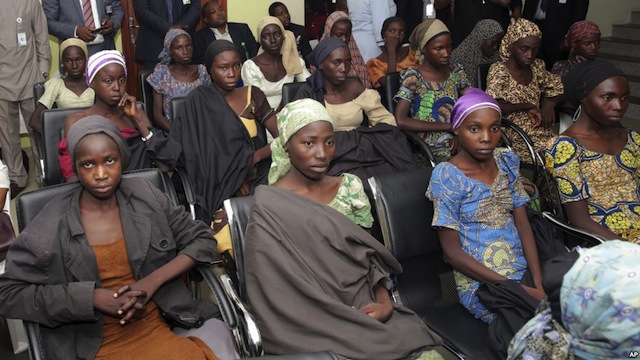
However, the release of 21 of the Chibok girls following negotiations between the BH group and the Nigerian Government brokered by International Committee of the Red Cross and the Swiss Government has brought great joy to all and rekindled the hope of many.
Beyond the fact that insurgency is a major threat to local and global peace and security, it constitutes the highest contributor to humanitarian crises in the form of rise in human casualties, internally displaced persons, refugee debacles, food insecurity and the spread of various diseases.
About 97% fled on account of Boko Haram violence since 2014 and 53% are mostly female while others have sought shelter in neighbouring Cameroon, Chad and Niger.
They reported that although Nigerian military operations earlier in 2016 in the country’s North-East had pushed Boko Haram out of some major towns in Borno, such as Monguno, freeing tens of thousands of people from insurgents’ rule, living conditions have remained difficult for them amidst lack of basic amenities/supplies.
Boko Haram terrorism originated from the north-eastern part of Nigeria. It was started as a Muslim youth organisation by Mallam Lawal in 1995 but later metamorphosed into a violent terrorist group under the leadership of Yusuf and Sheakau.
In the context of Boko Haram insurgency, Osita-Njoku A et al defined terrorism as “the unlawful use of force or violence by a person (at the behest of a group) or organised group (with misguided religions and political ideologies) against the government and its citizens to achieve its desired objectives“.
Identified causes of Boko Haram terrorism in Nigeria are: poverty, unemployment, absence of good governance and increasing radicalisation of jihadist group in the world.
Boko Haram activities have led to harrowing consequences like abduction of women and girls; arbitrary arrest of women by government security agents e.g alleged suspects, sometimes wrongful arrests; use of women as pawns in their activities; inflicting collective terror on women; use of women as wartime labour force, etc.
Women and girls in captivity are used for cooking, cleaning and other duties that may be assigned to them by their captors. Many may also be forced to bear children that will grow to further the course of the insurgency.
Regardless of the motive(s) behind kidnapping / abduction and other terrorist activities, these crimes have devastating, far-reaching effects on the victims, their families and the society at large.
Therefore, beyond the euphoria of the return of the Chibok girls, lies the glaring challenge of their rehabilitation, not just on the short-term, but particularly on the long-term.
Victims are exposed to a myriad of conditions and hazards that necessitate rehabilitation.
Effects on Victims
Psychological Effects: This was succinctly documented in a paper by Alexander et al.8
Emotional: sudden nature of the traumatic event leads to shock and numbness; fear and anxiety disorders (but panic is not common);9helplessness and hopelessness; dissociation (feeling numb and ‘switched off’ emotionally); anger (at any/everybody – perpetrators, themselves and the authorities); anhedonia (loss of pleasure in doing that which was previously pleasurable); depression (a reaction to loss); suicidal ideations or attempt; guilt (e.g. at having survived if others died, and for being taken hostage).
Their emotional bond with family and friends is severed and in the face of terror, some develop Stockholm Syndrome.
The term Stockholm Syndrome refers to the particular psychological response, sometimes seen in abduction cases, in which the victim forms an attachment to their perpetrators. Children could be particularly susceptible to the development of Stockholm Syndrome.
Dr Shirley Jülich explains in her paper published in the ‘Journal of Child Sexual Abuse‘ that if unable to escape and isolated from others, victims turn to offenders for nurturance and protection.
The need to be nurtured and protected combined with the will to survive compel victims to actively search for expressions of kindness, empathy or affection from the offender.
The victim suppresses any feelings of danger, terror or rage, and through this denial, is able to bond to the ‘positive’ side of the offender.
Additionally, to facilitate survival, the victim similarly suppresses his or her own needs and becomes both hyper-vigilant and hypersensitive to the offender’s needs, feelings, and perspectives.
Cognitive: impaired memory and concentration; confusion and disorientation; intrusive thoughts (‘flashbacks’) and memories; denial (i.e. that the event has happened); hyper-vigilance and hyper-arousal (a state of feeling too aroused, with a profound fear of another incident);
Social: withdrawal; irritability; avoidance (of reminders of the event).
Denial (i.e. a complete or partial failure to acknowledge what has really happened) has often been maligned as a response to extreme stress, but it has survival value (at least in the short term) by allowing the individual a delayed period during which he/she has time to adjust to a painful reality.
‘Frozen fright’ and ‘psychological infantilism’ are two extreme reactions that have also been noted.
The former refers to a paralysis of the normal emotional reactivity of the individual, and the latter reaction is characterized by regressed behaviour such as clinging and excessive dependence on the captors.
Extended periods of captivity may also lead to ‘learned helplessness’ in which individuals come to believe that no matter what they do to improve their circumstances, nothing is effective.
Another common consequence is indoctrination, where victims are ‘brain-washed’ to accept wrong / distorted norms, beliefs, and values. This distortion of their fundamental beliefs may be temporary, or occasionally permanent.
Genuine psychopathology has also been noted e.g post-traumatic stress disorder (PTSD).
The International Classification of Mental and Behavioural Disorders (ICD 10) also recognises the ‘Enduring personality change after a catastrophic experience’ as a possible chronic outcome after a hostage incident. This condition is characterised by:
a hostile or mistrustful attitude; social withdrawal and estrangement;
feelings of emptiness or hopelessness;
a chronic feeling of being ‘on edge’ as if constantly threatened.
For the diagnosis to be made, the symptoms must have endured for at least two years.
Denial, ‘frozen fright’, ‘psychological infantilism’ and ‘learned helplessness’ are not age-specific. Children may also display ‘school refusal, loss of interest in studies, dependent and regressed behaviour, pre-occupation with the event, playing at being the ‘rescuer’, stubborn and oppositional behaviour, and risk-taking.
The impact can be particularly serious if the children have been detained over an extended period and if the incident entailed a breach of trust.
Physical Effects on Victims
For the victim, the experience is tormenting. Often cramped in appalling conditions, the captive may be open to the elements of health hazards, or subject to threats or beatings that can lead to injury and even death.
Under harsh living conditions, victims become malnourished and impaired immunity renders them susceptible to various diseases like malaria, typhoid fever, diarrhoea, insect/rodent-borne diseases.
Sexual abuse puts them at risk of sexually transmitted infections like HIV/AIDS, Hepatitis B & C, Syphilis, Gonorrhoea, etc.
Effects on the Victims’ Families and Friends
Kidnappings have similar effects on the victim and his or her family and friends. Psychological distress, family crises / destabilisation, anxiety disorders, depression and even guilt feelings are some of the effects on family members.
Medical Rehabilitation
This requires a multi-disciplinary approach. Services and support must be collaborative, person-directed and individualised.
Recommended Screening and Diagnostic Tests include:
Screening for drugs and mental health disorders such as post-traumatic stress disorder, depression, substance use etc.
Screening for sexually transmitted diseases such as Hepatitis B (if negative , give 3doses ; stat, one and six months after the first dose ), if positive, further evaluation should be done at a recommended health care facility), syphilis, gonorrhoea, chlamydial infection, trichomoniasis, HIV infection(should be done six weeks, three months and six months after the first screening).
Screening for communicable diseases such as tuberculosis.
Other routine tests such as full blood count; urine/stool tests and pregnancy test( done at the time of arrival and two weeks after)
Psychosocial rehabilitation is essential for the restoration of personal recovery, community functioning / integration, and satisfactory quality of life for the victims.
The goal of psychosocial rehabilitation is to help disabled individuals to develop the emotional, social and intellectual skills needed to live, learn and work in the community with the least amount of professional support.
The overall philosophy of psychiatric rehabilitation comprises two intervention strategies. The first strategy is individual-centred and aims at developing the patient’s skills in interacting with a stressful environment. The second strategy is ecological and directed towards developing environmental resources to reduce potential stressors. Most disabled persons need a combination of both approaches.
When hostages are released, it is essential for them to:
Receive medical attention,
Be in a safe and secure environment,
Connect with loved ones,
Have an opportunity to talk or journal their experience if and when they choose,
Receive resources and information about how to seek counseling, particularly if their distress from the incident is interfering with their daily lives,
Protect their privacy (e.g. avoid media over-exposure including watching and listening to news and participating in media interviews),
Take time to adjust back into family and work,
Family and friends can support survivors by listening, being patient and focusing on their freedom instead of engaging in negative talk about the captors.
It is important to realise that families and friends of abducted children are confronted with numerous issues in coping with fears and uncertainties as well and may also need support in dealing with their own emotional reactions.
Effective psychiatric evaluation involves providing hope and respect for the client, empowering the client, teaching them wellness planning and emphasising the importance for the client to develop social support networks. Services delivered may include:
Psychiatric (symptom management; relaxation, meditation; support groups and in-home assistance)
Health and Medical (maintaining consistency of care; family physician and mental health counselling)
Housing (safe environments)
Basic Living Skills (personal hygiene or personal care, preparing and sharing meals, home and travel safety and skills, goal and life planning)
Social (relationships, recreational and hobby, family and friends, communications & community integration)
Vocational and/or Educational programmes
Financial support
Community and Legal (resources; health insurance, community recreation, houses of worship, ethnic activities and clubs)
It is very clear therefore, that a proper understanding and detailed evaluation of the hazardous conditions during captivity and the psychological states of the victims and their families, are necessary for the planning and implementation of an efficient and effective rehabilitative, restorative and integrative programme. It is very important for the agencies saddled with these responsibilities to continue to engage the services and support of relevant professional bodies and organizations to guarantee rewarding outcomes.
Dr. Akin Moses is the National President, Society of Family Physicians of Nigeria. He can be reached at Lawakmoses@yahoo.com
The controversies thrown up by the Amnesty International, AI, report released on Thursday is yet to die down.
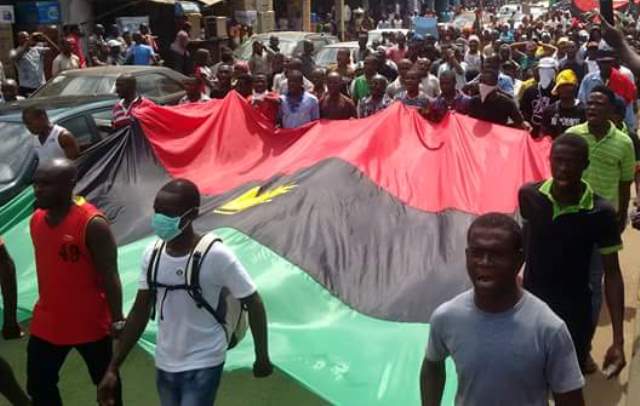
The international human rights group had alleged in the report that the Nigerian Army killed no fewer than 150 members of the Indigenous People Of Biafra, IPOB, during various protests by the group between August 2015 and August 2016.
According to the report, the IPOB members were largely unarmed, except for some few cases where the protesters had hurled rocks and sticks at the security agencies trying to stop the protests.
AI said that it had reviewed a total of 87 videos and 122 photographs as well as interviewed 146 eyewitnesses before arriving at their report.
Part of the report which was titled: “Bullets Were Raining Everywhere”: Deadly Repression of Pro-Biafra Activists, read: “On (May 30, 2016; Biafran) Remembrance Day itself, the security forces shot people in several locations.
“Amnesty International has not been able to verify the exact number of extrajudicial executions, but estimates that at least 60 people were killed and 70 injured in these two days. “The real number is likely to be higher.”
AI also stated that one of the video clips it reviewed showed “a peaceful gathering of IPOB members at Aba National High School on February 9.”
“The Nigerian military surrounded the group and then opened fire on everyone in sight without any warning.
“Many of the protesters were then rounded up and taken away. Four days later, 13 corpses including some of the men taken away were found near the Aba Highway,” the report stated.
The human rights organization also reported that some of the IPOB members who were arrested and detained by soldiers both in Aba and Onitsha, were put through immense torture.
Narrating his ordeal, a man detained at the Onitsha army barracks revealed that “those in the guard room were flogged every morning. The soldiers tagged it ‘Morning Tea’”
Interim Director of Amnesty International in Nigeria, Makmid Kamara, opined that “the Nigerian government’s decision to send in the military to respond to pro-Biafra events seems to be in large part to blame for this excessive bloodshed.
“The authorities must immediately launch an impartial investigation and bring the perpetrators to book.”
“It is chilling to see how these soldiers gunned down peaceful IPOB members.
“The video evidence shows that this was a military operation with intent to kill and injure,” he said.
Watch the video of the pro-Biafra killings:
However, the military, which seemed to have had a prior knowledge of the report, released a statement earlier on Wednesday, informing the public of the proposed release of the report and exonerating itself of any blame.
Army spokesman, Sani Usman, described the report as an attempt to tarnish the reputation of Nigerian security forces, especially that of the army.
He claimed that the IPOB members had on several occasions attacked and killed people from other ethnic groups living in the south-east.
The statement also claimed that the pro-Biafran group had injured several soldiers and policemen as well as vandalized military and police vehicles.
Usman stated: “These security agencies are always targeted for attack by the MASSOB/IPOB instruments of barbarism and cruelty.
“For instance, in the protests of 30 – 31 May 2016, more than 5 personnel of the Nigeria Police were killed, while several soldiers were wounded, Nigeria Police vehicles were burnt down same as several others of the Nigerian Army that were vandalized.”
The army spokesman further said that the Biafran agitators also used “crude weapons as well as other cocktails such as acid and dynamites to cause mayhem” in the region.
“Therefore, it is rather unfortunate for the Amnesty International to allow itself to be lured into this cheap and unpopular venture that aims to discredit the undeniable professionalism as well as responsiveness of the Nigerian Army in the discharge of its constitutional roles,” he stated.
IPOB is a group that is agitating for the independence of Biafra. It’s founder Nnamdi Kanu is currently undergoing treason and terrorism charges after he was arrested by Nigerian Authorities on October 14.
Two men, Emmanuel Moyi and Victor Ali-Ishaya, were on Thursday sentenced to sixty and fifty years imprisonment respectively by Justice J. K. Omotosho of the Federal High Court, Kano, on six count charges of conspiracy and obtaining money under false pretence.
This was made known by spokesman of the EFCC, Wilson Uwajuren, in a press statement made available to media houses in Abuja.
Uwajuren explained that the convicts specialized in obtaining huge sums of money from their unsuspecting clients under the guise that they were going to give them employment and contract.
“The convicts succeeded in their fraudulent activity through phone calls with different GSM numbers and phony names,” the EFCC spokesman stated, only for the victims to realize later that they had been duped.
He said that the anti-graft agency commenced investigations into the case when it received a number of petitions on the activities of the duo.
Uwajuren stated: “The convicts were arraigned on 16th May, 2016 by the EFCC. Upon arraignment, they pleaded guilty to the charge read against them.
“In view of their plea, Justice Omotosho, asked the prosecution to produce their witnesses.
“The prosecution counsel N.K. Ukoha after closing his case with only one witness, urged the court to convict the defendants accordingly.
“The matter was then adjourned till 24th November, 2016 for judgment.
In his Judgment, Justice Omotosho convicted and sentenced Moyi to ten years imprisonment with option of N100,000 fine, on each of count one to six, while the second convict was sentenced to ten years imprisonment with option of N100,000 fine on each of count two to six.
The House of Representatives has accused former president Olusegun Obansanjo of trying to blackmail every government that he is not part of, even when it is obvious that he introduced corruption into the National Assembly during his time as president in 1999.
Spokesman of the House, Abdulrazak Namadas, said recent criticism of the present administration by Obasanjo was aimed at distabilising and bringing down the government of President Muhammadu Buhari.
Recall that Obasanjo had at a lecture in Lagos on Wednesday said that the National Assembly was a den of corruption, accusing the lawmakers of threatening the life Abdulmumin Jibrin, who exposed the corruption perpetrated in the 2016 budget.
Addressing a press conference on Thursday, Namdas accused Obasanjo of being a mischief maker and a life time opposition leader.
Namdas also said that as far as the House was concerned, Obasanjo introduced corruption in the House the first day he assumed office as president in 1999 and that the former president is the grandfather of corruption in Nigeria.
The House spokesman said: “It is unfortunate that he (Obasanjo) has started his very familiar method of bringing down governments.
“He did it to Alhaji Shehu Shagari, he did it to Gen. Buhari, he did same to Gen. Babangida, he attempted to bring down Gen. Abacha before he imprisoned him for treason; he made frantic efforts to derail the government of President Ya’ardua when he couldn’t use him.
“He supported President Goodluck Jonathan but when he refused to take dictation, he turned against him. He supported President Buhari, but since he has sensed that Nigeria is having economic difficulties under him, he has pounced to derail his government.
“What did he do about the issues he raised in his 8 years as President?” Namadas queried.
The spokesman reiterated that there was no case of “padding” in the 2016 budget, saying that it was unfortunate that a person of Obasanjo’s caliber allowed himself to be deceived by “a renegade member of the House, who embarked on massive propaganda and lies just because he was removed from office.”
“We have repeatedly maintained that there was no “padding” of the 2016 Appropriation Act, which is a legitimate document passed by the National Assembly, authenticated by the Clerk to the National Assembly as provided in the Acts Authentication Act and assented to by Mr. President,” he maintained.
Namdas, described all the allegations raised by the former president at the said lecture as “outright lies” and “misrepresentation of facts.”
Two former Presidential helicopters handed over to the Nigerian Air Force in October
One of the presidential aircraft handed over to the Nigerian Air Force by the Presidency in October has been involved in a crash in Makurdi.
The aircraft, an Agusta AW 101, which is a medium-lift helicopter specially designed for military operations, crashed less than a month after the Nigerian Air Force took delivery of it from the presidency according to a report by an online news medium, thenewsguru.com.
The report, noted however that Public Relations Officer of NAF, Dele Famuyiwa, a Group Captain, explained that what happened to the aircraft cannot be described as a crash.
“It was not a crash. I wouldn’t call it a crash because it just fell on the ground in Makurdi,” he was quoted as saying.
“I can say maybe it was an incident. You know accident is a higher degree of incidence.
“It was just an occurrence that did not take any life or equipment. Cars can malfunction and the same thing with any machine.”
Famuyiwa was quoted as explaining that the incidence was not as a result of poor handling, saying that the same crew which managed the aircraft at the presidency was still responsible for its management at the air force base.
However, the Air Force Public Relation Officer in Makurdi, Okon Bassey, when contacted by journalists, claimed that he has no knowledge of the incident.
He said that he is presently not in the state, but rather undergoing a course in Lagos.
His assistant, who simply gave his name as Gambo, said that nothing like that happened at the air base.
“It is a rumour; many people have been disturbing us concerning this thing, but I can confirm to you that nothing happened.”
The Presidency had on October 10, 2016 handed over the two aircraft from the Presidential fleet to the Nigerian Air Force, as part of moves to cut down the number of aircrafts on the Presidential fleet, following pressure from the general public.
Days before the handover, the presidency had advertised two other presidential aircraft on some of the country’s daily newspapers.
Receiving the aircraft at a ceremony at the Presidential wing of the Abuja Airport, the Chief of Air Staff, Sadique Abubakar, said that one of the aircraft would be configured and deployed as ambulance while the second would be deployed as troop carrier, especially for operations against the Boko Haram sect in the North-eastern region of the country.
Agusta AW101, which is a large armoured helicopter cost about $21million each (N10.5billion) making it 130% more expensive than the average aircraft of its class.