Sylvester Ngwuta, a Justice of the Supreme Court, has been granted bail in the sum of N100 million, after he was arraigned by the federal government on charges bothering on bribery and corruption.
Ngwuta was arraigned on Monday before Justice John Tsoho of the federal high court on a 16-count charge to which he pleaded not guilty.
Ngwuta was among the 7 senior judges whose residences were raided by operatives of the Department of State Services, DSS, in October on allegations that they collected bribes in order to deliver controversial judgements.
His lawyer, Kanu Agabi, asked the trial judge to grant his client bail on self-recognition; an application that was vehemently challenged by the prosecution counsel, Charles Adeogun who maintained that the accused person could tamper with or outrightly destroy evidence if granted bail.
Adeogun also said that the defendant could jump bail since he possessed four international passports.
He said: “Barely 20 minutes after he was granted administrative bail, one of the witnesses received a call from the defendant. During that call a number of instructions were given to the witness: ‘get rid of those cars. Go into my bathroom, in my residence where you will find three bags’.
“That same witness came back to the house, removed three luxury cars and concealed them. Days before his residence was raided on October 8, the defendant had four valid passports.
“We object to bail being granted because we are of the opinion that the defendant may conceal or destroy evidence,” Adeogun added.
In his response, the defence counsel maintained that the offence his client was alleged to have committed was bailable and as such, there was no need to remand him in custody.
Justice Tsoho, having listened to both parties, held that the offence allegedly committed by the accused person was bailable.
“I hold the offence is bailable,” he said. “I hereby rule that the defendant be granted bail in the sum of N100 million in self-recognizance.”
Ngwuta, who hails from Ebonyi State in South East Nigeria, had written to the then Chief Justice of Nigeria, Mahmud Mohammed, shortly after his arrest by the DSS, alleging that his ordeal was being orchestrated by two cabinet members of President Muhammadu Buhari.
He claimed that he was being persecuted for refusing at different times to do the biddings of Ogbonnaya Onu and Rotimi Amaechi, who are now Ministers of Science and Technology and Transportation respectively.
Nigeria’s Chief of Defence Staff, Abayomi Olonisakin, has released a fresh list of 55 wanted Boko Haram terrorists, asking the general public to come up with any information that could lead to their arrests.
The list was released alongside a banner bearing photographs and names of the terrorists who have caused massive devastation to the North East region of the country.
Speaking at a brief event held at the headquarters of Operation Lafiya Dole in Maimalari Cantonment , Maiduguri, the Defence chief urged the people to help the authorities in apprehending the criminals for the good and development of the country.
“With this launching of additional list of wanted terrorists, it is hoped that the public will collaborate to identify the wanted Boko Haram wherever they are,” he said.
Olonishakin, however urged some of the terrorists who wish to surrender their arms and embrace peace to do so immediately in order to benefit from the Operation Safe Corridor programme designed to pardon and rehabilitate repentant insurgents.
Also speaking at the event, the Chief of Army Staff, Tukur Buratai, recalled the army had published the first and second lists of wanted Boko Haram members, adding that the recent list which, like the other two, contained the name and photograph of Abubakar Shekau, Boko Haram leader, was the third one released to the public.
He promised that any information as to the whereabouts of the terrorists would be treated with utmost confidentiality.
Buratai maintained that the insurgency has been largely defeated, urging people to show more faith in the military.
“It is very clear that Boko Haram has been defeated but to insist otherwise is to encourage the terrorists to evolve, to get them to feel they are around. We know some of the insurgents are still there but their end is near,” he said.
The death toll in Sunday’s train accident in India has risen to 147 with reports saying the number could rise as many of the injured were still in critical conditions.
The cause of the crash, which happened near the city of Kanpur in India’s northern Uttar Pradesh state, is not yet official, but there are reports that a fractured rail could be responsible.
Train accidents are fairly common in India, where much of the rail infrastructure and rolling stock is out of date.
Early on Monday the railway ministry published a list of names of injured passengers. Out of the 180 listed, 56 were said to be “grievously injured”.
Hundreds are taking part in the rescue operation, using machines to cut through the mangled metal or using their bare hands to remove the debris, as police hold back curious onlookers from nearby villages.
Two carriages are completely smashed up beyond recognition. Several other carriages are hanging off the tracks precariously.
Personal effects of passengers – bags, clothes, water bottles – are strewn all over the place.
Officials are saying that those still trapped in the wreckage are probably dead by now.
There are two giant cranes trying to remove carriages that have already been cleared of bodies, but it’s proving difficult because they’re badly damaged.
Most of the victims were located in the first two carriages of the train which crashed into each other and overturned.
According to the Indian Express the carriages were outdated though the government had promised earlier this year to upgrade all trains.
Other reports say the train may have also been carrying far more passengers that it was supposed to.
Although the official number of passengers was about 1,200, the Times of India said as many as another 500 could have been on the train without tickets.
Anxious relatives of missing passengers have reached the scene. One man from Patna said he spotted a hand sticking out in the debris wearing a ring which he recognised as his brother’s.
“I’m certain that it’s my brother’s body but it’s not been removed yet,” he told jounalists.
Indian Prime Minister Narendra Modi tweeted: “Anguished beyond words on the loss of lives due to the derailing of the Patna-Indore express. My thoughts are with the bereaved families.
Modi also promised compensation to the victims’ relatives and injured passengers, and said he had spoken to Railways Minister Suresh Prabhu.
On his own Twitter account, Prabhu warned that “strictest possible action will be taken against those who could be responsible for accident”.
Kanpur is a major railway junction and hundreds of trains pass through it every day.
Last year, the government announced investments of $137bn (£111bn) over five years to modernise and expand the railways.
India’s Worst Rail Disasters
Bihar, 6 Jun 1981: 250 deaths confirmed as passenger train derails on a bridge and plunges into the Baghmati river. Hundreds more are never found, with an estimated death toll ranging from 500 to 800
Firozabad, 20 Aug 1995: 358 people are killed as an express train hits a stationary express train
Khanna, 26 Nov 1998: At least 212 killed as a train collides with a derailed train
Gaisal, Assam, 2 Aug 1999: At least 290 killed as two trains carrying a total of 2,500 people collide
Rafiganj, 10 Sept 2002: Rajdhani Express derails on bridge, killing at least 130
West Midnapore, West Bengal, 28 May 2010: The Calcutta-Mumbai passenger train derails, killing at least 100. Police blame Maoist sabotage of the track.
The 200,000 hitherto unemployed Nigerian youths, who were captured in the ongoing N-Power programme of the Federal Government as graduate teachers, agriculture and health workers, are set to begin work on December 1.
This was made known by Laolu Akande, Senior Special Assistant to the Vice President on Media and Publicity, in a statement on Sunday evening.
Akande said that the graduates, whose names had been sorted by the federal government, would be sent to states and the Federal Capital Territory for deployment.
According to the statement, state governments and the FCT were encouraged to post the names of the successful first batch applicants in their local government areas pending further public announcements.
“Between now and the end of the month, the states and the FCT would be engaged in deploying the graduates who would formally start working and earning their stipends on December 1, 2016,” Akande stated.
He explained that out of the 200,000 first batch, 150,000 would be deployed as teachers, 30,000 would work in the agricultural sector and 20,000 in healthcare delivery.”
The statement also conveyed to the beneficiaries the congratulations of the federal government, encouraging them to take the opportunity seriously by learning the skills that would brighten their future, as well as to serve their communities with commitment and dedication.
The Vice Presidential spokesman added that there is a waiting list for those yet to be selected, based on the total number of applicants.
He said: “All together, the N-Power will engage and train 500,000 young unemployed graduates.
“It’s a paid volunteering programme of a 2-year duration that engages graduates in their immediate communities where they’ll assist in improving inadequacies in the education, health and agriculture sectors.
“Participants will be provided with teaching, instructional and advisory solutions in 4 main focus areas, and will be paid a monthly stipend of N30,000 during the programme.
“The 4 main focus areas are in basic education, agriculture extension services, public health and community education (civic and adult education).”
Drug addiction common among girls in Northern Nigeria
Drug abuse and addiction among young girls and women in Northern Nigeria have become a big problem that may have serious implications in the future if not immediately addressed
By Tajudeen Suleiman
The reporter had to be introduced as an NGO worker helping children and women to get her to agree to a meeting. Even then, she extracted a promise that she would be given “something” before she settled down for a chat.
She looked cheerful but shy and carried her lean frame gingerly as if afraid she might fall down any minute. Her cheeks were slightly sunken, making her cheekbones prominent. She clutched a fairly weathered handbag. Her open neck Ankara blouse revealed sharp shoulder blades, a sign that she was not feeding well.
“Actually I take drugs. In fact I’m addicted to drugs,” she said without much prodding. “I just took some before leaving the house now. I cannot eat food nor do anything without taking the drugs.”
Fatima Hassan, a 2010 graduate of the Kaduna Polytechnic, who still lives with her mother, was introduced to drugs when she went for her National Youth Service Corp in Minna, Niger State, when she started dating the son of a wealthy man.
“My boyfriend had many friends and all of them were taking drugs like cocaine, wee-wee, syrup and some tablets, and he made me to join them.”
She joined the girls in taking bottles of cough mixtures with codeine contents. The ones without codeine do not excite the brain, so they are not useful.
The boys would take hard drugs like cocaine, heroin or wee-wee and get syrup for the girls. There are varieties of them, including CSP, Stopcof, C&C, Cofflin, Totalin, Ezolyn, and the prices ranges from N250 per bottle to N1000 per bottle.
After her NYSC, Fatima came back to Kaduna and started looking for where to get the codeine syrup. Soon, she met other girls who have become addicted like her, and began buying for herself.
According to her, in the last five years, she has met more than 200 girls and women who take codeine in Kaduna.
She said there are ‘countless’ numbers of women, including married and ordinarily responsible women, in Kaduna who are codeine addicts.
Fatima grew to taking up to eight bottles of codeine in a day and it still will not get her ‘high’ enough. Then she learnt how to boost the syrup with prescription tablets like Tramadol, Rohypnol and D5.
Whenever she takes the combination, which has been daily since her NYSC ended six years ago, it gives her an uncommon feeling, she said. “Wow, I feel cool, I feel like Don Jazzy; I feel like the President and I feel like I own the world. I feel like there is nobody above me,” she told the reporter as her face brightened with a smile.
The habit has come with a lot of negative effects for her. Whenever she cannot find anyone to buy drugs for her, she sells some of her jewellery, and even handsets. She sold a plot of land she inherited from her late father and expended it on codeine.
“When I feel like, I will go and lodge at a hotel with my girlfriends and take drugs the way we like,” she said.
She once owed a codeine supplier N25, 000 for accumulated supply.
The habit has affected her relationship with men and she finds it difficult keeping steady relationships.” I cannot stay with a guy who does not use drug or who cannot buy for me. We cannot be compatible,” she declared.
She agreed to link the reporter with one of the girls in her codeine-afflicted group who lives with her parent inside Tudunwada, Kaduna. She called the girl on one of her two phones to explain ‘the deal.’ The girl agreed after Fatima promised to come along with ‘kaya,’ slang for codeine syrup and complimentary tablets.
On our way to the girl’s house, she asked that we pass by the Kaduna Central Market. Along the road and a young Hausa boy came to deliver the drugs to her. She gave the boy N2,000 for two bottles of codeine and a sachet of Rohypnol.
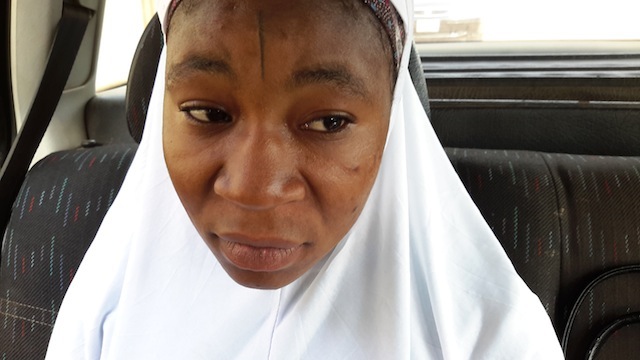
At Tudunwada, the car in a street corner and Fatima went to call her friend. The girl, like many of the codeine girls, still lives under her parents. After about 25 minutes, Fatima appeared with a young girl in hijab, a veil traditionally worn by Moslem women to cover parts of their upper body. She entered the car and we chatted.
Maimuna Sodangi
The new girl, Maimuna Sodangi, 20, was introduced to codeine by friends. She went on a visit and her friend entertained her with a bottle of soft drink mixed with codeine syrup. “It was so sweet and I felt so good,” she recounted.
That was three years ago and she has been hooked since then, graduating from one bottle to six per day. Since she is jobless and cannot afford the drug, she depends on boyfriends to buy for her.
She takes the codeine home because her illiterate parents do not know what it is. Sometimes her female friends buy and bring for her at home since her boyfriends cannot visit her residence.
After the chat, she collected a bottle of codeine from her friend and tucked it into her bra before covering with the hijab. She strolled back home, looking like any other girl in the neighbourhood.
Hauwa Mohammed
At Abakpa, a different part of the city, a source introduced the reporter to another ‘codeine’ girl, Hauwa Mohammed, who hesitated to reveal identity because she would not want to cause any “anxiety” for her parents with whom still lives. But after brief persuasion and a promise of gift, she admitted taking codeine, rohypnol and other prescription drugs she couldn’t name.
She started taking the drugs two years ago after her fiancé’s death a few weeks to their wedding. She was 16 at the time, and was the only one among her four sisters not taking the drugs.
But after the death of her fiancé, she fell into depression and kept to herself for weeks. Then her sisters advised her that a sip of codeine syrup would help her ‘forget’ her sorrow. “At the time I almost went mad because of the death of my fiancé,” she recounted.
She tried it once and got hooked.
“Now when I drink codeine I enjoy myself and feel good,” she said with an i-don’t-give-a-damn look on her face.
She takes up to four or five bottles of codeine mixture in a day, sometimes diluting poring a bottle or two inside a coke plastic bottle to deceive her parents.
At 18, she only has a secondary school certificate. She hopes to get married and stop taking drugs because she wouldn’t want her children to engage in drug abuse like her. “But I’m hoping I will get a man who will help me to stop,” she said, with a flat smile.
The story of Fatima, Maimuna and Hauwa exemplify the serious drug addiction problem facing many young women in many parts of Northern Nigeria and the changing complexion of the war against drug use and addiction in the region.
Our investigations show that a great percentage of young women across northern Nigeria, including students of tertiary institutions, working class ladies, married women and a vast majority of unemployed girls, are hooked on drugs.
However, they have rewritten the drug as the new high lies not in prohibited narcotic substances such as heroine, cocaine and cannabis, but in simple codeine, commonly found in cough syrups.
The rising drug use among young girls and women may be the fallout of increasing drug use among young men. However, the women, finding hard drugs like cocaine too strong and disruptive, have taken to “safer” “softer” drug such as codeine, which although is banned but is commonly found in cough syrup. To augment this, the ladies also take a mixture of prescription drugs, which medical experts tell the www.icirnigeria.org, are counterfeit painkillers.
At the start of our investigation, it was thought that the problem was typical of the North west, but investigations showed that the drug problem could be even worse among women ion the North east, which has been ravaged by Boko Haram insurgency.
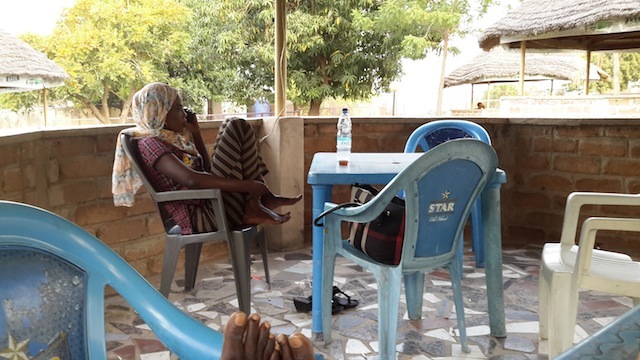
In Yola, capital of Adamawa State, some 764 kilometres from Kaduna, Sarah Haruna, a hairdresser does not complete her day without taking codeine.
Sarah Haruna
According to Sarah, she was introduced to drug by the daughter of a former Vice President of Nigeria who used to invite her home. She became a courier for her, sometimes been sent to buy cartons of codeine syrup and hiding them under her bed and inside her wardrobes. Sarah got to make other friends, all children of well – known people in the state, who are equally codeine addicts. She also got to know their boyfriends, most of who she said smoke cannabis and sniff cocaine.
She is still single at 32 and always hangs out with friends at Legon Villa or any of the hotels along Barracks Road in Yola.
Northern Women and Drug Abuse
While drug abuse, especially cannabis, has been a long time problem among male youths in the North, codeine cough syrup is the emerging cancer ravaging women and girls in the North from Kaduna to Borno and Yobe to Narasarawa. Codeine syrup has become the favourite drug of abuse by all classes of girls and women in the north, but most especially the daughters and wives of the wealthy.
The smallest bottle of codeine syrup costs up to N600, while some cost as high as N1,000. Some of the girls admit they could take up to eight bottles in a day.
Since many of the girls and women, including housewives, are neither career nor business women, the habit is sustained by a legion of “boyfriends” who buy for them.
Shuaibu Maituraki, an ex-drug user who now runs an NGO devoted to rehabilitating drug addicts in Kano, is worried that many young girls and even married women are wasting their lives doing drugs. He said married women who do not keep boyfriends use their housekeeping money to buy codeine and that addiction has also led many of the women into debts or vices and crimes such as stealing of jewelleries at social functions.
Maituraki, whose father is also a wealthy Kano businessman, said he established the Youth Awareness Forum On Drug Abuse, YAFODA, to save Kano youths from destruction from drug addiction
Addiction to codeine syrup is turning the otherwise conservative girls and women of the North into social miscreants and rebellious housewives. It is increasingly becoming common to see Northern girls and women at night clubs and social spots where they have freedom to drink codeine, take their tablets and smoke cigarette, and return home wearing hijab.
More women now are believed to keep late nights since they cannot indulge in addiction freely at home.
It is common in Kano, Kaduna, Sokoto, Yola and some other cities in the North, to see women check into hotels or guest houses during the day to indulge themselves before going back home at night. It is at these relaxation spots that many of the women rendezvous with boyfriends or men friends or just fellow girls and women.
A girl at a codeine-joint on Abedi Sreet, Kano
Our reporter visited one of the notable guesthouses in Sabon Gari, Kano, where some of these girls usually lodge for observation. It was around 2.00pm on a Saturday.
Within an hour, more than 10 girls dressed in hijab had checked in. Some were driven to the place in taxis while some drove themselves. There were a few who came on commercial motorbikes.
The manager of the guesthouse revealed to this website that it was the daily routine for them, adding that the girls could stay up till midnight before leaving.
More women and girls are also getting involved in petty stealing at wedding parties and during social visits when in need of cash for more drugs. Guest and celebrants in the north are now getting more protective of their valuables, especially jewelleries during social occasions. Mohammed Idris, State Commander of the National Drug Law Enforcement Agency, NDLEA, in Sokoto recounted a recent story of what happened at a wedding party in Sokoto.
“A gold necklace was missing at a wedding ceremony here in Sokoto and the owner closed the road and said every woman at the event would undergo a search. The women were asked to empty their handbags. Although they didn’t find the jewellery, what they found was alarming. Over 70 per cent of the women had one or two bottles of cough syrup in their bags. Even the bride had a carton under her bed.”
Kazeem Abdullahi, an Imam employed by the Kano Emirate Council, told www.icirnigeria.org that many marriages are breaking up in the city due to drug related issues. He revealed that not less than 100 cases of marital conflicts are brought to the palace of the Emir of Kano for resolution daily, stressing that the situation had become critical.
Wife of Nigeria’s President, Aisha Buhari, raised an alarm early this year when she visited Kano State. She said Northern youths, including women, were wasting their lives with drug abuse. She urged political and religious leaders in the region to urgently find solution to the menace.
Maituraki told our reporter that he has counselled many girls and housewives who have become addicted to codeine because of marital problems or influence of friends.
“Some of them told us that they became addicted to codeine when their husbands took other wives, for some it’s because they have been divorced while some women believe it will make them attractive by giving them big eyeballs,” Maituraki stated.
But many parents are either truly unaware of the menace or are living in denial. Dahiru Musdapha, Secretary, Adamawa Emirate Council, said that he had never heard about the problem of drug among women in the state.
“I don’t know anything about this, I’ve never heard about this type of thing before,” he told the reporter.
But his denial is in sharp contrast to what other officials of the palace, and the state NDLEA Commander, Yakubu Kibo, told our reporter.
The latter said records of the command indicate that more women are now involved in use of dangerous drugs, specifically codeine syrup. Officials of the Kano Emirate who also spoke on condition of anonymity confirmed this too.
“This drug issue is a very serious problem now,” one of them said. “We hear a lot of cases about girls and young women, even married women, taking this thing.”
Drug abuse, according to medical practitioners, occurs when a person can no longer function normally without taking the drug. According to Taiwo Sheik, a psychiatrist and chief executive of the Federal Neuro-psychiatrist Hospital, Kaduna, anyone suffering from drug abuse is no longer a normal person and is referred to as “suffering from significant loss of function” which manifests in the person’s behaviour.
“He has taken the substance to a degree to which he is not able to function well. In medical language we say there is significant impairment-the individual is impaired. So its now a sickness. That is what we mean by abuse,” he explained.
And if the statistics reeled out by Sheik is any indication, many women and girls in the North are very sick. He said unlike 10 years ago when drug abuse and addiction was a male problem, more women and girls are becoming prone to drug and substance abuse.
He said the major drug abused by Northern girls and women is codeine cough syrup, which they take in quantities that would make them tipsy and almost impervious to pain – just as narcotics do.
“Ten years ago, for every four or five men, we see one woman. But today, for every four or five men we see four women. That shows a trend that suggests increase in the number of women that come with substance abuse problems. Especially now that the type of substance people abuse is also changing. Twenty years ago, we don’t talk about things that people buy from the chemist and take home. Today, that is what we’re struggling with, cough mixtures. And that is the one that women abuse most.”
This is thee first of a two part report on the problem of drug addiction by women in Northern Nigeria.
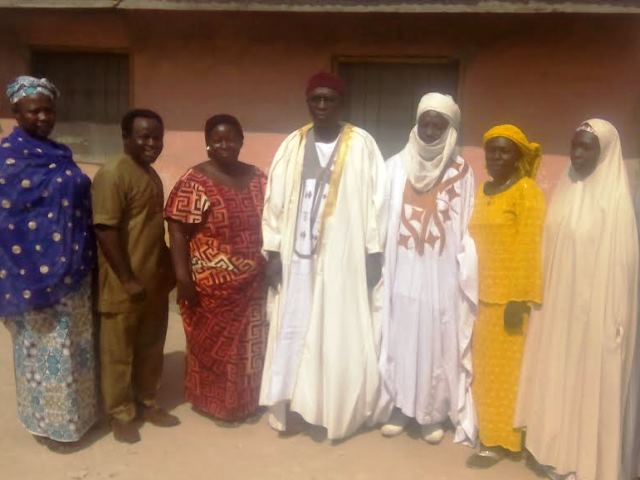
History was made in Adamawa State on Sunday when four women were inaugurated into the leadership of the emirate council, which made Adamawa the first Northern State to do so.
The women were inaugurated as assistant heads of their ward in Numan, a local government in Adamawa State.
They are: Tinin Nemfas as Assistant Head of Kwalinga ward; Josephine Philip as Assistant Head of Gwaida Mallam; Tina Bedan, Assistant Head of Mgbawuro ward and Hadiza Usman as Assitant Head of Sabon Pegi..
The women were inaugurated at the office of the representative of his Royal Majesty, Honest Irimiya Stephen, the Homun Bachama.
The idea of having women into the decision- making body of the Numan traditional council was suggested by Titus Ornugu the Director of UN-Women/Gender Technical Adviser, Adamawa State office, visit to the Homun Bachama.
The representative of Humon Bachama, Philemon Godi, said the council was proud to have women in position of leadership, stressing that women had played significant leadership roles in the history of Northern Nigeria.
He added that women had ruled communities in the past and wondered why the reverse was now the case, He said “We inaugurate these women to improve our leadership, creating awareness for women and to bring back the assistance of women in our community.”
Ornugu, who also witnessed the inauguration, expressed joy at the development and said he was proud to have contributed to the elevation of women in the community. He urged the women to show good example and be loyal to the leaders of their wards.
Hadiza Usman, who spoke on behalf of the women, expressed their gratitude for the opportunity given to women to contribute their quota to the development of their community.
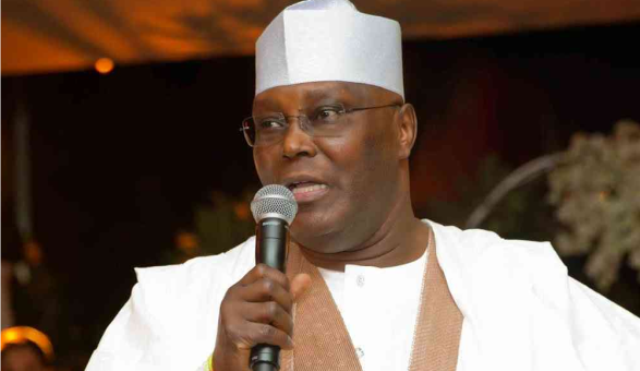
Former Vice President Atiku Abubakar has said that the insurgency in the North east is far from over and that the Boko Haram terrorists still occupy territories in the region, contrary to reports from Nigerian authorities.
He spoke during the 11th Founder’s Day Ceremony of the American University of Nigeria, AUN, in Yola, the Adamawa State capital, contending that Boko Haram is still strong and deadly, adding that it was wrong to think that the group had been defeated.
“The insurgents still occupy a specific geographical space, the former Vice President said, adding that the insurgents “still retain the capacity for occasional deadly attacks. Many citizens in the zone still remain vulnerable and live in fear.”
President Muhammadu Buhari has on numerous occasions, in local and international fora, said that the Boko Haram has largely been decimated and the insurgency was all but over.
He also maintained the same position in his 2016 Independence Day speech on October 1.
But Atiku said that it was premature for anyone to claim victory over Boko Haram at this time.
“We cannot say that the problem is over until every displaced person is able to return home, to the office, to the market, to the farm, and resume normal activities,” he said.
“We cannot say it is over until we rebuild the schools, the churches, the hospitals, the markets, and the homes that had been destroyed.
“And we cannot say it’s over until the survivors of this insurgency receive the help they need, including psychological therapy to deal with the trauma that they have been through.”
The former Vice President said that he had visited an IDP camp and seen hundreds of children running around and unable to attend school, a situation he observed was “gut wrenching.”
“It still breaks my heart. So we cannot say the insurgency is over until all the displaced children return to their schools,” he posited.
Atiku maintained that “it would not be enough for people to simply return to their pre-insurgency lives,” adding that something must be done to rehabilitate the people whose lives had been adversely affected by insurgency, “otherwise we would only have papered over the wound without really treating it.”
“People must return to something better, to hope, to improved schools, to improved economic opportunities, to freedom of worship and improved inter-religious harmony,” he said.
The Peoples Democratic Party, PDP, has called on the Independent National Electoral Commission, INEC, to postpone the Ondo State Governorship election scheduled to hold next Saturday, November 26.
The party said it was making the call due to the non-conclusion of the appeal court case to determine the authentic candidate of the PDP in the election.
Recall that the Appeal Court panel led by Justice Ibrahim Salauwa, which is hearing the appeal filed by Eyitayo Jegede, had on Friday adjourned ruling indefinitely pending the decision of the Supreme Court on some injuctions filed by some of the defendants in the case.
Jegede is asking the appellate court to reverse the ruling of Justice Okon Abang of the Federal High Court, to the effect that Jimoh Ibrahim was the rightful PDP candidate.
While Jegede and the Ondo State governor, Olusgeun Mimiko, are members of the Ahmed Makarfi-led PDP, Ibrahim and a factional chairman of the PDP in Ondo State, Biyi Poroye, belong to the Ali Modu-Sheriff faction.
The Makarfi-led PDP faction, in a statement issued on Saturday by its spokesperson, Dayo Adeyeye, said that based on the indefinite adjournment, INEC should postpone the election.
The statement read: “We call on INEC to postpone the Election pending the determination of the suit before the Supreme Court.
“We make this call against the backdrop of the fact that INEC is a party to the suit before the Court of Appeal and Supreme Court and is well aware of the steps taken by certain parties to the Suit to frustrate the course of justice.”
In the statement, the PDP added that the call for a postponement of the election was in order, given the fact that INEC had postponed the Edo State gubernatorial election and recently postponed the Rivers rerun elections.
The PDP spokesman also condemned what he described as the mischievous actions of the members of the Modu-Sheriff faction, namely: Biyi Poroye, Jimoh Ibrahim and their legal team led by Ben Nwofor, SAN.
“These actions, ranging from unsubstantiated allegations of corruption to outright disrespect and disregard for the Justices of the Court of Appeal to disruption of Court proceedings and flagrant abuse of Court processes, are all designed to achieve one aim – stall proceedings and ensure that the legitimate Candidate of the Party is prevented from contesting the November 26th, 2016 Gubernatorial Election in Ondo State,” the statement noted.
The opposition party also alleged that judges of the Court of Appeal were being intimidated by the recent “arrests and harassment of several judges by men of the Directorate of State Services.”
Adeyeye stated that the DSS raids on Judges in October“are achieving the desired effect as judges are now compelled to refrain from furthering the course of justice by unsubstantiated allegations of corruption.”
He added that the adjournment of the party’s case by the Appeal Court was part of the bigger plan to rig the election.
The PDP spokesman stated: “We are aware that this is part of the plan to use the judicial process, security agencies and the Independent National Electoral Commission (INEC) to rig the election in favour of the ruling party (APC) before the Election Day.
“We call on all well-meaning Nigerians to urge the All Progressives Congress (APC) led Federal Government to desist from the use of organs of the Nigerian state as a tool with which to subvert the will of the Nigerian people.”
The statement added that the federal government, INEC, APC and the Jimoh Ibrahim group, should be held responsible “for any consequences of the dangerous games that they have chosen to play with the Nigerian people.”
It also urged the Supreme Court to as a matter of urgency consider the cases before it, bearing in mind that “Justice delayed is justice denied.”
Notable leaders of the All Progressives Congress, APC, from the South West were conspicuously missing at the party’s campaign rally in Akure, Ondo State, in preparation for the governorship election holding on November 26.
National Leader of the APC, Bola Tinubu and three APC governors in the South-West, namely: Akinwumi Ambode, Rauf Aregbosola and Abiola Ajimobi, of Lagos, Osun and Oyo States respectively, boycotted the rally which was attended by President Muhammadu Buhari on Saturday.
The reason for their absence was not clear yet but it may not be unconnected with the internal wrangling within the APC following the emergence of Rotimi Akeredolu as the party’s flag-bearer in Ondo State.
However, President Buhari was joined at the rally by the Imo State governor, who is also the chairman of APC Governors’ Forum, Rochas Okorocha, as well as governors of Plateau, Kano, Ogun, Jigawa, Edo, States were present at the rally
Okorocha in his speech at the rally said that all the governors of the party were behind the candidacy of the party’s flag-bearer, Rotimi Akeredolu.
He said, “Ondo State must join the progressives states in Nigeria, therefore we must vote for him and he will win the election.”
According to Okorocha, “Akeredolu rejected federal appointments because he loves you people. He wants to serve you, so vote for him.”
Recall that before the APC governorship primary election in Ondo State, Tinubu had publicly endorsed one of the candidates, Olusegun Abraham, a move that did not go down well with the other candidates who viewed the party leader’s action as an act of imposition of a candidate on them.
However, after the primary election, Abraham, Tinubu’s anointed candidate lost out to Akeredolu, but he and the other candidates claimed that the exercise was not free and fair and called for a cancellation.
A panel set-up by the APC National leadership to look into the matter also recommended that the exercise be cancelled, but the party’s National Chairman, John Oyegun, overruled the decision of the panel, insisting that Akeredolu remained the party’s flag-bearer.
This was viewed as an affront to Tinubu, who wasted no time in calling for Oyegun’s resignation; a call that has been re-echoed by notable APC members including former vice president, Atiku Abubakar, and APC’s deputy publicity secretary, Timi Frank.
President Muhammadu Buhari has promised citizens of Ondo State of a fair representation with regards to federal appointments.
The President who was in the state to participate in the campaign rally of the All Progressives congress, APC, preparatory to the governorship election scheduled for next Saturday, November 26, made the pledge at the palace of the Deji of Akure, Aladetoyinbo Aladelusi, .
Buhari was responding to a request by the traditional ruler that more appointments be extended to indigenes of the state in federal ministries and parastatals and agencies.
He explained that it was not a deliberate action to overlook Ondo state citizens during appointments, adding that he would take action to address the issue.
“Not giving federal appointment to any indigene from this kingdom is not deliberate,” Buhari Said
“I came here for your votes which I got, so, there is no reason why indigenes of this state should not enjoy equal benefit as indigenes of other states.
“You have raised a serious observation that needs urgent attention.”
Buhari expressed happiness that in spite of the misunderstanding that greeted the Ondo APC governorship Primary election, the party was still waxing stronger.
“I am here because of our party governorship candidate who is fully enjoying the support of Akure people and its environs,” Buhari told the traditional ruler, while calling on the people to come out en masse and vote the APC during the election proper.
Oba Aladelusi in his remarks urged President Buhari to wade into the crisis rocking the Federal University of Technology, Akure, whose non-academic staff has been on strike for some time.
He said that the incessant crises between the school’s management and staff members do not portray the institution, which he described as “one of the modern landmarks of the ancient city”, in good light.
The monarch also pleaded with the president to return some of the lands in the state which was given to the military years ago, so that indigenes may use them for agricultural purposes.
He said, “Another issue that agitates the mind of this ancient city is a large parcel of land ceded to the military authority in 1966.
“A large portion of the land remains underutilised and is wasting away.
“Our request is to give 1,000 hectares back to the community for agricultural purposes.”