Home Blog Page 290

Trapped to death: Five tragic cases of children who died in abandoned vehicles in Nigeria

0

THE deaths of children trapped in abandoned or unattended vehicles have become a recurring tragedy in Nigeria, claiming at least 18 young lives since 2021.

The trend continues to plague the nation, as reports emerged again on Monday, May 5, that the Nasarawa State Police Command ordered an investigation into the death of five children found dead in an abandoned vehicle in the Agyaragu community of Obi Local Government Area (LGA) of the state.

In a statement signed by the command’s Police Public Relations Officer (PPRO), Ramhan Nansel, the state Commissioner of Police (CP), Shetima Jauro-Mohammed, ordered a thorough investigation to determine the circumstances surrounding the incident.

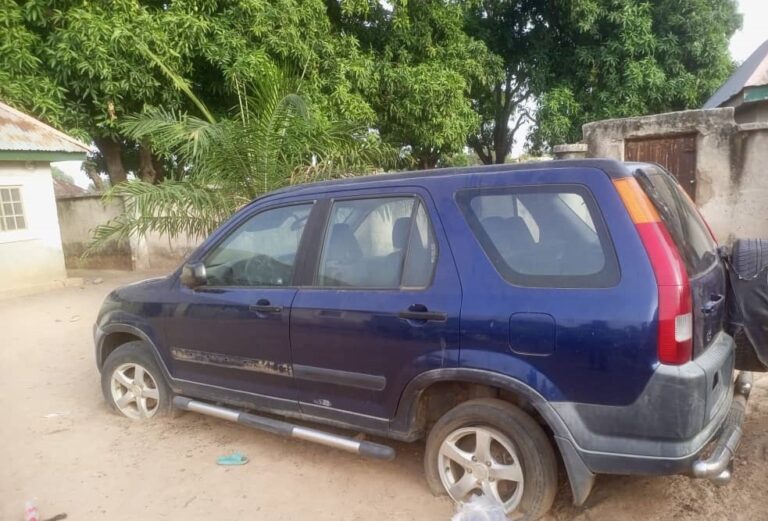
The CP said the children’s dead bodies were found inside an abandoned, unusable vehicle parked at the residence of one Abu Agyeme.

According to the police, on Sunday, May 4, at about 5:30 pm, a resident of the area, Ozimna Ogbor, reported to the police that the children were discovered ‘unresponsive’ inside an unserviceable vehicle parked in a compound.

The children were between six and 10 years old.

The CP expressed sadness over the loss and extended the command’s condolences to the bereaved families.

The ICIR tracked five such reported incidents since 2021. In addition to the most recent case in Nasarawa, children have reportedly suffocated to death in Kwara, Delta, Niger, and Lagos states.

Three siblings found dead in a car in Kwara

In February 2024, three siblings, a boy and two girls, died after suffocating in a car parked in their residential quarters in Ilorin, the Kwara State capital.

Their mother, Shade Silifat, had left home to buy noodles for their lunch. Upon returning, she found her children dead and fainted from the shock.

The incident occurred around 2 pm when the three children accidentally locked themselves inside a parked car in their quarters. The car reportedly belonged to their aunt and had been borrowed by their father.

The mother discovered the children’s shoes outside the car and raised an alarm after forcing the doors open.

The children were rushed to a clinic and then transferred to the University of Ilorin Teaching Hospital, where they were pronounced dead.

The bodies were later buried in a Muslim cemetery according to Islamic rites.

Five children found dead in abandoned car in Niger

In April 2024, the bodies of five children were found in Minna, Niger State, after they were trapped in an abandoned vehicle.

According to reports, three children of the same parents and two others, whose ages ranged from five to 10, died in an abandoned Honda Civic with registration No. GO 778 ABC, after they locked themselves inside the car for hours.

The incident occurred in the Gurara Albishir area on Bida Road. The children were reportedly playing in a compound and accidentally locked themselves inside an abandoned vehicle that had been left unused for two years.

Decomposing bodies of two children found in an abandoned car

In another tragic episode, in 2021, the decomposing bodies of two children of a widow were found in an abandoned vehicle in Abraka, Ethiope East Local Government Area of Delta State.

Two children, Kelvin Izakpa (10) and Fega Izakpa (7), were found dead inside a parked Honda Rover car with registration number AG 815 BKW along Okpoghoro Street around 2:50 pm on Friday, March 12, 2021.

Passersby were drawn to the scene by a foul odour, leading to the discovery of the children’s bodies inside a car that had been parked for nearly five years.

The vehicle owner, Eniku Aghogho Tayo, was reportedly arrested, and the vehicle was impounded for further investigation.

8 Children died of suffocation in locked vehicle in Lagos

The nation was left in utter shock in December 2021 when eight children who got into a vehicle to play were reportedly trapped and died of suffocation in Lagos State.

The incident occurred inside an abandoned vehicle at the Jah-Michael community in the Olorunda area of Lagos State.

The consequences of these incidents are devastating and often spark widespread outrage and grief, with many left wondering how such tragedies could occur.

Research indicates that there is no law specifying a time limit for parking or abandoning a vehicle in a particular location. The Nigeria Police Force also confirmed this.

The  spokesperson of the Niger State Police Command,  Wasiu Abiodun, told The ICIR that no law dictates how long a vehicle could be parked or abandoned at a specific spot.

“I am not aware of such law,” he stated.

When treatment fails: What to know about drug resistance in Nigeria

AMINU (not his real name), a 7-year-old boy from Katsina State, was full of energy and often seen playing football barefoot in his village. One day, he started feeling sick with headaches and body pain. His mother suspected malaria and took him to a local chemist. Without proper tests, he was given antibiotics.

But Aminu didn’t get better. His parents took him from one clinic to another, each time receiving stronger antibiotics. By the time they reached a general hospital in Kano, his infection had become severe and resistant to nearly all available antibiotics. The doctors explained that the bacteria had become stronger and could no longer be killed by the drugs.

Aminu is one of many Nigerians affected by antimicrobial resistance (AMR), a growing crisis where infections become untreatable because germs no longer respond to the medicines meant to kill them.

What is AMR?

AMR happens when bacteria, viruses, fungi, or parasites evolve and stop responding to medicines meant to kill them. This makes infections harder and sometimes impossible to treat. Common illnesses can become deadly. People stay sick longer, face complications as common illnesses can become deadly.

Antimicrobials are drugs used to fight infections in people, animals, and even plants. They include:

  • Antibiotics – for bacterial infections
  • Antivirals – for viral infections
  • Antifungals – for fungal infections
  • Antiparasitics – for parasitic infections
AMR data

How serious is the problem?

Globally, drug-resistant infections were linked to 4.95 million deaths in 2019, including 1.27 million directly caused by resistance.

Why AMR is a big problem in Nigeria

In Nigeria alone, 263,400 people died in 2019 from drug-resistant infections more than from malaria or heart disease. The country ranks 20th out of 204 nations in drug-resistance death rates. This means more Nigerians died from conditions related to drug resistance than of malaria, respiratory infections, or cardiovascular diseases

Why Is AMR happening?

According to the Nigeria Centre for Disease Control (NCDC), several connected factors fuel AMR:

1. Misuse and overuse of antibiotics

  • People often buy antibiotics without prescriptions.
  • Many use them for viral infections like colds, which antibiotics cannot treat.

The NCDC had issued a warning against the indiscriminate sale and display of antibiotics. The centre also called for strict enforcement of prescription regulations to curb the growing threat of Antimicrobial Resistance (AMR).

Globally, the consumption of antibiotics increased by almost half between 2000 and 2018. The rate of increase has been steepest in South Asia, where the proportion of people receiving antibiotics each day has more than doubled in the last 25 years.

The increase shows that antibiotics aren’t always used in the right way. Sometimes they are used unnecessarily – for example, for a viral infection like a cold or flu, on which antibiotics will have no effect. Other times they are misused: someone takes the wrong type, dose or course of drug. These inappropriate uses of antibiotics are huge contributors to the emergence of drug-resistant bacteria.

2. Incomplete treatment

  • Some stop taking antibiotics once they feel better, allowing bacteria to survive and become stronger.

3. Poverty and inadequate access to drugs

  • Many can’t afford full treatment or professional care.
  • This leads to self-medication and use of fake or low-quality drugs.

In low-income countries like Nigeria where over 100 million people are multidimensionally poor, many cannot afford full medical treatments or consult qualified healthcare professionals. This leads to self-medication or reliance on substandard drugs, both of which increase the risk of resistance.

4. Poor sanitation and hygiene

  • Dirty water and living conditions help infections spread, increasing antibiotic use and resistance.

5. Lack of awareness

  • Many Nigerians don’t understand how dangerous AMR is.
  • Without awareness, people are more likely to misuse antibiotics.

6. Uncontrolled sale and distribution of antibiotics

  • Antibiotics are sold freely in some places, even by untrained staff.
  • The NCDC has warned against this and called for strict rules on sales and prescriptions.

Speaking at a programme titled “Strengthening healthcare facility antimicrobial stewardship programme in Nigeria”, the World Health Organisation’s Country Representative, Walter Kazadi stressed the need for coordinated and collaborative efforts in addressing AMR.

Kazadi who was represented by Laxmikant Chavan from WHO, acknowledged the overuse and misuse of antibiotics in Nigeria, particularly in primary health care settings, and the need to scale up fight against AMR across the country’s 40,000 hospitals.

“Antimicrobial stewardship (AMS) is important because, in Nigeria, we have overuse and misuse of antibiotics; we know there is a lot of evidence on that, and that is actually fueling and spreading this AMR pathogen. We need to have many AMS in our hospitals, at least in 50 per cent of our 40,000 hospitals,” he noted.

Anti-microbial Resistance : Image used for illustration

What Nigeria is doing about It

Nigeria’s response to antimicrobial resistance, led by the Nigerian Centre for Disease Control (NCDC) in 2016 followed a situational analysis that investigated common antimicrobial-resistant pathogens recovered from hospitals, animal sources, and agricultural and environmental sources.

The NCDC also conducted systematic reviews to assess the prescribing patterns of antimicrobials in hospitals across the country. These efforts informed the development of the National Action Plan (NAP), designed with a 5-year focus in mind (2017–2022).

The National Action Plan (NAP) includes:

  • Promoting responsible drug use in humans and animals.
  • Improving hygiene and vaccination to prevent infections before they start.
  • Training health workers and educating the public about AMR dangers.
  • Tracking resistance trends through a nationwide surveillance system.
  • Supporting research into new drugs, vaccines, and alternative treatments.

The NAP takes a “One Health” approach, involving human health, animals, agriculture, and the environment. Ministries, researchers, civil society, and global partners are working together to stop AMR from worsening.

Many health institutions face significant Infection prevention and control (IPC) gaps, such as poor hand hygiene, inadequate sterilisation of medical equipment, and limited vaccination coverage. NAP recommends strengthening IPC, which involves improving hygiene practices at all levels of care, ensuring adequate availability of water, sanitation, and hygiene (WASH) infrastructure, and promoting vaccination against preventable diseases like pneumococcal infections and typhoid. This pillar aims to curb the spread of infections and reduce reliance on antibiotics, particularly in resource-constrained settings.

The bottom line – AMR awareness and understanding

The NAP calls for targeted advocacy, education, and communication strategies to improve awareness of AMR among health professionals, farmers, policymakers, and the general public. Public understanding of AMR is limited in many communities, where antibiotics are often perceived as a quick fix for all infections.

To protect people like Aminu and prevent curable infections from becoming deadly, the NAP recommends:

  • Enforcing prescription rules,
  • Improve access to quality healthcare,
  • Educate the public, and
  • Strengthen hospital practices.

Police probe death of 5 children found in abandoned vehicle in Nasarawa

0

THE Nasarawa State Police Command has ordered an investigation into the death of five children found dead in an abandoned vehicle in the Agyaragu community of Obi Local Government Area (LGA) of the state.

In a statement on Monday, May 5, signed by the command’s Police Public Relations Officer (PPRO), Ramhan Nansel, the state Commissioner of Police (CP), Shetima Jauro-Mohammed, ordered a thorough investigation to determine the circumstances surrounding the incident.

The CP said the children’s dead bodies were found inside an abandoned, unusable vehicle parked at the residence of one Abu Agyeme.

According to the police, on Sunday, at about 5:30 pm, a resident of the area, Ozimna Ogbor, reported to the police that the children were discovered ‘unresponsive’ inside an unserviceable vehicle parked in a compound.

He said that Ogbor, who reported the matter, said the children were between six and 10 years old.

He stated that upon arrival, the officers found the victims locked inside the abandoned vehicle.

“They were promptly evacuated to Aro Hospital, Agyaragu, where a medical doctor regrettably confirmed all of them dead due to suspected suffocation,” he said.

The CP expressed deep sorrow over the loss and extended the command’s heartfelt condolences to the bereaved families.

He also cautioned parents, guardians, and vehicle owners to be vigilant and ensure that children do not gain access to parked or abandoned vehicles without supervision.

He recalled that the incident was a painful reminder of a similar tragedy in August 2019.

He said due to severe heat burns on the deceased’s bodies, the remains were released to their parents based on a request for burial.

He listed the victims’ names and ages as Kamsi Onah (male, 8), Somer Onah (male, 6), Unice Udouchi (female, 10), Nmasoma Nnaji (female, 10), and Chioma Nnaji (female, 8).

Nearly 80% of 2025 UTME candidates score below 200 – JAMB

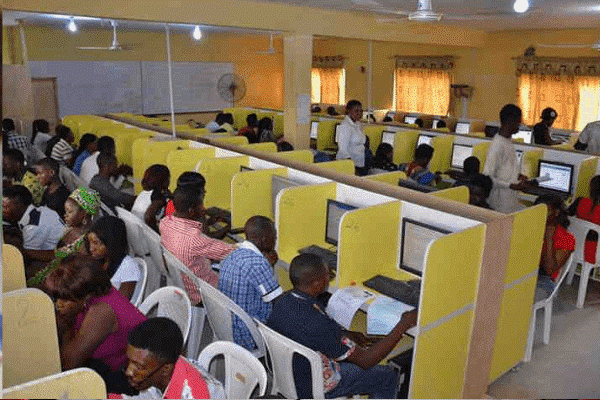
THE Joint Admissions and Matriculation Board (JAMB) has revealed that 78.5 per cent of candidates who sat for the 2025 Unified Tertiary Matriculation Examination (UTME) scored below 200.

Out of the total 1,955,069 registered candidates, 1,534,654 scored below 200, the score often used as a benchmark for admission into competitive programmes in most Nigerian federal universities, according to data released by the examination body on Monday, May 5.

The breakdown further shows that 983,187 candidates scored between 160 and 199, translating to  50.29 per cent out of the nearly 79 per cent.

This was as 488,197 (24.97 per cent) scored between 140 and 159, and another 57,419 (2.94 per cent) scored between 120 and 139. 

Over 5,800 candidates fell below 120, with 2,031 scoring below 100.

In contrast, just 98,269 candidates or 5.02 per cent, scored above 250, while only 12,414 candidates, representing 0.63 per cent, achieved scores of 300 and above.

The JAMB stressed that results for some groups, including visually-impaired candidates and members of the JAMB Equal Opportunity Group (JEOG), were still being processed.

A press conference to announce the individual results of candidates and to facilitate result checking will be held later this week,” the report stressed.

Underage performance, absenteeism, and irregularities

The Board noted that 40,247 underage candidates were allowed to sit for the examination in a bid to showcase exceptional potential.

However, only 467 of these candidates, about 1.16 per cent, met the threshold for further assessment in the next three stages of the evaluation process.

The Board also recorded 97 confirmed cases of examination misconduct and 2,157 others currently under investigation for suspected malpractices. 

Meanwhile, 71,701 registered candidates were absent from the exam. Several others are facing biometric verification challenges and may be rescheduled once cleared by the Board.

Recall that The ICIR reported that Nigerians faulted the exam body over the missing report of a candidate who was to write her exams at a centre far from her hometown. 

The candidate was reported to have gone missing on her way from the Epe area of Lagos to Ajah to write the 2025 UTME.

Meanwhile, in a follow-up post on Saturday, an X user who had first raised an alert about her disappearance disclosed that the missing candidate had returned home.

The incident, including students scheduled for exams at 6:30 am, led to public outcry.

Similarly, a report by BusinessDay on April 26 detailed several cases where students were either forced to wait for hours without writing their exams or had to travel unexpectedly to distant locations due to last-minute centre changes. 

Other candidates reported system shutdowns mid-exam, missing questions, and CBT interface errors.

Trump targets global film industry with new tariffs ‘to protect Hollywood’

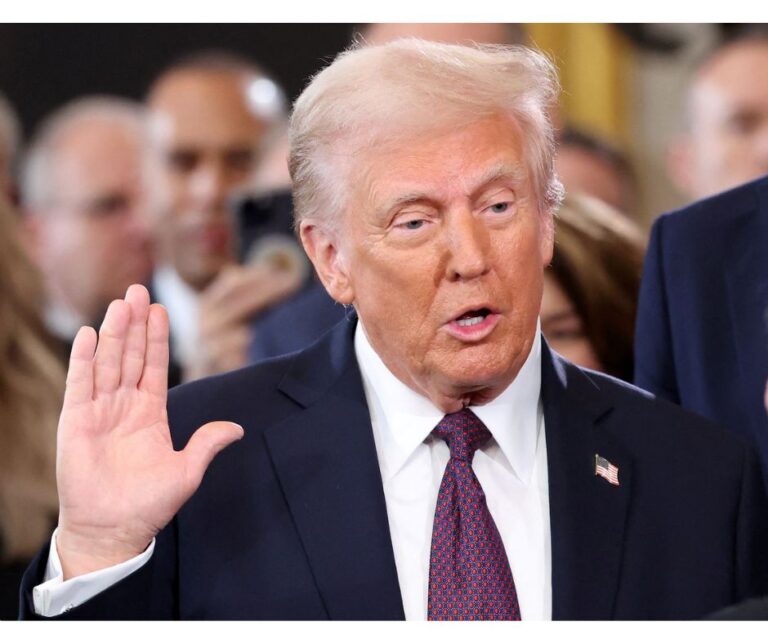
UNITED States President Donald Trump has  announced plans to impose 100 percent tariffs on all foreign-made films.

He argued that Hollywood was being ‘devastated’ by the growing trend of American filmmakers and studios producing movies overseas.

Trump announced this on Sunday, May 4,  on his Truth Social platform, as the White House faces increasing criticism over its aggressive trade policies, which have led Trump to impose widespread tariffs on nations around the world.

“I am authorising the Department of Commerce, and the United States Trade Representative, to immediately begin the process of instituting a 100 percent cent Tariff on any and all movies coming into our xountry that are produced in foreign lands,” he wrote.

Trump attributed the decision to a “concerted effort” by other countries l providing incentives to lure filmmakers and studios, calling it a “national security threat”.

“It is, in addition to everything else, messaging and propaganda! WE WANT MOVIES MADE IN AMERICA, AGAIN!”

Trump’s Commerce Secretary, Howard Lutnick, confirmed and reposted the president’s message on social media, expressing full support for the proposed tariffs, and saying “We’re on it.”

Trump’s announcement comes amidst recent data showing signs of resilience in the US box office.

According to the latest data from the Motion Picture Association, Hollywood is a significant contributor to the U.S. economy, supporting over 2.3 million jobs and generating $279 billion in sales in 2022.

However, industry insiders say that in the aftermath of the Hollywood strikes and the effects of the COVID-19 pandemic, which shifted American viewing habits toward home streaming over theater visits, the industry is still struggling to regain its footing.

A recent Hollywood report  shows that the US box office brought in around $8.7 billion last year, marking a slight decline of about three per cent from the $9 billion recorded in 2023.

The ICIR reports that several recent major movies produced by US studios were shot outside America, including Deadpool and Wolverine, Wicked and Gladiator II.

It was also unclear if the tariffs would apply to films on streaming services, like Netflix, as well as those shown at cinemas.

Trump’s post follows China’s announcement last month that it would cut back on the number of US films it mports, a move that comes amid ongoing tensions fueled by the president’s aggressive trade policies, including 145 percent tariffs on many Chinese goods.

Since assuming office, Trump’s tariffs have included a universal 10 per cent import tax, sharply higher rates for certain countries and sectors, and new secondary tariffs targeting third-party trade.

Nigerian arrested over multi-million dollar online dating scam in Canada

A 28-year-old Nigerian residing in Toronto, Canada, Chimezie Nwabueze, has been arrested by police and is facing multiple charges for allegedly defrauding two victims of over $600,000 through an online romance scam.

According to a statement published on its website, the Peel Regional Police said the victims were led to believe they were in a legitimate romantic relationship with the suspect between June 2021 and July 2023 after connecting with him on an online dating platform.

“The suspect fraudulently claimed to own an ‘Oil Rig’ in the Middle East and urgently needed money, promising repayment, and an eventual meeting.

“The victims only communicated with him electronically and never met in person,” the statement partly read.

After the victims confronted the suspect, he reportedly cut off all communication, and they were never reimbursed for the financial loss which totaled $610,382.

The police revealed that on April 28, Nwabueze was charged with one count each of uttering forged documents, laundering proceeds of crime, participating in activities of criminal organisation, and instructing commission of offence for criminal organisation, as well as two counts each of fraud over $5,000 and possession of property obtained by crime.

He was released afterwards on an undertaking and will appear later before the Ontario Court of Justice in Brampton.

The Peel Regional Police (PRP) stated that fraud investigators believe there may be additional victims and that Chimezie Nwabueze is part of a broader criminal network targeting older adult dating websites to exploit vulnerable or trusting individuals for financial gain.

Nwabueze was previously arrested by the PRP in November 2023 for using a similar method to defraud another victim of more than $250,000, a case that is currently ongoing in court.

Troops nab four security personnel aiding terrorists in North-East

THE Defence Headquarters has confirmed the arrest of four security personnel aiding terrorist operations in the North-East.

The suspects include two personnel from the hybrid forces who had been working alongside troops to combat the insurgency.

According to the Director, Defence Media Operations, Markus Kangye, the hybrid forces were arrested during operations from April 26 to 29 across Bama, Kukawa, and Madagali LGAs.

He said they were part of the four terrorist logistics suppliers arrested by the troops.

Kangye expressed concern over the betrayal and warned commanders to sensitise their personnel against acts that could sabotage ongoing military efforts.

“In a well-coordinated operation conducted from 26–29 April 2025 in Bama, Kukawa, and Madagali LGAs of Borno and Adamawa States, troops intercepted four terrorists’ logistics suppliers. Sadly, two of them were confirmed to be members of the hybrid forces.”

Kangye therefore urged commanders to sensitise hybrid forces personnel to desist from colluding with or encouraging terrorist acts capable of sabotaging operations.

In a separate operation, Kangye said troops, working in collaboration with hybrid forces, conducted offensive missions including fighting patrols, raids, and clearance operations across Gwoza, Dikwa, Bama, Chibok, Gujba, Geidam, and Yunusari Local Government Areas.

He reported that several terrorists were killed, six kidnapped victims were rescued, and caches of arms, ammunition, motorcycles, and bicycles were recovered.

In the South-South region, Kangye noted that troops also recorded major successes in efforts to curb oil theft and illegal refining activities in the Niger Delta.

He said the troops recovered over 86,000 litres of stolen crude oil, 72,000 litres of illegally refined diesel, and more than 2,600 litres of petrol.

Troops also destroyed dozens of illegal refining sites and seized boats, storage tanks, tricycles, mobile phones, and seven vehicles.

End cybercrimes Act against Journalists- NGE, SERAP tell Tinubu

0

THE Socio-Economic Rights and Accountability Project (SERAP) and the Nigerian Guild of Editors (NGE) have called on President Bola Tinubu’s government to immediately end the use of the “draconian” Cybercrimes Act  targeted at journalists, activists, critics, and other Nigerians peacefully expressing their views online.

They also demanded the release of those currently detained under the law across the country.

In a joint statement signed by SERAP Deputy Director Kolawole Oluwadare and NGE General Secretary Iyobosa Uwugiaren, on Sunday May 4, the organiations emphasised concern over the law’s misuse.

“The use of the Cybercrimes Act to lock up people peacefully expressing their views sends a chilling message to Nigerians that rights won’t get priority under the Tinubu administration.

“Using laws that do not conform with constitutional guarantees and international human rights standards like the Cybercrimes Act erodes democracy and the rule of law in Nigeria,” the statement reads in part.
The groups further stressed that Nigerian authorities at all levels must show greater tolerance for peaceful dissent and press freedom if citizens are to hold them accountable for their constitutional duties, commitments, and promises.
They called for an end to the misuse of the Cybercrimes Act and the National Broadcasting Commission’s regulations, which have been used under the guise of broadcasting codes to intimidate and harass media professionals.

They pointed out that since the 2024 amendment of the Cybercrime Act, authorities have consistently invoked section 24 on “cyberstalking” to arbitrarily arrest, detain, and prosecute social media users, activists, and journalists.

Additionally, they noted a growing reliance on criminal defamation and repressive laws to silence dissent, with frivolous lawsuits increasingly being filed against journalists and human rights advocates.

“We are also concerned about the persistence of threats to journalists’ safety and the chilling effect of SLAPPs (strategic lawsuits against public participation) and harassment by security agencies and politicians.

“The right to freedom of expression applies to all kinds of information and ideas, even those that may shock, offend, or disturb—regardless of the truth or falsehood of the content,” the statement said.

The statement emphasised that the amended Cybercrimes Act of 2024, particularly section 24, contradicts section 39 of Nigeria’s 1999 Constitution (as amended) and the African Charter on Human and Peoples’ Rights.

The groups referenced the March 2022 ECOWAS Court ruling, which declared section 24 of the Cybercrime Act as arbitrary and repressive, violating Article 9 of the African Charter and Article 19 of the International Covenant on Civil and Political Rights. The court had directed Nigeria to amend the law accordingly.

Despite the 2024 amendment, the groups pointed out that section 24 remains vaguely worded and susceptible to misuse.

They called on President Tinubu to instruct state governors, the Nigeria Police Force, and the Department of State Services to uphold citizens’ rights. Additionally, they urged the Attorney General to advocate for immediate reforms to ensure that the laws align with the Constitution and Nigeria’s international human rights obligations.

EFCC has not arrested me, I’m taking a deserved rest, Ex-NNPCL boss Kyari says

0

FORMER Group Chief Executive Officer of the Nigerian National Petroleum Company Limited (NNPCL), Mele Kyari, has debunked claims that he was arrested by the Economic and Financial Crimes Commission (EFCC).

In a post shared via his X account, on the night of Saturday May 3, Kyari labelled the reports as unfounded, explaining that he is currently taking a well-earned break following the dissolution of the NNPCL management and board.

He dismissed the allegations as pure mischief, insisting they were deliberate attempts to distort the truth, and reaffirmed his continued commitment to serving Nigeria and God.

“At present, I am taking a well-deserved rest after the dissolution of the management and board of the NNPCL, of which I was the Group Chief Executive.

“It should be stated that having served the NNPC and the NNPCL for 34 years, and 17 of those in management roles and especially the last 5 years and 9 months, I had little time for leave of even two weeks.

“So, I am thankful for the opportunity to serve under their Excellencies Presidents Muhammadu Buhari and Bola Ahmed Tinubu. I must emphasise that I served with the fear of God knowing fully well as a Muslim that if I do not account before man, I will account before Allah, and that I am better off accounting to the institutions of man. Therefore, having served in public capacity, I am willing and happy to account for my stewardship in this world,” the post read in part.

Kyari emphasised that resorting to disinformation serves neither the NNPCL nor the country at large, warning that such actions could send misleading signals to investors and the international community.

He further urged the media to exercise caution and avoid rushing to publish unverified reports or issues still under review by relevant authorities.

The ICIR reports that the EFCC had launched an investigation into alleged abuse of office and misappropriation of funds by former senior officials of the NNPCL , including Mele Kyari and Abubakar Yar’Adua.

The investigation is believed to be linked to the controversial $2.896 billion spent on refinery rehabilitation projects under their watch.


Catholic Bishops lampoon Trump over AI generated image as Pope

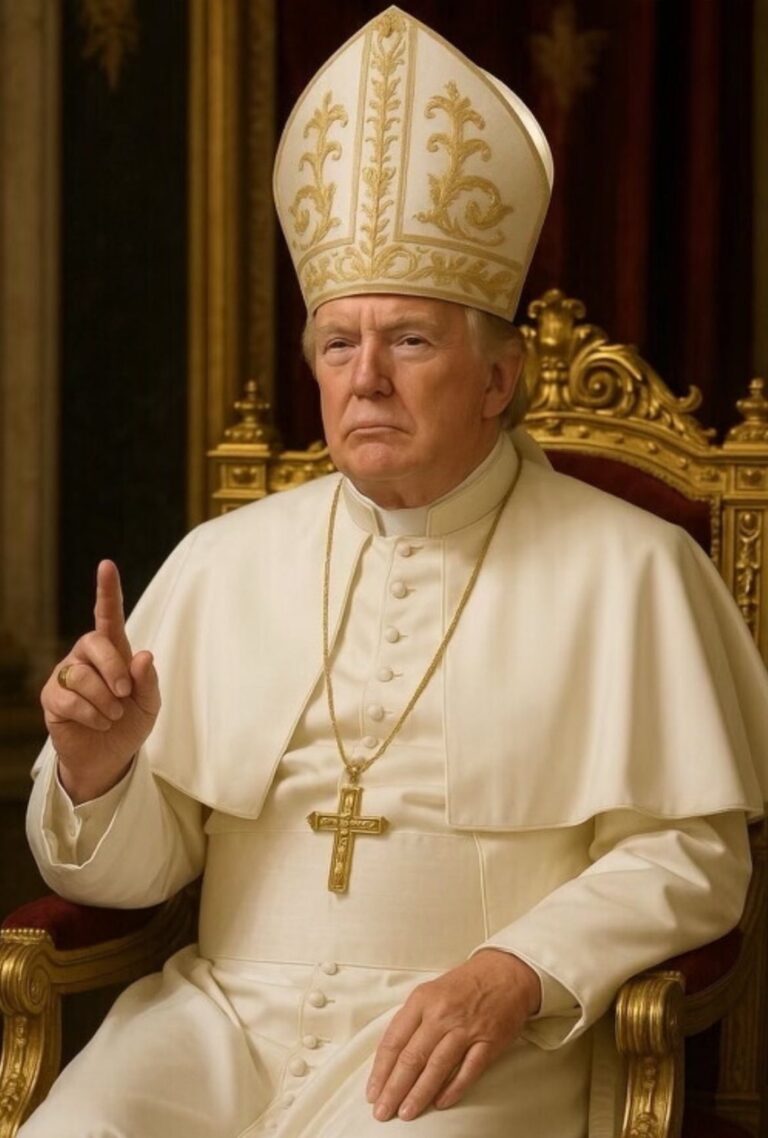
THE New York State Catholic Conference has condemned U.S. President Donald Trump for sharing what appears to be an AI-generated image of himself dressed as the Pope.

In a statement posted on X  Saturday, May 3, 2025 the organisation, which represents the state’s Catholic Bishops in advocating for laws that uphold social justice and the sanctity of life, said there was nothing amusing or intelligent about the image.

The Conference emphasised the timing of the post, noting that it came shortly after the burial of Pope Francis and as the College of Cardinals prepares to enter a solemn conclave to elect a new pontiff. They urged the president not to mock the Church during such a sacred moment.

The post read :” There is nothing clever or funny about this image, Mr. President.

“We just buried our beloved Pope Francis and the cardinals are about to enter a solemn conclave to elect a successor of St. Peter. Do not mock us.”

On Saturday, May 3, 2025  Donald Trump stirred controversy after posting a digitally altered image of himself in full papal attire on his Truth Social platform.

The image, which was later reposted by the White House’s official X account, depicted Trump wearing white robes, a golden crucifix, and a mitre, with one finger pointed skyward.

The post followed a lighthearted remark Trump made to reporters days earlier, in which he said, “I’d like to be Pope, that would be my number one choice,” when asked who he supported as the next leader of the Catholic Church.

His comment and the image surfaced just ahead of the conclave to elect a new Pope following the death of Pope Francis on April 21.

Although Trump did not name any specific candidate, he hinted at his support for “a very good” cardinal in New York widely interpreted as a reference to Archbishop Timothy Dolan, a prominent theological conservative known for his firm anti-abortion views.

Trump also made headlines last week by attending Pope Francis’ funeral, his first international appearance since resuming office.