THE House of Representatives Committee on Public Petitions has summoned Governors Hyacinth Alia of Benue State and Dauda Lawal of Zamfara State, along with their respective state assemblies, to appear before the committee on Thursday, May 8.
The summons follow concerns over escalating insecurity in both states, which prompted a petition to the House by the civil rights group, Guardians of Democracy and Rule of Law.
The governors and legislative bodies have been called to explain why their constitutional functions should not be assumed by the House of Representatives due to the escalating security challenges.
This notice was issued in a statement on Friday by Chooks Oko, Head of Media for the House Committee on Public Petitions.
Oko explained that the summons is in response to the petition filed by Guardians of Democracy and Rule of Law, urging the House to take over the functions of the two state Assemblies.
The summons, signed by Committee Chairman Mike Etaba, emphasised that the invited parties are already familiar with the details of the case.
“Ours is to ensure that the rule of law is upheld at all times. The parties have a wonderful opportunity to state their cases clearly so that Nigerians can know what is going on. Anarchy would never be given any space in our polity,” Oko added.
Benue and Zamfara are facing security crises which include escalating attacks by armed groups, displacement of thousands of residents, and an overwhelming loss of life.
In Benue, the state has been plagued by persistent clashes between farmers and herders, with criminal elements such as armed herders engaging in violent attacks across rural communities. This has led to the death of over 3,000 people in 2024 alone, with notable incidents like the mass killing in Adoka and Agatu, which have worsened the humanitarian situation.
Despite promises from the state governor to return displaced persons, insecurity remains rampant, leading to a petition for federal intervention.
Similarly, Zamfara has witnessed an alarming rise in bandit attacks. The state’s vast forests have become a haven for bandit groups who routinely raid villages, kill civilians, and abduct individuals for ransom.
TWO years into President Bola Tinubu’s administration, insecurity remains a widespread and persistent challenge across many Nigerian states. Despite promises to combat terrorism, banditry, and violent crimes, the country continues to witness killings, kidnappings for ransom, and attacks on rural communities.
Tinubu inherited a deeply rooted security crisis from his predecessor, Muhammadu Buhari. But instead of improvement, recent months have seen a surge in violence across regions, raising concerns about the government’s – state and federal – capacity or willingness to protect its citizens.
From Benue to Borno, Plateau to Niger, and Ondo to Sokoto, state governors are struggling to contain the menace, as armed groups unleash chaos, displace communities, and cripple local economies, particularly agriculture.
Tinubu/Shettima unfulfilled promises
In June 2022, while accepting the All Progressives Congress (APC) presidential ticket, Tinubupromisedto restore peace and eliminate criminals. On the campaign trail Vice President Kashim Shettima even promised to personally lead troops across the country, saying Tinubu would handle the economy while he focused on security.
“By God’s grace, I will handle the security, and not only handle the security, I will lead the troops to battle across the length and breadth of this country,” Shettima boasted.
Yet, nearly 24 months into their tenure, those promises appear largely unfulfilled.
According to Global Rights Nigeria, within the first six weeks of Tinubu’s administration, 555 Nigerians were killed and 267 abducted in violent attacks.
Edo governor talks tough
In Edo State, Governor Monday Okpebholo has pledged to take a firm stand against criminal elements. During a security meeting held at the home of the senator representing Edo North, Adams Oshiomhole, Okpebholo assured stakeholders that his government would ensure peace in the state.
“Under my watch, criminal elements will not succeed in destabilising Edo State. I will deal with them decisively and make the state uninhabitable for their activities,” the governor declared.
Benue under fire
Benue State has experienced some of the most deadly attacks in recent months. On April 21, 13 additional bodies were recovered after raids on rural communities in Ukum and Logo Local Government Areas, bringing the total death toll to 69.
Governor Hyacinth Alia had confirmed the discovery of 56 bodies on Sunday, April 20, after visiting the affected areas of the state.
Just days earlier, suspected herders had attacked three communities Emichi, Odudaje, and Okpamaju in Otukpo LGA. Killings in the state have continued.
Plateau: Governor describes killings as genocide
In Plateau State, over 90 people were killed in attacks in April, including 40 in the Zike community and 52 in Bokkos LGA. Governor Caleb Muftwang describedthe killings as a genocidal onslaught, calling them sponsored and deliberate.
Thousands have been displaced by the recent coordinated attacks that began in March and have since swept across several villages in Bokkos.
Niger: curfew in Minna amid surge in violence
In Niger State, Governor Umaru Mohammed Bago imposed a 6 p.m. to 6 a.m. curfew on Minna following a wave of violent attacks. The state government has banned motorcycles and tricycles during curfew hours and urged local leaders to report suspicious activity.
Homes found to be harbouring criminals could also be demolished, according to the new directive.
Ondo: Suspected herders kill nine in two weeks
Ondo State is also under threat. In Akure North LGA, four farmers were killed by suspected herders in early April, less than two weeks after a similar attack claimed five lives. The violence has sparked protests, with farmers demanding urgent government action.
New terror group emerges in Kwara
A new terror group, known as Mahmuda, has begun a string of violent attacks across Kwara and Niger states. The group, reportedly operating in military camouflage, has killed vigilantes and civilians, sparking fear in local communities.
Isolated attacks in Borno
In Borno State, Governor Babagana Zulum raised the alarm over Boko Haram attacks that have overrun military outposts. At a security meeting in Maiduguri on April 8, he called for increased federal intervention and aerial support to curb insurgent activities.
Sokoto: Peace eludes state despite Tinubu’s order for Defence Chiefs to relocate
Sokoto has been plagued by the rise of another group, ‘Lakurawa’. In response, President Tinubu ordered defence chiefs to relocate to the state in 2024. Despite the directive, peace has yet to return fully.
Matawalle, ex-gov of insecurity-plagued Zamfara, appointed as defence minister by Tinubu
Observers have linked Tinubu’s struggle to curb insecurity to his choice of defence leadership. In 2023, he appointed former Zamfara governor Bello Matawalle as Minister of State for Defence, despite Matawalle’s poor track record on security.
Under his tenure as governor (2019–2023), Zamfara became one of the worst-hit states by terrorism, with frequent killings, abductions, and bandit-led extortion. Though he implemented drastic measures telecom shutdowns, movement restrictions, and market closures none proved effective.
Now serving alongside former Jigawa State governor Mohammed Badaru in the Defence Ministry, Matawalle’s appointment continues to draw criticism.
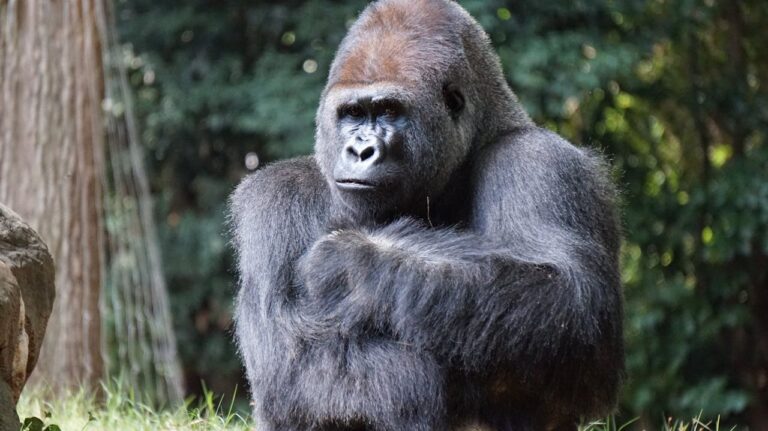
WHO would win in a fight between 100 men and 1 gorilla? An evolutionary expert weighs in. The internet’s latest absurd obsession is: who would win in a no-rules fight between 100 average human men and one adult male gorilla?
This hypothetical and strange question has taken over Reddit, TikTok, YouTube and Instagram. Some argue that humans once hunted mammoths so, clearly, we would win. Others point out that a silverback gorilla can lift close to 1,000kg and could throw a grown man like a rag doll.
To be honest, it’s not really a question we need to answer – and yet, as usual on the internet, everyone has an opinion.
But, beyond the jokes and memes, this silly debate provides an opportunity to reflect on human evolution. What are the real strengths of our species? What have we sacrificed? And what can a gorilla, our majestic, powerful and endangered distant cousin, teach us about our own nature and evolution?
Gorillas and humans: two branches of the same evolutionary tree
Gorillas are one of our closest living relatives. Along with chimpanzees, bonobos and orangutans, they belong to the great apes or Hominidae family. Chimpanzees share about 98.8% of their DNA with us, while gorillas come a close second, sharing around 98.4%.
The last common ancestor between humans and gorillas lived roughly 10 million years ago, and it is also the same ancestor for chimpanzees.
Since the evolutionary split, humans and gorillas have followed very different paths. Gorillas have adapted to dense forests and mountainous terrains, while humans have evolved to live in the open, but realistically to multiple and various environments.
Despite the substantial difference in ecological niches, humans and gorillas share many traits, such as opposable thumbs, facial expressions, complex social behaviours and emotional intelligence.
Mastering forest power
In the recent Dune saga, to win, Duke Leto Atreides wanted to develop “desert power”. Well, gorillas have mastered forest power.
And let’s be clear – in terms of raw power, the gorilla wins every time. An adult male silverback can weigh more than 160kg and lift about a tonne without going to the gym every day. Their upper-body strength is shocking. And that’s no evolutionary accident – it’s the result of intense competition between males, where dominance determines mating.
Additionally, gorillas are extremely tough and resilient, yet gentle and calm most of the time. Gorillas, like many primates, have a strong social intelligence. They use a variety of vocalisations, gestures and even chest drumming to communicate across distances.
They have shown the ability to use sign language, mourn their dead, and demonstrate empathy, attesting to sophisticated cognitive skills.
Trading muscles for minds
A fight between 100 men and one gorilla might lead to a lot of dead men, but we all know that men will come with weapons, strategies, drones, fire and other clever tricks.
Humans are not physically strong in comparison to many other mammals. Our strength as a species is our adaptability and our ability to collaborate in very large groups.
Our brains are, on average, three times larger proportionally than those of gorillas. This fantastic evolutionary adaptation has allowed us to develop abstract thinking and symbolic language, but most of all, to pass and build on complex knowledge across generations.
Humans’ evolutionary history has led to trading brute force for social, cultural and technological complexity, making us Earth’s most versatile and dangerous species.
So, who’s the winner?
In a one-on-one brawl, the gorilla can make “human-mash” with one hand. There is no contest when discussing brute force and bare hands.
But humans fight dirty. Judging by our evolutionary success, humans would likely lose many battles but ultimately win the fight. Mountain gorillas were not on the brink of extinction in the 1980s without our help.
Our species has spread across all continents, all terrains, and all climates. We have reshaped ecosystems, walked on the Moon, and developed advanced technologies. But gorillas are another kind of success rooted in harmony with their environment, physical grace, and quiet strength.
Perhaps the real takeaway message isn’t who wins in a fight, but to realise that two very different and yet very close cousins have walked two separate evolutionary roads, each in their own distinct way. And both are nature’s triumph and accomplishment.
The naira weakened on Friday at the official market, closing at ₦1,602.18 per dollar, according to data from the Central Bank of Nigeria. This reflects a ₦5.49 drop, or a 0.34 per cent decline, compared to the ₦1,596.69 rate recorded on Wednesday, April 30, ahead of the Workers’ Day holiday on May 1.
The naira held relatively steady over three consecutive trading days—from Monday, April 28, to Wednesday, April 30—trading at ₦1,599.95, ₦1,599.71, and ₦1,596.69, respectively. However, the local currency ended the week on a downward trend, having started the week with a slight decline of 0.02 per cent.
Nigerians may soon lose access to Facebook and Instagram as Meta, the parent company of both platforms, warns it may be forced to shut down operations in the country due to hefty fines and what it describes as “unrealistic” regulatory demands from Nigerian authorities.
Last year, three Nigerian regulatory bodies jointly imposed fines exceeding $290 million (£218 million) on the U.S.-based tech giant, accusing it of breaching various laws and guidelines.
Meta’s legal challenge to the sanctions at the Federal High Court in Abuja was unsuccessful. In court documents, the company stated it “may be forced to effectively shut down the Facebook and Instagram services in Nigeria in order to mitigate the risk of enforcement measures.”
While Meta also owns WhatsApp, the company made no mention of the messaging platform in its court filings.
The court has given Meta until the end of June to pay the fines.
Facebook remains Nigeria’s most widely used social media platform, relied upon daily by tens of millions of users for communication, news, and business. Many small and medium-sized enterprises across the country depend on it to reach customers and drive sales.
The penalties levied on Meta include a $220 million fine from the Federal Competition and Consumer Protection Commission (FCCPC) for alleged anti-competitive behavior; a $37.5 million fine from Nigeria’s advertising regulator for running unauthorized adverts; and a $32.8 million fine from the Nigeria Data Protection Commission (NDPC) for alleged violations of data privacy laws.
Adamu Abdullahi, CEO of the FCCPC, said joint investigations by his agency and the data commission between May 2021 and December 2023 uncovered “invasive practices against data subjects/consumers in Nigeria,” though he did not specify the exact violations.
Meta, in its court filing, expressed particular concern about the NDPC’s demands, accusing the agency of misinterpreting data protection laws. One of the NDPC’s key requirements is that Meta obtain prior approval before transferring any Nigerian user data abroad— a demand the company labeled “unrealistic.”
The commission also directed Meta to feature an icon linking to educational videos on data privacy risks, developed in collaboration with approved academic institutions and non-profit organizations.
These videos must warn users about the potential dangers of “manipulative and unfair data processing,” which could result in health or financial harm.
Meta rejected these conditions, saying they are impractical and based on a flawed understanding of data privacy regulations.
THE deputy governorship candidate of the Peoples Democratic Party in the 2023 Cross River State election, Emana Ambrose-Amawhe, along with her supporters, has officially defected to the ruling All Progressives Congress.
This development comes just a week after former Delta State Governor and 2023 vice-presidential candidate, Ifeanyi Okowa, alongside the incumbent Governor of Delta State, Sheriff Oborevwori, defected from the PDP to the APC.
At the defection event held in her ward, Edem Odo, Akpabuyo LGA, on Friday, May 2 2025, Ambrose-Amawhe cited the developmental achievements of the APC at both state and national levels as her reason for switching allegiance.
She highlighted that she decided to join the ruling party after observing the commendable work being done by Governor Bassey Otu. She remarked that only those who choose to ignore progress would fail to notice the positive developments taking place.
Ambrose-Amawhe reportedly expressed her excitement about becoming a member of the APC, noting her previous role as the PDP’s deputy governorship candidate and her identity as a proud daughter of Cross River South.
“At the national level, there are those who would say, things are hard, the economy is not looking up, and all of that. I would like to tell them that nothing good happens overnight.
The president of the Federal Republic of Nigeria has placed the right pegs in the right holes. Bit by bit, day after day, we are moving closer to an uptick in our economy. All the other good things put together, these are the reasons why I decided to come back to the All Progressive Congress as a Cross Riverian,” she was quoted as saying.
She claimed that her defection was not driven by personal gain or a desire for political appointments, but by a commitment to collaborate with those in power to bring democratic benefits to her grassroots. She also urged those still in the opposition to contribute to the state’s development rather than limiting themselves to online criticism.
“I’m a nation-builder, that’s why I am now part of the APC. The thing is that nobody is being forced to join the APC. If there is going to be opposition, we need viable opposition parties.
“When the opposition parties are not able to put their acts together, and there’s a lot of dissension within the ranks of these opposition parties, it’s obvious they are not ready to do the business of the day. So, for me, I’m a business-minded person, so I go where people mean business, and they do not just mean business, they are working towards achieving those dreams.”
She urged critics of the government to move beyond online commentary and instead bring their ideas forward, encouraging them to partner in building a better Cross River and Nigeria. She called on opposition members to join hands in driving development rather than remaining “keyboard warriors.”
Welcoming the defectors, the APC State Secretary, Patrick Asikpo, cautioned them against bringing conflict or divisive intentions into the party. He assured them that from the moment of their defection, they would enjoy the full rights and privileges of APC members.
Also speaking at the event, former Minister of Tourism and ward leader of Edem Odo, High Chief Edem Duke, expressed optimism about the APC’s future, especially ahead of the 2027 elections. He described the defection as significant, noting that the movement of such a high-ranking PDP figure signals a major shift in Cross River State’s political landscape—one that he believes favours the APC.
The ICIR can report that the recent defection adds to the growing list of politicians aligning with the ruling APC ahead of the 2027 general elections. This trend reflects an ongoing realignment within Nigeria’s political landscape.
In March, Olajide Adediran, popularly known as Jandor, who was the PDP governorship candidate in Lagos State during the 2023 elections, also dumped the opposition party to join the APC.
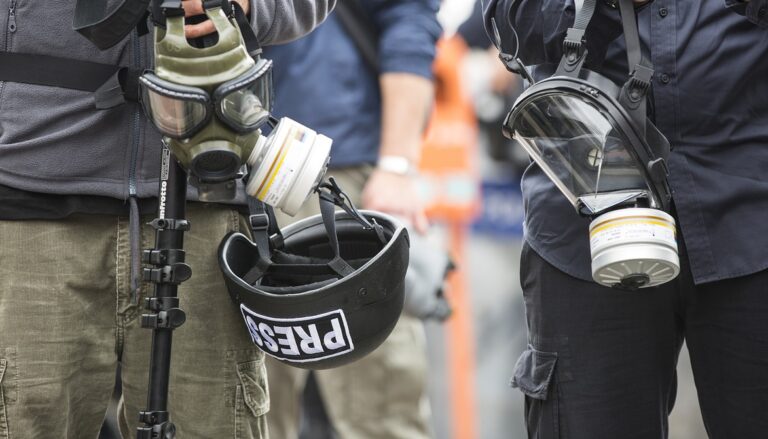
AS NIGERIA joins the rest of the globe to mark World Press Freedom Day, we sampled insights from selected editors on the challenges and opportunities facing the media industry in the country.
From navigating government restrictions and censorship to embracing digital innovation, our editors share their thoughts on the current state of press freedom, the future of journalism, and the importance of a free press in holding power accountable.
What is the biggest challenge facing press freedom in Nigeria today?
Chikezie Omeje: The biggest obstacle to press freedom in Nigeria is poor funding. There is no freedom when you’re hungry. Much of the mainstream media has been taken over by vested interests, and journalists are poorly paid. In this kind of environment, public interest journalism suffers because critical reporting is scarce. That’s why many stories are event-based. News becomes what powerful interests want published. Press freedom requires independent funding and adequate remuneration for journalists.
How do government policies or security agencies affect journalists’ ability to report freely?
Chikezie Omeje: We live in a country where powerful individuals use state instruments to intimidate journalists. Many Nigerian journalists have been arrested by the police on ridiculous charges like cybercrime. What does journalism have to do with cybercrime? They also bring up frivolous criminal charges related to defamation. It makes no sense to criminally charge a journalist for defamation in a democracy. It’s a shame that the Nigerian police are used to hound journalists. If you’ve an issue with a piece of journalism, sue for defamation, and stop using police to intimidate or silence journalists.
How do you handle cases of harassment or intimidation faced by your journalists/newsroom?
Chikezie Omeje: The truth remains the best defence against frivolous lawsuits or arrest by the police. Journalists should always strive to be accurate and fair. The truth will set you free, no matter how hard they try to silence or intimidate you. Newsrooms should also consider insuring themselves against Strategic Lawsuits Against Public Participation (SLAPPs).
What changes are needed legally or institutionally to better protect press freedom in Nigeria?
Chikezie Omeje: Independent and adequate funding is essential to protect press freedom. Without adequate remuneration, newsrooms cannot attract or retain top talent. We must find reliable and sustainable ways to fund independent journalism. Money won’t solve all the problems, but it will go a long way toward safeguarding the integrity of the profession. The era of funding journalism through advertising revenue has passed, and its decline calls for that vacuum to be filled by independent sources of funding.
What is the biggest challenge facing press freedom in Nigeria today?
Aminu Naganye: The biggest challenge to press freedom in Nigeria today is the government and powerful individuals who abhor accountability and promote impunity. There have been instances where they attempt to influence or control the judiciary, which ought to be an independent arm of government. Additionally, the Cybercrime Act has proven effective in stifling press freedom, as it has been repeatedly used to harass, intimidate, or even jail journalists.
Aminu Naganye, Editor, WikkiTimes
How do government policies or security agencies affect journalists’ ability to report freely?
Aminu Naganye: Government policies aimed at regulating new media, along with the use of agencies such as the National Broadcasting Commission (NBC) to control conventional media especially broadcast media pose significant challenges for journalists. Security agencies are continually used by government officials or powerful individuals to gag the press. This has led to harassment and intimidation of journalists through charges such as defamation and cyberbullying. It’s quite a daring effort for journalists to freely report about policies of government or its allies including influential figures.
How do you handle cases of harassment or intimidation faced by your journalists/newsroom?
Aminu Naganye: We believe in the power of collaboration with our colleagues, friends, and partners to expose those behind the harassment and intimidation. We go further to publicly shame them. Internally, we deploy mechanisms to ensure the safety of our staff. For this reason, we now largely operate remotely after threats against us became overwhelming. We remain in close contact with our legal team and actively share experiences with other newsrooms facing similar situations. Most importantly, we ensure that the story which triggered the harassment is amplified even further.
What changes are needed legally or institutionally to better protect press freedom in Nigeria?
Aminu Naganye: We need reforms, starting with a complete rejection of proposed regulations targeting new media. The Cybercrime Act should also be repealed. However, this doesn’t mean journalists should not be held accountable when they go wrong. It simply means that the government and powerful individuals should not be allowed to exploit legal provisions to evade scrutiny. Our judicial system must also improve, particularly at the sub-national level, where state governors are notorious for using the courts to silence the media and critical voices.
What is the biggest challenge facing press freedom in Nigeria today?
Joseph Adeiye: The biggest contemporary challenge for press freedom in Nigeria is an anti-journalist state establishment. Nothing stifles a free press in Nigeria with as much force and dedication as the Nigerian government.
Today, more journalists working in Nigeria are getting concerned about arbitrary arrests because of recent persecutions of their colleagues. Remember where FIJ’s Daniel Ojukwu was on Press Freedom Day 2024. Journalists do their jobs, report what they find, but federal and state governments use their vast resources to respond with threats or illegal reactions.
Joseph Adeiye, Foundation for Investigative Journalism (FIJ), News and Features Editor
How do government policies or security agencies affect journalists’ ability to report freely?
Joseph Adeiye: From experience, we have noticed that the government has weaponised vaguely and poorly drafted laws against journalists. The infamous misuse of the Cybercrime Act to target journalists in Nigeria is an example of this. Revealing stories and accountability reports are often labelled defamatory. Reporters are taken in for weeks or months of unnecessary questioning all in a bid to intimidate them.
However, there are other ways the government and its security agencies try to limit journalists’ ability to report important stories. One of such methods is an unspoken information embargo. Journalists are still so blatantly denied access to information by the government today that they find it difficult to process public data for timely news reports. Agencies, especially in finance departments and the armed forces, deliberately refuse to answer questions or respond to FOI requests in order to restrict journalists’ access to information that matters. It is a common practice across the tiers and arms of government even though it is against the law.
How do you handle cases of harassment or intimidation faced by your journalists/newsroom?
Joseph Adeiye: Intimidation and harassment come in varying forms. We treat each case individually, and the circumstances dictate how our newsroom responds.
Most times, our reliable legal counsel helps to nullify intimidation disguised as lawsuits.
We have received more direct threats for our journalism though; death threats are not alien to FIJ reporters. At a point, we know when to get the authorities involved and put working systems in place to protect the newsroom.
What changes are needed legally or institutionally to better protect press freedom in Nigeria?
Joseph Adeiye: Institutionally, I think the Nigerian press has to continue playing its role bravely and more persistently. The attacked institution of the press cannot afford to give up, not in the face of an anti-journalist regime. Our persistence is a necessary pushback against the intimidation of the press.
For the state, it must rid itself of habitual hostilities towards journalists. The government must revisit some of its laws like the cybercrimes and terrorism acts. We need to revisit what it means to commit a felony or treason. These laws should be revised with properly defined scopes.
There are also a few laws protecting the press from attacks and intimidation. Such laws have to be consolidated on.
In the end, Nigeria could have these laws and choose to disregard them just as most government agencies illegally ignore the FOI Act’s provisions today. The enforcement of these laws is key to a truly free press and a healthy democracy.
What is the biggest challenge facing press freedom in Nigeria today?
Seun Durojaiye: The biggest challenge to press freedom today I believe is the rise of surveillance capitalism. Research points to how the government is increasingly using AI and digital technologies to monitor journalists and control information. This creates a culture of fear and self-censorship, making it harder for reporters to cover vital issues like corruption and human rights abuses.
Seun Durojaiye
How do government policies or security agencies affect journalists’ ability to report freely?
Seun Durojaiye: Government policies often empower security agencies to use AI for surveillance, which directly impacts journalists. They can track online activities and intimidate reporters, making it risky to cover sensitive topics. The lack of clear legal protections around these technologies adds to the pressure journalists face.
How do you handle cases of harassment or intimidation faced by your journalists/newsroom?
Seun Durojaiye: We take harassment seriously. We focus on solutions journalism, which highlights effective responses to problems, helping our journalists feel empowered. We provide digital security training to protect their communications and offer legal support for anyone facing intimidation. Building a supportive community is key, so our journalists can share experiences and strategies.
What changes are needed legally or institutionally to better protect press freedom in Nigeria?
Seun Durojaiye: We need stricter regulations on surveillance technologies to ensure transparency and accountability. Establishing strong legal protections for digital rights is crucial to safeguard journalists from unwarranted surveillance. Promoting solutions journalism can also help shift the narrative, and public engagement campaigns can raise awareness about the importance of press freedom in the digital age.
What is the biggest challenge facing press freedom in Nigeria today?
Kolapo Olapoju: The biggest challenge is the increasing weaponisation of state power to silence critical voices. We have seen arbitrary arrests, digital surveillance and the misuse of laws like the Cybercrime Act. The state often treats journalism as a threat rather than a pillar of democracy. What’s even more dangerous is the culture of impunity; attacks happen, and no one is held accountable.
How do government policies or security agencies affect journalists’ ability to report freely?
Kolapo Olapoju: They create a climate of fear. Security agencies have been known to harass and detain journalists often with zero legal backing. Government policies are vague enough to be used as tools of suppression, especially when stories expose corruption or human rights violations. It forces journalists to self-censor, which is a quiet but deadly erosion of press freedom.
How do you handle cases of harassment or intimidation faced by your journalists/newsroom?
Kolapo Olapoju: We document everything. Intimidation isn’t new to us, so we’ve learned to respond quickly by mobilising legal support and where necessary, seek solidarity from press freedom groups. We don’t cower in fear, because fear emboldens the oppressor. Safety protocols are also in place, and we also provide emotional support to our journalists when needed.
What changes are needed legally or institutionally to better protect press freedom in Nigeria?
Kolapo Olapoju: We need clear legal definitions that separate journalism from criminality. Laws like the Cybercrime Act need urgent reform to prevent abuse. Institutionally, there must be stronger checks on security agencies and better training on media rights. Most importantly, we need a judiciary that stands firm when press freedom is tested.
What is the biggest challenge facing press freedom in Nigeria today?
Ekele Peter Agbo: The media in Nigeria face many challenges that invariably impede press freedom. These challenges range from government interference and restrictions to direct censorship and intimidation by media owners who are mostly in bed with the government because of economic pressure. Today, we find ourselves in a situation where the sacred ethical values of journalism are traded for business and government patronage. So, for most media houses to survive, stories are told in their clients’ narratives.
Peter Agbo, Editor LEADERSHIP
How do government policies or security agencies affect journalists’ ability to report freely?
Ekele Peter Agbo: This comes mainly in the form of economic pressure and intimidation. When you have a media organisation whose legal books are not clean, it’s a toxic environment in which to practice the profession. We have media houses that default on tax payments and pension remittances and owe months of salary. In such cases, many reporters compromise and fail to do a thorough investigation or proper reporting. You have a lot of PR materials on your desk to deal with. And because these media houses are not clean, they kill good stories for their friends in the government and the corporate world. This takes a significant toll on press freedom.
How do you handle cases of harassment or intimidation faced by your journalists/newsroom?
Ekele Peter Agbo: To effectively handle harassment and intimidation in newsrooms, we must ensure adherence to the Journalism Code of Ethics on the one hand as practitioners, and economic independence on the other hand, which brings us to the newsroom funding issue.
The fact is that our newsroom will require a combination of creativity, innovation, and strategic planning to navigate the economic challenges we face and establish a sustainable funding model that works for everyone involved. It’s not an easy task, but with commitment and hard work, we can find a way around the challenge.
What changes are needed legally or institutionally to better protect press freedom in Nigeria?
Ekele Peter Agbo: The first step is to amend laws that appear to threaten press freedom. We must amend, for instance, the Cybercrimes Act and Terrorism (Prevention and Prohibition) Act in line with international human rights standards.
THE Central Bank of Nigeria (CBN) and its subsidiaries have recovered from an N1.16 trillion loss in 2023, reporting a profit after tax of N38.8 billion in its 2024 financial year.
The apex bank reported this in its 2024 audited financial statements released on Friday, May 2.
It shows that the group rebounded from the N1.16 trillion loss suffered in the 2023 financial year in its profit lines, including net operating income and profit before tax recorded positive performance.
The group refers to CBN and its subsidiaries, including the Nigerian Security Printing & Minting Plc (MINT) and Nigerian Electricity Supply Industry Stabilisation Strategy Limited (NESI SS Ltd), among others.
According to the report, CBN posted a net operating income of N1.17 trillion in 2024 from a loss of N594.25 billion loss in 2023.
It recorded an N44.68 billion profit before tax from a loss of N1.15 trillion and a profit after tax of N38.84 billion from N1.16 trillion in 2023.
A further look at the CBN financial statements indicates that the apex bank reported total assets of N117.6 trillion from N87.87 trillion in the review period.
The growth in total assets was boosted significantly by increases in external reserves to N54.72 trillion, up from N29.97 trillion in 2023.
Its total liabilities also increased by N116.58 trillion, compared to N85.86 trillion in 2023.
The difference in CBN’s total assets and liabilities in the review period reveals a decline in total equity from N2.01 trillion in 2023 to N1.01 trillion in 2024.
Further analysis from the CBN financial statements is that its International Monetary Fund (IMF) holdings of special drawing rights (SDRs) increased by 61.42 per cent to N6.36 trillion in 2024, from N3.94 trillion in the previous year; while debt instruments from amortised cost rose by 12.67 per cent to N29.8 trillion from N26.45 trillion.
The ICIR had, in a report, analysed why CBN, like other public interest entities, should disclose its financial statements to engender trust, transparency, and accountability in its operations.
.
The concern came after CBN halted the release of its yearly financial statements for several years.
Amid an investigation into its financial management, the apex bank had to release seven years of its financial statements from 2016 to 2022, The ICIRreported in August 2023.
THE Economic and Financial Crimes Commission (EFCC) has launched an investigation into alleged abuse of office and misappropriation of funds by former senior officials of the Nigerian National Petroleum Company Limited (NNPC Ltd), including two former chief executives, Mele Kyari and Abubakar Yar’Adua.
In a letter dated April 28, 2025, with reference number CR:3000/EFCC/ABJ/HQ/SDC.2/NNPC/VOL.1/698, and addressed to the NNPC Managing Director, the EFCC requested certified records of salaries and allowances paid to 14 officials, some of whom are retired.
Titled, “Investigation Activities Request for Information,” the letter stated that the EFCC is probing allegations of financial misconduct and abuse of office and asked the company to submit certified true copies of relevant documents concerning both current and former staff.
Among those named are former Group Chief Executive Officer Mele Kyari; former Managing Director of the Port Harcourt Refining Company Limited (PHRC), Ibrahim Onoja; and former Managing Director of the Kaduna Refining and Petrochemical Company (KRPC), Mustafa Sugungun.
All three were removed in the recent shake-up at the oil company.
Others on the list include: a former Group Managing Director of NNPC, Abubakar Yar’Adua; a former NNPC group executive director, finance & services; Isiaka Abdulrazak; a former Chief Financial Officer NNPC Limited, Umar Ajiya; the former Managing Director of the PHRC, Dikko Ahmed; a power plant engineer at PHRC, Ademoye Jelili; Manager Production at NNPC/KRPC, Efiok Akpan; Kayode Adetokunbo, Babatunde Bakare, Jimoh Olasunkanmi, Bello Kankaya and Desmond Inyama.
“In view of the above, you are kindly requested to furnish certified true copies of their emoluments and allowances, including that of those who have retired and no longer work with your organisation,” the letter read.
The investigation is believed to be linked to the controversial $2.896 billion spent on refinery rehabilitation projects under their watch.
Of this amount, $1.56 billion was allocated to the Port Harcourt Refinery, $740.6 million to the Kaduna Refinery, and $656.9 million to the Warri Refinery.
The ICIRreported that President Bola Tinubu had sacked the Group Chief Executive Officer of the Nigerian National Petroleum Company Limited (NNPCL), Mele Kyari, along with Board Chairman Pius Akinyelure and other board members.
The president appointed Bashir Ojulari as the new Group CEO and Ahmadu Musa Kida as the non-executive chairman.
In a statement by Bayo Onanuga, on Wednesday, April 2, Tinubu ordered a complete overhaul of the 11-man board, replacing all members appointed alongside Kyari and Akinyrlure in November 2023.
THE Lagos State High Court has sentenced a driver of a bus rapid transit (BRT), Andrew Nice Ominikoron, to death by hanging for killing a 22-year-old fashion designer, Bamise Ayanwola, in 2022.
The court, which sat at the Tafawa Balewa Square (TBS) on Friday, May 2, held that the prosecution successfully established its case, leaning on the doctrine of “last seen” to establish that the accused was guilty.
Ominikoron was arraigned on a five-count charge bothering on conspiracy to commit felony, rape, murder, and sexual assault.
On March 7, 2025, the court reserved judgment in the case.
The judge, Sherifat Sonaike, fixed May 2, 2025, for the judgment after the prosecution and the defence adopted their final written addresses.
Defence lawyer, Abayomi Omotubora, while adopting the final written address, argued that the prosecution failed to provide adequate evidence to establish that the accused was guilty.
He said the prosecution witnesses’ testimonies didn’t directly connect the defendant to Ayanwola’s death.
Omotubora ruled out a voice note sent by the deceased to her friend, describing it as hearsay since the friend wasn’t called as a witness.
The defence argued that the “last-seen” doctrine was not enough for conviction without strong evidence and that a key witness’ testimony needed corroboration.
Meanwhile, the Director of Public Prosecutions (DPP), Babajide Martins, urged the court to convict the accused, citing witness testimonies and arguing that corroboration wasn’t required in rape cases under Nigerian law.
The DPP noted that the defendant was last seen with Ayanwola and fled to Ogun State instead of reporting to the police, calling his actions suspicious.
The DPP recalled how the accused was arrested by the State Security Services (SSS) in 2022 and argued that the deceased’s voice note was admissible as a dying declaration under Section 34 of the Evidence Act.
Ominikoron was arraignedin March 2022 before the court over the rape and murderof his passenger on February 26, 2022, at the Lekki-Ajah Expressway.
The prosecution alleged that he conspired to rape and murder his passenger.
He pleaded not guilty to the charges.
Bamise was last seen boarding a BRT bus in Lagos, and her disappearance sparked public outrage.
Her body was discovered on Carter Bridge nine days after she went missing.