Home Blog Page 292

Trump replaces National Security Adviser Waltz with Rubio

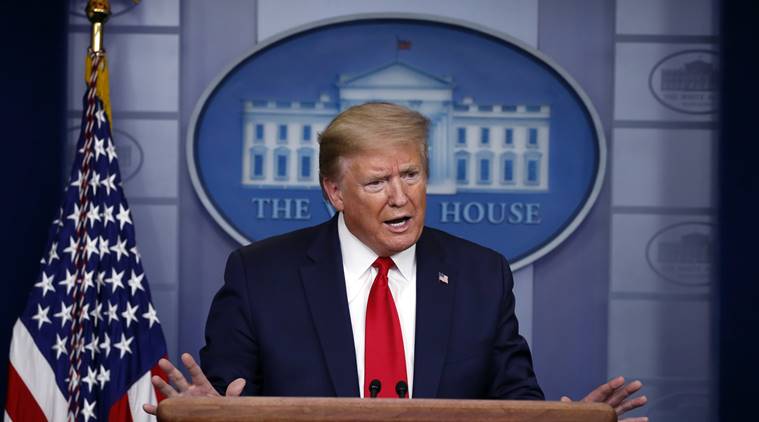
UNITED States President Donald Trump dismissed his National Security Adviser, Mike Waltz, on Thursday, May 1, and appointed Secretary of State Marco Rubio as his interim replacement.

Trump revealed this in a social media post, noting that he would nominate Waltz as the next US ambassador to the United Nations, adding that “he has worked hard to put our nation’s interests first.”

Waltz’s deputy, Alex Wong, an Asia specialist who previously served at the State Department, focusing on North Korea during Trump’s first term, will also be sacked, according to two sources familiar with the matter.

The ICIR reported that multiple sources said Trump had decided to remove Waltz from his position, marking the first significant shakeup in his inner circle since he assumed office in January.

Waltz, a retired Army Green Beret and former Republican congressman from Florida, faced internal criticism within the White House, especially after becoming entangled in a March scandal involving a Signal chat among senior Trump national security officials.

The ICIR reports that Rubio will be the first official since Henry Kissinger in the 1970s to serve concurrently as Secretary of State and National Security Adviser.

“When I have a problem, I call up Marco. He gets it solved,” Trump said at a White House event earlier on Thursday.

A source familiar with the situation said Trump aimed to reach the 100-day milestone of his presidency before dismissing a cabinet-level official. 

News of the shake-up on Thursday was so abrupt that State Department spokesperson Tammy Bruce learned about it from reporters at a briefing.

The national security adviser is a powerful role that does not require Senate confirmation. 

The NSC serves as the primary body through which presidents coordinate security strategy, with its staff frequently playing a central role in shaping US responses to the world’s most volatile conflicts.

The ICIR reports that Trump had four national security advisers in his first term: Michael Flynn, H.R. McMaster, John Bolton and Robert O’Brien.

Waltz’s removal marks the culmination of a month of upheaval within Trump’s national security team. Since April 1, over 20 National Security Council staffers have been dismissed.

According to several officials within or close to the administration, the purges have significantly damaged morale in parts of the national security apparatus. 

Despite the leadership turmoil at the Pentagon and his connection to the Signal controversy, Trump has so far continued to express confidence in his Defence Secretary, Pete Hegseth.


UK-based Nigerian nurse found dead in apartment

A NIGERIAN nurse residing in Leeds, United Kingdom, Nnena Miriam, has been found dead in her apartment.

The news was confirmed in a statement released by Fellow Nurses Africa, an organisation committed to promoting the nursing profession in Africa.

It revealed that police discovered Miriam’s body following a missing person report.

“It is with heavy hearts and deep sorrow that we report the sudden passing of one of our own, Nnena Miriam, a dedicated and professional nurse based in Leeds, United Kingdom,” it wrote.

The organisation explained that a close friend, alarmed by Miriam’s sudden absence from work and repeated unanswered calls, filed a missing person report.

Police later discovered her lifeless body in her residence.

“Nurse Miriam was found dead in her room earlier this week under heartbreaking circumstances. According to reports, her last shift was on Sunday of last week,” the association said.

It was also revealed that Miriam had recently returned to the UK after travelling to Nigeria for her introduction ceremony preparatory to her traditional marriage.

“Tuesday, April 29, was meant to be her special day — a day of joy, celebration, and new beginnings”, the statement added.

Colleagues described Miriam as a nurse who embodied kindness, dedication, and resilience in her profession. 

“Her untimely passing is a profound loss to the healthcare family she served with pride and to the many patients whose lives she touched with care and compassion.

The organisation noted that an investigation is currently ongoing, while extending its condolences to Miriam’s family, friends, and the global African nursing community as they mourn this tragic loss.

The ICIR reports that a similar tragic incident occurred in March 2024 involving another Nigerian woman, Chidimma Ezenyili, who was also working in the United Kingdom.

Ezenyili reportedly collapsed on February 22 while caring for an elderly client, Ian Hale, at a residence on Scott Road, and passed away two days later.

Ekpo tells Mahama: Nigeria will address gas supply issues with Ghana

0

THE Minister of State Petroleum Resources (gas), Ekperikpe Ekpo, has said that the Nigerian government would address and resolve outstanding issues related to gas supply to Ghana.

Ekpo told Ghanaian President John Mahama when he paid him a courtesy visit on the sidelines of the meeting of the committee of ministers of the West African Gas Pipeline (WAGP), held in Accra recently, according to a statement on Thursday, May 1.

The minister expressed Nigeria’s committment to maintaining its partnership with Ghana in the gas sector.

“Nigeria’s readiness to address and resolve outstanding issues related to gas supply to Ghana under the WAGP framework,” he assured Mahama.

He, however, urged Mahama to ensure that Ghana’s relevant agencies meet their financial commitments for gas supplies without delay.

He also urged the Ghanaian President to instruct concerned authorities to fast-track the proposed fiscal amendments to the WAGP Act.

Ekpo said the amendments are aimed at adapting to changing operational conditions and preserving regional harmony as outlined in the treaty.

The minister further sought Ghana’s continued backing for the African Atlantic Gas Pipeline Project, intended to strengthen regional energy security and foster economic cooperation.

Ekperikpe Ekpo during a courtesy visit to Ghanaian President John Mahama. Image from Ekpos X handle
Ekpo during a courtesy visit to Ghanaian President Mahama. The image, sourced from Ekpo’s X handle

Mahama, on his part, assured that his country would remain diligent in fulfilling its financial commitments to the WAGP project.

He also affirmed his country’s support for maintaining regional harmony through the proposed amendments to the WAGP Act.

On February 20, report circulated that N-Gas Limited informed Volta River Authority (VRA), the main generator and supplier of electricity in Ghana, about the suspension of gas supply to the West African country due to unpaid debt.

Ghana’s state-owned electricity companies had, on June 14, 2024, announced an interruption in power supply over reduced gas supply from Nigeria due to maintenance work.

West Africa Gas Pipeline Company (WAPCo), the owner and operator of the WAGP, has been responsible for transporting gas from Nigeria to Ghana, Benin, and Togo.

The ICIR reported in June 2024 that the Electricity Company of Ghana (ECG)  the three-week power outage experienced in the country resulted from Nigeria’s reduction of gas supply to the nation.

At the time, the  ECG had lamented that due to a reduction in gas supply from Nigeria, some areas across the country experienced an interruption in power supply.

Timeline of Ponzi schemes in Nigeria: A decade of financial fraud, deception

THOUSANDS of Nigerians had watched helplessly as MMM, the infamous Russian-born mutual aid scheme, crumbled overnight in 2016. Despite its accompanying shockwaves, MMM was far from the last Ponzi scheme in Nigeria. This report traces the rise and fall of some Ponzi schemes in Nigeria over the past ten years.

Nearly a decade later, the cycle continued with different names, some flashier, hiding behind corporate branding or charismatic influencers. Others still use religious language and promise of “community upliftment.”

2015–2017

The modern wave of Ponzi schemes in Nigeria began with MMM Nigeria, launched in 2015. Framed as a mutual aid community, MMM promised a 30 per cent return on funds donated to fellow members. It quickly gained traction via WhatsApp groups, Church testimonies, and social media influencers.

By December 2016, the scheme collapsed spectacularly, leaving many in financial ruin and cementing MMM as the benchmark for future frauds.

Following closely behind was Ultimate Cycler, a multilevel pyramid scheme where members paid ₦12,500 with the expectation of receiving ₦50,000. Despite brief popularity, its servers crashed within months.

2018–2020

Loom Nigeria emerged in 2019 as a WhatsApp-based gifting circle, luring participants with the promise of eightfold returns. Invest ₦1,000 and get ₦13,000 in return by recruiting others into the scheme, was its popular slogan. It quickly gained popularity among students and low-income earners but collapsed within weeks. The Securities and Exchange Commission (SEC) had issued a warning at the time, classifying it as a Ponzi scheme.

Around the same period, Pennywise Wealth Management blended the rising digital savings culture with investment opportunities. Backed by a strong Instagram presence and influencer marketing, it earned public trust. However, the platform vanished shortly after, citing “internal audits” as the reason for its sudden disappearance.

2021–2023

As Nigerians grew more skeptical of obvious scams, Ponzi schemes began adopting corporate and even religious facades to gain credibility.

One of the most prominent, MBA Forex, promised 15 per cent monthly returns through forex trading. The scheme attracted many Nigerians before collapsing in 2021 amid investigations by the Economic and Financial Crimes Commission (EFCC). Though it operated as a registered business, this formality only served to mask its fraudulent nature.

That same year, The ICIR reported growing concerns among investors about Racksterli, a platform that guised as an online affiliate marketing company. Under its “Standard” package, subscribers were encouraged to invest ₦14,000 with promises of earning about ₦722 daily amounting to ₦21,600 in 30 days, or over 154 per cent profit in just a month. Despite the red flags, Racksterli gained traction partly due to endorsements by celebrities such as Afrobeats star Davido and actress Nancy Isime, who featured the company as a sponsor on the first season of The Nancy Isime Show.

Meanwhile, Chinmark Group merged real estate, hospitality, and spiritual rhetoric to appeal to Christian investors. Another high-profile scheme, the Ovaioza Farm Produce Storage Business, tapped into Nigeria’s agri-tech boom. Its founder leveraged personal charisma, livestreaming supposed financial updates and fabricated impact stories to maintain investor confidence.

2024–2025

By 2024, fraudsters had begun integrating buzzwords like AI, crypto, DAO, and NFTs into their schemes. QZ Asset Management stood out with flashy dashboards and TikTok videos promoting “automated daily returns.” Similarly, a wave of NFT staking platforms and fake blockchain communities emerged, promising passive income with no clear business model.

In December 2024, a massive crypto-romance scam operating out of Lagos was busted by the EFCC. The scam, which used love traps and fake crypto platforms to defraud foreigners, led to the arrest of 792 suspects, including Chinese and Filipino nationals one of the largest anti-fraud crackdowns in Nigerian history.

In March, the EFCC released a list of 58 illegal investment firms, including Farm4Me, Wales Kingdom Capital, Chinmark Homes, and Crowdyvest. This marked a rare instance of proactive public disclosure from a regulatory body.

The most recent in this trend is CBEX, which collapsed in the early weeks of April. Report by The ICIR revealed that the scheme’s operators have been arrested by the EFCC, with investigations currently ongoing. In previous reports, The ICIR also outlined how to identify Ponzi schemes and examined why many Nigerians continue to fall for them despite growing awareness.

FBI, DEA seek 90-day extension on release of Tinubu’s records

0

THE Federal Bureau of Investigation (FBI) and the Drug Enforcement Administration (DEA) have requested a 90-day extension from a United States District Court to release documents relating to an alleged drug investigation involving President Bola Tinubu.

The records date back to the 1990s.

The request was filed on Thursday, May 1, in a joint report to the US District Court for the District of Columbia.

The case originated from Freedom of Information Act requests filed by Aaron Greenspan, a US transparency advocate.

Greenspan is seeking records allegedly related to a Chicago drug ring, naming Tinubu and three others.

The court, presided over by Beryl Howell, had earlier ordered the FBI and DEA to provide a status update on the search and release of non-exempt documents by May 2, 2025.

However, in the latest submissions before the court, the FBI and DEA said they needed more time to complete their searches for the records.

In their statement, the FBI and DEA submitted a joint status report outlining a proposed schedule for further proceedings in the case.

The statement reads,Pursuant to the court’s order, the defendants, FBI and DEA must search for and produce non-exempt records responsive to the plaintiff’s FOIA requests (FBI Requests Nos. 1588244-000 and 1593615- 000, and DEA Request Nos. 22-00892-F and 24-00201-F).

“The FBI and DEA have initiated their searches for responsive, non-exempt, reasonably segregable portions of records requested by the plaintiff and anticipate completing their searches in ninety days.”

Greenspan opposed the delay, citing years of prior delays and already identified documents, and suggested a tighter deadline.

According to Greenspan, given the years-long delay already caused by the defendants and the fact that many responsive documents have already been identified, he proposed that the FBI and DEA complete their searches and productions by next week, or, at the very least, produce unredacted versions of the already-identified documents by next week, with the remainder completed in 14 days.

He added that the defendants provided no rationale for why their search for documents should take 90 days.

Greenspan filed FOIA requests with several federal agencies in 2022 and 2023.

The FBI and DEA initially refused to confirm or deny the existence of the records, citing aGlomar response”.

The court ruled against the agencies’ initial response and ordered them to disclose records where applicable. Greenspan is also seeking $440.22 in cost reimbursement.

The agencies and Greenspan disagree on the deadline for the next joint status report, proposing July 31 and May 31, 2025, respectively.

Background of the case 

On October 20, 2023, Greenspan filed an emergency motion seeking a hearing to compel the US agencies to produce records responsive to his FOIA requests immediately.

He cited the Nigerian Supreme Court’s plan to begin hearing arguments in three days in a litigation contesting Tinubu’s 2023 election as Nigeria’s president.

Three days later, on October 23, 2023, Greenspan’s emergency motion was denied for failing tosatisfy any of the requirements for emergency injunctive relief.”

Also on that same day, Tinubu moved to intervene in the case, citing his privacy interests in hisconfidential tax recordsanddocuments from federal law enforcement agencies that fall within the Privacy Act or exceptions to FOIA and should not be disclosed.”

In 1993, Tinubu was said to have forfeited $460,000 to the American government after authorities linked the funds to proceeds of narcotics trafficking.

The issue of Tinubu’s forfeiture of the funds featured prominently at the Presidential Election Petition Court when his opponents, Atiku Abubakar and Peter Obi, challenged the president’s eligibility to contest Nigeria’s presidency. But the court, in a unanimous decision, dismissed the suits, affirming Tinubu’s election.

However, in April, Judge Howell ruled partly in favour of  Greenspan in the US case.

As part of his case for reconsideration under the Freedom of Information Act (FOIA), Greenspan submitted a verified complaint and affidavit filed by the US Department of Justice (DOJ) on July 26, 1993, in the Northern District of Illinois.

The legal documents sought the forfeiture of funds held by Tinubu in First Heritage Bank, which authorities alleged were linked to a drug trafficking investigation.

The affidavit, written by IRS Special Agent Kevin Moss, outlined the drug trafficking activities of Abiodun Agbele, which served as the basis for seeking the forfeiture of Tinubu’s funds.

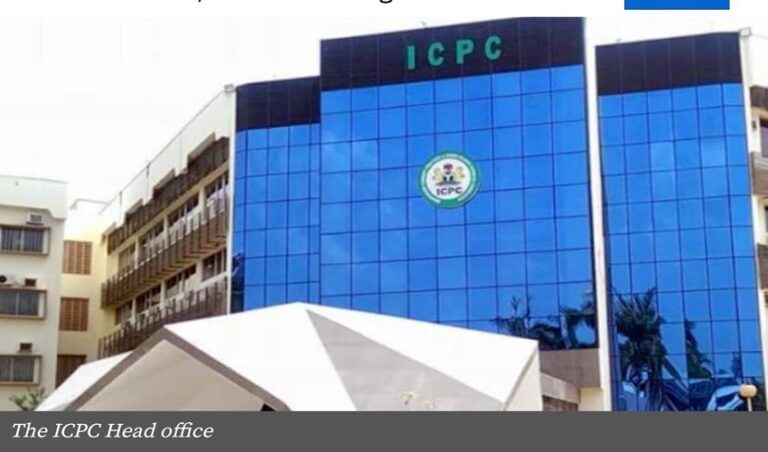
ICPC makes U-turn, says no discrepancies in student loan disbursements

0

THE Independent Corrupt Practices and Other Related Offences Commission (ICPC) has acknowledged an error in its statement on the investigation into the Nigerian Education Loan Fund (NELFUND).

The Commission noted that the mistake gave a false impression that discrepancies was observed in the loan scheme.

In a statement on Thursday, May 1, the Commission explained that a missing word in the “econd-to-last paragraph” of its earlier statement led to a misrepresentation of its findings.

“Unintentionally, the word “NOT” was missing in the second to the last paragraph of our earlier press release in respect of an ongoing investigation regarding Student Loan Scheme. The missing word created an erroneous impression that the alleged discrepancies or diversion has been established.

“We admit that this is not the case, indeed we accept that the same part of the sentence also contradicted the whole paragraph,” the statement said.

The ICPC stated that the paragraph in question should have read, *The ICPC confirmed that a clear case of discrepancies has NOT been established in the administration of the student loan scheme and announced that its investigation will now extend to beneficiary institutions and individual student recipients*.

“For avoidance of doubts, the Commission has only established the total amount of funds received and disbursed so far by NELFUND. 

“The impression of diversion and the issue of discrepancies do not exist at this stage; the investigation would have to move into the receiving institutions and persons before any reasonable deductions could be made,” the latest statement read.

However, going by this, The ICIR can still confirm that the N44 billion quoted by the ICPC was conflicting with NELFUND claim of disbursing N53.8 billion to students for institutional fees and upkeep allowances in its latest report released on Friday, April 25.

A breakdown of N53.8 billion, which the organisation said it disbursed, showed that N30.17 billion was allocated for institutional fees, while N23.65 billion was earmarked for student upkeep.

The ICPC also said 299 institutions benefited from the loan scheme, contradicting NELFUND’s report of 271 institutions listed on its portal.

NELFUND, however, has dismissed any mismanagement, insisting its figures were accurate and the process was fully automated, leaving no room for manipulation. 

US National Security Adviser, deputy set to quit Trump government

UNITED States President Donald Trump’s National Security Adviser, Mike Waltz, is set to resign from his position, marking the first shakeup within Trump’s inner circle since he assumed office in January.

This latest development was confirmed by four sources familiar with the situation according to Reuters.

The report also stated that Waltz’s deputy, Alex Wong, an Asian expert and former State Department official who focused on North Korea during Trump’s first term would also step down.

The ICIR reported that Waltz shared war plans in a signal messaging group that included a journalist days before the US attacked Houthis in Yemen in March.

Waltz, a 51-year-old former Republican Congressman from Florida, came under fire within the White House after the Atlantic’s editor-in-chief, Jeffrey Goldberg, who was erroneously added to an encrypted Signal chat group published the story a few days after.

During a later Cabinet meeting attended by Waltz, Trump emphasised the importance of conducting such discussions in a secure environment, an unmistakable indication of his dissatisfaction. 

Nonetheless, both he and other White House officials voiced their confidence in Waltz at the time and Waltz also attended Trump’s televised Cabinet meeting on Wednesday.

Sources indicated that the Signal controversy was not the only issue held against Waltz.

According to a source familiar with the Cabinet’s internal dynamics, Waltz was considered too hawkish for Trump, who prefers to avoid war, and was viewed as ineffective in coordinating foreign policy across multiple agencies, one of the national security adviser’s primary responsibilities.

“The system isn’t running properly,” under Waltz, said the source, who spoke on condition of anonymity.

The National Security Council (NSC) serves as the primary forum for presidents to coordinate security strategy, with its staff frequently playing a crucial role in shaping U.S. responses to some of the world’s most volatile conflicts.

It remains unclear who will succeed Waltz, but one potential candidate is US Special Envoy Steve Witkoff, who has been engaged in diplomacy related to both the Russia-Ukraine conflict and the Middle East, according to a source.

Deputy Secretary of State Christopher Landau was also mentioned as a potential candidate, the same source said. 

The ICIR reported that United States Defence Secretary Pete Hegseth was reported to have also repeatedly shared details of a March attack on Yemen’s Iran-aligned Houthis in a separate signal message group.

The revelation emerged just days after Dan Caldwell, one of Hegseth’s top advisers, was escorted out of the Pentagon after being identified in an investigation into leaks at the Department of Defence.

After Caldwell’s departure, Darin Selnick, who recently became Hegseth’s deputy chief of staff, and Colin Carroll, former chief of staff to Deputy Defence Secretary Steve Feinberg, were placed on administrative leave and dismissed last Friday.

Similarly, Pentagon’s former top spokesperson, John Ullyot, who resigned last week, criticised the Pentagon leadership in a POLITICO Magazine opinion piece published on Sunday. 

The Trump administration has taken a hardline stance against leaks.

NELFUND dismisses fund mismanagement after ICPC uncovers discrepancies in disbursement

0

THE Nigerian Education Loan Fund (NELFUND) has denied allegations of fund mismanagement, following gaps identified by the Independent Corrupt Practices and Other Related Offences Commission (ICPC) in its disbursements of student loans.

In a statement signed by its Director of Strategic Communications, Oseyemi Oluwatuyi, on Thursday, May 1, the agency said no money had been misappropriated, stolen, or unaccounted for by the Fund.

Responding to what it described as a “coordinated distortion of facts,” NELFUND stated that all disbursements were fully automated, time-stamped, and verifiable, with zero human interference in its loan application process.

Recall that the ICPC had earlier today revealed discrepancies in funds disbursed by NELFUND. The anti-corruption agency also disclosed the amount received by NELFUND since its inception. 

While NELFUND claimed to have disbursed N53.8 billion to students for institutional fees and upkeep allowances in its latest report released on Friday, April 25, the ICPC said only N44.2 billion had been disbursed so far.

A breakdown of N53.8 billion, which the organisation said it disbursed, showed that N30.17 billion was allocated for institutional fees, while N23.65 billion was earmarked for student upkeep.

However, the ICPC’s investigation of NELFUND’s activities revealed that the total money received by NELFUND was N203.8 billion.

The ICPC said it found that the total amount disbursed by NELFUND to institutions from inception was about N44,200,933,649.00.

The ICPC also said 299 institutions benefited from the loan scheme, contradicting NELFUND’s report of 271 institutions listed on its portal.

Dismissing the ICPC findings, NELFUND stated that ICPC claims stemmed from confusion between NELFUND and older education financing mechanisms handled by different government bodies.

“The figures and funding amounts currently being misrepresented in the public are drawn from entirely different education financing interventions predating NELFUND’s operational commencement. They bear no relevance to the current student loan scheme and should not be falsely attributed to this institution.

“NELFUND operates a zero human interface, fully automated loan system that eliminates opportunities for financial misconduct. Every application and disbursement is digitally tracked, time-stamped, and verifiable.

“Our commitment to transparency and cooperation with oversight agencies, including the ICPC, is total and unwavering. We have complied fully with every request for information and will continue to uphold the highest standards of public accountability,” NELFUND added.

The conflicting figures came amid a report by Guardian that exposed how at least 51 institutions were allegedly imposing illegal charges ranging from N3,500 to N30,000 on student loans.

The report said both NELFUND and the National Orientation Agency (NOA) accused these institutions of deceptive practices, alleging that they collected institutional fees from the government without fully passing them on to students. 

The institutions were also accused of a lack of transparency, including failing to disclose disbursement records.

At some of these universities, students reported that additional fees were imposed without clear explanations, while others claimed they were denied refunds for fees paid before NELFUND disbursed the funds. 

Reacting to this, the ICPC said it had a comprehensive investigation into alleged discrepancies surrounding the disbursement of the student loans.

The commission added that letters of investigation and invitations were dispatched to key stakeholders, including the Director General of the Budget Office, the Accountant General of the Federation, and senior officials from the Central Bank of Nigeria.

Okpebholo raises minimum wage in Edo by N5,000

EDO State Governor Monday Okpebholo has increased the minimum wage for workers in the state from 70,000 to 75,000.

The governor announced this on Thursday, May 1, during the commemoration of this year’s Workers’ Day. 

“Today, I am proud to announce that our administration has approved a new minimum wage of N75,000 per month for Edo workers,” said Okpebholo. 

The governor noted that the gesture was his way of “saying thank you, Edo workers”, noting that he believed the new wage would make a real difference in the workers’ lives. “We count on your renewed dedication as we build a better Edo together,” he stated.

The ICIR reports that Edo was among the first states to approve N70,000 as the minimum wage in Nigeria. The state’s immediate past governor, Godwin Obaseki, approved the payment in April 2024.

The ICIR reported that President Bola Tinubu signed a new N70,000 minimum wage bill into law in July 2024. The bill sought to increase the national minimum wage and reduce the period for periodic review from five years to three years.

Governors across the country’s 36 states had opposed the N60,000 minimum wage initially proposed by the Federal Government.

Lagos State Governor Babajide Sanwo-Olu, in response to the Federal Government’s minimum wage, approved N85,000 for the state workers in October 2024.

The minister of the Federal Capital Territory (FCT), Nyesom Wike, also approved the immediate payment of N70,000 as the new minimum wage for all workers engaged by the FCT Administration in November 2024.

Some states approved between N70,000 and N80,000 for their workers.

As of February 2025, some government workers were still demanding payment of the new wage despite its approval.  

Workers Day: NLC demands 65-year retirement age for civil servants

THE Nigeria Labour Congress (NLC) has called for an increase in the retirement age for all civil servants.

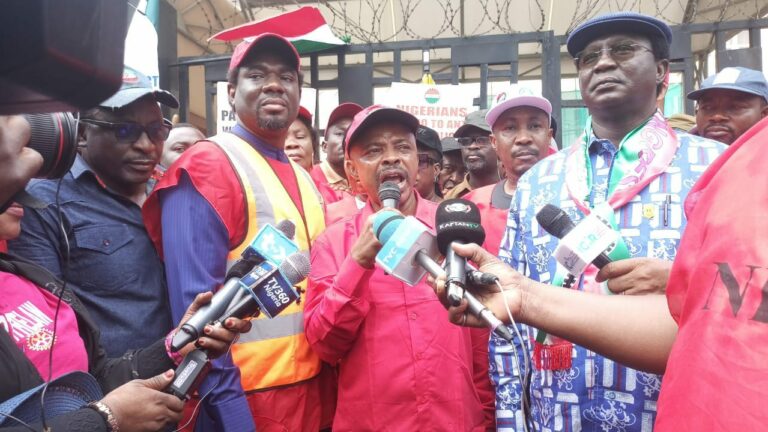
The NLC National President, Joe Ajaero, made this demand on Thursday, May 1, during the Workers Day commemoration at Eagle Square, Abuja.

While presenting some of the NLC’s demands, Ajaero said, “It is imperative to extend the revised retirement age of 65 years or 40 years of service currently enjoyed by teachers, health professionals, and judges to all public servants.”

In its response to the workers demands during the May Day celebration in 2024. The ICIR reported that the Federal Government approved pension increases ranging from 20 to 28 per cent for pensioners under the Defined Benefits Scheme, effective from January 1, 2024.

President Bola Tinubu reaffirmed his commitment to enhancing workers’ welfare. In a Workers’ Day message (in 2024), Tinubu congratulated Nigerian workers and assured them of his dedication to improving their welfare and working conditions.

On April 30 that year, the president announced that his administration had approved a salary increase of between 25 per cent and 35 per cent for civil servants on the remaining six Consolidated Salary Structures.

Commemorating the celebration this year, President Tinubu reaffirmed his commitment to prioritising workers’ welfare. He described Nigeria’s labour force as “the engine of our economy and the key to our nation’s growth.”

In a brief message on his official X handle on Thursday, May 1, the president said “everyone, young and old, entrepreneur or employee, private or government-employed, whose meaningful contributions help, in no small way, to the development of our homes, communities, and our dear nation.

“Together, we will make Nigeria great again. Our administration has, and will continue to, prioritise workers’ welfare. Together, we will make Nigeria great again,” Tinubu said.

The ICIR reports that state chapters of the NLC and the Trade Union Congress (TUC) condemned the current plight of Nigerian workers and urged an immediate review of the N70,000 minimum wage, making it a key demand in the 2025 Workers’ Day celebration.

The unions presented their demands following Senate President Godswill Akpabio’s assurance that both the legislative and executive arms of government would not “shirk our responsibility to work together” in addressing workers’ concerns and fostering growth and prosperity. 

Labour leaders across the country argued that workers had become worse off under Tinubu’s administration, despite his promise to provide not just a minimum wage, but “a living wage.”

The leaders said Nigerian workers were looking forward to a review of the National Minimum Wage Act, which provides a review every three years, since, according to the labour leaders, the current N70,000 is no longer enough to meet workers’ needs.

The ICIR reported that Tinubu signed a new N70,000 minimum wage bill into law in July 2024. The bill sought to increase the national minimum wage and reduce the period for periodic review from five years to three years.

Governors across the country’s 36 states had opposed the N60,000 minimum wage initially proposed by the Federal Government. 

Addressing workers during the May Day celebration in Bayelsa State on Thursday, Chairman of the Trade Union Congress, Comrade Julius Laye, said “You know that the government introduced several taxes, and the hike in tariffs has impacted the workers negatively. The economic policies and the removal of subsidies have led to hyperinflation, so the minimum wage has become inadequate.

“Even the minimum wage is not enough to cover medicare. Incidentally, they have money to fly out to seek better medical attention, but the Nigerian workers do not have the means to do so”

As of February 2025, some government workers were still demanding payment of the new wage.