THE Nigeria Labour Congress (NLC) has called for an increase in the retirement age for all civil servants.
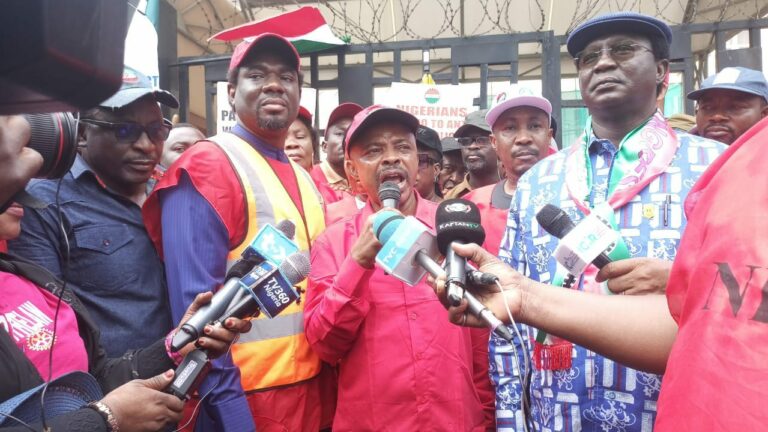
The NLC National President, Joe Ajaero, made this demand on Thursday, May 1, during the Workers Day commemoration at Eagle Square, Abuja.
While presenting some of the NLC’s demands, Ajaero said, “It is imperative to extend the revised retirement age of 65 years or 40 years of service currently enjoyed by teachers, health professionals, and judges to all public servants.”
In its response to the workers demands during the May Day celebration in 2024. The ICIRreported that the Federal Government approved pension increases ranging from 20 to 28 per cent for pensioners under the Defined Benefits Scheme, effective from January 1, 2024.
President Bola Tinubu reaffirmed his commitment to enhancing workers’ welfare. In a Workers’ Day message (in 2024), Tinubu congratulated Nigerian workers and assured them of his dedication to improving their welfare and working conditions.
On April 30 that year, the president announced that his administration had approved a salary increase of between 25 per cent and 35 per cent for civil servants on the remaining six Consolidated Salary Structures.
Commemorating the celebration this year, President Tinubu reaffirmed his commitment to prioritising workers’ welfare. He described Nigeria’s labour force as “the engine of our economy and the key to our nation’s growth.”
In a brief message on his official X handle on Thursday, May 1, the president said “everyone, young and old, entrepreneur or employee, private or government-employed, whose meaningful contributions help, in no small way, to the development of our homes, communities, and our dear nation.
“Together, we will make Nigeria great again. Our administration has, and will continue to, prioritise workers’ welfare. Together, we will make Nigeria great again,” Tinubu said.
The ICIR reports that state chapters of the NLC and the Trade Union Congress (TUC) condemned the current plight of Nigerian workers and urged an immediate review of the N70,000 minimum wage, making it a key demand in the 2025 Workers’ Day celebration.
The unions presented their demands following Senate President Godswill Akpabio’s assurance that both the legislative and executive arms of government would not “shirk our responsibility to work together” in addressing workers’ concerns and fostering growth and prosperity.
Labour leaders across the country argued that workers had become worse off under Tinubu’s administration, despite his promise to provide not just a minimum wage, but “a living wage.”
The leaders said Nigerian workers were looking forward to a review of the National Minimum Wage Act, which provides a review every three years, since, according to the labour leaders, the current N70,000 is no longer enough to meet workers’ needs.
The ICIR reported that Tinubu signed a new N70,000 minimum wage bill into law in July 2024. The bill sought to increase the national minimum wage and reduce the period for periodic review from five years to three years.
Governors across the country’s 36 states had opposed the N60,000 minimum wage initially proposed by the Federal Government.
Addressing workers during the May Day celebration in Bayelsa State on Thursday, Chairman of the Trade Union Congress, Comrade Julius Laye, said “You know that the government introduced several taxes, and the hike in tariffs has impacted the workers negatively. The economic policies and the removal of subsidies have led to hyperinflation, so the minimum wage has become inadequate.
“Even the minimum wage is not enough to cover medicare. Incidentally, they have money to fly out to seek better medical attention, but the Nigerian workers do not have the means to do so”
As of February 2025, some government workers were still demanding payment of the new wage.
THE reported resumption of Crypto Bridge Exchange (CBEX) a controversial digital trading platform previously linked to the loss of investor funds has cast fresh doubt on the effectiveness of the Securities and Exchange Commission’s (SEC) campaign against Ponzi schemes.
Despite a ban by SEC and an ongoing probe by the Economic and Financial Crimes Commission (EFCC), Punch reported on Thursday, May 1, that CBEX has resumed operations. The platform has allegedly introduced new withdrawal options in an effort to regain investor trust.
Two CBEX users reportedly confirmed the resumption on Wednesday, claiming that withdrawals for existing investors whose funds were wiped out in April would begin from June 25, after a purported audit by a UK-based insurance firm. However, only new accounts are currently able to process withdrawals, while older accounts remain locked.
CBEX is notorious for promising investors a 100 per cent return within 30 days through supposed artificial intelligence (AI) trading. Many Nigerians are believed to have lost funds when the platform abruptly froze withdrawals on April 14.
In response to growing digital fraud, the SEC has been running public awareness campaigns under the banner “Say No to Ponzi Schemes.” On April 26 and May 1, the Commission visited Wuse and Garki markets in Abuja to educate traders about the risks of investing in unregistered platforms.
However, the CBEX comeback casts doubt on the impact of these efforts.
The ICIR contacted SEC and EFCC spokespeople – Efe Ebelo and Dele Oyewale – but received no response. However, two SEC officials confirmed the Commission lacks a dedicated app to verify investment schemes. Instead, it relies on whistleblower tips and intelligence to investigate and shut down fraudulent operations.
“Tracking fraudulent investment schemes requires insider knowledge from those involved, including information about accounts and platforms used,” one official said.
“Technology is crucial for the SEC to track and uncover these schemes. The current DG (Director General) is a strong proponent of using technology,” the official added.
There is however a dashboard maintained by SEC that can be used to verify if an organisation has undergone the necessary regulatory compliance. Called the Capital Market Operator Search (CMOS), the website provides the names and functions companies operating in the market are licensed to carry out.
The officials affirmed that the Commission is working with the EFCC to track illegal financial activity, aided by powers under the new Investment and Securities Act (ISA). They also expressed skepticism that CBEX promoters would boldly return, given the scale of alleged fraud.
Public reaction to CBEX’s return has been mixed. While some Nigerians vow never to reinvest, others see the reopening as a chance to recover lost funds despite strong warnings from regulators.
One affected investor, speaking anonymously, cautioned against optimism. “No Ponzi scheme refunds money to investors; rather, they cajole new investors to join to be able to pay a few investors and cash out the remaining chuck of the money for themselves,” he said. “If there are one million people who trade forex, about 950,000 will lose their money. While only 50,000 will gain something.”
THE Nigerian Education Loan Fund (NELFUND) claims to be revolutionising access to higher education through its student loan programme. However, discrepancies between recent figures it released on its activities and those issued by the Independent Corrupt Practices and Other Related Offences Commission (ICPC) have raised concerns about its transparency and accountability.
In its latest report dated April 25, 2025, NELFUND stated that it had disbursed N53.8 billion to students in both institutional fees and upkeep allowance across various beneficiary higher institutions of learning.
While the report did not specify the number of students or institutions that have so far benefited from the loans, NELFUND’s official portal indicated that 271 institutions partnered with the scheme.
A breakdown of N53.8 billion, which the organisation said it disbursed, revealed that N30.17 billion was allocated for institutional fees, while N23.65 billion was earmarked for student upkeep.
However, the ICPC’s investigation of NELFUND’s activities revealed that the total money received by NELFUND was N203.8 billion.
A breakdown of money received by NELFUND shows that “N10 billion was an allocation from the Federation Allocation Account Committee, N50 billion was from the Economic and Financial Crimes Commission, N71.9B was from the Tertiary Education Trust Fund, while another N71.9 billion was also from the same Tertiary Education Trust Fund.”
The ICPC said it found that the total amount disbursed by NELFUND to institutions from inception to date was about N44,200,933,649.00, while 299 institutions benefited from the funds released.
This contradicts the N53.8 billion stated by NELFUND on its portal.
The ICPC also found that 299 institutions had benefited, rather than the 271 reported by NELFUND on its portal.
Allegations of fraudulent deductions by tertiary institutions
These discrepancies were uncovered after a media report surfaced, alleging irregularities in the disbursement of student loans under the NELFUND scheme.
According to a Guardian report, at least 51 tertiary institutions were implicated in illegal deductions from institutional fees.
These institutions were said to have deducted between N3,500 and N30,000 per student from the fees disbursed by NELFUND.
Both NELFUND and the National Orientation Agency (NOA) accused these institutions of deceptive practices, alleging that they collected institutional fees from the government without fully passing them on to students.
The institutions were also accused of a lack of transparency, including failing to disclose disbursement records.
At some of these universities, students reported that additional fees were imposed without clear explanations, while others claimed they were denied refunds for fees paid before NELFUND disbursed the funds.
President Bola Tinubu signed the Student Loans (Access to Higher Education) Act (Repeal and Re-Enactment) Bill into law on Wednesday, April 3, 2024, following approval by the Senate on Wednesday, March 20.
Although the Act is touted to ease access to tertiary education for Nigerian students, members of the Academic Staff Union of Universities (ASUU) have continued to describe it as an attempt by the government to abandon public universities’ funding.
Update: The ICPC makes u-turn, saying there was no discrepancy. Read it HERE
The Banff Centre Mountain Film and Book Festival is set to honour the best in mountain-themed literature, film, and photography in a festival gathering of filmmakers, authors, publishers, editors, photographers, athletes, adventurers, and readers.
Through film screenings, guest talks, readings, seminars, and book signings, the Festival offers a rich and diverse experience for enthusiasts of mountain storytelling.
A central feature of the festival is the book competition, an internationally acclaimed contest that recognises excellence in mountain literature across various genres.
Each year, over $29,000 in cash prizes is awarded across eight categories, selected by an international panel of writers, adventurers, and editors. Finalists eligible for the grand prize are announced every October.
In 2025, the book awards ceremony will take place in Banff on Thursday, November 6.
Storywriters, visual artists, activists, and changemakers worldwide are invited to apply for the SDG Action Awards, hosted by the UN SDG Action Campaign, which honours those driving progress toward the Sustainable Development Goals (SDGs).
The competition features three award categories:
Creativity Award: Recognises campaigns that have sparked SDG action through the power of imagination, storytelling, and creative expression.
Resilience Award: Celebrates initiatives that have shown exceptional resilience in the face of crises, adversity, or systemic barriers while promoting more just, sustainable, and peaceful communities.
Changemaker Award: Honors individuals who have made a significant impact in their communities and contributed meaningfully to SDG progress.
Winners will be celebrated at the UN SDG Action Awards Ceremony in October in Rome, Italy.
ON May 29, 2023, the Governor of Kaduna State, Uba Sani, assumed office after taking over from his predecessor, Nasir El-Rufai, whose tenure was marred by bloodshed, violent attacks, and widespread unrest.
In his inaugural address, Sani expressed his desire for a peaceful and united Kaduna State, promising to reshape it and make it a model of development, ethnic harmony, and cooperation.
“Kaduna State has had its fair share of bloodletting and unnecessary destruction. To this end, this administration will invest heavily in all legally permissible efforts, including deploying technology for security and law enforcement. We shall be assisting the activities of the police, the military, para-military and other security agencies in the state,” he said.
“We shall also engage traditional, religious institutions and community leaders to ensure effective intelligence gathering and work towards peaceful and harmonious coexistence within the various communities.”
The ICIR reports that Kaduna State was likened to a killing field during the era of Sani’s predecessor, Nasir El-Rufai. Kidnappers, abductors and insurgents took over many parts of the state and unleashed mayhem on innocent people, including women and children.
According to filtered data from the Armed Conflict Location and Event Data (ACLED), between May 29, 2015, and May 29, 2023, when El-Rufai governed the state for eight years, a total of 1,660 insecurity incidents were reported, leading to the death of 4,876 people.
The escalation of violence in Kaduna began almost immediately after El-Rufai took office. In 2015, there were 356 deaths from 24 violent incidents, marking the start of a troubling trend. Each year thereafter, the state grappled with complex crises such as banditry, ethno-religious violence, and militia attacks. By 2021, the situation peaked, with 1,225 fatalities from 480 incidents, and the trend continued.
A highlight of this period was the March 28, 2022, Abuja-Kaduna train attack, where terrorists derailed a passenger train, killing eight people and abducting dozens. This brazen assault on critical infrastructure paralysed movement on one of the most important transport routes between Nigeria’s capital and the north.
Infographic showing incidents and killings in Kaduna State
Another bloody episode occurred in March 2022 when heavily armed bandits stormed several villages in Giwa LGA, killing over 50 people in coordinated raids. Villages such as Kuda and Marke were left in ruins, with survivors recounting how their homes were torched, livestock stolen, and loved ones executed.
The ICIR reports how Southern Kaduna was turned into a battlefield due to crisis. One of the most devastating attacks in the area occurred on December 18, 2022, when terrorists attacked the Malagum 1 and Sokong communities, resulting in the deaths of 40 villagers. This incident followed the familiar pattern of targeted attacks by suspected Fulani militias, perpetuating a cycle of revenge killings and distrust between communities.
Between 2015 and 2022, Kaduna experienced over 3,600 fatalities from armed violence, according to the ACLED, with recurring patterns of attacks on farming communities, religiously motivated massacres, and government security crackdowns.
Terrorists turned the state into a war zone and made travelling from there to Abuja a nightmare with impudent attacks on road, rail and air facilities. The growing infamy was despite the heavy presence of the military and police in the state.
Data gathered showed that the insecurity crisis and related killings were more predominant in El-Rufai’s second tenure as governor than in the first four years. Between May 29, 2015, and the end of 2019, a total of 1,432 people were killed. Note that the governor’s first tenure ended on May 29, 2019.
However, between 2020 and when El-Rufai handed over to Uba Sani, on May 29, 2023, the number of deaths reported rose to 3,444. This is twice the fatality rate recorded in the first four years of his administration.
El-Rufai, while explaining what the state government had done to combat insecurity in 2021, lamented that the failure to sustain cooperation among northern states contributed largely to insecurity in the region.
The former governor came out in October 2022 to admit that despite the effort of the state government to end the crisis, the federal government, which should be in charge of security, seemed to have abdicated its duties.
“I can tell you that we have done our best to tackle insecurity in Kaduna State, but we are being hampered by the structure which lies with the federal government. You may call this resignation, you may call it surrender, but it is not abdication,” he said in an interview.
Kaduna security under Uba Sani
Speaking at the inauguration of the rehabilitation of the Kabbala-Costain Road in March, Sani indicated that the security situation in the state had improved under his administration, a view held by many observers.
“In Kaduna State today, we are not experiencing any religious crisis; we’re not experiencing any community crisis in Kaduna State. In the last 20 months, we have not experienced any of these unfortunate incidents,” he said.
However, data analysed by the ICIR shows that the number of fatalities and incidents has only declined slightly since he assumed office. Insecurity reached alarming levels in Kaduna State during the final two years of Nasir El-Rufai’s administration, with the state recording 1,225 and 1,074 deaths and 480 and 419 insecurity incidents in 2021 and 2022, respectively – the highest in decades. But the number of killings decreased to 546 and 816, while incidents reduced to 259 and 397 cases in 2023 and 2024, respectively.
Findings by The ICIR reveal that the crisis persisted into Uba Sani’s tenure, with bandit attacks on communities continuing. In fact, the number of incidents and deaths reported during the new administration’s first year exceeded those recorded during the first two years of El-Rufai’s tenure. In El-Rufai’s first two years in office, 52 incidents were reported, with 556 fatalities recorded. However, during Uba Sani first two years, 1,362 deaths have been recorded from 656 incidents.
For instance, on 11 December 2024, a Kaduna militia group clashed with the Nigerian army and the vigilantes in Chibiya (Kajuru, Kaduna) during which 8 soldiers, 1 vigilante, and an unspecified number of attackers were killed.
On 11 August 2024, the Buda community members attacked and killed eight people in the Chibiya community (Kajuru, Kaduna) over the allegation of being informants to the militia group that killed people in their community, coded separately.
In addition, on May 29, 2024, terrorists attacked and killed 12 persons at Maro Junction, a weekly Market in Maro Ward, Kajuru Local Government Area of Kaduna State.
On April 24, 2025, bandits killed at least three people and abducted eight others in an attack on Hayan Habuja village of Kakangi ward in Birnin-Gwari Local Government Area. The attack came just five days after 23 people were killed by bandits at Anguwan Danko community near the Dogon Dawa district in the eastern part of the local government.
Have things changed under Uba Sani?
Since assuming office in May 2023, Governor Uba Sani has implemented a multifaceted strategy to address insecurity in Kaduna State. His approach encompasses both kinetic and non-kinetic measures.
Shortly after assuming office, he held an emergency security meeting with some traditional rulers and heads of security agencies over the security situation in the state.
The meeting, which was held in August 2023 behind closed doors at the Sir Kashim Ibrahim Government House, Kaduna, followed the resurgence of kidnappings and bandit attacks in Soba, Zaria, Birnin-Gwari and some other parts of the state.
It featured key traditional rulers, including members of the state security souncil, including the deputy governor, Hadiza Balarabe; Emir of Zazzau, Nuhu Bamalli; Emir of Birnin-Gwari; Commissioner of Police; Director, State Security Services; and the representatives of the military and paramilitary agencies.
In September 2023, Uba Sani announced the expansion of the KADVS by recruiting 7,000 additional personnel, increasing the total force to 9,000 members.These recruits, drawn from local communities, were trained at the Police College and work closely with formal security agencies to enhance grassroots intelligence and response capabilities
In May 2024, he distributed 150 Hilux vehicles and 500 patrol motorcycles equipped with advanced technology to bolster the operational capacity of security forces. This initiative aims to improve mobility and response times in combating banditry and other criminal activities.
There have also been multiple instances where attacks were repelled by the security operatives, according to the ACLED record.
For instance, on November 18, 2024, suspected Boko Haram (JAS) attacked the NSCDC officers monitoring the power line around the Farin Kasa area, Birni Gwari, Kaduna. The security agents repelled the attack and killed over fifty militants during the onslaught. They declared seven officers missing. Four of the missing officers were later confirmed dead, and two returned while one was still missing.
Similarly, the Nigerian Air Force launched multiple offensives that destroyed the various terrorist enclaves. For instance, on 13 June 2024, Nigerian army troops engaged a militia operating in Kaduna and Katsina states in an armed clash around Idasu forest (Giwa, Kaduna). 36 militia members, including a militia leader, Buharin Yadi, were killed.
Around June 9, 2024, the air component of Operation Whirl Punch conducted airstrikes targeted at Kaduna militia camps in Sabon Birni Daji. Several militia members were killed, and fatalities were coded as 10.
The 2025 African Fact-Checking Awards, the continent’s longest-running celebration of fact-checking journalism, are now open to journalists, student journalists, and professional fact-checkers.
Now in their 12th year, the awards honour those who promote accuracy and fight misinformation. “Their work is vital for transparency and trust,” said Hlalani Gumpo, Africa Check’s head of outreach.
In 2024, the awards received 241 entries from 29 countries. Organisers expect even more this year.
Categories include:
Fact-Check of the Year by a Working Journalist
Fact-Check of the Year by a Professional Fact-Checker
Fact-Check of the Year by a Student Journalist
Winners receive up to $3,000; entries must be published between 1 May 2024 and 7 June 2025. Deadline: 7 June 2025 (midnight GMT).
THE National Judicial Council (NJC) has suspended three serving judicial officers for one year without pay, including a justice of the Court of Appeal, for myriad acts of judicial misconduct.
The disciplinary actions were part of key decisions made at the NJC’s 108th meeting, chaired by Chief Justice of Nigeria, Kudirat Kekere-Ekun.
Thiswas disclosed in a statement released Wednesday night by the NJC’s Deputy Director of Information, Kemi Ogedengbe.
According to the council, Jane E. Inyang of the Court of Appeal, Uyo Division, was found guilty of breaching Rule 3(5) of the Revised Code of Conduct for Judicial Officers.
The NJC stated that Inyang was found to have abused his office by issuing inappropriate Ex parte orders for the sale of Udeme Esset’s petrol station and other businesses at the interlocutory stage of the case.
“The act of judicial misconduct occurred while His Lordship presided over Suit No. FHC/UY/CS/46/2023, at the Federal High Court, Uyo Judicial Division, before his elevation to the Court of Appeal,” the NJC stated.
Similarly, another judge, Inyang Ekwo of the Federal High Court, Abuja Division, was also suspended for one year without pay. In addition, he was placed on the council’s watch list and barred from promotion for five years.
“The complaints against Ekwo arose from charge no. FHC/ABJ/CR/184/2021, wherein His Lordship delivered a ruling in a pending application without hearing the parties,” the NJC said.
According to the NJC, Ekwo ignored an application to set aside court proceedings conducted without the parties present and went on to dismiss the charge against the defendants. This action was deemed a violation of Rules 3.1 and 3.3 of the 2016 Revised Code of Conduct for Judicial Officers.
The third judge slammed with punishment by the NJC, Aminu Baffa Aliyu of the Federal High Court, Zamfara Division, was suspended for one year without pay for judicial wrongdoing.
In another development, the Council has directed the Governor of Imo State, Hope Uzodimma, to reverse the appointment of Theophilus Nzeukwu as acting chief judge of the state.
The NJC directed the Imo State Governor to appoint the most senior judicial officer in the High Court as acting chief judge, as mandated by Section 271(4) of the Constitution, leaving no room for discretion.
The NJC also empanelled nine committees to investigate pending complaints against 27 judicial officers for alleged acts of judicial misconduct.
The NJC also resolved that Nzeukwu should be issued a query to show cause within seven days why disciplinary action should not be taken against him for presenting himself to be sworn in as the acting chief judge of Imo State.
The President of the Customary Court of Appeal, Imo State, V. U. Okorie, who acted as Interim Chairman of the Imo State Judicial Service Commission and recommended the appointment of Nzeukwu, is required to show cause within seven days why disciplinary action should not be taken against him for his complicity in the recommendation.
The council resolved that thenceforth, the names of candidates being considered for appointment as judicial officers to superior courts of records would be published for information and reactions from the public.
AS the world commemorates International Workers’ Day today, Thursday, May 1, the National Agency for the Control of AIDS (NACA) has raised concerns over persistent stigma and discrimination against people living with human immunodeficiency virus (HIV) in workplaces across Nigeria.
In a statement on Thursday, NACA called on employers, labour unions, and government agencies to promote inclusive work environments that uphold the rights and dignity of all workers, especially those living with or affected by HIV.
According to the World Health Organisation (WHO), HIV is a virus that weakens the immune system by attacking white blood cells, making individuals more vulnerable to illnesses such as tuberculosis, various infections, and certain cancers.
The virus is transmitted through the bodily fluids of an infected person, including blood, breast milk, semen, and vaginal secretions and can also be passed from a mother to her child.
The statement, signed by the NACA Director-General, Temitope Ilori, stressed that “nearly two million Nigerians are living with HIV”, many of whom he said are part of the active workforce.
“As the world marks International Workers’ Day, we honour the contributions of workers everywhere and reaffirm our commitment to creating inclusive, supportive workplaces for all, including those living with or affected by HIV.
“Workplaces are more than sites of labour, they are communities. On this day, we call on employers, unions, and government bodies to champion HIV awareness, education, and zero-discrimination policies in the workplace,” he said.
The NACA warned that the dual burden of managing a chronic health condition and enduring workplace stigma could severely affect productivity and mental wellbeing.
“With almost two million people living with HIV in Nigeria, many are part of our workforce, contributing every day while facing the double burden of health challenges and societal stigma. We must ensure that HIV is never a barrier to employment, dignity, or opportunity.
“As we build a fair and safe work environment, let us remember that health rights are human rights. Together, we can create a world where every worker, regardless of their HIV status, is treated with respect, fairness, and care,” he added.
The ICIR reports that despite significant progress in the national HIV response, including expanded access to treatment and prevention services, stigma remains a key barrier to combating the epidemic. According to a report, out of the over two million people living with HIV in Nigeria, 1.7 million of them know their HIV status.
Rivers tops the list of the most affected states with 208,767 cases, followed by Benue State with 202,346 cases. Akwa Ibom have 161,597 reported cases, while Lagos also reported 108,649 cases of the virus.
NACA estimates that out of the 1.7 million people living with HIV, 1,693,457 are adults—579,209 males and 1,114,401 females. Additionally, about 54,983 children aged 0–14 have also been confirmed to be living with the disease.
While there is no cure for HIV infection, access to effective HIV prevention, diagnosis, treatment and care, including for opportunistic infections, has made HIV infection a manageable chronic health condition and enabled people living with HIV to lead long and healthy lives.
NACA noted that access to antiretroviral therapy (ART) has also improved considerably, with 1,735,808 people currently receiving treatment.
THE Independent Corrupt Practices and Other Related Offences Commission (ICPC) has commenced a comprehensive investigation into alleged discrepancies surrounding the disbursement of student loans under the Nigeria Education Loan Fund (NELFUND).
This action follows a recent media report alleging that no fewer than 51 tertiary institutions were implicated in illegal deductions and exploitation related to the NELFUND scheme.
In a statement released by the ICPC on Thursday, May 1, by the spokesperson for the commission, Demola Bakare, the anti-graft agency said some institutions were alleged to have made unauthorised deductions ranging from N3,500 to N30,000 from each student’s institutional fees received through NELFUND.
According to the commission, preliminary findings revealed a significant gap in the financial records of the disbursement process. While the Federal Government reportedly released N100 billion for the scheme, only N28.8 billion was disbursed to students, leaving an unaccounted N71.2 billion.
The Commission confirmed that its chairman’s Special Task Force immediately swung into action upon receiving the report.
It added that letters of investigation and invitations were dispatched to key stakeholders, including the Director General of the Budget Office, the Accountant General of the Federation, and senior officials from the Central Bank of Nigeria.
Additionally, the Chief Executive Officer and Executive Director of NELFUND were invited to provide documentation and explanations relevant to the case. According to the commission, the responses received were critically analysed, and interviews were conducted with the concerned individuals.
The ICPC said its investigation revealed that the total money received by NELFUND was N203.8 billion.
A breakdown of money received by NELFUND shows that “N10 billion was an allocation from the Federation Allocation Account Committee, N50 billion was from the Economic and Financial Crimes Commission, N71.9B was from the Tertiary Education Trust Fund, while another N71.9 billion was also from the same Tertiary Education Trust Fund.”
ICPC, however, found that the total amount disbursed to institutions from inception to date is about N44,200,933,649.00, while a total of 299 institutions have benefited from the funds released.
“To date, the total amount disbursed to 299 beneficiary institutions stands at approximately N44.2 billion, with 293,178 students benefiting from the fund,” the ICPC stated.
The ICPC confirmed that a clear case of discrepancies has been established in the administration of the Student Loan Scheme and announced that its investigation would extend to beneficiary institutions and individual student recipients.
The commission said further updates would be provided as the investigation progressed.
President Bola Tinubu signed the Student Loans (Access to Higher Education) Act (Repeal and Re-Enactment) Bill into law on Wednesday, April 3, 2024, following approval by the Senate on Wednesday, March 20.