ROMAN Catholic Cardinal Electors(under the age of 80) have isolated themselves on Wednesday, May 7, inside the Sistine Chapel until they select a successor to Pope Francis to lead the global Catholic Church.
The ICIR reported that the Vatican announced in April that cardinals would begin the election of a new Pope on May 7.
Cardinals under 80 are considered canonically qualified according to ‘conclave law’ and have already gathered in the Sistine Chapel to elect a new Pope, the spiritual leader of Catholics worldwide, with 135 eligible voting cardinals among the 252 who gathered in Rome.
The ICIR reports that in a tradition that dates back to the medieval era, the cardinals will enter the Vatican’s fresco-adorned Sistine Chapel following a public Mass at St. Peter’s Basilica, beginning their secret conclave to choose a successor to Pope Francis, who passed away last month.
For centuries, no pope has been elected on the first day of a conclave, so voting may stretch over several days before one of the red-robed Church cardinals secures the required two-thirds majority to become the 267th pontiff.
The past 10 conclaves lasted an average of just over three days, with none extending beyond five. The 2013 conclave, for example, concluded in just two days.
Only one round of voting will take place on Wednesday. After that, the cardinals may cast up to four ballots per day.
After each round, the ballots will be burned, black smoke rising from the chapel’s chimney will indicate no decision, while white smoke accompanied by ringing bells will announce that the 1.4 billion-member Church has a new pope.
During a Mass at St. Peter’s Basilica on Wednesday morning, just before entering the conclave, the cardinals prayed for divine guidance in choosing a pope who would provide “watchful care” for the world.
In his sermon, Italian Cardinal Giovanni Battista urged his fellow cardinals to put aside “every personal consideration” and focus solely on “the good of the Church and humanity” in selecting the next pope.
In recent days, cardinals have expressed varying views on the qualities they seek in the next pope.
No clear frontrunner has emerged, though Italian Cardinal Pietro Parolin and Filipino Cardinal Luis Antonio Tagle are widely regarded as the leading contenders.
Other possible candidates include Jean-Marc Aveline of France, Peter Erdo of Hungary, Robert Prevost of the United States, and Pierbattista Pizzaballa of Italy.
As in medieval times, the cardinals will be prohibited from communicating with outsiders during the conclave, and the Vatican has implemented advanced technology, including jamming devices, to ensure complete secrecy and prevent any eavesdropping.
The ICIR reported that Pope Francis died at the age of 88 on Monday, April 21, Easter Monday. He had suffered various ailments in his 13-year reign, with severe complications in recent weeks before his death.
World leaders and thousands of mourners gathered on Saturday, April 26, to lay him to rest at the Vatican.
INDIA has launched strikes on Pakistan and Pakistani-administered Kashmir beginning in the wee hours of Wednesday, May 7, morning, an action which could lead to war between both nations.
India’s army says it struck nine locations in Pakistan in response to a deadly militant attack on tourists in the Indian-administered part of Kashmir just over two weeks ago.
“Operation Sindoor was a reaction to seek justice for the Pahalgam attack. The operation destroyed nine terror camps, recruitment centres, terror launch pads, indoctrination and training camps. Niche tech weapons used to avoid collateral damage,” Indian Colonel Sophia Qureshi said in a press briefing this morning.
India’s Foreign Secretary Vikram Misri explained that India’s intelligence has proof of Pakistan’s role in the Pahalgam attack, noting that Pakistan is a haven for ‘terrorists’.
Today morning, India responded to cross-border terror. The attack has been aimed at destroying terror infrastructure across the border,” he said.
Pakistan reported that the attack killed 26 civilians, wounded 46 others.
The Pakistan army spokesperson said its forces shot down five Indian aircraft.
“Pakistan will respond to India at a time, place, and means of our own choice,” the spokesperson said.
Meanwhile, Indian police said that 10 civilians were killed, and 48 were injured by Pakistan.
The ICIR reports that in the April 22 Pahalgam attack that claimed 26 lives in India’s Kashmir region, militants separated the men from the women and children, asked the men their names, and then shot them at close range, security officials and survivors reported.
Around 1,000 tourists and 300 local service providers were in Baisaran Valley, often called “mini Switzerland” for its lush hilltop meadows and dense pine forests, when three gunmen carried out the attack, marking the worst in India in nearly 20 years.
A little-known militant group called the “Kashmir Resistance” initially claimed responsibility for the attack in a social media post, expressing anger over the settlement of more than 85,000 “outsiders” in the region.
THE Nigeria Police Force (NPF) said it has apprehended two suspected internationally wanted criminals involved in transnational crime operations.
The suspects, Felix Omoregie, alias ‘Eghosa Johnson Omoregie,’ and Okwudili Sabastine Ezeje, were arrested in separate operations across Nigeria in connection with human trafficking and armed robbery, respectively.
A statement by the NPF spokesman, Olumuyiwa Adejobi, on Wednesday, May 7, stated that Omoregie, who is a suspected ringleader of a human trafficking syndicate, was arrested in Benin City, Edo State, following a concerted intelligence operation.
It also noted that Omoregie had been on the run since 2021, after being convicted in absentia by Belgian authorities for multiple counts of aggravated human trafficking and organized crime.
According to the statement, the Belgian authorities issued an INTERPOL Red Notice for his arrest in December 2023.
The 47-year-old Omoregie is accused of trafficking Nigerian women, including minors, to Italy and other European countries for sexual exploitation. His operation allegedly involved manipulating victims through fabricated debts ranging between €20,000 and €50,000, forcing them into voodoo-based oaths to ensure compliance.
The NPF said Omoregie’s network had handlers in Belgium and France, who managed the victims and remitted the proceeds to him, adding that it discovered incriminating evidence at his residence, including a passport for a planned relocation to Canada.
“His criminal network involved handlers in Brussels and France who managed the victims’ activities and remitted proceeds to him. Following a conviction in absentia in Belgium in 2021 for multiple counts of aggravated human trafficking and criminal organisation leadership, Omoregie fled to Nigeria. Upon his arrest, a search of his premises revealed incriminating materials, including a photocopy of a passport intended for a planned relocation to Canada,” the statement read.
It added that the suspect is scheduled to be arraigned at the Federal High Court in Benin City.
Dubai-based armed robber captured in Enugu
In a separate operation, Okwudili Sabastine Ezeje, 37, was arrested at a hideout in Nsukka, Enugu State.
According to the police, Ezeje is a key member of an armed robbery gang linked to several high-profile heists in Dubai, including a robbery at Dubai Mall and a targeted attack on Al Ansari Exchange in Jumeirah.
The Nigerian police noted that Ezeje has been wanted by authorities in the United Arab Emirates (UAE) for armed robbery, drug trafficking, and other organised crimes.
It also stressed that despite being in Nigeria, the suspect continued to coordinate criminal operations remotely.
“The arrest was the result of strategic intelligence sharing and operational collaboration between the Nigeria Police Force, the Office of the National Security Adviser (ONSA), and the Dubai Police. The arraignment of Okwudili Ezeje is expected to take place shortly.
“The Inspector-General of Police, IGP Kayode Adeolu Egbetokun, commends all operatives involved in these high-profile arrests for their professionalism, diligence, and dedication to upholding Nigeria’s international law enforcement obligations,” the statement added.
While calling on citizens to remain vigilant and cooperative in the fight against organised crime, the Force stressed that it remains committed to enhancing its global policing partnerships and ensuring that fugitives find no haven within our borders.
“IF any youth is declared missing in Ilorin nowadays, the probability that he’s being illegally arrested or killed by police is higher than him being kidnapped. Ilorin police men are crazy”, These stark words from a social media user with the handle @Adamthallith on November 7, 2024, summarises a terrifying reality for many in Kwara State. Citizen frustration, already growing, had reached a boiling point with the killing of Kwara State Polytechnic student Qoyum on September 4, and the death of Suleiman Olayinka in police hands in November last year.
Qoyum was shot dead by officers. While the police admitted wrongdoing and dismissed those responsible, the harassment and human rights violations persisted.
Circulating picture of Qosim who died in the hands of Kwara police.
The case of Qoyum: an engineer’s dream cut short
When The ICIR sat with Qoyum’s father, Muskilu Yakeen, in Ilorin, barely two months after the demise of his son, whom he said harboured the dream of becoming an electrical engineer, the sadness and feelings of despair still lingered.
Qoyum had gained admission into the state polytechnic in 2022 to pursue the career his father had set out for him. They were both electricians, but the son felt the need to continue his career by going to learn the theoretical part of the job.
However, on the day, Qoyum was preparing for his sign-out ceremony to mark his completion of ND-2 two he was stopped and bundled into a police van around Agric area of Ilorin on September 5, 2024.
The late Qoyyum’s father, narrating how his child was shot in the hand by the Kwara police
His father stated officers accused him of being a “yahoo boy” (internet fraudster) and was fatally shot attempting to escape the vehicle while officers were allegedly chasing other youths.
After he was brought down, the officers fled the area but unfortunately, an attempt to save his life by a passerby was not enough to do so.
Qoyum’s father was asleep when he received a call from his brother that his son had had a ‘serious accident’. But due to the loss of blood, Qoyum had been rushed to the hospital.
“When we got to the hospital the doctor was asking if we were sure that it was a car accident. I told him that I was only informed he had an accident. It was later that we learnt he was actually shot. My brother who rushed him to the hospital only knew about the incident about two hours after he was hit by bullet.
“They probably would have done it without claiming responsibility; but there was this student who was also coming from ShopRite and was stopped by the same ‘Dangote’ police (officers using a car donated by Dangote). So those guys met Qoyum inside the police car,” he said.
The father said it was when the police were negotiating settlement with the other victim that Qoyum felt he was safe and took to his heels. “He ran and I think it was when they couldn’t get hold of him that he was shot in the hand,” he said, adding that, “Despite being shot, he was able to drag himself to a corner far away from their eyes. If he probably had made it to the main road, he would probably have been saved by passersby.”
However, the Kwara police responded with ‘promises’ of an investigation, and eventually dismissed the three officers in connection with his death.
For many, this was not an isolated incident but another chapter in Kwara’s ongoing saga of police brutality, reminiscent of the abuses that led to the #EndSARS protests and the disbandment of Special Anti-Robbery Squad (SARS) in 2020.
Another killing linked to the Kwara police: Suleiman Olayinka
Two months after Qoyum’s incident, 27-year-old Suleiman Olayinka was brutally harassed and beaten by police in Tanke, Ilorin. Eyewitnesses and family who spoke to The ICIR said three officers jumping from a yellow tricycle, manhandling Olayinka for his reluctance to enter their vehicle. He collapsed and was declared dead upon arrival at the police clinic in Ganmo.
Picture showing injury sustained by Olayinka during his encounter with the Kwara police, as shared by a family member.
Olayinka collapsed during the encounter, but by the time officers conveyed him to the station, his body was unnervingly still. Olayinka was later declared dead upon reaching the police clinic in Ganmo, his cousin, Abdullahi Ajase said.
Ajase, explained the arrest stemmed from a N400,000 dispute in a business transaction where Olayinka had paid N2 million of N2.4 million, promising the rest later. The aggrieved friend reported him to Ganmo Police Station.
The police spokesperson while speaking with The ICIR claimed Olayinka resisted arrest, leading to a fatal struggle, family members, including Olayinka’s mother and eyewitness vehemently dispute this account. They stated that the officers’ actions were excessively brutal.
Another picture, shared with The ICIR, showing injuries sustained by Olayinka during his encounter with the Kwara police
The circumstances remain controversial, but his killing added to a disturbing trend of young men in Kwara, particularly those perceived as successful or “flashy,” increasingly targeted by law enforcement officers.
The ICIR gathered that the abuse can be abrupt and systemically. In the state capital, the police targeted school areas, such as Tanke, Oke Odo, Tippa Garage, Sanrab and many communities surrounding Kwara polytechnic Ilorin.
For Kwara polytechnic students, some of the students and sources who spoke with The ICIR listed Agric area, Oyun Bridge, Harmony and Tanke axis asare as where the police lurk around.
The Universal Declaration of Human Rights, (UDHR), set out fundamental human rights to be universally protected. Article 3 of the document states that, “Everyone has the right to life, liberty and security of person,” while article 5 safeguards everyone from being subjected to torture or to cruel, inhuman or degrading treatment or punishment.
Also, Article 7 submits that, “All are equal before the law and are entitled without discrimination to equal protection of the law.” The article makes it clear that, “No one shall be subjected to arbitrary arrest, detention or exile”, while Article 10 gives everyone an entitlement in full equality to a fair and public hearing by an independent and impartial tribunal, in the determination of his rights and obligations and of any criminal charge against him.
The Constitution of the Federal Republic of Nigeria, 1999 (as amended), outlines the fundamental human rights guaranteed to all citizens, including the right to life, dignity of the human person, personal liberty, fair hearing, private and family life, freedom of movement, and freedom from discrimination.
However, none of these laws have deterred violations of human rights abuses in Kwara as there have been many reported cases of abuse against the Nigerian police.
A change that never happened
After the #EndSARS protests rocked the country in 2020, there was widespread belief that police harassment of citizens would be curtailed. In 2021, the Kwara State government received panel report, recommended improved training and remuneration for officers. While the salary reportedly went up by 20 per cent in 2021 and 2024, The ICIR’s investigation confirms that these reforms have failed to curb their excesses.
Walking into a Police trap: the death of Jimoh Erubu Abdulqodir
On December 20, 2024, Jimoh Erubu Abdulqodir, an employee at Ola livestock, was home intending to settle a N220,000 debt he owed one of his bosses. He had gotten N350,000 from his family and planned to pay the debt from it when he returns to Offa from the new year break. That evening, a colleague called, asking him to meet at Balogun Fulani’s house a few blocks from his location, to collect a pair of pants and shoes he had said he would bring for him. Abdulqodir, who was preparing roasted yam, alongside his sister, hurriedly left unaware he was walking into a police trap.
Shortly after arriving, he was arrested by plainclothes officers along with the colleague who lured him out. The colleague was soon freed, but Abdulqodir never returned alive.
Jimoh Oladimeji, the deceased’s elder brother, explained they were taken on a motorcycle towards the police station, but before they got far, the other man was set free.
When his family received the first call about his arrest around 5:30 p.m. on the same day, his distraught mother, rushed to the police headquarters in Ilorin with a friend but was told that Abdulqodir could not be bailed that night as the complainant who had filed a petition against him had to be present.
Jimoh Oladimeji, the deceased’s brother, speaking with The ICIR
Around 10 p.m., police called Abdulqodir’s sister to bail him; she couldn’t make it that late. An hour later, they called again, saying he was at the general hospital.
“The officers who called my two sisters gave different accounts. One officer claimed he died in his cell, while another said it happened at the hospital. When we arrived at the station, they delayed us, telling us to return by 9 a.m. But before we got home, they called us back.
“At the SCID office, the Assistant Commissioner of Police fed us a vague story, saying he had left my brother sitting on a bench the previous night, only to return in the morning to hear that he had hanged himself. The room was barely six feet high but Abdulqodir himself was over six feet tall. The police told us he knelt down to hang himself, but we did not believe that,” the brother of the deceased said.
Oladimeji recounted finding a streak of bloodstains on both the wall and the tiles, right where his brother was made to sit. He was ‘tortured,’ he said.
Meanwhile, when The ICIR requested for the video of the bloodstain, the brother declined to share it, only allowing the reporter to watch on his video. In the footage seen by The ICIR, traces of bloodstain were sighted on the bench and the tiles of the supposed police corridor where he was first kept after his arrest.
“We were horrified when we got to the mortuary. My brother’s body had been operated on; his thighs had been cut open without any family member’s consent. His face and nose bore bruises, and when we asked what had happened, they gave weak excuses,” he added.
Other family members, including Oladimeji, explained that the deceased, who is a father of two daughters, did not have motive to commit suicide, as the money had been raised and did not show any sign of depression or weakness prior to the incident.
He further explained that although the Inspector General of Police, Kayode Egbetokun, visited them to sympathise and pledged to probe the controversies surrounding his death, they have no answers on if the erring officers have been fished and punished.
When The ICIR contacted the state police PRO for an update, she said the case had been transferred to Abuja.
A Pattern of abuse: extortion and harassment
Abdul (first name only), a University of Ilorin graduate, recounted multiple encounters.
On September 20, 2024, two men claiming to be officers from the Criminal Investigation Bureau (CIB) of A Division o forced entry into his apartment, ransacked it, and damaged his TV and lamp, using a blank paper as a “warrant.”
When they knocked he opened the door but resisted the initial attempt of the officers to enter his house.
“I asked them for a search warrant, but they produced a blank piece of paper. There was no name, no crime stated and nothing was on it. That was when I knew something was off. They had no real reason to be there,” he said.
The officers, however, forced their way inside. “They searched everything-my wardrobe, my soap, my bathing sponge. They even started writing down things like ‘soap’ on the empty search warrant they brought,” he explained.
Accused of cybercrime despite no evidence, he was coerced into transferring N51,000 to an account the provided for his freedom or risks arrest and detention.
Receipt of payment to withdraw money from POS to pay for Abdul’s freedom
A pattern of harrasment
This wasn’t Abdul’s first ordeal. In August 2021, four plainclothes officers scaled his fence, forced entry, and demanded N1 million. He spent a night in detention until an acquaintance intervened, securing his release for N100,000.
“I was inside my house, when my generator suddenly went off. I thought it was a power issue, so I stepped outside to check. As soon as I opened the door, four men in plainclothes forced their way in. They banged the door so hard that it hit my head. My mouth swelled instantly.
“They didn’t have a warrant, just ID cards,” he said.
“The officers couldn’t provide any evidence against me,” he explained. “But they still extorted N100,000 before letting me go.”
This incident is not peculiar to Abdul, a graduate of University of Ilorin, Olarewaju who only wants his first name published, stated that his experience with the Kwara police dated back to 2016 when he gained admission. He lived in Oke Odo, a school area where he said the police had tagged as a ‘red zone’ for internet fraudsters. He said in 2022, he had just come home from Katsina State where he did his NYSC when Police in a Camry hit the bike he and his friend were on carrying them to a mall around Tanke junction.
He, together with his friend and the bike man, fell into a deep gutter. He named the leader of the police squad who hit him as Asa, who he said is notorious for his violent behaviour against the students in that area.
He thought the officers would leave them after falling in the gutter but to his surprise they followed them with beating. His phone was collected and that of his friend for a quick search.
“I showed them my NYSC portal but my friend, who is still a student, tried to show them the school portal but because he was using iPhone 13, he was bundled inside the car.
“I had to call his sister and went to the station in front of the state sharia court where he was kept. We paid in cash to secure his bail,” he said.
Another resident Abdul Afeez showing how over N80,000 was extorted from him and his friend while on the road
Another resident, Abdul Afeez, showed stated that he had to pay N80,000 when him and his friend had an encounter with the police.
In 2024, Punch newspaper reported that 2,421 complaints of misconduct were filed against personnel of the Nigeria Police Force between 2021 and the first quarter of 2024. These misconducts includes harassment, extortion, unlawful arrests, unjust detentions, and even killings of citizens. However, the true number of complaints may be significantly higher, as many incidents go unreported.
Harassment cripples tricycle riders’ business
Students of Kwara polytechnic, being one of the most targeted groups, often lead to disruption of tricycle and motorcycle riders around Sango, Oyun, Agric and Polytechnic axis of Ilorin.
Although these riders are not the primary targets of the police, their businesses suffer significant disruptions whenever officers conduct their indiscriminate arrests.
The students, who are frequent passengers, have become wary of stepping out. This led to a decline in patronage for the transport operators.
Abu Muhammad, a tricycle rider touring Poly gate to Post office in Ilorin, narrating his experience to The ICIR.
“For instance, some of these students would always ask us before entering our tricycle if police were on the road, and once we told them they are doing ‘stop and search’ somewhere, they would back off because even during exams the officers would keep them waiting until they pay them,” one of the riders, Abu Muhammad said.
When students take Keke rides, the journey, according to sources, is often fraught with tension. They noted officers frequently stopped tricycles, causing panic among passengers, and some students, fearing arrest, abruptly abandoned the trip mid-way.
“Anytime some of these students see police officers or checkpoints, they will just jump out of the Keke.
“There was one student who was hit by a car last year when he jumped out of Keke because of the police. So, whenever this happens it affects our business as we won’t be able to collect money from them,” he added.
Tunde explained that the arbitrary police arrests and ‘stop and search’ have been affecting his business
Also, another rider, Tunde, explained that the extortion of students who patronised them have been affecting their business.
“What the students do now is to send people to market to get them what they need. They every send us too sometimes just to evade the police checkpoints on the road.
“From polytechnic to post office, you can meet like three police checkpoints waiting to stop us and extort those students. It’s now common, that affects our business a lot,” he added.
This is the same position of other tricycle drivers The ICIR spoke with.
More students at risk
Police harassment in school environments has reportedly led some students to transfer institutions.
Rosheedat, a University of Ilorin student, and her friend were stopped by police one evening in 2024 while on their way from their hostel in Tanke to grab a meal at Item 7 in Sanrab.
“They asked if we were students, and we said yes. We even opened our school portals to prove it,” Rosheedah recalled, adding that, “Then they were like we would follow them to the station, we literally begged them.”
Despite proving their student status, they were asked to step down from the bike and driven far from where they were picked up, their phones searched, and bank apps opened.
“You won’t believe they drove us from Sanrab to almost Sobi at night,” she stated, “They checked our phones, and they opened our bank apps. My friend had about N50,000 in his account, and they told him to send the whole amount. I had N27,000 in my account, they collected N25,000 from me.”
Rosheedat did not provide payment evidence, stating transactions were overridden and she will need to get a bank statement.
“Thank God one man offered us a ride. They even threatened to kill us that day. I was literally crying because I was scared and they were like if I kept crying they’ll kill us and there’s nothing anybody could do about it. I didn’t stop crying though my friend kept consoling me,” she stated.
For Rosheedah’s friend, this wasn’t the first time he had also been harassed and extorted by the police in Kwara state.
“They had extorted him so many times that he finally decided to leave. He transferred to Unilag because he couldn’t take it anymore,” she said.
Illegal detentions: the ordeal of Mukaila Habeebullah
Mukaila Habeebullah was arrested in a raid that happened around 8:40pm on December 5, 2024, in Oko-Olowo after using a public toilet.
Despite identifying himself as a law student and telling them his mother’s shop is nearby shop, he, alongside two others were handcuffed and thrown in the police van.
“Before the arrest, I asked the police politely the reason for the arrest and they were unable to give a reason, they were just trying to handcuff me. Thereafter, I shouted, calling my mom because the place was not far from her shop.
“When the pressure was too much, I angrily told them to tell me what exactly my offence was because I am a law student. On hearing that, one of them slapped me like twice from behind and the other one said he would blow a tear gas,” he said.
Despite his protest and that of his mother, he was taken to G-Division Oloje Police Station, where he spent the night in detention without food.
He explained that the following morning, an officer known as ‘Owo Eye’ taunted him further that he will be prosecuted but there was no real intention to take the case to court.
Habeebullah said his release came only after his brothers arrived and paid N15,500 for bail.
“I was assaulted, unlawfully detained from that night till they came for my bail at exactly 11:09 am next day. Of course, they collected N15,500 for the bail,” he said.
Although his money was subsequently returned after lodging a complaint with the Kwara police command, he noted that his experience in custody shouldn’t have happened.
“We were nine in the cell. Despite the fact that I barely spent 24 hours in the cell, the experience was unbearable, and I pray not to find myself in such situations again.
“First of all, I couldn’t sleep because we didn’t eat anything till dawn and we were urinating and defecating in the cell without water to flush or clean ourselves,” he narrated.
Legal expert bemoans police rights abuse, say it’s illegal
Human rights lawyer Mujeeb Abdulwasiu condemned the police’s unlawful targeting of individuals based on appearance (luxurious cars, tattoos, dreadlocks).
Human Rights Lawyer Abdulwasiu Mujeeb. SOURCE: LinkedIn.com
He noted that while the Administration of Criminal Justice Act (ACJA) and Police Act permit arrests on “reasonable suspicion,” officers misinterpret this subjectively.
He stressed that the law provides for a suspect’s right to silence and legal representation, which is often denied.
“This style of arrest receives no pat in the back from the law. But unfortunately, what the officers do is to give a subjective interpretation to the section 3 and 18 of the Administration of Criminal Justice Act (ACJA) and section 24 of the Police Act which permits them to arrest when there is reasonable suspicion that an individual has committed or is about to commit a crime.
Speaking the law that empowers the police to carry out search, he stressed that “where a search is to be conducted on a person or thing, the Police officer may do so with or without a search warrant by virtue of section 29 of the Police Act.
“However the power doesn’t extend search of phones or bags to gain access to their emails, chat applications, text applications, call history, contacts, accessories.”
Abdulwasiu highlighted that many police officers violate constitutional rights by failing to uphold the right to silence and access to legal representation after an arrest. These practices, he explained, not only undermine individual freedoms but also open the door to unlawful searches and detentions.
Kwara Police responds to concerns over human rights abuses
The Kwara State Police command spokesperson Ejire-Adeyemi Toun, stated that officers are consistently reminded to conduct themselves in a professional manner at all times, particularly when engaging with the masses.
“We contact and emphasise civility and professionalism at all times, and we hold our officers to these standards,” Adetoun said, assuring the public that any officer found to be acting unprofessionally would face internal disciplinary actions.
Kwara police spokesperson Ejire-Adeyemi Toun
Regarding specific cases, including those of Suleiman and Jimoh Abdulqodir, Adetoun confirmed that both have been transferred to the Force Criminal Investigation Department. She assured that the police force is committed to addressing such incidents thoroughly and that appropriate steps are being taken.
When questioned about “stop and search” activities, Adetoun insisted that police officers are strategically positioned in various locations to maintain overall security, not targeting any specific group or area.
“There is police presence everywhere, and officers conduct operations such as stop and search at specific points or locations based on the need for security. This is not intended to target any particular area but to ensure the general security of all citizens.”
Also commenting on cases of extortion within the force, Adetoun reiterated that any officer found engaging in such practices would be investigated. “I always encourage people to report extortion. If such information reaches me, it will be acted upon accordingly,” she stated.
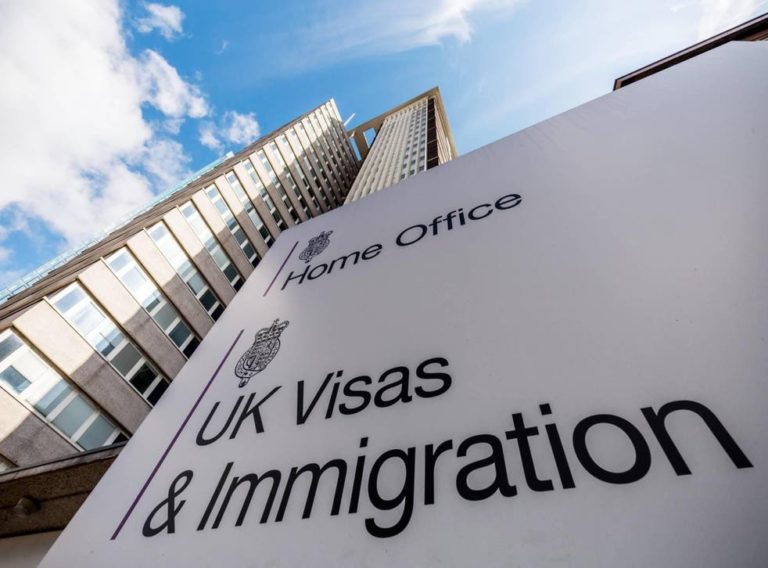
THE United Kingdom (UK) is set to introduce new and tighter visa access for citizens of Nigeria, Pakistan, and Sri Lanka, citing concerns over high rates of visa overstays and a surge in asylum applications from these countries.
This was revealed on Tuesday, May 6, by the Home Office spokesperson, who said that the UK Home Office is preparing to introduce stricter immigration policies targeting nationalities identified as having a greater likelihood of remaining in the country beyond the terms of their visas.
“Our upcoming Immigration White Paper will set out a comprehensive plan to restore order to our broken immigration system,” the spokesperson said.
The UK authorities said that the proposed restrictions were prompted by a trend of individuals entering the country on work or study visas and subsequently applying for asylum.
“To tackle abuse by foreign nationals who arrive on work and study visas and go on to claim asylum, we are building intelligence on the profile of these individuals to identify them earlier and faster.
“We keep the visa system under constant review and where we detect trends, which may undermine our immigration rules, we will not hesitate to take action,” the spokesperson added.
The paper, due later this month, will also present a wider strategy to restore order to what the government describes as a “broken” immigration system.
The ICIR reports that the Home Office announced last month that 43 failed asylum seekers and foreign offenders were returned on a charter flight to Nigeria and Ghana, as the government steps up international collaboration to secure our borders.
Nigerian applicants have recently encountered stricter visa regulations, such as limitations on bringing dependents and fewer opportunities for post-study employment.
Data from 2024 revealed a sharp rise in UK visa rejections for Nigerians, with the rejection rate increasing from one in 31 applications in 2022 to one in eight by late 2023.
It is worth recalling that just last month, the UK government announced a rise in visa fees for students, tourists, and other travelers.
The Home Office said that the student visa fee has increased from £363 to £490, reflecting a 35 per cent rise.
NIGERIA has recorded another tragic death of one of its citizens abroad, as 23-year-old student nurse, Elizabeth Tamilore Odunsi, was stabbed to death in Texas, United States, just two days before her graduation.
A similar incident was reported by The ICIR last week of a Nigerian nurse who died in almost a similar way at Leeds in the United Kingdom, after she was declared missing.
According to the Houston Police, the deceased in the latest incident, a British student, was found dead by police at her home in Houston shortly before 4 pm local time on Saturday, 26 April.
According to police, detectives were dispatched to the apartment above a complex for a welfare check but received no response when they knocked on the door.
They saw blood on a rear concrete patio and entered the apartment, where they found the 23-year-old on the kitchen floor with multiple stab wounds.
The police reported that upon entering the residence, officers found Odunsi’s body and also discovered her suspected killer, Chester Lamar Grant, in a bedroom.
Police stated that the 42-year-old, who was said to be her roommate, was found with at least one stab wound and was taken to the hospital.
The ICIR reports that Grant was arrested on Friday, May 2, and has remained in custody at Harris County Jail in Texas with a bond set at $500,000 (around £375,000).
According to ABC News, a magistrate revealed during a preliminary hearing that the roommates had argued over Grant’s cat.
A GoFundMe page set up to bring Ms Odunsi’s body back to the UK for burial had received more than £63,000 in donations as of 3 am UK time on Tuesday, May 6.
Organisers have asked for “help to give her the peaceful and dignified farewell she deserves”.
The ICIR reported on May 2 that a nurse residing in Leeds, United Kingdom, Nnena Miriam, was found dead in her apartment.
The Police said they discovered Miriam’s body following a missing person report.
A similar tragic incident occurred in March 2024 involving another Nigerian woman, Chidimma Ezenyili, who was also working in the United Kingdom.
Ezenyili reportedly collapsed on February 22 while caring for an elderly client, Ian Hale, at a residence on Scott Road, and passed away two days later.
THE National Drug Law Enforcement Agency (NDLEA) has recommended drug-free certificates as part of wedding requirements to curb violence and abuse in marriages.
The NDLEA chairman, Mohammed Buba Marwa, said drug tests should be mandatory for intending couples, similar to HIV/AIDS and genotype tests, to prevent domestic violence fueled by substance abuse.
Marwa said this in his welcome address at a training workshop organised by the agency for the Nigeria Governors’ Spouses’ Forum (NGSF) in Abuja on Tuesday, May 6.
Addressing participants, Marwa said, “I would like to encourage your excellencies, when you go back, engage your dear husbands on the need for drug-free certificates at weddings.
“This may appear a small matter, but it is at the root of some of the challenges we face. There is absolutely no reason why you do HIV, genotype, and so on, and the most important is actually the drug-free certificates because our daughters daily are chased around by husbands after they are intoxicated with drugs,” he stated.
He said he recently got a call from a man whose daughter got married three months ago and her husband, under the influence of drugs threatened to kill her with a knife while chasing her around the house.
He said one of the ways to address violence in marriage is to ask intending couples to bring their drug-free certificates before wedding, to enable them to know how if either party takes drug.
Marwa also noted that drugs could obstruct progress in families.
62,595 drug suspects arrested
Marwa said that under the Drug Supply Reduction Mandate encompassing drug seizures, arrests, prosecutions, and convictions, the agency recorded the arrest of 62,595 drug suspects (including 68 drug barons), seized 10,317,137.55 kilogrammes of assorted drugs, and secured the conviction of 11,628 offenders.
Besides, he said 1,330.56553 hectares of cannabis farms were identified and destroyed.
Training apt – First Lady
In her keynote address, the First Lady, Oluremi Tinubu, who was represented by the wife of the Deputy Senate President, Laila Jibrin Barau, commended the NDLEA “for courageously confronting the fight against illicit drug abuse and trafficking in the country.”
She said the training was timely, given the alarming statistics and prevalence of drug abuse in communities, which she said posed a threat to the nation.
“I urge you to continue to provide the right direction through prevention initiatives, advocate for those whose voices have been silenced by addiction, provide community interventions to support recovery and reintegrating people into communities after treatment,” Mrs Tinubu stated.
The First Lady urged participants to tackle the challenge of drug abuse with determination and commitment.
Also speaking at the event, the United Nations Office on Drugs and Crime (UNODC) Country Representative, Cheikh Ousmane Toure,emphasised that solutions to drug crisis must come from communities..
He urged state governments, particularly the First Ladies, to utilise their influence to mobilise resources, prioritise drug control efforts, and establish state-specific task forces and community centres for prevention and treatment.
Similar thoughts were echoed by the Head of the ECOWAS Drug Prevention and Control Division, Daniel Amankwaah, who encouraged state governments to invest in prevention and treatment initiatives at the state and community levels.
THE Nigerian Securities and Exchange Commission (SEC) has called on Nigerians to be wary of an investment solicitation by the Property World Africa Network (PWAN) and its associated platform, PWAN MAX, flagging the activity as illegal and potentially fraudulent.
The commission raised the alarm in a statement released by its management on Tuesday, May 6.
It said PWAN or PWAN MAX is not registered with the commission and, therefore, is not authorised to collect funds from the public or operate in any capacity within the Nigerian capital market.
“The attention of the Securities and Exchange Commission has been drawn to the activities of “Property World Africa Network” (PWAN), which holds itself out as a real estate investment company and is soliciting funds from the public for investment purposes, through “PWAN MAX”.
“The Commission hereby informs the public that PWAN/PWAN MAX are NOT REGISTERED by the Commission either to solicit investments from the public or operate in any other capacity within the Nigerian capital market,” the SEC said.
The commission hinted that investigations have revealed that PWAN’s operations exhibit the typical indicators of a fraudulent Ponzi scheme, including the promise of unusually high returns and failure to honour withdrawal requests from subscribers.
“Accordingly, the public is strongly advised to be wary about investing with PWAN/PWAN MAX, as any person who places such investment with these entities does so at his/her own risk,” it maintained.
Additionally, the SEC urged potential investors to verify the registration status of investment platforms via its dedicated portal: www.sec.gov.ng/cmos before committing their funds.
The ICIR can report that recent concerns over the loss of funds by unsuspecting Nigerians to Ponzi scheme operators have continued to raise worries as the commission looks for ways to inform and educate the public against investing in Ponzi schemes.
On April 30, the SEC drew public attention to the activities of an online platform known as TOFRO.COM (Tofro), flagging the cryptocurrency trading platform as a fraudulent Ponzi scheme.
This followed the recent crash of Crypto Bridge Exchange (CBEX), a controversial digital trading platform where about N1.2 trillion was reportedly lost by people who invested in the scheme.
CBEX, said to be notorious for promising investors a 100 per cent return within 30 days through supposed artificial intelligence (AI) trading
Many Nigerians are believed to have lost funds when the CBEX platform, notorious for promising investors a 100 per cent return within 30 days through supposed artificial intelligence (AI) trading, abruptly froze withdrawals on April 14.
THE Economic and Financial Crimes Commission (EFCC) has admitted it arrested and detained popular social media activist Martins Innocent Otse, also known as VeryDarkMan (VDM).
The commission also revealed the reason for his arrest.
The anti-graft agency made the revelations after some Nigerians stormed the commission’s headquarters in Abuja and the headquarters of the Guaranty Trust Bank in protest to demand his release.
Recall that VDM was arrested last week and remains in custody, a move that has been criticised by former vice president Atiku Abubakar and presidential candidate of the Labour Party in the 2023 elections, Peter Obi.
But in a clarification, the EFCC, in a statement posted on his official X handle on Tuesday, May 6, and signed by the spokesman of the agency, Dele Oyewale, said the VDM was arrested after he failed to honour several invitations to him after different petitions against him on financial misconduct.
According to Oyewale, contrary to speculations, the EFCC did not arrest VDM over his criticisms of the commission.
He said the EFCC, in the exercise of its mandate of tackling economic and financial crimes, invited the activist owing to a series of petitions bordering on sundry issues of alleged financial crimes raised against him.
“He refused to show up despite several invitations sent to him through his known addresses and medium of communication. The petitions pertain to grave allegations of financial malfeasance, which cannot be ignored by the commission,” Oyewale stated.
He added that VDM had been granted administrative bail and is already trying to perfect his bail conditions, and charges will be filed against him after concluding investigations.
The EFCC spokesperson added that the relevant agency would investigate the matter, adding that the commission had the lawful right to hold the suspect in custody as part of their investigation.
“The appropriate remand order was obtained in this regard. He has been offered an administrative bail and would be released after fulfilling all the bail conditions.
“The Commission appreciates the interest of Nigerians in its operations. The passion, enthusiasm, and torrential reactions to all of its activities are welcome,” the commission added.
The EFCC spokesman stated that assumptions about the commission’s motives for the arrest should stop, while stressing the importance of not interfering with the commission’s job.
The ICIR reported that a group of young Nigerians staged a protest at the headquarters of Guaranty Trust Bank (GTB) Abuja on Monday, demanding the immediate release of VeryDarkMan.
The demonstration followed his alleged arrest by the EFCC.
Eyewitnesses said the activist was detained after visiting a branch of GTB in Abuja with his mother to resolve an issue related to his account.He was reportedly taken into custody shortly afterwards.
Protesters gathered near the EFCC headquarters in the Jabi district of Abuja, carrying placards and chanting slogans such as “He’s not a thief!” and “Release VDM!” The protest caused significant traffic disruptions, drawing the attention of motorists and bystanders.
On social media, the hashtag #FreeVDM has been trending nationwide, with supporters, civil society groups, and prominent figures expressing concern over Otse’s arrest and detention.
ARSENAL, Barcelona, Paris-Saint Germaine (PSG), and Inter Milan are all prepared to follow the tension-soaked route to the Champions League final, with the semifinal second-leg set for today, May 6, 2025.
This week’s semifinal second-leg matches on Tuesday and Wednesday promise to be intense, with only two teams emerging victorious to reach the Champions League final in Munich, Germany.
The semifinal’s second-leg matches will build on the results from the first legs played last week, determining which two teams will proceed to the final.
The Champions League semifinals will feature four top teams: Inter Milan, Paris Saint-Germain (PSG), Barcelona, and Arsenal.
On Tuesday (Today), Inter Milan, Italy will play Barcelona, Spain – This game will take place at San Siro in Italy at 8 pm.
Inter Milan and Barcelona, who drew 3-3 in the first leg, will face off again, with the stakes high as only one team will reach the Champions League final in Munich on May 31.
Inter Milan, fresh from a 1-0 win over Verona in the Serie A, will look to build on that momentum against Barcelona, who themselves come off the back of a 2-1 victory over Real Valladolid in LaLiga. Inter currently sits second in Serie A, three points behind Napoli, while Barcelona leads LaLiga with a four-point advantage over Real Madrid.
On Wednesday, PSG, France, will face Arsenal, England. This match will take place at the Parc des Princes in Paris, France, at 8 pm.
Paris Saint-Germain holds a slender 1-0 advantage over the London Gunners after the first leg played at the Emirates Stadium last week.
Both PSG and Arsenal had disappointing weekends, losing 2-1 to Strasbourg and Bournemouth, respectively.
Arsenal will need an exceptional performance to overcome PSG, given their 1-0 deficit from the first leg.
Meanwhile, PSG has Ousmane Dembélé back in training, and he might be available for the match despite dealing with discomfort earlier.