THE Department of Homeland Security (DHS) has announced that the Trump administration will provide a $1,000 stipend and travel assistance to migrants who choose to voluntarily “self-deport” from the United States.
A statement from the DHS on Monday, May 5, revealed that the stipend and travel assistance for migrants returning to their home country will be provided through the CBP Home App.
The statement mentioned that any undocumented migrant who uses the CBP Home App to self-deport will be granted $1,000 after their return to their home country is confirmed through the app.
The self-deportation is a dignified way to leave the U.S. and will allow illegal aliens to avoid being encountered by U.S. Immigration and Customs Enforcement (ICE), the DHS said.
“Even with the cost of the stipend, it is projected that the use of CBP Home will decrease the costs of a deportation by around 70 per cent. Currently, the average cost to arrest, detain, and remove an illegal alien is $17,121,”it added.
The ICIR reports that President Donald Trump, a Republican, assumed office in January with a pledge to deport millions of people.
According to the DHS, the Trump administration has deported 152,000 people since January 20, which is lower than the 195,000 deportations recorded from February to April last year under Biden.
The Trump administration has attempted to persuade migrants to leave voluntarily by threatening heavy fines, seeking to revoke legal status, and deporting them to infamous detention facilities in Guantanamo Bay and El Salvador.
Trump previewed the stipend plan in April, saying the U.S. would consider allowing migrants to return.
In the announcement on Monday, DHS said people who choose to leave “may help preserve” the ability to return legally, but did not cite any specific pathway or program.
The ICIR reported that the Trump administration has imposed several policies and regulations since entering office in January.
Just last month, Trump revoked the visas of hundreds of international students and carried out arrests over alleged support for Hamas.
A few days later, the government restored the students’ visas after more than 100 lawsuits were filed by students who had lost their legal right to study at US universities.
THE communications application used by the former United States President Donald Trump’s national security adviser, Mike Waltz, has announced the suspension of its services after a reported hack exposed some of its messages.
Smarsh, a Portland, Oregon-based company that operates the TeleMessage app, revealed this on Monday, May 5, in an email that it is “investigating a potential security incident” and has suspended all its services “out of an abundance of caution.”
The ICIR reports that Smarsh did not provide more details about the breach.
In an email, the Department of Homeland Security said that the United States Customs and Border Protection agency said it had “promptly disabled TeleMessage as a precautionary step.”
“The investigation into the scope of the breach is ongoing,” it said.
A Reuters photograph showed Waltz using TeleMessage, an unofficial version of the popular encrypted messaging app Signal, on his phone during a cabinet meeting on Wednesday last week.
Waltz was removed from his position the next day, ending weeks of controversy surrounding his creation of a Signal group to share real-time updates on US military operations in Yemen.
The chat attracted significant attention after Waltz, or someone using his account, mistakenly added a prominent journalist to the group.
Concerns about the security of Waltz’s communications grew when it was reported on Sunday, May 4, that a hacker had infiltrated TeleMessage’s backend infrastructure and intercepted some of its users’ messages.
Tech news site 404 Media reported that the hacker had provided them with stolen material, some of which the site was able to independently verify.
The ICIR reported that President Trump dismissed Waltz on Thursday, May 1, and appointed Secretary of State Marco Rubio as his interim replacement.
Sources said Trump had decided to remove Waltz from his position after becoming entangled in a March scandal involving a Signal chat among senior Trump national security officials.
The ICIR also reported that United States Defence Secretary Pete Hegseth, after reports that he repeatedly shared details of a March attack on Yemen’s Iran-aligned Houthis in a signal message group.
Hegseth shared details of a March attack on Yemen’s Iran-aligned Houthis in a separate signal group chat that included his wife, brother, and personal lawyer, Reuters reported on Sunday, April 20.
However, Trump has expressed his support for Hegseth despite repeatedly sharing details of a March attack in the same Signal message group.
FORMER presidential candidate of the Labour Party (LP) Peter Obi has expressed concern over the poor performance recorded in the recently released results of the 2025 Unified Tertiary Matriculation Examination (UTME).
In a statement on Monday night, May 5, via his X handle, Obi said the results reflect a deep-rooted crisis in Nigeria’s education sector caused by decades of underfunding.
The Joint Admissions and Matriculation Board (JAMB) on Monday revealed that out of 1,955,069 candidates who sat for the examination, 1,534,654 scored below 200, the benchmark used for admissions into most competitive federal universities.
Only 420,415 candidates crossed the 200 mark, while just 12,414 (0.63 per cent) scored 300 and above.
Further breakdown of the UTME results showed that 983,187 candidates scored between 160 and 199; 488,197 scored between 140 and 159; and 57,419 scored between 120 and 139. Over 5,800 candidates scored below 120, including 2,031 who scored under 100.
The Board also disclosed that 40,247 underage candidates participated in the exam, but only 467 of them met the threshold for further assessment.
Reacting to the development, Obi stressed that meaningful development would remain elusive if the country continues to neglect education.
Citing global comparisons, Obi regretted that countries like Bangladesh and Turkey have far outpaced Nigeria in educational advancement, despite having fewer resources and populations.
“The latest JAMB results once again highlight the consequences of decades of underinvestment in education, a sector that should be central to our national development strategy,” Obi stressed.
Currently, Nigeria’s total university enrollment stands at approximately 2 million students.
By comparison, the National University of Bangladesh — a single university — has over 3.4 million students enrolled, despite the country having only about 75 per cent of Nigeria’s population. One university in Bangladesh surpasses the entire university enrollment in Nigeria.
Bangladesh, which once lagged behind Nigeria in virtually every measurable development index, now surpasses us in all key areas of development and the Human Development Index (HDI). Similarly, Turkey, with a population of about 87.7 million people, has over 7 million university students — more than three times Nigeria’s total university enrollment,” he said.
The former Labour Party presidential candidate reiterated his call for an aggressive investment in the education sector, saying Nigeria cannot make meaningful progress without prioritising learning at all levels.
“I have consistently said it: education is not just a social service; it is a strategic investment. It is the most critical driver of national development and the most powerful tool for lifting people out of poverty.
“We must now invest aggressively in education — at all levels — if we are serious about building a prosperous, secure, and equitable Nigeria,” he said
NIGERIAN celebrities brought African elegance and cultural pride to the global stage at the 2025 Met Gala on Monday, May 5, at the Metropolitan Museum of Art.
Among the standout attendees were Afrobeats stars Burna Boy, Tems, Ayra Starr, Chimamanda Ngozi Adichie, a literary icon, and Swanky Jerry, a celebrity stylist. Each showcased a unique interpretation of the theme, blending heritage and high fashion.
This year’s theme, “Superfine: Tailoring Black Style,” called for precision tailoring infused with cultural identity, a vision Nigerian icons embodied remarkably.
Temilade Openiyi, popularly known as ‘Tems’, captivated onlookers with a modern take on traditional African wear. Her ensemble, designed with a Western silhouette and adorned in vibrant Aso-Ebi print, was a tribute to her Nigerian roots, easily bridging tradition and trend.
Burna Boy (Damini Ogulu) stood out in a custom piece by Ghanaian-British designer Ozwald Boateng. Describing his outfit as “specially made,” Burna’s appearance was widely praised and went viral after he was seen enjoying the night with UK rapper Central Cee.
Ayra Starr embraced her “sabi girl” persona in a sleek, unconventional floor-length gown. The look, both minimalist and striking, embodied her signature bold style.
Chimamanda Adichie, a renowned literary voice, turned heads in a dramatic red gown.
As a member of the 2025 Met Gala host committee, Adichie joined fellow luminaries including Usher, Tyla, Dapper Dan, and Ayo Edebiri, affirming her influence beyond literature.
Celebrity stylist Swanky Jerry (Jeremiah Ogbodo) lived up to his reputation for fearless fashion.
Dressed in a vivid creation by Deji and Kola, he shared a photo from the night on hisInstagram page, which he captioned, “On duty for Met Gala 2025, superfine. Tailoring black style. When the theme calls for legacy, I deliver. Heritage in every stitch. Legacy in every look. Style crafted. Culture honoured.”
Also representing Nigerian heritage was Ayo Edebiri, the American-Nigerian actress whose outfit and hairstyle paid homage to her African ancestry, blending Western couture with Benin-inspired influences.
As always, the Met Gala — known as fashion’s biggest night — delivered unforgettable moments. This year, Nigerian stars didn’t just participate; they set the standard for cultural elegance and creative storytelling through style.
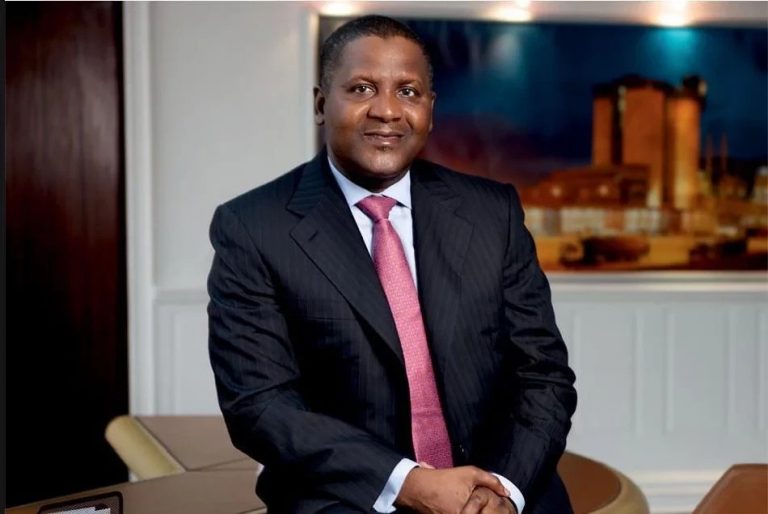
PRESIDENT of Dangote Group, Aliko Dangote, has described the recent appointment of new leadership at the Nigerian National Petroleum Company Limited (NNPCL) as a “revolutionary change” that would save Nigeria’s oil and gas sector.
The billionaire businessman said this when he visited President Bola Tinubu to commend him for putting together a new team at the state-owned oil firm, according to a statement on Monday night by the group’s chief branding and communications officer, Anthony Chiejina.
Dangote also described the new team as formidable, professionally competent, and eminently qualified to take NNPCL to a greater height.
He believes the new management team brings a wealth of technical expertise and managerial experience essential for revitalising Nigeria’s most strategic public enterprise.
He also believes the team reflects the president’s strategic intent to drive reform and innovation across the energy sector.
“We are confident that this team will address systemic challenges, align with the president’s vision of a $1 trillion economy, and reposition NNPC Limited for operational excellence and long-term sustainability,” Dangote said.
The ICIRreported on April 2 that Tinubu sacked the NNPCL Group Chief Executive Officer (GCEO), Mele Kyari, along with the chairman, Pius Akinyelure, and other board members.
The sack was a complete overhaul of the 11-man NNPCL board. The president replaced them with Bashir Ojulari as the new GCEO and Ahmadu Musa Kida as non-executive chairman.
His decision became necessary to enhance operational efficiency, restore investor confidence, boost local content, and advance gas commercialisation and diversification.
Dangote had, over the weekend, expressed worries that he was still fighting for the survival of his $20 billion refinery, assuring that he was determined to fight the cabals in the oil sector to a standstill.
Fielding questions from journalists in this regard, he clarified that the statement was not in any way connected to the new leadership of the NNPCL, but that the new leadership had so far been supportive in meeting the Dangote Refinery’s needs.
He said that the cabals he referred to were some major oil marketers and traders bent on frustrating Tinubu’s effort to revamp the nation’s economy.
He said recent activities and structural reforms introduced by NNPCL were strong indicators of the organisation’s renewed focus on transparency, efficiency, and accountability.
“The calibre of individuals at the helm, and their deliberate, reform-driven agenda, demonstrate a commitment to fostering a culture of performance and professionalism,” Dangote maintained.
ACTION Collective, a pressure group, has urged the Senate President, Godswill Akpabio, to honour the invitation of presidential panel reportedly set up to investigate sexual harassment allegations levelled against him by the senator representing Kogi Central, Natasha Akpoti-Uduaghan, when called upon.
In a statement issued on Monday, the group’s coordinator, Onimisi Ibrahim, expressed surprise over Akpabio’s alleged withdrawal from the panel without any official explanation.
“We have gathered that the Senate President cited undue interference by the Executive Arm of government and lack of confidence in the neutrality of the panel as reasons for his decision.
“Is Akpabio saying he lacks confidence in the current presidency or President Bola Ahmed Tinubu?” the group queried.
It further stated that Akpabio should either publicly address the allegations or step down as Senate President.
The ICIR, however, gathered that Akpabio’s alleged withdrawal from the panel is a “fake news.”
The Senate President’s media team also said President Bola Tinubu did not set up any presidential panel to probe the allegations.
Responding to the alleged withdrawal from the panel, the Senate President’s Special Adviser on Media and Publicity, Eseme Eyibo and the Consultant, Communications & Strategy Office of President of the Senate, Kenny Okolugbo, said the claim was untrue.
Eyibo said, “It is fake news. Ignore it. The senator in question did not petition the Presidency so why should the President be probing a non existing matter before him.
“The matter is an internal affairs of the Senate but the senator in question took it to the court and a Senate Committee which she petitioned had to step the matter down.”
The President of Citizens Quest for Truth, Oby Ndukwe, had on the Sunday edition of Channels TV’s ‘Politics Today’ claimed that Akpabio withdrew from the ‘presidential committee.’
Ndukwe said Tinubu inaugurated the panel on April 2 to investigate the allegations that have sparked national outrage and fueled controversy within the National Assembly.
She claimed that Vice President Kashim Shettima chaired the panel. According to her, the panel includes notable members such as the National Security Adviser, Mallam Nuhu Ribadu; the Attorney General of the Federation; and one representative each nominated by Akpabio and Akpoti-Uduaghan.
The ICIR reports that among other Nigerians peeved by the allegation, the National Association of Nigerian Students (NANS) had threatened to storm the National Assembly if Tinubu failed to intervene in the crisis.
The controversy stemmed from weeks of tension between Akpabio and Akpoti-Uduaghan, who accused the Senate President of sexual harassment on a television with a global audience.
In what many perceived as a retaliatory move, the Senate suspended the female lawmaker, who was already having a pending feud with the Senate leadership over seating arrangements.
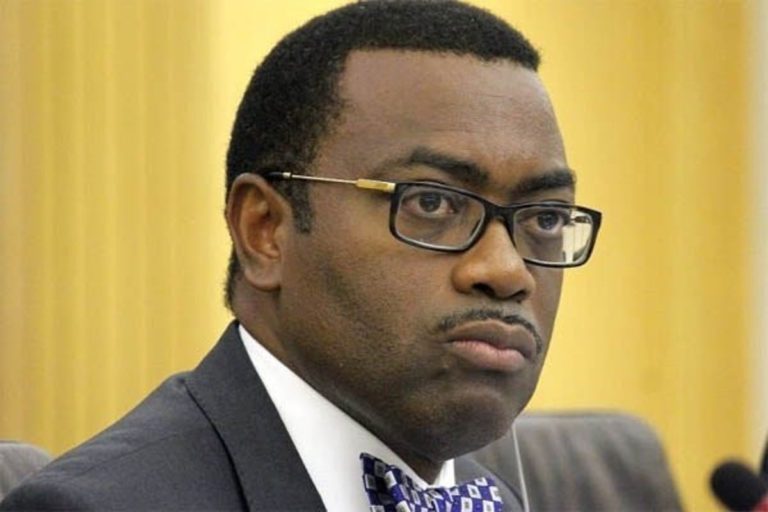
A development economist, Kazeem Bello, has said the response by the Nigerian presidency to the president of the African Development Bank (AfDB), Akinwumi Adesina, on the state of the Nigerian economy is wrong.
Bello said the rebuttal by the presidency exposed its “poor understanding of the economy.”
Bello, the chief executive officer/principal partner with Afrique Capital and Equity Funds Ltd, New York, United States, told The ICIR that he would have expected the presidential spokesperson to check with professionals before issuing a rebuttal.
He said the response by the presidential aide, Bayo Onanuga, exposed “his ignorance and perhaps bias against any talk on the economy as it relates to this government.”
What Adesina said
On May 2, Adesina reportedly said that with a current gross domestic product (GDP) per capita of $824, Nigerians were significantly worse off than they were in 1960, when it was $1,847.
The outgoing AfDB president was further quoted as saying that despite Nigeria being Africa’s largest economy by GDP, its economic structure remained deeply flawed and unsustainable.
Onanuga’s rebuttal
In a rebuttal by Onanuga on Monday, May 5, the presidency faulted Adesina’s position that Nigerians were worse off today than they were in 1960.
Onanuga criticised both the data cited by Adesina and the conclusions drawn from it.
Among others, he said Adesina’s claim that Nigeria’s GDP per capita was $1,847 in 1960, compared to the current $824 was inaccurate and not supported by historical data.
He argued that Adesina should know that GDP per capita was not the only criterion used to determine whether people live better lives now than in the past, adding that it is a poor tool for assessing living standards.
“Its primary usefulness is in giving us the metrics to compare economic output in a country or between countries.
“GDP masks many activities in a country’s economy. It neither discloses wealth distribution nor income inequality nor accounts for the informal economy, which experts have said is enormous. It does not account for subsistence farming or income transfer from one family member to another,” Onanuga said.
Economist view
Sharing his thoughts on the matter, Bello explained that Onanuga misinterpreted the issue, adding that Adeshina did not say that Nigeria’s GDP in 1960 was $1,847.
The economist maintained that there was no way that it could be possible.
“Norway has one of the highest PCIs in the world for such a long time, and today it is reported at over $100,000 based on its population. The same Norway had a PCI of $9,770 in 1960.
“So, how could Nigeria at that time have recorded a PCI of $1,847 in 1960. What Mr Onanuga should understand, and this can be excused because he’s making a literary comp-analysis of PCI, while on the other hand, Dr. Adesina is using comp-analysis based on relative time value proposition.”
He said Onanuga’s analysis was based on a linear time value algorithm of exchange rate parity between what the exchange rate is today in relative time and what it should have been in 1960 for Nigeria, but that Adesina based his reference on relative time-value analysis.
“That suggestion simply means that at the current period, if we reference back to 1960 based on the relative exchange parity difference, the PCI of Nigerians will be $1,847 in 1960 which means with even the $93 as projected by Mr Onanuga literal analysis, Nigerians then are enjoying the standard of living worth $1,847 today. That is what Dr Adesina is referring to based on relative time-value analysis.
“There is therefore a mix-up in the interpretation of Dr. Adesina’s assertion or numbers. He never says Nigerians PCI was $1,847 in 1960 because there was no way that could have been the case,” Bello submitted.
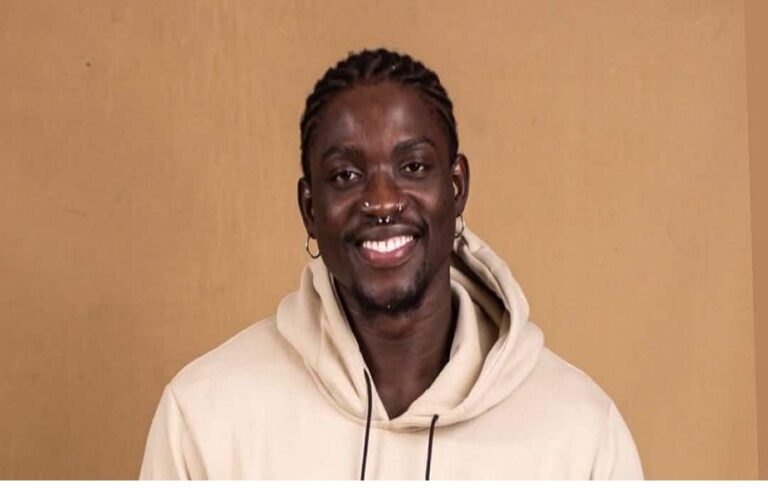
A group of young Nigerians staged a protest at the headquarters of Guaranty Trust Bank (GTB) Abuja on Monday, 5 May, demanding the immediate release of social media influencer Martins Vincent Otse, widely known as VeryDarkMan (VDM).
The demonstration followed his alleged arrest by the Economic and Financial Crimes Commission (EFCC)
Eyewitnesses said Otse was detained after visiting a branch of GTB in Abuja with his mother to resolve an issue related to his account. He was reportedly taken into custody shortly afterwards.
Protesters gathered near the EFCC headquarters in the Jabi district of Abuja, carrying placards and chanting slogans such as “He’s not a thief!” and “Release VDM!” The protest caused significant traffic disruptions, drawing the attention of motorists and bystanders.
“We are here because VDM speaks truth to power. He shouldn’t be punished for using his voice,” said one protester who declined to be named. Others accused the authorities of attempting to silence Otse over his outspokenness on social and political issues.
“This is not just about Martins. It’s about freedom of expression,” said another demonstrator. “Arresting someone without clear charges sends a dangerous message,” the protester added.
While the protest was peaceful, police and other security operatives were seen monitoring the situation from a distance..
On social media, the hashtag #FreeVDM has been trending nationwide, with supporters, civil society groups, and prominent figures expressing concern over Otse’s arrest and detention.
Former presidential candidate Peter Obi condemned the manner of his arrest via his social media channels.
He stated on X, “The display of force, lacking in transparency and civility, closely resembled an abduction, a disturbing method that not only creates fear but also risks being mimicked by criminal elements.”
Abubakar added, “The Tinubu administration’s systematic crackdown on opposition voices is nothing short of disgraceful. It is an affront to democratic norms and must be fiercely condemned and resisted.”
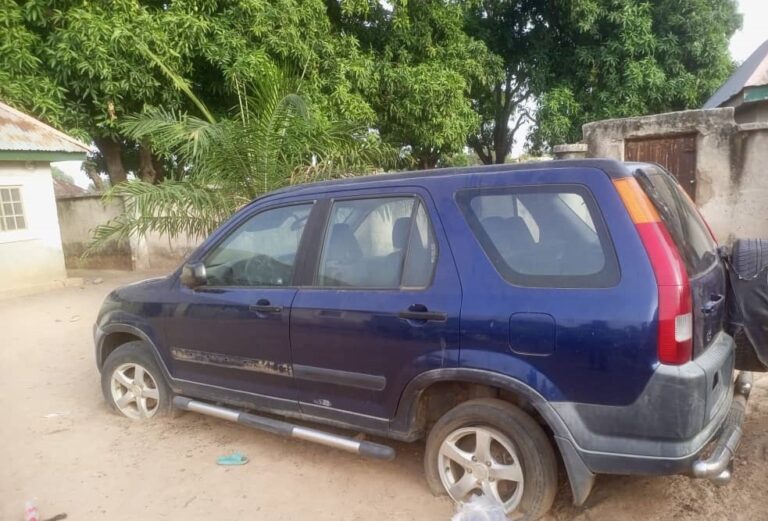
THE deaths of children trapped in abandoned or unattended vehicles have become a recurring tragedy in Nigeria, claiming at least 18 young lives since 2021.
The trend continues to plague the nation, as reports emerged again on Monday, May 5,that the Nasarawa State Police Command ordered an investigation into the death of five children found dead in an abandoned vehicle in the Agyaragu community of Obi Local Government Area (LGA) of the state.
In a statement signed by the command’s Police Public Relations Officer (PPRO), Ramhan Nansel, the state Commissioner of Police (CP), Shetima Jauro-Mohammed, ordered a thorough investigation to determine the circumstances surrounding the incident.
The CP said the children’s dead bodies were found inside an abandoned, unusable vehicle parked at the residence of one Abu Agyeme.
According to the police, on Sunday, May 4, at about 5:30 pm, a resident of the area, Ozimna Ogbor, reported to the police that the children were discovered ‘unresponsive’ inside an unserviceable vehicle parked in a compound.
The children were between six and 10 years old.
The CP expressed sadness over the loss and extended the command’s condolences to the bereaved families.
The ICIR tracked five such reported incidents since 2021. In addition to the most recent case in Nasarawa, children have reportedly suffocated to death in Kwara, Delta, Niger, and Lagos states.
Three siblings found dead in a car in Kwara
In February 2024, three siblings, a boy and two girls, died after suffocating in a car parked in their residential quarters in Ilorin, the Kwara State capital.
Their mother, Shade Silifat, had left home to buy noodles for their lunch. Upon returning, she found her children dead and fainted from the shock.
The incident occurred around 2 pm when the three children accidentally locked themselves inside a parked car in their quarters. The car reportedly belonged to their aunt and had been borrowed by their father.
The mother discovered the children’s shoes outside the car and raised an alarm after forcing the doors open.
The children were rushed to a clinic andthen transferred to the University of Ilorin Teaching Hospital, where they were pronounced dead.
The bodies were later buried in a Muslim cemetery according to Islamic rites.
Five children found dead in abandoned car in Niger
In April 2024, the bodies of five children were found in Minna, Niger State, after they were trapped in an abandoned vehicle.
According to reports, three children of the same parents and two others, whose ages ranged from five to 10, died in an abandoned Honda Civic with registration No. GO 778 ABC, after they locked themselves inside the car for hours.
The incident occurred in the Gurara Albishir area on Bida Road. The children were reportedly playing in a compound and accidentally locked themselves inside an abandoned vehicle that had been left unused for two years.
Decomposing bodies of two children found in an abandoned car
In another tragic episode, in 2021, the decomposing bodies of two children of a widow were foundin an abandoned vehicle in Abraka, Ethiope East Local Government Area of Delta State.
Two children, Kelvin Izakpa (10) and Fega Izakpa (7), were found dead inside a parked Honda Rover car with registration number AG 815 BKW along Okpoghoro Street around 2:50 pm on Friday, March 12, 2021.
Passersby were drawn to the scene by a foul odour, leading to the discovery of the children’s bodies inside a car that had been parked for nearly five years.
The vehicle owner, Eniku Aghogho Tayo, was reportedly arrested, and the vehicle was impounded for further investigation.
8 Children died of suffocation in locked vehicle in Lagos
The nation was left in utter shock in December 2021 when eight children who got into a vehicle to play were reportedly trapped and died of suffocation in Lagos State.
The incident occurred inside an abandoned vehicle at the Jah-Michael community in the Olorunda area of Lagos State.
The consequences of these incidents are devastating and often spark widespread outrage and grief, with many left wondering how such tragedies could occur.
Research indicates that there is no law specifying a time limit for parking or abandoning a vehicle in a particular location. The Nigeria Police Force also confirmed this.
The spokesperson of the Niger State Police Command, Wasiu Abiodun, told The ICIR that no law dictates how long a vehicle could be parked or abandoned at a specific spot.
AMINU (not his real name), a 7-year-old boy from Katsina State, was full of energy and often seen playing football barefoot in his village. One day, he started feeling sick with headaches and body pain. His mother suspected malaria and took him to a local chemist. Without proper tests, he was given antibiotics.
But Aminu didn’t get better. His parents took him from one clinic to another, each time receiving stronger antibiotics. By the time they reached a general hospital in Kano, his infection had become severe and resistant to nearly all available antibiotics. The doctors explained that the bacteria had become stronger and could no longer be killed by the drugs.
Aminu is one of many Nigerians affected by antimicrobial resistance (AMR), a growing crisis where infections become untreatable because germs no longer respond to the medicines meant to kill them.
What is AMR?
AMR happens when bacteria, viruses, fungi, or parasites evolve and stop responding to medicines meant to kill them. This makes infections harder and sometimes impossible to treat. Common illnesses can become deadly. People stay sick longer, face complications as common illnesses can become deadly.
Antimicrobials are drugs used to fight infections in people, animals, and even plants. They include:
Antibiotics – for bacterial infections
Antivirals – for viral infections
Antifungals – for fungal infections
Antiparasitics – for parasitic infections
AMR data
How serious is the problem?
Globally, drug-resistant infections were linked to 4.95 million deaths in 2019, including 1.27 million directly caused by resistance.
Why AMR is a big problem in Nigeria
In Nigeria alone, 263,400 people died in 2019 from drug-resistant infections more than from malaria or heart disease. The country ranks 20th out of 204 nations in drug-resistance death rates. This means more Nigerians died from conditions related to drug resistance than of malaria, respiratory infections, or cardiovascular diseases
People often buy antibiotics without prescriptions.
Many use them for viral infections like colds, which antibiotics cannot treat.
The NCDC had issued a warning against the indiscriminate sale and display of antibiotics. The centre also called for strict enforcement of prescription regulations to curb the growing threat of Antimicrobial Resistance (AMR).
Globally, the consumption of antibiotics increased by almost half between 2000 and 2018. The rate of increase has been steepest in South Asia, where the proportion of people receiving antibiotics each day has more than doubled in the last 25 years.
The increase shows that antibiotics aren’t always used in the right way. Sometimes they are used unnecessarily – for example, for a viral infection like a cold or flu, on which antibiotics will have no effect. Other times they are misused: someone takes the wrong type, dose or course of drug. These inappropriate uses of antibiotics are huge contributors to the emergence of drug-resistant bacteria.
2. Incomplete treatment
Some stop taking antibiotics once they feel better, allowing bacteria to survive and become stronger.
3. Poverty and inadequate access to drugs
Many can’t afford full treatment or professional care.
This leads to self-medication and use of fake or low-quality drugs.
In low-income countries like Nigeria where over 100 million people are multidimensionally poor, many cannot afford full medical treatments or consult qualified healthcare professionals. This leads to self-medication or reliance on substandard drugs, both of which increase the risk of resistance.
4. Poor sanitation and hygiene
Dirty water and living conditions help infections spread, increasing antibiotic use and resistance.
5. Lack of awareness
Many Nigerians don’t understand how dangerous AMR is.
Without awareness, people are more likely to misuse antibiotics.
6. Uncontrolled sale and distribution of antibiotics
Antibiotics are sold freely in some places, even by untrained staff.
The NCDC has warned against this and called for strict rules on sales and prescriptions.
Speaking at a programme titled “Strengthening healthcare facility antimicrobial stewardship programme in Nigeria”, the World Health Organisation’s Country Representative, Walter Kazadi stressed the need for coordinated and collaborative efforts in addressing AMR.
Kazadi who was represented by Laxmikant Chavan from WHO, acknowledged the overuse and misuse of antibiotics in Nigeria, particularly in primary health care settings, and the need to scale up fight against AMR across the country’s 40,000 hospitals.
“Antimicrobial stewardship (AMS) is important because, in Nigeria, we have overuse and misuse of antibiotics; we know there is a lot of evidence on that, and that is actually fueling and spreading this AMR pathogen. We need to have many AMS in our hospitals, at least in 50 per cent of our 40,000 hospitals,” he noted.
Anti-microbial Resistance : Image used for illustration
What Nigeria is doing about It
Nigeria’s response to antimicrobial resistance, led by the Nigerian Centre for Disease Control (NCDC) in 2016 followed a situational analysis that investigated common antimicrobial-resistant pathogens recovered from hospitals, animal sources, and agricultural and environmental sources.
The NCDC also conducted systematic reviews to assess the prescribing patterns of antimicrobials in hospitals across the country. These efforts informed the development of the National Action Plan (NAP), designed with a 5-year focus in mind (2017–2022).
The National Action Plan (NAP) includes:
Promoting responsible drug use in humans and animals.
Improving hygiene and vaccination to prevent infections before they start.
Training health workers and educating the public about AMR dangers.
Tracking resistance trends through a nationwide surveillance system.
Supporting research into new drugs, vaccines, and alternative treatments.
The NAP takes a “One Health” approach, involving human health, animals, agriculture, and the environment. Ministries, researchers, civil society, and global partners are working together to stop AMR from worsening.
Many health institutions face significant Infection prevention and control (IPC) gaps, such as poor hand hygiene, inadequate sterilisation of medical equipment, and limited vaccination coverage. NAP recommends strengthening IPC, which involves improving hygiene practices at all levels of care, ensuring adequate availability of water, sanitation, and hygiene (WASH) infrastructure, and promoting vaccination against preventable diseases like pneumococcal infections and typhoid. This pillar aims to curb the spread of infections and reduce reliance on antibiotics, particularly in resource-constrained settings.
The bottom line – AMR awareness and understanding
The NAP calls for targeted advocacy, education, and communication strategies to improve awareness of AMR among health professionals, farmers, policymakers, and the general public. Public understanding of AMR is limited in many communities, where antibiotics are often perceived as a quick fix for all infections.
To protect people like Aminu and prevent curable infections from becoming deadly, the NAP recommends: