Home Blog Page 298

(FULL LIST) Mohbad, Tems, Davido, Rema, others star at Headies Award

THE 17th edition of the Headies Awards, themed “Back to Base”, made its return to Nigeria on Sunday, 27 April, following a two-year stint abroad.

The event, held in Lagos State, celebrated the outstanding achievements of Nigeria and the African music industry.

Hosts Nancy Isime and IK Osakioduwa captivated the audience with their charisma, humour, and stage presence. The event showcased performances by some of Africa’s top talents, including Qing Madi, L.A.X, Odumodublvck, Kcee, Shallipopi, Flavour, Juma Jux, Nasboi, and Magnito.

Veteran Nigerian artist Kcee was honoured with the Special Recognition Award for his 26-year contribution to the music industry, cultural influence, and continued artistic evolution.

The ceremony also paid a glowing tribute to the late Mohbad, who was posthumously awarded Best Street-Hop Artiste for his track “Ask About Me.”

His family accepted the award and was given a standing ovation by the audience. Mohbad also got additional nominations, highlighting the enduring impact of his works.

In a moment of drama, rapper Odumodublvck, who won the Next Rated category, refused to leave the stage after event organisers cut his speech short.

Joined by his mother and entourage, he stood firm until his microphone was restored, allowing him to complete his remarks.

The 2025 Headies Awards showcase a night of elegance and significant accolades, underscoring the dynamic growth of African music.

See the full list of winners below :

Best Recording of the Year

Tems – Burning — Winner

Burna Boy – Higher

Ayra Starr & Giveon – Last Heartbreak Song

Sarz feat. Lojay – Billions

Producer of the Year

Sarz – Happiness

London – Ozeba — Winner

Magicsticks – Basquiat
Rema/Producer X/Cubeatz/Deatz/Klimperboy – Hehehe

Dibs – Different Pattern

Next Rated

Qing Madi

Shallipopi

Odumodublvck — Winner

Ayo Maff

Nasboi

Afrobeats Album of the Year

Stubborn – Victony

Work of Art – Asake

The Year I Turned 21 – Ayra Starr

Heis – Rema — Winner

Jiggy Forever – Young Jonn

Songwriter of the Year

Simi – Stranger

Qing Madi – Vision –Winner

Llona – Can’t Breathe

Bloody Civilian – Family Meeting

Wizard Chan – Stages of Life

Rookie of the Year

Llona

Kaestyle

Taves

Zerrydl— Winner

Best Rap Single

Shallipopi feat. Odumodublvck – Cast — Winner

Odumodublvck feat. Bloody Civilian & Wale – Blood on the Dance Floor
Ladipoe, Rozzz & Morrelo – Hallelujah

Magnito – Canada

Jeriq – Ije Nwoke

Best Vocal Performance (Female)

Ayra Starr – Last Heartbreak Song

Niniola – Level

Simi – Stranger

Liya – I’m Done —Winner

Yemi Alade – Tomorrow

Music Video of the Year

Rema – Charm (Dir. Perliks & Folarin Oludare)

Jyde Ajala – Metaverse

Perliks & Emeka Shine Shine – Like Ice Spice

Mattmax – Ojapiano

Director Pink – Egwu — Winner

TG Omori – Showa

Dammy Twitch – Na Money

Best Street-Hop Artiste

Seyi Vibez – Different Pattern

Ayo Maff feat. Fireboy DML – Dealer

Shallipopi feat. Odumodublvck – Cast

Zhus Jdo – Johnbull

Mohbad – Ask About Me — Winner

Afrobeats Single of the Year

Young Jonn feat. Kizz Daniel & Seyi Vibez – Big Big Things

Kizz Daniel – Twe Twe Remix

Chike feat. Mohbad – Egwu
Asake – Remember

Hyce, Boypee & Brown Joel feat. Davido – Ogechi Remix

Flavour – Big Baller — Winner

Viewers’ Choice Award

Young Jonn feat. Kizz Daniel & Seyi Vibez – Big Big Things

Hyce, Boypee & Brown Joel feat. Davido – Ogechi Remix

Chike & Mohbad – Egwu — Winner

Rema – Ozeba

Seyi Vibez – Different Pattern

Kizz Daniel – Showa

Tems – Love Me Jeje

Shallipopi feat. Odumodublvck – Cast

Flavour feat. Fireboy – Dealer

Flavour – Big Baller

Digital Artiste of the Year

Ayra Starr

Rema

Shallipopi

Tems

Davido — Winner

Kizz Daniel

Asake

Song of the Year

Showa – Kizz Daniel

Commas – Ayra Starr

Egwu – Chike and Mohbad

Lonely at the Top – Asake — Winner

Ozeba – Rema

Big Baller – Flavour

Best Vocal Performance Male

Lojay — Billions — Winner

Best Movie Soundtrack

A Tribe Called Judah — Winner

Special Recognition Awards

Babajide Sanwo-Olu, Lagos State Governor

Alex Okosi

Amaju Pinnick

Kcee

Humanitarian awards

Temitola Adekunle Johnson

Mitchell Mukoro

Best East African Artiste

Bien (Kenya)

Diamond Platnumz (Tanzania)

Juma Jux (Tanzania) –Winner

Bruce Melodie (Rwanda)

Azawi (Uganda)

Best Central African Artiste

Innoss’B (DRC) — Winner

Gaz Mawete (DRC)

Emma’A (Gabon)

Eboloko (Gabon)

Singuila (Central African Republic)

Kocee (Cameroon)


Namibia president sacks minister accused of rape

0

NAMIBIA’S president, Netumbo Nandi-Ndaitwah, has relieved the country’s minister of agriculture, who, according to local media reports, is under investigation for alleged misconduct.

Nandi-Ndaitwah’s office announced this in a statement shared on X on Sunday.

“The termination of tenure takes effect from Wednesday, 23 April 2025, when Hon. Dr. Mac-Albert Hengari should have tendered his resignation. Hon. Hengari has also been withdrawn from the National Assembly,” the statement read. 

The president appointed Hengari in March after assuming office to lead one of the country’s top economic portfolios, despite an ongoing police investigation over rape allegations dating back to 2024.

The allegations against Hengari surfaced on social media shortly after his appointment. They were raised by investment scheme operator-turned-activist Michael Amushelelo, who accused the police of covering up the rape case involving a 16-year-old.

Amushelelo also demanded that Hengari resign as minister, warning that if he refused, more evidence would be published against him.

However, the country’s Police Inspector-General, Joseph Shikongo, denied claims that the police downgraded the charge and attempted to bury the case.

Shikongo also denied allegations that the police refused to assist the alleged victim or pressured her into silence.

He explained that the case had been under investigation for five years because of its complexity.

A police spokesperson immediately released a statement two weeks after Hengari’s appointment that there was an ongoing investigation of a minor who had accused the agriculture minister of raping her.

According to local media, Hengari may also face prosecution for abduction and abortion, which is illegal in the conservative southern African country.

In March, the ICIR reported that Nandi-Ndaitwah became the first woman to lead Namibia, adding to the growing list of African nations that have elected women to the highest political office.

She is popularly known as NNN and a long-time loyalist of the South West Africa People’s Organisation (SWAPO) that has governed Namibia since its independence from South Africa in 1990.

Who will the next pope be? Here are some top contenders

0

By Darius von Guttner Sporzynski, Australian Catholic University

THE death of Pope Francis this week marks the end of a historic papacy and the beginning of a significant transition for the Catholic Church. As the faithful around the world mourn his passing, attention now turns to the next phase: the election of a new pope.

This election will take place through a process known as the conclave. Typically held two to three weeks after a pope’s funeral, the conclave gathers the College of Cardinals in the Vatican’s Sistine Chapel. Here, through prayer, reflection and secret ballots, they must reach a two-thirds majority to choose the next Bishop of Rome.

While, in theory, any baptised Catholic man can be elected, for the past seven centuries the role has gone to a cardinal. That said, the outcome can still be unpredictable – sometimes even surprising the electors themselves.

An unlikely candidate

Cardinal Jorge Mario Bergoglio – who became Pope Francis – wasn’t among the front-runners in 2013. Nonetheless, after five rounds of voting, he emerged as the top candidate. Something similar could happen again.

This conclave will take place during a time of tension and change within the church. Francis sought to decentralise Vatican authority, emphasised caring for the poor and the planet, and tried to open dialogue on sensitive issues such as LGBTQIA+ inclusion and clerical abuse. The cardinals must now decide whether to continue in this direction, or steer towards a more traditional course.

There is historical precedent to consider. For centuries, Italians dominated the papacy. Of the 266 popes, 217 have been Italian.

However, this pattern has shifted in recent decades: Francis was from Argentina, John Paul II (1978–2005) from Poland, and Benedict XVI (2005–2013) from Germany.

The top papabili

As with any election, observers are speaking of their “favourites”. The term papabile, which in Italian means “pope-able”, or “capable of becoming pope”, is used to describe cardinals who are seen as serious contenders.

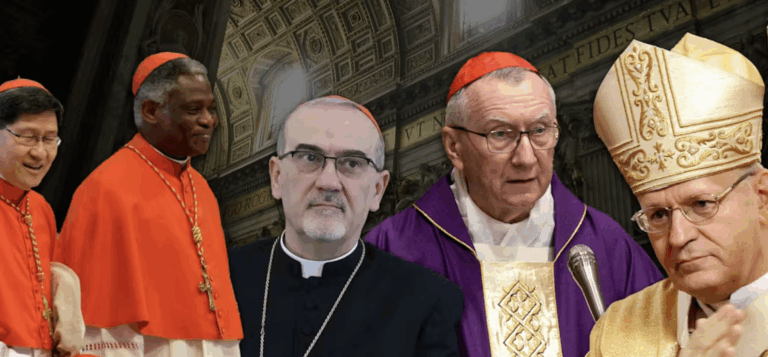
Among the leading papabili is Cardinal Pietro Parolin, aged 70, the current Secretary of State of Vatican City. Parolin has long been one of Francis’ closest collaborators and has led efforts to open dialogue with difficult regimes, including the Chinese Communist Party.

Parolin is seen as a centrist figure who could appeal to both reform-minded and more conservative cardinals. Yet some observers argue he lacks the charismatic and pastoral presence that helped define Francis’ papacy.

Another name to watch is Cardinal Pierbattista Pizzaballa, the Latin Patriarch of Jerusalem. At 60, he is younger than many of his colleagues, but brings extensive experience in interfaith dialogue in the Middle East. His fluency in Hebrew and his long service in the Holy Land could prove appealing.

Then again, his relative youth may cause hesitation among those concerned about electing a pope who could serve for decades. As the papacy of John Paul II demonstrated, such long reigns can have a profound impact on the church.

Cardinal Luis Antonio Tagle of the Philippines is also frequently mentioned. Now 67, Tagle is known for his deep commitment to social justice and the poor. He has spoken out against human rights abuses in his home country and has often echoed Francis’ pastoral tone. But some cardinals may worry that his outspoken political views could complicate the church’s diplomatic efforts.

Cardinal Peter Turkson of Ghana, now 76, was a prominent figure during the last conclave. A strong voice on environmental and economic justice, he has served under both Benedict XVI and Francis.

Turkson has largely upheld the church’s traditional teachings on matters such as male-only priesthood, marriage between a man and a woman, and sexuality. He is also a strong advocate for transparency, and has spoken out against corruption and in defence of human rights.

Though less widely known among the public, Cardinal Mykola Bychok of Melbourne may also be considered. His election would be as surprising (and perhaps as symbolically powerful) as that of John Paul II in 1978. A Ukrainian-Australian pope, chosen during the ongoing war in Ukraine, would send a strong message about the church’s concern for suffering peoples and global peace.

Other names that may come up are Cardinal Fridolin Ambongo Besungu from the Democratic Republic of the Congo, and Cardinal Jaime Spengler of Brazil – both of whom lead large and growing Catholic communities. Although news reports don’t always list them among the top contenders, their influence within their regions – and the need to recognise the church’s global demographic shifts – means their voices will matter.

On the more conservative side is American Cardinal Raymond Burke, who had been one of Francis’ most vocal critics. But his confrontational stance makes him an unlikely candidate.

More plausible would be Cardinal Péter Erdő of Hungary, aged 71. Erdő is a respected canon lawyer with a more traditional theological orientation. He was mentioned in 2013 and may reemerge as a promising candidate among conservative cardinals.

Cardinal Péter Erdő was ordained as a priest in 1975 and has a doctorate in theology. He will be a top pick among conservatives.
Wikimedia, CC BY-SA

One tough act to follow

Although Francis appointed many of the cardinals who will vote in the conclave, that doesn’t mean all of them supported his agenda. Many come from communities with traditional values, and may be drawn to a candidate who emphasises older church teachings.

The conclave will also reflect broader questions of geography. The church’s growth has shifted away from Europe, to Asia, Africa and Latin America. A pope from one of these regions could symbolise this change, and speak more directly to the challenges faced by Catholic communities in the Global South.

Ultimately, predicting a conclave is impossible. Dynamics often change once the cardinals enter the Sistine Chapel and begin voting. Alliances shift, new names emerge, and consensus may form around someone who was barely discussed beforehand.

What is certain is that the next pope will shape the church’s future: doctrinally, diplomatically and pastorally. Whether he chooses to build on Francis’ legacy of reform, or move in a new direction, he will need to balance ancient traditions with the urgent realities of the modern world.The Conversation

Darius von Guttner Sporzynski, Historian, Australian Catholic University

This article is republished from The Conversation under a Creative Commons license. Read the original article.

NDIC begins payment of over N46bn to Heritage bank depositors

THE Nigeria Deposit Insurance Corporation (NDIC) said it has started paying N46.6 billion in liquidation dividends to depositors of the defunct Heritage Bank.

The corporation disclosed this in a statement on Sunday, April 27, by its Acting Head of Communication and Public Affairs, Hawwau Gambo.

It said the funds were realised from sales of the bank’s assets and recovery of debts owed.

A liquidation dividend is paid to depositors of a closed bank, beyond the maximum insured limit, using proceeds from asset sales and debt recovery.

According to Gambo, the liquidation dividends may also cover payments to creditors and shareholders once all depositors have been fully reimbursed.

She explained that the NDIC began payment of the first tranche of the liquidation dividends on April 25 and that the initial dividend is paid at 9.2 kobo per naira on a pro-rata basis to depositors with balances above N5 million.

She said further that additional payments would be made as more assets of the defunct bank are realised and outstanding debts recovered.

The ICIR reported that the Central Bank of Nigeria (CBN), on June 3, 2024, revoked the operating licence of Heritage Bank.

It said its action became necessary due to the Heritage Bank’s breach of Section 12 (1) of the Banks and Other Financial Institutions Act (BOFIA) 2020.

It hinted specifically that the bank’s board and management failed to improve the bank’s financial performance, a situation which CBN revealed constituted a threat to financial stability.

Following the revocation, the NDIC immediately reimbursed insured deposits up to N5 million.

It used depositors’ Bank Verification Numbers (BVN) to locate alternate accounts and automatically credit the insured amounts.

The corporation also used existing records from insured payments to disburse the first tranche of liquidation dividends.

“Depositors with balances exceeding N5 million who did not receive their liquidation dividends should visit the nearest NDIC office.

“Depositors without alternative bank accounts, who were not paid the insured amount, should also visit NDIC offices or download forms from www.ndic.gov.ng,” Gambo stated.

She noted that depositors must complete and submit a deposit verification form to receive their insured amounts and, where applicable, the first tranche of dividends.

2027: Why Jonathan should contest – Buhari supporter

0

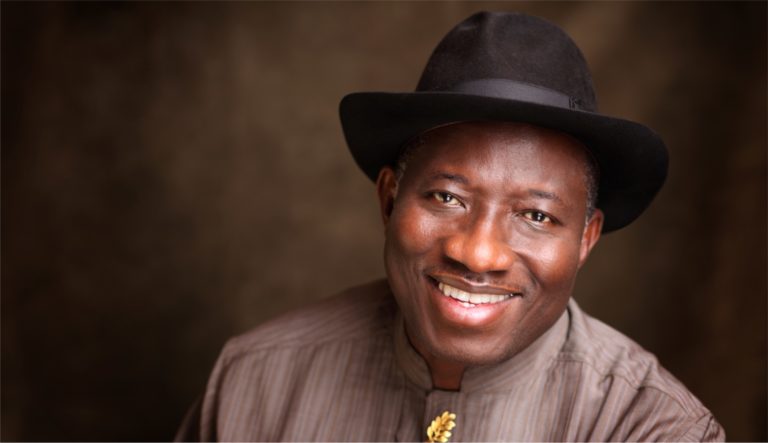
THE president of the Nigeria Rescue Mission Organisation and former president of Buhari Youth Organisation (BYO), Jibril Mustapha, has called on former President Goodluck Jonathan to contest the 2027 presidential election to save Nigerians from hunger and other economic hardship.

Mustapha reportedly made the call in a statement on Sunday, April 27, in Lagos state.

He said Jonathan should heed the call to run for the office of the president again.

He stressed that as the nation prepares for the 2027 elections, his organisation believes that it is time for all stakeholders to come together and support a candidate who can genuinely represent the interests of all Nigerians.

“We urge former President Goodluck Jonathan to consider this call and to step forward as a candidate who can unite our country and lead us towards a brighter future.

“This appeal comes in light of the numerous challenges currently facing Nigeria, including economic hardship, insecurity, unemployment, and rampant banditry,” Mustapha maintained.

He believes there is an urgent need for a leader who embodies integrity, inclusivity, and a commitment to national unity, as Jonathan is to be Nigeria’s next president.

“Nigeria is at a crossroads. We are grappling with significant issues that threaten our stability and progress.

“We need a leader who can bring all Nigerians together, regardless of their background,” Mustapha said.

He asserted that Jonathan, during his tenure, demonstrated a commitment to democratic values and governance that prioritised the welfare of all citizens.

He added that his group believes that Jonathan has the vision and experience necessary to lead Nigeria.

“His leadership style is one that fosters inclusivity and economic advancement, which is exactly what our nation needs at this critical juncture.

“Under Jonathan’s leadership, we can work towards restoring Nigeria’s lost glory on the international stage and within our borders,” Mustapha argued.

BYO is a youth-based supporter of former President Muhammadu Buhari. In 2015, Jonathan lost his second-term bid to Buhari in the 2015 presidential election.

This is not the first time a call for former President Jonathan to return to the presidency has been made.

In the build-up to the 2023 generation election, Jonathan had rejected a presidential nomination form bought without his consent to run for the All Progressives Congress (APC) primary.

The form was said to have cost N100 million to purchase the APC’s nomination papers bought by a supporters’ group on his behalf.

As the calls for Jonathan to re-contest in the presidential election mount, The ICIR can recall that a Federal High Court in Bayelsa had ruled on his eligibility to run again.

Reps summon PTI Finance Director, Principal, others after ICIR investigation

0

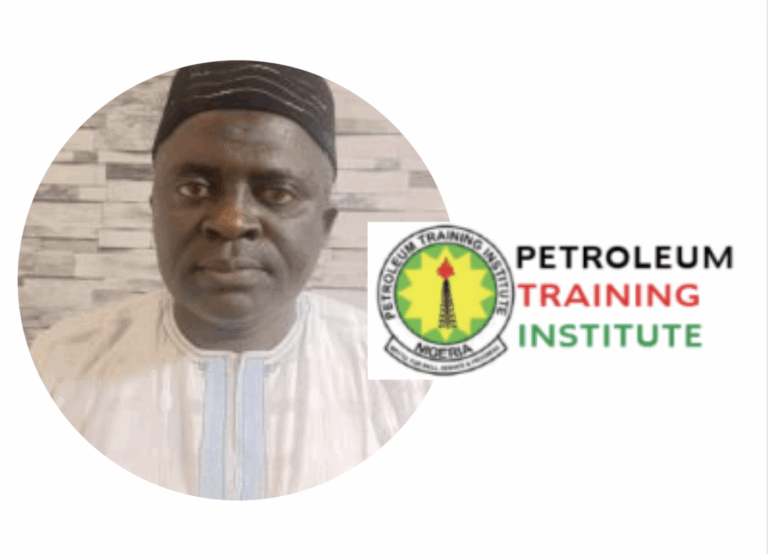
THE House of Representatives Public Accounts Committee has summoned the Principal/Chief Executive Officer of the Petroleum Training Institute (PTI), Samuel Onoji, alongside its Director of Finance, Aliyu Mafindi, over alleged financial irregularities exposed by an investigation by the International Centre for Investigative Reporting (ICIR).

The invitation was also extended to the Bursar and other relevant officers in the Institute.

In a letter, signed by the committee chairman, Bamidele Salam, the PTI was directed to appear before the committee on April 29, 2025, at the House of Representatives at 1:00 p.m.

The summon, made under Order XX, Rule 6 of the House Standing Orders and Section 89 of the 1999 Constitution (as amended), mandates PTI management, including the Director of Finance and the Institute’s Bursar, to explain alleged violations relating to the utilisation of public funds, non-remittance of fees, and disregard for financial regulations.

The committee warned that attendance is mandatory, adding that failure to honour the invitation could result in a resolution against the institute without further recourse.

Speaking further with The ICIR on the development, Salam stressed that the meeting “is mainly on the report as well as a few other issues which are being unearthed.”

The development follows an investigation by The ICIR, which exposed how Mafindi orchestrated a  scheme that siphoned over N200 million from the institution since 2018. 

According to the report, Mafindi exploited oversight visits by the National Assembly committees, which, in several cases, never occurred, as a pretext to request and divert public funds into his personal and proxy accounts.

The ICIR reports that oversight visits by the National Assembly to government agencies are a routine. The visits often come with financial provisions for logistics, accommodation, and honoraria. The Petroleum Training Institute, like other agencies, regularly receives official letters from lawmakers planning oversight visits. 

Documents obtained by The ICIR revealed that large sums, including N21.85 million, N15.5 million, and N25.76 million between 2018, were disbursed for oversight visits that never took place. 

Payment vouchers showed that the funds were paid directly into Mafindi’s accounts in violation of Nigeria’s Public Sector Financial Regulation Act, which criminalises such actions.

Despite an internal probe by the PTI’s Anti-Corruption and Transparency Unit (ACTU) at the end of his initial tenure in 2021, Mafindi was reappointed in 2023. 

The fraudulent activities continued into 2024, with the reappointment of Mafindi and Onoji’s emergence as the principal of the Institute.

In March and April 2024, N25.8 million and N43.4 million, respectively, were disbursed through proxies for supposed visits by the House Public Accounts and Public Procurement Committees, visits which lawmakers later confirmed never took place.

When contacted, the Chairman House of Representatives Public Accounts Committee, Bamidele Salam, denied any visits by the committee to the Institute since 2023.

On three different instances, as referenced by the Institute Finance Director that the public accounts committee would be visiting, Salam said neither he nor any of the committee members had visited the PTI-at least to the best of his knowledge and that of the House Clerk.

‘We never planned, proposed, or intended any visit to that Institute. There was absolutely nothing of such,” he said, reiterating that, “For the benefit of doubt, I restate again that this Institute has not featured in any of our hearings nor have we had any engagement with them in the last two years.

Nigeria records over 1,200 cholera cases in 3 months

THE World Health Organisation (WHO) has revealed that Nigeria is among the countries experiencing a surge in cholera infections globally, with 1,227 cases. 

According to the WHO’s latest data, between January and March 2025, Nigeria recorded 1,227 cholera cases and 28 deaths, ranking it among the most affected countries in the African region.

The ICIR reports that the latest WHO data is the first for 2025, following numerous cholera cases and deaths recorded across all Nigerian states in 2024.

In July 2024 alone, 63 deaths and 2,102 suspected cholera cases were reported across 33 of Nigeria’s 36 states.

The latest WHO situation report reveals that the African region has reported 66,689 cholera cases and 1,336 deaths across 17 countries, making it the hardest-hit region globally.

It showed that over 116,000 cases and more than 1,500 deaths were reported globally, with  32,985 new cases and 517 deaths reported in March alone,indicating a slight decrease from February.

“In March 2025 (epidemiological weeks 10 to 13), a total of 32,985 new cholera and/or acute watery diarrhoea cases were reported from 22 countries, territories, areas (hereafter countries) across three WHO regions, reflecting a nine per cent decrease from February.

Although the decline may reflect seasonal patterns, WHO warns that underreporting, especially in conflict-affected areas like the Democratic Republic of the Congo, likely means the true figures are much higher.

“The African region registered the highest number of cases, followed by the Eastern Mediterranean Region and the South-East Asia Region”, the report read.

South Sudan recorded the highest number of cases in the African region, with 29,050 infections and 502 deaths.

The Democratic Republic of the Congo follows with 15,785 cases and 297 deaths, while Angola has recorded 9,785 cases and 383 deaths.

WHO attributed the rise in cholera outbreaks to a combination of climate-related disasters, ongoing conflicts, poor sanitation, and weak healthcare systems, particularly in rural and flood-prone areas.

The ICIR reports that since January, 25 countries globally have reported outbreaks of cholera or acute watery diarrhoea, with many of these continuing from 2024.

Obi approves identity cards, online registration portal for ‘Obidients’

1

FORMER presidential candidate of the Labour Party, Peter Obi, has unveiled an online registration portal along with identity cards for members of his ‘Obidient Movement’, both within and outside Nigeria.

The announcement was made in a joint statement issued by the National Coordinator of the Obidient Movement, Yunusa Tanko, and the Director of Strategic Communications and Media, Nana Kazaure, on Saturday, April 26.

The statement highlighted that the goal is to demonstrate firsthand the embodiment of the Obidient Movement’s spirit of diversity, camaraderie, and unity, showcasing the widespread impact of its message.

It explained that the identity card, featuring a QR code in the bottom right-hand corner for authentication, will display the flag of the country where the holder resides.

It partly read: “Obidient registration portal supports Nigerians and fellow Obidients living in the diaspora. You will observe that the ID has a flag on it. For example, if you’re not a resident in Nigeria, the top right-hand corner will carry the flag of your country of residence.

“The OBX is constant on the ID card. The Diasporan and Nigerian cards all start with the same prefix, which is the OBX.

The statement also mentioned that to provide Obidients with a secure and reliable way to connect, the QR code in the bottom right-hand corner is designed to authenticate the card, and it can be scanned with any QR scanner, such as a smartphone.

“So if you choose to support or do business with an Obidient, you can scan the QR code or verify the OBX ID online to confirm that the person is who and what they truly say they are and are who they truly claim to be,” it added.

The ICIR reports that the Obidient Movement began with young people who are known for their strong-willed, independent-minded nature and their disdain for older politicians, whom they believe have done nothing for them, starting in 2022.

Obi’s support base during the 2023 election was so strong across the country among the youths that it was termed a movement.

In 2023, former Ebonyi State governor and current Minister of Works, Dave Umahi, said the ‘Obedient’ political movement is anchored on equity, justice, and fairness.

Does it cost just N500,000 to become doctor in Nigeria?

A comment by the Senior Pastor of Covenant Christian Centre, Poju Oyemade, claiming that medical graduates in Nigeria spend just N500,000 to complete their education, has sparked controversy across social media platforms.

Speaking during a sermon on April 13, Oyemade said Nigerians are being “programmed” on social media to hate their country despite the fact that it costs, for instance,  just N500,000 to study medicine and become a medical doctor in Nigeria.

While comparing the cost of medical education in Nigeria and US, the cleric said: “In Nigeria, a person will graduate as a medical doctor and spend N500,000 throughout to become a doctor. Throughout!

“In America, you graduate from Johns Hopkins and Harvard as a doctor, and you spend $2,000. Are you okay? Do you know how much money you spend. Nigerians are ungrateful,” he added.

CLAIM

Medical students pay only N500,000 to become doctors in Nigeria.

THE FINDINGS

Findings by The FactCheckHub show that the claim is FALSE as N500,000 is not enough to study medicine and become a medical doctor in Nigerian Universities.

Since the assumption of office in May 2023, President Bola Ahmed Tinubu introduced a series of economic reforms aimed at stabilising Nigeria’s economy, including the removal of fuel subsidy and the floating of the naira. However, these policies triggered significant inflation and a cost-of-living crisis. Educational institutions, heavily reliant on government funding and grappling with the soaring costs of goods and services, began reviewing their school fees upward.

By the last quarter of 2023, many government universities increased their fees, sometimes increasing it by 100 to 200 percent. The surge sparked widespread protests across the country, particularly in institutions like the University of Lagos, University of Jos, and Obafemi Awolowo University.

Although the federal government attempted to cushion the effects by launching a student loan scheme, many students and education stakeholders criticised the programme.

Medicine and Surgery, one of the demanding courses in Nigerian universities, was among the affected programmes. Typically under Colleges of Health Sciences in many Nigerian Universities, Medicine is a six-year course requiring access to specialised laboratories, clinical postings, medical equipment, and professional mentorship, all of which cost money.

The FactCheckHub reviewed the school fees of top Federal Universities in Nigeria since they are generally cheaper than state and private Universities, the result shows that the cost throughout the six years is above N500,000.

For instance, Obafemi Awolowo University charges for N190,200 for freshers and N128,200 for returning students. This means a medical student will spend N831, 200 as fees before graduating from the University.

In Bayero University of Kano, fresh medical students pay N171,300 as school fees while returning students pays N160,500. This means a medical student will pay N973, 800 as fees before the end of the programme.

In the University of Lagos, medical students pay averagely N190,250 per session. This means a student will pay an estimated N1.1 million to complete the course in the University.

At Usmanu Danfodiyo University, Sokoto (UDUS), the registration fees for the MBBS programme are structured across different levels. Fresh students (100 level) are required to pay ₦124,260.00. In 200 level, students pay ₦115,860.00, while in 300, 400, and 500 levels, the fee rises to ₦124,860.00 each year. In the 600 level, the amount increases to ₦140,160.00. So, excluding spillover, a student will pay ₦754,860 at UDUS throughout their studies.

It’s also worth noting that the figures for school fees do not include several other essential expenses such as hostel accommodation, textbooks and study materials, transportation, and costs associated with assignments, group projects, and seminars. These additional requirements substantially increase the overall cost of studying medicine.

Furthermore, the cost of medical education in private universities in Nigeria is significantly higher, largely because education in public institutions is subsidised. For example, tuition is free in federal universities. The Minister of Health, Muhammad Ali Pate, recently stated that it costs over $21,000 to train a medical student, a figure that aligns with estimates from a peer-reviewed study by Osoba et al. (2021), published in the Pan African Medical Journal, which estimates the cost of training a doctor in Nigeria to range between $21,000 and $51,000—this includes tuition, living expenses, and other associated costs.

VERDICT 

The claim by Poju Oyemade that medical students spend only N500,000 to become doctors in Nigeria is FALSE. Findings show that, due to current economic realities, school fees alone can cost up to N1 million in Nigerian public universities.

This report is republished from the FactCheckHub.

FBI arrests 22 Nigerians for sextortion scheme linked to teen suicides

0

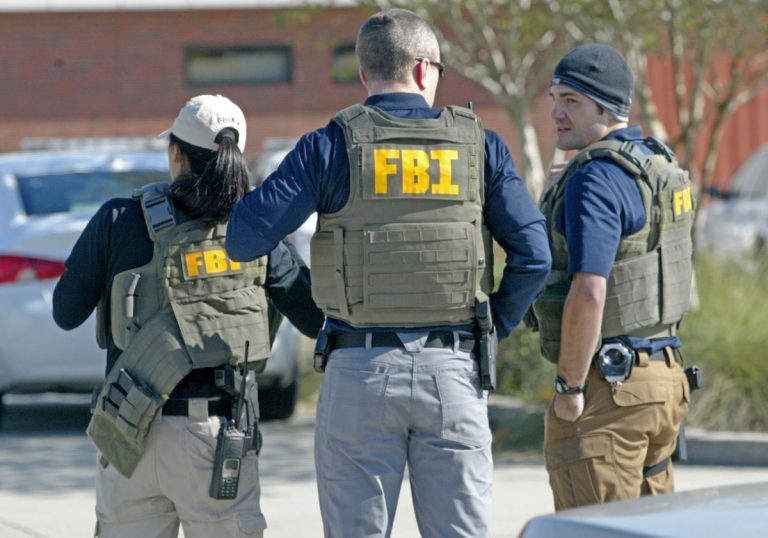
THE United States Federal Bureau of Investigation (FBI) has arrested 22 Nigerians allegedly involved in a financially driven sextortion scheme, which has been linked to over 20 teen suicides in the country since 2021. 

In a statement obtained from its website, the agency revealed that the arrests were part of a groundbreaking global operation, codenamed Artemis, carried out in partnership with law enforcement agencies from Canada, Australia, Nigeria, and the United Kingdom.

The FBI said it launched Operation Artemis nearly two years ago after receiving thousands of reports of teen boys being coerced into sharing sexually explicit photos online and then extorted with threats of exposure unless they paid.

“As a result of Operation Artemis, FBI investigations led to the arrest of 22 Nigerian subjects, with at least one arrest linked to an American victim who took their own life,” the FBI said.

It explained that the sextortion schemes involve minors, typically boys, who are befriended online by individuals posing as young women, persuading them to exchange nude photos.

“Once the victims comply, they are demanded to send money to prevent the images from being shared,” it said.

Investigators highlighted that even after victims make payments, the demands frequently continue, and the threats intensify.

According to the FBI, the analysis of victims’ phones and social media accounts revealed heartbreaking narratives of young kids enduring panicked negotiations in bids to maintain their privacy.

FBI Special Agent Matthew Crowley interviewed suspects in Lagos State to gain insight into why they opted for sextortion instead of other financial scams, such as romance fraud or business email compromise.

“One subject said, ‘It’s easy money. I can just move on to the next one if I don’t get any traction,” Crowley reported.

She added, “It makes sense why they would go that route because they could target 40 victims in a day, working multiple at a time. And maybe of those 40, three pay. But if three paid $200, that’s $600.”

She explained the devastating impact of these schemes, citing an American father whose 16-year-old son took his own life in 2023 after being targeted by sextortion threats.

In response,  the Economic and Financial Crimes Commission (EFCC) Zonal Commander,  Michael Wetkas, expressed hope that the collaborative effort would clamp down on all the people involved.

“We hope to get every single one of them. Because with the kind of collaboration that we have and the determination and commitment we have, I don’t see anything stopping us from getting these guys no matter where they are,” Wetkas said.

The ICIR reports that the FBI’s Internet Crime Complaint Center (IC3) reported more than 34,000 sextortion victims in 2023, a number that surged to over 54,000 in 2024, with financial losses amounting to nearly $65 million over the past two years.

The Australian Federal Police reported an average of 300 new sextortion cases each month in Australia, according to the statement.