Home Blog Page 300

Fake PDP members defecting to APC, says Saraki

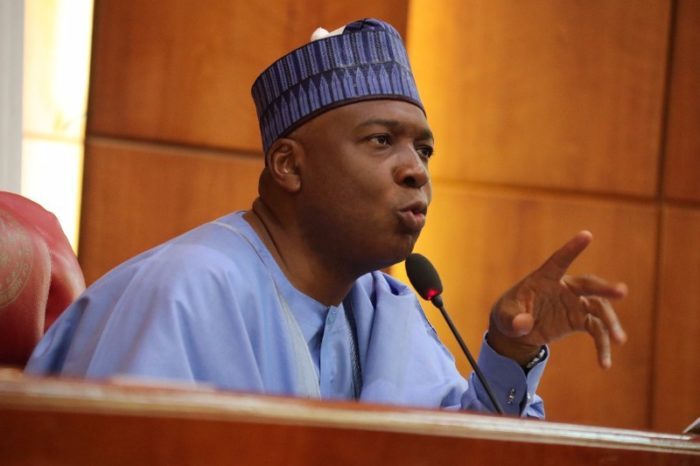
FORMER Senate President Bukola Saraki has urged members of the Peoples Democratic Party (PDP) who intend to leave the party to quit. 

Reacting to the gale of defection from the party to the All Progressives Congress (APC) in Delta State, in a statement on Thursday, April 24, Saraki said the party was not in crisis but in a moment of transformation.

According to him, the defections merely exposed long-standing insincerity among people who had already checked out of the party in spirit.

He added that those leaving were making space for genuine party members to step forward and refocus the PDP into a viable, people-centred opposition. 

“My view is that those who want to leave the PDP should leave now and let the rest of us who want to stay concentrate on rebuilding the party and refocusing it to play the role of a viable opposition that will provide a better alternative for the good people of Nigeria.

“Therefore, it is in the interest of Nigeria and the survival of our democracy for the opposition to be vibrant and strong enough with the capacity to replace the ruling party at any point. Thus, my charge to our party members is that the PDP is merely experiencing a rebirth. Those who want to leave the party should go and let those of us remaining have a clear view of who we are talking to and where their political loyalty lies. All we need is for those who want to stay back in PDP to show commitment, and we can all work to rebuild the party.

He said the latest defections from the party, involving the entire members of the Delta State PDP, including the Governor Sheriff Oborevwori and his predecessor, Ifeanyi Okowa, vindicated his stance of watching events unfold in the party. 

“I have seen that there was no sincerity with the supposed leaders of the opposition. One was not sure of the next person one was talking to,” Saraki added. 

He further assured party members across the country that there is “no cause for alarm” over the defections.

He urged members to remain calm, focused, and committed to the rebuilding of the party, describing the recent developments as an opportunity for the PDP to redefine itself.

Saraki also expressed confidence that the PDP would rebuild, mobilise, and gain new allies from other parties.

“Our numerous party members should know that the PDP is better with fewer members who are loyal, sincere, determined, dedicated, and committed to its ideas, ideals, and progress than to have so many who will identify with us in the afternoon and be romancing the ruling party in the night,” he added.

The ICIR reported that the Delta State governor, his predecessor and all PDP members in the state defected from the PDP to the APC on Wednesday, April 23. 

Oborevwori announced the defection through his Commissioner for Information, Charles Aniagwu.

James Manager, a former senator, also announced the PDP members’ defection after a meeting that lasted several hours at Government House, Asaba, the state capital.
Columbia Journalism School offers fully funded summer investigative reporting course

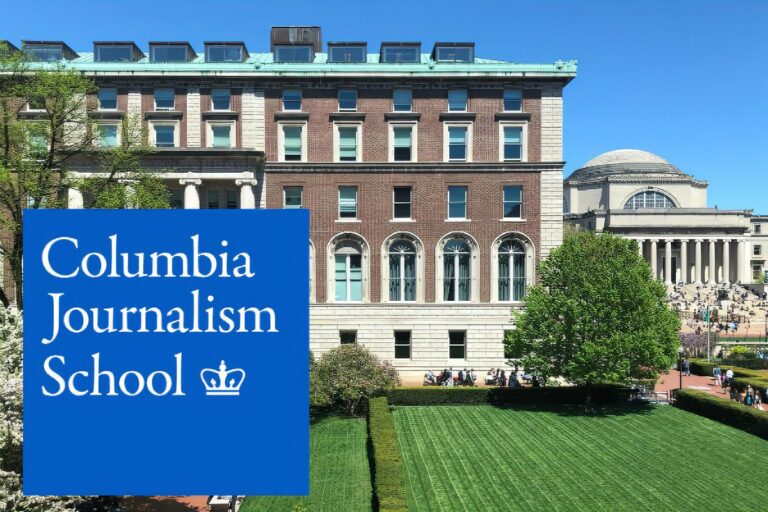
COLUMBIA Journalism School, in partnership with the TX Group and The Reynolds Foundation, is offering scholarships for its Summer Investigative Reporting Course, which will take place from July 7 to 25 at Columbia University in New York.

The programme is open to journalists, editors, and journalism educators from around the globe who are interested in sharpening their investigative reporting skills. 

Through hands-on workshops, participants will explore identifying stories worth pursuing as long-term investigations, using data as the foundation of a compelling narrative, and applying advanced reporting techniques to produce impactful journalism.

Three scholarships sponsored by the TX Group are available to journalists in Asia. Six scholarships funded by The Reynolds Foundation are open to investigative reporters and editors based in Africa, Latin America, and the Caribbean.

Each scholarship covers tuition and course fees, economy airfare to New York City, ground transportation, and accommodation.

The application deadline for TX Group scholarships is April 30, and the deadline for Reynolds Foundation scholarships is May 15

Interested Applicants can apply here 

Over 200 Nigerian youth freed from human trafficking in Ghana set to arrive in Lagos

THE Federal Government has announced that at least 231 young Nigerians who were trafficked to Ghana are expected to return to Lagos on Friday. 

In a statement issued on Thursday, April  24, the Minister of State for Foreign Affairs, Bianca Odumegwu-Ojukwu, said the development followed the rescue of 219 young Nigerians from a human trafficking syndicate that had coerced them into cybercrime activities by the Ghanaian authorities..

It highlighted that the victims were discovered after they were confined in about 25 rooms within a residential estate in Accra, Ghana’s capital.

During a visit to the Economic and Organised Crime Office (EOCO) in Accra, Odumegwu-Ojukwu expressed Nigeria’s gratitude for the rescue operation and lauded the EOCO operatives for their professionalism and compassionate treatment of the victims.

“Count yourselves lucky, as next time, it may not be a benevolent country like Ghana. It may not be a circumstance within a location where we have excellent bilateral relations.

“There are countries that take cybercrimes very seriously, and by the time they lock you up, they will throw away the key. We are still trying to this day to ensure that Ethiopia signs our exchange or transfer of sentenced persons MoU so that we can bring those nationals who are trapped in their prisons back to Nigeria. So we don’t lose even more of them” she said.

The Executive Director of EOCO, Bashiru Dapilah, explained that his agency launched the operation after acting on credible intelligence that led to uncovering the trafficking network.

He confirmed that several Ghanaians were part of the network, including the owner of the estate where the youths were kept.

The  house owner has been arrested and will be prosecuted.

Dapilah emphasised the importance of cross-border collaboration, stressing that although the crime took place in Ghana, it involved individuals from Nigeria. He called for enhanced cooperation between the two nations to ensure the perpetrators are brought to justice.

Theu ICIR that some of the victims were subjected to abuse, with visible injuries, and one individual sustained broken legs after allegedly failing to turn over proceeds from the illicit activities.

Odumegwu-Ojukwu, who described the ordeal as a form of modern-day slavery, cautioned Nigerian youths against being lured by fake job offers abroad

 She said such promises were often disguised for human trafficking operations.

The minister emphasised the Federal Government’s commitment to tackling youth unemployment through skill acquisition programmes and urged the rescued individuals to take advantage of available federal intervention schemes to rebuild their lives.

“We are happy that this commission has excellent relations with NAPTIP, and they have been kind enough. I was really humbled when the Executive Director said their interest is not for these young men to get back to Nigeria into the prison system, because that’s what usually happens.

“So, when you get home, give the government the opportunity to equip you with skills,” Odumegwu-Ojukwu said.

More Nigerians to become poorer by 2027 amid Tinubu’s reforms, says World Bank

0

DESPITE the policies of Bola Tinubu’s administration and its economic reforms, the World Bank has projected that poverty in Nigeria would increase by 3.6 percentage points by 2027.

The current administration has promoted key policies of fuel subsidy removal and floating the naira. But the World Bank paints a gloomy picture, noting that more Nigerians would be pushed into poverty. It cited risks of over-dependence on natural resources.

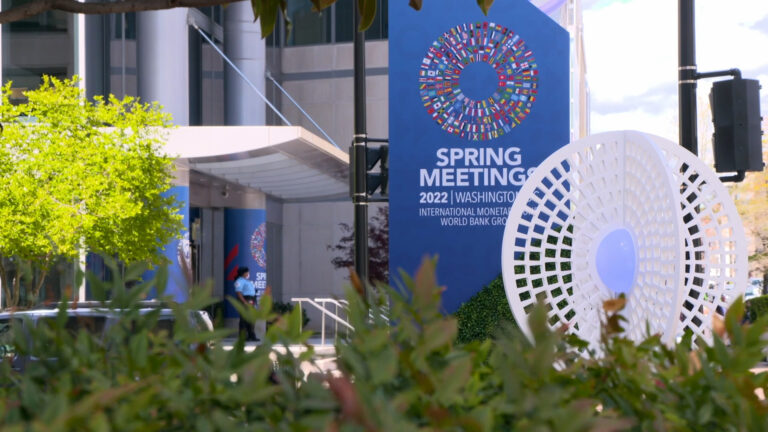
This projection is from the World Bank’s Africa Pulse report, released during the ongoing Spring Meetings of the International Monetary Fund (IMF) and the World Bank in Washington, DC.

The report paints a troubling outlook for poverty reduction in Nigeria, highlighting that despite some recent gains in economic activity, particularly in the non-oil sector during the last quarter of 2024, structural issues related to resource dependence and national fragility are likely to hinder progress.

According to the World Bank, Nigeria, alongside other resource-rich and fragile countries in Sub-Saharan Africa, will experience a worsening poverty situation, unlike non-resource-rich countries, which are expected to see faster poverty reduction.

“Poverty in resource-rich, fragile countries—including large economies like Nigeria and the Democratic Republic of Congo—is projected to increase by 3.6 percentage points between 2022 and 2027,” the report stated.

The report underscores that Sub-Saharan Africa continues to have the highest extreme poverty rate globally, with a disproportionate concentration of the poor. In 2024, 80 per cent of the world’s 695 million extreme poor lived in Sub-Saharan Africa.

Within the region, half of the 560 million extreme poor were located in just four countries.

In comparison, South Asia accounted for eight per cent, East Asia and the Pacific two per cent, the Middle East and North Africa shared five per cent, and Latin America and the Caribbean contributed three per cent.

Resource-rich countries are expected to lag in poverty reduction due to slowing oil prices and weak fiscal structures. Conversely, non-resource-rich countries are benefiting from high agricultural commodity prices, which are fueling stronger growth despite fiscal pressures.

The report adds: “This follows a well-established pattern whereby resource wealth combined with fragility or conflict is associated with the highest poverty rates—averaging 46 per cent in 2024, which is 13 percentage points higher than in non-fragile, resource-rich countries.”

The Nigerian government, despite its numerous policies, still struggles with lifting citizens out of poverty.

Some analysts say most of its policies are not wholistic enough to address key economic problems; rather, they are interventionist and not capable of solving perennial poverty issues.

“Most of the government’s programmes and policies are knee-jerk and don’t provide a holistic solution to our perennial poverty issues. Oftentimes, the government gets consultants who design such policies, many of such are disconnected from the real needs of the people and what can provide a lasting solution to the unemployment concerns,” a development economist, Celestine Okeke, told The ICIR.

Despite some of its interventionist programmes, the Federal Government has disclosed that 133 million people in the country, representing 63 per cent of the population, lived in different categories of poverty.

The government, giving the figure in its  “multi-dimensional” poverty report, said that 65 per cent of the poor (86 million people) live in the North, while 35 per cent (nearly 47 million) live in the South.

FG to probe NNPCL account amid misappropriation allegations

THE Federal Government has revealed plans to carry out a forensic audit of the Nigerian National Petroleum Company Limited (NNPCL) to promote operational efficiency and address misappropriation claims.

The Minister of Finance and Coordinating Minister of the Economy, Wale Edun, reportedly hinted at this at the ongoing Nigerian investor forum, held on the sidelines of the International Monetary Fund (IMF)/World Bank Spring Meetings in Washington, DC.

He said the audit of the state-owned oil firm will come soon without reference to a definite time.

At the forum on Wednesday, April 23, Edun stressed that the government plans to reconcile NNPCL books to reposition the company for efficient operations and service delivery.

“The NNPC needs to come to the table with more dollar revenue,” the minister was quoted to have saying.

The audit of the NNPCL comes at a time when stakeholders believe the government should revamp oil production in the face of the global uncertainty heightened by the United States and China’s tariff war.

Edun’s revelation that the federal government would carry out a forensic audit of NNPCL followed the assurance given by the Attorney General of the Federation and Minister of Justice, Lateef Fagbemi, that the NNPCL under the former group chief executive officer (GCEO), Mele Kyari, would be investigated.

In a related development, a group of protesters under the banner of Concerned Citizens Against Corruption were reported to have stormed the AGF’s office, calling for a thorough investigation into Kyari and NNPCL’s transactions over the past five years.

A group of lawyers from the Guardians of Democracy and Rule of Law Wednesday, we’re also reported to have marched to the AGF’s office to submit a petition seeking Kyari’s investigation, arrest, and prosecution.

The ICIR reported in January this year that the Office of the Auditor-General of Nigeria indicted the NNPCL of N514 billion in fraud.

The allegation was contained in the 2021 auditor general’s annual report published in November 2024.

The report disclosed that the NNPCL misappropriated funds and diverted revenue meant for the Federation in 2021.

A breakdown of the allegations revealed that the auditor-general indicted the NNPCL for unauthorised deductions of N82.9 billion from federation revenue for refinery rehabilitation.

It berated the state-owned oil company for its irregular deductions of funds from domestic crude sales at the source.

It further observed that N82.9 billion was deducted from the sale of crude oil and gas from the 2020 and 2021 records, which were deducted at source for purported refinery rehabilitation.

On April 2, President Bola Ahmed Tinubu made a change to the board of NNPCL and sacked Kyari along with other executives.

The president appointed Bayo Ojulari as the new NNPC’s GCEO and named Ahmadu Musa Kida as the non-executive chairman, replacing Pius Akinyelure.

Continuing, Edun said the recent changes in the NNPCL management were part of a broader effort by the federal government to clean up and examine the company closely.

Flights resume across Nigeria as NiMet workers suspend strike

EMPLOYEES of the Nigerian Meteorological Agency (NiMET) have called off the strike they embarked upon on Tuesday, April 22, to express their grievance over their welfare.

The suspension of the strike followed the Federal Government’s intervention on Thursday, April 24.

The NiMet workers had commenced an indefinite strike action on Wednesday to protest poor working conditions, grounding flight operations across the country.

The workers had accused the NiMet management of failing to implement the new national minimum wage, ignoring requests to include omitted staff in past allowances, and neglecting key training programmes, among others.

In a bid to address the concerns, the Minister of Aviation and Aerospace Development, Festus Keyamo, on Thursday, met with stakeholders in the aviation sector, including the heads of aviation agencies, alongside leaders of key aviation unions, where the issues were resolved, and the workers agreed to return to work.

Other stakeholders said to be in attendance were the Amalgamated Union of Public Corporations, Civil Service Technical and Recreational Services Employees, the Association of Nigerian Aviation Professionals, and the National Union of Air Transport Employees, among others.

The ICIR reports that the strike action lingered for two days and left passengers on scheduled local flights stranded at the Nnamdi Azikiwe International Airport,  Abuja, the Murtala Muhammed International Airport, Lagos, and other airports.

It caused confusion and anger as Air Peace suspended all its flight operations nationwide on Wednesday following the strike.

The airline, in a statement issued on Wednesday, stated that due to the NiMet workers’ strike and the unavailability of QNH (hazardous weather) reports required for safe landings, suspending all its flight operations nationwide until the strike was over was for safety and a top priority.

The airline chief executive officer, Allen Onyema, while directing the immediate suspension of his airline’s flight operations, said passengers’ lives and the safety of the airline’s equipment and crew were priorities.

“Suspend Air Peace flight until that strike is over. If people want to collect their money, let them collect their money. I don’t want to have blood on my hands,” Onyema directed.

The halt to flight operations by Air Peace and others confused intending passengers, as angry customers who had booked flights to different destinations had considered various options, including litigation or a demand for a refund, reported The ICIR.

With the workers suspending the strike, flights, including Air Peace, have resumed operations across the country.

Russia launches biggest attack in 2025 on Ukraine, kills 8, injures 70

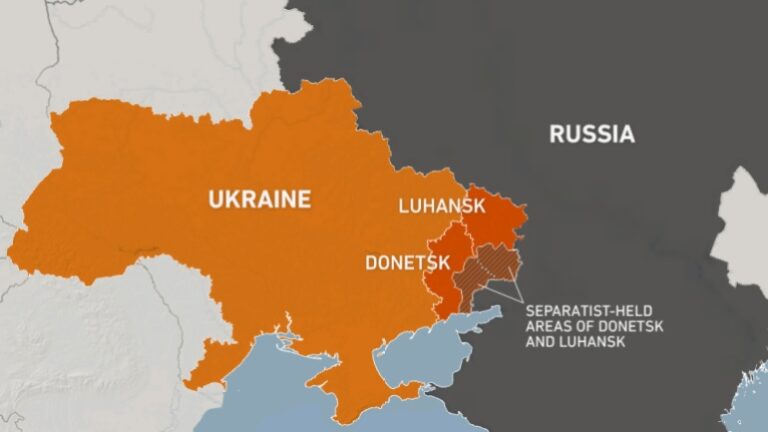
RUSSIA launched a massive overnight missile and drone attack on Kyiv, killing at least eight people, injuring over 70, and damaging multiple buildings in what is described as the largest assault on the Ukrainian capital this year.

Government officials disclosed this on Thursday, noting that the attack ignited fires, injured six children, and left some people trapped under the rubble.

“There has been destruction. The search is continuing for people under rubble,” the State Emergency Service wrote on the Telegram messaging app.

Ukrainian Foreign Minister Andrii Sybiha said on X that the “brutal strikes” showed that Russia, not Ukraine, was the obstacle to peace. There was no immediate comment by Russia on the attack.

Kyiv Mayor Vitali Klitschko said eight people were confirmed dead in the capital, although earlier reports from officials had put the death toll at nine.

According to Klitschko, the most serious incident occurred in the Sviatoshynskyi district, west of the city centre, where rescuers continued clearing rubble from two buildings.

The ICIR reports that the attack occurred at a significant point in Russia’s war in Ukraine, which began with Moscow’s full-scale invasion in 2022. 

Both Kyiv and Moscow are currently under pressure from United States President Donald Trump to demonstrate progress toward a peace agreement.

Trump and his administration have warned that they would abandon efforts to broker a ceasefire if no progress is made, prompting European nations to search for alternative ways to support Kyiv.

A joint statement from Britain, France, and Germany revealed that Wednesday’s talks in London made “significant progress” toward reaching a “common position on the next steps” in the negotiations.

However, the talks were downgraded following a last-minute decision by United States Secretary of State Marco Rubio to cancel his attendance.

The ICIR reported on March 30, that Trump said he was furious after the Russian leader questioned the credibility of Ukrainian President Volodymyr Zelenskiy, threatening to impose secondary tariffs of between 25 and 50 per cent on buyers of Russian oil.

In response, Russia said it was ready to work with the US in exploring ideas for striking a peace deal in Ukraine.

Trump, who said he wanted to be remembered as a peacemaker, has consistently expressed his desire to end the three-year conflict and has warned of its potential escalation into a global war.

However, Trump also seems to blame Zelenskiy for the lack of progress after Zelenskiy said he would not recognise Russia’s occupation of the Crimean peninsula as part of any peace agreement.

The ICIR reported that Zelensky said Trump understood Kyiv’s position of not recognising the occupied territory as part of Russia while also reaffirming Kyiv’s willingness to halt strikes on Russian infrastructure and accept an unconditional frontline ceasefire, as previously proposed by the US.

Putin had proposed placing Ukraine under a temporary administration to facilitate new elections and the signing of key agreements aimed at ending the war between the two nations.

Since Russia invaded Ukraine in February 2022, thousands of people have been killed or injured, with millions displaced and several cities and towns devastated.

IMF to Nigeria: Spend ‘PMS subsidy savings’ wisely, priortise key reforms

THE International Monetary Fund (IMF) has advised the Nigerian government to use the money saved from removing fuel subsidies wisely and focus on important economic reforms.

The global financial body praised Nigeria for making tough economic decisions, especially the removal of fuel subsidies, which has helped the country save money. However, the IMF stressed that this money must be spent carefully and on the right things to support long-term economic stability.

Speaking at a press briefing during the 2025 IMF/World Bank Spring Meetings in Washington, D.C., Davide Furceri, who heads the IMF’s Fiscal Affairs Department for Nigeria, said: “Nigeria managed to do a very difficult reform that was important in delivering fiscal savings.”

Furceri encouraged Nigeria to spend these savings on important areas like healthcare, education, and infrastructure. He also urged the government to find better ways to increase its income (revenue) and improve how public funds are managed.

“Spending must be done wisely – that means better prioritisation and greater efficiency,” he said.

He emphasised the importance of strong fiscal institutions, adding that,” Medium-term fiscal frameworks and solid public financial management systems are essential.”

Furceri stressed that strong fiscal institutions provide a fiscal anchor to guide necessary adjustments and help reduce uncertainty.

“We want fiscal policy to be a source of stability, not a source of volatility,” he added.

IMF calls for stronger financial safety nets

Also speaking at the event, Vitor Gaspar, the IMF’s Director of Fiscal Affairs, said countries like Nigeria need to build up their financial “buffers”  savings that can be used in emergencies.

He said governments must act quickly and use their political will to win public trust. Strong financial policies, he added, are key to surviving tough times and helping the economy grow in a stable way.

Gaspar laid out three main goals for governments:

  1. Make sure fiscal policy supports the country’s overall economic strategy.
  2. Save money to handle future economic shocks.
  3. Use smart policies to help the economy grow over time.

He said, “Putting house in order involved three policy priorities. First, fiscal policy should be part of overall policies.

“Secondly, fiscal policy should, in most countries, aim at rebuilding buffers to create space to respond to spending pressures and other economic shocks through a credible medium-term framework.

“Thirdly, fiscal policy should, together with other structural policies, aim at improving potential growth, thereby easing policy trade-offs in these times of high uncertainty.”

Gasper urged finance ministers to earn public trust, ensure fair taxation, allocate resources responsibly, and adopt a long-term approach.

Despite recent reforms, the IMF has cut its forecast for Nigeria’s economic growth. The country’s economy is now expected to grow by 3.0 per cent in 2025 down from the 3.2 per cent predicted earlier.

This new figure was included in the IMF’s April 2025 World Economic Outlook report, released on Tuesday, April 22. The IMF said the lower forecast is due to weaker oil prices.

Video does NOT show last burial rites of Pope Francis

0

A video circulating widely on X (formerly Twitter) claims to show the final burial rites of Pope Francis.

The video by user @Mautiin01, shows a solemn procession of people dressed in white robes and black pointed hats, each carrying torch-like staffs. Rhythmic drumming plays in the background, adding to the ceremonial tone of the scene.

The caption reads:

“The last burial rites for the late Pope. This one sef nah part of Christianity?? Nah kwesion i ask oo.”

Since it was posted on Wednesday, April 23, 2025, the video has amassed over 450,000 views, 1,600 likes, and 661 reposts. Another user, @_iolatunde, also shared the video before eventually deleting the post. That version had already drawn over 20,000 views before its removal.

CLAIM

The video shows the last burial rites of Pope Francis.

THE FINDINGS

Findings by The FactCheckHub shows that the claim is FALSE!

Screenshot of an appearance of the claim as seen on X; Insert FALSE verdict

Pope Francis died on Monday, April 21, 2025. According to the Vatican, his funeral is scheduled for Saturday, April 26, 2025, and will be held in St. Peter’s Square, starting at 10:00 a.m. (0800 GMT).

As of April 23, Vatican officials, including red-robed cardinals and white-robed priests, escorted the Pope’s coffin in a solemn 40-minute procession from his residence to St. Peter’s Basilica. Members of the Swiss Guard accompanied the coffin. By April 24, thousands had lined up for a final public viewing of the Pope’s open casket inside the basilica. He will be laid to rest after the funeral mass on Saturday.

So, what does the video really show?

A Google Reverse Image Search traced the footage to Semana Santa or Holy Week celebrations in Spain. Semana Santa is an annual Catholic observance leading up to Easter, marked by grand religious processions, traditional music, and participants wearing robes and conical hats. These processions often feature ornate religious floats and are carried out by Catholic brotherhoods in Spain and parts of Latin America, especially Guatemala.

A central feature of Semana Santa is the procession of religious floats (andas) that carry statues of Christ and the Virgin Mary, accompanied by penitents and religious brotherhoods.

Guatemala’s version of Semana Santa, for example, blends Catholic and Indigenous Maya traditions and includes elaborate processions, sawdust carpets, and heavy incense. It has even been recognised by UNESCO as part of the Intangible Cultural Heritage of Humanity.

The video in question aligns closely with documented footage from these events, including a recent video by WION News highlighting similar ceremonial elements.

THE VERDICT

FALSE – The video does not show the burial rites of Pope Francis. It shows a Holy Week procession from Spain’s Semana Santa celebrations.

This report is published from the Factcheckhub.

Africa No Filter announces storyLab funding opportunity

AFRICA No Filter, in collaboration with the Ford Foundation, offers a Work Reimagined StoryLab grant of $3,500 for the creation of compelling stories and engaging content focused on the future of work in Africa.

Journalists, podcasters, and content creators interested in exploring how Africa’s workforce is evolving are invited to apply. 

Successful applicants will receive micro-grants of up to $3,500 to produce and distribute their work.

The programme also includes mentorship, skills development, access to exclusive data, insights on Africa’s workforce trends, and publishing opportunities with leading media outlets.

Eligible applicants include content creators, podcasters, freelance journalists, and junior to mid-career reporters aged 18 and above, based in Africa or the diaspora.

A combined social media following of at least 2,000 across platforms like Facebook, Instagram, or TikTok is required.

Interested applicants can apply here 

Deadline for applications: April 30, 2025.