THE Trump administration has begun to restore visas for hundreds of foreign students whose legal status had been suddenly revoked.
Government officials confirmed the development on Friday, noting that the decision comes after more than 100 lawsuits were filed by students who had lost their legal right to study at U.S. universities.
The ICIR reported that the United States revoked the visas of hundreds of international students and carried out arrests over alleged support for Hamas.
The Secretary of state, Marco Rubio, said that about 300 students were targeted as part of the Trump administration’s immigration crackdown titled, “Catch and Revoke.”
According to Rubio, the programme utilises artificial intelligence to monitor and flag individuals engaged in activism perceived as supporting extremist groups.
The visa terminations triggered panic on US campuses, prompting some students to leave the country preemptively to avoid possible detention or deportation.
“Losing their SEVIS records left students vulnerable to immigration actions — and possible detention and deportation,” said Elora Mukherjee, director of the Immigrants’ Rights Clinic at Columbia Law School.
However, the Justice Department announced on Friday, April 25, that student records would be reinstated in the Student and Exchange Visitor Information System (SEVIS), which tracks foreign students’ visa compliance.
A BBC report on Friday revealed that Justice Department attorney Elizabeth Kurlan told a federal court in California that immigration officials are creating a new system for reviewing and terminating visas for international students.
Kurlan emphasised that Immigration and Customs Enforcement still holds the authority to terminate SEVIS records for other reasons.
“If a student fails to maintain his or her nonimmigrant status after the record is reactivated, or engages in other unlawful activity that would render him or her removable from the United States under the Immigration and Nationality Act,” Kurlan told the court.
According to Inside Higher Education, the policy change follows the impact on an estimated 1,800 students and 280 universities.
Meanwhile, attorneys representing students across the country reported that their clients’ SEVIS records have been restored in recent days.
Despite these reinstatements, legal advocates maintain that the revocations violated students’ rights and disrupted their educational pursuits.
THE Director-General of the World Trade Organisation (WTO), Ngozi Okonjo-Iweala, has said that United States President Donald Trump’s tariff tension would minimally affect African countries.
She said this while addressing Nigerian journalists at the World Bank/International Monetary Fund (IMF) Spring Meetings in Washington, D.C., on Friday, April 25.
She noted that African trade exposure to the US was relatively small, limiting the direct economic impact of the US tariffs.
Okonjo-Iweala pointed out that only 6.5 per cent of Africa’s exports go to the US, while 4.4 per cent of its imports come from the US; as such, the impact of the tariff tension on the African continent would be minimal.
“The trade of the continent is minimal with the USA. We have done the analysis, and the impact on the continent as a whole is not significant,” Okonjo-Iweala said.
Citing Lesotho as an example, she said Africa must strengthen internal trade.
She stressed that despite Lesotho exporting $200 million worth of textiles to the US, the country faced challenges due to the shrinking US market.
Okonjo-Iweala further noted that Africa spent $7 billion annually on importing textiles, suggesting that Lesotho should instead focus on selling textiles within African markets.
Adding that Africa’s low level of trade with the US is not ideal and points to deeper structural challenges facing the continent, Okonjo-Iweala, therefore, called on African governments and policymakers to look inward by strengthening regional and intra-African trade.
She pointed out that the African Continental Free Trade Area (AfCFTA) is critical to achieving the goal.
“We cannot trade more externally, where our share is only 3 per cent of global trade, or internally, where intra-African trade remains at 16 to 20 per cent at best,” she warned.
The WTO director-general also called for increased investment in Africa, pointing out that aid flows are declining, and the continent must build resilience through self-sustained growth.
She appealed to the US government to take into account the effects of its tariff policies on least-developed countries (LDCs), many of which are in Africa.
She also urged the US government to reassess reciprocal tariff arrangements for LDCs to avoid worsening their economic vulnerabilities.
The ICIR earlier reported that Okonjo-Iweala has expressed serious concern about the growing trade tensions between the US and China.
She had warned that the tensions could dramatically reduce the trade volume by 80 per cent between the two countries.
The Federal Government of Nigeria also has decried the US tariff imposition on the country, saying it would adversely impact its oil and non-oil export businesses.
It could also potentially disrupt trade relations and affect the competitiveness of Nigerian products in the US market, especially in sectors reliant on market access and price competitiveness, the Minister of Industry, Trade, and Investment, Jumoke Oduwole, expressed.
THE Economic and Financial Crimes Commission (EFCC) has released names and photos of four wanted suspects in the Crypto Bridge Exchange (CBEX) scam.
The commission also declared the four individuals wanted over the alleged fraud perpetrated in the CBEX, a trading platform.
The four suspects are Adefowora Olanipekun, Adefowora Oluwanisola, Emmanuel Uko, and Seyi Oloyede.
The EFCC, in a statement on Friday, April 25,published the notice across its social media platforms.
“The public is hereby notified that the persons whose photographs appear above are wanted by the Economic and Financial Crimes Commission (EFCC) for fraud allegedly perpetrated on an online trading platform called Crypto Bridge Exchange (CBEX),” the commission stated.
Recall that the Federal High Court in Abuja gave the EFCC a nod to arrest and detain six CBEX promoters over an allegation of $1 billion investment fraud.
The presiding judge, Emeka Nwite, gave the order following an ex parte application filed by counsel to the EFCC, Fadila Yusuf.
In the application filed by the EFCC, the six suspects named were Avwerosuo Otorudo, Emmanuel Uko, Seyi Oloyede, Chukwuebuka Ehirim, and Olanipekun Oluwanisola.
The EFCC informed the court that the investigation revealed that the suspects, “using their company, ST Technologies International Limited, publicised another company, CBEX, by making advertisements and deceived unsuspecting members of the public into investing in the investment platform.”
The EFCC said the defendants promised an unachievable return of 100 per cent on investments.
The ICIR reported that the EFCC confirmedthat it has launched an investigation into the controversial cryptocurrency trading platform.
CBEX, an AI-powered crypto platform that promised users “100% monthly returns,” crashed in April, locking investors out of their accounts.
The sudden shutdown triggered outrage among users, leading to chaotic scenes at the CBEX offices. In Ibadan, angry investors stormed the premises, and the protest reportedly escalated into looting.
Speaking with The ICIR, EFCC spokesperson, Dele Oyewale, confirmed that the commission had begun investigating the matter.
“We have commenced investigation into CBEX,” Oyewale said. “The investors will get back their money. It might not be immediately, but they will get back their money. It is not an assurance.
“I am telling you that operationally, we are working, and because we are working, we will ensure that investors get back their money,” Oyewale stated.
On the existence of CBEX offices in Nigeria, Oyewale clarified that the platform operated strictly online and had no practical physical presence in the country.
FORMER Vice President Atiku Abubakar has said he bore no grudges against members of the Peoples Democratic Party (PDP) who have defected to the ruling All Progressives Congress (APC)
He described political realignments as a normal feature of democracy.
Atiku made the remarks on Friday, April 25, in a statement addressing concerns raised over the recent wave of defections from the PDP and criticisms trailing his recent visit to former President Muhammadu Buhari in Kaduna State.
The ICIR reported that the Delta State Governor Sheriff Oborevwori, his predecessor, Ifeanyi Okowa, and all PDP members in the state defected from the PDP to the APC on Wednesday, April 23.
Oborevwori announced the defection through his Commissioner for Information, Charles Aniagwu.
Reacting to this, Abubakar said freedom of association is a fundamental democratic right and should not be weaponised for political attacks.
The former vice president, who was the PDP presidential candidate in the 2023 election, said he had received numerous inquiries from concerned Nigerians regarding the defections of PDP leaders in Delta State and the intent behind his visit to Buhari.
He said the concerns raised also included his recent alliance with former Kaduna State governor Nasir El-Rufa’i and the visit of the Labour Party presidential candidate in the 2023 poll, Peter Obi, to his hometown of Yola, Adamawa State.
“Let me be unequivocal: freedom of association and expression are not optional in a democracy — they are fundamental rights. Alongside these stand the pillars of a just and functional democratic society: the people, the rule of law, credible elections, and accountability. Undermine any of these, and democracy itself begins to crumble.
“As someone who holds fast to these values, I bear no grudges against anyone for exercising their right to political alignment. Defections, alliances, and realignments are part and parcel of democratic politics. We’ve seen them before, and we’ll see them again,” he said.
While also reacting to insinuations that the visits signalled a possible alliance or betrayal of his party, Abubakar described such reactions as hypocritical and politically motivated.
He accused some critics of double standards, saying they had no issues when PDP leaders held meetings with President Bola Tinubu, but attacked him for engaging with opposition figures.
“When PDP leaders are busy sipping tea and brokering power deals with President Tinubu, it’s called a strategic alliance. But the moment I greet Peter Obi, el-Rufai, or visit Buhari, it becomes a national emergency. Hypocrisy and the politics of selective outrage have never been this fashionable!
“Let us be clear: the coming political battle is not APC versus PDP, or LP versus APC. It is Nigerians versus an administration that has plunged the nation into untold suffering. The economy is in freefall. Inflation is choking the masses. Jobs are vanishing. Youth restiveness is surging to terrifying levels. Nigerians are not just tired — they are angry, and rightfully so,” he added.
While criticising Tinubu’s administration, Abubakar accused it of failing to address the economic crisis and rising public discontent.
He said the country was experiencing a worsening cost-of-living crisis, high inflation, and growing youth unemployment, which created widespread frustration across the country.
“The Tinubu administration has no achievements to stand on, no credible record to defend. Its only strategy is chaos and division, because that’s the last refuge of the incompetent. And make no mistake— an incompetent captain does not only wreck his ship; he endangers the lives of everyone on board,” he added.
His statement came barely a day after former Senate President Bukola Saraki, another PDP party leader, slammed the defectors, saying they are fake party members.
He said the defections merely exposed long-standing insincerity among people who had already checked out of the party in spirit.
Saraki had urged those leaving the PDP to ‘go now,’ insisting that the defections simply cleared the air and offered the party an opportunity to rebuild with loyal members.
He added that those leaving were making space for genuine party members to step forward and refocus the PDP into a viable, people-centred opposition.
He urged members to remain calm, focused, and committed to the rebuilding of the party, describing the recent developments as an opportunity for the PDP to redefine itself.
PRESIDENT Bola Tinubu has appointed Senate President Godswill Akpabio to lead Nigerian delegation to the funeral of Pope Francis in Vatican City.
Akpabio leads Nigerian delegation that comprises Bianca Odumegwu Ojukwu, Minister of State for Foreign Affairs; Lucius Iwejuru Ugorji, President of the Catholic Bishops Conference of Nigeria; Archbishop too Matthew Hassan Kukah of the Sokoto Diocese; and Archbishop Ignatius Ayua Kaigama of the Abuja Diocese to the funeral amid his ongoing struggle with sexual harassment allegations levelled against him by a fellow senator, Natasha Akpoti-Uduaghan, who represents Kogi Central.
As part of Tinubu’s delegation, Akpabio is expected to formally deliver a letter to the acting head of the Vatican, conveying the president’s condolences.
The ICIR reported that Pope Francis passed away on Monday, April 21, aged 88. He will be laid to rest on Saturday, April 26.
In a statement released on Friday, Special Adviser to the President on Information and Strategy, Bayo Onanuga, announced that the Senate President would lead a five-member delegation to the funeral.
The ICIR reports that since February, Akpabio has been in the spotlight over sexual harassment allegation against him by Akpoti-Uduaghan.
The female lawmaker submitted a petition before the Senate against Akpabio in March.
Before the allegation, Akpoti-Uduaghan had had a face-off with Akpabio over seating arrangement in the Senate.
The altercation led to the Senate President ordering the sergeant-at-arm to walk the female lawmaker out of the Senate Chamber.
The decision sparked public outrage as many Nigerians have since been demanding for a thorough investigation into the sexual harassment allegations against Senate President.
Meanwhile, the Senate President has repeatedly denied the allegation, and the matter is currently in court.
THE Nigeria Education Loan Fund (NELFUND) said over 500,000 students applied for its loans in the past eleven months.
NELFUND, in a statement on Friday, April 25, by its Director of Corporate Communications, Oseyemi Oluwatuyi, said the organisation had reached a landmark in its first year of operation.
According to the statement, the success achieved within a year of its activities shows the crucial need for available student financing in Nigeria and highlights the across-the-board trust in NELFUND’s mission to democratise access to tertiary education.
The Managing Director and Chief Executive Officer of NELFUND, Akintunde Sawyerr, was quoted as saying that the initiative was a beacon of hope for Nigerian families, driven by a nationwide demand for opportunity, with NELFUND playing a key role in the transformation.
“This milestone represents more than numbers – it reflects real hope for Nigerian families. It shows that students across the country are eager for opportunities, and NELFUND is proud to be playing a central role in making those dreams possible.”
He added, “We are witnessing a nationwide demand for opportunity, and NELFUND is proud to be at the heart of this transformation.”
The NELFUND reports strong student engagement with its loan application process, reaffirming its commitment to transparency, accessibility, and efficiency, and invites stakeholders to support its mission for equitable education.
The ICIR reported in February 2025 that NELFUND revealed that 192,906 students had benefited from the fund since its launch in 2024.
A statement by NELFUND, on Monday, February 3, via its X handle, stated that as of that day, it had received 364,042 applications.
Out of the number, N20 billion (N20,074,050,000) was disbursed for institutional fees, which directly benefited 192,906 students across various tertiary institutions.
The statement added that in addition to institutional fees, N12,818,960,000 was allocated for 169,115 students’ upkeep, who each receive a monthly stipend of N20,000.
President Bola Tinubu signed the Student Loans (Access to Higher Education) Act (Repeal and Re-Enactment) Bill into law on Wednesday, April 3, 2024, following approval by the Senate on Wednesday, March 20.
Although the Act is touted to ease access to tertiary education for Nigerian students, members of the Academic Staff Union of Universities (ASUU) have continued to describe it as an attempt by the government to abandon public universities’ funding.
IT was a chilly April morning in 2020 in Kerker, a village in Jos East Local Government Area of Plateau State, a 13-year-old girl, Mary Yakubu, bent over the rich brown soil, carefully weeding the Irish potatoes farm alongside her parents, a daily routine that helped the family earn a living, when she felt pain in her lower abdomen.
“I didn’t want to alarm my parents,” Mary said who was recalling the first day she saw her menstrual flow, said. “I asked to be excused, and by evening, the pain had grown as I noticed blood stains on my wrapper.”
Mary’s eyes softened as she recalled how her mother walked to a small roadside wooden kiosk to collect a bar of toilet soap on credit, promising to pay back when their farm harvest came.
More than 133 million Nigerians living below the poverty line, that make menstrual expenses risk taking a backseat in family budgeting.
“My mother cut one of her cleanest wrappers, which she often tied to Church on Sundays, into rectangular strips. Each piece was folded carefully into thick layers to absorb the blood. Without a word, she handed them to me, showing me how to place them in my underwear,” Mary narrated.
Mary’s experience reflects the voices of 54.88 per cent of rural girls who use homemade reusable sanitary pads, compared to 36 per cent of urban girls who use homemade sanitary pads according to a comparative study on Menstrual Hygiene published on
National Library of Medicine.
Mary, now 18, in Senior Secondary School (SS3), revealed that she has only used two packs of sanitary pads in her life – both donated by different women at her school. She said she couldn’t afford pads, especially now that they cost as high as N2,000.
Rising cost of sanitary pads worsens poor menstrual hygiene.
Like Mary, over 37 million Nigerian women and girls cannot afford essential menstrual hygiene products as it is ranked one of the countries with the highest costs of sanitary products, a study by PlushCare revealed.
The platform said that it assessed the cost of a one-month supply of tampons, sanitary pads, and ibuprofen in local currencies at the lowest available prices across 107 countries before converting the amounts to US dollars.
Although the Finance Bill signed by former President Muhammadu Buhari in 2020 exempted locally manufactured sanitary products from Value Added Tax (VAT), the policy has had little impact on reducing prices, the government didn’t remove import duties on raw materials used in production.
The bill clearly states that locally manufactured sanitary towels, pads and tampons are among the items to be covered under the VAT-exemption policy, which advocates have argued that without the exception of import duties, the VAT exception might not reflect in price.
The cost of sanitary pads has risen from an average of N450 in 2021 to about N2,000 in 2025, translating that the exception bill has no impact.
Faith Bala, 18, an SS3 student at a government school in Plateau State, said there were days she had to skip school due to her heavy menstrual flow, which required at least six sanitary pads daily for five days which she couldn’t afford.
“Even though my grandmother tried her best to buy pads for me when it was N400, there were times I had to use rags when she couldn’t afford them. But most of the time now, I use rags because pads are very expensive,” Faith told The ICIR.
Blessing Hussaini ,19, an SS-3 student in a government school in Bauchi State, recalled how her mother had to make sacrifices at times just to buy pads for her.
“There were times we didn’t have seasoning or essential ingredients at home, but my mother would give me the money to buy the economic pack just so I could go to school comfortably,” she said.
Happiness John, 16, an SS-3 student in a government school in Gombe, told The ICIR that menstrual pads are not her only challenge, as she wakes up at 5 am: every day to fetch water from a source a few miles away from her home.
“Some days, I don’t feel strong enough to fetch water, especially when on my period, but I have no choice but to walk the lonely path in the dark,” she said.
Hyeladeen Martins, 17, in Yola, Adamawa State, said she once had to use a handkerchief in school because there was no sanitary bank or pads in the school restrooms and the first aid box.
“I was not happy because the handkerchief was not clean, but I didn’t have a choice,” she said.
The neglected reality of schoolgirls
Stella Jerry, 19, sat stiffly at her desk, her hands clenched into fists on her lap. Just a few hours into the first session before break time, and the classroom air was thick. Her white over brown school uniform bore the betrayal of blood stain spreading across the back of her brown skirt again.
An AI illustration of Stella in her white over brown skirt sitting in a classroom in shame because she was stained while her classmates are booing her
“This has been my experience every month since I started menstruating in 2022,” Stella said.
“My grandma can barely afford to buy pads for me, except on the rare occasions when some people come to distribute them at our school. I usually wait until all my classmates have left before going home.”
The Government Secondary School (GSS) student in Bauchi State said she often gets bruises between her thighs during menstruation due to friction while walking home from school.
“That’s why I sometimes missed school because of the cramps, headaches, and the discomfort of wearing a rag,” she said.
Stella represents 4 out of 10 girls who missed school because of their menstrual cycle, often due to lack of access to sanitary products and facilities.
Like Stella, Mary said she endured the sharp pains from bruises and blisters between her thighs each time she used rags to manage her menstrual flow.
“The rough texture of the fabric rubs against my skin, leaving me sore and uncomfortable,” she explained.
She said she walks carefully, wincing at every step to prevent the rag from falling off, while silently praying for her period to end quickly.
“The irritation worsens during long hours in school, making it difficult for me to concentrate in class,” she whispered.
On her part, Blessing lamented that using cheaper pads which cost only a little less than quality ones felt no different from using rags as they cause discomfort and have very low absorbent power.
“Often wrapped in flimsy plastic, the pads tear easily, offering little protection with thin, rough layers that barely absorb menstrual flow. The outer surface feels coarse against the skin, causing irritation and discomfort,” she explained.
Blessing is one of the 25 per cent of women in Nigeria that lack adequate privacy for menstrual hygiene management, access to clean materials, pain medication, and places to dispose of used products.
The 19-year-old lamented that the government school she attends does not have first aid for pain medication and a functional rest room.
“We don’t have a functional toilet facility, so we often use the bushes to ease ourselves. I try my best to be very active in class even when the headache and stomach pain starts, because we don’t have medication in my school to take care of that,” she said.
In the same vein, Hyeladeen said: “I’ve heard stories about people using used pads for rituals, and it scares me. That’s why I don’t like disposing of them just anywhere; but we don’t even have a proper disposal facility in my school.”
Happiness, on the other hand, lamented the lack of water in her school environment— highlighting findings from a study that shows inadequate sanitation facilities at schools is a major challenge to menstrual hygiene management.
The Executive Director, Women and Girl-Child Rescue and Development Initiative (WGRDI), Bridget Dakyes, confirmed the challenges faced by these girls. She emphasised that managing menstruation in school can be difficult for teenage girls, often affecting their academic performance, self-esteem, and overall well-being.
“The lack of access to affordable and quality sanitary products is a major concern. Many girls cannot afford pads, tampons, or menstrual products, forcing them to resort to unhygienic alternatives such as rags, leaves, newspapers, or even skipping school during their periods. This not only compromises their health but also perpetuates the stigma surrounding menstruation,” Bridget said.
She explained that the absence of private changing areas, clean toilets, and proper disposal facilities in many schools made it hard for girls to manage their periods discreetly and hygienically and has often led to embarrassment, anxiety, and discomfort, which can ultimately hinder their ability to concentrate on their studies.
Confirming a study that shows period poverty can impact a menstruator’s education, emotional well-being, health, discomfort, and the nation’s economy.
Social impact and health implications
Bridget, who is also the Plateau State Coordinator of the Women Peace and Security Network, said her work with young girls has revealed a connection between poor menstrual hygiene, low self-esteem, and increased vulnerability to unhealthy relationships.
“Low self-esteem is a significant concern for adolescent girls. Societal expectations, media representation, and peer pressure can contribute to negative body image, self-doubt, and a lack of confidence,” she explained.
According to her, girls with low self-esteem may struggle to assert themselves, set boundaries, and make informed decisions about their lives. “This vulnerability can make them more susceptible to unhealthy relationships, where they may seek validation and acceptance from partners,” she said.
A resident, Obstetrics and gynaecologist, Usman Isah, said that the potential health risks of using unclean or damp cloths, or infrequent changing of pads during menstruation increases risk of infection with microorganisms especially bacteria.
“The kinds of infections or skin conditions that can arise from prolonged use of unhygienic menstrual materials includes but not limited to reproductive tract infection, urinary tract infection, increase risk of Human Papillomavirus Infection and subsequently cervical cancer” he said.
Isa continued that the long-term effect of poor menstrual hygiene includes but not limited to reproductive tract infection, abnormal vaginal discharge, chronic pelvic pain, infertility, cervical cancer.
According to a gynaecologist with the, Isa, the potential health risks of using unclean or damp cloths, or infrequent changing of pads during menstruation increases risk of infection with microorganisms especially bacteria.
“Menstruation is still stigmatised in many cultures, leading to embarrassment or feeling “unclean and coupled with poor menstrual hygiene infection may set in with associated fowl smelling vaginal discharge which may further complicate the issue and low self-esteem,” the doctor added.
The gynaecologist said that all the problems in poor or rural communities includes lack of water, sanitary pads and education.
He suggested providing community-based sanitary pads where possible or encouraging the use of clean, reusable sanitary pads, provision of clean water for school and other places of gathering.
“Proper drying and storage of reusable materials is recommended in poor resources settings as part of menstrual hygiene and for prevention of infections and its sequelae,” he added.
The Founder of FemPawa Africa, Dorkong Rimdam, made a passionate call in 2024 during an outreach at Government Secondary School in Abuja, highlighting the urgent need for action.
She questioned, “If condoms can be provided for free, why not pads? If toilet rolls are freely available in bathrooms, then menstrual pads which are just as essential should be too.”
She said, “If we can have free condoms, why can’t we have free pads, if we have free toilet rolls in the bathroom, so why not pads?
“Sex is an option, but menstruation is not a choice, and a lot of women and girls cannot access sanitary pads.”
She emphasised that removing tax on sanitary pads will help to reduce the cost and enhance accessibility and affordability for women.
Like Rimdam, experts in Nigeria have argued that access to safe, affordable menstrual hygiene products must be treated as a public health priority, noting that untaxing pad is important because menstrual health is not a luxury, it’s a right.
More than 17 countries have abolished the value-added tax (VAT) on menstrual products in a push for menstrual equity. Pioneering this movement, Kenya began the process as early as 2004, setting the stage for others like South Africa, India, and Canada to follow. More recently, countries such as Mexico, Britain, and Namibia have also joined the growing list, recognising that menstrual products are necessities, not luxuries.
However, the impact of the exemption on sanitary products in Nigeria is not being felt.
“Menstrual pads should be available in school toilets, offices, and public institutions facilities. It’s not just students who might be facing this challenge,” Bridget said, supporting Rimdam’s advocacy.
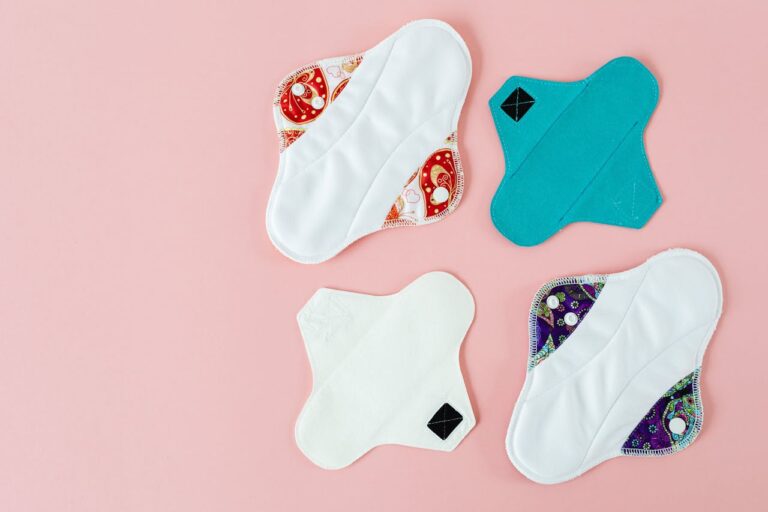
Bridget said that WGRDI has been producing reusable pads and training women and girls in rural communities to tackle the menstrual hygiene crisis in schools, especially among girls from low-income families.
WGRDI training women and girls on making reusable pads. Photo credit: WGRDI
“Our reusable pads offer a cost-effective and sustainable solution to this crisis. Made from breathable, absorbent materials, they are designed for comfort and ease of use. They can be washed and reused multiple times, making them an affordable alternative to disposable pads,” she explained.
Packaged reusable pads the women and girls made. Photo credit: WGRDI
She added that providing access to affordable and reliable menstrual hygiene products can help create equal opportunities and support girls in achieving their educational goals.
“By addressing the menstrual hygiene needs of girls in schools, we can help improve their overall well-being, reduce absenteeism, and promote dignity. Our reusable pads are a practical and innovative solution to the menstrual hygiene crisis.
“Over 5,000 young women and girls have been trained in Plateau, Adamawa and Borno States from 2021 to March 2025. With the acquired skills, girls and young women are able to make their own reusable pads, train other women in their communities, and generate income for themselves from the sales of the reusable pads, while also enabling them to stay in school during menstruation and promote menstrual health and hygiene,” She added.
The menstrual hygiene expert emphasised that tackling these issues demands a holistic approach involving various stakeholders such as educators, policymakers, parents, and community leaders.
“Providing girls with accurate information about menstrual hygiene, promoting positive body image, and fostering self-esteem can help alleviate shame and embarrassment. Encouraging girls to develop self-confidence, self-worth, and self-assertion skills can empower them to make informed choices and prioritise their well-being,” She added.
CHINA has warned against the United States (US) push to approve deep-sea mining in both domestic and international waters, claiming the move “violates international law.”
China’s Foreign Ministry spokesperson, Guo Jiakun, issued the warning on Friday, April 25, in response to a directive to expand deep-sea mining permits.
“The US authorisation violates international law and harms the overall interests of the international community,” Jiakun said.
The ICIR reports that President Donald Trump on Thursday, April 24, signed a controversial executive order intended to accelerate deep-sea mining activities both within the US and in international waters.
Thursday’s order is the latest move by the US president to boost the country’s access to minerals critical to the aerospace, green technology, and healthcare industries.
The deep sea is believed to hold billions of tonnes of potato-shaped rocks known as polymetallic nodules, which are rich in essential minerals such as cobalt and rare earth elements.
Governments and private companies have long shown interest in the mineral and metal resources scattered across the ocean floor.
However, most of them have been waiting patiently for the International Seabed Authority (ISA) to establish regulations, a process that has been underway since the 1990s.
Beijing, which has refrained from mining in international waters while awaiting the ISA’s regulations, has criticised Trump’s orders, stating they “once again highlight the unilateral approach and hegemonic tendencies of the United States.”
The latest order seems to bypass the ongoing UN negotiations regarding mining in international waters.
While the US, which is not a member of the UN-affiliated body, never gave formal consent to the treaty that empowered the ISA’s jurisdiction.
Like China, the European Union, United Kingdom and environmental organisations support deep-sea mining in international waters, but insisted that more research be done before any such activities proceed.
The ICIR reports that China leads the production of rare earths and essential metals such as cobalt and lithium.
Analysts said Trump had been frustrated by the relative weakness of the US position in this regard.
“We want the US to get ahead of China in this resource space under the ocean, on the ocean bottom,” a US official said on Thursday.
Trump’s order calls for Washington to become a “global leader” in seabed exploration and to “counter China’s expanding influence over seabed mineral resources.
The Trump administration estimates that deep-sea mining could increase the country’s GDP by $300 billion (£225 billion) over the next 10 years and generate 100,000 jobs.
The ICIR reported that Trump has continuously signed numerous executive orders since his resumption in office on January 20.
The World Bank Group has expressed optimism in Nigeria’s economic outlook, projecting a 3.6 per cent growth rate for 2025, an estimate that surpasses the International Monetary Fund’s (IMF) forecast of 3.0 per cent.
The IMF projected 3.2 per cent for the Nigerian economy earlier but later downgraded the economy projection to 3.0 per cent this year. It cited lower oil prices as the reason for downgrade.
The world bank based its growth projection on key macroeconomic reforms, which it asserted have begun stabilising the country’s business environment.
The ICIR can report that while the World Bank aims to reduce poverty and promote sustainable development through financial assistance and technical expertise, the IMF focuses on global monetary stability, providing loans to countries facing economic difficulties.
The former reflected this in its latest economic forecast contained in the Spring 2025 edition of Africa’s Pulse, while the latter in its April 2025 World Economic Outlook report.
In its report, the IMF said, “Among the larger economies, the growth forecast in Nigeria is revised downward by 0.2 percentage points for 2025 and 0.3 percentage points for 2026, owing to lower oil prices, and that in South Africa is revised downward by 0.5 percentage point for 2025 and 0.3 percentage point for 2026, reflecting slowing momentum from a weaker-than-expected 2024 outturn, deteriorating sentiment due to heightened uncertainty, the intensification of protectionist policies, and a deeper slowdown in major economies.”
The IMF 2025 projection is below the 3.4 per cent growth it estimated for 2024. Basing its reason on the impact of declining oil prices on Nigeria’s fiscal and external balances, it projected further that it would slow further to 2.7 per cent in 2026.
It said, even though Nigeria maintained a current account surplus, that its external position is expected to weaken in the coming years.
The IMF maintained that it remains pessimistic in its projections, estimating Nigeria’s current account balance to shrink from 6.9 per cent in 2025 and further to 5.2 per cent in 2026, from 9.1 per cent of gross domestic product in 2024.
In contrast, the World Bank projected recovery, anchoring it on improved performance in non-oil sectors, notably financial services, telecommunications, information technology, and a gradual rebound in oil production, which is expected to align with Nigeria’s OPEC+ quota.
It is anticipated that Nigeria’s economic growth would further strengthen to 3.8 per cent by 2027, assuming current reforms are sustained.
“Economic growth is expected to remain moderate in Nigeria. It is expected to increase from 3.4 per cent in 2024 to 3.6 per cent in 2025, and slightly increase to 3.8 per cent in 2026–27.
“The gradual recovery of the Nigerian economy along the forecast horizon is driven primarily by the service sector—specifically, finance, information and communications technology services, and transportation—and, to a lesser extent, a rebound in oil production that converges to its OPEC+ quota,” the World Bank stated.
On the external front, it expects Nigeria’s current account position to remain strong.
It said the current account surplus will rise slightly from 9.2 per cent of GDP in 2024 to 9.4 per cent in 2026. This outlook is underpinned by lower imports, increased remittances, and higher oil exports.
Data from the Central Bank of Nigeria shows the country recorded a balance of payments surplus of $6.83 billion in 2024—its first in three years—driven by a goods trade surplus of $13.17 billion.
The ICIR had, in a recent analysis, spotted that the 2025 budget would most likely face implementation challenges with the consistent drop in crude oil price, hitting its lowest level at $65 per barrel in 4 years in recent times and below the country’s $75 per barrel benchmark.
With the US-China trade war posing a significant risk to the global economy, experts have suggested that Nigeria increase its oil production and avoid poor fiscal management to cushion the impact of global economic shocks, particularly from recent United States (US) trade tensions.
During a press briefing on the Fund’s 2025 Global Policy Agenda in Washington, D.C., on Thursday, April 24, the IMF’s Managing Director, Kristalina Georgieva, noted that the drop in oil prices has placed oil-producing countries like Nigeria in a difficult position.
“Oil producers like Nigeria are under budget pressure due to lower oil prices. On the other hand, oil importers may benefit. But broadly, slowing global growth will affect everyone, and we have already downgraded the continent’s growth prospects,” Georgieva said.
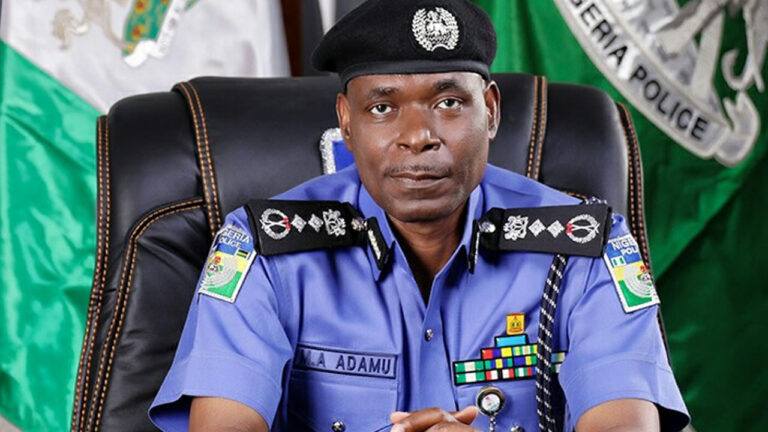
FORMER Inspector-General of Police, Mohammed Adamu, has formally announced his intention to contest in the 2027 governorship election in Nasarawa State, under the platform of the All Progressives Congress (APC).
He made the declaration on Wednesday, April 24, during a strategic meeting with members of the APC State Working Committee, in Lafia, the state capital.
During the meeting, Adamu alleged that he was encouraged to vie for the office by people in the state.
Describing his intention as a response to a “clarion call,” Adamu said he was committed to public service. He pledged to lead an inclusive and transparent government if elected.
“I am answering the call of my people who believe I can serve and move Nasarawa forward,” he stated.
He added, “My administration, by the grace of God, will be inclusive, transparent, and focused on delivering tangible development across all sectors.”
Adamu seeks to succeed the current Governor Abdullahi Sule, an engineer, whose tenure ends in 2027.
Sule was elected in 2019 and was re-elected for the second and final term in 2023.