
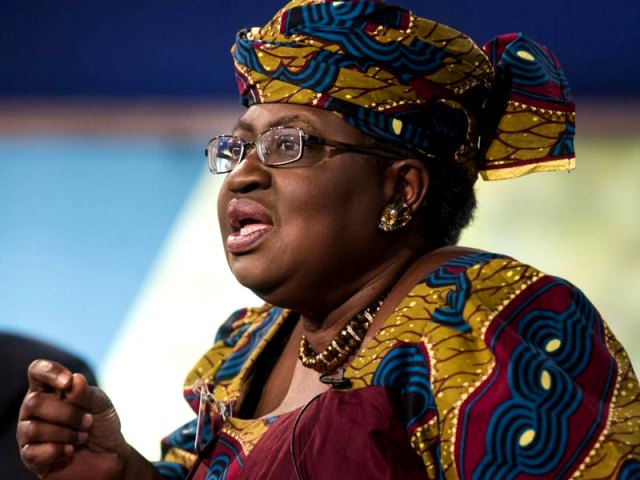

THE Director-General of the World Trade Organization (WTO), Ngozi Okonjo-Iweala, has expressed serious concern about the growing trade tensions between the United States and China. She warns that these tensions could dramatically reduce the trade volume by 80 per cent between the two countries.
In a statement released on Wednesday, April 9, the former Nigerian Minister of Finance emphasised that the actions taken by the U.S. and the resulting reactions from China pose a significant risk of a sharp decline in their bilateral trade.
“Our preliminary projections suggest that merchandise trade between these two economies could decrease by as much as 80 per cent,” she said.
Okonjo-Iweala pointed out that this back-and-forth approach between the world’s two largest economies, whose combined trade accounts for approximately three percent of global trade, carries wider implications that could severely damage the global economic outlook.
“Our assessments, informed by the latest developments, highlight the substantial risks associated with further escalation,” she said.
She further explained that the negative macroeconomic effects would not be limited to the U.S. and China. Other economies, particularly the least developed nations, would also be affected.
Of particular concern is the potential fragmentation of global trade along geopolitical lines. She warned that dividing the global economy into two blocs could lead to a long-term reduction in global real Gross Domestic Product (GDP) by nearly seven percent.
The WTO Director-General also stated that trade diversion is an immediate and pressing threat, requiring a coordinated global response.
“We urge all WTO members to address this challenge through cooperation and dialogue,” she said.
Okonjo-Iweala stressed the importance of the global community working together to preserve the openness of the international trading system.
She added, however, that the “WTO members have agency to protect the open, rules-based trading system. The WTO serves as a vital platform for dialogue. Resolving these issues within a cooperative framework is essential.”
Background on US-China tariffs
Previously, U.S. President Donald Trump had on April 2, intensified a global trade war by imposing sweeping tariffs on imports from various countries, including allies and adversaries. This action, reported by The ICIR, disrupted markets and challenged established free trade norms.
The new tariffs, effective immediately, were applied to over 50 countries, including major trade partners such as China, the European Union (EU), India, and Japan, along with developing economies across Asia, Africa, and Latin America.
On Wednesday, April 9, Trump annouced a 90-day pause in all the “reciprocal” tariffs that he rolled out with massive fanfare last week.
However, China was excluded from this pause. Instead, the U.S. increased tariffs on Chinese goods from 104 per cent to 125 per cent, escalating the ongoing trade dispute between the two superpowers.
In retaliation, China increased its tariffs on U.S. goods entering the country to 84 percent from 34 percent, effective April 10.
The 50 per cent hike comes in response to the latest U.S. tariff increase on Chinese goods to more than 100 per cent that began at midnight.
In a statement by the State Council Tariff Commission, China said, “The US escalation of tariffs on China is a mistake upon mistake, severely infringing upon China’s legitimate rights and interests, and seriously damaging the multilateral trading system based on rules.”
China also published a white paper on its trade and economic relations with the U.S., asserting that the relationship had been damaged by “unilateral and protectionist measures” taken by Washington.
“If the US insists on further escalating trade restrictions, China has the firm will and ample tools to take resolute countermeasures — and will see it through to the end,” said the official.