THE Nigeria Education Loan Fund (NELFUND) said over 500,000 students applied for its loans in the past eleven months.
NELFUND, in a statement on Friday, April 25, by its Director of Corporate Communications, Oseyemi Oluwatuyi, said the organisation had reached a landmark in its first year of operation.
According to the statement, the success achieved within a year of its activities shows the crucial need for available student financing in Nigeria and highlights the across-the-board trust in NELFUND’s mission to democratise access to tertiary education.
The Managing Director and Chief Executive Officer of NELFUND, Akintunde Sawyerr, was quoted as saying that the initiative was a beacon of hope for Nigerian families, driven by a nationwide demand for opportunity, with NELFUND playing a key role in the transformation.
“This milestone represents more than numbers – it reflects real hope for Nigerian families. It shows that students across the country are eager for opportunities, and NELFUND is proud to be playing a central role in making those dreams possible.”
He added, “We are witnessing a nationwide demand for opportunity, and NELFUND is proud to be at the heart of this transformation.”
The NELFUND reports strong student engagement with its loan application process, reaffirming its commitment to transparency, accessibility, and efficiency, and invites stakeholders to support its mission for equitable education.
The ICIR reported in February 2025 that NELFUND revealed that 192,906 students had benefited from the fund since its launch in 2024.
A statement by NELFUND, on Monday, February 3, via its X handle, stated that as of that day, it had received 364,042 applications.
Out of the number, N20 billion (N20,074,050,000) was disbursed for institutional fees, which directly benefited 192,906 students across various tertiary institutions.
The statement added that in addition to institutional fees, N12,818,960,000 was allocated for 169,115 students’ upkeep, who each receive a monthly stipend of N20,000.
President Bola Tinubu signed the Student Loans (Access to Higher Education) Act (Repeal and Re-Enactment) Bill into law on Wednesday, April 3, 2024, following approval by the Senate on Wednesday, March 20.
Although the Act is touted to ease access to tertiary education for Nigerian students, members of the Academic Staff Union of Universities (ASUU) have continued to describe it as an attempt by the government to abandon public universities’ funding.
IT was a chilly April morning in 2020 in Kerker, a village in Jos East Local Government Area of Plateau State, a 13-year-old girl, Mary Yakubu, bent over the rich brown soil, carefully weeding the Irish potatoes farm alongside her parents, a daily routine that helped the family earn a living, when she felt pain in her lower abdomen.
“I didn’t want to alarm my parents,” Mary said who was recalling the first day she saw her menstrual flow, said. “I asked to be excused, and by evening, the pain had grown as I noticed blood stains on my wrapper.”
Mary’s eyes softened as she recalled how her mother walked to a small roadside wooden kiosk to collect a bar of toilet soap on credit, promising to pay back when their farm harvest came.
More than 133 million Nigerians living below the poverty line, that make menstrual expenses risk taking a backseat in family budgeting.
“My mother cut one of her cleanest wrappers, which she often tied to Church on Sundays, into rectangular strips. Each piece was folded carefully into thick layers to absorb the blood. Without a word, she handed them to me, showing me how to place them in my underwear,” Mary narrated.
Mary’s experience reflects the voices of 54.88 per cent of rural girls who use homemade reusable sanitary pads, compared to 36 per cent of urban girls who use homemade sanitary pads according to a comparative study on Menstrual Hygiene published on
National Library of Medicine.
Mary, now 18, in Senior Secondary School (SS3), revealed that she has only used two packs of sanitary pads in her life – both donated by different women at her school. She said she couldn’t afford pads, especially now that they cost as high as N2,000.
Rising cost of sanitary pads worsens poor menstrual hygiene.
Like Mary, over 37 million Nigerian women and girls cannot afford essential menstrual hygiene products as it is ranked one of the countries with the highest costs of sanitary products, a study by PlushCare revealed.
The platform said that it assessed the cost of a one-month supply of tampons, sanitary pads, and ibuprofen in local currencies at the lowest available prices across 107 countries before converting the amounts to US dollars.
Although the Finance Bill signed by former President Muhammadu Buhari in 2020 exempted locally manufactured sanitary products from Value Added Tax (VAT), the policy has had little impact on reducing prices, the government didn’t remove import duties on raw materials used in production.
The bill clearly states that locally manufactured sanitary towels, pads and tampons are among the items to be covered under the VAT-exemption policy, which advocates have argued that without the exception of import duties, the VAT exception might not reflect in price.
The cost of sanitary pads has risen from an average of N450 in 2021 to about N2,000 in 2025, translating that the exception bill has no impact.
Faith Bala, 18, an SS3 student at a government school in Plateau State, said there were days she had to skip school due to her heavy menstrual flow, which required at least six sanitary pads daily for five days which she couldn’t afford.
“Even though my grandmother tried her best to buy pads for me when it was N400, there were times I had to use rags when she couldn’t afford them. But most of the time now, I use rags because pads are very expensive,” Faith told The ICIR.
Blessing Hussaini ,19, an SS-3 student in a government school in Bauchi State, recalled how her mother had to make sacrifices at times just to buy pads for her.
“There were times we didn’t have seasoning or essential ingredients at home, but my mother would give me the money to buy the economic pack just so I could go to school comfortably,” she said.
Happiness John, 16, an SS-3 student in a government school in Gombe, told The ICIR that menstrual pads are not her only challenge, as she wakes up at 5 am: every day to fetch water from a source a few miles away from her home.
“Some days, I don’t feel strong enough to fetch water, especially when on my period, but I have no choice but to walk the lonely path in the dark,” she said.
Hyeladeen Martins, 17, in Yola, Adamawa State, said she once had to use a handkerchief in school because there was no sanitary bank or pads in the school restrooms and the first aid box.
“I was not happy because the handkerchief was not clean, but I didn’t have a choice,” she said.
The neglected reality of schoolgirls
Stella Jerry, 19, sat stiffly at her desk, her hands clenched into fists on her lap. Just a few hours into the first session before break time, and the classroom air was thick. Her white over brown school uniform bore the betrayal of blood stain spreading across the back of her brown skirt again.
An AI illustration of Stella in her white over brown skirt sitting in a classroom in shame because she was stained while her classmates are booing her
“This has been my experience every month since I started menstruating in 2022,” Stella said.
“My grandma can barely afford to buy pads for me, except on the rare occasions when some people come to distribute them at our school. I usually wait until all my classmates have left before going home.”
The Government Secondary School (GSS) student in Bauchi State said she often gets bruises between her thighs during menstruation due to friction while walking home from school.
“That’s why I sometimes missed school because of the cramps, headaches, and the discomfort of wearing a rag,” she said.
Stella represents 4 out of 10 girls who missed school because of their menstrual cycle, often due to lack of access to sanitary products and facilities.
Like Stella, Mary said she endured the sharp pains from bruises and blisters between her thighs each time she used rags to manage her menstrual flow.
“The rough texture of the fabric rubs against my skin, leaving me sore and uncomfortable,” she explained.
She said she walks carefully, wincing at every step to prevent the rag from falling off, while silently praying for her period to end quickly.
“The irritation worsens during long hours in school, making it difficult for me to concentrate in class,” she whispered.
On her part, Blessing lamented that using cheaper pads which cost only a little less than quality ones felt no different from using rags as they cause discomfort and have very low absorbent power.
“Often wrapped in flimsy plastic, the pads tear easily, offering little protection with thin, rough layers that barely absorb menstrual flow. The outer surface feels coarse against the skin, causing irritation and discomfort,” she explained.
Blessing is one of the 25 per cent of women in Nigeria that lack adequate privacy for menstrual hygiene management, access to clean materials, pain medication, and places to dispose of used products.
The 19-year-old lamented that the government school she attends does not have first aid for pain medication and a functional rest room.
“We don’t have a functional toilet facility, so we often use the bushes to ease ourselves. I try my best to be very active in class even when the headache and stomach pain starts, because we don’t have medication in my school to take care of that,” she said.
In the same vein, Hyeladeen said: “I’ve heard stories about people using used pads for rituals, and it scares me. That’s why I don’t like disposing of them just anywhere; but we don’t even have a proper disposal facility in my school.”
Happiness, on the other hand, lamented the lack of water in her school environment— highlighting findings from a study that shows inadequate sanitation facilities at schools is a major challenge to menstrual hygiene management.
The Executive Director, Women and Girl-Child Rescue and Development Initiative (WGRDI), Bridget Dakyes, confirmed the challenges faced by these girls. She emphasised that managing menstruation in school can be difficult for teenage girls, often affecting their academic performance, self-esteem, and overall well-being.
“The lack of access to affordable and quality sanitary products is a major concern. Many girls cannot afford pads, tampons, or menstrual products, forcing them to resort to unhygienic alternatives such as rags, leaves, newspapers, or even skipping school during their periods. This not only compromises their health but also perpetuates the stigma surrounding menstruation,” Bridget said.
She explained that the absence of private changing areas, clean toilets, and proper disposal facilities in many schools made it hard for girls to manage their periods discreetly and hygienically and has often led to embarrassment, anxiety, and discomfort, which can ultimately hinder their ability to concentrate on their studies.
Confirming a study that shows period poverty can impact a menstruator’s education, emotional well-being, health, discomfort, and the nation’s economy.
Social impact and health implications
Bridget, who is also the Plateau State Coordinator of the Women Peace and Security Network, said her work with young girls has revealed a connection between poor menstrual hygiene, low self-esteem, and increased vulnerability to unhealthy relationships.
“Low self-esteem is a significant concern for adolescent girls. Societal expectations, media representation, and peer pressure can contribute to negative body image, self-doubt, and a lack of confidence,” she explained.
According to her, girls with low self-esteem may struggle to assert themselves, set boundaries, and make informed decisions about their lives. “This vulnerability can make them more susceptible to unhealthy relationships, where they may seek validation and acceptance from partners,” she said.
A resident, Obstetrics and gynaecologist, Usman Isah, said that the potential health risks of using unclean or damp cloths, or infrequent changing of pads during menstruation increases risk of infection with microorganisms especially bacteria.
“The kinds of infections or skin conditions that can arise from prolonged use of unhygienic menstrual materials includes but not limited to reproductive tract infection, urinary tract infection, increase risk of Human Papillomavirus Infection and subsequently cervical cancer” he said.
Isa continued that the long-term effect of poor menstrual hygiene includes but not limited to reproductive tract infection, abnormal vaginal discharge, chronic pelvic pain, infertility, cervical cancer.
According to a gynaecologist with the, Isa, the potential health risks of using unclean or damp cloths, or infrequent changing of pads during menstruation increases risk of infection with microorganisms especially bacteria.
“Menstruation is still stigmatised in many cultures, leading to embarrassment or feeling “unclean and coupled with poor menstrual hygiene infection may set in with associated fowl smelling vaginal discharge which may further complicate the issue and low self-esteem,” the doctor added.
The gynaecologist said that all the problems in poor or rural communities includes lack of water, sanitary pads and education.
He suggested providing community-based sanitary pads where possible or encouraging the use of clean, reusable sanitary pads, provision of clean water for school and other places of gathering.
“Proper drying and storage of reusable materials is recommended in poor resources settings as part of menstrual hygiene and for prevention of infections and its sequelae,” he added.
The Founder of FemPawa Africa, Dorkong Rimdam, made a passionate call in 2024 during an outreach at Government Secondary School in Abuja, highlighting the urgent need for action.
She questioned, “If condoms can be provided for free, why not pads? If toilet rolls are freely available in bathrooms, then menstrual pads which are just as essential should be too.”
She said, “If we can have free condoms, why can’t we have free pads, if we have free toilet rolls in the bathroom, so why not pads?
“Sex is an option, but menstruation is not a choice, and a lot of women and girls cannot access sanitary pads.”
She emphasised that removing tax on sanitary pads will help to reduce the cost and enhance accessibility and affordability for women.
Like Rimdam, experts in Nigeria have argued that access to safe, affordable menstrual hygiene products must be treated as a public health priority, noting that untaxing pad is important because menstrual health is not a luxury, it’s a right.
More than 17 countries have abolished the value-added tax (VAT) on menstrual products in a push for menstrual equity. Pioneering this movement, Kenya began the process as early as 2004, setting the stage for others like South Africa, India, and Canada to follow. More recently, countries such as Mexico, Britain, and Namibia have also joined the growing list, recognising that menstrual products are necessities, not luxuries.
However, the impact of the exemption on sanitary products in Nigeria is not being felt.
“Menstrual pads should be available in school toilets, offices, and public institutions facilities. It’s not just students who might be facing this challenge,” Bridget said, supporting Rimdam’s advocacy.
Bridget said that WGRDI has been producing reusable pads and training women and girls in rural communities to tackle the menstrual hygiene crisis in schools, especially among girls from low-income families.
WGRDI training women and girls on making reusable pads. Photo credit: WGRDI
“Our reusable pads offer a cost-effective and sustainable solution to this crisis. Made from breathable, absorbent materials, they are designed for comfort and ease of use. They can be washed and reused multiple times, making them an affordable alternative to disposable pads,” she explained.
Packaged reusable pads the women and girls made. Photo credit: WGRDI
She added that providing access to affordable and reliable menstrual hygiene products can help create equal opportunities and support girls in achieving their educational goals.
“By addressing the menstrual hygiene needs of girls in schools, we can help improve their overall well-being, reduce absenteeism, and promote dignity. Our reusable pads are a practical and innovative solution to the menstrual hygiene crisis.
“Over 5,000 young women and girls have been trained in Plateau, Adamawa and Borno States from 2021 to March 2025. With the acquired skills, girls and young women are able to make their own reusable pads, train other women in their communities, and generate income for themselves from the sales of the reusable pads, while also enabling them to stay in school during menstruation and promote menstrual health and hygiene,” She added.
The menstrual hygiene expert emphasised that tackling these issues demands a holistic approach involving various stakeholders such as educators, policymakers, parents, and community leaders.
“Providing girls with accurate information about menstrual hygiene, promoting positive body image, and fostering self-esteem can help alleviate shame and embarrassment. Encouraging girls to develop self-confidence, self-worth, and self-assertion skills can empower them to make informed choices and prioritise their well-being,” She added.
CHINA has warned against the United States (US) push to approve deep-sea mining in both domestic and international waters, claiming the move “violates international law.”
China’s Foreign Ministry spokesperson, Guo Jiakun, issued the warning on Friday, April 25, in response to a directive to expand deep-sea mining permits.
“The US authorisation violates international law and harms the overall interests of the international community,” Jiakun said.
The ICIR reports that President Donald Trump on Thursday, April 24, signed a controversial executive order intended to accelerate deep-sea mining activities both within the US and in international waters.
Thursday’s order is the latest move by the US president to boost the country’s access to minerals critical to the aerospace, green technology, and healthcare industries.
The deep sea is believed to hold billions of tonnes of potato-shaped rocks known as polymetallic nodules, which are rich in essential minerals such as cobalt and rare earth elements.
Governments and private companies have long shown interest in the mineral and metal resources scattered across the ocean floor.
However, most of them have been waiting patiently for the International Seabed Authority (ISA) to establish regulations, a process that has been underway since the 1990s.
Beijing, which has refrained from mining in international waters while awaiting the ISA’s regulations, has criticised Trump’s orders, stating they “once again highlight the unilateral approach and hegemonic tendencies of the United States.”
The latest order seems to bypass the ongoing UN negotiations regarding mining in international waters.
While the US, which is not a member of the UN-affiliated body, never gave formal consent to the treaty that empowered the ISA’s jurisdiction.
Like China, the European Union, United Kingdom and environmental organisations support deep-sea mining in international waters, but insisted that more research be done before any such activities proceed.
The ICIR reports that China leads the production of rare earths and essential metals such as cobalt and lithium.
Analysts said Trump had been frustrated by the relative weakness of the US position in this regard.
“We want the US to get ahead of China in this resource space under the ocean, on the ocean bottom,” a US official said on Thursday.
Trump’s order calls for Washington to become a “global leader” in seabed exploration and to “counter China’s expanding influence over seabed mineral resources.
The Trump administration estimates that deep-sea mining could increase the country’s GDP by $300 billion (£225 billion) over the next 10 years and generate 100,000 jobs.
The ICIR reported that Trump has continuously signed numerous executive orders since his resumption in office on January 20.
The World Bank Group has expressed optimism in Nigeria’s economic outlook, projecting a 3.6 per cent growth rate for 2025, an estimate that surpasses the International Monetary Fund’s (IMF) forecast of 3.0 per cent.
The IMF projected 3.2 per cent for the Nigerian economy earlier but later downgraded the economy projection to 3.0 per cent this year. It cited lower oil prices as the reason for downgrade.
The world bank based its growth projection on key macroeconomic reforms, which it asserted have begun stabilising the country’s business environment.
The ICIR can report that while the World Bank aims to reduce poverty and promote sustainable development through financial assistance and technical expertise, the IMF focuses on global monetary stability, providing loans to countries facing economic difficulties.
The former reflected this in its latest economic forecast contained in the Spring 2025 edition of Africa’s Pulse, while the latter in its April 2025 World Economic Outlook report.
In its report, the IMF said, “Among the larger economies, the growth forecast in Nigeria is revised downward by 0.2 percentage points for 2025 and 0.3 percentage points for 2026, owing to lower oil prices, and that in South Africa is revised downward by 0.5 percentage point for 2025 and 0.3 percentage point for 2026, reflecting slowing momentum from a weaker-than-expected 2024 outturn, deteriorating sentiment due to heightened uncertainty, the intensification of protectionist policies, and a deeper slowdown in major economies.”
The IMF 2025 projection is below the 3.4 per cent growth it estimated for 2024. Basing its reason on the impact of declining oil prices on Nigeria’s fiscal and external balances, it projected further that it would slow further to 2.7 per cent in 2026.
It said, even though Nigeria maintained a current account surplus, that its external position is expected to weaken in the coming years.
The IMF maintained that it remains pessimistic in its projections, estimating Nigeria’s current account balance to shrink from 6.9 per cent in 2025 and further to 5.2 per cent in 2026, from 9.1 per cent of gross domestic product in 2024.
In contrast, the World Bank projected recovery, anchoring it on improved performance in non-oil sectors, notably financial services, telecommunications, information technology, and a gradual rebound in oil production, which is expected to align with Nigeria’s OPEC+ quota.
It is anticipated that Nigeria’s economic growth would further strengthen to 3.8 per cent by 2027, assuming current reforms are sustained.
“Economic growth is expected to remain moderate in Nigeria. It is expected to increase from 3.4 per cent in 2024 to 3.6 per cent in 2025, and slightly increase to 3.8 per cent in 2026–27.
“The gradual recovery of the Nigerian economy along the forecast horizon is driven primarily by the service sector—specifically, finance, information and communications technology services, and transportation—and, to a lesser extent, a rebound in oil production that converges to its OPEC+ quota,” the World Bank stated.
On the external front, it expects Nigeria’s current account position to remain strong.
It said the current account surplus will rise slightly from 9.2 per cent of GDP in 2024 to 9.4 per cent in 2026. This outlook is underpinned by lower imports, increased remittances, and higher oil exports.
Data from the Central Bank of Nigeria shows the country recorded a balance of payments surplus of $6.83 billion in 2024—its first in three years—driven by a goods trade surplus of $13.17 billion.
The ICIR had, in a recent analysis, spotted that the 2025 budget would most likely face implementation challenges with the consistent drop in crude oil price, hitting its lowest level at $65 per barrel in 4 years in recent times and below the country’s $75 per barrel benchmark.
With the US-China trade war posing a significant risk to the global economy, experts have suggested that Nigeria increase its oil production and avoid poor fiscal management to cushion the impact of global economic shocks, particularly from recent United States (US) trade tensions.
During a press briefing on the Fund’s 2025 Global Policy Agenda in Washington, D.C., on Thursday, April 24, the IMF’s Managing Director, Kristalina Georgieva, noted that the drop in oil prices has placed oil-producing countries like Nigeria in a difficult position.
“Oil producers like Nigeria are under budget pressure due to lower oil prices. On the other hand, oil importers may benefit. But broadly, slowing global growth will affect everyone, and we have already downgraded the continent’s growth prospects,” Georgieva said.
FORMER Inspector-General of Police, Mohammed Adamu, has formally announced his intention to contest in the 2027 governorship election in Nasarawa State, under the platform of the All Progressives Congress (APC).
He made the declaration on Wednesday, April 24, during a strategic meeting with members of the APC State Working Committee, in Lafia, the state capital.
During the meeting, Adamu alleged that he was encouraged to vie for the office by people in the state.
Describing his intention as a response to a “clarion call,” Adamu said he was committed to public service. He pledged to lead an inclusive and transparent government if elected.
“I am answering the call of my people who believe I can serve and move Nasarawa forward,” he stated.
He added, “My administration, by the grace of God, will be inclusive, transparent, and focused on delivering tangible development across all sectors.”
Adamu seeks to succeed the current Governor Abdullahi Sule, an engineer, whose tenure ends in 2027.
Sule was elected in 2019 and was re-elected for the second and final term in 2023.
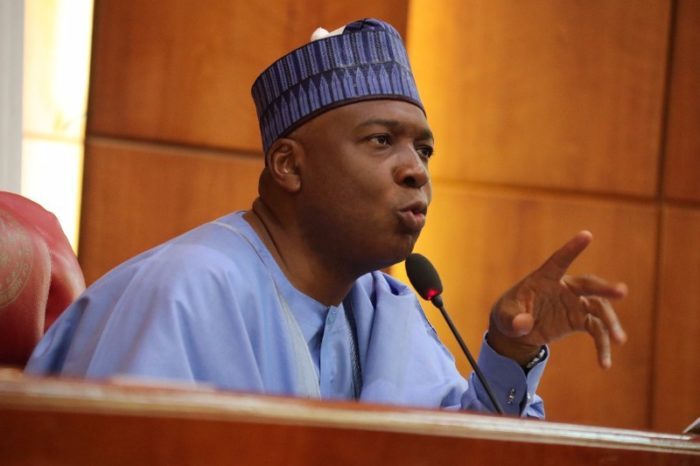
FORMER Senate President Bukola Saraki has urged members of the Peoples Democratic Party (PDP) who intend to leave the party to quit.
Reacting to the gale of defection from the party to the All Progressives Congress (APC) in Delta State, in a statement on Thursday, April 24, Saraki said the party was not in crisis but in a moment of transformation.
According to him, the defections merely exposed long-standing insincerity among people who had already checked out of the party in spirit.
He added that those leaving were making space for genuine party members to step forward and refocus the PDP into a viable, people-centred opposition.
“My view is that those who want to leave the PDP should leave now and let the rest of us who want to stay concentrate on rebuilding the party and refocusing it to play the role of a viable opposition that will provide a better alternative for the good people of Nigeria.
“Therefore, it is in the interest of Nigeria and the survival of our democracy for the opposition to be vibrant and strong enough with the capacity to replace the ruling party at any point. Thus, my charge to our party members is that the PDP is merely experiencing a rebirth. Those who want to leave the party should go and let those of us remaining have a clear view of who we are talking to and where their political loyalty lies. All we need is for those who want to stay back in PDP to show commitment, and we can all work to rebuild the party.
He said the latest defections from the party, involving the entire members of the Delta State PDP, including the Governor Sheriff Oborevwori and his predecessor, Ifeanyi Okowa, vindicated his stance of watching events unfold in the party.
“I have seen that there was no sincerity with the supposed leaders of the opposition. One was not sure of the next person one was talking to,” Saraki added.
He further assured party members across the country that there is “no cause for alarm” over the defections.
He urged members to remain calm, focused, and committed to the rebuilding of the party, describing the recent developments as an opportunity for the PDP to redefine itself.
Saraki also expressed confidence that the PDP would rebuild, mobilise, and gain new allies from other parties.
“Our numerous party members should know that the PDP is better with fewer members who are loyal, sincere, determined, dedicated, and committed to its ideas, ideals, and progress than to have so many who will identify with us in the afternoon and be romancing the ruling party in the night,” he added.
The ICIR reported that the Delta State governor, his predecessor and all PDP members in the state defected from the PDP to the APC on Wednesday, April 23.
Oborevwori announced the defection through his Commissioner for Information, Charles Aniagwu.
James Manager, a former senator, also announced the PDP members’ defection after a meeting that lasted several hours at Government House, Asaba, the state capital.
COLUMBIA Journalism School, in partnership with the TX Group and The Reynolds Foundation, is offering scholarships for its Summer Investigative Reporting Course, which will take place from July 7 to 25 at Columbia University in New York.
The programme is open to journalists, editors, and journalism educators from around the globe who are interested in sharpening their investigative reporting skills.
Through hands-on workshops, participants will explore identifying stories worth pursuing as long-term investigations, using data as the foundation of a compelling narrative, and applying advanced reporting techniques to produce impactful journalism.
Three scholarships sponsored by the TX Group are available to journalists in Asia. Six scholarships funded by The Reynolds Foundation are open to investigative reporters and editors based in Africa, Latin America, and the Caribbean.
Each scholarship covers tuition and course fees, economy airfare to New York City, ground transportation, and accommodation.
The application deadline for TX Group scholarships is April 30, and the deadline for Reynolds Foundation scholarships is May 15
THE Federal Government has announced that at least 231 young Nigerians who were trafficked to Ghana are expected to return to Lagos on Friday.
In a statement issued on Thursday, April 24, the Minister of State for Foreign Affairs, Bianca Odumegwu-Ojukwu, said the development followed the rescue of 219 young Nigerians from a human trafficking syndicate that had coerced them into cybercrime activities by the Ghanaian authorities..
It highlighted that the victims were discovered after they were confined in about 25 rooms within a residential estate in Accra, Ghana’s capital.
During a visit to the Economic and Organised Crime Office (EOCO) in Accra, Odumegwu-Ojukwu expressed Nigeria’s gratitude for the rescue operation and lauded the EOCO operatives for their professionalism and compassionate treatment of the victims.
“Count yourselves lucky, as next time, it may not be a benevolent country like Ghana. It may not be a circumstance within a location where we have excellent bilateral relations.
“There are countries that take cybercrimes very seriously, and by the time they lock you up, they will throw away the key. We are still trying to this day to ensure that Ethiopia signs our exchange or transfer of sentenced persons MoU so that we can bring those nationals who are trapped in their prisons back to Nigeria. So we don’t lose even more of them” she said.
The Executive Director of EOCO, Bashiru Dapilah, explained that his agency launched the operation after acting on credible intelligence that led to uncovering the trafficking network.
He confirmed that several Ghanaians were part of the network, including the owner of the estate where the youths were kept.
The house owner has been arrested and will be prosecuted.
Dapilah emphasised the importance of cross-border collaboration, stressing that although the crime took place in Ghana, it involved individuals from Nigeria. He called for enhanced cooperation between the two nations to ensure the perpetrators are brought to justice.
Theu ICIR that some of the victims were subjected to abuse, with visible injuries, and one individual sustained broken legs after allegedly failing to turn over proceeds from the illicit activities.
Odumegwu-Ojukwu, who described the ordeal as a form of modern-day slavery, cautioned Nigerian youths against being lured by fake job offers abroad
She said such promises were often disguised for human trafficking operations.
The minister emphasised the Federal Government’s commitment to tackling youth unemployment through skill acquisition programmes and urged the rescued individuals to take advantage of available federal intervention schemes to rebuild their lives.
“We are happy that this commission has excellent relations with NAPTIP, and they have been kind enough. I was really humbled when the Executive Director said their interest is not for these young men to get back to Nigeria into the prison system, because that’s what usually happens.
“So, when you get home, give the government the opportunity to equip you with skills,” Odumegwu-Ojukwu said.
DESPITE the policies of Bola Tinubu’s administration and its economic reforms, the World Bank has projected that poverty in Nigeria would increase by 3.6 percentage points by 2027.
The current administration has promoted key policies of fuel subsidy removal and floating the naira. But the World Bank paints a gloomy picture, noting that more Nigerians would be pushed into poverty. It cited risks of over-dependence on natural resources.
This projection is from the World Bank’s Africa Pulse report, released during the ongoing Spring Meetings of the International Monetary Fund (IMF) and the World Bank in Washington, DC.
The report paints a troubling outlook for poverty reduction in Nigeria, highlighting that despite some recent gains in economic activity, particularly in the non-oil sector during the last quarter of 2024, structural issues related to resource dependence and national fragility are likely to hinder progress.
According to the World Bank, Nigeria, alongside other resource-rich and fragile countries in Sub-Saharan Africa, will experience a worsening poverty situation, unlike non-resource-rich countries, which are expected to see faster poverty reduction.
“Poverty in resource-rich, fragile countries—including large economies like Nigeria and the Democratic Republic of Congo—is projected to increase by 3.6 percentage points between 2022 and 2027,” the report stated.
The report underscores that Sub-Saharan Africa continues to have the highest extreme poverty rate globally, with a disproportionate concentration of the poor. In 2024, 80 per cent of the world’s 695 million extreme poor lived in Sub-Saharan Africa.
Within the region, half of the 560 million extreme poor were located in just four countries.
In comparison, South Asia accounted for eight per cent, East Asia and the Pacific two per cent, the Middle East and North Africa shared five per cent, and Latin America and the Caribbean contributed three per cent.
Resource-rich countries are expected to lag in poverty reduction due to slowing oil prices and weak fiscal structures. Conversely, non-resource-rich countries are benefiting from high agricultural commodity prices, which are fueling stronger growth despite fiscal pressures.
The report adds: “This follows a well-established pattern whereby resource wealth combined with fragility or conflict is associated with the highest poverty rates—averaging 46 per cent in 2024, which is 13 percentage points higher than in non-fragile, resource-rich countries.”
The Nigerian government, despite its numerous policies, still struggles with lifting citizens out of poverty.
Some analysts say most of its policies are not wholistic enough to address key economic problems; rather, they are interventionist and not capable of solving perennial poverty issues.
“Most of the government’s programmes and policies are knee-jerk and don’t provide a holistic solution to our perennial poverty issues. Oftentimes, the government gets consultants who design such policies, many of such are disconnected from the real needs of the people and what can provide a lasting solution to the unemployment concerns,” a development economist, Celestine Okeke, told The ICIR.
Despite some of its interventionist programmes, the Federal Government has disclosed that 133 million people in the country, representing 63 per cent of the population, lived in different categories of poverty.
The government, giving the figure in its “multi-dimensional” poverty report, said that 65 per cent of the poor (86 million people) live in the North, while 35 per cent (nearly 47 million) live in the South.
THE Federal Government has revealed plans to carry out a forensic audit of the Nigerian National Petroleum Company Limited (NNPCL) to promote operational efficiency and address misappropriation claims.
The Minister of Finance and Coordinating Minister of the Economy, Wale Edun, reportedly hinted at this at the ongoing Nigerian investor forum, held on the sidelines of the International Monetary Fund (IMF)/World Bank Spring Meetings in Washington, DC.
He said the audit of the state-owned oil firm will come soon without reference to a definite time.
At the forum on Wednesday, April 23, Edun stressed that the government plans to reconcile NNPCL books to reposition the company for efficient operations and service delivery.
“The NNPC needs to come to the table with more dollar revenue,” the minister was quoted to have saying.
The audit of the NNPCL comes at a time when stakeholders believe the government should revamp oil production in the face of the global uncertainty heightened by the United States and China’s tariff war.
Edun’s revelation that the federal government would carry out a forensic audit of NNPCL followed the assurance given by the Attorney General of the Federation and Minister of Justice, Lateef Fagbemi, that the NNPCL under the former group chief executive officer (GCEO), Mele Kyari, would be investigated.
In a related development, a group of protesters under the banner of Concerned Citizens Against Corruption were reported to have stormed the AGF’s office, calling for a thorough investigation into Kyari and NNPCL’s transactions over the past five years.
A group of lawyers from the Guardians of Democracy and Rule of Law Wednesday, we’re also reported to have marched to the AGF’s office to submit a petition seeking Kyari’s investigation, arrest, and prosecution.
The ICIRreported in January this year that the Office of the Auditor-General of Nigeria indicted the NNPCL of N514 billion in fraud.
The allegation was contained in the 2021 auditor general’s annual report published in November 2024.
The report disclosed that the NNPCL misappropriated funds and diverted revenue meant for the Federation in 2021.
A breakdown of the allegations revealed that the auditor-general indicted the NNPCL for unauthorised deductions of N82.9 billion from federation revenue for refinery rehabilitation.
It berated the state-owned oil company for its irregular deductions of funds from domestic crude sales at the source.
It further observed that N82.9 billion was deducted from the sale of crude oil and gas from the 2020 and 2021 records, which were deducted at source for purported refinery rehabilitation.
On April 2, President Bola Ahmed Tinubu made a change to the board of NNPCL and sacked Kyari along with other executives.
The president appointed Bayo Ojulari as the new NNPC’s GCEO and named Ahmadu Musa Kida as the non-executive chairman, replacing Pius Akinyelure.
Continuing, Edun said the recent changes in the NNPCL management were part of a broader effort by the federal government to clean up and examine the company closely.