Home Blog Page 3005

Court Refuses To Sack Andy Ubah, Stella Oduah, Others

0
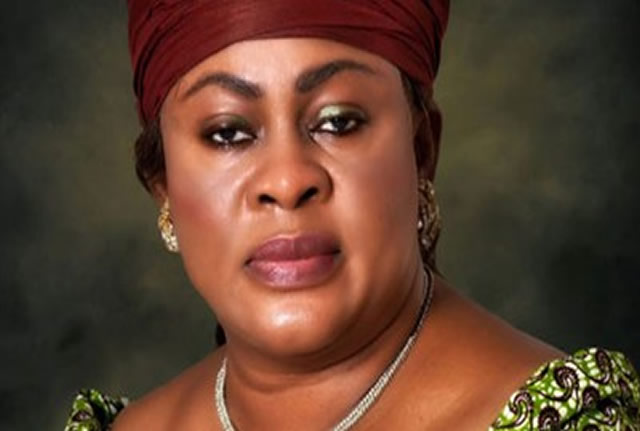
Senator Stella Oduah

The Federal High Court in Abuja has dismissed the suit seeking to remove lawmak­ers representing Anambra State at both the state and National Assemblies, including former Aviation Minister, Stella Oduah and Andy Ubah, from office.


Justice Adeniyi Ademola, in his ruling on Friday dismissed the suit brought by Annie Okonkwo, a one-time senator, and Chris Ubah, younger brother to Andy Ubah, and 42 others for lacking in merit.


The court ruled that the claim of the plaintiffs that they are the rightfully nominated candidates of the Peoples Democratic Party, PDP, in the state could not stand in the face of law since they emerged from an illegal process.


The court said that the power to nominate candidates and submit names to INEC is vested in the National Executive Council, NEC, of any political party.


Justice Ademola said in the instant case, the plaintiffs, having emerged from a primary elec­tion conducted by the State Executive Commit­tee of the party submitted themselves to an act of illegality and as such cannot seek legal backing to such nomination.


He made reference to the Supreme Court judgment of January 29 and the ruling of the Court on February 24, 2016, where it was effectively stated that the state organ of the party has no power un­der the party’s constitution and Electoral Act to nominate candidate for the purpose of a general election.


He said the Supreme Court has made clarification through its judgment and “that judgment is binding and must be obeyed by persons and statutory bodies.”


“It is settled in law that a state Exco of a po­litical party lacked power to nominate candidate for election. It’s only election organised by Na­tional Executive Committee (NEC) that is valid­ly empowered by law to submit to INEC names of candidate for the purpose of election and no other organ of the party.”


Before the 2015 general election, the PDP in Anambra State was rocked by internal crisis which resulted in the party dividing into two factions; one led by one Ejike Oguebego and the other by Ken Emeakayi, with both factions holding parallel primary elections and having different candidates for the State and National assembly elections.


But long after the elections, on January 29, 2016, the Supreme Court affirmed the chairmanship of Oguebego as the authentic State Chairman of the party in the State, declaring the list of candidates submitted by the  Emekayi faction – which was supported by the Party’s NEC and recognized by INEC during the general election – illegal.


Oguebego and his faction therefore wanted the court to order INEC to cede the certificates of return issued the Emeakayi-faction to them as the authentic faction of the PDP in Anambra State, but the court dismissed their plea on the grounds that a state party exco has no power to present candidates for election.

We Will Not Hide Anything From Nigerians – Buhari

0
President Buhari with some Northern Christian Leaders

President Muhammadu Buhari says his administration will not hide anything from Nigerians in its resolute commitment to restoring the economic fortunes of the country and delivering prosperity to her citizens.

The President said this while receiving the Northern Christian Leaders Eagles Eyes Forum at the State House in Abuja on Friday.

According presidential spokesman, Femi Adesina, the President appealed to the religious leaders not to lose hope in the unity, stability and progress of the country, adding that the Federal Government would continue to prioritise the safety of lives and property.

He pledged that his government would also equip Nigerian farmers with the right tools, technology and techniques to boost agriculture.

“You must tell your followers the truth about the country. We have nothing to hide because we have no other country but Nigeria,” the President was quoted as saying.

“Tell them to give us a chance to stabilise the country. Your concern for the security, unemployment, anti-corruption campaign and the frequent altercations between herdsmen and farmers are genuine concerns.

“I know the Ministry of Agriculture and the Governors Forum are doing a lot to resolve the lingering crisis between herdsmen and farmers, we must give them a chance,” he added.

The President also thanked the Christian leaders for their support to the anti-corruption campaign and other policies geared towards reviving the economy.

He described as saddening that some people stole what belonged to all Nigerians and stashed them in their personal accounts, but added that that people like these are already regretting it and “they will regret more.”

Pastor Aminchi Habu, leader of the delegation, called on Nigerians to support the President’s anti-corruption war and his vision to restore the lost glory of Nigeria.

He expressed optimism that the Buhari administration will bring about a “new Nigeria where the fear of bribery, corruption and extortion is the beginning of wisdom” and where tribalism, religion and ethnicity is no longer a barrier that separates us but a bond that unites us for a greater tomorrow.”


Ese Oruru: Absence Of Defence Counsel Stalls Trial

0
Ese Oruru
Ese Oruru

A Federal High Court in Yenagoa has deferred the trial of Yanusa Dahiru, the alleged abductor of 14-year-old-girl, Ese Oruru till September 13.

Justice Aliya Nganjiwa, gave the long adjournment on Friday due to the absence of the new lead Defence Counsel in the court.

Yanusa is standing trial on a five-count charge of criminal abduction, illicit sex, sexual exploitation and unlawful carnal knowledge of a minor.

At the resumed hearing on Friday, Abdul Mohamed, who appeared for the Defence Counsel explained to the court that the new lead Defence Counsel was absent due to illness and appealed for an adjournment of the case

“My lord, our senior partner from Kano, a Senior Advocate of Nigeria (SAN), who will lead the team is ill and he has asked the court to take cognizance of his health,” he said.

Following Mohamed’s submission, Justice Nganjiwa adjourned the case till September 13, for definite trial, stressing that the adjournment would be the last for the defence counsel.

“Meanwhile, Yunusa, the accused will remain in prison custody,” Nganjiwa added.

The Prosecution Counsel, James Amate, who spoke with the News Agency of Nigeria, NAN, expressed frustration at the many adjournments the case has witnessed so far.

“We are not happy over the series of adjournment,” Amate complained.

“Of course, catering for the principal witness, who is in Police protective custody is biting on us.”

Nasarawa Workers Declare Indefinite Strike

0
Nasarawa State Governor, Tanko Al-Makura

The Nigeria Labour Congress, NLC and the Trade Union Congress, TUC, in Nasarawa State has declared an indefinite strike over the state government’s decision to cut workers’ salaries by 50 percent.

Abdullahi Adeka and Danladi Namo, State Chairmen of the NLC and TUC respectively made this known while addressing journalists at the Labour House in Lafia, Nasarawa State capital, saying that government’s reluctance to reverse its decision has left them no choice but to declare an indefinite industrial action.

According to Adeka, “We staged a peaceful protest to the government house on Monday 4 July, where we made it clear that if the government did not reverse its decision to cut our salaries, we would embark on strike,

“We told the Deputy Governor, Mr. Silas Agara who came and received our petition on behalf of the Governor that at the close of work on Monday, government must reverse the workers’ unfriendly decision or face strike.

“Since the government remains adamant, the unions would use its only weapon which is strike to press home its demands until the government returns and maintains the status-quo,”

The TUC Chairman, Namo, explained that government in its usual characteristics has resorted to intimidating workers especially Permanent Secretaries and Directors.

He urged all categories of workers in the payroll of the government of the state to continue to remain at home until they receive further directive form the union, promising workers across the state that there would be light at the end of the tunnel.

Governor Tanko Al-Makura had insisted that there was no going back on the decision.

Cable Editor Wins Nomination For Kurt Schork Award

0
Fisayo Soyombo
Fisayo Soyombo

Fisayo Soyombo, an editor with one of Nigeria’s leading online Newspaper, TheCable, has been short-listed for the Kurt Schork Memorial Fund Awards in International Journalism.

Soyombo, with support from www.icirnigeria.org, had also done an investigative, five-series report titled “Forgotten Soldiers” which revealed the condition of some Nigerian soldiers who were wounded in the battle against Boko Haram insurgents in the Northeast, but have seemingly been neglected by the Army Authorities.

The Kurt Schork awards, was initiated in 2002 in honour of American freelance journalist Schork, who was killed in 2000 while on assignment for Reuters in Sierra Leone.

Soyombo was short-listed in the Local reporter category, for his three stories of 2015: an undercover investigation into corruption at Apapa ports, a feature on the practice of female genital mutilation in some parts of Nigeria, and a three-part investigation into Liberia’s post-Ebola recovery.

The Local Reporter award recognises the often over-looked work of journalists in developing nations or countries in transition, who write about events in their homeland.

Also short-listed in the category are two other Nigerians — Olatunji Ololade of The Nation and Motunrayo Joel of Sunday Punch — as well as Aylaa Abo Shahba (Egypt), Chitrangada Choudhury (India), Ray Mwareya (Zimbabwe), Umer Ali (Pakistan) and Brian Ligomeka (Malawi).

Philip Obaji, another Nigerian, is on the short list for the Freelance category, which honours the works of journalists who travel to the world’s conflict zones, usually at great personal risk, to witness and report the impact and consequences of events.

According to a statement by the organisers, this year’s awards attracted 93 entrants — 37 Freelance and 56 Local Reporter — from 36 countries.

The winner in each category will be announced in September.

The 2016 presentation ceremony, hosted by the Thomson Reuters Foundation in the Thomson Reuters Auditorium, Canary Wharf, London, will hold on Thursday October 27.

The judges for this year’s awards include Anna Husarska, freelance journalist and author; Sam Dubberley, co-founder of Eyewitness Media Hub; Samia Nakhoul Reuters middle East editor; and Richard Sambrook, professor of journalism at Cardiff University.

Soyombo was first short-listed for the award in 2014, for ‘Blood on the Plateau’ — a five-part investigative series on the ethnocentric killings in Plateau state, published in December 2013.

The award was eventually won by Indian journalist, Neha Dixit, for “her courageous and innovative series of undercover reports on rape published by the New York Times, Outlook India, and Yahoo News”.

Soyombo, a 2013 recipient of the Deutsche Welle/Orange Magazine Global Fellowship for Young Journalists, contributes opinions to UAE-headquartered Al Jazeera and Germany-based TAZ and his works have been translated into French, German and Arabic.

Suicide Attacks Kill Six In Damboa, Borno State

0
File
File

Six people were killed and one injured in the early hours of Friday following two suicide bomb attacks at the Damboa central mosque in Borno state.

Sani Usman, Acting Director, Army Public Relations confirmed this in a statement, saying that one of the bombers successfully detonated his device while the other, who could not gain entry into the mosque succeeded only in killing himself.

“At the early hours of today, precisely at about 5.15am, two Boko Haram terrorists suicide bombers attacked Damboa,” Usman Stated.

“The first suicide bomber targeted Damboa Central Mosque but due to stringent security measures, he could not gain entry. Obviously frustrated, he exploded and died near the Central mosque,

“However, the second bomber veered off and gained entry into another smaller mosque and detonated the bomb killing himself and 6 other worshipers and injuring one other person.”

The Army spokesman said the wounded has been evacuated to a hospital while efforts are on to clear the rubbles, adding that troops and other security agencies have been mobilized to the area.

Usman also revealed that insurgents attacked Gaskeri village on Thursday, killing three civilian vigilantes and looting food items.

Oil Workers’ Unions Divided Over Planned Strike

0
NUPENG President, Igwe Achese

There appears to be a division between the two unions representing oil workers in Nigeria as to whether to embark on a nationwide strike or not.

Tokunbo Korodo, The South West Chairman of the Nigeria Union of Petroleum and Natural Gas Workers, NUPENG, said a meeting with representatives of the federal government, which was scheduled to take place on Thursday has been shifted till Monday, July 11.

He noted that NUPENG remains open to the option of dialogue to ensure Nigerians are not made to suffer unnecessarily as a result of the strike.

However, Emmanuel Ojugbana, National Public Relations Officer, Petroleum and Natural Gas Senior Staff Association of Nigeria, PENGASSAN, insisted that all was set for the planned strike.

He added that the gradual method of shutting down activities and operations in the oil and gas sector is being adopted by its members.

He also said the Department of Petroleum Resources, DPR, the Petroleum Products Pricing Regulatory Agency, PPPRA, and the Petroleum Equalisation Fund, PEF, will also be affected during the strike.

Olabode Johnson, National president of PENGASSAN, also said in a television interview that the strike was stalled only to allow their Muslim counterparts, who had been fasting during the Ramadan period, to participate in the Eid-el-Fitri celebration.

He added that the strike will go on even as the associations continue to dialogue with the government.

USA: Sniper Kills 5 Police Officers, Injures Seven

0


Dallas shootings

Five police officers have been killed in Dallas, USA and seven others wounded by gunmen during protests against the shooting of black men by police. Two civilians were also wounded in the attack.

Three people, including one woman, have so far been arrested in connection to the attacks, and one man who was in a stand-off with police was later killed.

Gunfire broke out at around 8:45 pm local time on Thursday as demonstrators marched through the city, protesting the killing of two Black-Americans by policemen earlier in the week.

The Dallas attack marks the deadliest day for US law enforcement officers since the September 11 attacks in 2001.

President Barack Obama, who is on a visit to Poland, said it was a “vicious, calculated and despicable attack on law enforcement”, adding that “anyone involved in these senseless murders will be held fully accountable”.

Dallas Police Chief, David Brown said the suspects were all believed to have been working together, including two snipers who fired from “elevated positions”, shooting some officers in the back.

“We believe that these suspects were positioning themselves in a way to triangulate on these officers from two different perches… and planned to injure and kill as many law enforcement officers as they could,” Chief Brown said.

Officers later surrounded a car park near El Centro College, as an armed man fired off rounds with a rifle.

Chief Brown said the suspect had told negotiators that “the end is coming” and that he was going to attack more officers and had “bombs all over the place”.

US media reported that the suspect later killed himself but the police chief clarified that he was later killed by a bomb robot which was detonated by the police.

Police are continuing to sweep the downtown area and no explosives have been found so far.

One of the officers killed was Brent Thompson, a 43-year old transport police officer and the first Dallas officer to be killed in the line of duty.

Statistics has it that 53 US officers have died in the line of duty in 2016, 21 of them as a result of gunfire, excluding those killed in Dallas.

Police had earlier issued a photo of one man at the rally with a rifle slung over his shoulder, saying he was a suspect.

The man, named as Mark Hughes, turned himself in to police and was later released.


Read also:

Forget The Law, Take Care Of The Poor

0

Lagos Street
-By Abdul Mahmud

Lagos is a fascinating city that holds immense imaginations, dreams and possibilities for many who encounter it.

It is the place where hopes are born, where hopes die, and dreams yield to the geniuses of those who overcome bitter warts and ends to live the good life and attain the level of grace by merely knowing and encountering the wealthier Lagos.

Ask those, who, having fled the poverty and misery of their birthplaces, are drawn to the klieg lights, welcomed by the statue of the Eyo masquerades to the vast opportunities the city offers. And they seize them. These are the rag-to-riches folks who render testimonies of their conquests, sing and dance to praise songs, roll on altars in appreciation of what God and Lagos have done to them in mega churches.

This is the Lagos of Linda Ikeji.

Yet, there are those who abandon their birthplaces in search of the Golden Fleece who end up in shanties erected on stilts raised above the brackish waters of the lagoon, or in the margins of the metropolis that are merciless as they are punishing.

Lagos isn’t idyllic, even by the most liberal meaning one gives to the adjective, idyllic.

Visit Lagos you’ll find what passes as sad antonyms of the idyllic: the chaos of the Lagos traffic, the Venice of Lagos- the slum dwellings of Ijora-Badiya, Otto Ilogbo and Ajegunle and the floating shanty of Makoko- brackish waters, shunned by sunlight and befriended only by human waste at night. There are criminals, prostitutes, petty thieves, burglars, carjackers, armed robbers, pickpockets, swindlers, money-doublers, area boys- those left behind by the wealthier Lagos- here, who morph into pretend beings at dawn, and there are those who hustle in the streets- they are neither criminals nor area boys- by hawking wares. God bless their hustles.
This Lagos of Ijora-Badiya is akin to the one that the famous American journalist, John Gunther described in his famous work, Inside Africa, as the “catacombs of filth”.

A word here. One can forgive John Gunther for extrapolating the “cardboard city” he viewed from the old Carter Bridge. Perhaps he didn’t catch a glimpse of Ikoyi of colonial Lagos when he described the city as the catacombs of filth.

The poet, Femi Fatoba, once described Lagos thus: “Lagos is like crab/in a basket/each stepping in the other/each pulling the other down/in order to get up/that is how Lagos is/tough is Lagos/difficult is Lagos”.

The crab mentality is ever pronounced in places where resources are scarce, where opportunities are limited and folks get by, struggle to climb the food chain by pulling each other down, by stepping on each other.

Getting by and surviving Lagos is a bruising experience even in the best of times. Climbing or reaching the summit of the food chain is even more bruising for those who crouch at the foot, without strength, without courage, without the belief that they can reach the summit of the food chain and don’t come crashing into their miserable earth like Humpty Dumpty.

Lagos state, for all its claim to excellence, subtly implicated in Fatoba’s poetic rendering, is as guilty as the crab in the basket. The toughness and difficulties of Lagos are often quadrupled by the sinister actions of the government of Lagos state.

Take the decision to forcefully remove traders and hawkers from the streets of Lagos as one of the many difficulties poor folks who fight for better life for their families and dependents by eking out their livelihoods on bitter streets- just to place food on the dinner table- have to contend with.

Lagos state is a basket case of how a state becomes repressive, shows no compassion in the way it deals with those who cannot run the rat race, cruel in its public policies, brutal with its legal regimes, when so much is needed to relieve the poor of the pain they feel each day in our country.

When Lagos state chooses to remove beggars from the streets of Lagos, as it shamefully did a few years ago as part of the enforcement of its environmental law and the beautification of Lagos, and embarks on the more devious task of removing street traders and hawkers from the sources of their livelihoods, one is assured that it is madness that is at work.

The poor of Lagos can only be cautioned, warned to be afraid, be very afraid, here.

Environmental laws proceed from the public policy idea that street trading and hawking blight the beauty of our cities. While it is conceded that street trading and hawking have negative implications for the environment and urban beauty, our public policy-makers neglect or willfully refuse to balance the gains of the informal market against social policy needs. The problem, here, is the lack of creative thinking inside the governments of our country.

Elsewhere, we see how the gains of the informal market are balanced against social policy needs. Take Vietnam, a country with one of the highest FDIs and GDPs in Asia, where public areas, streets and the inner rings of cities like Hanoi and Ho Chi Mihn are mapped out and marked for street vendors and traders thereby enhancing great trading experiences, businesses, economic activities, urban and city life. There, deliberate legal and policy regimes allow trading on named streets and fixed sidewalks in a regulated way.

Walk the street of Nguyen Van Chiem in downtown Ho Chi Mihn City, you will witness how the legal regime of street trading makes public health and safety regulations, public policy on streets management more effective.

By allowing street trading in a regulated way, ancillary policies on revenue generation emerge as well. In England that I am well familiar with, street trading licenses are issued by local councils to traders and it is for this reason one finds street traders hustling during the Nottinghill Carnival and at the prestigious horse racing event, The Royal Ascot, where Kebabs, racing annuals, hats, betting coupons, hospitality packages and sometimes unofficial tickets are hawked and sold under the very eyes and noses of officers of the Thames Valley Police.

Imagine the revenue that accrues to the local councils from licensing and think about the internally generated revenue profile Lagos state would acquire if street traders were licensed. Think: ancillary legal and policy regimes would emerge to safeguard public health and safety.
The regulated regime of street trading is a WIN-WIN for all- the government and the governed, and not the blanket ban Governor Ambode insists on.

Lagos state government, far from the excellence it attaches to itself, is emerging as the most dangerous enemy of the poor- an enemy whose objective is to wipe the poor out of the face of Lagos.

There is no logic in seeking to wipe out poor street traders, or restrict their trade, when the Constitution of the Federal Republic of Nigeria, 1999 ( as amended) provides that “the state shall direct its policy towards ensuring that all citizens, without discrimination, have the opportunity for securing adequate means of livelihood as well as adequate opportunity to secure employment”. The operative phrase here is: all citizens have the opportunity for securing adequate means of livelihood; but, then, the forceful removal of street traders and hawkers raise the questions: how does the removal of street traders and hawkers enhance the opportunity for securing adequate means of livelihood? What will become of these street traders and when they are removed from their sources of livelihood?

Governor Ambode has not provided identifiable figures of jobs he has created since he assumed office, instead he exhibits a Promethean behavior towards the poor and displays scant regard for the urgency of the problems that confront them.

There is a wider point on the purposes of government here.

Government exists for two important purposes: first, to secure the prosperity of every citizen; and, second, to provide “suitable and adequate food” for all citizens. For the Lagos state government the best way to secure suitable and adequate food for the poor of Lagos is to remove food from the mouths of those who secure their adequate means of livelihood by hawking wares in the streets. What an irony!

Governmental actions shall be humane, says the Constitution.

Even where governmental laws and policies demand enforcement and implementation, those who run governments in our part shouldn’t have the luxury of willfully enforcing and executing laws and policies in a manner that robs poor citizens of their humanity, nor does power entitle them to turn the arc of governance away from poor folks writhing under the weight of poverty and hunger to wholly evil ends.

The arc of governance should rightly bend towards that benign place where life remains the true living of it and happiness, peace and comfort are purchased at a giveaway price- or for free!

Every anti-people law, every anti-poor policy, not only pushes the masses of the people to the wall, it carries with it the danger of revolt. Remember: when the poor are shoved and pushed, they don’t wait for Moses to help them cross the Red Sea of pain. They seize the moment, parting the Red Sea to reach their destinies.

The Lagos State Street Trading and Illegal Market Prohibition Law does not serve as a source of comfort to those poor street traders and hawkers whose livelihoods are ruined when they are forcefully removed from the streets, or jailed.

It is sad that those who ruin the livelihood of the poor often insist on removal as an inescapable demand of the law.

Forget the law, take care of the poor in our midst.

More Setback For Boko Haram As NAF Pounds Location

0


OPERATION GAMA AIKI, The Air Component of the ongoing clearance operations against Boko Haram Terrorists, also called OPERATION LAFIYA DOLE, recorded major successes on Thursday in its air campaign against the insurgents as two fighter aircraft struck a terrorists’ location at Northern Borno state.

Ayodele Famuyiwa, a Group Captain and Director of Public Relations and Information in the Nigerian Air Force, NAF, in a statement said the target location lies between Tumbum Rego and Malkonory, about 25 kilometres from Kangarwa, and harbours Boko Haram’s makeshift structures and about 4-6 clusters of solar panels which are used by the Terrorists to power communications equipment and for lighting.

Famuyiwa stated that the latest strike was part of the air operations conducted by the NAF in support of efforts by the Nigerian Army and the Multi National Joint Task Force, MJTF, to rid the northern part of Borno of the remnants of the Boko Haram Terrorists.

“The location, prior to the strike yesterday, had been under surveillance for sometimes but was reported active by a NAF Beechcraft aircraft on Intelligence, Surveillance and Reconnaissance (ISR) mission. Thereafter, the Fighter aircraft were immediately scrambled for interdiction,” he added.

Famuyiwa believes that the success of the latest air strikes meant a major setback for the terrorist group, adding that the NAF will intensify such air operations in order to flush out the insurgents within the shortest possible time.