Home Blog Page 304

Conclave: What happens when the Pope dies, how his successor is chosen

0

Pope Francis has died, the Vatican has announced in a video statement. He is the first Latin American leader of the Roman Catholic Church. He died at the age of 88 on Monday, April 21, Easter Monday. He had suffered various ailments in his 13-year reign, with severe complications in recent weeks. In this explainer, The ICIR looks at papal administration following the death of Pope Francis and how a new pope is elected in the Roman Catholic Church.


What happens when a Pope dies

When a Pope dies, the governance of the Catholic Church passes to the College of Cardinals.

Cardinals are bishops and Vatican officials from all over the world, personally chosen by the pope. They are recognisable by their distinctive red vestments.

Following a vacancy in the papacy, the Cardinals hold a series of meetings at the Vatican called general congregations. In the meeting, they discuss the needs and the challenges facing the Catholic Church globally.

They will also be prepared for the upcoming papal election, called a ‘conclave’. Decisions that only the pope can make, such as appointing a bishop or convening the Synod of Bishops, must wait till after the election.

Popes that govern the Vatican City since 1914
Popes that governed the Vatican City since 1914

In the past, they made arrangements for the funeral and burial of the deceased pope.

Although no specific date is fixed for the conclave after a Pope’s death, in the past, 15 to 20 days after a papal vacancy, the cardinals gathered in St. Peter’s Basilica for a Mass invoking the guidance of the Holy Spirit in electing a new pope.

Age limits of Cardinals who are qualified to vote in a conclave

For the conclave itself, the cardinals electors process to the Sistine Chapel and take an oath of absolute secrecy before sealing the doors.

The ICIR reports that ‘Cardinal electors’ are those under the age of 80 who are eligible to vote in a conclave.

Bergoglio at an Argentine seminary where he studied for the priesthood in the 1950s.

The Cardinals vote by secret ballot, processing one by one up to Michelangelo’s fresco of the Last judgement, saying a prayer and dropping the twice-folded ballot in a large chalice.

Four rounds of ballots are taken every day until a candidate receives two-thirds of the vote. The result of each ballot is counted aloud and recorded by three cardinals designated as recorders. If no one receives the necessary two-thirds of the vote, the ballots are burned in a stove near the chapel with a mixture of chemicals to produce black smoke.

When a cardinal receives the necessary two-thirds vote, the Dean of the College of Cardinals asks him if he accepts his election.  If he accepts, he chooses a papal name and is dressed in papal vestments before processing out to the balcony of St. Peter’s Basilica.

The ballots of the final round are burned with chemicals, producing white smoke to signal to the world the election of a new Pope.

Perfect of the Supreme Tribunal of the Apostolic Signature, announces from the balcony of St. Peter’s “Habemus Papam” which translates in Engilsh “We have a Pope” before the new pope processes out and imparts his blessing on the city of Rome and the entire world.

What happens now that Pope Francis has died?

The period of official mourning officially begins with the funeral set to be conducted within days.

With the World’s 1.3 billion Catholics now mourning the death of Pope Francis, here is what will happen in the coming days.

News of the 88-year-old’s passing was announced earlier today, two months after he was admitted to the hospital with an infection that developed into pneumonia in both lungs and then kidney failure.

There will now be nine days of official mourning, but the historic process of the conclave, where cardinals will gather in the Sistine Chapel at the Vatican to choose who will be the next pope-will not begin for at least 15 days from today.

The Vatican Chamberlain, currently Cardinal Kevin Farrell, will first certify officially that Francis is dead by calling his name three times at his bedside.

The Pope’s office and private apartments will be sealed, and the papal fisherman’s rings will be removed from his finger and broken with a hammer.

The body of the Pope will then be dressed in red robes with a white mitre on his head, and he will be taken to St. Peter’s Basilica, where he will lie in state for three days.

His funeral will take place within six days, and in contrast to most of his predecessors-Francis will be buried in the Basilica of Santa Maria Maggiore in Rome’s Esquilino neighbourhood, rather than in the grottoes beneath St.Peter’s.

Only Cardinals who are under the age of 80 at the time the papal seat becomes vacant are eligible to vote in a conclave.

The ICIR reports that Nigeria has four Cardinals; Francis Arinze, Anthony Olubunmi Okojie, Peter Ebere Okpaleke and John Cardinal Olorunfemi Onaiyekan. However only Okpaleke is eligible to vote in the conclave, others are over 80 and therefore ineligible to vote.

Ondo, Bauchi, Edo lead as Nigeria records 674 Lassa fever cases, 127 deaths in 14 weeks

0

ONDO, Bauchi, and Edo states have emerged as the epicentres of Nigeria’s ongoing Lassa fever outbreak, accounting for 71 per cent of the 674 confirmed cases recorded nationwide between January and April 6, 2025.

This is according to the latest situation report from the Nigeria Centre for Disease Control and Prevention (NCDC), which shows that Ondo State alone contributed 30 per cent of the confirmed cases, followed by Bauchi with 25 per cent and Edo with 16 per cent.

The update, covering epidemiological week 14 (March 31 – April 6), reveals that Nigeria reported 4,025 suspected cases during the first 14 weeks of the year. Of this number, 127 people have died.

The report further stressed that 18 states have recorded at least one confirmed case across 93 Local Government Areas so far in 2025.

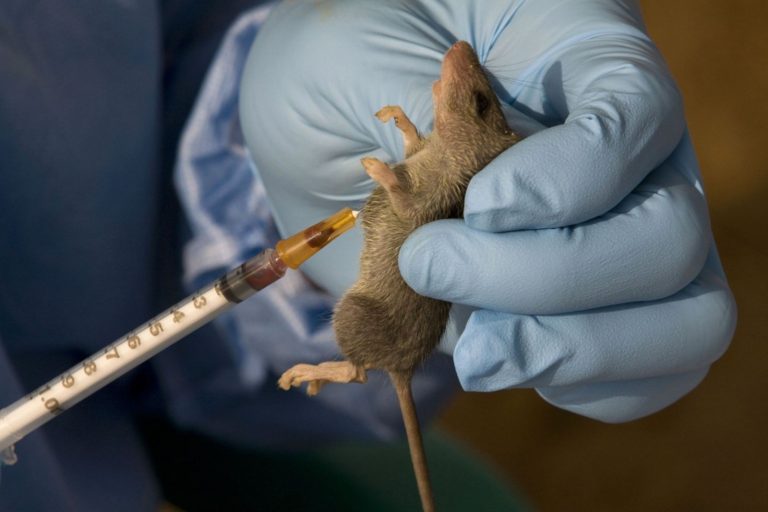
The NCDC described Lassa fever as an acute viral haemorrhagic fever caused by the Lassa virus,  mostly through the type of rodents known as the multimammate rat or the African rat.

The disease can be spread through direct contact with urine, faeces, saliva, or the blood of infected rats or contaminated objects, faeces, saliva, or the blood of infected rats.

Person-to-person transmission can also occur through direct contact with an infected person’s blood, urine, faeces, vomitus, and other body fluids.

Fatality rate raises concern

With the reported 127 deaths recorded from 674 confirmed cases in 2025 so far, the case fatality rate (CFR) stands at 18.8 per cent, according to the situation report.

This figure, it noted, is slightly higher than the 18.5 per cent recorded during the same period in 2024.

However, the NCDC highlighted that the number of suspected cases this year had been lower than what was recorded in the same period in 2024, possibly indicating improved public awareness and response measures.

The high case and fatality rates are linked to late presentation at health facilities, poor health-seeking behaviour, and limited access to early diagnosis in high-burden states.

Youths most affected

The most affected age group falls between 21 to 30 years, with a median age of 30. The sex distribution of the confirmed cases shows a near parity, with a male-to-female ratio of 1:0.8.

While no new healthcare worker infection was recorded in the latest week, the NCDC confirmed that 20 health workers have contracted the disease in 2025.

Latest report shows an increase in confirmed cases

The latest NCDC report for week 14 indicates a slight increase in new lassa fever cases, with 15 confirmed cases recorded compared to 14 in the previous week.

The cases were reported in Ondo, Bauchi, Edo, Taraba, Ebonyi, and Gombe states, bringing the total number of states with confirmed Lassa fever cases in 2025 to 18.

Both Ondo and Bauchi recorded five cases, Edo recorded two, while Taraba and Ebonyi recorded one each in week 14.

This also means that Ondo has 200 confirmed cases of the disease in 2025, followed by Bauchi with 171, Edo with 107, and Taraba with 106.

Ebonyi (21), Kogi (14), Plateau (13), Gombe (13), Benue (9), and Nasarawa (5) make the top 10 most affected states.

China to allies: Don’t trade us off for US

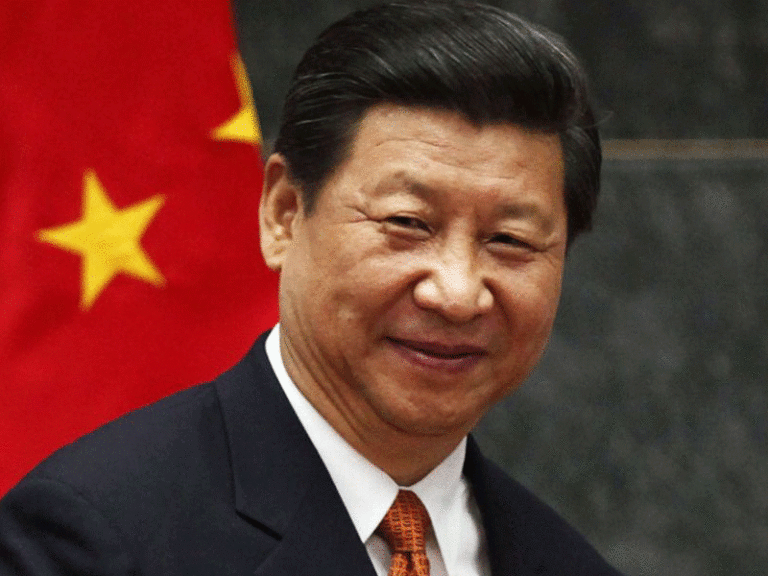
CHINA has warned its allies against entering wider economic agreements with Washington at its expense.    

Beijing’s Commerce Ministry issued the warning on Monday, April 21, as it accused the US of misusing tariffs, noting that Beijing would firmly oppose any party striking a deal at China’s expense and “will take countermeasures in a resolute and reciprocal manner.”

The ministry was reacting to a Bloomberg report which said the Trump administration was planning to pressure countries seeking tariff relief or exemptions from the US to scale back trade with China, potentially including monetary penalties.

“The United States has abused tariffs on all trading partners under the banner of so-called ‘equivalence’, while also forcing all parties to start so-called ‘reciprocal tariffs’ negotiations with them,” the ministry said.

The ministry vowed that China was resolute and capable of protecting its rights and interests, and expressed its willingness to strengthen solidarity and cooperation with all parties.

Taking a hardline approach, Beijing also announced plans to hold an informal United Nations Security Council meeting this week to accuse Washington of bullying and of “casting a shadow over global efforts for peace and development” through the weaponisation of tariffs.

The ICIR reported that US President Donald Trump suspended the broad tariffs he announced on over 50 countries on April 2, except those on China, singling out the world’s second-largest economy for the heaviest duties.

In a series of moves, Washington increased tariffs on Chinese imports to 145 per cent, prompting Beijing to impose retaliatory duties of 125 per cent on US goods. However, last week, China indicated that it would not further raise its overall tariff rates.

Earlier this month, US Trade Representative Jamieson Greer revealed that nearly 50 countries had reached out to him to discuss the significant additional tariffs imposed by Trump.

Several bilateral discussions on tariffs have taken place since Trump’s announcement, with Japan reportedly considering increasing its imports of soybeans and rice as part of its negotiations with the US, while Indonesia plans to boost imports of American food and commodities, potentially cutting back on purchases from other countries.

Trump’s tariff policies have unsettled financial markets. Investors are worried that major disruptions to global trade could push the world economy into a recession.

The Trump administration has also been working to hinder Beijing’s advancement in developing semiconductor chips, citing concerns that they could be used for military purposes. 

Last week, it further targeted China’s shipbuilding industry by imposing port fees on vessels built in China, aiming to curb the country’s dominance in the sector.

On Monday, Chinese stocks edged up slightly, showing a minimal response to the commerce ministry’s remarks. 

However, investors have largely remained wary of Chinese assets amid mounting concerns over slowing economic growth.

The ICIR reported that China suspended all liquefied natural gas (LNG) imports from the US for over 10 weeks in response to Trump’s tariffs.

Pope Francis is dead

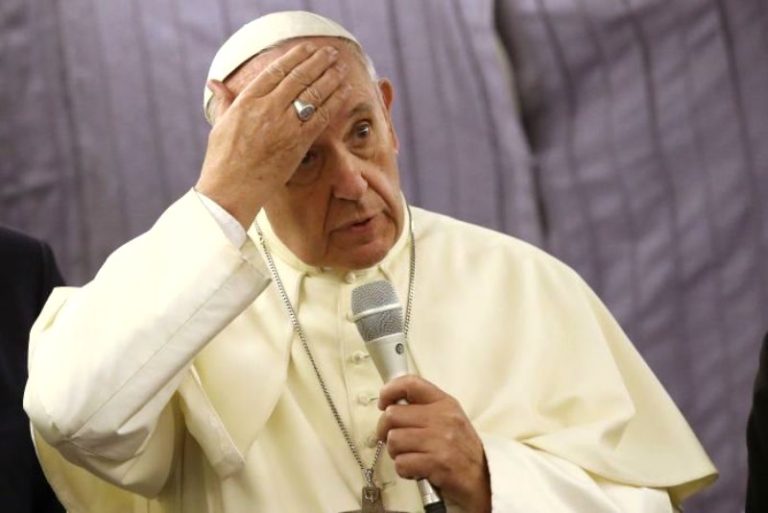
POPE Francis, aged 88, is dead.

The Vatican announced his passing Monday morning while the global Christian community continued the 2025 Easter celebration.

The Vatican’s Cardinal Kevin Farrell announced his death in a statement: “Dear brothers and sisters, with deep sorrow I must announce the death of our Holy Father Francis.

“At 7:35 this morning, the Bishop of Rome, Francis, returned to the house of the Father. His whole life was dedicated to the service of the Lord and His Church. He taught us to live the values of the Gospel with fidelity, courage and universal love, especially in favour of the poorest and most marginalised.

“With immense gratitude for his example as a true disciple of the Lord Jesus, we commend the soul of Pope Francis to the infinite merciful love of the Triune God.”

The statement said the pope died on Easter Monday at his residence in the Vatican’s Casa Santa Marta.

Pope Francis, whose real name is Jorge Mario Bergoglio, was born in Buenos Aires, Argentina, on December 17, 1936.

He hailed from a humble background and was renowned for his simple lifestyle.

He had advanced degrees in chemistry, philosophy, and theology. Before joining the church, he briefly worked in the food industry. He was ordained as a Catholic priest in 1969.

Pope Francis was appointed Archbishop of Buenos Aires before being elected as the 266th Pope in 2013 at age 76.

He was the first Pope outside Europe in 1300 years.

He advocated for social justice and tolerance on issues like women’s rights, abortion, and LGBTQ+ rights.

He was celebrated for his humility and efforts to reform the Vatican bureaucracy and corruption.

Pope Francis led the Catholic Church for 12 years after the historic resignation of his predecessor, Pope Benedict XVI.

He spent a large part of 2025 in the hospital, treating an infection that developed into pneumonia in both lungs.

Pope Francis was hospitalised with a complex respiratory tract infection and double pneumonia, which affects both lungs and can make breathing difficult.

He later recovered to the extent where he was able to appear in front of crowds in St Peter’s Square for Easter Sunday, where he met with US Vice President Vance.

Pope Francis became Archbishop of Buenos Aires in 1998 and was appointed to the College of Cardinals by Pope John Paul II in 2001.

His eventual election as pope was heralded later that year when he stepped in as the general rapporteur of the Synod of Bishops that year when Cardinal Edward Egan was called back to New York after the 9/11 attacks.


Power, politics, and polls: Inside Nigeria’s troubled local government elections

LOCAL government areas are the closest to the grassroot in Nigeria. They allow communities to have a say in how they are governed, ensuring their needs are met through effective representation.

This, in return, can lead to inclusive governance, where citizens actively participate in decision-making processes, fostering robust governance at the local governments.

However, despite their importance in Nigeria, elections into offices at that level of governance are always marred by controversies. Elections always face significant hurdles, hindering free, fair, and transparent processes.

These challenges impede the effectiveness of smooth administration, which are crucial for grassroots political participation and socialisation at the local level.

The seemingly improper conduct of LG elections in Nigeria has sparked calls for constitutional reforms to strengthen local government autonomy and ensure free and fair elections.

Lawmaker frowns at the conduct of LG elections across Nigeria.

In December 2024, the speaker of the House of Representatives, Tajudeen Abbas, criticised the conduct of local government elections across Nigeria, describing it as “disgraceful” and a caricature of democratic regulations.

Abbas shared these concerns at the National Dialogue on Local Government and Constitution Amendment in Abuja.

 He emphasised the importance of local governments in providing essential services and giving citizens a voice and while pointing out the lack of competitiveness in local elections.

Abbas criticised the excessive control of local governments by state governments and political godfathers, arguing it undermines their autonomy.

He welcomed a recent Supreme Court judgment requiring council elections and direct funding, saying it was a step toward stronger local governance. The speaker also called for reviewing State Independent Electoral Commissions’ roles, citing accusations of bias toward ruling parties.

AGF wants INEC to conduct LG elections

In May 2024, Lateef Fagbemi, Attorney-General of the Federation (AGF) and Minister of Justice, recommended transferring SIEC powers to the Independent National Electoral Commission (INEC), hoping it might be necessary to restore credibility to local government polls. 

Fagbemi proposed that State Independent Electoral Commissions (SIECs) should be scrapped. 

Fagbemi spoke at a one-day discourse with the theme: ‘Nigeria’s Security Challenges and Good Governance at The Local Government Levels’ organised by the House of Representatives.

While criticising governors for exploiting weaknesses in the 1999 constitution and rendering local governments ineffective, AGF highlighted how governors manipulate SIECs to impose leaders on local governments through sham elections.

According to him, governors either conduct sham elections or appoint caretaker leaders, which deprives local communities of effective representation.

Supreme Court landmark ruling in favour of LG autonomy

The ICIR reports that the federal government had dragged the 36 state governors before the Supreme Court over the age-long debate of full autonomy for local governments.

In its ruling on Thursday, July 11, 2024, the apex court said it is unconstitutional for governors to hold council funds. The apex court thereby granted the nation’s 774 Local Government Areas (LGAs) financial autonomy.

The judgement, read by Justice of the Supreme Court Emmanuel Agim, held that funds meant for LGAs be paid directly into their accounts.

The court also ruled that it was unconstitutional for the state governments to hold on to or manage such allocations and directed the 774 LGAs to commence managing their funds.

Calls for local government autonomy in Nigeria have increased in recent years, as interference by the state has been identified as a reason for its underperformance.

Recent controversial council polls in Nigeria

In the Southwest state of Osun, the recently concluded local government election raised dust.

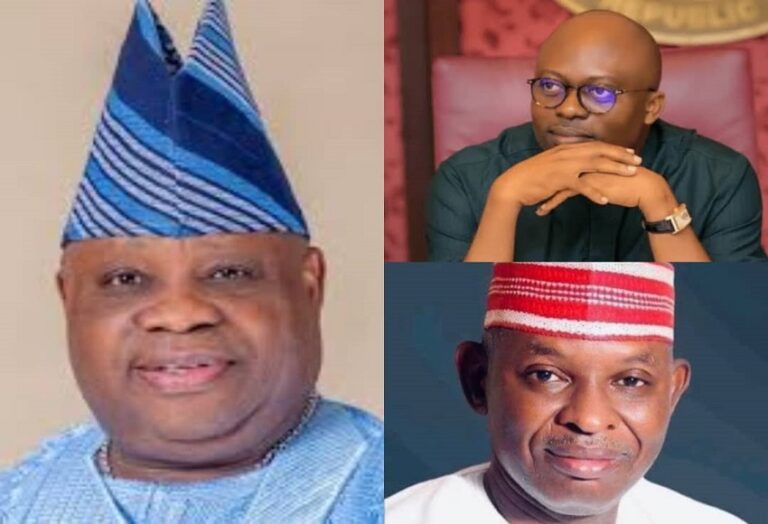
The issue escalated when the AGF and Minister of Justice, Fagbemi, warned the state Governor, Ademola Adeleke, against proceeding with the Saturday, February 21, local government election in the state.

The AGF told Adeleke to direct the State Independent Electoral Commission (OSIEC) to suspend the election. 

In a statement signed by the AGF on Thursday, February 20, he warned that conducting a new local government poll would be invalid and unconstitutional.

Fagbemi said the crisis in Osun State erupted when some disgruntled elements resisted the attempt by the officials to resume their positions.

However, despite the AGF’s warning, Adeleke, in a statement signed by his spokesperson, Olawale Rasheed, on Friday, February 21, vowed that nothing would stop the process.

According to Adeleke, Osun voters were prepared to exercise their voting rights, even as he expressed satisfaction with the level of preparation by the electoral body.

Adeleke went on to conduct the election and inaugurated the newly elected chairpersons and councillors in the state capital on Sunday, February 23.

He charged the officials to prioritise good governance while cautioning against seizing council secretariats in the state by force.

Reacting, the director of media of the All Progressives Congress (APC) in the state, Kola Olabisi, alleged that the election results were manufactured.

Olabisi, during an interview with the PUNCH, said OSSIEC had made the state an object of ridicule.

The ICIR reported that seven people reportedly died during the period as APC supporters and those of the PDP clashed in the state on Monday, February 17. The crisis also led to the death of a former chairman of the Irewole Local Government Area, Aderemi Abbas, and others.

In Kano State, Northwest Nigeria, a Federal High Court sacked the chairman and members of the Kano State Independent Electoral Commission (KANSIEC) a few days before the conduct of local government election.

The court, in its ruling, delivered by Simon Amobede, stated that the KANSIEC chairman, Sani Lawan Malumfashi, a professor, and other members were card-carrying members of the ruling New Nigeria Peoples Party (NNPP) in the state.

The court gave the ruling on Tuesday, October 22, while delivering judgment in a suit filed by Aminu Aliyu Tiga of the APC against KANSIEC, the state Attorney General and Commissioner for Justice, Haruna Isa Dederi, and 14 others.

After the court ruling, a few days before the local government election, the state government boasted that it would proceed with the exercise scheduled for Saturday, October 26.

The Governor, Abba Kabir Yusuf, in a statement, said he was ready to swear in those declared winners by the electoral body.

The ICIR reports that the New Nigeria Peoples Party (NNPP), won all the 44 council areas of Kano State.

Elsewhere in Rivers State, tension intensified when the Nigerian Police Force said it would not provide security for local council elections scheduled for Saturday, October 5, in the state.

The State Police command announced its withdrawal from the exercise in a statement posted on its Facebook page and shared on its X handle on Friday, October 4. 

This followed a series of court rulings that raised concerns regarding the legality of the electoral process. 

The ICIR also reported how an explosion rocked the APC secretariat in Port Harcourt just hours before the election.   

The poll became a major issue of national concern, particularly as it deepened the feud between Governor Siminalayi Fubara and his predecessor, Nyesom Wike, the Minister of the Federal Capital Territory (FCT).

The ICIR reports that on September 30, a Federal High Court in Abuja upheld a July 19 ruling that barred the Nigeria Police Force and other security agencies from participating in the local government election. 

However, on Wednesday, October 2, Fubara declared that the Rivers State Independent Electoral Commission (RSIEC) would proceed with the poll.

He further called on security agents to ensure the exercise was free, fair and credible, as he restricted human and vehicular movements on election day from midnight on Friday to 5 pm on Saturday.

The decision, however, sparked protests from supporters of PDP and those of the APC, who had vowed to boycott the election due to the legal fireworks trailing it.

The ICIR reported that tensions reached a boiling point on October 3, as a large group of PDP members stormed the party’s headquarters in Port Harcourt, voicing their opposition to the planned conduct of the election by RSIEC. 

During the period, Governor Fubara led a delegation to the RSIEC office in the early hours of Friday, October 4, following claims that armed policemen from neighbouring Abia State attempted to infiltrate the facility to seize sensitive electoral materials.

It was reported that police officers led by a deputy commissioner of police (operations) at the Rivers State command had moved to RSIEC at about 1.00 am on Friday.

The ICIR reported that the African People’s Party (APP) won 22 out of the 23 chairmanship seats in the poll, with the Action Alliance (AA) claiming one.

But the Supreme Court, in a ruling on February 28, 2025, sacked all the local government chairpersons that were elected.

In its judgment, delivered by Jamilu Tukur, the Supreme Court declared the election conducted by RSIEC invalid.

The court declared that the election grossly violated the Electoral Act.

Lawyers react to controversial LG elections in Nigeria

Some lawyers who spoke to The ICIR said local government elections are usually controversial because of power tussles among various political interests in a state.

Monday Marvellous, a barrister, while commenting on the matter, stated that local elections are often marred by controversy because of power struggles, stressing that the absence of the rule of law always fuelled controversies.

“Most times it is a power to tussle political actors and interests and refusal to allow the rule of law to take its course,” Marvellous stated.

On what can be done to have a credible LG election, Marvellous said institutions need to become answerable to the constitution and Nigeria rather than to any politician or political interest.

Another lawyer, Moshood Ibrahim, said the reason why local government elections are always controversial in Nigeria is because they are still democratically immature.

“Also, our governors have too much power with the type of federalism we practice in Nigeria,” he added.

Ibrahim recommended that the local government election should be removed from State Electoral commissions that are being controlled by governors.

“We should have another electoral umpire that conducts local government elections across the federation. I’m aware there is a bill to that effect at the Senate, and I hope the bill will be passed into law,” he stated.

Rigging 2027 election will have serious consequences on Nigeria – Baba-Ahmed

0

FORMER Special Adviser on Political Matters to President Bola Tinubu, Hakeem Baba-Ahmed, has warned that any attempt to rig the 2027 general election would have devastating consequences on Nigeria.

Daily Nigerian reported on Sunday, April 20, that Baba-Ahmed said the future of Nigeria would be determined by credible elections and that the North would not remain silent in the face of manipulation or marginalisation. 

“If they plan to rig the election, they should be careful. It won’t be good for Nigeria. The North is watching. Elders, masses, and interest groups will soon say, ‘enough is enough.’ The injustice and sidelining must stop,” he said.

According to him, no politician can win the presidency in 2027 without the backing of the North.

Baba-Ahmed, who reportedly resigned his position on April 4, expressed deep concern over the political direction of the country. He alleged alienation of northern Nigeria in national affairs. 

“In the next six months, the North will decide where it stands. If the rest of the country wants to join us, fine. If not, we will go our own way. One thing is clear: nobody can become president of Nigeria without northern support,” he said.

His exit from Tinubu’s reportedly followed a series of public disagreements, including a confrontation with Minister of State for Defence, Bello Matawalle, who had accused the Northern Elders Forum of undermining the government.

In his latest outburst – the first since he quit the Tinubu government – Baba-Ahmed said northerners had endured hardship for too long and must begin to demand better leadership.

“We want a government that understands our problems and can address them. After Buhari’s eight years, we became wiser. Now, we are in another government, and we are still crying. Is crying all we know how to do?” Baba-Ahmed said.

He added that “Before Buhari became president, Boko Haram was bombing mosques, churches, Abuja, and Lagos. That was a time northerners had to unite. Today, no politician can just show up and expect northerners to fall in line. Who are you?” 

He also warned against politicians using religion and ethnicity to deceive voters, insisting that the North had learned hard lessons and is now focused on competence and character.

He said the North must make a conscious decision to shift away from identity politics and instead rally around leadership that delivers results.

“We are tired of being deceived into voting based on religion or ethnicity. That era is over. We just want a right leader. Let him fall from heaven, we just want someone who will solve our problems,” he added.

Baba-Ahmed’s warning came at a time of heightened political tension and economic hardship, as the Tinubu administration faces criticism over his economic policies, inflation, the cost-of-living crisis and persistent insecurity in Nigeria.

His warning was also on the heels of political manoeuvrings, as key power players are repositioning for 2027. 

The ICIR reports that former vice president and the People’s Democratic Party (PDP) candidate in the 2023 election, Atiku Abubakar, recently confirmed a new coalition to square up against the ruling All Progressives Congress (APC) in the 2027 poll.

There are indications that Tinubu may seek a second term, just as the former vice president could be throwing his hat into the ring for the seventh time since he began his bid for the presidency in 1992.

NDLEA intercepts cocaine in Saudi-bound religious books

0

OPERATIVES of the National Drug Law Enforcement Agency (NDLEA) have intercepted a shipment of cocaine concealed in 20 sets of religious books heading to Saudi Arabia.

The agency, in a statement on Sunday, April 20, by its spokesperson, Femi Babafemi, said the consignment, consisting of 20 parcels with a total weight of 500 grammes, was buried in the pages of the religious books.

He said the drugs were uncovered at a courier company in Lagos on Tuesday, April 15, when NDLEA officers of the Directorate of Operations and General Investigation (DOGI) were searching through export cargos going to Saudi Arabia at the logistics firm.

It added that at another courier company, same day, NDLEA officers intercepted five parcels of loud, a strong strain of cannabis weighing 2.8 kilogrammes, hidden in a carton coming from the United States.

In Kano, a 22-year-old alleged supplier of illicit substances to bandits, Muhammad Mohammed, was arrested by the NDLEA operatives on patrol along Bichi-Kano road while heading to Katsina with 277 ampoules of pentazocine injection tied to his thigh and private part with sellotape.

He was intercepted on Sunday, April 13, while another suspect, Mohammed Abdulrahman Abdulaziz, 43, was nabbed same day at Research Rimin Kebe area of Nasarawa, Kano, with 68 blocks of skunk, a strain of cannabis, weighing 30kg.

In another development, the agency said not less than 557.2kg of skunk, 5.6kg of methamphetamine and 29.8 grammes of heroin were recovered from a house along Major General Isaiah Alllison Street, Opolo, Yenagoa, Bayelsa State, where four suspects were arrested when NDLEA operatives raided the premises on Wednesday, April 16.

The four suspects arrested during the raid include: Sarimiye Suwa Kurtis, 46; Roland Prosper, 34; Sarimiye Tare Paul, 45; and Fidelis Ugbesla, 46.

In Kebbi, NDLEA operatives on patrol along Bagudo road on Friday, April 18, intercepted a vehicle loaded with bags of charcoal coming from Malabil, Benin Republic.

Is the Minister right about 150 million Nigerians having access to electricity? We Checked!

THE Minister of Power, Adebayo Adelabu, has said that approximately 150 million Nigerians now have access to electricity.

Adelabu made this known on Thursday, April 17, during the 2025 Ministerial Sectoral Update Conference held in Abuja, where he spoke alongside the Minister of Information and National Orientation, Mohammed Malagi, and other key stakeholders.

“As it is today, Nigeria—a country with about 240 million people—has access for 150 million people already, while about 80 million lack access to adequate electricity in Nigeria.

“The real challenge lies in the stability and affordability of electricity. That’s how we measure reliability. We must ensure that those who have access enjoy consistent and affordable power,” he said.

The claim went viral online with many wondering over the accuracy of the claim due to challenge with access to electricity in Nigeria. This prompted The FactCheckHub to examine the claim.

CLAIM

150 million Nigerians have access to electricity.

THE FINDINGS

Findings by The FactCheckHub show that the claim is TRUE.

According to the Electricity 2025 report  by the International Energy Agency (IEA), Nigeria’s electricity access has grown significantly in recent years, reaching approximately 70 per cent of the population by the end of 2023. With the country’s population estimated at 230 million then, this implies that about 161 million Nigerians have access to electricity.

“An estimated 70 per cent of Nigerians had access to electricity in 2023, up from 50 per cent a decade ago…Electricity demand declined by around 6 per cent in 2024, but we forecast that it will increase on average by more than 5 per annually between 2025 and 2027,” the report stated.

The report highlights key dynamics that are reshaping the country’s power landscape, including persistent gas supply challenges and the rising contribution of renewables. It also outlines how new policies and infrastructure investments are influencing electricity generation, distribution, and access across the country.

Similarly, the Energy Progress Report, which tracks progress on the Sustainable Development Goal 7 (SDG7), indicates that 61 per cent of Nigeria’s 218 million people had electricity access as of 2022, amounting to about 133 million people. Additionally, World Bank data for 2023 shows that 61 per cent of 227.9 million Nigerians around 139 million people had access to electricity.

These estimates show a consistent upward trend in electrification across the country, driven by policy reforms, infrastructure expansion, and increased deployment of off-grid renewable solutions such as solar photovoltaic (PV) systems, particularly in rural areas.

VERDICT

The claim by the Minister of Power, Adebayo Adelabu, that 150 million Nigerians now have access to electricity is TRUE, based on corroborating data from the IEA’s Electricity 2025 report, the World Bank, and the Energy Progress Report. Though estimates vary slightly, they all support the minister’s claim as being within a plausible range.

This report is republished from the Factcheckhub.

Photo does not show Kwankwaso wearing Tinubu’s ‘trademark’ cap

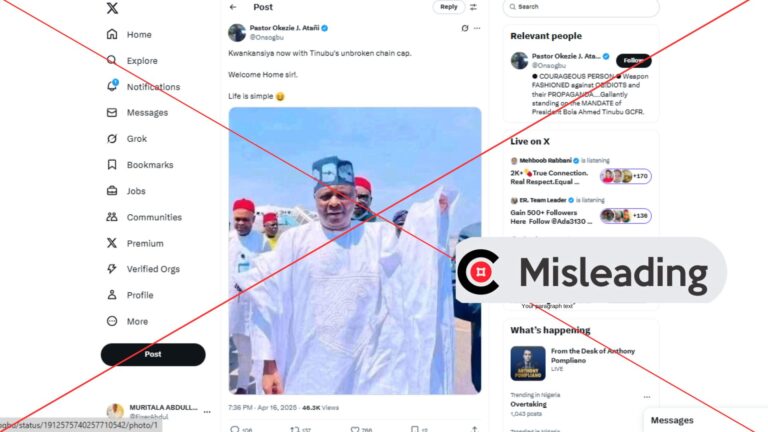
AN image showing the presidential candidate of the New Nigeria Peoples Party (NNPP) in the 2023 election, Rabiu Kwankwaso, wearing a cap with an insignia associated with President Bola Tinubu, is circulating online.

The image is being shared alongside claims that Kwankwaso has defected from the NNPP to the ruling All Progressives Congress (APC).

The viral claim emerged amid growing speculations over Kwankwaso’s political future following a leadership crisis within the NNPP.

Several users on X and Facebook shared the image suggesting Kwankwaso’s public alignment with President Tinubu.

An X user, @Onsogbu, posted the image with the caption:

“Kwankansiya now with Tinubu’s unbroken chain cap. Welcome Home sir! Life is simple.”

The post has garnered over 100 reposts and more than 700 likes as of April 16, 2025.

Similarly, a Facebook user, AMN, posted the picture with the caption:

“Kwankwaso Dumps NNPP to APC as he replaces Kwakwasiya Cap with Tinubu Cap.”

The image has been circulated widely across different platforms, such as here and here.

CLAIM

A photo shows Rabiu Kwankwaso recently wearing a cap bearing Tinubu’s ‘trademark’, indicating his defection to APC.

Photo: screenshot of the X post retrieved online inserted MISLEADING VERDICT

THE FINDINGS

Findings by The FactCheckHub show that the claim is MISLEADING and false.

Rabiu Kwankwaso, who is also a former governor of Kano State is widely recognised for his signature red cap, a symbol of the Kwankwasiyya movement. The red cap has become a strong identity marker for his followers and is consistently worn by Kwankwaso at public events and political gatherings.

On the other hand, President Bola Ahmed Tinubu is known for his trademark cap featuring the “broken chain” or “infinity” insignia. His supporters often adorn caps with this distinctive symbol as a show of loyalty.

Recently, there have been persistent rumours that Kwankwaso is considering defecting to the ruling All Progressives Congress (APC) amid a leadership crisis within the NNPP. These speculations have fuelled the spread of misleading content online.

The FactCheckHub subjected keyframes from the viral image to a Google Reverse Image Search. Results show that the original version of the photo was first published on the official Facebook page of the NNPP on November 8, 2022.

Screenshot of NNPP’s post in 2022

The original picture was taken at the Akanu Ibiam International Airport in Enugu State when Kwankwaso was received by party supporters.

In the authentic image, Kwankwaso was wearing the signature red cap of the Kwankwasiyya movement, not a cap bearing Tinubu’s insignia.

This indicates that the viral picture was digitally manipulated to create the false impression that Kwankwaso was wearing a Tinubu-branded cap.

As of the time of filing this fact check, there is no credible media report or official statement from Kwankwaso or his team suggesting that he has detected to APC.

THE VERDICT

The claim that Rabiu Kwankwaso wore a cap bearing President Bola Tinubu’s insignia and defected to APC is MISLEADING and false; the image was digitally altered.

This report is republished from the Factheckhub.

Tunde Onakoya sets new GWR with 64-hour chess marathon in New York

0

NIGERIAN chess master and founder of Chess in Slums Africa, Tunde Onakoya, has officially set a new Guinness World Record after completing a 64-hour chess marathon at Times Square in New York City.

The confirmation, announced via his Chess in Slums Africa’s X handle on Sunday, April 20, came after Onakoya’s marathon chess session, which began at 10 a.m. local time on Thursday, April 17, and concluded around 11 am on Sunday, April 20.

The feat, achieved alongside US chess master Shawn Martinez, surpasses the previous world record of 61 hours, 3 minutes, and 34 seconds set by the Norwegian pair Odin Blikra Vea and Askild Bryn in June 2024.

In a now-viral video and picture, a GWR official presents the award for the Nigerian chess master’s new 64-hour record.

This is Onakoya’s second major attempt at the record. In April 2024, he completed a 60-hour session, overtaking the previous 56-hour record set in 2018 by Norwegians Hallvard Haug Flatebø and Sjur Ferkingstad in 2018.

However, his success was short-lived, as the Norwegian pair beat his record barely two months later. 

Addressing the public before the marathon, Onakoya explained that his goal was beyond setting a world record.

“There is a new world record for 61 hours set by two Norwegian players. On the 17th of April, we will attempt to break that record and set a new one for 70 hours.

“My dream is to inspire the world and raise support to build the biggest free school for homeless children in Nigeria,” he wrote.

Through his Chess in Slums Africa initiative, Onakoya has used the game as a tool to empower vulnerable children living in impoverished communities. 

Over the years, he has organised chess training sessions in some of Nigeria’s most underprivileged areas, including the slums of Makoko, where children with little or no access to formal education are taught how to play chess alongside literacy and numeracy skills. 

Some of the children mentored through the initiative have gone on to win local and international chess tournaments, receive scholarships, and earn media attention for their remarkable turnarounds.