The Nigerian Senate on Tuesday threw its weight behind the increase in fuel price but said the government must immediately role out palliatives to cushion the effect on Nigerians.
The Senate’s position was contained in a statement issued at the end of a closed door meeting headed by the Deputy Senate President, Ike Ekweremadu, who read the statement to journalists.
It also urged the government to dialogue with the Nigerian Labour Congress to find a way of amicably solving the impasse between both parties.
“The Senate in a closed session deliberated on the increase in the pump price of PMS by the Federal Government and the threats by the organised Labour to embark on a nationwide strike over the matter and resolved as follows:
“That we sympathise with ordinary people of Nigeria on the hardships they are going through, the senate will engage the federal government to find sustainable ways of improving the welfare of the people of Nigeria,” the statement read.
“That we call on government to continue to engage the organised labour and other stakeholders to resolve issues in other not ground the system and impose more hardships on our people. That government should immediately start implementing palliatives or palliative measures contained in the 2016 appropriation act passed by the National Assembly.”
The Federal Government has intensified effort to bring more transparency into the finances of the Nigerian Military following disclosures of fund diversion in the on-going trial of Alex Badeh, an Air Marshal and former Chief of Defence Staff.
The federal government has decided to migrate the military into the Integrated Payroll and Personnel Information System,IPPIS. This was disclosed by Kemi Adeosun, Minister of Finance, during a meeting of the Continuous Audit Team of the federal government with the military finance team.
The audit team, which was set up to investigate the finances of federal government’s ministries, departments and agencies, embarked on the audit of military finances following revelations in the on-going trial of Badeh that N558.2 million was diverted monthly from the Nigeria Airforce accounts into private pockets.
Adeosun said the ministry of finance was making efforts to automate the payroll of all the branches of the armed forces to stop corruption in military finance, adding that the migration would be done before December this year.
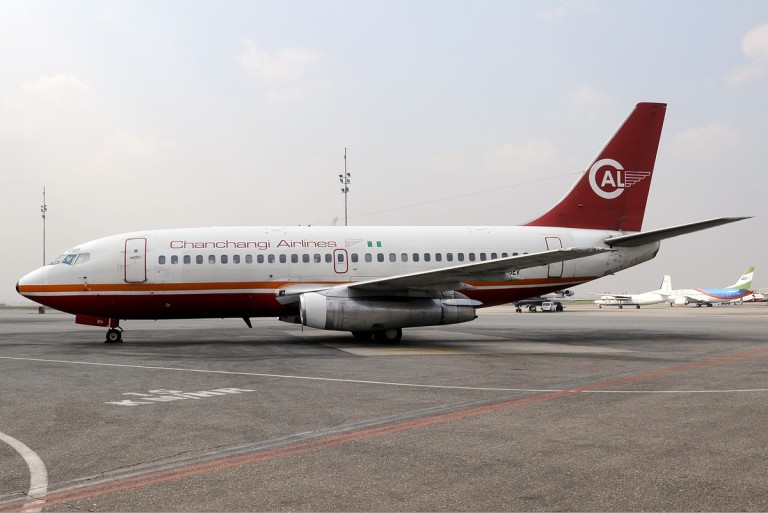
Participants at a Ministry of Transport’s Aviation Stakeholders’ Forum were shocked when Captain Mohammed Joji, a former Managing Director of the Nigeria Airways, disclosed that 45 airlines operating in the country have gone under in the last 25 years.
Joji said despite over $39 billion invested in the country’s aviation sector by the private sector, airlines’ indebtedness have continued to climb higher. He stressed that the industry was in such dire strait because it still largely import dependent and dollar based.
He urged the Minister of Aviation to brace up for the task ahead as a lot was needed to put the sector on the right footing.
In his contribution, Hadi Sirika, Minister of State for Aviation,also lamented the problems facing the industry, saying airport and airspace infrastructure in many of the airports have become obsolete and dilapidated.
The Nigerian Labour Congress, NLC, has been barred by the National Industrial Court from embarking on its proposed nationwide strike earlier billed for Wednesday, May 18, 2016.
The federal government, through the Attorney General of the Federation and Minister of Justice, Abubakar Malami, a Senior Advocate of Nigeria, SAN, sued the NLC arguing that the strike would cripple the country’s economy.
The labour union had warned Nigerians to stockpile food stuff in readiness for a complete shutdown of the economy due to the recent increase in fuel pump price.
When asked by the court how he knew there was a planned strike, Malami said he saw a statement to that effect on the website of the NLC, which was also published in the media.
Delivering judgement, President of the National Industrial Court, Babatunde Adejumo, asked both parties to maintain the status quo pending the hearing of the suit brought by the Attorney General.
The court order will expire in seven days.
While adjourning the case to May 24, the judge urged the government to dialogue with the NLC, which was not represented during the hearing, with a view to finding amicable resolution.
The government and NLC are already locked in discussion to find a common ground to the fuel increase crisis.
The meeting, which started on Monday, did not reach a positive conclusion. Yesterday’s meeting ended in a deadlock after labour reportedly insisted on a new minimum wage if government wanted it to call off the proposed strike. The government delegation, which included the Secretary to the Government of the Federation, was said to have stated that this was not the right time to increase minimum wage for workers, especially in view of the falling price of crude oil-the country’s major revenue earner.
Lai Muhammed, Minister of Information, who spoke on a Radio Nigeria live programme Tuesday morning, also pleaded with labour that minimum wage is not something only the federal government could fix, stressing that it has to involved states, local governments and the private sector.
Yesterday the House of Representatives also passed a resolution calling on labour to shelve its planned strike action and allow the legislature intervene in the face-off. The resolution was moved by Nicholas Ossai during a meeting with Ibe Kachikwu, the Minister of State for Petroleum.
The House subsequently set up a committee headed by Alhassan Doguwa, House Whip, to mediate between the FG and labour and reach an amicable settlement on areas of conflict.
In a few weeks, precisely on the 31st day of May, 2016, the writer and political activist, Chido Onumah, will present his latest book, We are all Biafrans – A Participant-Observer’s Intervention in a Country Sleepwalking to Disaster, to the public.
The book is a deserved addition to his two previous books, Time to ReclaimNigeria and Nigeria is Negotiable.
A word or two on Chido Onumah, here. There is something original and courageous about Onumah who, in so many ways, engages our humanity with courage, exposes some of its triumphs and defeats, writs his finer thoughts that are consistent with the ideals of freedom and justice he cherishes dearly on the slate of our public conversation, advances and trades honest ideas in our marketplace.
In his engagement with the Nigerian public, he consistently calls attention to our flawed federation, posing the argument that our country needs to be reinvented. Engaging episodic upheavals that threaten the Nigerian state is the recurring theme of his public engagement.
Onumah understands the dangers of posing issues our governing class considers as settled or closed. He is familiar with those lonely places public intellectuals who are “unwilling to accept easy formulas, or ready-made clichés, or smooth, ever-so-accommodating confirmations of what the powerful or conventional have to say” find themselves in a country that despises truth, disdains public intellectuals of courage.
The public intellectual, the type Edward Said wrote about in his acclaimed seminal work, Representations of the Intellectual, as original, embarrassing, contrarian, questioning, courageous and unpleasant, even to the point of unsettling his audience, is hard to find in a country like ours that devalues intellect and promotes mediocrity.
The role of a true public intellectual is to read and interpret the word, and to change the world. Only those who display original thoughts, who possess the courage of their convictions can truly read and interpret the word and change the world!
He is his own man, Onumah. A true public intellectual with razor-sharp wit, brilliant intellect, who has no Moloch to look up to for unwavering guidance, or be worshipped, “who has neither offices to protect nor territory to consolidate and guard”.
For him, there are no limits, there are no boundaries for inquiring into the shenanigans of our governing elite.
Back to the book: this is what the media statement announcing its public presentation says: “In his book, Chido Onumah argues that many, if not all, of the problems of Nigeria are rooted in the structure of the country. He makes a case, as he did in his two previous books, for the socio-political restructuring of Nigeria.
He argues that the country needs to engage the episodic political convulsions that threaten its very foundation, including Biafra, June 12, Boko Haram, the “National Question”, citizens rights and ‘militocracy’.
In We are all Biafrans, Onumah takes on Nigeria’s indolent and reactionary ruling elite – civilian and military – and their allies, as well as bandits in uniform, scoundrels posing as statesmen, and conservative ideologues, religious bigots and ethnic chauvinists posing as patriots.
He raises fundamental questions: what is Nigeria and who is a Nigerian? If Nigeria is a federal republic, what constitutes or should constitute the federating units? He posits that the different manifestation of Biafra may as well be a metaphor, to that extent, we are all Biafrans as long as we seek to confront the clear and present danger.
The author notes that we can’t achieve any meaningful progress as a people until we come to terms with the reality of our existence- that Nigeria is a deeply flawed nation- and sincerely and selflessly confront it. Forging a nation out of the disparate and often antagonistic entities, in the author’s view, is perhaps the greatest challenge confronting Nigeria.
This book, a compilation of articles published in traditional and online newspapers in the last three years (2013-2016) is divided into five chapters.
The first chapter, “The Politics of 2015”, deals with the high-wire politics of the 2015 election which, given its zero-sum character, was rightly regarded as a crucial factor in the survival of Nigeria as a country.
The second chapter, “Dancing on the Brink” focuses on the issue of the Sovereign National Conference, a controversial subject that splits Nigerians right down the middle, but which rulers of Nigeria have not been bold enough to confront in a fruitful way.
The third chapter, “Unmaking Nigeria”, highlights those phenomena that not only constitute an ugly phase of our history, but also expose our pretense to being a nation. The fourth chapter, “Of Scoundrels and Statesmen”, is a narrative of some individuals and groups in and out of government whose actions have either enriched our polity or reinforced it as the “giant of Africa” only in name.
The fifth chapter, “Last ‘Missionary’ Journey”, is again a reminder that unless we sit at the table to negotiate the terms of our co-existence as a people, our country, to quote the late human rights activist, Dr. Beko Ransone-Kuti, ‘would continue to go round and round’.”
Here, Onumah poses two fundamental questions – what is Nigeria and who is a Nigerian? – that beg for answers, true and real answers.
There is a growing number of those who close off the prospect of engaging around the question of what is Nigeria and what constitutes Nigeria; and it is this closing-off, or attempt at closing-off engagements, that invariably spawns resistance, rejection, denunciation and renunciation of Nigeria.
Those who seek a different perspectival understanding of Nigeria, who pose a different narrative of state formation, reject the notion of being dragged along by the chariot-wheels of those who cry, “Nigeria is non-negotiable”.
Nothing in the cry suggests that there are attempts at addressing the question beyond seeking to supplant the aspirations of diverse ethnic nations with the single unity of the fictional ideal and with the aspirations of the fictional nation-state.
The problem here is that the criers assume that Nigeria is a settled question. How can it possibly be? Modern nation-states are not natural creations, and Nigeria is not different. As a colonial entity, forged out of the Colony and Protectorate of Southern Nigeria and the Northern Nigeria Protectorate, Nigeria still presents the historical problems of discord, disharmony, antagonism, chaos, differences and division sowed at the moment of amalgamation. Let truth be told, amalgamation did not dissolve ethnic nationalities identities, nor did it extinguish those ethnic nations that existed before the Lugardian economic experiment of amalgamation emerged.
Amalgamation enthroned its tension – the tension of constantly differentiating and reconciling differences, of constantly seeking to resolve the ambiguities of identity, and differences. Nigeria is not an empty geospatial entity. What constitutes it are the many ethnic nations that emerged from the pre-colonial empires and kingdoms of the past.
The non-recognition of this logic, this fact of history, and the refusal to articulate and mediate the tension and differences, makes the search for answers problematic. The closure of debate and the imposition of a single narrative of unity make the question of identity more problematic.
The closure of debate, the refusal to articulate and mediate tension, and the non-recognition of differences beyond the platitude of the national anthem, implicates the way the nation-state is often viewed and encountered.
A young Bini who glimpses into the narrative body of his Bini ethnic nation, for instance, to find an intelligible narrative that gives meaning to his identity and existence would accept the narrative as true to his story. Here, what is good for the young Bini is determined by the goodness he finds in the narrative, or in the story that gives true meaning to his life and his identity.
For him, assuming a national identity that is hollow and vacuous becomes a taboo. Here, too, the idea of Biafra flourishes in him and he becomes a Biafran as well.
The return to Biafra, in my opinion, is driven by three impulses. First, by the desire to realize one’s first nature, identify with it, and rekindle affinity with a place that makes better meaning, provides greater clarity to life and its many stories.
Second, and more importantly, to express the right to self-determination or the right to be treated as equals as a natural right. Agitation for this right often takes the form of self-assertion, or in extreme cases as non-constitutional action.
Truth is: self-assertion and non-constitutional action are escapes from “huge impersonal authority that ignores ethnic, regional and religious differences, cravings for ‘natural’ units of ‘human’ size”.
Third, to challenge the authority of members of the ruling class who impose their values on the nation-state and to resist the corrosion of their values. The return to the metaphorical Biafra could mean anything from the preservation of cultural legacies and dreams to the defence of identities. Social formation like the nation-state is ever threatened by its constitutive outside.
The antagonistic otherness that Onumah invites us to confront always operates as an enemy of the nation-state. How can the “other” be integrated? How can difference be used as a tool for modern nation-state building? Onumah addresses the questions in his book.
Are we all Biafrans? I shall provide a brief answer here.
Insofar the Nigerian state continues to trample on the rights of citizens, abandons its constitutional responsibility of securing lives and property, ensures unequal distribution of social and economic wealth and guarantees the greatest happiness for the smallest number, we are all Biafrans.
The constitutive outside is real. Nothing exemplifies the un-seriousness of rulers of the nation-state in addressing the problem of antagonism, division and differences than the brazen use of divisive political language.
Here is one example of a divisive remark credited to Mr. President: “With the way Sahara is advancing, with Boko Haram, growing number of people and uncertainty over rainfall, in a land where we fought civil war leading to the death of about two million, it would be foolhardy for someone to just say he would chase us away”.
The reader may want to ask who that someone is, and who are us? To this question I volunteer no answer.
Let it be known that divisive language drains support for the fictional nation-state, that the binary of WE and THEM is unhelpful.
Abdul Mahmud, lawyer and poet, is President of the Public Interest Lawyers League (PILL), Nigeria.
It was a rowdy session on Monday as members of the House of Representatives cut short their break to deliberate on the recent increase in fuel pump price by the Federal Government.
Around noon when the Speaker, Yakubu Dogara, read the proceedings of the last session and called for the Minister of State for Petroleum, Ibe Kachikwu, to be admitted into the green chamber, there were shouts of disapproval from members.
Dogara went ahead to invite the Majority Leader, Femi Gbajabiamila, who moved the motion for Kachikwu to be ushered in but as soon as the Speaker put the motion to a voice vote, there were shouts of ‘nay’ from majority of the members.
However, Dogara overruled them and ruled in favour of the ‘ayes’, calling that the minister be brought in to explain more on the fuel crisis, which has led to the Nigeria Labour Congress, NLC, threatening a total shutdown of the country.
This led to a shouting match between members of the Peoples Democratic Party, PDP, and All Progressives Congress, APC. Soon, there was waving of the national flag and chanting of ‘all we are saying, save Nigeria’.
While APC members shouted ‘change’, their PDP counterparts replied with ‘shame’.
In the midst of all these, the Minority Leader, Leo Ogor, approached the Speaker and after a brief conversation Gbajabiamila also joined the Speaker.
Not long after, frayed nerves were clamed, leading to Ogor calling for a closed-door meeting.
The Ijaw Youths Council, IYC, has called on the Niger Delta Avengers to find a peaceful means of registering their grievances instead of blowing up oil installations in the region.
Udengs Eradiri, President of the group, made the call at a press conference on Monday in commemoration of the 2016 Isaac Boro Day in Yenagoa, capital of Bayelsa State.
“We appeal to the Niger Delta Avengers to stop the destruction of oil facilities, they should look for other ways of expressing their grievances and not resort to violence.
“The issues they are raising are valid and the government has taken some steps that are not in the interest of the region by slashing the budget for the amnesty programme, NDDC, Ministry of Niger Delta Affairs amongst others,” Eradiri said.
He called on the Federal Government to a find a lasting solution by dialoguing with leaders of the Niger Delta, warning that military option may worsen the situation as it had not helped in the past.
“The Federal Government should engage the stakeholders of the Niger Dlta region to find lasting peace, as the military option has worsened the situation in the past, we have to try other methods of peace building,” he said.
The youth leader also called on the government to make the bidding process for oil blocks more open, adding that the 2017 date for the next round of bids presents an opportunity for the country to right the wrongs of the past.
With over 70 percent of diesel produced in the country, according to the IYC leader, there is need for the legalization of artisanal refineries instead of their destruction as currently done by security agents.
Less than two years after it blocked a sale of American-made attack helicopters to Nigeria from Israel because of human rights concerns, the United States is poised to sell up to 12 light attack aircraft to Nigeria as part of an effort to support the country’s fight against the Boko Haram insurgency.
The Super Tucano, a turboprop aircraft, is designed for light attack, counterinsurgency, close air support and reconnaissance missions. It could prove useful as the Nigerian military tries to clear Boko Haram out of the Sambisa Forest, which is believed to hold large numbers of the militants, as well as kidnapped girls and women.
The New York Times reported that the pending sale of the Super Tucano attack warplanes — which would require congressional approval — is already coming under criticism from human rights organizations that say President Muhammadu Buhari has not yet done enough to stop the abuses and corruption that flourished in the military under his predecessor, Goodluck Jonathan.
The paper reported that officials at the White House, the State Department and the Pentagon have been bracing for a fight with congressional Democrats, in particular Senator Patrick J. Leahy of Vermont, who sponsored a bill to block the sale of military hardware to countries whose military have poor human rights record.
The proposed sale reflects the warming of the relationship between the Nigerian and American militaries, which had frayed under Mr. Jonathan. The Pentagon often bypassed Nigeria in the fight against Boko Haram, choosing to work directly with neighboring Cameroon, Chad and Niger.
In addition to citing corruption and sweeping human rights abuses by Nigerian soldiers, American officials were hesitant to share intelligence with the Nigerian military, saying Boko Haram had infiltrated it. That accusation prompted indignation from Nigeria.
But that was before Buhari, a former Nigerian Army major general, came to power. Since coming into power in May last year, Buhari has devoted himself to fighting graft in Africa’s largest economy.
He has fired a number of Nigerian military officers accused of corruption, and American military officials say they are now working closely with some of their counterparts in Nigeria. The Obama administration is also considering sending dozens of Special Operations advisers to the front lines of Nigeria’s fight against Boko Haram, an insurgency that has killed thousands of civilians in the country’s northeast as well as in Cameroon, Chad and Niger.
The US may be encouraged by the Buhari administration’s pledge to investigate allegations of human rights abuses and his promise not to tolerate them.
It is believed that the US government may send a formal notification to Congress on the sale of the attack aircrafts before July when President Obama is expected to visit Nigeria.
“The United States is committed to working with Nigeria and its neighbors against Boko Haram,” said David McKeeby, a spokesman for the State Department’s Bureau of Political-Military Affairs. “The Nigerian security forces and regional forces from Cameroon, Chad and Niger have made important progress in pushing Boko Haram out of many towns and villages of northeast Nigeria and the broader Lake Chad basin region.”
Consideration of selling the attack aircraft to Nigeria is a sharp turnabout from two years ago, when the United States blocked the sale of American-made Cobra attack helicopters to Nigeria from Israel, amid concerns about Nigeria’s protection of civilians when conducting military operations. That infuriated the Nigerian government, and Nigeria’s ambassador to the United States responded sharply, accusing Washington of hampering the effort against Boko Haram.
Under the Jonathan administration, the Nigerian military was accused by human rights groups of detaining and killing thousands of innocent civilians in sweeps of the militant group, a practice that Amnesty International said was continuing. This year the military rounded up several hundred men and boys in arrests that Amnesty, in a report it released last week, called “arbitrary, the hazardous profiling based on sex and age of the individual rather than on evidence of crime.”
The report said 149 people had died this year in detention in the Nigerian military’s Giwa barracks in Maiduguri, a city that has been a staging ground for the fight against Boko Haram. Among the victims were 11 children under age 6, including four infants, Amnesty said. The prisoners most likely died of disease, starvation, dehydration or gunshot wounds, the report said.
In a news release, the Nigerian military called the report “completely baseless, unfounded and source-less with the intent of denting the image of the Nigerian Armed Forces.”
A version of this article appears in print on May 16, 2016, on page A6 of the New York edition with the headline: Push to Sell Planes Shows U.S. Thaw With Nigeria.
Soldiers on patrol in Borno State have arrested an internally displaced person, IDP, Abacha Bulama, who was found with N1.9 million in a village.
Bulama was intercepted along with 30 other IDPs, including women and children, who were coming from Sunabaya, Gumule, Garno and Mane-Gana villages. The money on the Bulama was discovered while the IDPs were being questioned by soldiers about their movement.
Bulama is said to have claimed to be a businessman but while the others have been handed over to officials of the Dikwa IDP camp, he is being held for further questioning.
Some IDPs are known to conduct business in the camps for displaced persons, selling essential commodities and it is not unusual for them to have large sums of money which they carry around because of the difficulty of banking their money.
In a related development, the Nigerian Army said that it had captured a suspected Boko Haram terrorist who was declared wanted last year.
The suspect, Sulaiman Umaru, is said to be one of the 100 Boko Haram terrorists whose photographs were published last year when they were all declared wanted. He was arrested by troops of 143 Battalion around 1.34 pm on Friday and has been taken to the headquarters of the 28 Task Force Brigade Headquarters in Mubi, Adamawa State, for investigation.
Dare devil Boko Haram terrorists on Saturday morning attacked Nigerian troops inside Sambisa Forest, wounding five soldiers.
The insurgents were said to have launched the attack on men of the Armed Forces Special Forces, AFSF, deep inside the forest around 1.45 am but were successfully repelled, according to the acting Director, Army Public Relations, Sani Usman, a Colonel.
Nigerian troops have been clearing Sambisa Forests of Boko Haram insurgent for weeks in a bid to finally defeat the last vestiges of Boko Haram fighters in the North east.
The five soldiers wounded in the attack were said to have been victims of mortars fired into the area where the troops were stationed. The injured soldiers have since been evacuated from the scene for treatment.
Usman said that some items were recovered from the insurgents, including two AK-47 rifles, two Rocket Propelled Grenade, RPG, bombs, five rifle magazines, mortar bombs and rounds of Machine Gun.
He said that in spite of the attack, “the morale of the gallant troops remains very high as they are determined to successfully clear Boko Haram terrorists.”