
Home Blog Page 3125

Here Comes The Ombudsman

0
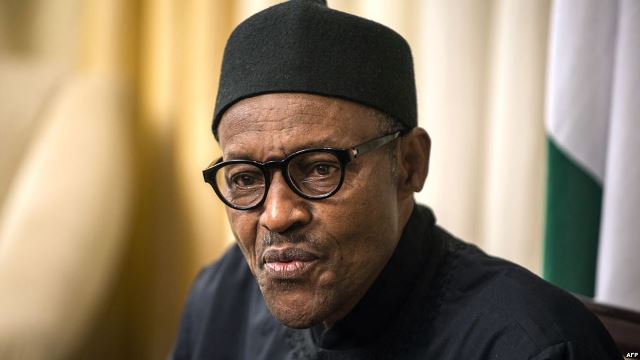
President Muhammadu Buhari

By Eric Teniola

I read in the media recently, that President Muhammadu Buhari is to implant the office of ombudsman as one of the multiple of measures to combat corruption in the country.

If it turns out to be true, it may be a welcome development for as he said in his last visit to South Africa, “If he Nigeria does not kill corruption, then corruption will kill Nigeria”.

Since the constitution does not make room for such an office, it follows therefore, that the President will seek approval of the now crisis mangled National Assembly.

To his credit and whatever anyone will say President Obasanjo created the Independent Corrupt Practices and other related offences Commission, ICPC and the Economic and Financial Crimes Commission, EFCC with the approval of the National Assembly. His two successors never created any front for combating corruption.

Following the submission of a bill by President Olusegun Obasanjo, the Independent Corrupt Practices and Other Related Offence Commission Bill became a law on June 6, 2000 when the then Clark of the National Assembly, Mallam Ibrahim Salim, gave assent to it and a concurrent assent by President Obasanjo on June 13 made the commission to take off..

The EFCC was established by President Obasanjo in 2003 partially in response to pressure from the Financial Action Task Force on Money Laundering, FATF, which named Nigeria as one of 23 countries non-cooperative in the international community’s efforts to fight money laundering.

If President Buhari could create the office of ombudsman, it will be to his credit. The Ombudsman or public advocate is not a new phenomenon. A prototype of the ombudsman may have flourished in China during the Qin dynasty in 221BC and in Korea during the Joseon dynasty. Right now, the office of ombudsman exists in 59 countries of the world.

They include Canada, Finland, Poland, South Africa, France, China, Italy, Iceland, Jamaica, Peru, Sri Lanka, Lithuanian, and Philippines.

The idea of Ombudsman was first introduced in Nigeria in 1975, 40 years ago, by the sub-committee on National Objectives and Public Accountability of the Constitution Drafting Committee. The Chairman of the committee, who is very much around, was Professor Ben Nwabueze, then Professor of Law at the University of Nigeria, Nsukka.

Other members of the committee were Alhaji Ibrahim Imman, former Leader of opposition in the Northern House of Assembly; Alhaji A.Y. Aliyu, lecturer Public Administration, Ahmadu Bello University; Chief Paul Unongo, politician and former minister; Professor E.U. Emovon, Professor of Chemistry, University of Benin and late Mr. Kanmi Ishola Osobu (my egbon), a Lagos Lawyer popularly known as “People’s law”.

In their submission, they noted that “As in Sweden and Finland, a parliamentary agent (ombudsman) could exist side by side with a presidential commissioner (justitiekansler). Their functions are largely the same, with hardly any evident demarcation between them. Cases seem to be referred by the public rather haphazardly to one or the other. Close personal co-operation between them prevents any wasteful overlapping in practice”.

They went further to state that “The Ombudsman strictly so-called is an instrument of parliament, and it is in that form that it has been received in many countries from its original Scandinavian habitat. He is responsible to, and relies upon the backing of Parliament, which provides the ultimate sanction for his authority and prestige. He reports directly to Parliament, and continued disregard of his recommendation and suggestions would provoke parliamentary action”.

Unfortunately the idea of the ombudsman was rejected by the Constituent Assembly in 1978 but what the assembly passed into law was the creation of a Code of Conduct Bureau with less powers.

The argument then was that the office of the ombudsman will duplicate the duties of the Inspector General of Police and other relevant agencies.

So, when President Obasanjo came to power in 1999 he insisted that the Nigeria Police is not sufficiently equipped to combat corruption and that was why he came out with the idea of ICPC and EFCC.

I do not know the scope of the ombudsman of President Muhammadu Buhari as being speculated, but he was part of President Obasanjo’s government between 1976 and 1979, and he was aware of Professor Nwabueze sub committee’s submission on the issue.

Let us take a look on the full details of what Professor Nwabueze submitted in 1975—

“1. The Constitution should establish a Publish Complaints Commission, consisting of a Chief Public Investigator as chairman and 8 Public Investigators. All powers of investigation should be vested in the commission, and not in individual Investigators, but the commission, may sit in panels of at least three Investigators. An Investigator should be appointed to a State or group of States to receive and screen complaints on behalf of the Commission. A list of all cases screened out must be laid before the Commission, which may direct any complaint on the list to be investigated. An office of the Commission should be established in each State capital and in each division within the State. The qualification of the Chief Public Investigator and of the Public Investigators, the method of their appointment and removal, their tenure, jurisdiction over subject-matter and over persons should be prescribed in the Constitution

2. Qualifications— A person to be appointed a member of the commission should be a man of integrity and humanity, with wide administrative experience. No legal qualification should be required either for the Chief Public Investigator or for the other members.

3. Jurisdiction—(a) Over Persons— This should extend to individuals and institutions. Jurisdiction over institutions is necessary in order to enable the Commission to enquire into administrative systems. It should also extend to both public and private organisations. It is desirable that registered companies, for example, should be brought within the jurisdiction of the Commission. The Commission should not, however have jurisdictions over the President, because the dignity of the nations highest office needs to be protected. When the Commission receives complaints against the President, it should send them to Parliament.

(b) Over subject-matter— The Commission should have jurisdiction to enquire into the conduct or action of any person or institution in the exercise of his or its office or authority or any abuse thereof.

4. Appointment— Members of the Commission should be nominated by the President and approved by Senate.

5. Removal— (a) Grounds— Inability or misbehaviour should be the only grounds for removal. Breach of Code of Conduct should constitute misbehaviour for this purpose. (b) Procedure for Removal— To be initiated by motion in Senate supported by two-thirds majority of all members calling for the removal of a member of the Commission.

The President of Senate should then refer the matter to the Chief Justice of Nigeria, who will appoint a tribunal of three present or past superior court judges. The tribunal enquires into the matter and reports to both Senate and the President.

Report by the President upon an adverse finding.

6 Tenure—Three years and a maximum of two terms.

7. Salary— To be a charge on the Consolidated Revenue fund of the Federation.

8. Relationship to Parliament— The character of the Commission should be that of agent of Parliament. It should report its findings and recommendations in each case to—Parliament, the person or agency complained against, the President and the complaint.

Remedial action taken by the person or agency complained against should be reported to Parliament. Annual report containing summary of cases should be laid before Parliament.

9. Relationship to Public— The public should have access to the Commission’s report in individual cases, to the annual reports and to its proceedings. This is important if the Commission is effectively to serve the role of making the administration accountable to the public. The Commission should have discretion to decide to conduct certain proceedings in camera. The present Public Complaints Commission Decree of 1975 leaves it in the “absolute discretion” of a Commissioner to decide whether, and if so, in what manner he should notify the public of his action or intended action in any particular case. The Commission’s discretion in this respect should not be unfettered or even so wide.

10. Independence of the Commission in the exercise of its functions— In the exercise of its functions the Commission should not be subject to the direction or control of any other person or authority.

Let us await what President Buhari will submit to the National Assembly for approval.

Eric Teniola, a journalist, former Editor of The Punch and a former director at the presidency resides in Lagos.

Seven Killed In Fresh Boko Haram Attack On Borno Villages

0
Gov Kashim Shettima
Gov Kashim Shettima

By Musdapha Ilo, Maiduguri

Attacks on Monday night by members of the Boko Haram sect on four communities in Konduga local government area of Borno State have left at least seven people dead, the www.icirnigeria.org has learnt.

A member of the youth vigilance group who does not want to be named said Boko Haram fighters attacked Mailari and three other remote villages in Konduga local government area late Monday night.

The residents of the villages concerned are said to have escaped slaughter by running into bushes as soon as they heard the sound of gun shots, thus minimising the casualty figures.

When governor Kashim Shettima of Borno State visited the affected communities to commiserate with the people and assess the level of damage he was told that about 1,000 people were displaced in the attack.

An interesting and dramatic part of the governor’s visit was when four suspected members of the Boko Haram sect were paraded before him.

Apparently, in a swift reaction to Monday’s attack, the youth vigilante group, popularly known as Civilian JTF in the area, moved quickly to clamp down on persons believed to be members or supporters of the Boko Haram sect in Mailari and surrounding communities, arresting four of them.

They were arrested after a raid on suspected hideouts on Wednesday morning. And all four suspects are said to have lived in Mailari

“We arrested them today after his father handed over them to us, then they led us into bush where the two remaining hid themselves,” Adam Kolo, a member of the vigilante group told journalists.

He said that one of the suspects had already confessed to their affiliation with the Boko Haram sect.

Speaking to the people, governor Shettima said new camps would be opened in the area where hundreds of people who have been displaced by the attack.


Delta Council Boss Suspended Over Financial Misconduct, Insecurity

0
Monday-Igbuya
Delta House Speaker, Monday Igbuya

The Delta State House of Assembly has suspended indefinitely the chairman of Uvwie local government area in Delta state, Henry Baro, over accusations of misappropriation of funds and insecurity in the council area

The chairman was suspended by the House after a motion under matters of urgent public importance was raised by the Majority Leader, Tim Owhefere (Isoko North Constituency).

Speaker Monday Igbuya, put the matter to a voice vote after a lengthy debate and the House was united in in adopting the motion to suspend the council chairman.

The House also set up an ad-hoc committee headed by the Deputy Majority Leader, Oboro Preyor, to investigate the allegations against the council boss.

The allegations against Baro are not clear but it would be recalled that that the headquarters of Uvwir local government, Effurum, witnesses violent clashes between factions of the local chapter of the National Union of Road Transport Workers, NURTW, following a change in the leadership of the association.


READ ALSO:


But, the Delta State chairman of the NURTW, Ifeanyi Obi has called on members to maintain the peace and desist from any action that could lead to a breakdown of law and order.

Obi blamed security operatives for interfering in the affairs of the union in Uvwie local government which worsened the crisis.

“We were surprised when we heard that some people tried to cause trouble in Uvwie using some security men. The situation is now normal and our members are working peacefully. We know the essence of having a peaceful state and we cannot be involved in any action which can lead to a breach of peace,” Obi said.

Borno Elders Want Ex President Jonathan Charged To ICC For Genocide

0
President Goodluck Jonathan

By Musdapha Ilo, Maiduguri

A group of people in Borno State, under the umbrella of the Borno Elders Forum, BEF, has asked for the prosecution of former President Goodluck Jonathan before the International Criminal Court, ICC, for genocide.

The group also called on the federal government to set up a judicial commission of enquiry to investigate why the Jonathan led government failed to adequately equip the Nigerian armed forces to fight Boko Haram insurgents in the North east.

The elders in a statement issued on Tuesday and signed by its chairman, Usman Gaji Galtimari, said recent statements by former Chief of Defence Staff, Alex Badeh, Air Chief Marshal, at his ceremonial pull-out from service that the military was ill-equipped and poorly motivated under his watch should be investigated and the former President made to account for failings of that era in the war against terrorists.

The group expressed distaste that the Borno State governor, Kashim Shettima, was vilified by the Jonathan administration when he cried out against the inadequate kitting of the military and insisted that Badeh’s recent disclosures had made clear the true situation of things.

“The Borno Elders Forum found Badeh’s comments very revealing, an eye opener, a precursor to judgement day and extremely disturbing.  As Chief of Defence Staff under His Excellency, former President Goodluck Ebele Jonathan, GCFR, Alex Badeh was not just the most senior serving military man and head of all serving military men in Nigeria, he was also in the best position to know the state of affairs regarding the provision of military supplies and motivation of troops,” the Borno elders observed.

The group said further in its statement: “To our very rude shock, it turned out on Thursday, coming from an authoritative mouth, that indeed the Governor was absolutely right after all. He has been vindicated by no less a person but the then Chief of Defence Staff who was the symbol of the Nigerian Armed Forces.”

The statement listed a number of demands including the following:

1. A National Judicial Commission of Enquiry under an incorruptible judge from preferably the Southern Nigeria be set up to ask the immediate past President questions on why his administration refused to provide the military with the required functional and superior equipment whereas our sons and daughters were exposed to mass murder, severe injuries and grave destructions of our communities

2. If the former government is found wanting, it should be charged for genocide against the people of Borno State or at least criminal negligence at the International Criminal Court of Justice.

3. The retired CDS (Chief of Defence Staff) should also be asked why he kept silent when the military under his command was not provided with the right equipment. He had the option of speaking or resigning as he ought to have done in order to draw attention of the world and by that he would have saved lives of Borno people.

4. A list of citizens of Borno State killed from the time the issue of military capacity became in question, is compiled and relations of those killed are fully compensated for the death of their loved ones as a result of criminal negligence.

5. A list of soldiers sent on missions without being properly equipped and exposed to death at different battle fronts in Borno State, is also compiled and that they are specifically celebrated with their survivors fully compensated since their bread winners died not just in combat but out of negligence of those in authority.

6. An unreserved apology is tendered by the immediate past President and his service chiefs to the people of Borno State, especially those lost relations and also to Governor Kashim Shettima for all the humiliation he was made to suffer for telling the truth about capacity of the military at that time.

7. The President Muhammadu Buhari administration in constitutional collaboration with the National Assembly considers the need to set up a Presidential Armed Forces Capacity Monitoring and Evaluation Unit which could be directly supervised by the President, Commander In Chief in order to at all times, have accurate data of the capacity of Nigeria’s Armed Forces, monitoring military procurements and hardware and their deployments, so as to avert future discrepancies unless if of course, there is already an established system of this nature.
 

Buhari Fires NNPC GMD, Appoints Emmanuel Kachikwu As Replacement

0
New NNPC GMD, Emmanuel Kachikwu

President Muhammadu Buhari has relieved Joseph Thalma Dahwa of his position as the Group Managing Director, GMD, of the Nigerian National Petroleum Corporation, NNPC, and immediately replaced him with Emmanuel Ibe Kachikwu.

Dahwa was appointed to the office by former President Goodluck Jonathan on August 1, 2014, nearly a year to the day got fired.

The new NNPC boss was until his appointment the executive vice chairman of Exxon Mobil (Africa).

A statement released Tuesday by presidential spokesman, Femi Adesina, confirmed the new development in Nigeria’s national oil giant.

Kachikwu, from Delta State graduated with a First Class Law degree from the University of Nigeria, Nsukka and has Masters and Doctorate degrees in Law from the Harvard Law School.


Family Demands Probe Of Man’s Death In Police Custody

0

The Polie is Your Friend

By Jefferson Ibiwale, Benin

The family of a 26 year old Benin – based car dealer, who is believed to have died in custody of the police in Edo State, has petitioned the Inspector General of Police, IGP, Solomon Arase, demanding an investigation into circumstances that led to his death.

The deceased car dealer, Benson Obode, allegedly died in police custody on 21 May, following his arrest by four policemen from the Special Anti-Robbery Squad, SARS, from Lagos State on allegations that he bought a stolen 306 Peugeot car.

The www.icirnigeria.org reported on Saturday that the four SARS operatives, Adeleke Adedeji, Oniyo Musa, Henry Shobowale and Abena John, had been arrested and were being detained and questioned in Lagos in connection with Obode’s death.

After he died in their custody, the policemen are alleged to have dumped his corpse at the mortuary of the Central Hospital in Benin even without informing the family.

In the petition signed by its lawyer, Philip Okoh, the family urged the police chief to investigate the role of the commissioners of police in Edo and Lagos States and operatives of the SARS in both states in Obode’s death.


Military Gets New Spokesman

0


The old and the new. Maj Gen Chris Olukolade (right) handing over to Col. Rabe Abubakar

The Defence Headquarters has announced the appointment of a new spokesman to replace Chris Olukolade, its erstwhile Director of Information.

The new Defence spokesman is Rabe Abubakar, a Colonel, formerly took over the office today from Olukolade, a Major General, who is retiring from the Army in September after putting in 35 years of service.

Speaking after receiving the baton from Olukolade, the new Defence spokesman said he was aware of the security challenges in the country and stressed the need for a collective effort by all stakeholders to help solve them.

“There is absolute need for synergy of efforts and collaboration among all stakeholders to re-strategise in the area of information collection, management and determination in counter terrorism and insurgency,” he stated.

Abubakar promised to maintain excellent relations with all sections of media in getting them to support the Nigeria military in its activities, stressing that he would be “accessible, available, responsive and proactive” in dealing with media and other stakeholders.

He said further that he would also promote and maintain an excellent relationship between the military and the civilian population in order to gain public trust and goodwill in support of Nigerian troops wherever they operate.

Abubakar commended his predecessor for the hard work he had done in managing information concerning the military and promised to maintain the professional standard set by him.

The new Defence spokesman who hails from Katsina State was born in 1965 and was commissioned into the Nigerian Army as a Second Lieutenant in 1989.

He has acted previously in related military information management capacity as coordinator, Joint Media Centre at the headquarters of the Joint Task Force Operation in the Niger Delta; Commandant Nigerian Army School of Public Relations and Information, NASPRI, Lagos and the executive director, corporate affairs, Nigerian Army Welfare Limited.
 

Boko Haram Commander Captured , As Army Rescues 178 Captives in Bama

0


Some of those rescued from insurgents
Some of the women and children rescued from insurgents

The Nigerian says it has captured and is presently interrogating a key commander of the Boko Haram sect in ongoing military operations to deal with insurgency in the North east.

It gave no further details about the captured Boko Haram leader.

A press release issued Sunday and signed by Tukur Gusau, deputy director of Army Public Relations, 7 Division  Nigerian Army, also indicated that 178 persons held captive by the insurgents were rescued by Nigerian soldiers.

Of the rescued persons, 101 are children, 67 are women and only ten are men.

Gusau said that the operation aimed at clearing the insurgents from locations in the North east were carried out by troops from the 21 Brigade and the 7 Division’s 151 Task Force.


READ ALSO:


The Army spokesman said that the troops successfully cleared several communities of the insurgents including, Fadan, Shuwarin, Wulari, Ngoro Dauye, Jidori, Alikashiri, Kalzamari-Shuwa and Kalzamari-Kanuri.

He said that some items were also recovered from the locations including three flags with Boko Haram logos while five motor cycles were burnt by the troops.


A dying breed: Tribute to Emma Ezeazu!

0
Late Emma Ezeazu
Late Emma Ezeazu

By Chido Onumah

Emma Ezeazu who was buried in Onitsha, southeast Nigeria, on July 4 was one the staunchest activists of the radical student and civil society movements in Nigeria. His death came as a shock not just to me and many of his comrades, friends and colleagues but to people who knew him only by name and reputation.

The news of Ezeazu’s death in mid-May came shortly after a programme I took part in as part of activities to mark the 2015 Global Day of Citizen Action organized by Project Pink Blue in Nigeria on the theme: “Speak Out, Organise and Take Action.”

In September 2006, Dr. Omolade Adunbi, then a graduate student at Yale University, and I wrote a tribute to a mutual friend and comrade, Chima Ubani. Ubani had died a year earlier in a car accident along the Potiskum-Bauchi Road on his way from Maiduguri, Borno State, on a mobilization tour against the arbitrary increase in the price of petroleum products by the Olusegun Obasanjo administration.

Ubani was a fiery activist, one of the finest this country has produced. He was a great mobilizer and it was only natural to think about the tenth anniversary of his demise as I reflected on the theme of this year’s Global Day of Citizen Action. I remembered the call by Omolade Adunbi that fateful day in September 2005 and thought of contacting him to share thoughts on what to do in remembrance of Ubani.

In the decade since the death of Chima Ubani, the radical movement in Nigeria has lost a host of young and very brave warriors: Olaitan Oyerinde, Bamidele Aturu, Oronto Douglas and others. Perhaps, apart from the 1920s at the height of the pan-Nigerian nationalist struggle, no other period in our history witnessed the kind of sustained struggle for students’ rights, democracy, human rights, etc., as the periods of the 1980s and early 1990s. That was the period these late activists held sway. Theirs was the golden generation of student activism and sustained political struggle in Nigeria.

It is sad, therefore, when one reflects on the passage of any comrade who played a key role in that tumultuous period of our national history. But what is even sadder, considering that death is inevitable, is that somehow that generation managed not to reproduce itself. That, perhaps, explains the sorry state of student activism in Nigeria today and the inevitable death knell of our once glorious organisation, the National Association of Nigerian Students, NANS.

Memory fails me, but my first encounter with Ezeazu must have been at the NANS convention at Obafemi Awolowo University (then University of Ife) in 1989, at the height of the rogue regime of Ibrahim Badamosi Babangida, the gap-toothed general whose machinations not only changed the trajectory of Nigeria’s academic and student movements, but also its political future.

Those who knew Ezeazu as a student at the University of Nigeria, Nsukka, from where he emerged as president of NANS in 1986 and those who encountered him either as a rights activists, campaigner for democracy, advocate for electoral reforms or politician will, attest to the clarity of his ideas as well as his commitment.

But Ezeazu was not all activism and politics. He had a soft side that belied his steely character and powerful voice that gave him a commanding presence during his days as a student activist. In the years before he took ill, an illness that limited his movement and reduced his public appearances, any time that other raconteur, Innocent Chukwuma, was in Abuja was an occasion to reconnect; not only to talk politics, but also to share jokes. And Ezeazu was not an amateur in this regard.

It was heart-warming, therefore, reading the touching tributes to Ezeazu, particularly that of Salihu Moh. Lukman who succeeded Ezeazu as president of NANS in 1988, reflecting his contributions not just to the student movement but the bigger issue of national identity formation and the future of our blighted nation.

I draw inspiration from the tribute by Lukman about Ezeazu’s nationalism and I shall quote him extensively.

“In 2011, we held series of consultations and agreed that our mission in politics should be long term and must not be reduced to aspiration for a particular position,” Lukman wrote.

“But one area we debated but had to accept to disagree was the ambition of Emma to contest for Senate in Abuja and not Onitsha. I felt Emma would have made more successful impact in Onitsha. Emma disagreed on the grounds that he was only known in Abuja and he was not ready to go back to Onitsha and start negotiating to appropriate the profiles of his parents. With such strong positions, Emma engaged the process of APC formation in Abuja, aspired for House of Representatives but lost the primaries very marginally.”

Lukman went on: “It will be incomplete to talk of the politics of Emma without bringing out the fact (of) his nationalism being unpretentious and without any border. At a time when everyone is returning to his ethnic group, Emma chose to integrate himself with the Gwaris. He worked hard and selflessly for the Gwaris. There is no contest; the Gwaris (took Emma) as their own. One can say confidently, Emma was born an Igbo man and died both an Igbo man and a Gwari. In our generation, Emma is about the only Marxist that practically lived based on Lenin’s dictum of recognizing your own nationality but never campaigning for the hegemony of your own nationality over others.”

There is nothing more to add about what needs to be done! Ezeazu’s death challenges patriots and all those who seek to reorder our nationless state!

conumah@hotmail.com; Follow me on Twitter: @conumah

Army Discovers Boko Haram Bomb Making Factory In Borno

0
File pix of bombs recovered at a Boko Haram IED factory

By Musdapha Ilo, Maiduguri The Nigerian Army has discovered a bomb making factory established by the Boko Haram sect in Borno State.

The insurgents had apparently turned the abandoned chemistry laboratory of a college into the factory where they manufactured improvised explosives devices.

The discovery was announced Saturday by the Deputy Director, Army Public Relations and spokesman of the 7 Division of the Nigerian Army, headquartered in Maiduguri, Tukur Gusau, a Colonel, who said that the factory was found during the clearing out of insurgents from Dikwa by troops.

Gusau said that the soldiers “discovered that the terrorists have converted the abandoned Chemistry laboratories of Dikwa College of Education into an Improvised Explosives Devices making factory.”

The Army spokesman said that some items were recovered at the bomb making factory, including a welding machine and a mine detector.

He added: “Troops of 7 Division Nigerian Army conducting mop up operations to clear Dikwa and environs of Boko Haram terrorists recovered 4 Toyota Hilux vehicles today.”