Home Blog Page 3138

LEDAP Takes NASS To Court Over Bogus Emoluments

0

LEDAP-LOGO

By Tosin Omoniyi

The Legal Defence and Assistance Project, LEDAP, has taken the National Assembly to court over what it termed illegal salaries and allowances earned over the years.

In a suit filed at the Federal High Court, Abuja, it is seeking among other reliefs, an order that only salaries and allowances approved by the Revenue Mobilisation and Allocation Fiscal Commission, RMAFC, for lawmakers will be subsequently paid to the 8th Assembly which was recently sworn into office.

LEDAP is also asking the court to issue an order compelling the National Assembly to immediately refund any excess payment of monies, above what the RMAFC has statutorily prescribed as entitlements, made to legislators of the 5th, 6th and 7th assemblies.

In a press statement signed on behalf of LEDAP by its executive programs director, Adaobi Egboka, the organisation noted that it was appalled that despite a court ruling in June 2012 that compelled the clerk of the National Assembly to disclose the true earnings of the lawmakers, the order is yet to be obeyed.

Also, lead counsel to LEDAP, Chino Obiagwu, said it is high time that the questionable disbursement of public funds for the upkeep of the lawmakers is halted using legal channels.

‘It is important to curtail the arbitrary self-payments by the members of the National Assembly from the national treasury, “he stated.

“The court has a duty to ensure that no arm of the government becomes too arbitrary and acts above the law simply because it is the arm that makes the law,” Obiagwu further noted.

He added that the constitution was clear on the role of the RMAFC which is the only legitimate government body empowered to fix emoluments of public servants and political appointees.

“Anything in excess of that is unlawful and amounts to corrupt enrichment,” Obiagwu said.

Obiagwu said that LEDAP wants the court to put a stop to the allocation of N8.6billion proposed as aggregate sum for payment of ‘wardrobe allowance’, and payment of monies for, ‘constituency project allowance’, ‘recess allowance’, ‘oversight allowance’, ‘committee sitting allowance’, ‘furniture allowance’ ‘vehicle allowance’ or any other allowance to members of the 8th Assembly of the National Assembly.

Obiagwu noted that since these were not stipulated as salaries and remuneration of legislators by RMAFC, their disbursement would amount to acts of illegality.

However, no date has been fixed for the hearing of the case.

Nigerians have consistently decried the huge allocation of funds channeled to the National Assembly over the years.

A Nigerian senator earns about N240m which is over a million dollars annually in salaries and allowances.

A member of the House of Representatives on the other hand earns about N204m which is about one million dollars per annum.

However, a civil servant who earns a minimum wage of N18, 000 or just I’ve $80 will have an annual salary of about N216, 000, less than $1,000 to cater for his or her needs.

Kids Of Rich Nigerians Who Finance Boko Haram

By Prince Charles Dickson

On Saturday, 4 October, 2013, Bauchi, capital of Bauchi State, was experiencing an unusually cold weather. At the Old GRA, a suburb of the city, Ismaila Gambo, a 21-year old with a neatly trimmed beard got up at dawn and headed to a nearby mosque for his morning prayers. He wore a grey sweatshirt atop a pair of jeans and boots.

Ismaila’s dressing suggested that he was off to some high-energy work. But he was actually headed for Maiduguri, capital of Borno State where he believed he was to carry out a self-appointed divine assignment.

Upstairs, in a bedroom in the Gambos’ home, a duplex, his17–year-old sister, Khadija, said her own prayers. She was dressed in a long gown and wore a headscarf as she waited for her brother to return.

Khadija wore a niqabi, a veil worn by a Muslim woman so that only the eyes are visible. Soon, if all went according to plan, Khadija would be married to a jihadi, a fighter for the cause of Islam. What would her husband be like? She hoped he would be handsome and bearded like Ismaila, her brother.

When the men returned from the mosque just before 6 a.m., Khadija waited until she heard her father go back to bed. Then, before her parents woke up, she stuffed some pillows under the covers to make it seem like she was the one in bed and mentally reviewed her checklist: – clothes for five days, boots, warm socks, a toothbrush, a hairbrush, her niqabi, hijab, and Qur’an.

She grabbed her suitcase, walked downstairs, slipped through the door with her brother and they sped off in one of their father’s many cars.

For the Gambo children, they were embarking on a journey to fulfil destiny. Both had been radicalised by the extremist ideology of Boko Haram and were making a trip to be part of the movement they believed in. But fate had other plans for them.

The two Gambo siblings – this website agreed to change their names for security reasons – had been plotting their journey for over a year. They had been in touch via the telephone and internet with others who had become convinced that the Boko Haram ideology represents the way to salvation.

Ismaila is an Engineering graduate of the Abubakar Tafawa Belewa University, Bauchi, his sister a second year French undergraduate of the University of Jos, before they embarked on their journey.

But Ismaila and his sister did not fulfil the mission to join the insurgents. They were caught because he mixed up the phone number of his contact, a lecturer at the University of Maiduguri which was given to him by the Boko Haram. The contact was to have provided them with accommodation in GRA Maiduguri.

“I made a mistake with the numbers they (Boko Haram) had given me in Bauchi, and by twist of fate it was another University of Maiduguri lecturer’s number.”

“The lecturer played along, and while we were waiting, the house was raided,” Ismaila recalled, without regret.

He and his sister are among many that wanted to join Boko Haram or successfully joined but have been caught and are now cooling their heels at a detention camp in Maiduguri, capital of Borno State and the heart of the insurgency.

The www.icirnigeria.org was given a brief, exclusive access to the detention facility in Maiduguri, one of the many such places where the children of mostly rich and powerful people who have supported, sponsored or were working for Boko Haram are being kept.

The story of these “rich kids” provides a small window into how some of the terrorist activities of the Boko Haram group have been financed. Apparently, part of the insurgency group’s past success can be attributed to the contributions these children made to their “cause”.

Ismaila told the www.icirnigeria.org that there were many of them who were successfully recruited from very influential homes to work for Boko Haram. Many of them consider claims that the insurgency was poverty-driven laughable.

Major Adegboyega Sam, one of the officers at the camp, said that when Ismaila and his sister were caught, they had almost an equivalent of N3 million in various currencies, several banks’ ATM cards, four smartphones and three laptops.

“There are many of them here, children of influential Nigerians, some we have been keeping for more than three to four years. We only await instructions from above; ours is to follow orders,” he said.

Confusion

In spite of several hours of interrogation, investigators who have handled the case of these young Nigerians are still a bit confused about how they got conscripted to work for Boko Haram. There are still too many questions unanswered. Why did they leave everything dear to them – family, privileged upbringing and life – without looking back to become terrorists?

The services that Ismaila intended to offer Boko Haram are unclear, even to him. According to a rough transcript of his confessional statement, he told security operatives that he wanted to play a “public-service role” — delivering food, or, perhaps, providing intelligence for the sect. Maybe “a combat role,” he said.

Ismaila said that he had never held a gun, let alone fire one. As he claimed, his desire was to help Muslims. He wanted to die fighting a holy war.

When asked if he was willing to be used on a suicide mission, Ismaila said: “Yes, if it pleases the Almighty Allah.”

“I did not just run with my sister. An Islamic State had been established, and it is thus obligatory for every able-bodied male and female to fight to keep it. I wanted the comfort of a new khalifah (caliphate),” he said.

Investigations show that there are many like Ismaila who have come to believe in the Boko Haram ideology and have provided support in terms of intelligence, logistic support, food, transportation and so on. Others have directly provided funds to oil the wheel of the deadly insurgency campaign waged by Boko Haram against the Nigerian state and its people.

Musa Awal

Another inmate of the detention facility, Musa Awal, 18, was restless as he spoke to our reporter.

“This nation is openly against Islam and Muslims, especially since Jonathan became President and the evil of this country makes me sick,” he said angrily.

Musa is the third son of a wealthy family from Borno State. His family came into wealth during the regime of the late General Sani Abacha. He told our reporter boldly that not only is education harmful, but “living in this land is haram [sinful].”

But when reminded that he had attended some of the best schools in Nigeria, he kept mute, looking bemused.

When Musa was caught, he begged that his parents should not be called. He told interrogators that if he confessed, his parents would be killed.

According to a security source, this suggests that he must have worked in a group of people – the possibility of a cell could not be overruled.

Another source at the Directorate of Behavioural Analysis which is part of the office of the National Security Office, NSA, revealed that they had been tracking finance and supplies to Boko Haram for long and it was no surprise that many influential families had set up some sort of fund which they released in the shape of “protection monies” to Boko Haram.

“Some of them watch helplessly as their kids become radicalized and when we nab them, some even prefer that their wards are left in detention out of fear,” said the source.

The source disclosed that one way that Boko Haram finances its operations is through collection of protection money which it obtains from willing sources or through blackmail and coercion of residents of territories it controls.

For example, rich people like Ismaila and Musa, who sympathise with the Boko Haram fighters, funnel monies to the insurgents ostensibly for protection but in reality as financial support to prosecute their activities.

The source contends that that is why, curiously, in spite of the numerous attacks on Maiduguri, places like the old and new GRA where wealthy and influential people stay have never been attacked.

“Go to both the new GRA and the old one, none of them has been attacked all these years that the insurgency has lasted,” he stated.

The Parents

When our reporter visited Musa’s parents, it was obvious that they were regular people, although wealthy.

His mom expressed shock that he had become radicalised and joined a terrorist group. She said that the only time her son was violent was when he was aged about eight. That was when he got angry and broke the television. She also said they ensured that their kids never had unsupervised internet access and encouraged them to watch cartoons.

“We wanted to preserve their innocence, but maybe with all the affluence we failed,” she said with a sigh.

The story is no different from the Gambos whose children first attended religious schools before heading to the upscale Hillcrest School in Jos, Plateau State, after which they spent a year in a preparatory college in the United Kingdom. After that, back home in Bauchi, a private Islamic teacher came home to give them Islamic knowledge in what they considered a conducive environment.

But the story of radicalised rich kids like Ismaila and Musa cannot be strange or new to those who know about Farouk Abdulmutallab, who at 23 attempted to bomb a US-bound plane on a Christmas Day in 2009.

The youngest of the 16 children of Umaru Mutallab, a wealthy businessman and banker from Kastsina State, Farouk, now popularly known as the “underwear bomber”, hid explosives in his underwear which failed to detonate on a flight from Amsterdam to Detroit, Michigan.

Among other charges, he was arraigned for the attempted murder of 289 people and was in February 2012, sentenced to four life terms and a 50 year jail term.

There is also the story of Ibrahim Uwais, the son of a former Chief Justice of Nigeria, who allegedly left with his two wives and children to join the ISIS.

The 41 year old devout Muslim who was perceived to have hated Boko Haram, its ideology and killing of innocent people, left his father, Muhammed Uwais, and other family members shocked.

Kunle Nwosu, a psychologist with the NSA office’s Counter-Terrorism Department, works on a de-radicalization programme started recently for these “rich misdirected boys” as he called them.

He said in many cases, most of their parents are nice, regular people and the kids seem well adjusted. They are obedient, well-mannered, got good grades in school and are volunteers in mosques. Religion plays a central role in their lives and they make efforts to pray five times daily.

“To be honest with you, you can’t imagine their kids being Boko Haram,” Nwosu stated.

Aliyu Ibrahim, an Islamic scholar in one of Maiduguri’s many Islamiyya (Islamic schools), explained why many kids from wealthy homes are Boko Haram supporters. “We have a lot of experience with these influential children. Many of these kids are Boko Haram fans. Something just goes wrong. It probably begins from drugs, stealing, waywardness and then sympathy for Boko Haram,” he said.

Big Problem

“If you read many of their statements, there is a similarity to them as if they’d been copied from a script. For example you keep seeing the phrase “I simply cannot sit here and let my brothers and sisters get killed by infidels; I am ready to die and so forth,” noted Nwosu.

Nwosu observed that most of the boys and girls in the facility were arrested before the coming of the Islamic State, IS, which has launched a terrorist campaign in the Arab world. He believes that many such youths who are open to extremist indoctrination might have since joined ISIS and that Nigeria may already have a large army of radicalized youths that could make the country a huge tinderbox.

But if nothing can be immediately done about Nigerian youths that might be flocking to join ISIS, certainly, back home, the state can take action against those who have been detained for links to Boko Haram. Or so it seems.

For, our reporter wondered why such potentially dangerous youths would be kept in detention for years, some as many as four years, without being brought to trial. But it is not as cut and dry as it appears, it seems. Even our security source at the camp balked when asked why the detainees had not been charged. He did not provide an answer.

But another security source, who is also a lawyer, who does not want to be named, said there is no legal obstacle preventing the military or security agencies from charging them to court, reasoning that there are a plethora of charges that can be brought against them.

“Basically you have something like knowingly attempting to provide material support and resources to a terrorist organization in the form of personnel — namely, himself, monies and so on,” he observed.

Even then, he added that ‘”a wide range of activities is criminalized under the Terror Act, including supplying weapons, money, personnel or training to providing things like humanitarian relief, conflict-resolution training and other expert advice or assistance.”

It is not known precisely how federal authorities arrived at its targets and under what laws some of these semi-juvenile detention facilities are run. In all, it was discovered that there are four facilities – one in Borno and Plateau states and two in Abuja – all catering to some 1,000 individuals aged between 15 and 30.

The National Security Adviser’s Office would not speak officially. The Department for State Security too said it is not aware of the existence of these facilities.


Similarly, the military appeared unwilling or unable to offer any information. The publication of this report was held up for several weeks in order to get the defence spokesman, Chris Olukolade, a Major General, to speak on the detention camps but it was difficult getting him until last week.

When confronted with our findings last week, Olukolade stated that he was not aware of any detention camp where young Boko Haram financiers or supporters were being held,

He however, promised to find out and react appropriately later. Until the time of going to press, Olukolade had not been able to provide any information on the matter.

The www.icirnigeria.org, however, learnt that investigation of many young people at various stages of radicalization is still ongoing. Also, agents are gathering intelligence and setting traps for unsuspecting targets like Ismaila.

This investigation was supported by Ford Foundation and the International Centre for Investigative Reporting

IGP Arase Orders Fee Collecting Council Officials Off The Road

0

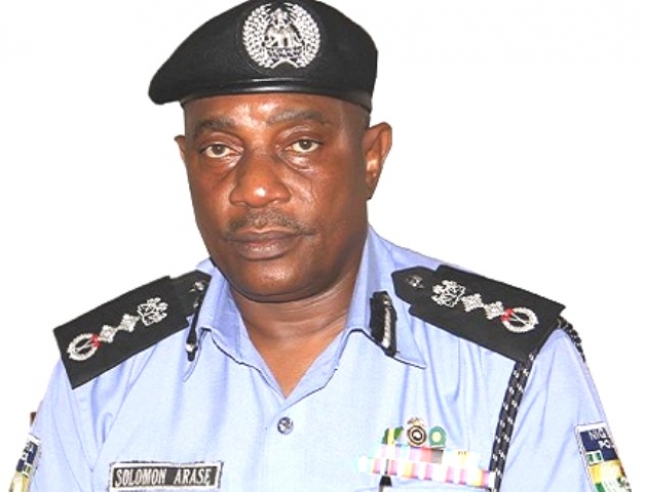
Arase

The Inspector General of Police, Solomon Arase has mandated commissioners of police in the states to dismantle road blocks erected by local government officials in order to collect fees, dues and taxes.

In a terse press statement issued on his behalf on Wednesday by the police spokesperson, Emmanuel Ojukwu, the IGP said the order became imperative following complaints by the public over the disruption of the smooth flow of traffic by officials of the local government who mount road blocks in the guise of collecting the fees.


READ ALSO:


He said there were equally reports of extortion and harassment of motorists by the local government agents deployed to the highways.

“Henceforth any local government staff found wanting in this regard would be made to face the full weight of the law,” the statement read.

FCT Command Arrests Illegal Fuel Merchants

0

IGP

The federal capital territory, FCT, police command has set up a task force to arrest people who illicitly sell petroleum products in jerry cans and other containers.

The task force comprises the police, military and paramilitary personnel.

The task force quickly swung into action and yesterday raided several parts of the Federal Capital Territory, where petrol is sold in the black market.

In one operation, it impounded two vehicles fitted with large drums used in the illegal sale of petrol.

Police commissioner, Wilson Inalegwu told newsmen on Thursday that two suspects have also been arrested in connection with the crime, adding that that each of the drums could take up to 200 litres of petrol.

He said that the suspects and the vehicles were apprehended at a filling station in the Central Business Area, CBD by a task force.

Inalegwu said that selling of fuel in cans and other containers is illegal and warned that those involved in the illicit trade would be arrested and prosecuted.

Sale of fuel in jerry cans is banned but we have observed that some individuals continue to sell fuel in jerry cans and have turned their cars to fuel tankers, which is against the law. Those two cars you see, if anyone of them is driven into object, it can cause serious mayhem, it can cause fire outbreak that can lead to loss of lives and property. We want to say these things are criminal acts that must be avoided by all,” Inalegwu said.

The police commissioner, who is equally the chairman of the task force, also disclosed that the team had impounded more than 4,000 motorcycles from commercial operators who were found to have operated in the city centre illegally.

Political Office Holders in Edo State Forfeit Allowances To Offset Workers’ Salaries

0
Edo State Governor, Adams Oshiomole

By Jefferson Ibiwale, Benin

Political office holders in Edo State are to have their allowances immediately stopped as the state government strives to end the non-payment of workers’ salaries, particularly at the local government level.

Governor Adams Oshiomhole made this known at the end of a meeting between the state, local government chairmen and organised labour.

According to the governor, in addition to measures to block leakages of funds, the state has agreed that security allowances, payments to contractors, payments for overhead and allowances to political office holders, including local government chairmen and councillors, would immediately cease while local governments were directed to put a hold on the employment of casual staff.

“Let both the leader and the workers starve together so they can feel the pain of the workers. You cannot be eating when other workers are starving,” Oshiomhole said, ruling out a bailout for the local government. He however said he was ready to work and ensure that workers get their salaries in the nest one month.


Osinbajo Promises Better Deal For Displaced Persons In North East

0

facebook_-2132732914

By Musdapha Ilo, Maiduguri

Vice President Yemi Osinbajo on Wednesday, during a visit to Maiduguri promised that the federal government would resettle all those displaced by the insurgency that has ravaged the North east in recent years.

He also said their welfare would be given top priority in subsequent government spending.

Osinbajo who visited some of the camps that currently accommodate an estimated 1.5 million internally displaced persons, IDPs, in Borno Satate, reemphasized that the essence of governance was the security and welfare of the people.

At the Dalori camp, one of the 22 IDP camps in the state, the Vice President said he had gained more insight on the huge challenges faced by the IDPs during his visit.

While praising the efforts of the National Emergency Management Agency, NEMA, over their support for the displaced persons, he said he had equally met with different stakeholders in the state who apprised him of the challenges faced at the camps.

At every camp visited, Osinbajo was quick to state that he was in Maiduguri as a representative of the president, Muhammadu Buhari.

“I am here in Borno state and in particular in this camp on the specific instructions of the President, who out of great concern for the wellbeing and the welfare of men, children and women in this camp has sent me here. He has asked me to come and see for myself what is going on at the IDP camps located in the northeast,” Osinbajo stated.

He said that from his assessment, he could see that there was a great deal of suffering and pain being experienced at the camps by the IDPs.

He, however, commended the state governor, Kashim Shettima for putting in place measures to ameliorate the plight of the IDPs.

“This is overwhelming task and a great task indeed and he has rendered tremendous service not just for his people but for the entire populace of this country,” the Vice President said.

He affirmed the federal government’s resolve to play a leading role in bringing about suitable measures to bring succor to the besieged communities, adding that state government and nongovernmental bodies would equally be carried along in the implementation of such steps.

“The work of resettlement involves a big deal, not just taking people back to their homes; it involves rebuilding and in doing this we have to rebuild their homes, schools, and places of worships. We will collaborate with the state government and NGOs in this regards. We will do this within a short time,” Osinbajo promised.

He said although the federal government was currently battling with financial challenges, it would, however, place the northeast in its list of priorities in the disbursement of funds.

Osinbajo’s visit to the city was, however, not without hiccups as there was massive traffic gridlock across the city due to the closure of major roads from as early as 7am in honor of the visiting official.

Many had to resort to trekking to get to their destination during the period of the visit.

Respite came for residents only after the Vice President left Maiduguri around 3.30pm.

Court Again Dismisses Application To Extradite Kashamu

0

Kashamu
A Federal High Court in Abuja has dismissed an application by the federal government for the extradition of Buruji Kashamu, a senator representing Ogun-East in the National Assembly.

Kashamu is currently wanted to the United States of America for drug trafficking related offences.

The immediate past attorney-general and minister of justice, Mohammed Adoke, had filed the application on May 28, 2015 after the US government requested for the senator’s extradition.

Presiding judge Gabriel Kolawole in his ruling held that he lacked requisite jurisdiction to entertain the suit ‎while the judgment of the division of the court in Lagos nullifying the proceedings on June 8, 2015 and the same judgment affirmed by another judge of the same Lagos division had not been set aside by an appellate court.

A judge, Okon Abang, of the Lagos division of the Federal High Court had on June 8, 2015, nullified the extradition proceedings which he said were initiated in contravention of an earlier order of the court.

Abang’s orders nullifying legal proceedings were equally affirmed by another judge, Ibrahim Buba, in another ruling on June 23, 2015.

Kolawole had expressed reservations on the Lagos judgments, which he described as “wild and audacious.”

He, however, held that it was the exclusive duty of the Court of Appeal to determine whether the rulings were rightly or wrongly given.

Kashamu’s counsel, Ajibola Oluyede, had on June 25, 2015, when the case came up for the first time, urged the court to dismiss the extradition application in the light of the judgments delivered in Lagos

Again, Suicide Bombers Attack Borno Village

0

Governor Shettima

By Musdapha Ilo, Maiduguri

Two suicide bombers, a male and female, attacked Molai village in Maiduguri, Borno State, on Wednesday, the same day Nigeria’s Vice President, Yemi Osinbajo, visited internally displaced persons in the state.

This is the second time in a week that the village has been targeted, following last Saturday’s bombing of a general hospital, which left five people dead and 16 injured.

Confirming the incident, a member of the youth vigilante group, known as Civilian-JTF, who spoke on condition of anonymity, said luck ran out on the bombers as the bombs apparently went off accidentally and that they were the only persons killed in the attack with two other persons injured.

“It must have been accidental detonation as no known persons or structures were targeted by the suicide bombers.

“The explosion occurred at about 11 am close to Molai Leprosy/General Hospital and about 100 metres away from a locally established market. It left both suicide bombers dead with two innocent people injured, many residents including patients on admission at the hospital were left scampering for safety,” he stated.

Another account had it that the female suspect detonated her bomb at the entrance of the hospital, killing two passers-by while her male counterpart rode on a motorcycle and had his bomb also accidentally detonated at the back of the hospital.


Gmail Introduces New ‘Undo’ Button

0

gmail.

Any Gmail user, who wants to correct any message they just sent, now has the option to undo the action, provided they are quick enough, a report said on Wednesday.

It added that the new “Undo Send” option allows a message to be retrieved, as long as it is clicked upon within 30 seconds of the “Send” command being hit.


READ ALSO:


“The idea is to give users a second chance if they catch a mistake or realise they have sent a note to the wrong person.

“The function has, so far, only been available as an experimental feature. It is still not automatic, as availability has to be activated in the setting,” the report noted.

However, it added that the users could opt for the “undo” function to work for between five and 30 seconds after the initial “send”.

Transparency International Calls For Release Of Cameroon Whistleblower

0

Paul Eric Kingue

By Samuel Malik

Transparency International has demanded the immediate release of Paul Eric Kingue, the former mayor of Njombe-Penja in Cameroon, who blew the whistle on corrupt practices involving Plantations du Haut Penja, a French-owned company based in the West African country.

Kingue accused PHP of tax evasion in 2007 and following protests in the poverty-stricken province, he was arrested in 2008 for allegedly masterminding the protests. He has since been in prison.

In 2012, he was sentenced to life for “aiding and abetting gang looting and inciting rebellion” and “forgery and misappropriation of public property”, accusations viewed as trumped up.

“Why is this brave corruption fighter who dares to hold the powerful to account being treated like a criminal? The Cameroonian judiciary should release this important and vital advocate for workers’ and people’s rights immediately,” José Ugaz, head of Berlin-based TI, said.

The UN Working Group on Arbitrary Detention in 2014 questioned the charges and “arbitrary” proceedings against Kingue, calling for his immediate release and compensation.

Thus, the charges were dropped early this year but he is still been held, which TI and other human rights organisations say is in violation of his rights. He was expected to be released on June 18 when the case was heard but “the judge required the public prosecutor to produce the original documents of the previous judiciary instances, adjourning the case to next month on what can only be described as a technicality,” TI said.

“Paul Erick Kingue must be released immediately and the Cameroonian judiciary must stop delaying this case in apparent retaliation against an anticorruption champion. Cameroonian authorities must guarantee the independence of the judiciary, investigate allegations of abuse against workers and make every effort to ensure taxes are paid where due for the benefit of the population of Njombe-Penja,” Ugaz said.

In addition to tax evasion, PHP is also accused of using pesticides banned in Europe in the Cameroonian province, thereby degrading the environment and putting the health of the people at risk. Transparency International said it is investigating the allegations through its Anti-Corruption and Legal Advice Centre.

PHP denies the allegations and in October 2014 published an open letter to Cameroon President, Paul Biya, signed by 5, 000 of the company’s 6, 000 staff, which said staffs were treated right by the company.