Home Blog Page 3319

21 Killed In Mulai Explosions

Death toll in the explosions that occurred Tuesday at Mulai, in the outskirt of Maiduguri, capital of Borno State, has reached 21, while 17 persons are said to have been injured.

Military spokesman, Chris Olukolade, a major general, said 15 of the dead were civilians including a member of Youth Vigilante Group, known as Civilian JTF, while the remaining six were terrorist suicide bombers.

Five soldiers were among the 17 persons injured in the incident.

Olukolade said the four suicide bombers were probably heading for a facility of the Nigerian National Petroleum Corporation, NNPC, along Maiduguri-Damboa road in four explosive – laden vehicles.

“Three explosive-laden vehicles were demobilised by shots fired at them by soldiers at the checkpoint shortly before the explosions that rocked the area,” he said.

But a fourth car exploded, apparently set off by one of the militants.

The Army spokesman said 8 vehicles were altogether destroyed and one arrest was made.

“Six of the terrorists died while one has been arrested,” the statement said.

At least 1,500 lives have been claimed in the restive north-eastern region in the first quarter of this year alone, according to latest figures.

Half of those killed were civilians, Amnesty International, the watchdog organisation said in a report released on Monday.

The organisation blamed both “an increase in attacks by Boko Haram and uncontrolled reprisals by Nigeria’s security forces” for the high death toll.

Saboteurs Responsible For Drop In Power Supply – Okupe

The special adviser to the President on Public Affairs, Doyin Okupe, has attributed the loss of 4,000mw of electricity and the resultant drop in the nation’s power supply to massive sabotage of the nation’s gas pipelines across the country.

Okupe who was speaking with newsmen in Yenagoa, Bayelsa State, said the nation was generating about 3,000mw, the lowest since 2011 due to gas supply constraints to the power plants.

According to him, President Goodluck Jonathan is worried about the power shortage and had released funds to fix the vandalised pipelines and assured that the situation will improve in the next six weeks.

He said the administration had completed 10 independent power projects it inherited, as well as provided additional 4,000 kilometres of gas pipelines to feed the power plants and remained committed to improved power supply across the country.

Okupe said President Jonathan has also ordered the military to treat pipeline vandalism as a national security challenge and assured that very soon, Nigerians would enjoy between16 to 18 hours of uninterrupted power supply.

Gov Yuguda Picks New SSG, Chief Of Staff

The Governor of Bauchi State, Isa Yuguda, has appointed Aminu Hammayo as the new Secretary to the State Government, SSG, to replace Ibrahim Dandija, while Abdulkadir Ibrahim Mohammed, becomes the new Chief of Staff to take over from Aljaji Yusuf Gumli.

The replacement takes immediate effect.

A statement signed by the chief press secretary to the governor, Ishola Michael Adeyemi, said before his appointment, Hammayo was the commissioner for Lands and Survey and also oversaw the ministry of Budget and Economic Planning.

It said that Hammayo will continue to oversee the two ministries from his new position.

Ibrahim on the other hand was the commissioner in charge of ministry of Animal Resources and Nomadic Resettlement.

He too will continue to oversee the activities of that ministry as Chief of Staff.

The statement did not give reasons for the removal of Dandija and Gumli.

Large Cache Of Arms Seized From Boko Haram Terrorists In Cameroon

Nigerian Military authorities say over 288 rifles, 35 Rocket Propelled Guns and 35 locally-made Improvised Explosive Devices have been recovered from terrorists after a fierce encounter with security forces in Abugasse, Cameroon, close to the Chadian border.

This is contained in a statement issued on Tuesday the director of defence information and coordinator of Joint Information Centre Counter Terrorism Campaign, Chris Olukolade, a major general, in Abuja.

“The resolve for collaborative efforts to fight terrorism in the region got a boost recently when Cameroon’s security forces made a huge seizure of arms, apparently meant for use by terrorists operating in Nigeria last weekend. Other weapons recovered include pistols, mortar bombs, sub-machine guns and various calibres of ammunition following the arrest of two suspects believed to be major arms suppliers to the terrorists in Nigeria,” the Army spokesman said.

The suspects, who were in possession of over 50 Cameroonian passports, were nabbed in a Toyota Jeep in Abugasse near the Chadian border with Cameroon.

The renewed offensive on terrorists by Nigerian troops had continued to record series of arrests of terrorists and recovery of arms, especially close to the nation’s border with Cameroon.
Apart from the arms recovered following disclosure from captured terrorists lately, more arms have been recovered in the on-going offensive operations.

The statement further explained that a terrorist driving in a green Peugeot vehicle with registration number Bauchi 264 AA, heading to Maiduguri from Alagarno, was arrested at a check point during the weekend.

It said that the arrest of the terrorist had led to the recovery of 15 AK47 rifles and 12 magazines and various yet to be assembled rifles.

Offensive on terrorists in various fronts is continuing especially around the Alagarno are and various points of Sambisa forest and its suburbs.

“Apart from several dead terrorists, 14 vehicles which were either being used for operation or hidden by the terrorists in various parts of the forests and theatres have been destroyed. Various calibres of weapons and ammunitions were also recovered in the course of fighting and subsequent cordon and search of the areas,” the statement added.


Read also:

Court Declares Freedom of Information Act Applicable In All States

In a landmark decision that might have far reaching impact on transparency in governance in Nigeria, a Federal High Court sitting in Enugu on Monday ruled that the Freedom of Information Act, FOIA, is applicable in all states of the federation.

The ruling was given by Justice D. V. Agishi, who presided over a matter brought by the Civil Liberties Organisation, CLO, against the Enugu State health commissioner, George Eze.

The CLO through its Southeast zonal director, Olu Omotayo, had asked the court for an order mandating the commissioner to disclose records and documents in respect of the contract awarded for the building and completion of the Diagnostics Center, Enugu, located at Old Trade Complex, Abakiliki road.

It further prayed for a declaration that the failure of the commissioner to supply the records and documents in respect of the contact was wrongful and contrary to the provisions of Clause 2, 4 and 8(5) of the Freedom of Information Act 2011.

The CLO went to court when its FOIA request for the said information was denied.

However, in its defence, the state government had argued that it has no obligation under FOIA to provide the information sought as Enugu State was yet to adopt the Act or enact same as its’ laws.

The State also said that the Federal High Court lacked jurisdiction to entertain the suit.

But the judge stressed that just like the Economic and Financial Crimes Commission, EFCC Act, among others; the FOI Act is applicable across all states of the country and that all public officers are subject to it.

Agishi also held that the court has jurisdiction to entertain the matter and that nothing in the interpretation clause of the Act robbed it of jurisdiction under the FOI Act 2011.

The applicability of the FOI Act in the states had been a contentious one that has generated cases in the courts. For example, the Lagos State is still battling the Social – Economic Accountability Project, SERAP, over a request made for public information.

The transparency advocacy group had made a FOIA request seeking information on a $90 million loan it got from the World Bank to improve on education infrastructure which was declined.

In a case instituted at a Federal High Court in Lagos, the Lagos State Attorney General, Ade Ipaye, deposed in an affidavit that the state was not bound by the provisions of FOIA because it is a federal legislation.

The counter affidavit of the state government read in part:

“The public records of Lagos State Government are generated and kept by various ministries, departments, agencies and personnel of the state government in execution of their functions and responsibility in the service of the state.

“Such state government agencies and personnel are statutorily created or regulated by laws of the state House of Assembly and the handling of public records has serious security implications which are routinely handled by rules established by the state government.”

Northern Elders Accuse Govt Of Failing To Fight Terrorists

As the federal and state governments blame each other for the insurgency rocking Nigeria’s Northeast, political elders in the region say authorities cannot claim ignorance of the helicopters which drop arms and ammunition, food and medicine to areas known to be strongholds of the insurgents.

The elders, who spoke at a press conference on the platform of the Borno and Yobe people’s forum, also asked the government to provide answers to the attack on the Maiduguri Air Force Base by members of the Boko Haram sect, who reportedly de-mobilized and set alight air crafts and other military equipment despite the state of emergency and curfew in the town.

Speaking on behalf of the group, former chief of defence staff, Al-amin Daggash, a retired Air Marshall, asked the federal government to tell Nigerians those that authorized the withdrawal of security personnel from the Federal Government College, Buni Yadi, few hours before the recent attack that claimed the lives of 59 innocent children.

Daggash said about 18 communities had been attacked by insurgents in the last one month with heavy civilian casualties and that official statistics released by the National Emergency Management Agency, NEMA, revealed that over three million people have been displaced by the insurgency and terrorist attacks in the affected states of Borno, Yobe and Adamawa in the first three months of 2014 alone.

“The continuous bloodletting has led to the loss of over 17,000 lives. Most of the victims are women, children and the elderly,” he said.

The elders also wondered how the situation in the Northeast region deteriorated to the extent that criminals can move freely and act swiftly and successfully under a state of emergency without being apprehended.

“How did a little band of rag-tag misguided youths metamorphose into a well-kitted, well-armed killing machine moving freely in convoy of vehicles and supported by helicopters? How did the Shilka Tank, a multipurpose self propelled anti-aircraft  artillery weapon, positioned to secure Giwa Barracks, fail to function resulting in heavy loss of lives of both civilian and military as widely reported in the media?” the elders queried.

As the state of emergency, originally declared in May last year and renewed for another six months in November expires on April 19, 2014, the elders said the people would resist plans to extend it as they believe it has failed to serve its purpose.

They, however, maintain that the developments in the region underscore the urgent need for the government, the international community, as well as all Nigerians, to arrest the brewing humanitarian crises in the area.

Other notable persons present at the conference were former minister of finance, Adamu Ciroma, former secretary to government of the federation, Babagana Kingibe, an elder statesman, Shetima Mustapha and other political leaders from the two states.

Amnesty International Seeks War Crimes Probe In Nigeria

Amnesty International has called on the African Commission and the United Nations to assist Nigeria in investigating acts that may amount to war crimes and crimes against humanity committed by both Boko Haram and the Nigerian security forces in North-eastern Nigeria.

In its latest report, the international watchdog allege that at least 1500 people, mainly civilians, were killed in the first quarter of 2014 alone in attacks staged by the Boko Haram sect and uncontrolled reprisals by Nigeria’s security forces.

“The escalation of violence in north-eastern Nigeria in 2014 has developed into a situation of non-international armed conflict in which all parties are violating international humanitarian law.  We urge the international community to ensure prompt, independent investigations into acts that may constitute war crimes and crimes against humanity,” the research and advocacy director for Africa at Amnesty International, Netsanet Belay said.

He said more than 1,500 deaths in three months indicate an alarming deterioration in the situation and that civilians, schoolchildren who have been the victims of deliberate attacks, are paying a heavy price as the cycle of violations and reprisals gather momentum.

An Amnesty International documentary of the killings carried out in January, February and March 2014 by both Boko Haram and the Nigerian Security Forces, highlights March 14 as a tipping point when the security forces unleashed a brutal crackdown on former detainees.

“On 14 March Boko Haram gunmen attacked the Giwa military barracks in Maiduguri, Borno state. They reportedly fought their way into the detention facilities and freed several hundred detainees. Amnesty International has received credible evidence that as the military regained control, more than 600 people, mostly unarmed recaptured detainees, were extra-judicially executed in various locations across Maiduguri,” Belay said.

He said the evidence is based on interviews with residents, lawyers, human rights campaigners, and hospital staff across the city as well as satellite imagery showing three possible mass graves in one area of Maiduguri.

“The scale of atrocities carried out by Boko Haram is truly shocking creating a climate of fear and insecurity. But this cannot be used to justify the brutality of the response that is clearly being meted out by the Nigerian security forces,” the director stated.

Amongst the testimony gathered by Amnesty International were the voices of witnesses who described what happened when the military found 56 of those who had escaped from the Giwa barracks.

“The former detainees were in a classroom. They started screaming ‘we are not Boko Haram. We are detainees!’ My neighbours and I saw the soldiers take the men to a place called ‘no man’s land,’ behind the University of Maiduguri. We watched as the soldiers opened fire killing all 56. They were killed in front of us. All of them,” one witness said.

Other eyewitnesses in Jiddari Polo, also in Maiduguri, described how members of the “Civilian Joint Task Force” rounded up freed prisoners and handed them to soldiers. More than 190 people were executed, many of whom were too frail to run.

“I saw the soldiers asking the people to lie on the ground. There was a small argument between the soldiers and the civilian JTF. The soldiers made some calls and a few minutes later they started shooting the people on the ground. I counted 198 people killed at that checkpoint,” he said.

Amnesty International says that the summary killing of these detainees amount to extrajudicial executions and are crimes under international law, stressing that “these killings follow an entrenched pattern of deaths in custody of detainees held in relation to the situation in the northeast.”

It said the international community and in particular the African Commission on Human and People’s Rights and the UN Human Rights Council, must, as a matter of urgency, ensure that a thorough, impartial and transparent investigation is conducted into these allegations of war crimes and crimes against humanity in Nigeria.

Amnesty International is also calling on the Economic Community of West African States, ECOWAS, and the African Union’s Peace and Security Council to assess immediately the conflict situation in north-eastern Nigeria and provide full and effective support to end these acts of violence against civilians.

“As Nigeria assumes the chairmanship of the African Union’s Peace and Security Council next month, the AU needs to critically ask itself how far its member States are living up to their commitment to uphold the principles of the African Union and respect for rule of law and human rights,” Belay added.

Govt Accuses Sanusi Of Sponsoring Terrorism

The Department of State Security Service, DSS, Monday, told a Federal High Court sitting in Lagos that the suspended Governor of the Central Bank of Nigeria, CBN, Lamido Sanusi, is a financier of terrorist activities.

The SSS made the allegation in counter-affidavits presented before court at the hearing of a suit filed by Sanusi who is seeking a perpetual injunction to restrain the Service and the police from arresting him.

On February 21, the court granted the suspended bank chief an interim order of injunction restraining the respondents from arresting, detaining, or harassing him pending the determination of the motion on notice.

The Attorney General of the Federation, AGF, the Police and the SSS are the first to third respondents respectively.

Sanusi’s lawyer, Kola Awodein, who made reference to the allegation on Monday, told the court it was merely an afterthought which government came up with after seizing his client’s passport.

Awodein said, “The allegation against the applicant as to funding of terrorism is an afterthought by the respondents, which is not backed by facts, as there is no reasonable suspicion that the applicant committed any crime.”

He said further that the seizure of the applicant’s international passport by the third respondent after his suspension in March, was a violation of his freedom of movement, adding that “the law clearly defines how such duties should be performed”.

But the respondents in objecting to the suit urged the court to dismiss the case for lack of jurisdiction.

Counsel to the AGF, Fabian Ajogwu, while moving his preliminary objection to the suit, argued that the suit bordered on employment and as such the provisions of Section 254 (c) 1 (d) of the 1999 Constitution had vested jurisdiction to entertain such suit in the National Industrial Court.

He said, “Section 254 (c) 1 (d) of the Constitution vests exclusive jurisdiction in the NIC with respect to civil cases or matters touching on employment, labour or industrial relations. We respectfully urge the court to hold that it has no jurisdiction to entertain the reliefs sought by the applicant, and strike out the suit.”

Ajogwu also argued that the applicant was trying to restrain government from performing its constitutional and statutory duties.

“My Lord, this suit is speculative, hypocritical and an attempt to shield the applicant from the machinery of the administration of justice, which the federal government has started,” he said

He also submitted that the applicant was not entitled to a grant of perpetual injunction, restraining them from performing their constitutional duties.

Lawyers to the Police, David Abuo, and SSS, Moses Idakwo, also associated themselves with Ajogwu’s submissions.

Idakwo said that it was absurd for the applicant to argue that an interaction with the SSS for less than an hour amounted to a violation of his rights.

He maintained that the provisions of Section 6 of the National Security Agencies Act, empowered the Service to impound the international passport of a suspect, pending the conclusion of investigations and therefore urged the court to strike out the applicant’s suit.

But Sanusi’s counsel countered their arguments saying that it was not true that his client was trying to prevent the security agencies from performing their duties.

“It cannot be suggested that the applicant is restraining the respondents from performing their duties, but they must be restrained from doing so without due process of the law. The seizure of the applicant’s passport by the third respondent is a violation of his freedom of movement,” he said.

He also stressed that the suit had nothing to do with the terms of employment of the applicant or industrial relation as submitted by Ajogwu and maintained that the court was clearly vested with jurisdiction to hear the matter.

Justice Ibrahim Buba after entertaining arguments from both sides, adjourned ruling till April 3.

Security Forces Move To Stop Killings In Benue, Nasarawa, Plateau

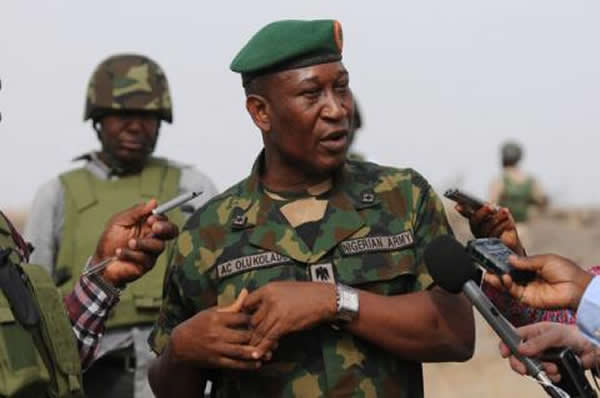
The Nigeria military said on Monday that it had begun major operations in Benue, Nasarawa and Plateau States to end the activities of armed men and criminal gangs.

The director of defence information, Chris Olukolade, a major general, said in a statement that the operations would end the wanton killing and destruction of lives and property in the zone.

Olukolade said that troops had already been deployed for a major offensive which covered the three states of the North- Central.

He said that the internal security operation was meant to capture and neutralise all the enclaves of criminal gangs.

“The Nigerian Air Force, Police and other security agencies are also participating in the operation designed to restore peace in the affected states,” he said.

Olukolade charged law abiding citizens to cooperate with the military by providing timely and useful information to facilitate the operation as it affected their localities.

Nasarawa, Benue and Plateau states have witnessed increasing attacks in recent times and residents had initially thought the attackers were Fulani herdsmen, but now suspect have metamorphosed into a full-fledged terrorists.

The military operation comes about a week after more than 200 gunmen levelled communities in Guma local government in Benue State and killed at least 25 people in Gwer East local government of the state.

The Benue State deputy governor, Steven Lawani, had insisted that the gunmen unleashing terror on the state are not herdsmen but terrorists of a dangerous group who come from faraway Borno State.

In a major attack last month in Plateau State, at least 16 people were killed and 200 houses burnt in Torok, Gwon, Gwarama, Gwarim and Gida Biu villages in the Riyom and Langtang South local government areas of the state.

3 Kidnappers Bag 14 Years Jail Sentence With Hard Labour

From Jessica Tamaraduoye, Asaba

An Asaba High Court has sentenced three persons to jail with hard labour for kidnapping one Otio Onoriode Paul, a student, on July 1, 2012 at Ogharaki, in Delta State.

The kidnappers – Innocent Atunye, a politician, Emmanuel Adebayo, a student and one Emmanuel Edokun who claimed to be an electronic technician- each bagged 14 years for the crime.

They were said to have held their hostage for six days before he releasing him after a ransom of N2million was allegedly paid by the family.

The gang however ran out of luck as they were later arrested by men of the Department of State Security Service DSS, through intelligence gathering after which they made voluntary confessional statements admitting to the crime.

However, as the judgement was delivered, mother to one of the convicts burst into tears, rolling on the floor and causing a disruption of court proceedings before she was taken out of the room by police officers stationed within the court premises.

In a related development, , another High Court sitting at Asaba sentenced a 25yr old welder, Ebierim Onianwa, to 11 years in jail with hard labour for committing the same offence of kidnapping.

He was found guilty for kidnapping one Phillip Okotcha on January 31, 2012, at KM 3, Ibusa – Asaba Expressway, within the Asaba Judicial Division and held him hostage for 4 days.

Okotcha only regained his freedom after the sum of N1million was paid as ransom.