Home Blog Page 3367

The Cost Of Anambra Governorship Election

0

By Eze Onyekpere

In the run up to the Anambra State governorship election, the parties and candidates deployed a lot of human and material resources. Like the other aspects of electioneering, the Electoral Act governs, sets limitations and prescribes permissible human and financial conduct while declaring others illegal. In all the analyses so far, the overall concern has been about what happened on the day of the election and the issues so far raised include a voter register that seemed to be adulterated, logistic challenges related to supplies of materials, late commencement of accreditation and polls and outright sabotage by electoral officials. In all of these, the popular position seems to indicate that the performance of the Independent National Electoral Commission was sub-optimal.

But there is a missing link. The Electoral Act sets limitations on the resources a candidate in a governorship election can spend. It also places a limitation on the use of state resources to the advantage or disadvantage of any candidate. By Section 91 (3) of the Act, the maximum election expenses to be incurred by a candidate at a governorship election shall be N200m. A violation of the provision attracts a fine of N800,000 or imprisonment for nine months or both. The Act also prescribes that no individual or other entity shall donate more than N1m to any candidate and a violation also attracts a sanction. For incumbents, the Code of Conduct for Political Parties states that all political parties shall separate party business from government business. No political party shall use state vehicles, or other public resources for any campaign or any other party business. However, if what we saw in Anambra is anything to go by, it appears that these rules were more obeyed in breach than in compliance.

Available evidence indicates that the frontrunning candidates spent money above the permitted ceiling. A candidate claimed and indeed has an office in every ward in the state; the cost of running these offices alone is in tens of millions. These offices had paid personnel and equipment. Candidates even housed some workers and supporters in hotels.  A single carnival-like rally, many of which were held across the state by the frontrunners, with all its logistic costs relating to hire of venue, public address systems, podium, seating arrangements, security, transport, various dressing materials, food, drinks, and entertainers, live media coverage etc, requires a financial outlay of more than N15m. These frontrunning candidates held not less than 10 of such rallies. Of course, there were all manner of gifts to traditional rulers which are only known to the givers and the takers.

The advertisement in the print media was also very expensive with newspaper pages that cost over N500,000 each. For the electronic media, the massive jingles on radio and television cost hundreds of millions.  The billboards that were in all nooks of the state, posters that were pasted and torn the next minute; hire of campaign managers and other staff of the campaign team cost a lot of money. The sudden charitable disposition of some candidates who donated millions of naira to all kinds of “philanthropic” purposes and candidates who offered material benefits to persons attending rallies and events also added up to the cost of the election.

For state resources, the ruling party, the All Progressives Grand Alliance, had no business appointing public officers paid at the public expense to run its campaign. Official cars and properties had no business at the rallies of the ruling party whilst the state’s fiscal resources by law should not be deployed to the advantage of the incumbent. The idea is that if the incumbent party or candidate is allowed to use public resources for campaigning, it will amount to an undue advantage against the opposition considering that the resources belong to all.  It is within this context that reports of gift of vehicles to traditional rulers during electioneering fails the test of legality and legitimacy. Even the idea of dragging traditional rulers who are supposed to be fathers to all to endorse a candidate seems to be stretching politicking too far.

On the day of election, there were reports of money being shared to voters, being an attempt to induce them to vote or abstain from voting in a particular manner. Before the election, money exchanged hands and there were reports of fundraising events where huge sums of money were raised.  In all the foregoing, there was little or no regard for the Act which states that any person who directly or indirectly by himself or by any other person on his behalf, gives, lends or agrees to give or lend, or offers any money or valuable consideration for the purpose of influencing a voter commits an offence and shall be liable to a sanction. The reports indicated the law enforcement agents looked the other way while these offences were being committed. No arrests were made and of course, no one has been charged to court.

Although one may query the basis of the N200m limitation in a governorship election, it is still the law and needs to be enforced. But there appears to be no political will to enforce same. The INEC may have been overwhelmed by sheer logistic arrangements as to have time to monitor the expenses of candidates. But nothing stops it from demanding an official expenditure report from candidates and their parties. The truth is that the election may be inconclusive and the stakes too high because of the financial commitment of the candidates.


READ ALSO:


The INEC officials who sabotaged the election must have done so under the influence of monetary inducement. No candidate easily accepts defeat after investing billions of naira in a political enterprise. The full scale monetisation of campaigns has made it extremely difficult for reasonable men and women who do not belong to the millionaire club to emerge as candidates. Such reasonable men and women can only emerge with a godfather who if they succeed, will seek to control the state from the back door. It will be easier for elections to be free and fair if candidates stick to the legal expenditure ceilings.

If the 2015 elections will have the massive influence of money as happened in the Anambra election, then the elections will face a strong crisis of credibility. Even if INEC does not have the capacity to monitor the campaign finance provisions of the Act, it should seek a strong partnership with the civil society, anti-corruption agencies, and the academia, etc. This partnership will work out a framework to actively engage and monitor campaign finance and use of state and administrative resources in the run up to the elections in 2015. We should no longer tolerate a situation where votes are won and lost based on the quantum of money available to the candidate.

-Follow me on twitter @censoj

Russian Military Expert Shot Dead In Yemen

A Russian military expert was killed and another injured on Tuesday when gunmen driving a motorbike opened fire on them in the Yemeni capital, Sana’a, local media reported.

The two were advisers to the Yemeni armed forces, the Barakish news website said.

Drive-by shootings and abductions have increased since the 2011 uprising against long time leader, Ali Abdullah Saleh, who stepped down in 2012.

Last week, a lawmaker was assassinated by assailants on a motorbike in Sana’a.

Authorities have blamed the violence on militants linked to al-Qaeda.

On Monday evening, 12 suspected members of al-Qaeda were killed in an air raid on the restive southern province of Abyan, according to a website affiliated with the defence ministry.

Yemen is a stronghold of al-Qaeda in the Arabian Peninsula and US drone strikes aimed at Islamist militants in Yemen have increased in recent month.

Militants have repeatedly called for attacks on foreign diplomats and embassies.

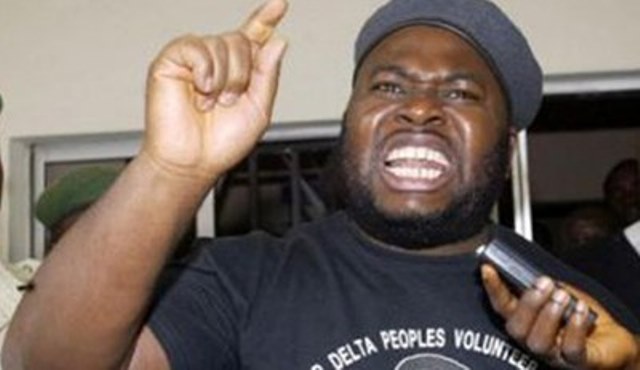
Asari Dokubo Arrested In Benin Republic

0

Human rights lawyer, Festus Keyamo, has raised an alarm over the arrest of Mujahid Dokubo-Asari, in neighbouring Cotonou, Benin Republic, by the country’s police.

Keyamo said in a statement on Tuesday that Dokubo was picked up around the Lubeleyi roundabout between the hours of 1:00pm and 2:00pm and was taken to an unknown destination.

“We want to emphasise that Alhaji Dokubo-Asari carries on legitimate business and has been living partly in Benin Republic for many years now. In fact, he owns houses, schools and an academy in that country. All these places have been searched as at this evening and nothing incriminating was found,” he said in the statementd.

He expressed worry that the arrest and detention may be part of a ploy by “certain forces in Nigeria in unholy alliance with the Beninoise government” to keep him away as 2015 approaches.

Keyamo therefore called on the Nigerian government to immediately intervene and ensure that Dokubo is released and returned back to Nigeria unharmed within the shortest time using all diplomatic means possible.

Asari, a ex militant and a strong supporter of President Goodluck Jonathan’s 2015 reelection bid, has in recent times issues several threats of Nigeria falling apart if his candidate is not returned for a second term.

Although the reason for his arrest is yet to be made public, some analysts believe it may be connected with his new soccer academy which he launched only two months ago in the West African country.

The university, which will be known as King Amachree African University, KAAU, has already been accredited to commence degree programmes beginning September 2014.

Senate Queries FCT Minister Over Mismanaged SURE-P Funds

0

The Senate ad-hoc committee on Subsidy Re-investment and Empowerment Programme, SURE-P, has asked the minister of the Federal Capital Territory, FCT, Bala Mohammed, to explain how SURE-P funds allocated to the territory from 2012 to date were spent.

The committee, which issued the query on Tuesday in Abuja at a meeting with the minister, urged him to explain the rationale behind his alleged payment of N1 billion SURE-P funds into the Abuja Investment Fund, saying that there was no justification for such payments.

The minister was asked to provide details of how and why the FCT Administration, FCTA, spent N140 million to rehabilitate the buses which it bought in 2012.

Members of the committee insisted that the buses ought not to have been due for repairs until at least one year after their purchase.

Besides, the committee queried the minister over the N500 million that was allegedly spent on the rehabilitation of the NYSC Orientation Camp in Kubwa.

“There is no evidence that the NYSC is lacking funds from the Federal Government,” the committee said.

Pension Scam: Court Denies Former Oyo Head of Service, Others Bail

0

An Oyo State High Court sitting in Ibadan on Tuesday refused to grant bail to Kudirat Adeleke, a former Oyo State head of service and eleven others dragged to court by the Economic and Financial Crimes Commission, EFCC, over a N5.6billion pension scam.

The accused were arraigned on November 7, 2013 on charges of conspiracy, stealing and criminal breach of trust.

Justice Bolaji Yusuf, in presiding over  their bail application which was opposed by the prosecuting counsel, Gbolahan Latona, ruled that the offence for which they were arraigned was very weighty even though it was bailable.

Latona prayed the court to turn down the requests for bail in view of the severity and enormity of charges preferred against the accused and the huge public interests generated by the case, as well as the pains and pangs of pensioners who would rather want the trial accelerated and concluded on time.

In granting the prayer of the prosecuting counsel, the judge instead ordered that their trial be accelerated.

“This is a serious offence which attracts 7 to 20 years imprisonment without option of fine,” she said.

While reacting to Adeleke’s claims that her health was failing and that she needed the bail to enable her seek medical care Justice Yusuf said that the applicant did not file anything to show that she had been denied treatment.

“The trial has started and will be accelerated,” she added with finality.

On claims made by some defence counsels that all the defendants had earlier been granted bail by a magistrate court, the judge said “that Mrs Adeleke and other accused persons had been granted bail by an Ibadan Magistrate court does not mean that they will be granted bail here. The situation before the court is different and there is proof of evidence before the court.”

Among the other eleven defendants in the case who are mostly senior officers of the Oyo State Pension Board are  Muili Hakeem Aderemi, (executive secretary);  Adedutan Johnson; Oguntayo Banji, (former internal auditor);  and Kareem Rasheed.

Others are:  Muili Adedamola; Adesina Jimoh Ayoade, (former cashier);  Adebiyi Olasumbo Musendia, (former Admin.Officer);  Johnson Bosede; Iyabo Giwa,(former cashier),  Adewale Kehinde and Olujinmi Adebayo.

Justice Yusuf adjourned the case to December 11 and ordered that the defendants be returned to Agodi prison, Ibadan.

I Have Not Dumped PDP – Gov Babangida Aliyu

1

Contrary to some media reports on Tuesday, Mu’azu Babangida Aliyu of Niger State has declared that he remains a member of the ruling Peoples Democratic Party, PDP, denying ever decamping to the All Progressives Congress, APC.

Aliyu, who spoke through his chief press secretary, Danladi Ndayebo, said that a decision had not been taken on the fate of governors who left the ruling party to form a faction known as the New PDP and that he was shocked by reports that he had joined the APC.

In a statement he issued, Ndayebo said that Aliyu was not present at the meeting in Abuja where the merger agreement was sealed and signed, an indication that he was not part of the deal.

Aliyu said that reconciliatory talks were still going on between the Abubakar Baraje – led PDP faction and President Goodluck Jonathan and that the wise thing to do was to allow that process to end before taking a decision on the next step for the new group.

Even then, the interim chairman APC in Niger State, Bako Shetima has said that governor Aliyu was welcome in the party as long as he does not expect any preferential treatment.

“We learnt of the development and our party will be ready to accept them into the party. The G7 governors have been talking with our leaders at the national level. They are welcome. Our doors are widely open,” Shetima told journalists in Minna on Tuesday

Five of the G7 governors who left the PDP for the New PDP were at the ceremony in the residence of Rabiu Kwankwaso, governor of Kano State, where a merger between the APC and breakaway group was formalised.

The five are the host, Rotimi Amaechi of Rivers State, Abdufatah Ahmed of Kwara State, Magatakarda Wamakko of Sokoto State and  Murtala Nyarko of Adamawa State.

Absent were Aliyu and Sule Lamido of Jigawa State.

Norway Partners Nigeria On Oil Management

0

From Jefferson Ibiwale, Benin

The Norwegian government has expressed readiness to partner with Nigeria for the development of the Niger Delta region through proper management of its oil resource.

Norwegian Ambassador to Nigeria, Rolf Ree, said on Tuesday in Benin that his government was interested in the development of the Niger Delta region and Nigeria because both countries are important players in the global oil market.

Ree who was giving a  keynote address at a workshop organized by the Africa Network for Environment and Economic Justice, ANEEJ, said his country has been able to develop using its oil wealth and that with proper management systems, Nigerian can overcome the challenge of underdevelopment.

“We believe that such a transformation is possible in Nigeria where the government and other interest groups work hard to support development initiatives and also where the resources are properly managed in the interest of majority of the people,” he said.

Speaking further, the ambassador said the proposed intervention will also help curb widespread poverty in Nigeria and the Niger-Delta region in particular.

His words: “The Strengthening Oil Revenue Management in Niger Delta Project is a direct response to the wide spread poverty in the Niger Delta through strengthening of institutions of identified stakeholders. We hope that such an intervention will contribute to the needed development in the region and the entire country.”

The, special assistant to the Edo state governor on Civil Society Organisations, CSOs, Efosa Kayode-Iyasere, commended the organisers of the workshop, saying that the promotion of Niger Delta region through unprecedented development was something long awaited.

Responding, the executive director of ANEEJ, David Ugolor, said the workshop which is the second phase of the organisation’s project, was aimed at responding to the widespread poverty in the region by strengthening of institutions of the six identified stakeholders which include Edo, Delta, Bayelsa, Rivers, Cross River and Akwa Ibom States.

“The project is also focused on enforcement of law’s aimed at promoting good governance where such law’s exist and advocacy for the enactment of such laws where they do not exist,” Ugolor said.

According to him, the first workshop held in 2009, was able to among other things, put institutions in place to strengthen the governance system of the region.

“We are happy that some of these states have responded. Edo State for instance have procurement law, Delta also has, and in Rivers we have fiscal base, so we can now point to some of these states having these laws in place. For me, it’s a huge success,” he said.

Ugolor, however, noted that it is one thing to enact laws but that the duty of compliance and enforcement rests of the people,  urging them to ensure the law works for them.

All states of the Niger Delta region, as well as civil society groups, government parastatals and media organizations were represented at the workshop.

Five PDP Governors Decamp To APC

1

Five governors of the ruling Peoples Democratic Party, PDP, are believed to have joined the opposition All Progressive Congress, APC, in Abuja on Tuesday.

Of the seven governors (G7) in the breakaway faction of the party led by Abubakar Kawu Baraje, five including Rotimi Amaechi (Rivers State), Rabiu Kwankwaso (Kano), Murtala Nyako (Adamawa), Abdulfatah Ahmed (Kwara) and Magatakarda Wamakko (Sokoto) have all joined the APC.

Competent sources in the APC told our reporter this afternoon that all the seven governors would have publicly decamped from the PDP but that for strategic reasons governors Aliyu Babangida (Niger) who is the chairman of the G7 governors forum and Sule Lamido (Adamawa) would remain in the ruling party for the time being.

Nasir el Rufai, former minister of the Federal Capital Territory, FCT, and the deputy national secretary of the APC in a twit this afternoon gave indications that the New PDP formerly merged with the APC today.

According to his twit, the two parties signed a merger agreement in Kwankwaso’s residence and the interim national publicity secretary of the APC, Lai Mohammed, is expected to provide details of the union later today.

El Rufai’s twit read thus:  “At the residence of the Kano State Governor, Dr. Rabiu Musa Kwankwaso this morning, and after exhaustive deliberations, New PDP has merged with the APC. Merger agreement has been signed by the chairmen of the two parties. Await details from Lai Mohammed, the APC National Publicity Secretary.”

Our source said that members of the New PDP in the National Assembly are expected to publicly declare for the APC in the next few days although he disclosed that not all the members are ready to follow their governors.

“We have no problem in the House of Representatives. All the members of the New PDP are with their governors and are going to publicly move to the APC in the next few days. However, in the Senate, we face some problems as some senators in both the PDP and New PDP, even one or two in the APC are not fully with us,” the source said.

One of the senators who do not want to dump the PDP for the APC, it was gathered, is one of the three senators from Kano State whose governor is believed to have dumped the ruling party today.

Our source said the first test of the strength of the political realignment would manifest in the National Assembly in the coming days as the APC would now have a majority in both chambers of the legislature.

According to him, Aminu Tambuwal, who is expected to dump the PDP publicly in a matter of days, would remain as Speaker of the House while David Mark, the Senate President, would be given the choice of joining the APC to retain his seat or be forced to yield it to George Akume, the minority leader.

PDP Starts Drive To Regain Power In Nasarawa

0

Caption: PDP Nasarawa State Chairman, Yuhana Illiyah, and others

By Godwin Ojoshimite

In a bid to regain relevance and power in Nasarawa State, the Peoples Democratic Party, PDP, has commenced a meet – the – people tour that would take it to all 13 local governments in the state.

At the flag off of the tour in Toto local government which was attended by a mammoth crowd, the leadership of the party berated the Tanko Al – makura – led government for betraying the people by not fulfilling the electoral promises made to them.

Addressing party supporters at the Toto local government area secretariat of the party, venue of the inaugural tour which is expected to last for five days cutting across all local government areas, the state chairman of the party, Yunana  Illiyah, denounced the existence of any new PDP in the state.

He said that the party in the state did not recognize any breakaway faction and would work only with the Bamanga Tukur led PDP.

Iliya, who berated governor  Al – makura for not delivering on his campaign promises to the people of the area, also pointed accusing fingers on the APC led government for inciting inter-ethnic crisis as a divide and rule strategy for political gains.

Speaking earlier, Senator Abubakar Danso Sodangi, who expressed support for the Iliya – led state executive committee urged politicians to see attainment leadership position as an act of God.

Also, a, member representing Umuaisha/Ugya constituency in the Nasarawa state House of Assembly, Yahaya Usman, stressed that despite the party’s inability to return to Lafia Government House at the last general elections, the PDP is still the most entrenched party in the state, adding that it would do everything it can to reclaim power.

The lawmaker condemned the APC government for refusing to conduct local government elections and running council areas with administrators.


READ ALSO:


“The APC government has severally asked us to prepare for local council polls only to call it off at the final hour for fear of defeat by the PDP, ” he observed.

A party supporter, Mohammed Isah, who hails from Umaisha, said although the APC government provided them with some basic social amenities eclipsing that of the PDP, their support for the PDP is based on their credentials in human and economic empowerment.

Hamada Mohammed, who comes from the same area, aligned herself with the view saying she is more comfortable with the PDP because it has been with them for a long time.

Who Funds Civil Society Activism?

0

By Ayo Olukotun

Gbolahan Gbadamosi, a former judicial editor of The Guardian and currently Executive  Director, Centre for Media Law and Research, it was who provided the topic of this write-up  by raising a query on an aspect of my essay published on this column last week.

Entitled, Mbeki on Nigeria’s ‘comatose’ civil society (The PUNCH, November 15, 2013) the intervention examined former South African President, Thabo Mbeki’s comment that Nigeria’s civil society is currently comatose and by implication does not act as an effective check on impunity and corruption by government.

Gbadamosi, in a text message, took exception to my suggestion that the civil society should be mindful in seeking funds, of the subversive generosity of the political class on the one hand; and the often narrow agenda of international funding agencies, on the other. Gbadamosi’s query is: If non-governmental organisations and civil society activists cannot seek funds from the political class or from international donors, where then are they expected to get funds for their work?

Before addressing Gbadamosi’s pertinent question, let us recall the magnificent role which the civil society institutions have played and continue to play in our democratisation process.  Obviously, without the heroic struggles of this segment of our nation collaborating with the international community as well as reformist-minded military officers, the transition to democracy would have been impossible.  Who does not recall for examples, the epic confrontations between the military state and June 12 protesters, the anti-Abacha militants, the creators of “Radio Kudirat” and the underground press as well as a motley of human rights organisations that continuously laid siege to tyranny.

Looking back at the quality of democracy on offer in Nigeria today, one asks with more than a twinge of disappointment: Is this what we fought for? No doubt, it is against this back cloth of awesome civil society struggles in the pursuit of democracy that Thabo Mbeki observed ruefully that the Nigerian civil society has been demobilised or politically chloroformed. Let us recap that several of the leading lights of the anti-military struggle have taken up political appointments either by election or selection. Indeed, some of them occupy commanding positions in the current democratic dispensation; they have also brought around them several intellectuals in one form of consultancy or another. In this respect, the struggle between the civil society and authoritarian and corrupt civilian government at national and sub-national levels has become complicated.

I referred previously to the tenuous economic status of our civil society and its vulnerability to the co-optation strategies of the political class bearing in mind that we have a one-legged economy in which the productive sectors are marooned while windfall from government is the only game in town. What this slippery terrain produces is a rump of civil society that maintains some distance from the political class and a largely partisan civil society that has become a part of the political elite.

In order not to be misunderstood, let us make clear that a partisan public sphere as reflected in the advocacy strategies of political parties, the voluminous literature explaining party positions, the journalism of the party press all serve to enrich a nation’s conversation and policy debate.   In fact, some political scientists would classify political parties as belonging to civil society in view of the overlap in roles and mobilisation functions. In terms of deepening democracy for example, opposition political parties by putting the ruling party on its toes and insisting on a level playing field, exposing corruption within the ruling party while of course being silent about corruption in their own ranks extend the frontiers of democracy, lend substance to citizenship rights and play more or less the same role as a vibrant civil society.

As is well known, some international funding agencies provide resources and capacity building wherewithal not just for the civil society but also political parties.  For while the civil society can place issues on the national discourse agenda, they require the authoritative collaboration of political parties and the state to initiate or pass bills around them or turn them into policies. Therefore, the civil society and political parties need not be antagonistic to each other but should ideally play complimentary roles.

That said, the decidedly partisan nature of political parties whose main goal is to win the next election makes it important for civil society institutions to be wary of them. What I find problematic in the current Nigerian scenario is that too many political activists are masquerading as civil society activists.  This of course serves the politicians who are using these activists for celebrity endorsement well since they are also unlikely to be raising issues regarding their own performance or lack of it, corruption as well as the authoritarian tendencies which they share with the political parties they are seeking to displace.

It is against this backdrop that I warned last week that although civil society activists are in principle free to seek funds from politicians, they must be clear about the terms and the possibility that they might end up as the intellectual wing of the political parties extending those grants. This is another way of expressing the problem of donor-capture whereby a donor exercises leverage and increasing authority over the profiles and core mandates of the recipients.

We already have something of this nature in the relationship between international funders and NGOs leading in some cases to what scholars have described as international donors as an alternative state.

Another dimension of the problem manifests itself when we find that the vocabulary of our NGOs is almost totally borrowed from the donor community without local adaptations. Perhaps, for the same reason, the agenda of our civil society is confined regrettably to the procedural and neoliberal version of democracy obtainable in most parts of the West with emphasis on human rights, free market and a downplaying of social democracy and economic rights.

On those terms, democracy becomes no more than electoralism and is often carried on without the demos i.e. the people.

Civil society institutions are free to seek funds from the international community but they should be aware of the price tag of such funding.

Interestingly, because of the global recession, international funding has dwindled to a trickle in recent times and NGOs in other parts of the world are discussing creative ways of raising funds such as voluntary donations from members and citizens who buy into their agenda, membership dues while of course applying cost-saving mechanisms that reduce their overheads.

In sum and to return directly to Gbadamosi’s question, civil society organisations that wish to retain their foundational vision should seek funds from such sources that do not compromise them, subvert their independence or turn them into spokespersons or decoys for factions of the political class and for that matter into proxies of international donor agencies.

External funding always comes at a price but some prices are heavier than others; while some include the total loss of identity. It is important however that civil society activity continues to flourish and for activists to maintain a wary distance from “Greek” donations that can destroy their souls.