Home Blog Page 3432

FOIA Training Workshop for Journalists in Northern Nigeria

0

A training workshop for investigative journalists and the press on the Freedom of Information (FOI) Act 2011 was organised from May 20 to 22, 2012, at the Asaa Pyramid Hotel, Kaduna.

The training organised by the Right to Information Initiative (R2K), Nigeria, the Forum of African Investigative Reporters (FAIR), and the International Centre for Investigative Reporting (ICIR), was supported by the Open Society Initiative for West Africa (OSIWA).


Read Also:


In attendance at the program were editors and reporters from radio, television, and print media organisations from the 19 northern states of Nigeria. The participants were drawn from both private and public media institutions.

The main objectives of the training were to familiarise journalists with the essential elements of the FOI Act and how they can use the Act to conduct investigative reporting in Nigeria. The workshop was also meant to demonstrate the importance of the FOI Act to general media reportage.

Dana, Aviation Authorities, Responsible for Crash

The Nigerian government has suspended the operational license of Dana Airlines, owners of the MD – 83 aircraft that crashed in Iju Ishaga, Lagos State, which killed the 153 persons on board and several on the ground.

Joe Obi, spokesperson of the ministry of aviation, who disclosed this today in Abuja said the action is to allow for a thorough investigation of the air disaster.

He was silent on whether the government will sanction official of the Nigerian Civil Aviation Authority, NCAA.


Read Also:


Earlier today, the Senate called for the withdrawal of the operating license of Dana Airlines and the stepping aside of the NCAA boss, Harold Demuren, until investigations are carried out and concluded on the crash.

But investigations by the www.icirnigeria.org indicate that the NCAA should be held responsible for the crash as much as Dana Airlines.

Our investigations show that the Dana MD – 83 aircraft that crashed in Lagos should never have been brought to Nigeria.

Worse still, the entire Dana fleet of MD – 60 series might not have been certified to fly in Nigeria if aviation regulatory authorities had done some homework on the history of the aircraft.

Information available to the website indicate that Dana Airlines Limited purchased a fleet of  four MD – 83s from Alaska Airlines in 2008 shortly before it commenced operations, at a time when most American airline operators were dumping the  aircraft because of its inefficient fuel consumption and noticeable safety issues.

In fact, Dana Airlines bought the aircraft at a time Alaska Airlines itself was disposing of most of the MD – 80 planes in its fleet as many of them had previously had issues.

The airline had been dumping its MD 80s since its twin – engine McDonnell Douglas MD – 83 aircraft crashed off Point Mugu into the deep waters of the Pacific Ocean, killing all 88 persons on board.

Alaska Airline flight 261 departed Puerto Vallarta, Mexico for San Francisco and Seattle, United States when it developed problems and diverted to Los Angeles to land. But it crashed into the Pacific Ocean before it could land.

The National Transport Safety Bureau investigations showed that the cause was inadequate maintenance – the simple issue of failure to lubricate a mechanical component of the aircraft.

The Federal Aviation Administration, FAA, also had serious issues with MD – 80s for years. In March and April 2008, a safety audit by FAA forced American Airline to ground its entire fleet of about 300 MD – 80 series aircraft.

The issue at stake was the hydraulic wiring of the aircrafts and American Airline had to cancel about 5700 flights in the incidents.

In the same vein, Delta Airline also had issues with its fleet as it grounded its 117 MD – 80 aircraft for safety and regulatory checks, in the process cancelling 275 flights.

Thus, by 2008 when Dana Airlines bought its fleet from Alaska Airlines major operators in the aviation, particularly the United States, had started dumping the power packed but old MD – 80 aircraft.

In 2008, American Airline had nearly 300 MD – 80 planes in its fleet. By July 2011, it the number had gone down to 195.

Age is a big issue in the aviation industry as it relates to aircraft. The Dana plane that crashed in Lagos would have been grounded in many countries many years ago. In America, although the issue of age limit for commercial aircraft is still being discussed, most airlines do not fly planes that are older than 20 years old.

Boeing, the aircraft manufacturers, said that its planes are built to fly for 25 years but added that airlines can continue to fly them if they satisfy airworthiness regulations.

In China, the age restriction place on imported passenger aircraft is 10 years, in Russia it is between 10 to 15 years and Libya has reduced its  own from 25 to 20.

In response to allegations that the ill – fated aircraft that crashed on Sunday had technical or maintenance issues, Dana Airlines management has said that it was “serviceable and operational”.

Speaking through its Director of Flight Operations, DANA Air, Capt. Oscar Wilson, the airline said in Lagos yesterday that the plane was still in serviceable and good condition in spite of its age of 22 years.

“We don’t allow our aircraft to fly if not in perfect condition. We don’t take risks with people’s lives. I did the test flight of the questioned aircraft myself, there was nothing wrong with the aircraft, it was okay,” he said.

“The aircraft had flown to Ibadan on Saturday without hitches contrary to rumours that it was undergoing repairs. On Sunday, it was a different story entirely as the aircraft had started operations as early as 7.47 a.m. On Sunday, 5N-RAM flew at 7.47 a.m., left Lagos to Abuja on flight 999 and Abuja back to Lagos on Flight 998. The aircraft went back to Abuja flight 993 and was coming back before the fatal flight 992,” he said, giving further details about the aircraft’s final hours of operation.

But aviation experts are not impressed and hold Dana Airlines and Nigerian Civil Aviation Authority, NCAA, responsible for the crash.

One aviation source who does not want to be named accused the NCAA of handling aviation safety and regulations with laxity, observing that the agency continues to allow noisy and old aircraft to operate in the country in spite of the intervention fund given to airlines by the Olusegun Obasanjo administration to upgrade their fleet.

Dana Airlines commenced commercial flights operations in Nigeria on November 10, 2008 and operates flights from Lagos to Abuja, Calabar, Port Harcourt and Uyo. It had four MD – 83 aircraft in its fleet.

The MD – 80 series which include the MD – 81, MD – 82, MD – 83, MD – 87 and MD – 88, has been in commercial operation since 1980. In its 30 years of operation it has been involved in 60 incidents, at least 18 of them serious accidents involving over 1,300 deaths. The Dana crash is rated as the most devastating and deadliest crash involving an MD – 80 aircraft.

Hosni Mubarak Jailed for Life

0

Former Egyptian President, Hosni Mubarak, yesterday received a life sentence for failing to stop the killing of protesters during the uprising that brought down his government last year and forced him from power.

Habib El Aldy, the minister of interior under him, was also sentenced to life in prison for involvement in the killings but the court acquitted Mubarak and two of his sons, Gamal and Alaa, of corruption charges.

The ousted president has been standing trial for allowing the killing of hundred – by some estimation, close to 1,000 – of people during the 18 – day people’s uprising in February 2011 which force him to resign from office.


Read Also:


Judge Ahmed Rifaat delivered the judgment in a make shift court room, a lecture room, which was once named after the former president.

An unsparing Judge Ahmed Rifaat described Mubarak’s reign as “30 years of darkness” which was terminated only by the people’s demand for democracy.

“They peacefully demanded democracy from rulers who held a tight grip on power,” the judge said.

Some of the charges against Mubarak and El Aldy carry the death sentence but the judge preferred to send them to prison for life.

As Rifaat read the conviction and sentence, Mubarak sat emotionless with his expressions concealed by big eyeglasses.

There are some reports that when he was transported to a prison facility after the sentencing, Mubarak broke out in tears and refused to alight from the helicopter that took him.

Since his trial began, the former president has been help in military hospitals, largely because of his failing health.

That will changed now with his conviction as he has to serve his sentence in a prison.

There was chaos outside the court as hundreds of mostly anti – Mubarak Egyptians jubilated as the life jail term was announced. Several youths threw rocks and fights broke out among them. Hundreds of anti – riot policemen were called to restrain the crowd, preventing them from storming the court house.

Many people in Egypt are angry that Gamal, heir apparent to Mubarak, and Alaa, a wealthy businessman, escaped being sentenced. There is also a lot of anger, particularly among family of victims of the killing, as several police officers brought to trial have either been acquitted or given light sentences.

Thousands of Egyptians gathered at the historic Tahir Square after the ruling denouncing the trial and chanting “Execute them”

Interestingly, Mubarak’s sentencing has come only a few days after Egypt’s presidential elections, the run – off of which will be between Ahmed Shafiq,  former prime minister a protégé of the former ruler and Mohammed Morsi of the Muslim Brotherhood, a fundamentalist Islamic group persecuted by the ex president.

UN Moves to Protect Journalists

0

The United Nations, UN, has adopted The UN Plan of Action on the Safety of Journalists and the Issue of Impunity which was championed by the United Nations Educational, Scientific and Cultural Organization, UNESCO.

The Plan was endorsed on Friday, April 13, by the chief executives board which is the highest level coordination mechanism of the UN system.

According to a release by UNESCO on Wednesday, April 18, the Plan targets the “creation of a free and safe environment for journalists and media workers in both conflict and non-conflict situations” to strengthen peace, democracy and development worldwide.


Read Also:


At the board’s meeting, UNESCO Director-General, Irina Bokova, told members that “the safety of journalists is essential to upholding Article 19 of the Universal Declaration of Human Rights that guarantees the right to freedom of expression.”

The world body noted that some 500 journalists and media workers have been killed in the last decade while many have been wounded or threatened while carrying out professional responsibilities.

Quoting the UNESCO director general’s report on the safety of journalists and the danger of impunity, the agency observed that in 2011 alone, 62 journalists were killed around the world.

In most cases, it observed, the journalists were not reporting armed conflicts but local stories on corruption, organized crimes and drugs.

Due to this situation, the UN said “there has been a pressing need for the various UN agencies, funds and programmes to develop a single, strategic and harmonized approach in order to have greater impact on combating the issue.”

The statement elaborated that the approval of the Plan would lead to the establishment of a coordinated inter-agency mechanism to handle issues related to safety of journalists.

It will help to involve other intergovernmental organizations at international and regional levels to encourage the incorporation of media development programmes that would ensure safety of journalists.

The UN would also employ the Plan to assist countries through development of legislation and supportive mechanisms to sustain freedom of expression and information, and also to support efforts at implementing existing international rules and principles.

The Plan would make UNESCO to work with governments, media houses, professional associations and non governmental organisations, NGOs, to raise awareness on existing international instruments and conventions, and on dangers posed by emerging threats to media professionals and various existing practical guides on the safety of journalists.

The statement also explained that through the Plan, it would relate with countries to include materials relevant to the safety of journalists and impunity in the curricula of journalism education.

The adoption of this Plan is the result of a process that stared in 2010 by the Intergovernmental Council of the International Programme for the Development of Communication,  IPDC.

Coup Attempt in Guinea Bissau

0

There has been a coup attempt in the unstable West African country of Guinea Bissau with reports of the military attacking the house of Carlos Gomes Jr, the out going Prime Minister.

Foreign media reported explosions and firing of heavy arms in Bissau, the nation’s capital, with soldiers taking over the city centre.

And in a prompt reaction, the Economic Community of West African State, – nation regional body in Abidjan, capital of Cote de Ivoire.


Read Also:


Soldiers in Bissau are also reported to have taken over the ruling party’s headquarters and the state television station which has been taken off air.

In a fashion similar to the recent coup in Mali, the Guinea Bissau coup attempt is coming only about two weeks to a runoff election in which Gomes Jr is a favoured presidential candidate.

Diplomats in the country’s capital are quoted as saying that the home of Gomes Jr came under attack Thursday night and his whereabouts and that of  Raimundo Pereira, the country’s interim president, are unknown.

There have been fears in the country of possible coup attempt and political instability in the country since January when its president died from complications related to Diabetes and the installation of Pereira as interim president.

The Associated Press quoted a diplomat in Bissau saying, “I am at the office and I am prevented from leaving,” said the diplomat. “The downtown area has been sealed off by the military … I can also tell you that all Guinea-Bissau radio has been taken off the air since 8 p.m. local time and the whereabouts of the prime minister and interim president are unknown.”

Guinea Bissau has survived several coups and coup plots since gaining independence from Portugal in 1974.

Tensions have built up in the country since the non conclusion of elections held earlier in the year after the main opposition party led by Kumba Yala alleged that the poll was rigged.

The party called for a boycott of the runoff scheduled for April 29 and warned of violence at campaigns.

Daniel Kablan Duncan, Cote de Ivoire foreign minister, confirmed news of the coup plot after a meeting of the regional body in Abidjan.

“We have received some difficult information from Guinea-Bissau, and this information indicates to us that there is a coup underway,” he said.

Duncan condemned the coup plot saying “ECOWAS formally and rigorously condemns such an attempted coup d’état.”

At the Abidjan meeting, Mamadu Djalo Pires, Guinea-Bissau’s foreign affairs minister, appealed for international aid.

“The situation is serious. The soldiers are occupying the streets,” Pires told Reuters. “I spoke to the interim Prime Minister [Adiato Djalo Nandigna] and she said she was under fire”, he added.

Guinea Bissau has not only been politically unstable but has also recently gained notoriety as a major transit point for illicit drugs particularly cocaine, which has greatly destabilised the country.

Cocaine traffickers and their sponsors wield great influence in the country and are said to have succeeded in buying off government and military officials.

Nigeria’s Access to Information Law is Not Working

1

After 18 months in operation, Nigeria’s Freedom of Information Act still struggles with huge challenges.

Recently, a civil society group, the Nigerian Contract Monitoring Coalition, instituted a case against the Power Holding Company of Nigeria, PHCN, at a Federal High Court in Abuja.

The suit, instituted on behalf of the Coalition by the Public and Private Development Center, PPDC,was sequel to the refusal of PHCN to release details of a World Bank- funded PHCN contract for the supply and installation of High Voltage Distribution systems in its facilities in Abuja, Lagos, and Ibadan.


Read Also:


In August, the coalition had applied to PHCN and the Abuja Electricity Distribution Company Plc, one of the beneficiary companies, for copies of procurement documents and information relating to the contract for the supplies materials.

Information requested by the coalition included the report of the needs assessment that preceded the contract, documentation on the design and specification requirements, bidding documents issued to all bidders, a list of all the contractors that submitted bids, copies of the letters of award, as well as the names and addresses of all distribution companies on whose behalf the procurement was undertaken.

The request was turned down by both PHCN Abuja and Electricity Distribution Company Plc, leaving the coalition with no option but to approach the court with a motion exparte seeking the court’s order granting it leave to apply for the prerogative order of mandamus to compel PHCN, its general manager in the management unit, B.C. Nwozor, and the attorney-general of the federation to provide it with details of the contract.

In a significant ruling for access to information in Nigeria, Justice Ademola granted the coalition’s application after hearing its lawyer’s arguments in support of the motion. The ruling was a major victory for the coalition as PHCN immediately after the judgment released the information requested.

About 18 months after the Freedom of Information Act was passed into law, Nigerians still have a difficult time accessing public records. In most cases, government officials, ministries and agencies merely ignore requests for information.

Thus, like the Nigerian Contract Monitoring Coalition, many individuals and groups, particularly in civil society, have resorted to the courts to force information out of state officials and agencies.

One of the individual FOIA requests that ended up in court is the one by a legal practitioner, Ojukwu Chikaosolu, who applied for a court’s order to compel the executive secretary of the Petroleum Products Pricing Regulatory Agency, PPPRA, Reginald Stanley, to release information on the list of companies that had obtained import licenses and the volumes allocated in their respective permits.

Chikaosolu had on July 19 sought for the information with a view to exposing sharp and fraudulent practices in the petroleum import transactions through an informative and open process.

He also demanded to know whether the executive secretary had resigned his employment with the Nigerian National Petroleum Corporation, NNPC, before being appointed to his present position.

The agency refused to release the requested information claiming that it does not fall within the public information envisaged by the FOI Act.

The agency, in a letter signed by Ja’afar Abubakar in response to the inquiries wrote, “We …regret to inform you that the request is denied as the information required does not fall within the information that is caused to be published by a public institution under the FOI Act.”

However, Justice Gabriel Kolawole of the Abuja Federal High Court granted the lawyer the requested leave for an order to compel the executive secretary and the agency to release the requested information.

The Nigerian Contract Monitoring Coalition and Chikaosolu were lucky as they got rulings compelling the information requested to be released. Many similar requests have not gotten such reliefs from the courts.


For instance, Boniface Okezie, president, Progressive Shareholders Association, PSA, is in court with the Central Bank of Nigeria, CBN, after the apex bank ignored his request for information. But the wheel of justice is rather slow.


Okezie had, in January, 2012, sought to know the cost to the central bank, the government and people of Nigeria so far, of the banking reforms instituted by the CBN. Specifically, he wanted to know the amount of legal fees paid and how much of the amount is paid to and/or to be paid to the law firms of Olaniwun Ajayi and Kola Awodein & Co.

Also of interest to Okezie is the total sum paid in respect of the prosecution of Cecilia Ibru, former managing director of Oceanic Bank Plc and how much of this sum was in the form of commissions on the property recovered from her.


In his January 26th letter to the CBN, Okezie also demanded to know the total cash and value of property recovered from Cicelia Ibru, the whereabouts of the money and property recovered, and what part of this cash and property has been returned to Oceanic Bank and/ or its shareholders. The case is still in court and Okezie still has not gotten the information he asked for.


What worries many Nigerians is that in some cases even when the court instructs public institutions to disclose information, such court orders are ignored.


This is a dangerous trend, said Ene Enonche, national coordinator of Right to Know, R2K, an access to information group, who is worried at the refusal of some public institutions to comply with the FOI Act even after court judgments have been issued.


“While the testing of the FOI Act in our courts is good for precedence and interpretation of the law, it is more sensible for public institutions to develop the will to comply with the clear provisions of the Act”, she said.


According to her, open and transparent governance is not enhanced when citizens feel that they need to resort to the long and arduous path of litigation before they are able to obtain information from public institutions.


“Apart from the length of time it would take for litigations and appeals, there is also the considerable expense of the entire legal process, beyond the reach of many Nigerians,” Ene observed.


Nigeria’s access to information law was passed on May 28, in the dying days of the last legislative assembly, after nearly a decade in the National Assembly. The FOI Act affords every Nigerian the right to access or request for information domiciled with any public official, agency or institution. Apart from laying out the scope of public information the public can access, the ACT also provides details about time limits, exemptions, proactive publication of information as well as mandatory training for officials of government.

In a society where a culture of secrecy has traditionally surrounded information about government, where state institutions hardly keep records and where civil servants have for decades been protected by the Official Secrets Act and similar laws from disclosing sensitive information, it is obvious that a lot needs to be done to make the Act work.


Unfortunately, however, government has neglected doing many things that ought to be put in place by the government to facilitate implementation have been neglected. For example, Section 13 of the FOI Act provides that government agencies will train their staff to be able to comply.


“Every government or public institution must ensure the provision of appropriate training for its officials on public’s right to access to information or records held by government or public institutions,” the Act mandates.


But training for public servants, where it has been done, has been uncoordinated and, at best, haphazard and half – hearted. Thus, almost two years since the enactment of the FOI Act, government officials are yet to come to terms with their responsibilities under the Act.

One agency of government that has obviously not come to grasp with what the Act demands of it is the Code of Conduct Bureau, CCB, which has repeatedly denied Nigerian access to the assets declaration of public officers.


Several civil society organisations, including the African Centre for Media and Information Literacy, demanded from the Bureau details of the assets declared to it by President Goodluck Jonathn. This rash of demands for the President’s asset to be made public followed a declaration by Jonathan during a televised media chat in June that he did not give a damn about public declaration of assets.


“I don’t give a damn about that. The law is clear about it and so, making it public is no issue and I will not play into the hands of the people. I have nothing to hide.

“I declared publicly) under the late President Umaru Musa Yar’Adua because he did it, but it is not proper. I could be investigated when I leave office.

“You don’t need to publicly declare it and it is a matter of principle. It is not the President declaring assets that will change the country,” Jonathan said to the disappointment of many Nigerians.


However, Sam Saba, chairman of CCB has denied Nigerian access to Jonathan’s asset declaration, arguing that the FOI Act conflicts with the Constitution.


Saba has relied on Section 3 (c) of the Third Schedule of the 1999 constitution which empowers it to ”retain custody of such declarations and make them available for inspection by any citizen of Nigeria on such terms and conditions as the National Assembly may prescribe.”


The CCB chairman wants an Act of parliament to spell out the conditions under which it can disclose to the public declarations made to it by public officials.


However, that is exactly what the National Assembly has done with the FOIA Act, lawyers have pointed out. But the Bureau is adamant that it will not give Nigerians access to details asset declared by public officials.

One other obvious challenge in the implementation of the access to information law is that government institutions have hardly had to keep record until now. Thus, when Nigerians seek information, apart from the ignorance of public officers about the Act, those who request information or records confront situations where such information do not even exist.


This was the experience of the International Centre for Investigative Reporting, ICIR, last year. In doing a report on the anti – corruption campaign in Nigeria for this website, the ICIR, in June 2011, asked the Independent Corrupt Practices and other related Offences Commission, ICPC, for a list of the high profile cases it had prosecuted. The Centre equally wanted details about the charge, amounts, courts and status of the case. The commission’s resident consultant, Folu Olamiti, asked for time to provide the list. After three months, when it was obvious he was giving excuses and would not provide the information, the Centre filed a FOIA request demanding the aforementioned information. The anti – graft agency completely ignored the FOIA request.


Not ready to engage in a court battle, when the Centre made discreet efforts to get the information from several sources in the commission, the shameful truth came out that the ICPC had not compiled or kept a record of its cases since inception.

The executive director of the ICIR, Dayo Aiyetan, observes that one of the reasons why Nigerians must continue to force the implementation of the Act through FOIA requests so that government officials would be compelled to keep records and thus build a culture of open access to information in Nigeria.


But the road to implementation of the Act continues to be riddled with challenges. One of the biggest problems to making the Act effectively take off is the absence of a template, a kind of roadmap for government officials to follow.


For a country without precedents in open access to public information, government needs to evolve a coordinated public service – wide modality for the implementation of the Act. Stakeholders looked up to the office of the attorney general of the federation to provide such coordinated approach but that has not happened.


The government also set up an inter – ministerial committee on the implementation of the Act but no serious work appears to have been done to create the environment for easy implementation of the Act.

This has led concerned citizens, journalists, and civil society groups to express serious concerns at the slow pace of compliance with and implementation of the Act by government and public institutions.


This, to Media Rights Agenda, MRA, which was at the forefront of the crusade for an access to information law in the country, is, perhaps, the biggest problem in its implementation. MRA specifically asks the presidency to prevail on the inter-ministerial committee on the implementation of the Act to complete its assignment and release the modalities for the speedy, effective and efficient implementation of the Act.


It equally calls on the attorney-general to exert pressure on all public institutions to comply with the provisions of the Act especially the aspect of filing their annual implementation reports.


In 2011, when N80 million was provided in the budget of the head of the civil service of the federation for producing a roadmap for the implementation of the FOI Act, stakeholders heaved a sigh of relief, hoping that finally with a roadmap, public officials will have a guide to follow in implementing the Act.

However, the office of the head of service has produced no such roadmap. And it cannot explain what happened to the budgetary provision. This year again, another N30 million has been proposed for creating a roadmap by the head of service.


But speaking to our correspondent, Muhammed Danjuma Manga, an assistant director in the office of the head of service of the federation, insisted that the responsibility of providing a roadmap for the implementation of the FOI Act rests with the federal ministry of justice.


Even then, Muhammed said the office of the head of service has been collaborating with the office of the attorney-general to create the necessary enabling environment for the effective implementation of the Act.


This, according to him, has been done through training workshops for both directorate cadre and desk officers on records/ document management.

This collaboration was attested to by Adekunle, senior special assistant, SSA, to the attorney general. Curiously, however, Adekunle contends that there is no budgetary provision for the exercise.


“Although there is no budgetary provision for it, the ministry of justice, in collaboration with the office of the Head of Civil service, drawing from the goodwill of the minister and the United Nations Development Programme, UNDP, has taken steps to provide the enabling environment for the effective implementation of the FOIA.”


But even while Nigerians wait for government and its agencies to get their act together in providing implementation modalities, there are aspects of the act that public institutions can start to put to effect.


For example, Enonche, observes that government agencies and officials do not need a roadmap or guide to execute the proactive aspects of the Act.


Although Section 9 of the FOI Act demands that public institutions keep and maintain records, Section 2 specifically mandates such institutions to proactively publish the information.


The section extensively requires public institutions should publish in print, electronic and online media information about what it does, the kind of public records it deals with, documents on its rules, policies, names and salaries of its employees as well as information concerning public funds it spends, including records of contracts, licenses and grants.


Enonche is not happy that so far no public institution in the country has fully complied with the proactive disclosure provisions mandated by the Act and also observed that only 23 public institutions submitted the mandatory annual compliance report to the Attorney-General of the federation.


One aspect of the Act that worries many stakeholders and which many say might disturb effective implementation of the Act are the exemptions it guarantees. The FOI Act is replete with more exception sections and clauses that tend to deny access to information than those that grant it, a situation which may be exploited by public servants to lock out information seekers.


For example, while only two sections (sections 1&3) deal with access to information, ten (7, 11,12,14,15,16,17,18, 19, and 28) deny the public access to information. Also, the time limit provided for in the law for granting or refusal of requests as provided for in section 4 of the Act is short and unrealistic.


By far the most daunting challenge to the effective implementation of the FOI Act in Nigeria, according to Sunday Okpeh, a 500 level law student of the University of Jos, is the existence of subsisting laws that conflict with it.


These, according to him, include among others, the Official Secrets Act, the Evidence Act, and the Statistics Act.


These laws, Okpeh notes, are yet to be repealed contrary to section 28 of the FOI Act, which makes provision for the amendment or outright repeal of conflicting laws. Public officials who keep information required by members of the public are bound to fall back on these laws in preventing access public information.


However, Adekunle, SSA to the minister said these extant laws should not be seen to be conflicting with the FOI Act as it supersedes them. He therefore advised public officials to disregard the old laws and respect the FOIA.


But equally worrisome to many are provisions of the Act which tend to favour the refusal of information when national security, defense or international affairs is concerned.


Another challenge is the pervasive ignorance among journalists, chief purveyors of information, about the FOI Act and this is likely to constitute an impediment to its effective implementation as many of them appear to be unaware of its provisions and their duties and obligations under it.


This explains why Media Rights Agenda advises Journalists to play their watchdog roles of ensuring that the law works and transparency, accountability and ultimately, good governance is entrenched in Nigeria.


But for others, it does not really matter who is testing the law as long as it is done. The important thing, it is observed, is that public information with which officials and agencies of government can be made accountable is accessible to the ordinary Nigeria.


Such public accountability is the reason behind the request by the International Press Center, IPC, another civil society group, for information on the state of the implementation of President Goodluck Jonathan’s campaign  promises.


Explaining the reasons for the request, director of IPC, Lanre Arogundade, said beyond reporting campaigns by politicians, the media has the responsibility of documenting and monitoring the implementation of their promises in order to institutionalize electoral accountability in Nigeria.


He however notes that this is not possible in an environment where the necessary information is hoarded by persons and institutions that have it.


For Edetaen Ojo, executive director of MRA, for Nigerians to enjoy good governance, there is an urgent need for the effective implementation of the FOI Act, and for this to happen Nigerians must continue to put the Act to test and public officials on their toes.


Enonche also believes that it is the responsibility of all Nigerians to ensure compliance to the Act. She therefore calls on the entire citizenry to rise up and exercise their rights under the Act as the failure of the law portends grave danger to the fight against graft in this country.


ICIR, R2K and FAIR Partner to Train Journalists on FOIA

0

The International Centre for Investigative Reporting, ICIR, is partnering with Right To Know, R2K and the Forum of African Investigative Reporters, FAIR, to organise a training program for journalists in Northern Nigeria on the use of the Freedom of Information Act.

Organised with the support of the Open Society Initiative for West Africa, OSIWA, the two-day training workshop is aimed at creating awareness of the principles of the FOIA and public access to information held in the custody of public institutions.


Read Also:


The workshop is also aimed at equipping journalists with knowledge on the practical application of the FOIA in reporting news and empowering the media to utilise the provisions of the FOIA.

The programme scheduled for Tuesday, April 10 to Thursday, April 12 brings together over 40 journalists from several states in Northern Nigeria.

It holds at the Asaa Pyramid Hotel, Kaduna. Depending on funding support, similar training workshops on FOIA are planned for Abuja, Lagos and Port Harcourt in future.

Banks Ignore CBN Whistle Blowing Directive

0

Many banks in Nigeria have failed to fully comply with a Central Bank of Nigeria, CBN, directive for financial institutions to introduce customer care and whistle blowing mechanisms in their operations, an investigation by www.icirnigeria.org has revealed.

Although a good number of financial institutions have complied, several big banks have failed to do so months after the directive was issued.

Tagged the Code of Corporate Governance for Banks in Nigeria Post Consolidation,the directive requires Nigerian banks to implement whistle-blowing procedures in their operations as a means of preventing, detecting and combating cases of fraud.


Read Also:


The Code specifically requires that “Banks should establish whistle blowing procedures that encourage (including by assurance of confidentiality) all stakeholders (staff, customers, suppliers, applicants etc) to report any unethical activity/breach of the corporate governance code using, among others, through a special e-mail or hotline to both the bank and the CBN.

By the CBN directive, every financial institution operating in Nigeria is required to establish a platform through which stakeholders, customers and staff alike, would be able to give information on cases of fraud, misconduct and breaches of banking ethics in the affected bank and the CBN.

There are several ways of complying with the directive. One, which was actually suggested and agreed to by the Bankers Committee, is the creation of a whistle blowing platform on the banks’ website.

Others are creating a consumer desk in bank branches, providing a dedicated complaints hotline and an e-mail feedback mechanism.

However, our investigations show that many banks have not complied. In a bid to measure the level of compliance by banks, www.icirnigeria.org visited the websites of many banks and found out that quite a number of them have not complied with the directive.

While others have made attempts to at least establish online customer care platforms, others, particularly older generation banks, have not created any means by which customers can blow the whistle on fraud and other financial malpractices.

It was observed that those who have taken the CBN directive seriously are mostly second generation banks. These include Guaranty Trust Bank, GTB, First City Monument Bank, FCMB, United Bank for Africa, UBA, Diamond Bank, Sterling Bank, Keystone Bank, Unity Bank and Oceanic Banks.

Mainstreet Bank is still in the process of constructing its website while Enterprise Bank is still upgrading its own.

Other banks do not have direct whistle blowing platforms but have other customer care mechanisms that allow customers to lodge complaints or raise alarms on fraud.

These include dedicated e-mails and hotlines for feedback and complaints. Standard Chartered Bank and IBTC are in this category.

The first generation banks, particularly First Bank and Union Bank, do not have any kind of whistle blowing links on their websites. Interestingly, some new generation banks like Eco Bank and Zenith Bank too have not developed any whistle blowing platforms on their websites.

Thus, customers and even staff of the bank who want to alert the management to fraud do not have any means of doing so incognito without physically having to go to the bank and disclosing their identities.

On the First Bank website, for example, there is no whistle blowing platform or customer feedback mechanism dedicated to blowing the whistle on fraud.

When www.icirnigeria.org called the media department of the bank, an official of the unit who gave his name as Remi said that the bank has a customer feedback section on its website dedicated to complaints.

“If you go to First Contact on our website, you will see that it has dedicated lines which serve customers 24 hours,’ he said

However, a visit to First Contact on the First Bank website showed that the bank either does not understand the requirements of the CBN directive or has ignored it.

First Contact is merely for general enquiries, requests and complaints about accounts held in the bank and has nothing to do with enabling customers report fraud confidentially.

Like First Bank, Union Bank, another first generation bank, does not have any whistle blowing platform on its website.

Its customer service section only provides security tips to account holders on safeguarding their account or provides hotlines strictly for account management related issues. None of the hotlines have anything to do with complaining or giving information about fraud in the bank.

With other banks, there is only an appearance of compliance. For example, Sky Bank has a whistle blowing platform tucked obscurely in a customer services section on its website but the link is inoperable and takes an enquirer nowhere. Perhaps it is still developing its whistle blowing platform.

On the other hand, however, several banks have embraced the CBN whistle blower directive as a veritable means of guiding against fraud. One such bank is Unity Bank.

In response to the CBN directive, Unity Bank through a memo to its staffers elaborated on the reasons for the instruction thus, “Whistle-blowing involves the reporting of incidents of misconduct involving or affecting an organisation to enable the organisation to take appropriate action. It is a window to obtain feedback on issues bordering on both corporate governance as well as reputational risk related issues escalated to the highest levels of the Bank.”

According to the document signed by Bilkisu Umar, head, regulatory compliance department and Ahmed Yusuf, acting executive director, risk management and control of the bank, “An effective whistle-blowing programme is regarded as a key element ofgood corporate governance and good fraud risk management. ”

The statement further clarified, “A key feature of an effective whistle-blowing programme is the ability of whistle-blowers to report incidents anonymously and/or confidentially, if they so desire.”

Unity Bank has one of the most standard customer complaint platforms with live help, whistle blowing, and customer care and helpline links.

FCMB too has one of the most practical platforms to check fraud related issues. The bank’s website has a platform providing customers links on online, mobile and telephone fraud.

This is apart from its whistle blower, card fraud and cheque fraud links. These are separate platforms for lodging peculiar complaints that could be promptly treated depending on the nature of the fraud committed.

Each section has its peculiarity. For instance, the online fraud link is designed to alert customers on the inherent risks of disclosing confidential information on scam websites and provide corresponding e-mail to report such cases.

The bank also has whistle blower platform, uniquely contracted out to KPMG Ethics Line to be independently operated by KPMG Professional Services. This platform is accessible through a hotline, fax or e-mail and information can be given anonymously to ensure confidentiality.

Information about what happened, when the act occurred, where the act occurred, who was involved in the act and any other useful information would be required from an individual who lodges a complaint.

However, for banks that do not have whistle blowing platforms but provide e mail feedback links, efforts to put these e-mails to use became a mirage.

None of the messages sent to any of the banks were replied. Except for First Bank and Fidelity Bank which sent computer generated auto response as replies, replies are still being awaited to enquiries made to the banks.

For example, an e-mail sent to IBTC has remained unanswered. But a call to 01 – 2717739, the hotline for reporting fraud provided on the banks website was answered by a female voice.

She explained that callers who want to report fraud would have to provide details of the fraud including type, names of offenders and how it was perpetrated.

For those who have complied in one way or the other, noticeable is the confidentiality with which the whistle blowing or fraud reporting can be conducted. Many of the banks do not request for complainants to provide personal data before lodging a complaint.

For example, the female voice on the IBTC fraud reporting hotline said that callers are not required to provide their names or other personal details although a phone number might be required in case the bank wants more information from them.

This should embolden petitioners to make anonymous complaints without revealing identities or location and remove the fear of possible backlash.

Even then, some customers still have some fears about the efficacy of the whistle blowing platform achieving desired goals. Suleiman Adamu, a civil servant resident in Abuja opined that beyond having the customer feedback mechanisms, the banks must be very responsive for them to be effective.

“If complaints by customers or even insiders within the banks are not promptly attended to, some of them that might require very fast intervention by the banks to checkmate an action, then the policy cannot achieve results,” he said

However, Oge, a lady in the corporate affairs unit of GTB confided that not only has feedback to the bank’s whistle blowing platform been very good, it has actually served in detecting and preventing fraud.

Oge said that the bank’s whistle blowing platform is structured to be very responsive so that complaints and alerts about fraud are dealt with almost immediately.

The bank, she said, also has a whistle blowing platform on its internal staff Internet website where members of staff can also give information on possible fraud and related matters without disclosing their identity.

In reacting to the fears and issues raised about the CBN directive, particularly the requirements of a whistle blowing platform, Abubakar Mohammed, head of corporate affairs at the apex bank,said that the customer care policy is meant to protect both customers and the banks from fraud.

Observing that it was actually the banking committee that decided on adopting a whistle blowing platform on the websites of banks, he assured that feedback from financial institutions show that ”they are working on perfecting the system”.

According to Mohammed, the directive is meant to provide an early warning system and an opportunity for banking transactions to be conducted with transparency, adding that the regulatory bank was closely monitoring compliance to the directive.

He said that the issue of any banks saying it does not need or want such a platform does not arise because the management of the financial institutions were all part of the decision to create such a platform.

Mohammed stated that for those who have not complied, they must be working on it, reasoning that as an issue that involves application of technology, it might involve server upgrade or even getting new servers and so on.

“Some of them have servers that are already loaded, some might have to upgrade, create space or increase capacity of their server. But we know they are working on it. It is an ICT issue and that takes time.” he said.

A source at the CBN also told www.icirnigeria.org that the apex bank might create a department for consumer protection to deal with issues of consumer complaints and related matters.

The issue of bank fraud has become rather worrisome in the last few years. In the last couple of years several bank managing directors have come under scrutiny and many have been found to have dipped their hands in depositors’ funds.

Many are even now being prosecuted for fraud and corruption related offences.

Following the crisis that rocked the banking industry largely as a result of mismanagement of financial institutions in the country, the CBN had to inject N620 billionn into the sector and replace the leadership at eight Nigerian banks to calm the system and return confidence to banking industry.

The replacement of the bank executives were fallout of the discoveries of sharp practices, misconducts and mismanagement of billions of depositors’ funds domiciled in the affected banks.

The CBN dragged some of them before the Economic and Financial Crimes Commission, EFCC, which has commenced the prosecution of many of them.

Conviction was secured against Cecilia Ibru, the former chief executive of the now defunct Oceanic Bank, for misappropriating the sum of N191 billion of the banks depositors’ fund.

Erastus Akingbola, former chief executive officer of Intercontinental Bank, now merged with Access Bank, is also standing trial for allegedly stealing billions of depositors’ funds from his bank.

Westminster University Offers Scholarships to International Students

A number of scholarships funded by the Open Society Foundation (London Office) and the Department of Journalism, Media and Communication are available at the University of Westminster.
These cover 50% or the full cost (100%) for Egyptian, EU and international students. Successful applicants will need to be able to meet their living costs and the amount of tuition fees not covered by the award (where applicable).

Read Also:

The program will equip students with the skills to engage in responsible media coverage of diversity but to qualify applicants seeking scholarship must have been admitted to the masters programme.
The deadline for scholarship applications is 31 May 2012. For more information and to download the application forms click here

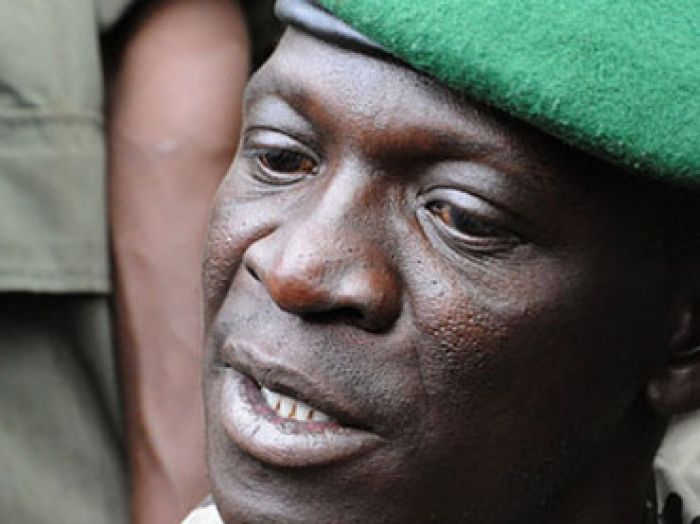
Mali Coup Led by US-Trained Captain

0

A US Africa Command official confirmed on Friday the leader of military coup d’état in Mali has visited the US on several occasions, receiving professional military education.

Captain Amadou HayaSanogo participated in the America’s International Military Education and Training program, sponsored by the US State Department, Public Affairs representative Patrick Barnes revealed to The Washington Post.

Foreign officers are handpicked for the program by US embassies in respective countries. The Malian army is very small, consisting of only 7,000 personnel.

With the given small number of officers in this army, it is no wonder that Sanogo had a good chance to get to the US.

On March 22, just a month before a presidential election in the country, Sanogo and soldiers loyal to him stormed the presidential palace in the capital Bamako and overthrew President AmadouToumaniToure.

The reason for the rebellion was stated as the existing leadership’s relaxed attitude towards Touareg tribes’ insurrection in this north-western African country. The coup claimed three lives, leaving about 40 wounded. Amadou HayaSanogo has made a statement saying he is not going to stay in power for long. He promised that as soon as the army manages to contain a Tuareg insurgency in the northern part of the country a new election will be called. The captain said he will be glad to continue to serve in the army after the election.

He also claimed the country’s deposed president is being held safely not far from the capital, and promised to bring Amadou ToumaniToure to court.

Rebel soldiers are currently busy looting throughout the city of Bamako. Sanogo denounced their actions, blaming the looting on “ill-intentioned individuals” trying to turn public opinion against the coup.

Despite condemning the coup, the US is not planning to reconsider its $140-million aid program to Mali in 2012.

Conversely, on Friday the African Union suspended Mali’s membership of that organization.

http://rt.com/news/mali-coup-american-trained-377/