THE 6 Division of the Nigerian Army has announced the arrest of 29 suspected oil thieves, the destruction of 24 illegal refineries, and the recovery of over 60,000 litres of stolen petroleum products in the Niger Delta region.
In a statement issued by the acting deputy director, 6 Division, Army Public Relations in Port Harcourt, Jonah Danjuma, on Monday, the Army said the success followed a tip-off about suspected illegal bunkering activities in some states of the Niger Delta.
“The operations were conducted across the Niger Delta from 3rd and 9th February, 2025. In clearance operations conducted by troops, along the Imo River, 6 illegal refining sites were deactivated, 113 drum pots and 83 drum receivers were destroyed. This was in addition to two boats demobilised with over 18,000 litres of stolen products recovered. Also, around Asa in Obigbo Local Government Area, troops uncovered a reservoir with over 1,000 litres of stolen products as well as 100 sacks filled with over 1,500 litres of stolen crude” it said.
The ICIR reported the Nigerian National Petroleum Company Limited (NNPCL) claiming it uncovered 179 incidents of crude oil theft in January 2025.
The NNPC said crude oil theft and vandalism had continued to hamper the state-owned energy firm’s production targets and destroyed its infrastructure, thereby leading to revenue loss for the country.
In the same vein, the executive secretary of the Nigeria Extractive Industries Transparency Initiative (NEITI), Orji Ogbonaya Orji, toldThe ICIR that Nigeria lost about 619 barrels valued at $46.16 billion (N16.25trillion) from oil theft in 2022.
Danjuma added that the troops also intercepted the movement of a suspected oil thief, who fled and abandoned his vehicle, a Sienna bus with Registration number Lagos APP 89 CV which was loaded with 15 sacks of illegally refined Automotive Gas Oil.
THE Central Bank of Nigeria has announced a new date to hold the 299th Monetary Policy Committee (MPC) meeting.
The 2-day bimonthly meeting was earlier scheduled for February 17 and 18.
In a statement on Monday, February 10, the apex bank said the meeting will now be held on February 18 and 19.
“This is to inform you that the 299th meeting of the Monetary Policy Committee (MPC) is scheduled to be held as indicated below: Day 1: Wednesday, February 19, 2025 Time: 10:00 am. Day 2: Thursday, February 20, 2025 Time: 8:00 am,” it said.
The venue: would be the MPC Meeting Room, 11th Floor, Wing C, CBN Headquarters, Abuja.
The official announcement came a day after The ICIRreported why the apex bank might shift the MPC meeting.
The organisation had observed a delay by the National Bureau of Statistics (NBS) in releasing a report on the rebasing of the Nigerian economy.
The rebasing is to give a new direction in calculating the monthly Consumer Price Index (CPI) used in measuring the country’s monthly inflation figure.
It is also to affect the measurement used in arriving at Nigeria’s quarterly gross domestic product (GDP) rate.
According to the statistics office, the rebasing is to capture changes in certain sectors of the economy and to reflect current consumption patterns while also reflecting the economic dynamics witnessed in the past few years.
It then set the end of January to unveil the report but had failed to deliver on its promise.
However, the delay by the NBS in releasing its report since the end of January has been anticipated to affect the earlier scheduled date for the MPC meeting.
It has also raised concerns about it affecting the MPC meeting as the inflation report is typically released every 15th day of every month.
Following the official rescheduling of the date, it then that the MPC meeting will commence three days after the January inflation rate is expected to be released.
The apex bank relies heavily on inflation trends to make key decisions.
With a new date confirmed, economic analysts are keenly watching to see if the committee will retain or increase the benchmark interest rate in response to prevailing economic conditions.
This is not the first time the CBN postponed its MPC meeting under the leadership of Olayemi Cardoso.
After he was newly appointed in September 2023, the CBN postponed a meeting of its MPC again as investors and analysts look forward to the move by Cardoso in tackling surging inflation.
The CBN held its first MPC meeting of 2024 on February 26 and 27, which was also the first under Cardoso’s leadership.
HUMAN rights activist and lawyer, Femi Falana, has filed a lawsuit at a Lagos High Court, seeking a declaration that a Facebook advertisement depicting him as suffering from Prostatitis constituted an invasion of his privacy.
Falana, a senior advocate, is demanding $5 million from Meta Platforms Inc., the parent company of Facebook, based in the United States, as damages from the publication.
Through his lawyer, Olumide Babalola, Falana accused Meta of publishing motion images and voice with the title, “AfriCare Health Center,” on its website, claiming that he suffered a disease known as ‘Prostatitis’.
He said the publication constituted an invasion of his privacy as enshrined in Section 37 of the Constitution of the Federal Republic of Nigeria, 1999.
He accused the company of wrongfully using his name, image, and voice to falsely attribute an illness to him, thereby violating his right to privacy as guaranteed by the Constitution and the Nigeria Data Protection Act 2023.
“In the video that carries my name and picture, I am reported to have said: ‘My name is Femi Falana, and I have been battling prostatitis for over 16 years. At the age of 50, I was diagnosed with this condition. Every day I faced pain, discomfort, and constant fatigue.
“I had trouble urinating, (and I have) lower back pain and other symptoms that make it difficult to live a full life. Despite consulting the best urologist in the country, no one could offer me effective treatment, I was prescribed numerous medications, physical therapy even surgery but the problem was that these methods only temporarily relieved the symptoms,” he explained.
Falana noted that he had never suffered from any condition known as ‘prostatitis’ at any point in his life. He further lamented that the respondent’s video had caused him significant harm and reputational damage.
“For the purpose of this suit, I do not find these stories libellous but since they are false and fabricated against me, I find them offensive, reckless, insensitive, disturbing, and an unjustifiable intrusion into my privacy by painting me in a false light” he said.
He explained further that the respondent’s page gave him publicity that painted him in a false light as the insinuations in the video were false.
“At the time of deposing to this affidavit, the video has been published to the entire world on the internet, and it has remained there for several weeks. For their failure to verify the page and video before publishing, I believe the respondent’s publicity of my name and image in a false light was done carelessly and recklessly to draw traffic to the respondent’s platform to boost its advertisement revenues” he added.
Recall that The ICIR reported that the Nigerian government imposed a $220 million fine on Meta, in 2024 over alleged violations of the local consumer, data protection and privacy laws.
Nigerian government investigations between May 2021 and December 2023 showed that Meta had taken control of Nigerian users’ data on its platforms without their permission.
FORMER Vice President Atiku Abubakar, accompanied by former Cross River State Governor Liyel Imoke and former Sokoto State Governor Aminu Tambuwal, are currently in a closed-door meeting with ex-President Olusegun Obasanjo at his hilltop residence in Abeokuta, Ogun State.
While the specifics of their discussion remain unknown as of press time, the timing has sparked speculation within political circles, with many suggesting that the meeting could be part of strategic efforts by opposition figures to consolidate forces and dislodge the President Bola Tinubu-led All Progressives Congress (APC) government in 2027 presidential election.
Abubakar, who served with Obasanjo between May 1999 and May 2007 has had a frosty relationship with his principal. The hostility climaxed in his opposition to alleged Obasanjo’s third-term bid.
The ICIR reports that Abubakar has been a central figure in Nigerian politics, particularly in his quest to occupy the nation’s highest office.
His political journey spans decades, beginning in 1993 when he contested in the Social Democratic Party (SDP) primaries but lost to the late Moshood Abiola.
Abubakar later became Nigeria’s Vice President from 1999 to 2007 under the Olusegun Obasanjo administration.
Since then, he has pursued the presidency in multiple elections, including running as a candidate for the Action Congress (AC) in 2007 and returning to the PDP to vie for the office in 2011, 2019, and most recently, in 2023, where he lost to Tinubu.
He had joined the All Progressives Congress in 2014 ahead of the 2015 presidential election to contest the presidential primaries but lost to Muhammadu Buhari.
A JUDGE of a Federal High Court in Abuja, Binta Nyako, has adjourned the trial of Nnamdi Kanu, leader of the Indigenous People of Biafra (IPOB) indefinitely.
Nyako adjourned the suit on Monday, February 10, following Kanu’s insistence that the judge could not preside over his case since she had recused herself.
Kanu challenged Nyako to take a definitive stance regarding his detention, specifically requesting that she either restore his bail conditions or order his release from custody.
Kanu stressed that Nyako lacked the jurisdiction to review or revisit his case, owing to her prior recusal from the case.
Nyako had initially recused herself from Kanu’s trial on September 24, 2024, in response to a request from the defendant, who had expressed a lack of confidence in her ability to preside over the case impartially.
Following her recusal, the case file was returned to the Chief Judge of the Federal High Court, Justice John Tsoho, for reassignment.
However, in a subsequent development, the case file was returned to Nyako, who has since been asked to continue the trial.
The ICIR reported that Nyako stepped down as the judge handling Kanu’s trial when Kanu declared he no longer trusted the judge and challenged her to step down.
Kanu is facing a seven-count charge bothering on terrorism, brought against him by the Nigerian Government.
The charges against him include treason, inciting public violence through radio broadcasts, and defamation of Nigerian authorities.
Kanu’s troubles began in 2015 when he was arrested by Nigeria’s secret police, the State Security Service (SSS), in Lagos State.
He was granted bail but later fled Nigeria after his home was raided by the Nigerian military in September 2017.
In June 2021, Kanu was rearrested from Kenya and extradited to Nigeria to face trial.
The trial, which began in October 2021, has been marked by protests and sit-at-home in the South-East by his supporters.
The appellate court set aside the judgment of an Abuja Federal High Court, which ordered him to answer seven out of the 15 counts of terrorism filed against him.
Nyako had, in a judgment in April 2022, struck out eight of the 15 counts in the charge preferred against the IPOB leader.
The judge, however, held that Kanu had some questions to answer in counts 1, 2, 3, 4, 5, 8, and 15 of the charge.
But Kanu, through his team of lawyers led by Mike Ozekhome, a senior advocate, filed an appeal to quash the remaining seven counts for lack of merit.
In its ruling in October 2022, the Court of Appeal agreed with Kanu’s counsel that the IPOB leader was illegally abducted and extra-ordinarily renditioned from Kenya to Nigeria, against international and local laws.
The Court of Appeal further held that Kanu’s alleged offences took place in Kenya and not in Nigeria. The court ordered Kanu’s release from custody.
But in a new twist, the Court of Appeal, on October 28, 2022, stayed the execution of its earlier order, acquitting Kanu of all charges and directing his release from custody.
The development forced the IPOB leader to file an appeal at the Supreme Court to challenge the decision.
SUPREME Court has dismissed the appeal filed by Rivers State Governor Siminalayi Fubara, challenging the state House of Assembly leadership, headed by Martin Amaewhule.
A five-man panel of the apex court led by Uwani Abba-Ajiwhile dismissing the appeal awarded a cost of two million naira against the Fubara, payable to the Rivers State House of Assembly as the first respondent and Martin Amaewhule as the second respondent.
The suit’s dismissal followed its withdrawal by Fubara’s counsel, Yusuf Ali.
The Rivers State Assembly has been engulfed in a prolonged crisis since 2023, heightened by the defection of over 25 lawmakers loyal to former Governor Nyesom Wike from the Peoples Democratic Party (PDP) to the All Progressives Congress (APC).
This development led to contention over the House leadership, with the faction led by Amaewhule being challenged by a rival group loyal to Fubara and headed by Victor Oko-Jumbo.
Consequently, Fubara has been conducting the business of the state in conjunction with the Oko-Jumbo faction while disregarding the Amaewhule group.
However, this arrangement was flawed in October when the Court of Appeal in Abuja upheld the judgment of the Federal High Court that nullified the N800 billion 2024 budget passed by the pro-Fubara lawmakers.
In a unanimous judgment on Thursday, October 10, the court dismissed the appeal filed by the Rivers State governor, Fubara, for lacking in merit.
The court reprimanded the governor for acting in contravention of the Constitution.
In July 2024, the Court of Appeal affirmed Amaewhule and 24 other lawmakers as members of the Rivers State House of Assembly.
The court voided the state High Court order restraining the 25 lawmakers, known as the G-25, from parading themselves as Assembly members.
A member of the House, Oko-Jumbo, had approached the court to seek an interim injunction against Amaewhule and 24 others from further conducting legislative duties, having left the party on which platform they were elected for another party.
Oko-Jumbo also prayed the courtto declare their seats vacant.
The court granted the prayers and ordered that Amaewhule and his colleagues should stop parading themselves as lawmakers and not conduct legislative business.
Dissatisfied with the order, the 25 lawmakers challenged the jurisdiction of the High Court at the Appeal Court.
Fubara and his predecessor, Nyesom Wike, have been at loggerheads over who controls the PDP structure in the state, with President Bola Tinubu’s efforts to resolve the stalemate yielding no result.
THE Federal High Court in Lagos has affirmed the Federal Competition and Consumer Protection Commission’s (FCCPC) authority to regulate competition and consumer protection within Nigeria’s telecommunications sector, including MTN Nigeria.
The ruling, delivered on February 7, by one of the court justices, F.N. Ogazi, upheld the FCCPC’s mandate to oversee fair practices across all industries, as enshrined in the Federal Competition and Consumer Protection Act (FCCPA) of 2018.
The case was initiated by a shareholder of MTN Nigeria and legal practitioner, Emeka Nnubia, who sought to prevent the FCCPC from investigating the telecommunications giant.
In the suit, Nnubia contended that such an inquiry could breach data protection laws and argued that regulatory oversight of MTN should fall exclusively under the Nigerian Communications Commission (NCC).
Reacting, the FCCPC stated that the court’s judgment clarified the interplay between the Nigerian Communications Act (NCA) of 2003 and the FCCPA 2018.
It emphasised that while the NCA granted the NCC jurisdiction over competition matters within telecommunications, the FCCPA established the FCCPC as the primary authority on competition and consumer protection across all sectors.
The commission said the court ruled that the NCC and the FCCPC shared concurrent jurisdiction in regulating the telecommunications industry.
“It held that the FCCPA, being the later legislation, supersedes conflicting provisions of the NCA 2003 to the extent that they seek to exclude FCCPC’s oversight in the telecommunications industry. The court’s decision affirms that the NCC does not have exclusive competition regulation authority in telecommunications. Instead, both regulators now share concurrent jurisdiction, ensuring a coordinated approach to fair competition and consumer welfare in the telecom industry.
“Section 105 of the FCCPA 2018 provides for collaboration between FCCPC and sector regulators, including the NCC. This approach aligns with global best practices, where consumer protection regulators collaborate with industry-specific regulators. The ruling reaffirms that FCCPC’s jurisdiction remains paramount in competition and consumer protection matters, while also recognising the role of the NCC in regulating telecommunications operations.
“Furthermore, the court held that entering into a memorandum of understanding (MoU) with sector regulators was not a condition precedent for FCCPC’s enforcement of its statutory functions. Instead, it is the obligation of sector regulators to engage with FCCPC to define working arrangements, not the other way round,” the statement read.
The statement further noted that the court validated the FCCPC’s actions in issuing a summons to MTN Nigeria as part of its investigation, affirming that the commission acted within its legal powers.
It also dismissed concerns regarding potential violations of data protection laws, noting that the FCCPC’s requests did not involve personal data and were justified in the public interest.
“On the issue of cost, the court acknowledged that the case raised important questions regarding the evolving landscape of competition and consumer protection law in Nigeria. While the court recognised that costs ordinarily follow events, it declined to award costs due to the public interest significance of the case,” the statement added.
DESPITE many motorists expressing concerns about poor awareness campaigns, the Nigerian Police Force across the Federation has announced the commencement and enforcement of the mandatory minimum of Third-Party vehicle insurance from February 1, 2025.
The enforcement complies with the directive of the Inspector General of Police (IGP), Kayode Egbetokun, as motorists without valid third-party insurance have been advised to comply or face sanctions.
The ICIR reports that the Nigerian Police have been licenced since last November and now have the Nigerian Police Force Insurance Company.
However, informed analysts told The ICIR that those whose vehicles are insured through the comprehensive insurance policy have nothing to fret about on the police third-party insurance coverage enforcement exercise.
“Those under comprehensive insurance policy are not affected by this police enforcement. Comprehensive has in it both the third-party-vehicle insurance coverage and the total insurance package for an insurer’s car, hence there’s no need for the police to disturb such person during enforcement,” an insurance sector governance expert, Modestus Anaesoronye told The ICIR.
Those under comprehensive insurance policy are not affected by this police enforcement. Comprehensive has in it both the third-party-vehicle insurance coverage and the total insurance package for an insurer’s car, hence there’s no need for the police to disturb such person during enforcement
“The person you hit his car if you have comprehensive is also completely covered. Third-Party is N15,000 officially, except you want to get a third-party extension or plus which enables you to take care of a little portion of the car in case of an accident to the tune of about N750,000. The comprehensive is a total package- mostly 5 per cent of the total cost of the car and payable annually. It expires annually. Because of the high cost of comprehensive insurance, most people opt for third-party vehicle insurance,” Anaesoronye stated.
The ICIR reports that the Police got a licence for the Nigeria Police Force (NPF) insurance package last November to enable them play huge part in the insurance market.
Commenting further, the President of the Association of Senior Staff of Banks, Insurance, and Financial Institutions (ASSBIFI), Olusoji Oluwole, said the Police need to drive an awareness campaign first with the Professional Insurance Association before embarking on its enforcement.
“The awareness campaign is low. There should be a month of enforcement in Motor Parks and other strategic spots before the enforcement. People don’t understand the value of insurance, hence the poor enrollment figures we have currently. Most people who take insurance take it as a result of obligations and not wanting to run foul of the law. Insurance is basically to protect oneself in the event of unforeseen indemnities and challenges,” Oluwole stated.
What is Comprehensive Insurance?
Investopedia describes the Comprehensive insurance as a type of automobile insurance that covers damage to your car from causes other than a collision. Comprehensive insurance will cover your vehicle if destroyed by a tornado, dented by a run-in with a deer, spray-painted by a vandal, damaged by a break-in, crushed by a collapsing garage, or many other causes.
While the policy has been established under the Insurance Act of 2003, many Nigerians, especially vehicle owners remain uncertain about the details and modalities of Police enforcement.
Already, the official spokespersons of the police across the federation have directed various commands to ensure compliance with the new directive.
What to know about the third-party insurance policy
As a means of spreading loss, insurance is an agreement where one party, the insurer, agrees, in return for a consideration called the premium, to pay the other party, the insured, a certain sum of money at the happening of a specified uncertain event or events.
Over the years, third-party insurance policies have developed. It is one under which the insurer (the second party) agrees to indemnify the insured (the first party) if he is liable for injuries done to another person (the third party) who is not a party to the contract.
Such insurance policies cover losses that result from acts or omissions of the insured that are deemed negligent and result in damage to the person, property, or interests of other persons.
The damage could be in respect of professional, product, or motor vehicle; motor vehicle third-party liability includes every other person except the contracting parties to the insurance contract.
The person could be a passenger in the insured vehicle, or another vehicle for that matter, or someone walking along a road in the vicinity of the accident.
The ICIRreported that Third-party motor vehicle insurance is a mandatory policy in Nigeria that provides financial protection against damages or injuries caused to third parties by the insured vehicle.
What does the law say?
The Motor Vehicles (Third Party Insurance) Act provides that certain guidelines for users of motor vehicles to be insured against third-party risks shall observed.
Section 3 (1) says, “Subject to the provisions of this Act no person shall use, or cause or permit any other person to use a motor vehicle unless there is in force about the user of that motor vehicle by such person or such other person as the case may be such a policy of insurance or such a security in respect of third party risks as complies with the provisions of this Act.
Subsection (2) provides that any person acting in contravention of this section shall be liable on conviction to a fine of four hundred nairas or to imprisonment for one year or to both such fine and im- imprisonment and a person convicted of an offense under this section shall be disqualified for holding or obtaining a driving licence.
Subsection (3) adds that a disqualification under the provision of subsection (2), unless the court for special reasons to be recorded otherwise orders, shall be for a minimum period of twelve months from the date of the conviction, and any person so disqualified for holding or obtaining a driving licence under the provisions of this section shall be deemed to be so disqualified under the provisions of the Road Traffic Laws.
NAICOM explains what insurance means for motorists
The National Insurance Commission (NAICOM) has expressed its support for the Nigeria Police Force’s announcement that effective February 1, 2025, the Third-Party Motor Insurance Policy for all vehicles on Nigerian roads will be enforced nationwide.
This move ensures strict compliance with Section 68 of the Insurance Act 2003.
NAICOM acknowledges that many Nigerians, particularly vehicle owners, may lack awareness of the law’s significance and the benefits of the Third-Party Motor Insurance Policy.
Third-party Motor Insurance is the minimum coverage compulsorily required by law for any vehicle on the roads, while Comprehensive Motor Insurance is optional and recommended.
The essence of every vehicle on the road having Third-Party Motor Insurance is to facilitate the safety of others and ensure the financial recovery/compensation for damages and/or injuries or loss of lives in the event of accidents covered by the policy.
Third-party Motor Insurance Policies can be procured from or through only licensed insurance entities authorised by the National Insurance Commission to transact Motor Insurance business in Nigeria.
The Third-Party Motor Insurance Policy is sold for a premium of N15,000 per year to private car owners, while the premiums for commercial vehicles vary depending on the type of vehicle.
The Third Party Motor Insurance Policy gives the policyholders a limit of N3m to repair or replace the property of the innocent third party damaged during an accident.
Also, it gives policyholders access to limited medical care for any third party injured as a result of the accident.
In addition, it provides financial compensation to the family of the deceased innocent third party in the event of death. Furthermore, the Third Party Motor Insurance Policy now includes third-party motor insurance cover for the vehicle if the vehicle was driven to any West African country based on the protocol of the ECOWAS Brown Card Scheme.
The Commission encourages vehicle owners in Nigeria to take full advantage of the enforcement announced by the Nigerian Police Force to ensure the safety and protection of lives, properties, and financial compensation for innocent third parties on our roads.
A Complaints Bureau is also in place at the National Insurance Commission for resolving all complaints that may emanate from members of the public who may be dissatisfied with an insurance company’s service or response to claims.
This move, NAICOM said is expected to enhance road safety, protect the rights of accident victims, and promote the overall growth of the insurance sector in Nigeria.
A FORMER former Vice-President, Atiku Abubakar, has drawn the attention of the Federal Government that claims that animals such as snakes, termites, and monkeys were responsible for the disappearance of public funds should not befall the $1.07 billion allocation to the health sector.
The Peoples Democratic Party (PDP) presidential candidate in the last general election reportedly made the call in a statement in Abuja.
He warned that the federal government should not allow the fund to be misused.
The claim “of animals such as snakes, termites, gorillas and monkeys swallowing public funds must never be the fate of the funds budgeted for the critical sector of health in the 2025 Budget,” Atiku said.
He asserted that the federal government already has a plan to expand the $1.07 billion in the primary health sector.
“This amount is in addition to the N2.48 trillion, which had earlier been proposed for the health sector in the initial draft of the budget.
“To this end, the Federal Government has to be deliberate about putting mechanisms in place for public audit and accountability in its US$1.07 billion budgetary appropriation in the health sector,” Atiku said.
He stressed that the mechanisms must be put in place to ensure the funds are used to improve healthcare services rather than vanish under suspicious circumstances.
He also called for a transparent and accountable framework to track how the allocated money would be spent for the benefit of the people.
The former vice president queried the federal government for not providing comprehensive information on how it plans to expand over one billion dollars in the primary health sector.
He noted that while healthcare, especially the primary sector deserves rapid investment to promote access to quality and affordable health services to Nigerians,.
He said it would be immoral of the government not to provide extensive details of how the money allotted for the purpose would be dispensed.
“This development gets even more troubling when the government equally announced that the $1.07 billion it is adding to the health sector at the sub-national level was mainly sourced through foreign loans and a fraction of it being provided through an international donor agency.
“In other words, Nigeria is expected to pay these loans back, and it is required that the Nigerian people know the details of these loans and that its expenditure must be conveyed in a policy envelope that will explain how it will be spent,” Atiku said.
He maintained that the failure of the government not to commit to a single physical infrastructure in expanding the budgetary provision smacks of fraud.
The ICIR can report that Atiku apprehensive referred back to February 2018 when a bizarre report trended of a snake swallowing N36 million from the vault of the Makurdi office of the Joint Admission and Matriculation Board (JAMB).
The disappearance of the cash caused a public outcry.
At the time, the spokesperson of JAMB, Fabian Benjamin, admitted a case of fraud and criminality in the Benue State office.
The registrar then put a stop to the sale of its scratch cards to curb corruption.
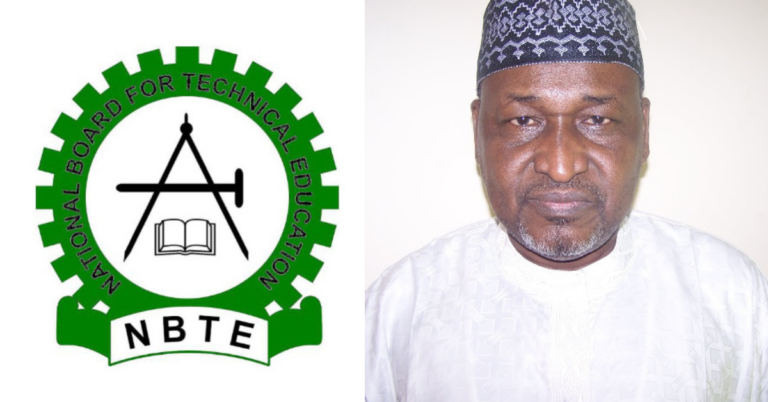
IN May 2024, the Executive Secretary of the National Board for Technical Education (NBTE), Idris Bugaje, a professor, was grilled by the Independent Corrupt Practices and other related offences Commission (ICPC), over allegations of unauthorised withdrawal of about N170 million from the Board’s Treasury Single Account (TSA) into personal accounts.
This followed a petition sent to the commission by a whistleblower alleging the creation of an illegal kickback fund, corruption and nepotism, among other accusations, against Bugaje.
Suspecting that the petition that led to the ICPC investigation was written by one of his staffers, Bugaje has allegedly subjected perceived whistleblowers to retributory actions, including demotions and isolation from work, with sources at the Board accusing him of altering seniority profiles to sideline perceived opponents and unjustly placing staff under suspension.
Sources privy to the matter also alleged the that ES established a parallel management structure, the NBTE EXCO, to override decision-making processes and isolate dissenting voices, while also being accused of flouting public service regulations and obstructing accountability measures.
Bugaje had in 2021, shortly after he was appointed as the Board Secretary, created the NBTE Consult account, which, according to him, was to generate more revenue for the parastatal. But the Consult accounts, according to sources, have been used for personal gains.
Since the creation of the NBTE consult, two directors have headed the unit in the past but in 2024, Bugaje was said to have removed one Bilkisu Daku, and appointed his in-law, Sani Nuhu KofarMata, as the managing director.
KofarMata hadn’t worked with the Board until his appointment by Bugaje in 2024.
N170 million paid into personal account
The ICIR was unable to get the petition to the ICPC detailing the allegations against Bugaje, but other documents obtained and reviewed revealed that over N170 million was withdrawn from the Board’s Treasury Single Account (TSA) domiciled with the Central Bank of the Nigeria (CBN) in January 2024, and funneled through private accounts before being transferred to the Board’s Consult account.
The Board’s TSA outflow report indicted nine staff members for receiving the money into their accounts, as the money was routed through their personal accounts, with each individual receiving varying sums, ranging from N10 million to N30 million in January 2024.
Among them, Musa Danjani Hadeija, received N30 million, Kassim Ahmed received N20 million, Hamsatu Suleiman received N10million, Muhammed Abdullahi received N15 million, Garba Umar Abdullahi received N20 million, and Hajara M. Kabir received another N20 million.
Document showing the outflow of money from the NBTE TSA to Musa Hadeija and Muhammad Abdullahi
Other substantial recipients are Sambo Ya Aribe with N15 million, Gift O. Gabriel with another N20 million, and Sambo Mohammed with N20 million.
Document showing the outflow of money from the NBTE TSA to Hajara Kabir
These individuals are all staff of the Finance and Accounts Department.
The funds withdrawn from the TSA account were designated for various payments, including advance payment in Respect of (IRO) Accreditation Visit to Delta State Polytechnic, Ogwa Shi-Uku, IRO QAA Training TETFund North west Region and Southwest Region, among others.
These transactions contravene Section 713 of Nigeria’s Public Sector Financial Regulation Act, which explicitly prohibits paying public money into private accounts. The Act stipulates that any officer who engages in such acts is presumed to have fraudulent intent.
Section 713 of the Act (under Chapter Seven) states: “Personal money shall in no circumstances be paid into a government bank account, nor shall any public money be paid into a private bank account.
It also added that, “An officer who pays public money into a private account is deemed to have done so with fraudulent intention.”
Furthermore, like other government agencies, guidelines from the Federal Ministry of Education mandate that all NBTE transactions must be conducted solely through the TSA, a directive that Bugaje ignored even after being warned by the ministry.
To allow him use non – NBTE TSA account to transact the agency’s business, Bugaje had written to the Ministry of Education to allow the Board to use the NBTE Consult account to receive accreditation funds from educational institutions it oversights, citing the mopping of the unused funds by the office of the Accountant General of the Federation.
In its reply to the request, the ministry in its letter dated February 23, 2024 and signed by the Permanent Secretary, Didi Esther Walson, emphasised that the National Board for Technical Education (NBTE) is a fully funded agency under its jurisdiction and, therefore, should not channel funds through a commercial bank.
Ministry of Education response to Bugaje’s claims
Contrary to Bugaje’s claim that the move was aimed at preventing the mopping up of funds, the ministry recommended in its response that the Board established an e-collection TSA account. This account, the ministry stressed, should be used for receiving and disbursing funds related to services rendered or by the NBTE.
One of the payment receipts of money paid into Consult account
Bugaje defied the ministry’s directive and still went ahead to instruct the institutions to make payment into the NBTE Consult account, which he controls and to which the federal government has no direct access.
Justifying his action, in a copy of the response to a petition by one Lawal Hafiz, a Director at the Board, dated October 3, 2024, and sent to the Education Ministry, Bugaje stated, “With the introduction of Digital Accreditation to replace physical mode early this year, in order to remove human interface and minimise corrupt practices, all outstanding visits some paid since 2022 (but funds mopped) had to be cleared. This led to the payment of cash advances to many staff to facilitate air tickets, honoraria, etc. of resource persons. This had been the practice in the past. This was what made some disgruntled staff to write a petition to ICPC and hence the invitation of some staff. The physical accreditations had been concluded successfully since.”
In a letter dated, September 11, 2024, the petitioner, had sought for the ministry’s intervention against what he described as ‘witch-hunting and victimisation’ on his person by Bugaje for his perceived involvement in exposing alleged wrongdoings in the Board, including the payment into individual accounts, alleged sale of luxury cars and buses under a swap arrangement, and operating an illegal kickback fund named Baytil Maal with the wife allegedly running the kitchen where he said meals are charged at almost 50 per cent for normal food vendors and illegal employment of individuals.
Beyond that, findings by The ICIR also showed that Bugaje directed institutions seeking accreditation to pay directly into the NBTE consult created by him.
Multimillion naira paid to NBTE account
Despite clear directives from the Federal Ministry of Education, in March 2024, Bugaje authorised the payment of public funds into the NBTE Consult account. Documents obtained by The ICIR, including receipts of payments from institutions, detailed how over N5 million was paid to the Consult account.
One of the receipts of money paid to into Consult account
One such instance came from a letter titled “Re: Application to Mount a New Programme/Payment Proof,” sent to the Board in April by Distinct Polytechnic, Ekosin, Osun State.
The letter showed how the institution paid the sum of N921,942.50 into the NBTE Consult account to cover the inspection visit for the ND Mass Communication programme at the National Diploma level, an inspection personally approved by the Executive Secretary.
The letter further confirmed that the payment, made in full accordance with the NBTE’s instructions, was deposited into an account labeled “NBTE Technical Services,” held at Zenith Bank, with the payment receipt duly attached.
Another receipt of money paid to into Consult account by Federal Polytechnic Offa.
Similarly, the Federal Polytechnic Offa transferred N3,984,836.85 into the same NBTE Technical Services account as part of the accreditation and resource inspection fee for several of its departments. The payment was made in April 2024.
This was a similar situation in the payment process of Prime Polytechnic Ltd is as it paid over N200,000 to the NBTE Technical Services account for a similar purpose.
Following footsteps of other MDAs
Recall that the former Minister of Humanitarian Affairs, Beta Edu, was suspended in January 2024 by President Bola Tinubu after public outrage erupted over revelations that she authorised the transfer of N585.2 million of public funds into a private account.
In a leaked letter, Edu instructed the Accountant-General of the Federation, Oluwatoyin Madein, to pay N585 million into a private account managed by United Bank of Africa (UBA) and owned by Oniyelu Bridget Mojisola.
While Edu, through her media aide, Rasheed Zubair, admitted the payment, she dismissed accusations of wrongdoing and labelled them as blackmail.
However, her claim contradicts Nigeria’s Public Sector Financial Regulation Act of 2009, which governs the disbursement of public funds.
This incident was not peculiar to Beta Edua as investigations by Premium Times, revealed widespread financial crime across numerous ministries, departments, and agencies (MDAs), with its analysis of data from Govspend, a platform monitoring government expenditures, indicated that over six years, MDAs funnelled at least N159.6 billion (N159,626,619,959) into private accounts.
In another report by the Foundation of Investigative Journalism, FIJ, more than N900 million of public funds were paid to different private accounts by the federal government, through ministries, departments and agencies (MDAs).
According to the report, several payments were made by various entities, including the Ministry of Interior, Ministry of Defence, Ministry of Foreign Affairs, National Productivity Centre, Office of the Accountant General, Nigerian Institute of Medical Research, the Secretary to the Government of the Federation, the Budget Office, and the Pension Transitional Arrangement Department.
Shortchanging institutions
Regarding the situation at the NBTE, documents obtained by The ICIR also revealed a troubling pattern where some institutions were shortchanged in the accreditation process.
For instance, some institutions paid as much as N3 million for the accreditation and inspection visits. However, during the actual accreditation, the number of staff paid to carry out the inspection was drastically reduced.
Despite these significant changes, the remaining funds amounting to millions of naira were not returned to the institutions or paid into the Treasury Single Account (TSA).
Documents showed that while Ramat Polytechnic, Maiduguri, one of the institutions seeking accreditation, paid a total of N28,354,320.00 for the accreditation of 49 programmes, the approved estimate for the inspection was revised to N23,217,300.00
The ICIR learnt thatthe revised amount, though lower, did not result in any refund of the excess funds that had already been paid. This remaining amount was also not returned to the institution or deposited back into the Treasury Single Account (TSA), and thus raises red flags about the proper handling of public funds.
A similar situation occurred in February 2024, when the NBTE revised estimates for 20 institutions that had already made payments totalling over N100 million for physical accreditation. The revised estimates were slashed to N50.5 million, a reduction of nearly 50 per cent.
Institutions such as Global Polytechnic, Benin, and Plateau State Polytechnic, Barkin Ladi, saw their payment significantly cut down, with no refund of the remaining funds. For instance, Global Polytechnic paid N2,411,383.81, but the revised estimate was reduced to N1,207,000.00, leaving a substantial difference unaccounted for.
This also resulted in a decrease in the amount of staff sent for accreditation.
Sources in the agency disclosed that the funds that institutions overpaid for accreditation have disappeared into non-existent projects. Instead of returning the excess funds or utilising them for the intended purpose, these amounts were reallocated to projects that failed to materialise or were allegedly embezzled after being transferred to the NBTE consult account.
ICPC silent despite petition
Despite the allegations of widespread corruption and the petition it looked into at the NBTE, the ICPC has been silent about the outcome of its investigation about six months after receiving formal petitions regarding these allegations.
The lack of progress in the ICPC investigation has also put many workers at the NBTE, who were suspected as the authors of the petition against Bugaje at his mercy, as he has continued to make them redundant.
Although The ICIR could not obtain a copy of the petition, it was gathered that in May 2024, the ICPC began investigating allegations of illegal withdrawals amounting to N200 million from the National Board for Technical Education’s (NBTE) Treasury Single Account (TSA) at the Central Bank of Nigeria.
The probe also encompasses irregularities in contract awards, controversial recruitment of individuals with questionable backgrounds, and the disposal of official vehicles under a swap arrangement.
On May 22, 2024, the ICPC invited ten NBTE staff members for questioning. Among them were nine individuals who had received public funds from the TSA account into their personal accounts. According to the anti graft agency’s invitation letters, the staff members were expected to appear before it on May 27, 28, and 29, 2024.
However, while they, along with the ES and other management staff, were questioned and statements taken at the Kaduna offices of the ICPC, there have been no updates regarding the investigation. The ICIR contacted the commission’s spokesperson, Demola Bakare, on Friday, November 28, to find out the outcome of the investigation. Although he promised to provide an update a week later, he has yet to do so as of press time. The ICIR followed up with several phone calls and messages, but no updates on the investigation have been released.
This, The ICIR learnt has led to a belief in the NBTE that the ES has suppressed the investigation. One NBTE staffer alleged s/he was sure that the ICPC boss in the state had suppressed the investigation as he has maintained a chubby relationship with Bugaje since the investigation commenced.
There is however no evidence of this. The ICPC spokesperson also dismissed the allegations of compromise, noting that the officers in charge have submitted their findings.
“Nothing can be farther from the truth, I am aware that they have officially submitted the investigation report but the details have not been revealed to me yet,” Bakare said.
Witch hunting supposed whistleblower
Meanwhile, as the investigation into the NBTE corruption scandal stalls, insiders who spoke to our reporter in Kaduna alleged that Bugaje has engaged in what they described as witch-hunting of those presumed to have blown the whistle on him.
Since the investigation commenced following the petition to the ICPC, about six directors in the Board have allegedly been subjected to unfair treatment, including the suspension of one director from the Human Resource Department and the transfer of others to non-functional units or outside the Board Headquarters in Kaduna.
For instance, Ngbede Ogeh, who served as the Director of Polytechnic Programmes, was reassigned as Director of Physical Planning, with his previous approval to retain the departmental headship revoked. Shuaibu Yusuf Ringim, a chemical engineer and Deputy Director in the Polytechnic Programmes Division was moved to Monotechnic Programmes, a department where his expertise is irrelevant, to make him redundant.
Lawal Adamu Bello, Deputy Director of Finance and Accounts, was also redeployed to Polytechnic Programmes with instructions to render him redundant, according to sources. Despite his rank qualifying him to lead the division, an Assistant Director heads it instead.
Bashir Jamilu, previously Deputy Director of Polytechnic Programmes, was reassigned to Academic Planning allegedly after he refused to be subservient to an Assistant Director heading his division and Yusuf Yakubu, Deputy Director of SERVICOM, was posted to the South East Zonal Office.
Similarly, Lawal Y. Hafiz, who was a Director at the Human Resources, was moved to a Student Affairs unit (one of the departments, sources said the ES created to make staff redundant), and was later suspended.
Meanwhile, the department was scrapped after the suspension of Hafiz.
Abba Danmowa, formerly the Director of Physical Planning, was transferred to the North East Zonal Office.
These actions seem to be an attempt to frustrate any opposition and deflect attention from the ongoing investigation into his actions, members of staff said.
One insider while speaking with The ICIR said that the directors’ reassignment to a “non-existent department” was a retaliatory move stemming from the leadership’s belief that they were involved in the petition.
Meanwhile, during the course of this investigation, The ICIR learnt that the Board lifted the suspension of Hafiz Lawal and transferred him to another state, while also meting out the same fate to other perceived whistleblowers in the Board.
When The ICIR reached out to Bugaje to seek his reactions to its findings and allegations against him, he defended his actions by sharing a copy of his response to a petition to the Education Ministry, framing them as part of broader institutional reforms.
The ICIR had earlier reported that the petitioner in his September 11, petition, called the attention of the Education Ministry on alleged victimisation and harassment of staff members while also detailing the allegations embroiled in by the Executive Secretary.
The petition alleges the creation of an NBTE Exco to replace the Management Committee, comprising a handful of loyal directors, to silence dissenting voices on the Board, of which Bugaje stated that the NBTE Act 1977 (as amended) does not recognise a ‘Management’ or any principal officer other than the Executive Secretary.
According to Bugaje, the allegations of retaliation are exaggerated and stem from resistance to necessary changes aimed at enhancing efficiency.
“Let me inform the HME that I had swapped Directors since I came into office to achieve efficiency and root out corrupt practices, which were endemic in the NBTE. So far 75 per cent of Directors in the NBTE have served in more than one Department.
“The NBTE Act 1977 as amended does not recognise ‘Management’ nor any Principal Officer other than the Executive Secretary. Indeed we had a management committee in the past, but I borrowed the practice in Kadpoly, where I was Rector, and established an Executive Committee’ made up of all key Directors. These structural issues are being addressed in the new Polytechnic Commission Act in the National assembly,” part of the letter wrote.







![[EXPLAINER] What to know about third-party vehicle insurance, police enforcement](https://www.icirnigeria.org/wp-content/uploads/2025/02/crash-test-1620591_1280-768x505.jpg "[EXPLAINER] What to know about third-party vehicle insurance, police enforcement")