NIGERIA recorded a surge in mpox cases between September 8 and October 6, 2024, with a total of 308 new suspected cases identified over the period.
Data from the Nigeria Centre for Disease Control (NCDC) shows that the country continues to battle with the viral outbreak, with 5,114 suspected cases and 1,180 confirmed cases reported nationwide since 2017, leading to 17 deaths.
This comes amid efforts by the national mpox multi-sectoral and multi-partner Emergency Operation Centre (EOC) to contain the outbreak.
Mpox is a viral illness caused by the monkeypox virus, with two distinct clades: Clade I and Clade II. The disease can be transmitted through close contact, such as sex, skin-to-skin contact, and talking or breathing close to another person.
While the exact reservoir of monkeypox is still unknown, the virus can spread from animal to human and from human to human with transmission occurring when a person comes in contact with the virus from an infected animal, human, or materials contaminated with the virus such as bedclothes.
The virus enters the body through broken skin (even if not visible), the respiratory tract, or the mucous membranes of the eyes, nose, or mouth.
Symptoms of the disease usually include an acute illness with fever >38.3°C, intense headache, lymphadenopathy, back pain, myalgia, and intense asthenia, followed by a progressively developing rash often beginning on the face and then spreading elsewhere on the body and soles of feet and palms of the hand.
During the five-week span from Epi week 36 to Epi week 40, suspected cases fluctuated, beginning with 72 new cases in the first week, dropping to 63, then rising slightly to 72 again, before decreasing to 54 and finally to 47 in the last week of reporting.
While the suspected cases showed variability, confirmed cases also followed a similar trend, with numbers ranging from a high of nine in week 36, six in week 37 to as low as three in week 38, before stabilising at six cases in weeks 39 and 40.
The outbreak has now spread to 25 states and the Federal Capital Territory (FCT), affecting 63 local government areas. Males remain the most affected group, accounting for approximately 70 per cent of the confirmed cases.
The NCDC stressed that the national mpox multi-sectoral and multi-partner Emergency Operation Centre was intensifying its coordination efforts to contain the virus, working closely with state health authorities to monitor and manage the situation.
However, despite ongoing efforts, the latest data shows an increase in suspected cases compared to the previously reported cases between January and September 1, 2024.
The ICIR reported that between the first and 35th epidemiological weeks of 2024, the country recorded 935 suspected cases, 55 of which were confirmed.
Between those periods, the disease spread across 21 states and the FCT, affecting 39 local government areas (LGAs), with no deaths recorded, or maintaining a 0.0 per cent case fatality rate (CFR).
According to the NCDC, children between ages zero to five are mostly affected by mpox in the country.
THE Nigerian Government has been urged to probe alleged irregularities and corrupt practices in the execution of 1,052 solar streetlight projects worth over N762 million in some communities in Borno State.
An investigative report by the International Center for Investigative Reporting (ICIR) titled “Contractors, politicians divert streetlights meant for Borno communities to personal use” indicted contractors that were awarded streetlight projects in the local communities of Bayo, Kwaya Kusar, and Shani in the state for failing to install over 400 streetlights.
The report also indicted the Federal Ministry of Housing and Urban Development for failing to supervise the project.
Participants made the call during an anti-corruption radio programme, ‘Public Conscience,’ produced by the Progressive Impact Organization for Community Development (PRIMORG), aired on Wednesday, October 16, in Abuja.
Speaking during the radio programme, an investigative reporter, Muhammad Ali, who authored the report, tasked leading anti-corruption agencies, the Economic and Financial Crimes Commission (EFCC) and the Independent Corrupt Practices and Other Related Offences Commission (ICPC) to look into the discrepancies in the project execution and violation of the Public Procurement Act, leading to missing streetlights.
Ali, while lamenting that politicians in connivance with contractors were taking advantage of gaps in public procurement to divert projects meant for communities for their personal use, urged that “the government must act fast to ensure the streetlight project is completed.”
Explaining how the contractors failed to implement the streetlight project properly, Ali said the project was worth N762.3 million and was awarded to contractors in 2021.
“Dunkulu Global Venture was awarded 277 streetlights but installed 230, meaning the company failed to account for the 47 uninstalled solar streetlights.
“The project file of Dunkulu Global Venture at the Federal Ministry of Housing and Urban Development lacked evidence of how the project was executed and did not meet the required documentation standards for payment processing.
“As for Facile Concept Service, it claimed to have fulfilled its part by bringing all 221 solar streetlights to Bayo and that they were installed within Briyel and other wards. However, it remains unclear how these streetlights were distributed and installed because, according to residents, some of them never worked,” Ali noted.
He added that RKK Inspire Service Limited allegedly failed to execute a streetlight project in Shani.
According to him, findings show that 277 solar streetlights were allegedly installed but only existed on paper.
Furthermore, records from the Open Treasury Portal indicated that RKK Inspire Service Limited received over N202 million for the project in February 2022.
He added that upon visiting the designated communities on July 1, 2024, no evidence suggested that the contractor had begun work on the site.
For his part, BudgIT’s state officer for Tracka, Garba Abdullahi, described the reported corruption in implementing streetlight projects in the communities as unfortunate while noting that the development reflected the country’s existing flawed public procurement system.
Abdullahi also called on the EFCC and ICPC to immediately beam their searchlight on the report while insisting that government agencies must ensure strict adherence to the Public Procurement Act by contractors.
He lauded PRIMORG and The ICIR for amplifying the report, urging citizens to support anti-corruption agencies with information to track and recover public projects mishandled by contractors.
“The ICPC and EFCC should put more effort into tackling these issues. The ICPC is doing a great job with that, but they cannot do it alone. They need citizens to help them report such cases.
“Whenever we discover issues like these, as BudgIT, we write to the ministry, mostly to ICPC and to the EFCC ministry, and inform the citizens. We tell the citizens so that they can confront their representatives with their votes.
“I encourage The ICIR to write to these agencies and the public. If they do, there will be a solution to that,” Abdullahi stated.
PRIMORG uses ‘Public Conscience’, a syndicated weekly anti-corruption radio show, to raise awareness of corruption and integrity issues in Nigeria among the public and government.
IN the heart of West Africa, a long stretch of road connecting Lagos, Cotonou, Lome, and Accra conceals a dark secret —a corridor plagued by human rights violations, extortion, and crimes of impunity committed by those entrusted with law enforcement. GuardPost Nigeria in collaboration with the Norbert Zongo Cell for Investigative Journalism in West Africa (CENOZO), and other partners embarked on a relentless pursuit of truth, seeking to expose the rot within the very institutions meant to protect the innocent. Can shedding light on these crimes catalyse the reforms urgently needed to dismantle the barriers hindering sub-regional trade and integration?
In this multi-part series, we unravel systemic corruption, human rights abuses, and the collective toll on the people and economy of West Africa. Brace yourself for an eye-opening journey through the heart of West Africa’s international road corridor where law enforcement officials openly and shamelessly steal from the people.
A Ghanaian businessman, Kwabena Danquah, faced a harrowing experience on the West African corridor when his bank account issues forced him to travel from Lagos back to Accra. Danquah contacted his travel agent and asked to be booked on the next available flight back to Accra. The agent was unable to secure him a seat.
To wrap up his transaction in Lagos, he needed to have the lien on his account removed as soon as possible. Time was ticking away. Helpless and overwhelmed, he decided to take one of the bus services that ran between Lagos and Accra. That was the only option left.
Getting a bus was simple. All he had to do was download the app of one of the transport companies that serviced the route and book a seat online. The next morning, Danquah arrived at the bus station at 5 a.m., checked in without a hitch, and the bus pulled out at 6 a.m.
“I was lucky to take the front seat which allowed me a lot of leg space and the advantage of seeing everything along the way. With an air-conditioned bus which was almost brand new, I expected a very smooth ride and based on what the driver told us, we would hit Accra before 4.pm,” Danquah recounted.
As the vehicle got on the way, trouble started when they got to a checkpoint mounted by Nigeria’s anti-narcotic agency, National Drug Law Enforcement Agency (NDLEA), just a few kilometres to Seme. An elderly anti-narcotic operative approached and requested the vehicle’s manifest from the driver.
“After collecting the manifest, the officer asked all of us (passengers) to come down and identify our luggage,” Danquah narrated. “I told him I had no luggage, and he smiled wickedly, asking why I would travel without one. I thought he was joking and joined the others to board the vehicle after the check. The driver was about to pull out when the elderly officer ordered me to come down.”
“How can you travel without luggage from Nigeria to Ghana? Go and sit down there,” the agent commanded the young Ghanaian.
That was how the NDLEA operatives detained Danquah in their Gbaji shade for over three hours. They did not accuse him of any drug-related crime; the elderly officer refused to let him go simply because he had no luggage. The officer only yielded when the bus driver threatened to escalate the matter to higher authorities.
This incident reflects the daily experiences of travellers along the Lagos, Cotonou, Lome, and Accra corridor. The ordeal of the young Ghanaian inspired us to embark on perilous journeys to uncover the crimes committed by security agents from the four West African states.
Preparation / methodology
A few days after Danquah shared his sad experience with us and volunteered the driver’s contact information, preparations for the investigation got underway. GuardPost immediately contacted the driver and requested a meeting in Lagos or Accra, but he declined, saying he was not permitted to speak on operational matters.
“Please don’t call to ask me about it again. I don’t want to get into trouble with my office. Go to our office and meet the manager. We are not allowed to speak on operational matters. My job is to drive immediately my bus is loaded. I don’t control what happens on the road,” the driver had said.
Determined to work on the story, our correspondent visited the Lagos and Accra offices of some of the transport companies operating along the route to solicit cooperation. They all lamented bitterly about the huge amount they spent on the illegal tollgates, longer travel time caused by excessive checkpoints and the stress on their drivers and passengers. Unfortunately, neither the transport companies nor their drivers would openly speak about their ordeals due to the fear of a predictable backlash.
Everyone knows what is happening from Nigeria to Ghana. The governments of the four countries know what their security agents are doing. We cannot tell them what they already know.
“Everyone knows what is happening from Nigeria to Ghana. The governments of the four countries know what their security agents are doing. We cannot tell them what they already know,” an operations manager in one of the companies had told our correspondent.
Twelve trips, crazy experiences
Over 15 months starting from November 2022, our reporter undertook 12 challenging journeys to gather indisputable proof of crimes committed by those paid to fight crime. Our extensive preparation involved contacting transport companies, speaking to passengers and road agents, and immersing our correspondent in the experiences of travellers. By recording these experiences during both day and nighttime journeys, our reporter endured harsh treatment, revealing the toll on both passengers and transport companies.
While Google estimates the road distance between Accra and Lagos at 466 kilometres, with a driving time of nine hours and 39 minutes, the reality is far different. Our findings revealed that travellers face not only higher fares but also significant delays due to the over 175 checkpoints that slow down traffic and extend travel time from about 10 hours to 18 hours or more.
For those transporting goods or providing services, the higher fares and lost man-hours caused by the extended travel time are eventually passed on to customers, forcing them to pay more for what should cost much less.
A cocktail of checkpoints
As indicated earlier, this investigation was based on a total of 12 trips with six from Lagos to Accra and another six from Accra to Lagos. Our correspondent used the services of major transport companies to ensure personal safety and security.
Map showing the distance from Nigeria’s Badagry Town to Accra, Ghana
We identified approximately 175 checkpoints that strangle the economic lifeline between Nigeria, Benin Republic, Togo and Ghana.
The identified checkpoints started from Badagry in Lagos, Nigeria, to Prampram on the outskirts of Greater Accra, Ghana, and covered a total of kilometres.
Our reporter boarded both day and night busses. It is important to note that the 175 checkpoints indicated in the report do not include the Benin Republic’s police observation posts or Ghana’s roving police teams.
The total number of checkpoints from Nigeria’s border city of Badagry to Prampram, a town on the outskirts of Greater Accra, Ghana.Number of checkpoints from Nigeria’s Badagry town to the border with Benin Republic
Checkpoints in Nigeria
Starting from Gbaji in Badagry, Lagos State to Seme border post, which Google puts at approximately 18 kilometres or 30 minutes drive, our correspondent counted an average of 132 checkpoints, with 66 located on each side of the dual carriageway. This is by far the highest number of checkpoints along the 467-kilometre international road corridor linking the four countries.
Number of checkpoints from Nigeria’s Badagry town to the border with Benin Republic.The total number of checkpoints from Nigeria’s border city of Badagry to Prampram, a town on the outskirts of Greater Accra, Ghana.
Map showing the distance between Nigeria’s Badagry town and Seme Border Post with Benin Republic.
Checkpoints in Ghana
Ghana came in second place with 27 checkpoints that were counted from Prampram on the outskirts of Greater Accra to the Aflao border post.
Number of checkpoints in Ghana: The visualisation shows the number of checkpoints from Prampram Junction in Greater Accra to Aflao, Ghana’s border with Togo.Number of checkpoints in Ghana: The visualisation shows the number of checkpoints from Prampram Junction in Greater Accra to Aflao, Ghana’s border with Togo.
According to Google, the distance between Accra and Aflao border post is approximately 186 kilometres, with a driving time of three hours and 28 minutes.
Map showing the distance between The Circle, Accra to Aflao Border Post.
Checkpoints in Benin Republic
Benin Republic has about eight checkpoints created by three law enforcement agencies along a distance of approximately 163 kilometres or three hours and thirty minutes of driving time from its border with Nigeria to its border with Togo..
Number of checkpoints in Benin: The chart shows the number of checkpoints from Benin Republic’s border with Nigeria to its border with Togo.Number of checkpoints in Benin: The chart shows the number of checkpoints from Benin Republic’s border with Nigeria to its border with Togo.
Map showing the distance from Benin border with Nigeria to its border with Togo.
Republic of Togo
The Republic of Togo, which has the best-maintained highway along the route, has only four checkpoints, the least number of the four countries.
Number of checkpoints in Togo: This chart shows the number of checkpoints from Togo’s border with Benin Republic to its border with Ghana in Aflao.Number of checkpoints in Togo: This chart shows the number of checkpoints from Togo’s border with Benin Republic to its border with Ghana in Aflao.
According to Google, the distance from Togo’s border with Benin Republic and the Aflao border station in Ghana is approximately 53 kilometers and takes one hour and eight minutes to drive.
Map showing the distance from Togo’s border with Benin Republic to its border with Ghana.
This report was partly supported by the Norbert Zongo Cell for Investigative Journalism in West Africa (CENOZO) and the Journalism Retool House, a charity arm of GuardPost.ng
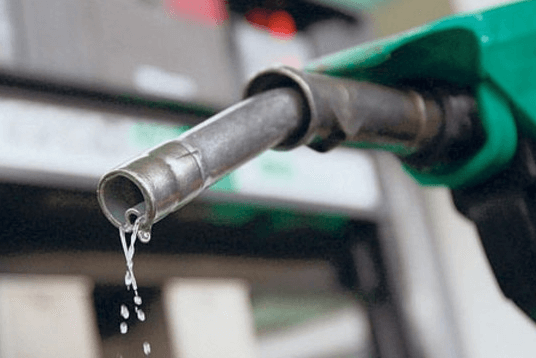
WHETHER Nigerians would be buying petrol at below N1,000 per litre or above will depend on some factors.
The factors will determine the impact of the deregulation of the downstream oil and gas sector and the Nigeria government-approved crude oil sale in naira deal to local refineries will have on the prices of petroleum products.
The Nigerian National Petroleum Company Limited (NNPCL), the state-owned oil company, started the crude for naira sale to Dangote Refinery and other local refineries on October 1.
On Friday, October 11, the federal government announced full deregulation of all petroleum products.
The deregulation of the sector is to give access to oil marketers to buy refined petroleum products directly from the Dangote refinery.
It is expected to end NNPCL’s monopoly in fixing prices of petroleum products, allowing for demand and supply mechanisms to determine the prices.
With the full deregulation of the market and commencement of crude oil sale in naira to local refineries, petroleum products is expected to sell at moderate prices. However, this is to be hinged on prevailing macroeconomic conditions.
Pump price from N195 to over N1,000 per litre
On May 29, 2023, President Bola Tinubu declared an end to subsidy payment on petrol also known as premium motor spirit (PMS), and since then the pump price has risen from about N195 to over N1,000.
The NNPC-L currently sells petrol at N1,030 pump price while other retail outlets owned by oil marketers sell as high as N1,200.
Buying petrol at the current pump price of over N1,000 per litre seems not to be going down well with many Nigerians, whose purchasing powers have been eroded by the Tinubu-led policies of fuel subsidy removal and exchange rate unification.
Crude oil is priced at international market rate
This is one of the factors that will determine the pump price of petrol at the retail outlets.
Even though the Nigerian government had initiated naira-for-crude sales to local refineries, the pump price of petrol will be estimated with the global market rate.
“What we are doing is paying the naira equivalent of the dollar component in the crude. So, nothing has changed,” the publicity secretary, Crude Oil Refiners Association of Nigeria (CORAN), Eche Idoko, told The ICIR.
The good thing, however, is that Nigerians are expected to enjoy the benefits of what is obtainable in other countries where the product is fully deregulated, he said.
“We may not have a fixed price, the price may keep moving as things change. When crude (price) is reduced, you will see the price dip, when demand increases like during the winter, you will see prices of petrol rise,” Idoko explained.
An energy expert, Oyeyemi Oke, whilst on Channels TV Morning Brief on Monday, October 14, corroborated that the pricing of petrol would be subject to the vagaries of the international market and also the strength of the Nigerian currency.
Based on the fact that crude oil is a commodity priced at the international market, the price would change in line with global conditions as witnessed in the previous week when it rose due to escalating tension between Israel and Iran, he said.
So, what this means for Nigerians is that if care is not taken, we may find ourselves buying petrol beyond N1,200, N1,500 in line with the increase in the price of crude oil in the international market,” Oke explained.
Naira to dollar value
This is another factor that will determine whether Nigerians will enjoy moderate price in the pump price of petrol.
With the naira arrangement for crude oil sale to local refineries, there should be a bit of ease on the naira which will cause the naira to appreciate, Idoko said, pointing out that it could cause petrol pump price to moderate where the naira appreciates against the dollar.
“The amount of naira you will need to exchange the dollar will reduce. Those are the expectations that we are having but I must point out that these are macroeconomic issues. It is not like a scientific situation where you will have a fixed answer,” he said.
He stressed that the price could go up or down considering other variables besides the purchase of crude in naira and prevailing naira-dollar value.
Idoko believes that this will bring self-sufficiency in domestic refining, and could positively impact the exchange rate market in the long run.
“For now, I think that no one can give you a fixed answer as to what will be the right price for petrol. But if we look at it based on what crude is doing now (price at the international market) then the price you are seeing right now is what it should be in the market actually,” the CORAN secretary added.
Analysing pricing template
On September 16, the NNPCL released a pricing template for petrol purchased from the Dangote refinery.
The templated Dangote refinery’s PMS gantry pricing was at N898.78. A breakdown of the estimate revealed an N8.99 Nigerian Midstream and Downstream Petroleum Regulatory Authority (NMDPRA) fee, 0.97 kobo inspection fee, and puts distribution cost (Lagos) at N15 and margin at N26.48.
This brings the total cost to N950.22 estimated pump price in Lagos, N1,019.22 in Borno, N999.22 in Kano, Kaduna, Sokoto and Abuja, N960.22 in Oyo and N980.22 in Imo and Rivers.
Commenting on the pricing template, the CORAN secretary said only the refinery and oil marketers could issue a pricing template. He explained that it might be different from one to the other based on their cost variables.
What was disclosed on September 16 was an NNPCL template, Idoko emphasised.
“They (NNPCL) would have done their P&L (profit and loss), looked at the cost variables and arrived at it. Now, it will be different if the Dangote refinery wants to do its own because its cost variables might be different.
“It will even be different, for instance, if my own company want to give you a price template because our staff strengths, earning power, taxes and overhead might not be the same,” he explained.
Also, since oil marketers will now be buying directly from the Dangote refinery, the NNPCL’s template may not hold sway as the market has been fully deregulated.
It is a free market now, we should understand that it is only when it is regulated that we can have a fixed template that we can apply, Idoko said.
He explained, “There are places you buy a biscuit for N200 and you to go another place you buy it for N180 or N150. If you are buying a bottle of coke at the airport, you could buy it for N1,000, meanwhile, if you are buying outside you buy it for N500.”
He stressed that different variables will affect the pump price to be at a particular range but at a fixed amount even within the same location.
Commenting on the pricing template, Kelvin Emmanuel who shares economic insights asserted that with Dangote refinery’s template, Nigeria will be saving N471 billion every month in payments that would have gone into subsidy.
Although the Dangote has not revealed its pricing template, Emmanuel said to get an idea of the ex-refinery price is to look at the Platt system.
“Today, you have (crude oil) anywhere around $680 or $700 per metric tonne. One metric tonne of PMS is 1,341 litres.
“You simply divide the $700 by 1,341, you get a raw ex-refinery price, you add the premium, anywhere between $40 and $80 divide it by 1341 litre. Add it to the plates and you get the ex-refinery price for PMS from Dangote refinery,” Emmanuel explained on an Arise TV Morning Show on Thursday, October 10.
He blamed the government for building in NMDPRA fees, distribution fees, inspection fees and other levies which make hike the ex-refinery price.
Ex-refinery price means the price at which refineries offer petroleum products to their customers at the refinery gate, based on the pricing mechanism, as approved by the government from time to time while ex-pump price is the price at which petroleum product is sold at a retail station dispensing pump.
On his part, Oke said, apart from the lifting cost, there are other costs like the NMDPRA level, gas infrastructure level and estimated cost of haulage that will determine the landing cost for various retail outlets.
He expressed concern that the Dangote Refinery has not disclosed the actual lifting cost of the product from its refinery.
Although Dangote debunked the NNPCL pricing template, the refinery has yet to reveal its lifting price.
The chief branding and communications officer at Dangote Group, Anthony Chiejina did not respond to enquiries on the pricing template, as it is expected that the refinery can speak to it since the market has been fully deregulated.
“With other marketers having direct purchases of petrol from the Dangote Refinery, I feel there will be a lot much transparency and also competition in terms of product availability which may ultimately affect price,” Oke added.
Rising pump price reality
The pump price of PMS has risen by over 400 per cent from N195 to over N1,000 since Tinubu’s administration, Oke noted, lamenting that the minimum wage has not increased by that percentage if one does back-of-the-envelope mathematics.
The Nigerian government recently raised the minimum wage from N30,000 to N70,000, representing a 133 per cent increment, The ICIR can report.
“My concern is the fact that some of these policies are being introduced in as much as you hear the government say there are palliatives, or other programmes to eliminate the impact, I don’t think that you and I have seen much change or effect of the so-called palliatives.
“That is where the problem is because it raises the question of sustainability, in terms of removing fuel subsidy 100 per cent,” Oke said.
The energy expert submitted that the current petrol pump price doesn’t align with the earning and purchasing powers of Nigerians considering the rippling effects of inflation.
Other elements in the value chain
Other factors that will determine the pump price of petrol will also be the cost of transporting petrol from the Dangote Refinery, situated in Lagos State, to within and across filling stations across the states.
This cost is not only in naira and kobo but also in the state of infrastructure, diesel or CNG cost for tankers conveying the product.
In moving petrol from Lagos, say to Adamawa, will add up to the unit cost of the PMS, Oke added.
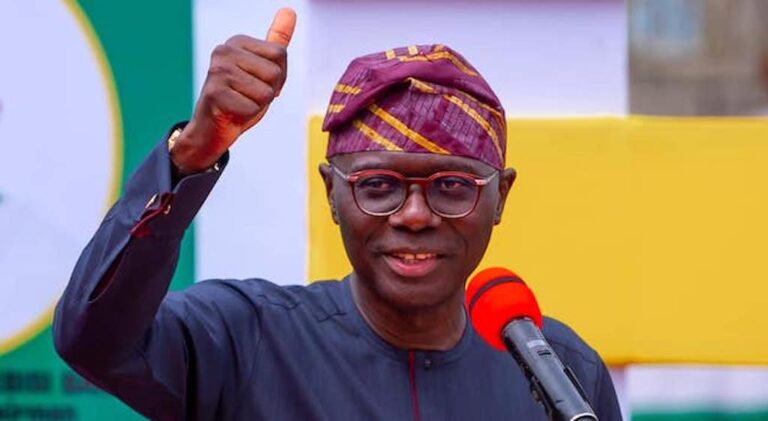
LAGOS State Governor Babajide Sanwo-Olu has approved N85,000 minimum wage for the state workers.
The new wage is N15,000 higher than the N70,000 approved by the Nigerian government.
Sanwo-Olu stated this when he appeared as a guest on Channels Television’s Politics Today on Wednesday, October 16.
According to the governor, the state is not paying N85,000 to outshine others but because it can pay.
“I am glad to let you know that the minimum wage for Lagos, which we conversed and discussed with our union, is N85,000 today.
“It is not a competition, so I am not going to say we are paying more than some other people; it is a function of affordability and it is a function of capacity. But we know too well that when people live in Lagos, Lagos has a premium in terms of even the cost of living; we are fully aware,” Sanwo-Olu stated.
The governor said the state had raised worker salaries earlier in the year, and he expressed his desire to pay the N100,000 minimum wage in January 2025.
“We actually increased salaries earlier in the year and deserving so for our staff, and we will continue to do that,” he added.
The governor said he aimed to ensure the state residents earn a living wage that reflects the government’s commitment to their well-being.
The ICIR reported that President Bola Tinubu signed the new N70,000 minimum wage bill into law in July, ending months of deliberations between government representatives, labour unions, and the private sector.
The President assented to the bill on Monday, July 29, at the State House in Abuja, barely a week after the National Assembly passed it.
Recall that the Nigerian Senate on Tuesday, July 23, passed the minimum wage amendment bill after the bill speedily scaled through the first, second, and third readings.
The Senate unanimously voted for the consideration and approval of the bill minutes after it was transmitted to it by President Bola Tinubu.
The bill sought to increase the national minimum wage and reduced the period for periodic review from five years to three years.
The upward review by the federal government came after a series of negotiations between the government’s representatives and organised labour.
Governors across the country’s 36 states had opposed the N60,000 minimum wage initially proposed by the Federal Government.
The governors rejected the proposal in a statement by the director ofmedia and public affairs of the Nigeria Governors’ Forum (NGF), Halimah Salihu Ahmed, on Friday, June 7.
Nigerian workers had embarked on a strike on Monday, June 3, and relaxed it the following day to compel the government to agree on an acceptable minimum wage.
The suspension of the industrial action was at the heels of the resolution reached between the Federal Government representatives and the labour after a six-hour meeting in the evening of Monday, June 3, in Abuja.
A MEDICAL student research team in the United Kingdom has discovered a man with three penises, the second case ever recorded of the rare birth defect, according to Daily Mail.
The team from the University of Birmingham Medical School made the discovery as they dissected the body of a 78-year-old man whose body was donated to science upon his death.
The team said the man might have gone his entire life without realising the rare condition though it could have caused him some issues or dysfunctions.
“These penile morphological abnormalities may not have been identified during his life. However, he may have lived with functional deficits due to the abnormal anatomy of the region, which may include urinary tract infections, erectile dysfunction or fertility issues,” said the team.
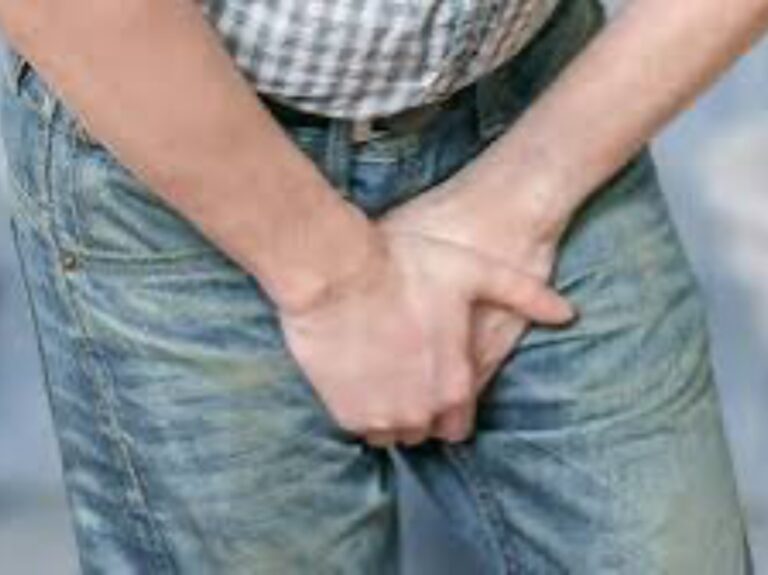
Upon closer examination, the researchers discovered that he had two tiny penises inside his scrotal sac, one of which was attached to the same urethra as the big penis.
“Without dissection, this anatomical variation would have remained undiscovered, suggesting the prevalence of polyphallia may be greater than expected.
“Despite normal appearance of external genitalia on examination, the dissection of a 78-year-old white male revealed a remarkable anatomical variation: two small supernumerary penises,” the researchers said.
This rare case, known as “triphallia” or triple penis has only been reported once with this one being the latest and second recovery, according to the Journal of Medical Case.
In 2020, the first case of triphallia was discovered in a newborn baby. It was the first time the internal anatomy of the birth defect was described in detail through post-mortem dissection.
The male genital development starts between four and seven weeks of pregnancy with researchers believing that the abnormal penis shaft formation may result from genetic disorders impacting androgen receptor expression.
Oftentimes, if the secondary penis does not fully develop, the urethra, which normally grows in it, may divert to the major penis leading to an increased risk of infection, sexual dysfunction, or problems with conception that might result from this excessive growth.
SENATOR representing the Federal Capital Territory (FCT), Ireti Kingibe, has called for increased representation for the FCT in the National Assembly.
Speaking on Wednesday, October 16, at a town hall meeting organised in collaboration with the National Institute for Legislative and Democratic Studies, Kingibe noted that there were several challenges with serving her constituency as the sole senator representing the nation’s capital.
The senator, according to a report by Punch, also expressed concerns about disparities in the distribution of resources and projects allocated to constituencies, particularly palliatives and development initiatives.
The lawmaker particularly mentioned the imbalance in the distribution of fertiliser across the states and the FCT.
Kingibe expressed hope that this disparity would be addressed, adding that the FCT minister, Nyesom Wike ‘is very amenable to supporting the FCT.’
She said: “Just like other senators, I received two trailers of fertiliser, which I distributed. I am also lobbying to see how I can get more for the FCT because I feel it is unfair that other states, which have two to three senators, received two trailers each. What this means is that some states each received six trailers of fertiliser, whereas the FCT, which has a single senator, is left with just two trailers.
“I am hoping that this disparity will be addressed somehow. The minister is very amenable to supporting the FCT, and I hope that something will happen soon.”
Kingibe stressed her determination to continue lobbying for more resources for her constituents, emphasising the need for collaborative efforts with key government functionaries.
“Other states have governors, but the president is the de facto president and governor of the FCT. However, because we don’t have direct access to him, a minister was appointed to administer the area on his behalf. I am meant to be the voice of the people, the interface between you and the executive administrator of this place.”
Kingibe also acknowledged the difficulties in reaching out to all constituents across the FCT but assured them that she was actively lobbying for what would benefit them at various levels of government.
She noted that lobbying is a time-consuming process, yet essential to secure the necessary support for her community development.
“I am lobbying ministers and others. Lobbying takes a lot of work and time. But I thank God I have been able to achieve some progress, and come 2025, I expect to do more,” she stated.
The ICIR reports that Kingibe, a member of the Labour Party (LP), defeated Philip Aduda of the Peoples Democratic Party (PDP) in the 2023 general election.
However, Kingibe and Wike have not had a cordial working relationship since they assumed their respective offices as the former had repeatedly accused the latter of sidelining her, despite being the senator representing the FCT.
Addressing the FCT residents in Abuja on Monday, June 1, at the flag-off ceremony of the construction of the Mabushi bus terminal, Wike said: “If we have done well, we have done well. If we haven’t done well, we haven’t done well. I am proud to say that in the short time that President Tinubu has appointed us, we have done well.”
In a veiled reference to Kingibe, Wike added: “You said there are no schools and hospitals. You, as a legislator, what have you done? How many bills have you sponsored for us to improve our education and health sectors?”
On various occasions, both politicians have lashed out at each other with Wike maintaining that Kingibe’s anger stemmed from his constant companionship with her predecessor, Aduda, and because she was not appointed as the Senate chairperson of the committee on FCT.
The ICIR reports that in September 2023, Kingibe said Wike lacked the powers to make threats of demolition of “illegal buildings” in the FCT.
Similarly, the lawmaker claimed earlier in January that Wike had failed to respond to her letters and messages amid rising insecurity in Abuja.
THE Federal Government of Nigeria has dismissed claims that it apologised to Libya over the recent incident involving the Super Eagles’ detention at the Al Abaq Airport.
The minister of foreign affairs, Yusuf Tuggar, in a statement on Wednesday, October 16,described the claim as ‘erroneous’ and a clear attempt to gain political leverage while sowing discontent among African football administrators and fans.
On Tuesday, October 15, Libya Observer, published a report claiming that Tuggar extended an official apology to the Libyan government over the incident involving the Libyan team.
It also noted that Tuggar expressed deep regret, and clarified that the incident that led to the delay of the Libyan team in Nigeria was neither intentional nor a deliberate act by the Nigerian government.
The ICIR reports that on Tuesday, October 8, after landing in Uyo, the Libyan team voiced its dissatisfaction, alleging mistreatment by the NFF.
It complained that the NFF treated its members badly by taking them through a long, tortuous journey by road from the Port Harcourt International Airport to Uvo in a vehicle without air conditioning.
The team was in Nigeria for the first leg of the Africa Nation’s Cup which the Nigerian Super Eagles won 1:0.
However, reacting to the report, the Nigerian government stated that the claim of apologising to the Libyan government was erroneous and was aimed to gain political leverage.
It also noted that the issue began when the Charge d’Affairs of the Government of National Unity was summoned to Nigeria’s Ministry of Foreign Affairs.
During the meeting, the Acting Charge d’Affairs, Imad Mohammed Matooq Aboud, was said to have insisted that the detention was beyond the jurisdiction of the Tripoli-based Government of National Unity.
He further placed the responsibility on the Eastern Government in Benghazi.
“The publication by the Libya Observer, which misrepresents the phone correspondence between Nigeria’s Minister of Foreign Affairs and the East-based Government’s Foreign Minister, is a clear case of misinformation.
“The fact of the matter was that the CDA of the Government of National Unity was summoned to the ministry to seek an immediate end to the unfortunate incident.
“However, not much diplomatic headway was made during the meeting with the acting charge of affairs, Imad Mohammed Matooq Aboud, as they insisted that it was not under the jurisdiction of Tripoli, which they represented, but that of the Eastern Government in Benghazi, the statement added.
According to the statement, following the diplomatic impasse, Nigeria’s minister of foreign affairs took immediate action by contacting Abdelhadi Lahweej, the foreign minister of the Eastern Government.
It stressed that the call resulted in securing the necessary permits for the Super Eagles’ aircraft to continue its journey and access aviation fuel.
The statement emphasised that the Nigerian government rejected a joint statement proposed by Lahweej, as it misrepresented the facts surrounding the incident.
The government, meanwhile, called on the Confederation of African Football (CAF) to urgently investigate the incident.
It also urged the CAF’s disciplinary board to examine the matter thoroughly and impose appropriate sanctions on those responsible, as stipulated by its statutes.
The ICIR earlier reported how Nigerian Super Eagles players and the Nigerian Football Federation (NFF) decried the mistreatment of the Nigerian contingent in Libya between Sunday, October 13 and Monday, October 14.
Stand-in captain of the Super Eagles, Williams Troost-Ekong, revealed on his Xpage Monday morning that the NFF officials and the players were stranded for over 15 hours after the team arrived at Al Abraq Airport Libya.
The team chartered ValueJet aircraft from Nigeria and expected to touch down at the Benghazi Airport in the host country but was diverted to Al Abraq Airport, where they would travel by road for three hours before reaching Benghazi where their reversed match would be played.
No official of the Libya Football Federation welcomed the players and their gaffers.
Images of the team circulated by the team’s captain Williams Troos-Ekong, showed players lying on airport benches, visibly fatigued, as they waited for the travel issues to be resolved.
The mistreatment led to the Super Eagles opting out of the return game.
The Super Eagles defeated the Libyan Mediterranean Knights 1:0 at the Uyo Stadium on Friday, October 11, and had hoped to be victorious again in the oil-rich North African nation.
HUMAN rights lawyer, Femi Falana, and his son, Folarin, fondly known as Falz, have issued a 12-hour ultimatum to crossdresser Idris Okuneye, also known as Bobrisky, demanding a retraction of what they describe as defamatory statements made in viral audio recordings against them.
The legal notice, dated October 14, and reported by Punch, called on Bobrisky to retract the comments made about the duo and issue a formal apology to avoid further legal action.
In a viral audio released by Martins Otse, popularly called VeryDarkMan, Bobrisky allegedly claimed that certain unnamed operatives from the Economic and Financial Crimes Commission (EFCC), accepted ₦15 million from him to dismiss money laundering charges.
In another audio recording, Bobrisky alleged that he asked Falz, a popular musician, to persuade his father to help secure a presidential pardon, supposedly costing N10 million.
Bobrisky also claimed to have requested N3 million from Falz for special treatment at Kirikiri Correctional Centre, while also allegedly claiming that he had paid N5 million upfront to seek a Federal Government pardon over charges by the EFCC.
Bobrisky has denied the allegations, noting that the audio was AI-generated.
However, a legal notice by Falana’s legal representatives, Olorunfemi Akinyemi and Taiwo E. Olawanle described Bobrisky’s claims in the audio recording as entirely slanderous.
“We have confirmed that you took advantage of your recent imprisonment to extort money from a group of artists and other members of the public.
“You will recall that on 4 May 2024, you called Mr. Folarin Falana, popularly known as Falz, and requested N3,000,000 (three million naira) to secure special treatment at Kirikiri Correctional Centre.
“Although Falz refused your request, you falsely claimed in a video that he told you his father, our client, had agreed to write a letter of pardon for you. You also stated that our client had spoken with you and that N10,000,000 (ten million naira) was required to bribe officials to process your pardon,” part of the letter read.
The letter stated that Bobrisky allegedly claimed to have paid N5 million to Falana for a Federal Government pardon and mentioned that the lawyer initially requested N10 million.
The letter further refuted any conversation of such, noting that Bobrisky’s allegations were aimed at extorting money from the public while tarnishing Falana’s professional reputation.
While dismissing the claim of a N5 million payment to Falana, the legal team stressed that Bobrisky had never spoken with Falana or instructed him to write a letter of pardon.
“Given that our client has secured pardons for over 300 Nigerians convicted by military and civilian courts in Nigeria, Libya, Thailand, and The Gambia on a pro bono basis, your defamatory statements have severely damaged his reputation, both locally and internationally.
“We, therefore, demand an immediate retraction of your defamatory and derogatory statements, along with a prominently aired or published apology on all platforms where your false statements have been shared.
“If we do not receive your formal retraction and apology within 12 (twelve) hours of your receipt of this letter, we will proceed with our client’s instructions to pursue legal remedies, including seeking monetary damages, for your malicious defamatory statements,” the letter added.
This latest development came two days after the Lagos State High Court ordered VeryDarkMan to remove defamatory comments and videos concerning Falana and Falz from his social media platforms.
While delivering his ruling in suit no: ID/8584/GCM/2024, Justice M.O. Dawodu, on Monday, October 14, ruled that the publications made by VeryDarkMan linking Bobrisky to Falz and his father were defamatory and harmful to their public image.
The 2024 National Freedom of Information ranking is based on the Ministries, Departments and Agencies (MDAs) compliance with the provisions of the Freedom of Information Act of 2011.
The ranking was done by a coalition of civil society organisations including the International Centre for Investigative Reporting (ICIR), Public-Private Development Centre (PPDC), Right to Know (R2K), Media Rights Agenda (MRA), Accountability Lab and BudgIT.
The coalition ranked 245 ministries, departments, and agencies (MDAs) and assigned points based on their level of responsiveness to FOI requests sent by the coalition members and proactive disclosure of relevant information to the public.
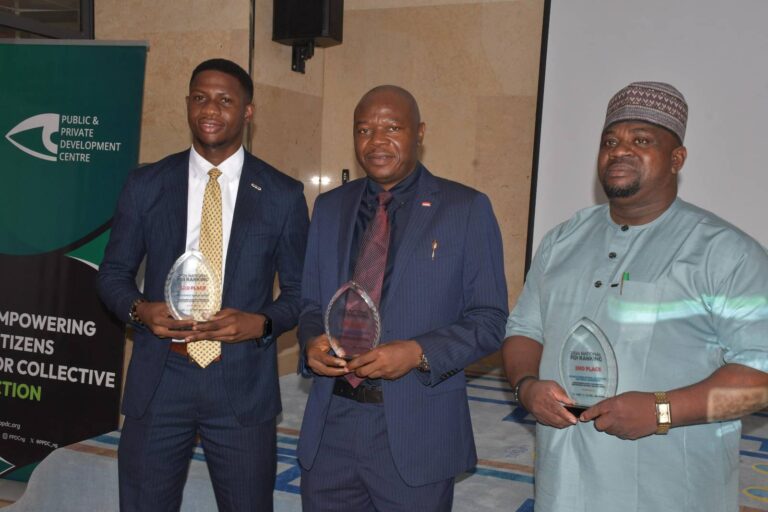
The Nigerian Investment Promotion Commission (NIPC), the Revenue Mobilisation, Allocation and Fiscal Commission (RMAFC), and the Development Bank of Nigeria have emerged as the top three winners of the 2024 ranking.
This trend analysis compares the 2023 and 2024 trends in the FOI ranking.
A total of 245 MDAs were ranked in 2024.
Level of Responsiveness
20 per cent of MDAs responded within seven days of the request
7.8 per cent of MDAs responded within eight-14 days of the request
72.2 per cent of MDAs responded after 14 days or did not respond at all
The number of MDAs that responded within 14 days increased by 6.25 per cent from 64 MDAs in the previous years to 68 MDAs. Also, the number of MDAs ranked increased by 2.5 per cent from 239 MDAs in the previous years to 245 MDAs in 2024.
2024 FOI ranking: Trend in analysis
1 of 6
2024 FOI ranking: Trend in analysis
2024 FOI ranking: Trend in analysis
2024 FOI ranking: Trend in analysis
2024 FOI ranking: Trend in analysis
2024 FOI ranking: Trend in analysis
2024 FOI ranking: Trend in analysis
2024 FOI ranking: Trend in analysis
2024 FOI ranking: Trend in analysis
2024 FOI ranking: Trend in analysis
2024 FOI ranking: Trend in analysis
2024 FOI ranking: Trend in analysis
2024 FOI ranking: Trend in analysis
Level of Proactiveness
Only 1.22 per cent of the 245 MDAs are fully proactive
6.94 per cent of the MDAs are partially proactive
91.84 per cent of the MDAs are non-proactive
Between 2023 and 2024, MDAs with full proactiveness increased by 50 per cent from two in the previous year to three in 2024. Also, MDAs with partial proactiveness decreased by 46.9 per cent from 32 in the previous year to 17 in 2024; while the non-proactiveness by MDAs increased by 10.3 per cent from 204 in the previous year to 225 in 2024.
Level of Disclosure
Only 9.39 per cent (23 MDAs) of the 245 MDAs fully disclosed the information requested
5.71 per cent (14 MDAs) of the MDAs partially disclosed the information requested
84.9 per cent (208 MDAs) of the MDAs failed to disclose the information requested.
Meanwhile, MDAs with full disclosure increased by 64.3 per cent from 14 in the previous year to 23 in 2024. The MDAs with partial disclosure decreased by 72.5 per cent from 51 MDAs in the previous year to 14 MDAs in 2024, while the non-disclosure by MDAs increased by 20.2 per cent from 173 MDAs in the previous year to 208 MDAs in 2024.
The ICIR reported how the Nigerian Investment Promotion Commission emerged as the winner in 2021 and the Bureau of Public Service Reform as the winner in 2022 as well as ICRC, NIPC, and NOA topped FOI ranking in 2023.


![Road to extortion: security forces prey on travellers on Lagos-Cotonou-Lome-Accra route [part 1]](https://www.icirnigeria.org/wp-content/uploads/2024/10/road-8587889_1280-768x517.jpg "Road to extortion: security forces prey on travellers on Lagos-Cotonou-Lome-Accra route [part 1]")