ADEDEJI Adeleke, the father of famous singer David Adeleke, popularly called Davido, has revealed that he generates about 15 per cent of the electricity consumed in Nigeria.
According to Punch Newspaper, Adeleke, a renowned industrialist, revealed this while speaking as a layperson at the West-Central Africa Division during the Seventh Day Adventist General Conference Annual Council on Tuesday, October 15, in Maryland, United States.
He explained how he faced challenges with Nigerian government officials while working on his $2 billion power firm and had to run to God for intervention.
“I am a businessman in Nigeria. I’m into the electricity business. I own a power plant, I generate about 15 per cent of the electricity needs for Nigeria. I have Chinese engineering companies that work for me. I’m building the biggest power plant in Nigeria that will be completed in January 2025. It is a 1,250-megawatt power plant.
“During the course of the design and getting the permit, we ran into difficult government officials. For environmental reasons, our permit was denied, and the particular government official that I held a meeting with told me to my face that my project would never see the light of the day.
“But while he was saying that, I was saying in my mind that this guy is talking as if he is God. I was saying in my mind that God should listen to him, because he is not God, whatever he is saying is null and void,” Adeleke stated.
He said he left disappointed and briefed his Chinese friend on the hurdles the company faced, adding that the project could stall despite huge funds already sunk into it.
Adeleke said his Chinese friend was worried because the Afrexim Bank of China was involved in the project, and ending the work abruptly would mean bankruptcy for him.
In September, Nigeria’s power generation reached a three-year high at 5,313 MW according to the Minister of Power, Adebayo Adelabu. This figure is much lower than the 20,000 megawatts of electricity the Federal Government is targeting for 2026.
Since Monday, October 14, the country’s national grid has collapsed, further threatening businesses struggling to survive the nation’s high inflation and floundering economy.
The ICIR reports that the challenges Nigerians faced over fluctuating power supply in 2023 remain as 2024 races to an end.
AT least 90 lives have been lost in a petrol tanker explosion that occurred in Majiya Town, Taura Local Government Area of Jigawa State, on Tuesday, October 15.
The Jigawa Police spokesperson, Shi’isu Adam, confirmed the toll to reporters on Wednesday, October 16.
He stated that 50 more victims had been admitted to hospitals for various degrees of injuries sustained in the incident.
Adam said the incident occurred about 11:30 p.m. on Tuesday after a tanker driver lost control near Khadija University and exploded.
“The driver left Kano and was heading to Nguru in Yobe when the accident happened.
“We are worried that despite police warnings for people to steer clear from scenes of accidents involving fuel tankers, they still engage in such acts.
“People gathered around the accident scene, that is the reason for the mass casualties,” Adam said.
According to the police spokesperson, the victims will be buried in a mass burial by Wednesday at 9 am.
He also said that the Ringim General Hospital provided medical care for the injured.
In April, five people were confirmed dead and several injured in an inferno after a tanker exploded on the East-West Road axis of Port-Harcourt, Rivers State, on Friday, April 27.
About 70 vehicles were reported to have been consumed in the tragedy.
The spokesperson for the State Police Command, Grace Iringe-Koko, said five people died in the incident.
Following the impact of the inferno, eyewitnesses said more people could have died from the accident, which happened after a tanker carrying petroleum products burst into flames.
The tanker was said to be travelling on a run-down road when it was struck by another large truck, causing it to burst into flames.
The fire quickly spread to many other vehicles on the route, trapping occupants and preventing many of them from escaping.
The East-West Road has been under construction for many years, increasing the risks of accidents for motorists who ply the route.
Rivers State Governor Siminalayi Fubara visited the site of the tanker explosion in Eleme Local Government Area on Saturday, April 27.
Fubara was accompanied to the scene of the incident by the Rivers Commissioner for Police, Olatunji Disu, and the Commissioner for Energy, Maximus Nwafor.
After seeing the carnage caused by the fire, Fubara directed security agencies to conduct a thorough assessment of the accidents to facilitate the provision of aid to victims’ families.
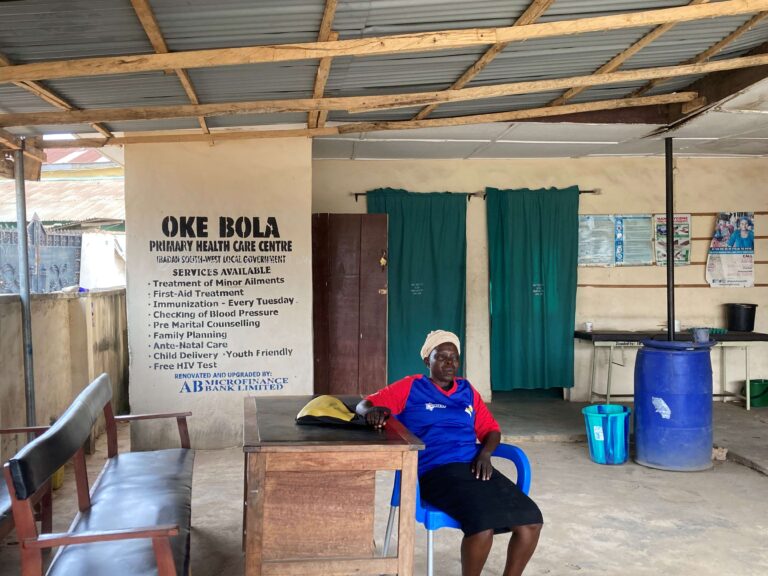
INVESTIGATION reveals a disturbing reality of the state of the primary healthcare system in Oyo state plagued with critical staffing shortages which is hampering healthcare delivery across the state. In a survey of six primary healthcare centres, both newly upgraded and long-established, it was discovered that most facilities were managed by a lone matron and a handful of nurses.
The crisis
On arriving at the Primary Healthcare Centres (PHCs) in Oyo State, their stark realities seem the same.
They all cut the pictures of chronic understaffing which leaves the vulnerable population of health consultations at significant risk with overstretched health workers struggling to meet the needs of their communities.
Some of them lament to the reporter that despite promises of improvement, the healthcare crisis in their facilities persist.
Upon visiting six PHCs across the state, the findings were remarkably shocking. Both urban and rural facilities were predominantly managed by a single matron acting as the Officer-in-Charge (OIC), supported by just one to three nurses seen as a nag undermining the very foundation of public health in that state.
At the Adifase PHC in Dogo Apata, Ibadan South-West Local Government Area (LGA) in particular, a facility serving over 710 patients monthly has only one heavily pregnant government-employed health worker. She looked overworked almost to the point of breakdown.
The reporter also saw that she had just one laboratory technician assisting her as their situation cuts the picture of a broader systemic issue facing the state’s healthcare system.
A PHC in Oyo state.
“This is how we have been running this place, we are just two staff and we are running three shifts, for the past three weeks I have not taken any off day, I am tired, as you can see on my face, and you can hear it in my voice, for the past three weeks I have not taken any off, presently we have 100 pregnant women who come for antenatal check every week, so today, I attended to 50, to see the remaining 50 tomorrow, that’s how we manage things here.
The scenario was forlorn at Akeke PHC Bashorun at Ibadan South West LGA when this reporter got there.
Aside it being a very old facility with no modern touch, only one matron, one desk officer, a few ad-hoc staff, and volunteers serve a community of over 3,000 people.
The reporter met the facility deserted when he got there as he was told that most residents would rather seek medical care elsewhere due to the number of staff available.
in Ibadan South West Local Government is another old facility where just one matron, one nurse, a few ad-hoc staff, and volunteers serve a community of over 4,500 people from different ethnic groups.
Even at the slightly renovated facility of Adifase PHC in Dogo Apata, Ibadan South-West LGA, the reporter met only one matron, one lab attendant, one ad-hoc staff member, and a few volunteers, struggling to cater for the health care needs of hundreds who had come to seek medical attention.
Saja Isale Ora PHC at Ogbomosho North LGA was not different. It has just one matron, ad-hoc staff, and a few volunteers to attend to the needs of those who had come for health care.
Saja Isale Ora PHC at Ogbomosho North LGA
By the time the reporter got to Ayete PHC in Ibarapa North LG, it was no longer a shock to see just one nurse employed through Basic Health Care Provision Fund (BHCPF)intervention and a few volunteers amid scores of health seekers.
The renovated Eleyele PHC, Babalegba in Ibadan North West LG facility had a slightly enhanced scenario with six government-employed workers, assisted by three nurses serving over 700 patients monthly, from 33 different communities.
On-site realities
Making efforts to document the crisis firsthand, the reporter encountered a series of distressing accounts.
A nursing mother at Eleyele PHC, Adeleke Abimbola, shared a touching narrative of her traumatic childbirth experience at Apete PHC, in Apete, attributing it to severe understaffing.
People waiting to access care at a PHC.
“I arrived at Apete PHC around 9.00pm on a Wednesday when my labour pangs began,” Abimbola recounted. “They assured me I would give birth by midnight, but as the hours passed, I received no special care. By the second day of labour pains, a nurse urged my husband to transfer me to a better-equipped hospital to avoid risking my life or that of our baby.”
Reflecting on her ordeal, Abimbola questioned the necessity of purchasing induction materials that were ultimately unused.
“Why did they sell me the injection and syringe if they knew they wouldn’t use them?” she lamented.
Commenting, the chairman of the Ward Development Committee at Akeke PHC, Kareem Nurudeen, in Bashorun, Akeke Olorounbo, Boripe layout, Ibadan painted the challenges faced in managing nighttime emergencies due to limited operating hours and staffing shortages.
“We had previously, and still urgently appeal to Governor Seyi Makinde to allocate more medical personnel to our facility, the last time we had government intervention was during the late Governor Alao Akala’s administration ” he emphasized.
“Local residents have lost confidence in our services; during emergencies, we often transport patients to distant hospitals to save lives.”
Nurudeen also expressed concerns about security, noting recent burglaries at the PHC. “In less than a year, thieves have broken in three times,” he stated. “The only item they haven’t stolen is the donated inverter freezer used for vaccine storage.”
Cases of burglary, plaguing PHCs.
Also lamenting, the OiC of Eleyele PHC, Esther Amao, acknowledged the level of resourcefulness required to manage the centre effectively with limited manpower.
“We operate with just six government-employed staff, including three nurse/midwives, a laboratory technician, and a records officer,” she explained. “Additional support comes from three Basic Health workers and volunteers.
“At present, our staffing cannot allow us to operate three shifts despite serving 33 communities, but we use the support from ad-hoc and volunteers to run these shifts,” Mrs. Esther continued. “And this poses challenges in meeting the government’s healthcare delivery goals.”
A case of systemic failure
Venturing deep into rural areas reveals a stark reality at Saja Isale Ora PHC in Ogbomosho and Ayete PHC in Ayete town, where severe staffing shortages are palpable. The sole government staff worker at Saja Isale Ora PHC, Adetoye Funmilayo, highlighted the strain on resources.
“I am the only government staff here; everyone else is support staff, with two hired through Basic Health Care Provision Fund and others as volunteers,” she explained.
“This facility serves a large population of over 6,000 residents, and an additional 10 staff members would significantly ease the immense pressure we face in patient care. It’s a constant challenge; I rarely leave the clinic.”
At Ayete PHC, the recent death of a government staff member who replaced a retired matron has exacerbated the critical understaffing crisis.
In Ibadan, the OiC of Adifase PHC, Abiiade Omobolanle, appeared visibly fatigued after attending to over 50 pregnant women during the weekly antenatal clinic.
“We operate with just two staff members across two shifts now, down from three shifts due to staff fatigue,” she revealed. “I’ve been working for over three weeks straight; the exhaustion is evident, but the work must continue.”
Highlighting further challenges, a doctor and a researcher Bakare Kehinde disclosed instances where volunteers in PHCs refer patients to private hospitals for a commission, undermining public healthcare efforts.
Despite these crises, resident in Ayete, Ologuneru, Eleyele, and other communities admitted that men and women visiting PHCs for various ailments remain largely unaware of the staffing issues.
This sentiment was echoed by patients waiting for their turn, who expressed surprise upon hearing about staffing shortages, assuming all personnel were full-time government employees.
Absence of resident medical doctors exacerbate situation
Further complicating matters, the absence of resident medical doctors at the visited PHCs was noted, with an ad-hoc staff member indicating that a single doctor services multiple centres weekly.
The extent of the manpower crisis becomes most apparent during immunisation and antenatal service days, contrasting with quieter days when few residents seek treatment for general ailments.
A patient at Ologuneru PHC, Oluwakemi Afolarin, voiced her concern over inadequate staffing. “It’s clear they don’t have enough staff here; you can see how stretched they are,” she remarked.
Moreover, a significant number of pregnant women who attend antenatal services at PHCs across the state ultimately opt to give birth at private hospitals, undermining efforts to reduce maternal and under-five mortality rates.
Reflecting on her decision, a nursing mother who requested anonymity shared her reservations about delivering at a PHC despite accessing antenatal services there.
“I chose a private hospital due to concerns about lapses and negative stories from past deliveries at the PHC,” she explained.
Addressing these challenges, a Ward Development Committee (WDC) member in Ibadan South West, Jokotola Olayemi Eniola, emphasized the urgency of addressing maternal health issues.
At a training session organised by the Justice and Peace Commission, Ibadan, Eniola urged the executive secretary of OYSHIA, Olushola Akande, to address the rising mortality rates among women delivering with unskilled traditional birth attendants in her community.
“I must commend the state governor for the regular intervention in healthcare delivery, particularly for involving us in the running of primary healthcare centres in our communities. However, we still need your help. The number of pregnant women who die after delivery in our community is becoming too high. How can you help us?” she asked the executive secretary, OYSHIA, during the training session.
Maternal mortality rate in Oyo state alarming at 262 Per 100,000
Oyo State’s maternal mortality rate is 262 deaths per 100,000 live births annually, according to the 2021 Multiple Indicator Cluster Survey (MICS) and National Immunisation Coverage Survey (MICS-6) released in August 2022.
While this figure is lower than the national average of 576 per 100,000 live births, it remains alarmingly high. The MICS-6, conducted by the National Bureau of Statistics (NBS) in collaboration with United Nations International Children’s Emergency Fund (UNICEF), identifies several contributing factors.
In terms of infant mortality, reports say Oyo State ranks third with 40 deaths per 1,000 live births. This places it behind Ogun State (68 deaths) and Ekiti State (67 deaths), but ahead of Lagos (15 deaths), Osun (17 deaths), and Ondo (31 deaths).
The under-5 mortality rate in Oyo State is also significant, with 57 deaths per 1,000 live births. This rate is higher than those in Lagos (15 deaths) and Osun (24 deaths) but lower than in Ondo (64 deaths), Ekiti (67 deaths), and Ogun (85 deaths).
The reporter found that these statistics highlight ongoing challenges in maternal and child health in the state, stressing the need for targeted interventions and improved healthcare infrastructure.
Gaps, progress of BHCP Fund
Established under Section 11 of the National Health Act, tBHCPF aims to improve access to primary health care across Nigeria.
In Oyo State, the initiative, led by agencies like the State Primary Health Care Board, initially intended to reach 45,000 individuals.
However, as of May 24, 2024, the executive secretary of the Oyo State Health Insurance Agency (OYSHIA),Olushola Akande, confirmed that only 213,000 residents have been registered under the health insurance scheme.
Akande attributes the low registration numbers to negative beliefs about insurance among the elites.
The deputy enrolment officer at OYSHIA, Akintayo Fashida, reported that since the programme’s inception in 2021, over 80,000 individuals have been documented under the BHCPF in the state.
The recent disbursement in April 2024 saw 342 health facilities receiving N300,750 each, totaling N102,856,500, indicating some financial support to bolster health services.
Despite these efforts, awareness and enrollment among vulnerable groups remain low.
Many pregnant women, nursing mothers, and economically disadvantaged individuals are unaware of their eligibility for free health services under the BHCPF.
A nursing mother at Ologuneru PHC, Oluwakemi Afolarin, expressed surprise upon learning about the programme, underscoring the need for improved outreach and education.
At Adifase PHC, Abiiade Omobolanle noted the challenge of maintaining continuity in coverage, with few pregnant women currently enrolled due to recent births exhausting their health package.
She highlighted efforts to engage OYSHIA for enrollment but cited delays in response.
“I don’t have any pregnant women here under the Basic Health intervention.
Children under five are limited, and we only have adults enrolled in the intervention.
I told OYSHIA to come and enroll the new set of pregnant women since the initial expectant mums have delivered.
They told me to tell them to bring their babies to the secretariat for enrolment, but how do I find them? It’s hard; I don’t know their houses,” she said.
These insights reveal both the potential and current limitations of the BHCPF in Oyo State, emphasizing the importance of proactive outreach and streamlined enrollment processes to maximise its impact on public health.
Staffing falls short of standards
The National Primary Health Care Development Agency (NPHCDA) outlines comprehensive staffing guidelines for primary health facilities, stipulating a minimum personnel requirement per political ward.
Each facility was ideally stipulated to have one medical officer, accompanied by a community health worker (CHO), four nurse/midwives, three community health extension workers (CHEWs), one pharmacy technician, one junior community health extension worker (JCHEW), one environmental officer, one medical record officer, one laboratory technician, and supporting staff including two health attendants, two security personnel, and one general maintenance worker.
However, a stark disparity exists between these standards and the actual staffing observed in the field.
To further investigate the Oyo State recruitment policy and PHC employment data, this reporter contacted the executive secretary, of Oyo State Primary Healthcare Board, Muideen Olatunji. The doctor emphasized that, according to set standards, Oyo state PHCs require at least 14,000 medical staff to function effectively and meet the healthcare needs of citizens.
However, he revealed that PHCs across Oyo State currently operate with less than 5,000 personnel, highlighting a significant shortfall and the root cause of many issues.
Despite the interventions of the BHCPF and other programmes aimed at improving healthcare access, the impact has been minimal due to severe staffing shortages.
Akande acknowledged the impact of these problems on service delivery and stressed the need for patient-friendly care.
“The shortage of workforce is a major issue globally, with many facilities struggling to fill gaps in staffing. It’s not a fallacy, but despite these challenges, optimal performance is still achievable.
“For example, if one had a private hospital, a cost-benefit analysis would be necessary to determine how many doctors to employ in order to maximise delivery.
“This approach is common abroad, where businesses understand the importance of service delivery. The same attitude should be applied to public facilities. The gaps in public facilities are well-known, and people are struggling to get the care they need.
“However, some hospitals have taken advantage of the health insurance program and used the funds to employ doctors. These facilities understand that success is dependent on service delivery. Instead of waiting for the government to solve the problem, why not try to find solutions using the resources that are already available?
“If I hire someone, I want to ensure that they provide maximum delivery of their services. This is being implemented in other countries. There are several gaps in our facilities that are not being utilised efficiently. In addition, health insurance has provided opportunities to employ staff in every facility.
“Currently, there are hospitals that have employed doctors who are not assigned to that facility, and some facilities are paying their own doctors. This means that there is money being paid to them on a monthly basis. These facilities have a business to service delivery,” the Akande explained.
Similarly, the State executive director of the Primary Health Care Board, Muideen Olatunji, confirmed the staffing shortage but assured ongoing efforts to address it, citing retirements as a contributing factor.
In a recent discourse with journalists, Olatunji confirmed that the state governor, Seyi Makinde has so far approved the recruitment of 30 per cent of the personnel needed for the state PHC to function properly.
“We have successfully advocated for a 30 per cent increase in recruitment to the state governor, and this has been approved. We are now focused on finalising the protocol to ensure we have the resources to provide quality service.
“In addition to recruiting more personnel, we have engaged contract workers, including 2,120 midwives and 264 chief agents, to supplement our current workforce,” he further enumerated.
“Plans to fill vacancies and engage community health promoters were mentioned in a recent announcement,” said the chairman of the Oyo State Hospital Management Board, in response to the recruitment of healthcare professionals, Akin Fagbemi.
Stakeholders decry manpower deficiency
To garner more insights on the development, the reporter also spoke with stakeholders who identified the lack of large-scale recruitment since 1992 as a root cause of current issues.
A retired nurse and midwife, Grace Ademidun Oluwatoye, suggests engaging retirees and adopting successful models from countries like Brazil to improve access and service delivery in PHCs.
A medical doctor, Dickson Adeolu Adetoye of the APIN Public Health Initiative highlighted the staffing shortage’s effects on user fees, service hours, and patient outcomes.
He said, “The issue of manpower deficit is not confined to PHCs alone but affects all levels of healthcare.
“This manpower deficit is a serious challenge, exacerbated by the Japa syndrome, which is impacting human resources for health. The increasing number of retiring health workers, without adequate replacement, is compounding the crisis. While it is a national problem, it significantly affects Oyo State, diminishing the quality of services and impacting the remaining staff.”
Jide Bangbose from the Justice Development and Peace Commission (JDPC) Ibadan urged the state government to prioritize healthcare delivery at PHCs, which are closest to the people, by addressing the longstanding vacancies in health personnel.
Similarly, Gbadamosi Adenike, the new OiC at Eleyele PHC, emphasized the need for a fair and merit-based selection process as the government prepares to activate the recruitment portal.
She said, “The governor’s recent approval to recruit 30 per cent of new personnel must emphasize transparency and fairness, ensuring that all candidates are evaluated based on their qualifications, experience, and dedication.”
Eleyele OiC, Gbadamosi, said there was the need to re-emphasize the importance of recognizing the contributions of dedicated Adhoc staff who have served at PHCs for many years.
“It is crucial that their contributions are acknowledged and considered during this recruitment process. We are committed to maintaining high standards to ensure that the most deserving candidates are selected, thereby strengthening our workforce and enhancing the quality of services provided to our citizens.
“We also hope the recruitment process will be closely monitored to uphold these principles, fostering a culture of excellence and integrity within our state’s workforce,” she argued.
This report was made possible with support from the International budget Partnership, IBP, and International Centre for Investigative Reporting, ICIR
ANAMBRA State Governor Chukwuma Soludo has declared that it is impossible to grant full autonomy to Nigeria’s 774 local government areas.
According to the governor, if granted, the autonomy could lead to “humongous chaos” and impact negatively on development.
Soludo said these on Tuesday, October 15, after signing the Anambra State Local Government Administration Law titled “Anambra Local Government Administration Law 2024,” at the Governor’s Lodge in Awka, the state capital.
The law which has been seen by many as an attempt to whittle down the power of local government chairmen in the state was passed by the State House of Assembly last Thursday, October 10.
Soludo emphasised the need for state supervision of local governments by pointing out that Section 7 of the Constitution gives state governments the authority to pass legislation for the management of local governments.
“The attendant challenges before the issue of local government autonomy are such that would certainly deepen the fate of the system and spell doom for the expected beneficiaries of the process if not well planned.”
Soludo explained that the new legislation aimed at ensuring consistency, transparency, and collaboration among the different tiers of government.
“The new laws by the Anambra House of Assembly are therefore consequential to give operational life to the Supreme Court judgment and not to undermine it. If the State House of Assembly abdicates this constitutional duty, the local government will then have no law on the use and management of its finance,” he stated.
He suggested that cooperation between the state and local governments was essential, cautioning that if adequate coordination was not maintained, many local governments might have financial crises and could need state bailouts.
Soludo added that the Federal Government had exclusive rights over resources, but the state had exclusive rights over the land and insisted that at the state level, each state spent a fortune to generate revenues.
According to him, no tier of government can function without the collaboration of others.
The governor dismissed as baseless the claim that state governors coerce local government chairmen into sending money to the state.
Soludo said governors had been frequently criticised for attempting to control local government funds with the mindset that the funds are being mismanaged.
He added that this accusation stemmed from societal scepticism, where public offices are viewed as opportunities for personal gain, fostering an environment of mistrust.
The ICIRreported in May that the Nigerian government filed a suit at the Supreme Court against the 36 state governors over the nation’s local governments’ autonomy, urging the apex court to issue an order prohibiting the governors from arbitrary and unlawful dissolution of democratically elected local government leaders.
The federal government sought the court to authorise the direct transfer of funds from the federation account to local governments in line with the provisions of the Constitution against the alleged unlawful joint accounts created by governors.
On Thursday, July 11, the Supreme Court granted the 774 Local Government Areas (LGAs) financial autonomy ruling that it was unconstitutional for the state government to hold on to or manage such allocations and directed the LGAs to commence managing their funds.
Besides, the court barred the governors from sacking constitutionally-elected local government chairmen.
The ICIR reports that governors have been blamed for the underdevelopment of local governments in Nigeria.
They have been accused of squirrelling the funds meant for that tier of government and appointing their loyalists to manage them and help them loot the local government finances.
NIGERIA’s headline inflation rose to 32.70 per cent in September from 32.15 per cent rate in August, following a hike in the price of petrol by the Nigerian National Petroleum Company Limited (NNPCL).
The National Bureau of Statistics (NBS) disclosed the latest inflation figure in its monthly Consumer Price Index report released on Tuesday, October 15.
The 0.55 per cent increase in inflation was propelled by increases in transportation costs and food prices.
Inflationary pressure has eased for the last two consecutive months July and August.
However, on Tuesday, September 3, the NNPCL adjusted its pump price to N855+.
The upward adjustment impacted the cost of transportation and other commodity prices negatively, with transport fares rising by over 50 per cent, The ICIRreported.
The NBS report shows that September headline inflation increased by 5.98 per cent on a year-on-year basis, higher than the 26.72 per cent recorded in the corresponding month of 2023.
The food inflation rate rose to 37.77 per cent from 37.52 per cent in August and much higher year-on-year from the 30.64 per cent recorded in September 2023.
The NBS linked the increase in food inflation to the rising prices of items such as beer (local and foreign) in the tobacco class, vegetable oil, groundnut oil, and palm oil in the oil and fats class, as well as beef, gizzard, dried beef in the meat class, and products like Lipton, Milo, and Bournvita.
Core inflation, which excludes volatile agricultural products and energy prices, tempered to 27.43 per cent from 27.58 per cent in August.
On a year-on-year basis, it increased by 5.59 per cent compared to 21.84 per cent in September 2023.
The largest price increases in core inflation were seen in items such as rent (actual and imputed rentals for housing), intercity bus journeys, taxi fares (under passenger transport by road), meals at local restaurants (accommodation services), and others.
According to NBS, headline inflation was highest in Bauchi at 44.83 per cent, Sokoto at 38.74 per cent and Jigawa at 38.39 per cent on a year-on-year basis.
Also, food inflation was highest in Sokoto at 50.47 per cent, Gombe at 44.09 per cent, and Yobe aat43.51 per cent on a year-on-year basis.
A FEDERAL High Court sitting in Benin has granted the request of Accountability Lab, a non-governmental organisation (NGO) focused on governance and development, to proceed with legal action against the Nigerian Upstream Petroleum Regulatory Commission (NUPRC) for failing to disclose critical information regarding host community funds.
A statement by the organisation on Tuesday, October 16, stated that the NGO had on July 17, sent a freedom of information request to the NUPRC, asking for details of companies that contributed three per cent of their operating expenses to the host community development trusts in Akwa Ibom, Delta, and Rivers states.
The organisation also inquired about possible fines imposed or license revocations for companies that did not meet the August 15, 2023 deadline for establishing the trusts, as mandated by the relevant law.
“The applicant on the 17th day of July 2024 sent an FOI request to the Nigerian Upstream Petroleum Regulatory Commission seeking information and records on the list of companies that have paid three per cent of their operating expenses to the host Community Development Trust incorporated in Akwa Ibom, Delta, and Rivers states.
“Also, the NGO is seeking to know how much the three per cent amounts to in each of the trusts. Also, the requester wants evidence of fines paid or notice of revocation of licenses issued to companies that failed to meet up with August 15, 2023, the deadline of establishing trust as provided by paragraph 9(2) of the enabling law,” part of the statement read.
The commission, however, allegedly failed to provide the information.
The organisation stressed that the NUPRC’s chief executive, Gbenga Komolafe, during a press briefing on September 9, 2024, disclosed that the commission had raised N60 billion in local currency and $100 million in foreign currency for these trusts.
However, he admitted that the funds remained unutilised due to ongoing disputes and legal challenges, casting doubt on the effectiveness of the trust’s implementation.
Presiding over the case, B.O Quadri, a justice, asked the organisation to file a judicial review of the case while fixing the hearing of the originating application on October 24 2024.
The ICIR reports that in 2011, former President Goodluck Jonathan signed the FOI Bill into law to make public records and information more freely available and accessible to Nigerians.
However, more than a decade after the law became operational, some MDAs still flout it by not responding to requests.
According to the Act, the public institution to which the application was made is expected to make available the information requested within seven days.
The law gives a person, group, association or organisation the right to access information from all government institutions and private firms utilising public funds.
Section 1, subsection (1) of the FOI Act, states that “Notwithstanding anything contained in any other Act, law or regulation, the right of any person to access or request information, whether or not contained in any written form, which is in the custody or possession of any public official, agency or institution howsoever described, is established.”
Also, Section 2, subsection 4, of the Act mandates public institutions to ensure that information requested by an individual or organisation is widely disseminated and made readily available to the public through various means, including print, electronic and online sources, and at the offices of such public institutions.
Should there be any reason an FOI request will not be granted, the Act stipulates that the affected institution must give written notice to the applicant on why the information will not be granted, referencing the section of the Act under which the denial is made.
THE Kwara State Police Command has dismissed three officers involved in the death of Qoyum Abdulyekeen Ishola, a 21-year-old student of Kwara State Polytechnic, Ilorin, during a fuel hike protest on September 4, 2024.
The officers – Abiodun Kayode, James Emmanuel, both inspectors, and Oni Philip, a sergeant – were found guilty of corrupt practices, leaving their beat, and unlawful exercise of authority.
The officers were dismissed after an internal disciplinary trial, with their dismissal effective from October 4, 2024, according to a statement by the command spokesperson, Adetoun Ejire-Adeyemi on Tuesday, October 15.
The command also promised that they would soon be arraigned in court.
The ICIR reports that this move followed a wave of public outrage and demands for justice from students and deceased family members.
The incident, which was said to have occurred during a student-led protest over the rising cost of fuel, resulted in the death of Qoyum, a National Diploma student of Electrical/Electronics Engineering.
His death sparked widespread anger, leading students to march to the police command headquarters, demanding justice for their slain colleague.
In a statement, the police command extended its condolences to the deceased’s family, affirming its commitment to transparent and a thorough investigation.
“The Kwara State Police Command, led by Commissioner of Police, CP Victor Olaiya psc(+), extends its deepest condolences to the family, friends, and colleagues of late Qoyum Abdulyekeen Ishola. We share in their grief and remain committed to providing them with support during this difficult period.
“We urge the public to always exercise patience and trust in the legal process, as we remain dedicated to maintaining law and order within Kwara State. The command appreciates the cooperation of all citizens and assures them that justice has been served,” she wrote.
Following Qoyum’s death, the Kwara State Polytechnic Students’ Union, alongside the National Association of Kwara State Students, engaged in extensive talks with police officials to demand justice.
The unions also vowed to collaborate with the institution’s management and other key stakeholders to ensure that the truth surrounding the student’s death is uncovered.
Also, while reacting to the incident on September 9, the rector of Kwara State Polytechnic, Abdul-Jimoh Muhammed, expressed his grief over the loss and assured the polytechnic community that the institution would leave no stone unturned in seeking accountability.
“The circumstances around the young and promising student’s death are still dicey as there were many unconfirmed stories and narratives around it.
“The school management is committed to ensuring that justice is served as appropriate based on the final reports of the matter,” the rector said.
THE New Nigeria Peoples Party (NNPP) in Kano State has suspended the secretary to the state government (SSG), Abdullahi Baffa Bichi, and the commissioner of transportation, Muhammad Diggol.
This was confirmed on Monday, October 14, by the party chairman in the state, Hashim Sulaiman Dungurawa.
According to Dungurawa, the suspension came after the party received multiple complaints from its ward and local government leadership.
Dungurawa declared that the two party chieftains were suspended due to their disloyalty, abuse of power, and inciting disorder inside the party.
“We are announcing today that we have suspended the SSG Abdullahi Baffa Bichi and the commissioner of transportation, Muhammad Diggol over abuse of power, office and disloyalty to the party.
“The party cannot tolerate actions that undermine its leadership and structure. After receiving formal complaint letters from their wards, and upon confirmation of the allegations by the local leadership, we have no other option but to take this decisive step,” Dungurawa stated.
He commended the party leaders from Bichi North wards and local government for documenting their concerns.
He also stated that the party faithful from Bichi North wards and local government appreciated the proactive approach and supported the decision to suspend the officials pending investigation.
The suspension of the two officials came after the announcement by the spokesperson to the governor, Sanusi Tofa, that the state Governor Abba Yusuf had settled the differences between Bichi and Hamza Sule Maifata, the chairmanship candidate of Bichi Local Government.
The NNPP wonthe Kano State governorship election in March 2023.
The current governor, Yusuf, won the election by defeating the candidate of the All Progressives Congress (APC), Nasir Gawuna, who was the deputy governor of the state, and 16 other contestants.
The Independent National Electoral Commission (IINEC) declared Yusuf the winner of the keenly contested poll after the collation of results from the 44 local government areas (LGAs) in the state.
According to the returning officer, Ahmad Dokko, Yusuf won the election with 1,019,602 votes, while Gawuna got 890,705 votes.
But despite the NNPP being in charge in the state, the party has been bedevilled by wranglings within the party
A NIGERIAN nurse, Rosemary Okaroafor, has been awarded the prestigious DAISY Award by the National Association of Nigerian Nurses in North America (NANNNA), in recognition of her exceptional commitment and selfless service in patient care.
Rebecca, a healthcare professional at General Hospital Karshi, Abuja, emerged as the winner from a shortlist of four outstanding candidates at the NANNNA-DAISY event held on Monday, October 14 in Abuja.
The three runners-up were also recognised for their contributions and received honorary pins during the event.
The DAISY Award is an internationally recognised honour for nurses who demonstrate exceptional compassion in patient care.
While providing background into the award, a member of the board of directors of NANNNA, Emilia Iwu, said Daisy was an acronym for diseases attacking the immune system.
According to her, the Daisy Award began in 1999 in honour of a patient, Patrick Bran, who died from an immune disease condition.
“As a result, the foundation decided to be honouring nurses who are doing compassionate care. So this award has been going on in the United States, some African countries, and many other countries, but this is the first time it is coming to Nigeria.
“It came about because the NANNNA has been doing great work in Nigeria, the United States and globally.
“And because of what we have been doing, Daisy approached NANNNA to come and partner with them so that we can recognise the good work our nurses are doing in Nigeria. We know that you’re working very hard and the situation is very frustrating. We know that your work environment is testing and sometimes you don’t have light, and no matter the conditions you still come back the next day,” she said.
She further explained that NANNNA was an umbrella association of Nigerian nurses abroad that brings together all chapters of Nigerian nurses in different states in North America.
Iwu said the association’s mission was to improve healthcare for all Nigerians, home or abroad.
“We are adopting, renovating and equipping primary healthcare centres and training their staff. So far, we have adopted 16 PHCs. We started with six, and this year, we are going to adopt an additional six,” Iwu said.
Also, speaking with The ICIR after the award presentation, the director of nursing services at the Federal Ministry of Health and Social Welfare, Franca Okafor, applauded NANNNA for its support and motivation for Nigerian nurses.
While lauding Rebecca for her unwavering commitment to patient care, she said her dedication to her work had not only earned her the admiration of her peers but also brought pride to the Nigerian nursing community.
She noted that the award would motivate many healthcare professionals to serve Nigeria.
Providing a patient’s account of Rosemary’s impact on healthcare delivery, she explained how a five-year-old boy was admitted with a complex medical diagnosis.
Being anxious and feeling overwhelmed by the diagnosis, coupled with her financial constraint, Rosemary sat with the boy’s mother, Zainab, and made her understand the treatment plan.
She addressed each concern, offering reassurance and emotional support. She went around the hospital, seeking help to ensure Zainab’s son received all the necessary treatment.
In her remark, Rosemary expressed gratitude to American and Nigerians nursing associations for deeming it fit to crown her the Daisy award winner.
“This award isn’t just about me; it’s about the countless nurses who work tirelessly behind the scenes, often without recognition. It’s about the nurse who stayed late to comfort a frightened patient, the nurse who advocated for a patient’s rights, and the nurse who simply listened with empathy.
“I remember why I became a nurse, to make a difference, one patient at a time. Today I am reminded that our work matters. We are the guidance of hope, compassion and care,” she stated.
On his part, the president of the National Association of Nigeria Nurses and Midwives, Jama Maden, also highlighted the importance of recognising the efforts of nurses like Rebecca, who often work tirelessly to ensure lives are saved.
NIGERIANS have again been plunged into a nationwide blackout following the collapse of the national grid system.
Many of the Distribution Companies (DisCos) have confirmed the nationwide blackout in their official X handle.
The national grid has collapsed at various times this year, checks by The ICIR indicate.
The current incident shows that the DisCos are currently receiving no power from the grid, leaving their feeders without electricity.
In its statement, the Abuja Electricity Distribution Company (AEDC) said the national grid collapsed at 6:58 pm.
According to AEDC, a system failure at the national grid affected the power supply from its franchise area.
“Please be informed that the power outage being experienced is due to a system failure from the national grid at 6:58 pm today, affecting the power supply to our franchise areas,” it stated.
The Enugu Electricity Distribution Company (EEDC), in the statement by its head of corporate communications, Emeka Ezeh, said the company was unable to provide power to its customers in Abia, Anambra, Ebonyi, Enugu, and Imo states.
“The Enugu Electricity Distribution Company PLC (EEDC) wishes to inform her esteemed customers of a general system collapse that occurred at 18:48 hours today, 14th October 2024,” Ezeh said.
The system collapse resulted in the loss of supply currently being experienced across the EEDC network.
“Consequently, due to this development, all our interface TCN stations are out of supply, and we are unable to provide services to our customers in Abia, Anambra, Ebonyi, Enugu, and Imo States.
“We are on standby awaiting detailed information of the collapse and restoration of supply from the National Control Centre (NCC), Osogbo,” Ezeh added.
Also, the Eko Electricity Distribution Company (EKEDC) confirmed the national grid collapse, hinting that the company was working with stakeholders to restore it.
“Kindly be informed there was a system collapse at 18:48hrs which has resulted in a loss of power supply across our network.
“We are currently working with our partners as we hope for speedy restoration of the grid. We will keep you updated as soon as the power supply is restored,” EKEDC stated.
The ICIR can recall that on August 5, various DisCos experienced feeders’ inactivity, resulting in widespread blackouts nationwide.
On July 6, April 15, March 28 and February 4, the country was plunged into a nationwide blackout following the national grid collapse.
The Nigerian Electricity Regulatory Commission (NERC), an independent regulatory body with authority for the regulation of the electric power industry in the country, has yet to make a statement about yesterday’s nationwide blackout at the time of filing this report.
However, the DisCos stated they are working with the relevant stakeholders to restore power as soon as the grid is stabilised.