INDUSTRY experts at this year’s International Rating Webinar shared divergent views on why Nigeria and other African countries take external loans to fund their developmental projects.
The webinar, ‘Navigating Economic Uncertainties: The Role of Credit Rating Agencies,’ was organised by DataPro Limited, a Nigerian rating agency.
It highlighted the roles credit rating agencies play in ensuring transparency, accountability and efficiency in countries’ financial sectors and the extent to which macroeconomic conditions influence rating opinion.
Speaking on reasons African leaders seek foreign loans, the group managing director of Metropol Ratings, Kenya, Sam Omukoko, said external loans would not favour import-dependent countries.
He opined that external borrowings make sense when a country’s proceeds from exports exceed its imports, otherwise, the country would face foreign exchange risk.
“That usually provides a very convenient mechanism and because external borrowing is usually at a lower interest rate, then you get the advantage of borrowing at a lower interest rate compared to the domestic market,” Omukoko reasoned.
He explained that if a country had sufficient export proceeds to service external loans, borrowing became a much better option for the government rather than going to the internal market.
But if a government is seen to be borrowing heavily from the domestic market, it would be competing with the private sector, Omukoko stressed.
He argued that the private sector needed funds to invest in manufacturing, agriculture and other developmental purposes.
“When that competition is high, it also pushes interest rates high. Then, the private sector begins to attract borrowing at a very high rate and that sort of impacts on the cost of borrowing and ultimately the returns that these institutions can make,” Omukoko said.
The chief operating officer at DataPro, Oladele Adeoye, explained that sometimes the government pursued what he called quantitative easing to give more room for local borrowers.
On his part, the group managing director of DLM Group, Sonnie Ayere, took a different standpoint.
He believes that the government should borrow more from the domestic market, noting that in the worst scenario, it could print the local currency to pay back.
He said as opposed to taking foreign loans against export proceeds where a country does not decide the price of its export, external borrowings become a problem.
Ayere asserted that this had been a major challenge for Nigeria as the country could influence the price it sold its crude oil.
“The ability to service debt internally is better than when you put yourself in the hands of the IMF (International Monetary Fund),” he added.
Nigeria’s external debt worsened to N56.02 trillion or $42.12 billion in the first quarter of the year, compared to N38.22 trillion or $42.495 billion as of December 31, 2023, The ICIR reports.
Its domestic debt also surged to N65.65 trillion or $49.35 billion from N59.12 trillion or $65.73 billion in December 2023.
Further discussions at the webinar were centred on the pivotal role credit rating agencies play in promoting investors’ confidence and complementing the public and private sectors in ensuring government policies aimed at achieving economic objectives are realised.
Responding to a question on the extent to which macroeconomic conditions influence rating opinion, Omukoko said the fundamental challenge of a rating agency was to determine an entity’s probability of default on financial obligations.
He said to overcome the challenge, rating agencies should develop a systematic methodology that has the right tools and data to come out with an intended result.
The Metropol Ratings boss pointed out that rating agencies’ role was to evaluate the borrowing capability of a government or a corporate organisation.
He noted that the macroeconomic condition prevailed on the interest rate and had a significant impact on the ability of any borrower to service the debt.
He added that when borrowings are dollar-denominated, repaying such a loan posed problems.
“I think that Nigeria is conducive, it is a difficult terrain but there are opportunities,” the managing director of Chapel Hill Denham, Kemi Awodein, said in her submission.
IN Ogun State, Nigeria, a critical battle for maternal and child health rages, transcending the mere provision of healthcare. Despite the rollout of the Basic Healthcare Provision Fund (BHCPF), critical healthcare gender disparities within Ward Development Committees (WDCs) cast a dark shadow over efforts to reduce maternal and under-five mortality rates.
Reality in its starkness
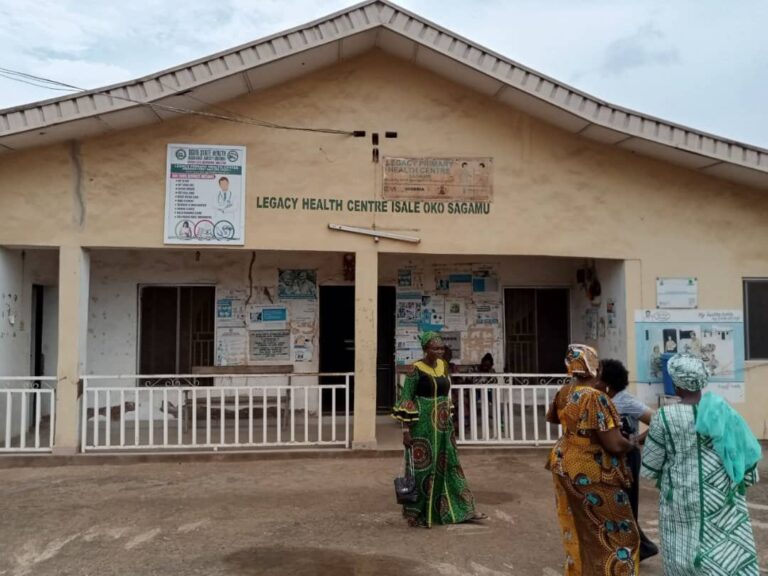
entering the first Primary Healthcare Centre, (Legacy PHC), in Ward 1, Shagamu Local Government Area, Ogun State, one encounters not just statistics and percentages, but the vivid narrative of Ogun State’s healthcare system, where women’s voices strive to rise above entrenched disparities.
A visit to Shagamu, Remo North, Odeda, and Abeokuta North Local Government Areas (LGAs) revealed men occupying the majority of Ward Development Committee (WDC) leadership positions, in a system designed to deal with healthcare issues that concern mostly women.
The women, who are the ones that truly feel and can comprehend the brunt of practical maternal health issues, are left to man the floor serving proverbial regular office tables.
In Shagamu, only one of the 15 wards is chaired by a woman.
Legacy Health Centre, Isale Oko, Sagamu
Similarly, in Odeda, the ratio of male to female chairpersons is 9:1 making male dominance routine.
This is despite evidence suggesting that female leadership in WDCs could significantly improve maternal and child health outcomes, particularly in rural communities.
Back in 2014, the Basic Healthcare Provision Fund (BHCPF) was established under the National Health Act to provide free basic healthcare to the poorest and most vulnerable Nigerians, including pregnant women, via accredited Primary Health Centres (PHCs).
Ogun State joined this initiative in October 2021, with 169 out of 237 wards verified to receive funds. However, improvements under its maternal and under-five health remain inadequate.
Data from the Nigeria Population Commission (NPC), and the State Central Department of Statistics (SCDS) indicate that 179 out of every 100,000 women in Ogun State die from pregnancy-related complications. Also, 56 out of every 1,000 children die within their first 11 months.
The 2021 Multiple Indicator Cluster Survey (MICS), a household survey programme developed by UNICEF in the mid 90’s to assist countries in filling data gaps for monitoring the situation of children and women, highlights that Ogun State has the highest child mortality rate in the Southwest region.
Admission ward, Agbero Health Centre.
For illustration, the survey revealed that nearby Lagos State has the lowest neonatal mortality rate in the South West region, with 11 deaths per 1,000 live births. Osun State follows with 12 neonatal deaths per 1,000 live births, and Ondo State reports 18 per 1,000.
The highest rate was recorded in Ogun State, with 56 neonatal deaths per 1,000 live births, followed by Ekiti State with 53, and Oyo State with 31 per 1,000 live births.
The systemic issues contributing to these alarming statistics include the lack of healthcare facilities, inadequate healthcare providers and poor road infrastructure.
Central to addressing these challenges are the WDCs, established by the National Primary Health Care Development Agency (NPHCDA) to empower local communities and get them involved in the healthcare delivery system.
But this has been overwhelmingly led by men in variance to the BHCPF’s mandate that women should comprise at least 40 percent of the membership in effective, decision-making roles.
In an interview with the WDC chairperson for Ward 1 in Shagamu, Ajani Adebola, affirmed that the overall leadership of WDCs remains male-dominated and thereby limits potential for widespread improvements if women had been allowed to hold the sway.
Photo of Ajani Adebola, the WDC chairperson for Ward 1 in Shagamu
Despite these glitches, she pointed out how she has implemented significant improvements at the Legacy Health Centre by ensuring proper utilisation of BHCPF funds.
She said she often advocates for necessary infrastructure like solar power as well as actively supporting pregnant women in accessing antenatal care, adding that her efforts have led to noticeable improvements in maternal and child health in her ward.
Other Stakeholders
Stakeholders like the Project Manager, Governance, at the Justice Development and Peace Commission (JDPC), Olumide Olaitan, and Cristian Munduate of UNICEF Nigeria, asserted the need for more female leaders to run the affairs of the centres so that they can effectively address the specific health needs of women and children.
The JDPC, in partnership with the International Budget Partnership (IBP), has reportedly launched initiatives to ensure women hold viable leadership positions within WDCs, Olaitan stated.
These initiatives aim to facilitate effective communication between WDCs and state actors and ensure the proper use of BHCPF funds to improve maternal health outcomes.
“One of these initiatives is to ensure that women are adequately represented within the WDC structure and hold strong leadership positions, enabling them to amplify their voices and influence decisions related to maternal health.
“We also focus on empowering WDC members to effectively perform their oversight functions, which are crucial for improving maternal outcomes and, by extension, primary health care services.
“Additionally, we aim to create dialogue spaces to foster better communication between the WDCs and relevant state actors. This effort supports the Ogun State Government’s plan to reduce maternal mortality and enhance primary health care services,” Olaitan added.
Olaitan added that a new guideline will soon be introduced. He stated that the guideline focuses on the role of WDCs at the grassroots level. Its essence would be to mandate periodic leadership changes and ensuring at least 30 percent of WDCs are led by women.
He added that the intent is to break longstanding gender barriers in particular as a strong measure to drive improvements in maternal and child health in the state.
“We are actively working to strengthen WDCs in Ogun State. These efforts include advocating for increased female representation, enhancing the capacity of WDC members, and facilitating better communication between WDCs and state actors,” he stressed.
On her part, Munduate gave her nod saying that steps are underway to ensure the corrections are duly achieved.
“We are taking steps to strengthen WDCs in Ogun State by advocating for increased female representation, building the capacity of WDC members, and improving communication between WDCs and state actors,” she said.
State actions and prospects for progress
On the quest to know the state’s position on the disparity issues towards promoting gender equity within WDCs, the health commissioner, Oluwatomi Coker, acknowledged the challenges.
She said, “facts cannot be denied as everyone can see what’s presently seen.”
Counselling Room, Agbero Health Center
She added that the state is committed to supporting initiatives that will enhance improvement and underscores the importance of female leadership if they must achieve better health outcomes.
“Recent government initiatives, such as training midwives and providing free health insurance for pregnant women, reflect this commitment,” Coker stated.
She further admitted that most of the responsibility for improving maternal and under-five health in the state rests on her shoulders.
She then vowed not to rest until the health system is fixed, highlighting some of her recent efforts, including training midwives, offering free health insurance packages for pregnant women, and establishing essential structures at the PHC level.
“We have trained midwives in Ijebu-Ode, Abeokuta, and other LGAs. I left my well-paid job in India because I don’t want women to die anymore. I am committed to achieving this goal,” she affirmed.
Continual pursuit
Based on the observed conditions at the four scrutinised PHCs, the struggle for effective maternal and child health in Ogun State is intricately linked to the male-dominated leadership.
And, like the women admitted, this calls for gender equity within the Ward Development Committees (WDCs).
Many women at these centers believe they should be at the helm of these committees and are urging the state government to address this critical issue.
Funmilayo Adeniyi, from Ward C, Shagamu LGA, PHC, Ajaka, near Awolowo Market, told LEADERSHIP that she shares the same vision as Mrs. Ajani Adebola, WDC Chairperson for Ward 1 in Shagamu, to transform her ward. However, as a WDC member, her influence is limited.
Funmilayo Adesanya, from Ward C, Shagamu LGA,
“I am passionate about helping pregnant women, children, and People with Disabilities (PWD) in my ward. During immunization campaigns, I ensure all children receive their vaccines. That is the extent of my current role as a WDC member,” she said.
Adeniyi affirmed that if given the opportunity to serve as chairperson of her ward, she would direct the BHCPF funds to improve the health facility, ensuring that pregnant women, PLWD, and all community members have access to quality healthcare services.
Mrs. Toyin Amusa, a photographer and member of Ward 8 in Sagamu, believes that becoming the chairman of her ward would enable her to make significant changes at Latawa Health Center, which she cannot make as an ordinary member.
“As an indigene of the area, I am aware of the challenges at the health centre. If I become the chairman, I will change things,” she affirmed.
Amusa explained that the health center is too small to admit pregnant women for longer than one day after delivery.
“Most newborn deaths occur within the first 28 days. At Latawa Health Center, new mothers are discharged a few hours after giving birth due to the limited space,” she disclosed.
Inside the counselling room, Agbero Health Center
To address this issue, Amusa said she plans to contest for the chairperson position in her ward.
“I want to become the chairperson to influence political leaders to expand the center, as there is unused land available. I will also ensure the government deploys more health workers, as there are currently fewer than five at the center. Pregnant women will receive the care they need, and children will be immunized on time because I will campaign for participation.”
Amusa also highlighted the lack of drugs at the facility, which she aims to address through the BHCPF if elected as chairperson of her ward.
The women unanimously argue that achieving gender fairness in WDC operations is essential for resolving the state’s healthcare challenges and lowering maternal and under-five mortality rates.
Advocates like Olaitan and Munduate emphasize that empowering women to assume leadership roles within these committees will enhance healthcare support and service delivery.
They also note that strengthening WDCs with increased female representation is expected to create more equitable and effective committees, ultimately reducing maternal and child mortality rates in Ogun State.
Other Health Centres’ struggles
Amidst bustling streets and daily routines in the heart of Remo North Local Government Area (LGA), Ogun state, lies Agbero PHC.
It is a healthcare facility that serves as a lifeline to over 5,000 residents in Ode-Remo community.
Though its signpost reads “Basic Healthcare Provision Fund Centre, Remo North LGA”, Agbero PHC renders services ranging from ante-natal care, infant welfare care, family planning, treatment of minor ailments, referral services, and immunization, and it still grapples with a myriad of challenges that threaten its ability to provide adequate care to those who really need it. It can be best described as a sick clinic itself.
This reporter found out that the structure housing the present Agbero Health Center is actually a temporarily donated building from Alaye-Ode Library since 2008, owned by the then Alaye-Ode of Ode-Remo, Oba Olufunso Adeolu, popularly known as “Chief Eleyimi of the TV Village Headmaster series”.
Alaye Ode Library, Remo-North government
The health center is a three-bedroom apartment building with three beds and less than five healthcare workers. Its waiting area, although intended to provide comfort, offers no respite as it has few chairs that are glaringly insufficient for the number of patients that visited there. At the time of the reporter’s, there were only two long benches in the waiting room.
The health centre also shares the same structure with the Alaye-Ode Library, built by Remo North Local Government.
Prince Juwon Opayemi, Chairman, WDC, Ward 10, Remo North LG had this to say about the facility’s state. “Yes, it is indeed not conducive as the health facility lacks major essential infrastructures like water and electricity, with inadequate bed space and health personnel, I admit”.
“However, putting these challenges aside, the PHC has been able to prioritise the drugs of pregnant women and the vaccines for children in the community,” he noted.
Photo of Prince Juwon, Ward 10, Remo-North LGA
He added:”Kabiyesi, Oba Dr. Adetunji Amidu Osho, Alaye of Ode Remo, approved the one plot of land, and the present Remo North Local Government Chairman, Prince Dapo Odunsi, gave official approval. They have provided us with land to build a functioning Primary Health Centre. The project will commence soon, I assure you.”
The reporter made attempts to speak with some of the patients seen navigating through the obvious challenges. One of them, an expectant mother, Mrs. Kehinde Adeyemi, 27, who resides in Wasimi Street, Agbero, said “it has been a struggle, but what option do we have, when the private healthcare centres in the community are too expensive for us and the next functioning PHC is far.”
Mrs Kehinde Adeyemi, Remo-North LGA
She said though she receives ante-natal treatment at the Agbero Health Center twice a week regardless of the unsatisfactory ambiance at the facility, she continues to visit the clinic because of her financial situation.
“It will cost me N1,000 to get to the nearest functioning PHC. I just run a small shop that barely gets me some modest coping sum. Most days, I don’t even make up to N500 in profits. I know how important antenatal care is to my health and that of my unborn baby. Rather than sit at home or go to traditional attendants, I decided to manage what we have,” she stated.
Adeyemi, however, expressed the hope to see a day when a new and functional health center will be commissioned.
“Look around you, there are just few beds in the centre. This has been of great concern to few of us women coming here. I always wonder what will happen if more than five women go into labour at the same time!
Delivery room, Agbero Health Center
“That is why if a new health structure is built, it will not only attract more pregnant women who will always come for their ante-natal medication, among others, but also assist less privileged patients who cannot afford transport fares to faraway places for their medication,” she said.
“We are getting the drugs we need as pregnant women in the community, all thanks to the BHCPF. The nurses are also trying their best to cater to our health needs. However, the pressing challenge we have is inadequate bed space.
“We believe that if the government builds the new facility as we have been hearing, we might have enough bed space and a conducive centre,” said Mrs. Oyinkansola Adejo, 26 years, living at Oke-Ola compound Ode-Remo, who was also at the center for her ante-natal care.
Mrs Oyinkansola Adejo, Remo-North, LGA
Hope amid despair
In the course of the investigation, LEADERSHIP reporter explored the claims that the Adetunji Amidu Osho, Alaye of Ode Remo and the Remo North Local Government Chairman, Prince Dapo Odunsi had provided land for constructing a new PHC building.
This claim was affirmed by Prince Juwon Opayemi, Chairman of WDC Ward 10 in Remo North LG, who guided the reporter to the land and allowed a video recording of the site.
He also said, “There is hope that the building of the new facility will soon commence. This intervention is anticipated to address the infrastructural shortcomings currently plaguing the centre.”
As findings further reveal, Agbero Health Centre’s story is a microcosm of a broader narrative about Ogun State PHCs’ struggle and gender disproportion in terms of offering quality healthcare provisions to teeming women seeking adequate maternal health and child care.
From the situation on ground, the larger narrative highlights the importance of tackling gender disparities in healthcare leadership, ensuring adequate infrastructure, and securing the necessary resources to improve maternal and child health outcomes in Ogun State.
This report republished from Leadership newspaper was made possible with support from the International Centre for Investigative Reporting, ICIR.
FORMER Vice President Atiku Abubakar has slammed President Bola Tinubu’s approach to fuel subsidy management and the hardship his government escalates.
In a post on X on Thursday, October 10, Abubakar tagged Tinubu with the moniker “T-Pain,” as the name ‘T-pain’ is widely becoming a popular alias for the President on social media, particularly on X.
Abubakar stated that Tinubu’s approach to managing the fuel subsidy had led to a sharp rise in inflation, severely affecting the livelihoods of ordinary Nigerians.
“The haphazard and disingenuous approach of the current administration to fuel subsidy management has been the reason we are in this current economic crisis in the country,” he wrote.
The ICIRreported that the NNPCL hiked the price of a litre of petrol to N998 in Lagos State and N1,003 in Abuja on Wednesday.
Many Nigerians saw the development as compounding the hardship they faced.
Until now, the NNPCL had sold the product for N855 in Lagos. The new development resulted from the anticipated total deregulation of the sector, which removed the NNPCL as the middleman and permitted independent marketers to purchase the product directly from the Dangote Refinery.
Reports showed that fuel stations owned by independent marketers were also adjusting their prices beyond N1,000.
Reacting to this development, the former vice president warned that without a change in policy direction, inflation would worsen and further deepen the hardship faced by Nigerians.
“As things stand, there will be no let up in the escalating inflation rate, which is drowning the material well-being of Nigerians,” he emphasised.
Taking a direct jab at the President, Atiku expressed his disappointment over Tinubu’s “apparent indifference” to the suffering of Nigerians.
“It is even more worrying that T-Pain is undisturbed by the hardship in the country.”
Atiku’s comments followed growing discontent across the nation regarding the fuel price and cost of living, with many Nigerians struggling to make ends meet due to rising prices of essential goods and services.
THE Board of Trustees (BoT) of the Peoples Democratic Party (PDP) has expressed concern over the ‘worsening economic hardship’ in Nigeria.
The BoT stated this at its 78th meeting on Thursday, October 10 in Abuja.
Communiqué issued at the end of the meeting showed that the BoT assessed the state of the nation and raised “serious concerns over the worsening economic hardship, acute food crisis and general sense of misery, despondency, uncertainty and hopelessness in the country occasioned by the anti-people policies of the All Progressives Congress (APC) administration.”
The BoT urged Nigerians not to allow the suffering they faced make them to lose faith in the country but to “continue to work with the PDP in the quest to rescue the nation from the stranglehold of the APC.”
The BoT demanded that the APC take immediate steps to ensure the reduction in the price of fuel, make key investments towards food production, revamp the manufacturing sector, and mitigate the pains Nigerians faced.
Speaking on the just-concluded Edo State governorship election, the BoT condemned and rejected what it called brazen rigging of the election by the APC allegedly in connivance with the Independent National Electoral Commission (INEC)
“The BoT insists that from the votes cast at the polling units, it is clear that the PDP and its candidate, Dr. Asue Ighodalo, won the election. The PDP will take every legitimate step to ensure the recovery of the mandate freely given to our party by the people of Edo State.
“The BoT alerts Nigerians that the electoral manipulation of the Edo State governorship election is part of the sinister plot by the APC to foist a one-party system and totalitarian rule on our country, which must be firmly resisted.”
The group urged Nigerians to resist any plan by the APC to ‘rig’ the November 16, 2024, governorship election in Ondo State.
While commending the reconciliation committee of the party for its efforts to resolve disputes within the party, the BoT expressed concern over the state of affairs of the party in Rivers State and stated that efforts must be intensified to find a lasting solution to the impasse.
It urged the party’s national working committee (NWC) to urgently summon a meeting comprising the NWC, PDP Governors’ Forum, leadership of the PDP National Assembly caucus, and BoT special committee to resolve the issues.
THE Court of Appeal sitting in Abuja has affirmed Martin Amaewhule as the Speaker of the Rivers State House of Assembly.
The Court, in a unanimous judgment on Thursday, October 10, dismissed the appeal filed by the Rivers State governor, Siminalayi Fubara, for lacking in merit.
A three-member panel of the appellate court upheld the Federal High Court’s judgment, delivered by James Omotosho on January 22, affirming that the 2024 Rivers State budget of renewed hope was not presented before members of the State Assembly as required by law.
The court reprimanded the state governor for acting in contravention of the Constitution.
The court ruled that Fubara had committed a flagrant breach of the 1999 Constitution, as amended, by presenting the 2024 Rivers State Appropriation Bill to just four of the Assembly’s 31 members.
In July, the Court of Appeal affirmed Amaewhule and 24 other lawmakers as members of the Rivers State House of Assembly.
The court voided the state High Court order restraining the 25 lawmakers, known as G-25, from parading themselves as Assembly members.
A member of the House, Oko-Jumbo, had approached the High Court to seek an interim injunction against Amaewhule and 24 others from further conducting legislative duties, having left the party on which platform they were elected for another party.
Oko-Jumbo also prayed the court to legally declare their seats vacant.
The court granted the prayers and ordered that Amaewhule and his colleagues should stop parading themselves as lawmakers and not conduct legislative business.
Dissatisfied with the order, the 25 lawmakers challenged the jurisdiction of the High Court at the Appeal Court.
Setting aside the order of the High Court restraining the 25 lawmakers who allegedly defected from the Peoples Democratic Party (PDP) to the All Progressives Congress (APC) from further parading themselves as members of the Assembly, the Appeal Court said the order was faulty.
In a unanimous judgment, the three-member panel of the Court of Appeal, Port-Harcourt Division, which sat in Abuja, held that the High Court lacked the jurisdiction to hear the case.
Fubara and his predecessor, Nyesom Wike, have been at loggerheads over who controls the PDP structure in the state, with President Bola Tinubu’s efforts to resolve the stalemate yielding no result.
Wike has maintained that he belonged to the PDP and dared the party to suspend him if it could.
On his part, Fubara has insisted on taking over the PDP’s structure in Rivers, as the move exacerbated his rift with Wike.
The crisis resulted in the 27 House of Assembly members loyal to Wike defecting to the APC.
Riled by the defected, Fubara declared their seats vacant.
To further demonstrate that he was the one in charge of the state, Fubara subsequently ordered the LGA chairmen elected under Wike to vacate their seats, stating that they had completed their term.
The ensuing crisis led to police taking over the 23 LGA secretariats in the state for months.
Unfazed, Fubara proceeded to conduct local government election in the state on October 6 against a court order.
The headquarters of Ikwerre and Eleme LGAs were set ablaze shortly after the police authorities withdrew their officers from the facilities after months of siege.
Police spokesperson in the state, Grace Iringe-Koko, while announcing the police withdrawal from the state’s 23 LGA secretariats, said the organisation would not hesitate to return the officers should the need arise.
The ICIRreported on Sunday, October 6, that the state governor Fubaraswore in all the newly-elected 23 local government chairmen shortly after the Rivers State Independent Electoral Commission (RSIEC) announced the election results for the last local government.
The ICIR reported how the African People’s Party (APP) won 22 out of the 23 local government chairmanship seats in the state according to results announced by RSEIC.
Fubara’s preferred candidates were victorious in the poll marred by controversies and security challenges.
Fubara also won the election for an opposition party, as he has yet to decamp from his party, the People’s Democratic Party (PDP).
THE National Drug Law Enforcement Agency (NDLEA) has removed the requirement for a married woman to present a letter of approval from her husband to travel outside Nigeria.
The NDLEA disclosed in a statement issued by its spokesperson, Femi Babafemi, on Thursday, October 10, that the portion that stated the requirement had been deleted from its list.
In the statement, the NDLEA clarified that the process for obtaining visa clearance from the NDLEA, which is a requirement for certain countries, is currently under review.
It noted that the previous requirement for married women to provide a letter of approval from their husbands for travel was no longer considered mandatory.
“The inclusion of that item arose following some ugly developments in some source countries. Members of the public are assured that the item has been deleted from the list of requirements in the ongoing review exercise, which will be made public in the coming days,” the anti-drug agency stated.
The action followed discussions on social media about why Nigerian married women needed their husband’s written permission to travel out of the country.
The NDLEA previously required Nigerian married women to obtain a letter of approval from their husbands before issuing a visa clearance certificate to travel abroad. This requirement was part of the documents needed for visa clearance.
The requirement is a component of an international initiative to lower the incidence of drug trafficking.
The nations requesting this include Brazil, Pakistan, India, Thailand, Malaysia, Indonesia, the Philippines, and Russia.
According to a statement by the NDLEA in 2021 when the requirement was introduced, the policy did not apply to all Nigerians seeking to travel overseas but those travelling to the eight countries listed above, usually referred to as “source countries.”
The statement added that the policy was at the order of the “source countries” and not that of the NDLEA or Nigeria and was designed as part of global efforts to fight the threat of drug trafficking.
Nigerians who criticised the requirements included some X users. Among them was Big Chief Wendy who said, “NDLEA’s visa clearance requires that a married woman bring a letter of approval to travel from her husband along with his passport photograph. There is no such rule for men. This is such disgusting government-sponsored misogyny. Are married women children?!”
Another X user, @KvngFids, tweeted, “The ‘anyhowness’ of Nigeria is so funny because why is NDLEA demanding spousal approval for travel? What’s the correlation? In 2024. So backwards.”
Another X user @KatwignDale stated, “Wait, a husband’s approval to travel? Thankfully, NDLEA says this outdated idea has been scrapped via an official public notice on its Instagram page. Let’s continue the fight for equality in law and practice.”
Being the fifth hurricane to make landfall in the US in 2024, the storm cut through the state and moved offshore, according to the National Hurricane Center in the morning of Thursday, October 9.
Milton, which happened to be the third hurricane to strike Florida in 2024, began on Wednesday evening and left over 3 million people without power across the state.
Reports indicate that in several areas, it’s currently unsafe to venture outside or return home due to flooding and severe weather conditions.
Although the exact number of deaths is not yet confirmed, many people lost their lives in St. Lucie County as a result of the storm, according to Sheriff Keith Pearson who spoke with CNN News Central.
“Unfortunately, I do have to report that we do have multiple fatalities,” he said.
He further noted a “modular home community” for residents 55 and older was struck by a tornado, adding that everything in the hurricane’s path was destroyed.
“Their whole homes with them inside were lifted up, moved, destroyed. I mean everything in the hurricane or this tornado’s path is gone.”
Meanwhile, Hurricane Milton is reportedly moving away from Florida’s east coast, the National Hurricane Center reported at 8 a.m. EDT Thursday.
Although forecasts indicate that the storm will gradually weaken as it approaches the Bahamas, strong gusty winds and heavy rainfall continue to impact areas near Cape Canaveral and the Kennedy Space Center, roughly 50 miles east of Orlando.
Pinellas County orders residents to remain in-house
Meanwhile, residents of Pinellas County have been advised to stay off the roads until advised otherwise by county officials.
The warning, issued after Hurricane Milton on Thursday, showed many roads were impassable due to downed power lines, fallen trees, and debris.
“You must stay off the roads until advised otherwise by county officials. This is required for emergency responders and crews to complete rescue and recovery. Stay put now,” the statement read.
The Pinellas County sheriff’s office also posted on X, that “Effective immediately, all access points to Pinellas County are closed until further notice due to hazardous conditions. The barrier islands will remain closed.”
Also, the Florida Division of Emergency Management (FDEM) on its X handle, while providing updates on the severity of Hurricane Milton advised residents not to move out into receding water in Tampa Bay, noting that water would return through storm surge and pose a life-threatening risk.
It also noted that Hurricane Milton had moved onshore and would move east across the state as the hurricane continued to bring life-threatening weather hazards.
“Shelter in place and remain vigilant well into Thursday as widespread flooding, isolated tornadoes and destructive winds are expected,” FDEM said on X.
In another post, it wrote “Dangerous tropical storm force winds, flooding and storm surge are impacting the East Coast and Central FL throughout the morning. Avoid flooded areas at all costs and continue to follow all weather alerts.”
Earlier on Thursday, Governor Ron DeSantis, alongside FDEM executive director Kevin Guthrie, provided updates from the State Emergency Operations Center on the state’s preparedness efforts for Hurricane Milton.
By 8 p.m. ET, FDEM reported that Hurricane Milton made landfall near Venice, Florida, with the storm expected to move across central Florida overnight before heading off the state’s east coast on Thursday.
Also, the National Hurricane Center had on Wednesday evening, October 8, said a “large area of life-threatening storm surge” would occur along portions of the western coast of the state and that heavy rainfall throughout Thursday would pose a continued risk of “catastrophic and life-threatening flash and urban flooding.”
GUARANTEE Trust Bank (GTBank) customers are to express service disruptions for three days – starting Friday, October 11 to Monday, October 14, as the bank migrates to a new banking application.
The bank disclosed this in a notice on Wednesday, October 9.
According to the bank, it is migrating to Finacle Core Banking Application Systems and is expected to complete the migration by Monday.
All GTBank branches nationwide are expected to shut down early to customers at noon on Friday and reopen at 9:00 a.m. on Monday.
The migration will cause a digital banking services shutdown for 11 hours, from 10:00 p.m. on Sunday, October 13 to 9:00 a.m. on Monday.
The bank said customers would perform limited transactions via its digital channels, including transfers, bill payments, airtime and data purchases, while other services would be unavailable.
“Overall, this transition will allow us to drive digital transformation to achieve insights-driven and frictionless interactions at all our customer touchpoints; enhancing the quality of customer experience we can deliver to you.
“We will keep you updated on our progress as we work towards making your banking experience simpler,” the notice read.
The bank apologises for every inconvenience the migration might cause, urging customers to show understanding.
The ICIR reports that most Nigerian banks are switching to new core banking platforms, supposedly to enhance their service delivery, which usually results in banking services disruption.
In September, customers of Sterling Bank expressed service disruption when it started the migration of its systems from T24 to SEABaaS, a new custom-built core banking application locally developed.
Similarly, customers of Zenith Bank had a harrowing experience of a service outage on October 1, which the bank said was “due to an information technology upgrade.”
Experts believe that migrating to a new core banking application is tedious and takes a while for any bank to stabilise after the migration.
At the parent company’s Facts Behind the Offer Presentation in July, the group chief executive officer of Guaranty Trust Holding Company Plc (GTCO), Segun Agbaje, had hinted at the bank’s plan to migrate its core banking software to Finacle.
“The technology needs to be better, the technology needs to be more robust. We have Finacle which is a good software that will land us where we need to go,” he said.
THE Nigerian Government has again distributed what it often refers to as palliatives in Anambra State.
Some palliatives distributed to women in the state on Wednesday, October 9, include 5,000 (10 kg) bags of rice, 500 bags of fertilisers, 500 PoS (point of sale) machines and 300 pieces of gas cylinders.
The ICIR reports that while significant resources are allocated to palliatives by the government, reports indicate that the impact on ordinary citizens has been minimal, and the government conceals beneficiaries’ data, forcing many citizens to believe that such support gets to only relations, loyalists and cronies of public officer holders and chieftains of their political parties.
While ‘palliative’ has been a household name in Nigeria, only a few citizens publicly confess to having benefitted from it, even though it has been a policy of successive federal governments.
The Cambridge Dictionary definespalliative as “making a problem seem less serious but not solving the problem or making it disappear.”
This has been the fate of many beneficiaries of such goodwill as they soon become impoverished after exhausting what was doled out to them, which often comes as foodstuffs and cash.
However, beneficiaries who receive what could empower them such as the PoS, fertiliser, sewing machines, motorcycles and the like, move on to use such gifts to create wealth.
Anambra’s palliatives were shared in Awka, the state capital by the minister of women’s Affairs, Uju Kennedy-Ohanenye.
At the event, Kennedy-Ohanenye emphasised that the distribution of relief items was part of the Federal Government’s efforts to cushion hardship that has led to widespread discontent among Nigerians.
She added that President Bola Tinubu was aware of the hardship Nigerians faced, but assured that once the government’s policies started yielding results, life would become easier.
“These items we are sharing today are from President Tinubu, and he has assured us that he will do more. The items we have here are only for the poor and no one who is out of here will benefit from it.
“We want to cultivate a culture of ensuring that whatever is released by the Federal Government to the people gets to them. That is why I’m here to supervise the distribution of these items.
“We have here 5,000 bags of rice, 500 bags of fertilizer, 300 cooking gas cylinders and POS machines, which will all be distributed,” she said.
According to her, the government has established a mobile court to safeguard the interests of the underprivileged, emphasising that the court would operate nationwide.
The minister stressed that anyone obstructing the rights of the poor would be held accountable by the law.
“The mobile court will take off from October 15. We will launch a group called Integrity Brigade to fight ills in the country.
“The government has been supporting the poor on social security, but you have to apply to benefit. I want to sound it as a note of warning, do not be afraid to tender your BVN when requested. No one can steal your money if you tender your BVN, it is only used to ensure that people who have been privileged to such a facility cannot collect again. What we do is to ensure that the money mapped out for social security gets to the people.”
The ICIR reported that since assuming office on May 29, 2023, Tinubu’s administration has rolled out rice distributions as palliative measures, at least nine times, to ease the economic strain caused by the removal of fuel subsidies, unification of exchange rates and other economic reforms.
The ICIR reports that Tinubu’s announcement that the “subsidy is gone” on May 29, 2023, negatively impacted the economy as the price of fuel had more than doubled since then. This led to a surge in the price of commodities and a spike in inflation.
Following this removal, the World Bank announced that 7.1 million Nigerians were at risk of poverty if properly targeted measures such as disbursement of palliatives were not taken to manage the impact of fuel subsidy removal.
To cushion the effects of escalating food prices, electricity costs, and fuel expenses, the government has been rolling out rice multiple times as palliatives targeted at vulnerable Nigerians.
However, these interventions have been plagued by reports of diversion, corruption, stampedes, and looting—patterns observed during previous administrations.
For instance, deputy senate president, Barau Jibrin raised concerns about the alleged diversion of palliatives meant for poor households in Kano State for personal gain.
Similarly, in August, Bauchi, Gombe and Jigawa States decried the alleged diversion of the Federal Government’s 20-truck rice palliative by politicians and government officials in charge.
The same patterns were also recorded in Kano, Kaduna, Katsina and other parts of the country showing that these interventions might not be reaching their actual targets.
TENNIS legend, Rafael Nadal, has announced plans to retire at the end of the season.
Nadal said he would quit this November after representing Spain at the Davis Cup Finals in Malaga.
According to BBC, Nadal revealed his retirement plan in a video message released on Thursday, October 10.
“I am here to let you know I am retiring from professional tennis. The reality is that it has been some difficult years, the last two especially. I don’t think I have been able to play without limitations,” he stated in the video.
Nadal will be retiring after winning 22 Grand Slam singles titles.
In addition, he retires as the second-most successful men’s singles player in history, only surpassed by old adversary Novak Djokovic.
Nadal has won the Australian Open and Wimbledon twice and is a four-time US Open champion.
He has also helped Spain win four Davis Cup titles, most recently in 2019, and he won gold in the Olympic singles and doubles competitions.
Nadal established the ‘Big Three’ with longstanding rivals Djokovic and 20-time major champion Roger Federer, who attracted hordes of spectators and dominated the men’s game starting in the early 2000s.
Nadal stated in his retirement announcement that he intended to retire at the end of 2024 due to a string of ailments that were wearing him down.
The ICIR reports that he grew more uncertain about his future after returning early this season.
The former world champion frequently expressed his desire to continue playing for as long as his body permitted.
He admitted that the decision to quit had been tough and took considerable time to make, but emphasised that everything in life had its beginning and end.
“I think it’s the appropriate time to put an end to a career that has been long and much more successful than I could ever have imagined,” Nadal stated.
At this year’s Olympics in Paris, he was beaten by his oldest rival, Djokovic, in straight sets in their final encounter.