Home Blog Page 460

Victims seek aid as flood submerges over 60 communities in Kogi

0

A DEVASTATING flood has submerged over 60 communities in Ibaji Local Government Area (LGA) of Kogi State.

According to the Daily Trust, the floods ravaged Ibaji, a region notorious for its yearly flood disasters.

Speaking on the incident on Friday, October 11, the Ibaji Flood Plains Multipurpose Cooperative Society (IFPMPCS) urged the Kogi State government to take immediate action in response to the floods that have affected over 60 communities in the area.

Chairperson of the IFPMPCS executive committee, Joy Ede Ukoje, a professor, made this plea during a press briefing in Lokoja, the state capital. 

 At the briefing, she highlighted the urgent need for intervention.

Ukoje called for immediate action to address the devastating floods in Ibaji, Kogi State, highlighting the urgent need for a disaster relief fund.

According to her, the fund would provide crucial support to over 60 affected communities, alleviating the suffering of residents and helping to mitigate the impact of the flooding.

Ukoje warns that flood management efforts in Ibaji and surrounding areas have exceeded the state government’s capacity.

According to her, the state government faces significant challenges in effectively managing floods in Ibaji and River Niger’s adjacent areas.

The flood in Kogi is coming a week after The ICIR reported that the Ondo State government ordered residents of flood-prone areas to evacuate after a flood hit some parts of Ondo town on Friday, October 4.

The flood, which destroyed property worth millions of naira, came after a heavy rainfall that lasted for several hours hit the ancient town.

Areas mostly affected include Odo, Oka, Itanla, Ijomu, Akure-Ondo Expressway, and Bethlehem, among others.

Reports indicate that many houses and vehicles were submerged in the affected areas.

Some victims have also reportedly moved out of their houses to seek shelter elsewhere. However, no loss of life was recorded.

Reacting to the disaster, the state government, through the commissioner for environment, Oyeniyi Oseni, on Saturday, October 5, said it had directed evacuation in the affected areas and quick response had begun to limit further damages.

The government emphasised that it had put strategies in place to prevent a recurrence.

It added that it had deployed amphibious excavators into critical erosion-prone areas in the state for dredging.

Oseni added that his ministry would work with relevant government agencies to address illegal dredging around the waterways.

The Ondo flood came a few weeks after the flood crisis in Maiduguri, Borno State, left residents of the North-East state panicking.
Obi demands fuel price reversal amid biting hardship

0

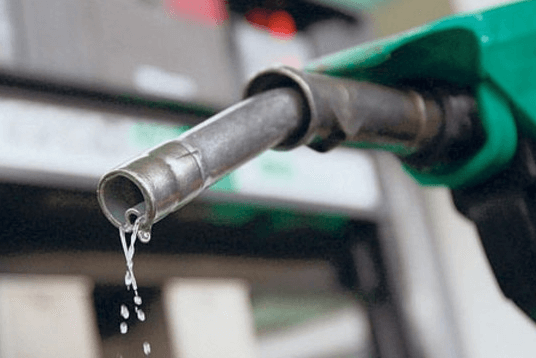
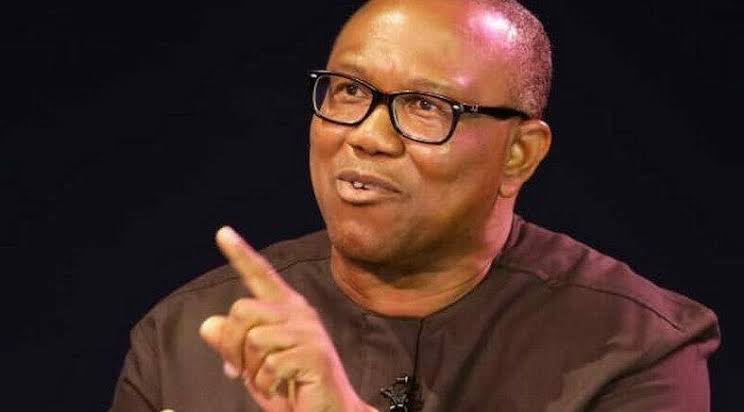
LABOUR Party’s presidential candidate in the 2023 general election, Peter Obi has condemned the recent increase in price of fuel, describing the situation as unfortunate and insensitive.

In a post he shared on his official X account on Saturday, October 12 titled, “Reversing the sudden fuel price increase”, Obi attributed the harsh economic conditions faced by Nigerians to the wrong policies of the federal government.

According to him, it is not the right way to manage a country’s resources and also not an ideal way to govern a nation.

“As Nigerians continue to groan under extremely difficult economic conditions, largely caused by the federal government’s wrong policy choices, the NNPCL has once again raised the price of fuel (PMS) without providing any explanation.

“This is unfortunate and insensitive, considering the wide-ranging negative consequences for our economic survival and well-being.

“This is neither how an economy’s resources should be managed nor how a nation should be governed. In this new measure, there is neither sound economics nor necessary compassion,” he stated.

Obi’s commentd follows the recent hike in the price of petrol by theNigerian National Petroleum Company Limited (NNPCL)across its retail outlets.

The ICIR reports that on October 8, the NNPCL raised the price of petrol from N855 to N998 in Lagos and N1,003 in Abuja, noting that the price could be higher in Sokoto and Borno states.

The new development resulted from the anticipated total deregulation of the sector, which removes the NNPCL as the middleman and permits independent marketers to purchase the product directly from the Dangote refinery.

Obi in his statement noted that despite NNPCL now being a limited liability company and regulated by agencies such as the NUPRC and NMDPRA, there seems to be growing confusion about the roles and responsibilities of the NNPCL and the regulating bodies.

He added that reversing the sudden price hike is the duty of the petroleum minister and president of the country, urging them to act in the interest of the masses.

“Interestingly, both the NNPCL and the regulatory agencies are supposed to be under the supervision of the Federal Ministry of Petroleum Resources, with the President of the Federal Republic of Nigeria serving as the substantive Minister. Who, in this arrangement,
is regulating who?

“With the unprecedented but avoidable hardship that Nigerians are enduring, the responsibility for providing a full explanation, offering alternative options, and most importantly, reversing the sudden price hike falls squarely on the Honorable minister of petroleum resources/President of the federal republic of Nigeria.

“We hope and pray that he acts in the best interest of the majority of Nigerians, who are living under unnecessarily precarious conditions, and that he does so before his return from his working vacation,” he added.


READ ALSO:


The issue of the hike in price of fuel which has also sparked widespread concerns over its impact on the cost of living, the Nigerian Bar Association (NBA) condemned the increase while urging the Federal Government to prioritise the well-being of Nigerians.

According to the association, this sharp rise would only deepen the economic hardships faced by Nigerians, especially those struggling to make ends meet.

They also expressed frustration over the lack of transparency in the government’s decision-making, highlighting that such policies had been implemented without meaningful consultation with stakeholders, including civil society and the private sector.

NBA condemns fuel price hike, demands immediate reversal

0

The Nigerian Bar Association (NBA) has condemned the recent increase in the petrol price by the Nigerian National Petroleum Company Limited (NNPCL) to N1,030 per litre.

The price hike, reported on Wednesday, October 9, has sparked widespread concerns over its impact on the cost of living. The NBA, therefore, urged the Federal Government to prioritise the well-being of Nigerians.

In a statement issued on Friday, October 11, the NBA president, Mazi Afam Osigwe, a senior advocate, criticised the government’s decision to increase fuel prices from N900 per litre to N1,030, without adequate measures to cushion the effects on the public. 

The association noted that this sharp rise would only deepen the economic hardships faced by Nigerians, especially those struggling to make ends meet.

The NBA expressed frustration over the lack of transparency in the government’s decision-making, highlighting that such policies had been implemented without meaningful consultation with stakeholders, including civil society and the private sector. 

On Wednesday, The ICIR reported that some NNPCL outlets raised the price of petrol to N998 in Lagos State and N1,003 in Abuja, which could be higher in Sokoto and Borno states.

Until now, the NNPCL had sold the product for N855 in Lagos. The new development resulted from the anticipated total deregulation of the sector, which removed the NNPCL as the middleman and permitted independent marketers to purchase the product directly from the Dangote Refinery.

Reports indicate that fuel stations owned by independent marketers have also adjusted their prices beyond N1,000.

The state-owned oil company had, on September 4, hiked the pump price, which resulted in an adjustment by oil marketers to above N1,000, which made transportation costs jump by over 50 per cent or more.

However, reacting to this development, the NBA president described the government’s disregard for the suffering of Nigerians as “troubling,” and called for immediate steps to reverse the increase.

On November 4, 2023, the NBA issued a statement strongly opposing the fuel price hike from N617 to N900 per litre. At that time, we highlighted the severe financial strain this imposed on the average Nigerian household, and the latest increase only compounds these difficulties. 

“Such drastic adjustments to fuel prices, with no adequate mitigating measures or economic relief, signal a disturbing trend of disregard for the welfare of the Nigerian populace. The much-needed tax breaks and social assistance programmes are yet to be implemented. People are groaning and life has become more difficult.

“The Nigerian Bar Association is particularly concerned that such decisions continue to be made without transparent consultation or dialogue with relevant stakeholders, including civil society and the private sector. The government’s seeming disregard for the suffering of the people is troubling. Nigerians deserve better— they deserve a government that prioritises their well-being and takes into account the real-world implications of its policies on the populace,” the statement read.

While urging the government to take steps to mitigate the impact of the fuel price, the NBA recommended that the government invest in local refining capacity, improve public transportation and reduce taxation on low-income earners.

The group also called on the government to repair public roads and enhance security to support farmers in transporting their produce.

He called for a transparent fuel pricing mechanism and broader economic policies aimed at reducing poverty and providing sustainable solutions to Nigeria’s energy challenges.

Chief judge rejects Nnamdi Kanu’s call for Nyako’s recusal

0

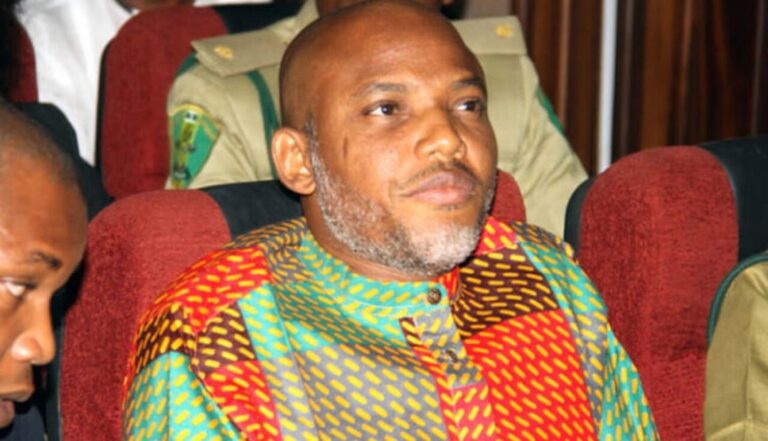
THE Chief Judge of the Federal High Court (FHC), John Tsoho, has rejected the request of the detained leader of the proscribed Indigenous People of Biafra (IPOB), Nnamdi Kanu, for Binta Nyako to recuse herself from his case.

Tsoho handed Nnamdi Kanu’s case file back to Nyako for management, noting that two other judges had earlier recused themselves from the matter.

According to Tsoho, Kanu’s case was reassigned to Nyako due to its prolonged nature as far back as 2015.

The chief judge said Nyako was considered the best judge to see the case through to its completion because she had handled it for the most part.

However, Tsoho ordered Kanu to submit a written petition on notice along with an affidavit outlining all the reasons for the recusal if he was still adamant about recusing Nyako at the case’s subsequent hearing.

According to the chief judge, Kanu must serve on the prosecution team as well and come before Nyako for assessment before she can make her decision.

Kanu’s Lawyer, Aloy Ejimakor, confirmed the outcome to the media. He also mentioned that Kanu’s team was awaiting a new hearing notice and an official notice from the court.

The ICIR reported that Nyako, a judge at FHC, Abuja, stepped down as the judge handling Kanu’s trial.

Nyako announced her decision to recuse herself from Kanu’s trial at the resumed hearing on his case in Abuja on Tuesday, September 24. 

The decision followed Kanu’s open-court request, where he cited the judge’s non-compliance with the Supreme Court ruling.

Kanu declared he no longer trusted the judge and challenged her to step down.

The judge agreed to recuse herself, saying she would happily return Kanu’s case file to the chief judge for reassignment.

During the proceeding, Kanu interrupted his lawyer, Alloy Ejimakor, ordering him to sit down as he attempted to argue for a trial adjournment.

The prosecution counsel, Adegboyega Awomolo, a senior advocate, however, tried to plead with Nyako to proceed with the trial, but she disagreed.

Kanu is facing a seven-count charge bothering on terrorism, brought against him by the Federal Government.

The charges against him include treason, inciting public violence through radio broadcasts, and defamation of Nigerian authorities.

Kanu’s troubles began in 2015 when he was arrested by Nigeria’s secret police, the State Security Service (SSS), in Lagos State.

He was granted bail but later fled Nigeria after his home was raided by the Nigerian military in September 2017.

In June 2021, Kanu was rearrested from Kenya and extradited to Nigeria to face trial. 

The trial, which began in October 2021, has been marked by protests and sit-at-home in the South-East by his supporters.

In October 2022, the Abuja Division of the Court of Appeal discharged and acquitted him. A three-member panel of the court freed him.

The appellate court set aside the judgment of an Abuja Federal High Court, which ordered him to answer seven out of the 15 counts of terrorism filed against him.

Nyako had, in a judgment in April 2022, struck out eight of the 15 counts in the charge preferred against the IPOB leader.

The judge, however, held that Kanu had some questions to answer in counts 1, 2, 3, 4, 5, 8, and 15 of the charge.

But Kanu, through his team of lawyers led by Mike Ozekhome, a senior advocate, filed an appeal to quash the remaining seven counts for lack of merit.

In its ruling in October 2022, the Court of Appeal agreed with Kanu’s counsel that the IPOB leader was illegally abducted and extra-ordinarily renditioned from Kenya to Nigeria, against international and local laws.

The panel led by Jummai Hanatu also held that the trial court lacked jurisdiction to handle the charges against Kanu, as he was not adequately arraigned before the court.

The Court of Appeal further held that Kanu’s alleged offences took place in Kenya and not in Nigeria. The court ordered Kanu’s release from custody.

But in a new twist, the Court of Appeal, on October 28, 2022, stayed the execution of its earlier order acquitting Kanu of all charges and directing his release from custody.

The development forced the IPOB leader to file an appeal at the Supreme Court to challenge the decision.

Greenberg World Fellowship Program opens

YALE University’s Maurice R. Greenberg World Fellows Program is seeking entries.

It brings innovative, multidisciplinary thinkers and doers worldwide to Yale for four months, from mid-August to mid-December 2025.

The fellowship provides a chance for professionals to step back from the intensity of their work to reflect, learn and be challenged both academically and personally.

Mid-career professionals whose work is focused outside the United States can apply for this fellowship in New Haven, Connecticut.

An excellent command of the English language is essential to successfully participating in the programme.

Fellows receive a stipend to cover the costs of living in New Haven, a furnished one- or two-bedroom apartment, medical insurance and round-trip travel from their home country.

The deadline for the submission of application is December 4, 2024. Interested applicants can apply here.

Hurricane Milton: Florida faces huge flood as 16 confirmed dead

0

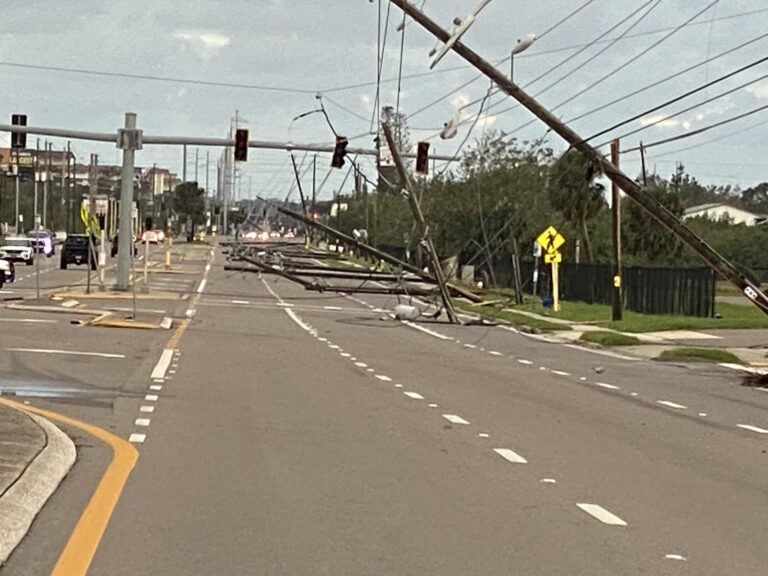
AT least 16 people have died from Hurricane Milton which caused heavy floods and storms in Florida, United States, with over 1000 persons rescued.

The disaster dropped more than 18 inches of rain over parts of the Tampa Bay area representing a more than 1-in-1000-year rainfall event for the area.

CNN reported that a man in his 60s was found dead at his home after rescue agents arrived at his house north of downtown Orlando. He was reported to have stepped on a downed power line while cleaning debris from Hurricane Milton.

While an investigation into the man’s death is still ongoing, the death toll by county includes six in St. Lucie County, two in Pinellas County, four in Volusia County, one in Citrus County, one in Hillsborough County, one in Polk County, and one in Orange County.

The ICIR reports that this is the fifth hurricane to hit the United States in 2024. According to the National Hurricane Center, the storm cut through the state and moved offshore in the early hours of Thursday, October 10.

Meanwhile, Milton is the third hurricane to strike Florida in 2024. It began on Wednesday evening and left over three million people without power across the state.

According to CNN, wind gusts reaching 100 mph were recorded near Tampa, prompting a flash flood emergency and causing the suspension of emergency services in the area.

Reports indicate that in several areas, it is still unsafe to venture outside or return home due to flooding and severe weather conditions.

In the meantime, various organisations in the US are getting donations to help the disaster victims.

Nigeria announces full deregulation, says marketers free to load petrol from Dangote Refinery

0

THE Nigerian Government has permitted oil marketers to start loading petrol directly from the Dangote Refinery, officially commencing the full deregulation of all petroleum products.

The announcement was contained in a statement on Friday, October 11, signed by the minister of finance and coordinating minister of the economy, Wale Edun.

It officially ends the sole off-taker arrangement the Nigerian National Petroleum Company Limited (NNPCL) has had with the refinery since September 15.

In the statement, Edun, the chairman of the naira-crude sale implementation committee, also gave an update on the takeoff of crude purchase and product sales in naira transactions.

“The committee is pleased to report a successful transition of operations in line with the directive issued by the Federal Executive Council. This directive has established a robust framework for local production and distribution of crude oil and refined products for local consumption in naira.

“Moving forward, petroleum product marketers are now able to purchase PMS directly from local refineries without the intermediary role of NNPC. Marketers are encouraged to initiate direct purchases from refineries on mutually negotiated commercial terms, which will promote competition and improve market efficiency.”

According to Edun, with this mechanism now in full operation, along with the commencement of local production, Nigeria is well-positioned to transition to a fully deregulated market for all petroleum products.

He assured of government confidence that in the long term, the measures would create better market conditions for the benefit of all Nigerians.

Recent actions by the NNPCL have kept Nigerians wondering whether the downstream oil and gas sector has been fully deregulated as previously indicated by the government.

The state-owned oil company had on Wednesday, October 8, hiked the litre price of petrol across its retail outlets to N1,030, throwing up a lot of concern about full deregulation of the market.

This came after its September 4 pump price hike to N855, which resulted in an adjustment by oil marketers to above N1,000, which made transportation costs jump by over 50 per cent or more.

However, with the announcement of a fully deregulated market, an energy expert, Joe Nwakwue, told The ICIR that full deregulation would be attained only when market forces set prices and where there are market competitions.

Court rejects Binance executive’s fresh bail plea

0

A FEDERAL High Court in Abuja rejected the fresh bail application by detained Binance Holdings executive, Tigran Gambaryan, on Friday, October 11.

The presiding judge, Emeka Nwite, turned down the request in his ruling on Friday, October 11.

Recall that Gambaryan’s lawyer, Mark Mordi, a senior advocate, on September 4, sought a six-week bail for his client to receive proper medical attention outside of prison, citing inadequate care in custody.

He stated that Gambaryan’s health was ‘perilous’ and that he needed surgery for a herniated disc along with psychiatric treatment for depression and anxiety.

According to him, the defendant’s health issues could not be properly managed in Nigeria.

However, the Economic and Financial Crimes Commission (EFCC) opposed Mordi’s request, stating that the defendant could receive treatment while held at Kuje Correctional Facility.

Ekele Iheanacho, the commission’s lawyer, argued that the health claims made by the Binance executive’s attorney did not indicate a condition serious enough to justify bail.

Iheanacho stressed that Gambaryan had been taken to leading medical facilities, including State House Clinic and Nizamiye Hospital, adding that a medical report from the State House Clinic showed he had refused medication and treatment.

Meanwhile, in his ruling on the motion for bail on medical grounds, Nwite denied the request, stating that ‘renowned Nigerian medical experts’ were already overseeing the health of the second defendant.

He also ruled that the Nigerian Correctional Service “refer Gambaryan to a standard hospital in Abuja for treatment for three days to two weeks under security supervision.”

The judge noted that the bail application constituted an abuse of the court process since Gambaryan was appealing the denial of his first bail.

“Therefore, the facts before the court have shown that the Nigerian Correctional Service has the capacity to treat the second defendant,” he said.

He subsequently adjourned the case to October 18, 2024, and again to November 22 and 25, 2024, for continuation of the trial.

The EFCC had charged Binance, Gambaryan, and Nadeem Anjarwalla with hiding the source of the $35,400,000 in revenue that Binance made in Nigeria while knowing that the money was the product of illegal activities.

The ICIR reported on Monday, March 25, that the Federal Government, through the FIRS, filed criminal charges against Binance at the Federal High Court in Abuja.

The charges accused Binance of a four-count tax evasion.

The FIRS stated that the action was intended to protect Nigeria’s economic integrity and maintain budgetary sustainability.

Binance pulled its services out of Nigeria on March 5 in response to the severe actions taken against it by the Nigerian government.


J. Anthony Lukas prize project awards call for application

COLUMBIA University is accepting applications for the J. Anthony Lukas Prize Project Awards, which recognises excellence in nonfiction that exemplifies literary grace and commitment to serious research and social concern.

Four awards are given: two J. Anthony Lukas Work-In-Progress Awards, the J. Anthony Lukas Book Prize, and the Mark Lynton History Prize.

The J. Anthony Lukas Work-in-Progress Awards gives US$25,000 annually to aid the completion of a significant work of nonfiction on a topic of American political or social concern. No entry fee is required.

The J. Anthony Lukas Book Prize awards US$10,000 annually to a book­-length work of narrative nonfiction on a topic of American political or social concern.

Writers and authors of nonfiction books can compete for cash prizes.

The Mark Lynton History Prize awards US$10,000 to a book­-length work of history on any topic that best combines intellectual distinction with felicity of expression.

A $75 entry fee per book is required for the J. Anthony Lukas Book Prize and the Mark Lynton History Prize.

The deadline for the submission of application is December 5, 2024. Interested applicants can apply here.

Caribbean countries seek partnership with Dangote on cement production

0

CARIBBEAN countries have expressed interest in partnering with the Dangote Group to produce cement, fertilisers and petroleum products.

The Prime Minister of Grenada and the chairman of the Caribbean Community, Dickon Mitchell, hinted at this during his tour of the Dangote Petroleum Refinery and Petrochemicals complex in Ibeju Lekki, Lagos on Thursday, October 10.

According to Mitchell, the Caribbean community, a political and economic union of 15 member states and five associated members in the Americas, is seeking a potential partnership with the Dangote Group.

He said the partnership would offer the Caribbean community the opportunities to enhance its economy.

“One of the reasons I am here is to pursue synergies and partnerships between the diaspora and Africa, particularly in areas such as the refinery, cement, and fertiliser.

“We believe there are fantastic opportunities to develop partnerships between the Caribbean and Africa,” Mitchell said.

He urged Nigeria and other African countries to discontinue exporting raw materials to the developed world and importing back the finished products.

“We need to reverse that cycle; it is the only way to grow the wealth of Africa and the developing world. Additionally, we need to support this with training and invest in job opportunities,” Mitchell said.

The chairman of the Dangote Group, Aliko Dangote, corroborated that the company was looking forward to partnerships with the Caribbean not only in petroleum products but also in cement and fertiliser production.

The billionaire businessman hinted that there were discussions about importing crude from the Caribbean while supplying the countries with refined products.

“We are exploring collaboration in areas such as cement and petroleum, including the possibility of buying crude from them while selling some of our petroleum products to them.

“We already export to the U.S., Mexico, and other regions, so there is significant collaboration we are looking to develop between us and them,” Dangote said.

In July, the President of Gabon, Brice Oligui Nguema, invited the chairman of Dangote Group to invest in cement and fertiliser production in his country.

The ICIR reported that the Gabonese President sought Dangote’s exploration of potential investment opportunities in the country’s cement and fertiliser, specifically urea and phosphate production.

While the Dangote Group is getting invitations to invest in other countries, on the homefront, there are many challenges facing the group.

Since its 650,000 nameplate refinery came on stream, the company has faced challenges getting crude oil supply.

The dramas that have ensued have led to the Nigerian government setting up a technical sub-committee to mediate the crisis between the Dangote Refinery and the state-owned oil company – the Nigerian National Petroleum Company Limited (NNPCL).