Home Blog Page 459

Presidency reacts to Nigeria’s alleged snub at UNHRC election

0

THE Federal Government has addressed the issue of Nigeria getting ‘snubbed’ at the United Nations Human Rights Council (UNHRC) election.

A statement by the Special Adviser to the President on Information and Strategy, Bayo Onanuga, on Sunday, October 13, said Nigeria did not stand as a candidate for this cycle of elections.

“Contrary to information circulating, Nigeria was not snubbed in this election, as some reports have falsely claimed. The country did not stand as a candidate for this cycle of elections,” the statement read in parts.

The ICIR reports that the UNHRC election was held on October 9 and elected 18 new members with five African countries including, Benin, the Democratic Republic of the Congo, Ethiopia, Gambia, and Kenya making the list.

They will serve for three years beginning from January 1, 2025.

The incoming members were elected through a secret ballot and will replace the current members whose terms will expire at the end of this year – December 31.

According to Onanuga, the votes recorded for Nigeria was cast out of error due to some countries thinking Nigeria was on the ballot.

“Again, we restate that Nigeria was not on the ballot in the election held on 9 October. Whatever vote was recorded for our country must have been cast in error in the secret balloting by some countries which thought Nigeria was on the ballot.

“For those conversant with elections into international organisations, especially to prestigious bodies like the Human Rights Council, countries vying for positions usually receive regional endorsements,” he added.

He further urged the public to not be quick to disparage or drag the country, especially on international matters.

The ICIR reports that the other countries elected into the council are, Bolivia, Colombia, Cyprus, Czech, Iceland, Marshall Islands, Mexico, North Macedonia, Qatar, the Republic of Korea, Spain, Switzerland and Thailand.

The outgoing members include; Argentina, Benin, Cameroon, Eritrea, Finland, Gambia, Honduras, India, Kazakhstan, Lithuania, Luxembourg, Malaysia, Montenegro, Paraguay, Qatar, Somalia, United Arab Emirates, and the United States.

They were all eligible for immediate re-election except Argentina, Cameroon, Eritrea, India and Somalia who have served for two consecutive terms.

Meanwhile, Albania, Algeria, Bangladesh, Belgium, Brazil, Bulgaria, Burundi, Chile, China, Costa Rica, Côte d’Ivoire, Cuba, Dominican Republic, France, Georgia, Germany, Ghana, Indonesia, Japan, Kuwait, Kyrgyzstan, Malawi, Maldives, Morocco, Netherlands, Romania, South Africa, Sudan and Vietnam will continue to be members of the Council.


Super Eagles boycott Libyan match over mistreatment

THE Nigerian senior men’s football team, Super Eagles, have agreed to boycott its Africa Cup of Nations second-leg match with Libya.

Stand-in captain of the Super Eagles, Williams Troost-Ekong, revealed this on his X page  Monday morning, “12 hours” after the team arrived at Al Abraq Airport Libya and was abandoned by the Libyan Football Federation.

The team chartered ValueJet aircraft from Nigeria and expected to touch down at the Benghazi Airport in the host country but was diverted to Al Abraq Airport, where they would travel by road for three hours before reaching Benghazi where the match would be played.

The ICIR reliably learnt that no official of the Libya Football Federation welcomed the players and their gaffers.

The Super Eagles defeated the Libyan Mediterranean Knights 1:0 at the Uyo Stadium on Friday, October 11 and hoped to be victorious again in the oil-rich North African nation.

Reacting, Troost-Ekong said his team was ready to concede the three points to Libya and would not risk the lives of its members.

“Twelve+ hours in an abandoned airport in Libya after our plane was diverted whilst descending. The Libyan government rescinded our approved landing in Benghazi with no reason. They’ve locked the airport gates and left us without a phone connection, food or drink. All to play mind games.

“This kind of behaviour, let them have the points. We will not accept to travel anywhere by road here even with security it’s not safe. We can only imagine what the hotel or food would be like given to us if we continued.

“We respect ourselves and respect our opponents when they are our guests in Nigeria. Mistakes happen but these things on purpose have nothing to do with int. football,” he said.

Another player, Bright Osayi-Samuel, wrote on X, “I’ve been stuck in a random Libyan airport for 15 hours with no guarantee (to) health and safety…We can do better @caf.

Shortly after Troost-Ekong published his statement on X, the Nigerian Football Federation (NFF) issued a statement on the development in Libya, stating that the team would not participate in their scheduled AFCON qualifier against Libya.
The federation cited unacceptable treatment and logistical challenges upon the team’s arrival.
The NFF said it was shocked that the Libyan Football Association made no arrangements to receive the Nigerians.
There were no vehicles to transport the players and officials to their hotel in Benghazi, leaving the already fatigued team stranded at the airport for over 13 hours without food, or basic communication facilities.

Reports indicate that the Libyan authorities intentionally delayed the Nigerian team’s movement, with directives allegedly given to airport officials to keep the team at the Al Abaq Airport. 

The ICIR reports that the development might not be unconnected with the incident that happened when the Libyan football team visited Nigeria last week to play the first leg of the qualifier.

On Tuesday, October 8, after landing in Uyo, the Libyan team voiced its dissatisfaction, alleging mistreatment by the NFF.

It complained that the NFF treated its members badly by taking them through a long, tortuous journey by road, from the Port Harcourt International Airport to Uvo in a vehicle without air conditioning.

According to reports, Libya’s national team captain, Faisal Al-Badri, publicly criticised their treatment upon arrival in Nigeria, stating that Nigerian officials had hindered their smooth entry into the country. 

However, the NFF refuted the claims, insisting that the Libyan Football Federation created chaos for its own team.

NFF’s Assistant Director (Protocol), Emmanuel Ayanbunmi, stated that the Libyan Football Federation notified the NFF just three hours before the team’s arrival that the team would be landing in Port Harcourt instead of Uyo. 

Ayanbunmi also said that the Libyan delegation disregarded the road transport arrangements provided by the NFF, opting instead to hire buses on its own.

Many Nigerians have also reacted with anger and disbelief at the treatment meted out to the Super Eagles. 

While expressing their outrage, they called for the Confederation of African Football (CAF) to investigate the incident and hold the Libyan authorities to account.

Relief for Abuja motorists as VIO suspends vehicle impoundment, fines

0

THE Directorate of Road Traffic Services (DRTS), also known as the Vehicle Inspection Office (VIO), has suspended vehicle impoundment and fine issuances in Abuja following a Federal High Court’s ruling that challenged the legality of its enforcement methods.

The suspension resulted from the  court’s judgment on October 2, which ruled that the VIO lacked the authority to stop vehicles or impose penalties on motorists.

According to PREMIUM TIMES, the acting spokesperson of the agency, Funmi Oguntala, confirmed the suspension and stated that the agency had filed an appeal against the judgment, with a court hearing scheduled for November 5.

“For now, DRTS is only handling traffic control. We will resume enforcement if the appeal is successful,” she told the newspaper.

The ICIR reported that the FHC in Abuja barred the VIO from stopping vehicles, confiscating them, and imposing fines on motorists.

Delivering the judgement in case number FHC/ABJ/CS/1695/2023 on Wednesday, October 2, the judge, Nkeonye Evelyn Maha, held that no law empowered the respondents to carry out such activities.

The judgement was given following a fundamental rights enforcement suit filed by a human rights activist and lawyer, Abubakar Marshal, before the court.

The order also binds the minister of the Federal Capital Territory,(FCT), the director of Road Transport, and the area commander, Jabi.

Furthermore, a restraining order was issued by the court against the respondents to stop them and their agents from impounding or confiscating vehicles or imposing fines, declaring such actions as improper, illegal, and oppressive.

The court issued a perpetual injunction to uphold Nigerians’ rights to their freedom of movement, presumption of innocence, and right to own property.

According to reports, the VIO has impounded 9,389 vehicles for various traffic offences between January and August this year in the Federal Capital Territory (FCT).


READ ALSO:


The DTRS head of public relations and enlightenment, Kalu Emetu, said in an interview that drivers of the impounded vehicles were usually sent to a driving institute as penalties.

He also noted that the institute’s officers might even be stricter by withdrawing the license of a driver who tends to be a danger to other road users.

The agency faces criticism for alleged abuse of power, with officers accused of unlawfully imposing fines and seizing vehicles.


Fact-checkers, media tasked to sanitise Africa’s information landscape

0

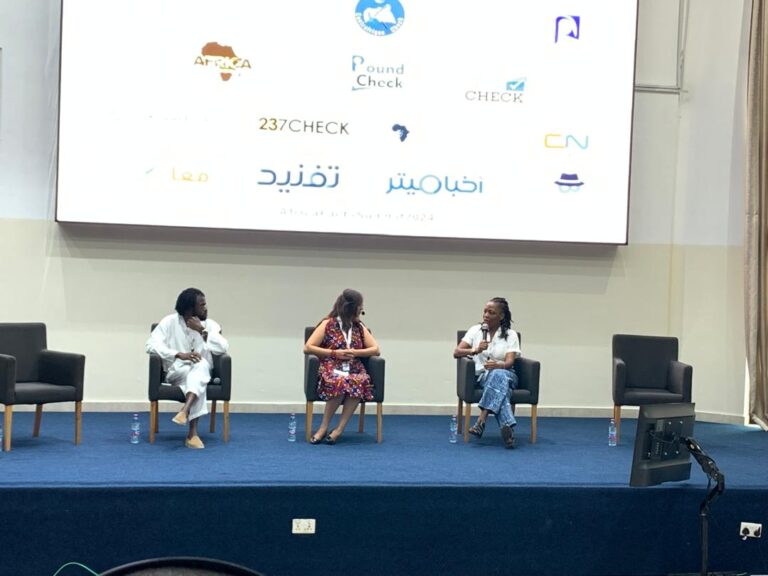
EXPERTS at the 2024 Africa Facts Summit have urged journalists and fact-checkers across the continent to sanitise Africa’s information landscape amid surge in global information disorder.

They gave the charge at the summit which kicked off on October 9, in Accra, Ghana, and which brought together some of the continent’s brightest minds in the fight against misinformation and disinformation.

With the theme Challenges, innovations, and strategic responses to countering Mis- and disinformation in Africa,” the two-day summit aims to reshape the narrative on fact-checking and build resilience against digital deception across Africa.

Noko Makgato, Executive Director of Africa Check, opened the summit with a rallying call for unity in the fight against misinformation and disinformation.

“Let us draw inspiration from each other and unite in our mission to uphold the principles of transparency and trust,” he urged the gathering of fact-checkers, academics and journalists from various parts of the African continent.

His message set the tone for a summit filled with stimulating discussions, workshops, and a renewed focus on collaborative solutions.

“Your voice is crucial in shaping the future of fact-checking on the continent,” Makgato emphasised, encouraging active participation from all attendees.

Also speaking, Professor Abena Yeboa-Banin from the University of Ghana‘s department of communication studies highlighted the critical need to clean up Africa’s information landscape. She noted that while global attention on misinformation grows, African nations often bear the brunt of disinformation campaigns, exacerbated by government responses that sometimes restrict free speech.

“If you move across our continent, there is a constant target of misinformation directed at our various countries and citizens,” she said, pointing out Africa’s vulnerability to foreign information manipulation.

Her remarks underscored the urgency to address these challenges not just from a technological perspective, but also through policies that protect the integrity of information without stifling freedom of expression in the continent.

In her keynote address, Onica Makwakwa, executive director of the Global Digital Inclusion Partnership, stressed the need for a culturally sensitive approach to combating misinformation and disinformation on the continent.

“While these issues are global in nature, we have a unique situation in our continent,” she said. “We’ve got multiple cultures, languages, and histories, as well as an inherited legacy of mistrust. The colonial legacy of manipulating information still lingers.”

Makwakwa highlighted the absence of Africa’s linguistic and cultural diversity in the digital space, calling it a missed opportunity both for preserving indigenous languages and for reducing misinformation.

“We need to see this diversity as a strength, not a barrier,” she added, pushing for an African-centered strategy that respects the continent’s unique context.

A panel discussion titled, “Lessons learned from covering the presidential lections in the DRC and Senegal”, brought real-world insights into the mix. Ange Kasongo of Balobaki Check and Valdez Onanina of Africa Check shared their experiences on how collaboration among fact-checkers helped curb misinformation during these critical elections.

Onanina lauded the Nigerian Fact-Checkers Coalition for its innovative approach, which served as a model for guiding fact-checking efforts across Africa and especially during Senegal’s presidential election in 2023.

Among the summit’s most thought-provoking presentations was, Tall Tales: When Journalists Invent Fiction,” delivered by professor Peter Kimani of the Aga Khan Graduate School of Media and Communications in Kenya. He dissected the phenomenon of fabricated news stories and their impact on public trust.

Another session led by Kwaku Krobea Asante from FactCheck Ghana tackled the troubling rise of gendered and sexualised disinformation in Africa. Asante’s analysis shone a light on the specific tactics used to target women in public life, urging for more robust strategies to counteract these digital attacks.

The award ceremony was the peak of the two-day event and it had participants from various African countries and winners were announced in three categories, namely: Fact-check of the year by a working journalist, fact-check of the year by a student journalist, and fact-check of the year by a professional fact-checker.

In the professional fact-checkers category, Adnan Salif Sidibe from Faso Check, emerged winner with his fact-check of a claim that was made at the opening ceremony of COP28 in 2023.

While acknowledging the honour of receiving the award, Sidibe thanked the summit organisers for giving fact-checkers the platform to showcase their crafts.

In the working journalist category, the trio of Chiagozie Nwonwu, Fauziyya Tukur & Olaronke Alo from the BBC global disinformation team were declared the winners with their fact-check on a claim about the alleged certificate forgery of the current Nigerian President, Bola Ahmed Tinubu.

Nwonwu thanked the organisers of the event while noting that he was happy to receive accolades from colleagues as this is the second accolade they would be receiving for the story due to the sensitive nature of the fact-check.

“It’s very important for us to be recognised for this; these came with a lot of death threats. We had to shut down our Twitter (X) handles… we wanted to hold the government accountable, we wanted to hold the president accountable. There was a lot of internal rebuke done on this story and this is the second time I’m being very happy about this story. This is the second time we are getting thumbs up from colleagues. Thank you,” he said.

In the student journalist category, Rita Enemuru, a student at the University of Uyo, in Akwa Ibom, Nigeria took home the prize.

Enemuru expressed gratitude to Africa Check for giving young people, including students like her, the opportunity to showcase their talent and professionalism while also thanking her superiors for their motivation.

The Africa Facts Summit 2024 summit marks not just a gathering of experts but a pivotal step toward a future where misinformation is met with swift, strategic and collaborative responses, ensuring that truth and accuracy hold firm in the face of digital deception.

Defence minister warns Amaechi for inciting youths over hardship

0

THE minister of state for defence, Bello Matawalle, has accused former minister of transportation, Rotimi Amaechi, of inciting violence and unrest in Nigeria following his recent comments on hardship in the country.

The ICIR reports that the former minister, in a recent interview lampooned Nigerian youths for sitting back instead of hitting the streets to protest the rising cost of living and hardship in the country.

Reacting to this, Matawalle in a statement signed by the ministry’s director of information, Henshaw Ogubike, issued a stern warning to the former minister, urging him to desist from making inflammatory remarks that threaten the peace and stability of the nation.

Matawalle further expressed deep concern over the dangers posed by such rhetoric, adding that the president is working tirelessly  to address the challenges.

“It is both reckless and irresponsible for a former public servant of Amaechi’s standing to incite Nigerians against their own government.

“This is coming at a time when President Bola Ahmed Tinubu is working tirelessly to address the challenges facing the nation through various reforms that are yielding results,” he said.

Also, he cautioned Amaechi to desist from causing violence and casting aspersions on government genuine intentions for the people.

“We will not allow anyone to fuel violence or manipulate the prevailing situation of our people. Let this serve as a final warning to Amaechi and his cohorts.
“It is expected that Amaechi joins hand with the Government to move the country forward ,rather he chose to stay aside with myopic assertions, he added.

Similarly, the special adviser to the president on Information and Strategy, Bayo Onanuga,  condemned Amaechi for the statement, calling him a “leechy dependant on state resources”.

“For almost all of his adult life, Amaechi, has been a leechy dependant on state resources, a voracious beneficiary of official patronage, and a leading participant in the generational devastation of our country’s economy.

“Attempting to hoodwink Nigerians into his web of false empathy and incitement to violence is hypocritical, provocative and dangerous,” he stated.

Onanuga added that Amaechi, Atiku Abubakar, Peter Obi, amongst others are sad for not being a part of the government.

“The only real anger that Amaechi and his fellow tribesmen of naysayers of the likes of Atiku Abubakar, Peter Obi, and Rabiu Musa Kwankwaso, must feel is that they are not in the saddle of government today, he added.

The former minister, Amaechi, in a recent interview berated Nigerian youths for sitting back instead of hitting the streets to protest the rising cost of living and hardship in the country.

The ICIR reports that many Nigerians trooped to the streets in the first and second weeks of August to protest against the lingering hunger crisis experienced since the assumption of President Bola Tinubu into office in May 2023.

EFCC declares oil magnate, Bolaji Akinduro, wanted over fraud

0

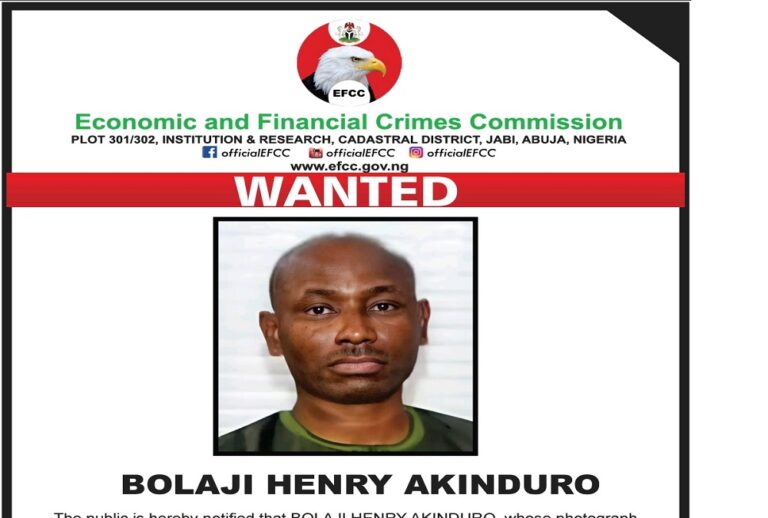
THE Economic and Financial Crimes Commission (EFCC) has declared oil executive, Bolaji Henry Akinduro, wanted over alleged fraud.

Akinduro is the executive chairman of Total Grace Oil and Gas Investment Limited.

The 51-year-old oil executive is accused of obtaining money under false pretence and committing stealing by conversion.

This was disclosed in a statement issued by the EFCC on its X handle and signed by its spokesman, Dele Oyewale, on Saturday, October 12.

The anti-graft agency urged the public to provide information on Akinduro’s whereabouts.

According to the statement, Akinduro’s last known address is 272, Patience Coker Street, Ajose Adeogun, Victoria Island, Lagos State.

The EFCC added that Akinduro is an indigene of Ondo State and advised anyone who knows his whereabouts to report to the EFCC offices in Uyo, Ibadan, Maiduguri, Benin, Makurdi, Kaduna, Sokoto, Ilorin, Enugu, Kano, Lagos, Gombe, Abuja, or Port Harcourt.

“The public is hereby notified that Bolaji Henry Akinduro, whose photograph appears above, is wanted by the Economic and Financial Crimes Commission (EFCC) in an alleged case of Obtaining Money under False Pretense and Stealing by Conversion,” the anti graft agency stated.

Similarly, the commission also declared one Sunday Peter Adu wanted for an alleged case of obtaining money under a pretence and stealing.

According to the EFCC, Adu, 46, is an indigene of Delta State, and his last known address is 154 Ipaja Road, Baruwa, Alimosho, Lagos State.

The commission said anybody with useful information as to his whereabouts should please contact the commission in its offices across the nation.

The EFCC is Nigeria’s law enforcement agency that investigates financial crimes such as advance fee fraud and money laundering, among others.

Again, gunmen attack Plateau community, kill 4

GUNMEN killed four persons in Bokkos Local Government Area of Plateau State on Thursday, October 10.

It was learnt that the attack occurred after many residents returned from the swearing-in of newly elected local government chairmen in Jos, the state capital.

In an exclusive chat with The ICIR on Saturday, October 12, a youth leader in the community, Kefas Mallai, said the gunmen attacked the community around 9 pm, killing four people on the spot.

According to Mallai, during the attack, the gunmen injured many people before fleeing.

He stated that the incident happened between the borders of Bokkos and Barkin Ladi LGAs.

Also confirming the incident in a statement on Saturday, the President of the Butura Youth Movement, Sebastine Magit, gave the names of those killed as Bwefuk Musa, 21; Klingshak Dickson, 21; Promise Joshua, 20, and Nyam Abaka, 20.

Magit said that four innocent persons were killed and five others were injured in the attack, which occurred at about 9: p.m. without any prior warning.

According to the statement, the four young people’s deaths were the most recent in a string of unprovoked attacks on their community, which has seen the deaths of over 20 of its members in the past month alone.

When contacted, the spokesman for the Plateau State command, Alabo Alfred, told The ICIR that he didn’t have any information on the attack.

“I have not gotten that information yet; I can’t confirm it. Let me contact my DPO,he stated.

However, he promised to reach out if he gets any details on the killings.

Over the years, Plateau State, situated in the north-central region, has been battling insecurity as a result of the activities of bandits and terrorists.

On December 24, 2023, suspected gunmen reportedly killed over 70 people in an attack on several communities in the Barkin-Ladi and Bokkos local government areas (LGAs).

According to reports, the assailants attacked residences, looted farm produce, and set houses ablaze.

Earlier on January 24, it was reported that at least 15 people, mostly children and women, were killed by assailants in Kwahaslalek village, a community in the Mangu LGA of the state.

Also in February, about four people were killed by suspected gunmen in two villages of the Miango district of the Bassa Local Government Area (LGA) of Plateau State.

This was disclosed by the district’s traditional council and development association on behalf of the Rigwe nation’s leadership.

The organisation described the recent spike in attacks and killings in the state asbarbaricandcallous.

According to the association’s national publicity secretary, Davidson Malison, the assailants attacked the Nkienzha community in the Miango district of Rigwe chiefdom early on Monday, February 11.

He also said attackers ambushed a car on Friday, February 9, resulting in the burning of the vehicle and injuries to one of the occupants. 

The ICIR, in a report done in June 2024, gathered that despite all the security challenges bedevilling the state, the State House of Assembly approved over N3.5 billion for refreshment and N800 million for abating COVID-19 in the 2024 budget.

Nigerian man bags seven-year jail term for fraud in US

0

A NIGERIAN man in the United States, Oludayo Adeagbo, has bagged seven years jail term for his involvement in a business email breach plot involving millions of dollars.

This was made known in a statement by the US Department of Justice from Principal Deputy Assistant Attorney General Nicole Argentieri.

Argentieri in the statement noted that Adeagbo attempted to steal over $3 million from victim entities in Texas by participating in various cyber-enabled BEC schemes.

Also, in the court documents obtained by the Department of Justice, this 45-year-old had targeted construction companies, local government agencies and a college in the Houston area.

It further stated that Adeagbo, who was also in possession of a British passport, plotted with his partners to steal over $1.9 million from a university in North Carolina.

In August 2022, he arrived US after being extradited from the United Kingdom (UK) to face criminal charges brought in Charlotte and Houston.

He however signed a guilty plea on April 8 to one count of conspiracy to commit wire fraud and one count of wire fraud for his illegal actions in both cases.

He also pleaded guilty after his case was moved from the US District Court for the Southern District of Texas to the US District Court for the Western District of North Carolina.

“Oludayo Adeagbo and his coconspirators perpetrated transnational cyber-enabled fraud schemes that targeted schools, government entities, and companies across the United States, and caused millions of dollars in losses,” the DOJ said.

His Nigerian accomplice, 42-year-old Donald Echeazu, was initially deported to the US from the UK due to the same fraud, in which the University of North Carolina lost over $1.9 million through a BEC scheme.

Echeazu was ordered to pay $655,408.87 in restitution for his part in the conspiracy and received a sentence of 18 months in prison, followed by a year of supervised release on May 16, 2023.

Nigerians living abroad have received different jail sentences in recent years due to various crimes.

The ICIR reported in August that four Nigerians were jailed for helping people live in the UK after being convicted of forging over 2,000 marriage certificates.

The convicts, identified as Abraham Alade Olarotimi Onifade, 41, Abayomi Aderinsoye Shodipo, 38, Nosimot Mojisola Gbadamosi, 31, and Adekunle Kabir, 54, were all sentenced at Woolwich Crown Court in London.

According to the UK home office, the four convicts were members of a criminal group involved in carrying out fraudulent EU Settlement Scheme applications for Nigerian nationals.

Between March 2019 and May 2023, they were caught with several criminal operations including, providing fake Nigerian customary marriage certificates among other fraudulent documentation to help people illegally remain in the UK.

Foreign trips: Tinubu can travel anywhere, he is still on leave – Presidency

0

THE SPECIAL adviser on information and strategy, to President Bola Tinubu, Bayo Onanuga, has declared that the President can go wherever he likes as he is still observing his two weeks’ leave.

The declaration followed criticism trailing Tinubu’s trip from the United Kingdom to France.

Onanuga in a post on his X handle on Friday evening said Tinubu was on leave and could travel wherever he chose.

“He is not restricted to the UK. It is his private time. He can go to anywhere he so desires. He is still observing his leave,” Onanuga tweeted.

The ICIR reported that Tinubu will depart Abuja on Wednesday, October 2, for the United Kingdom to begin a two-week vacation as part of his yearly leave.

According to a statement from presidential aide, Onanuga, Tinubu’s trip to the UK is not only for rest but also a ‘working vacation,’ which he said was aimed at reflecting on the economic reforms undertaken by his administration.

But in a post on X on Friday, October 11, The Senior special assistant on political and other matters to the president, Ibrahim Masari, confirmed on his verified X handle, @KabirIbrah64, that Tinubu was heading to Paris, France from the UK.

“Today, I had the honour of visiting President Asiwaju Bola Tinubu GCFR at his private residence in the United Kingdom, where we engaged in productive discussions. We then departed for Paris, France, for another important engagement,” the presidential aide posted. Masari did not however reveal details of the Paris engagement.

The President’s leave comes at a critical time when Nigeria is grappling with economic challenges, due to policy changes, including the removal of fuel subsidies and reforms in the foreign exchange market.

The ICIR reported that Tinubu stopped fuel subsidies on the day he took over power on May 29, 2023, and subsequently devalued the local currency – the naira – thus causing a spiral hike in food and commodity prices.

While the president admitted the economic hardship his policies and reforms had caused, he recently noted that the reforms were beginning to yield positive results.

In his October 1st, Independence Day address, Tinubu said that his administration had secured over $30 billion in foreign direct investments into the nation since he took over power. 

However, The ICIR reports that his claims conflict with the rising inflation and a hike in the cost of living that have pushed many citizens into despair. 

Many Nigerians have also claimed that these strides have not translated into a visible improvement in their lives, stressing that the hardships had rather worsened.

The ICIR reported that some Nigerians trooped to the streets of Lagos and Abuja, to protest what they described as “the hardships, privations, hunger, unemployment, insecurity, and poverty” that the Tinubu administration foisted on the nation.

The October 1 protest followed a similar demonstration in August.

From Fela Kuti to Jimi Hendrix and The Grateful Dead – the story of music manager Rikki Stein

0

By Alaba ILESANMI, Florida State University

RIKKI Stein, born into a regular, middle-class home in the UK, has had what must have seemed an unlikely career. As a music manager, he has toured the world in the company of music legends – from the late Nigerian Afrobeat star Fela Kuti to American rockers The Grateful Dead and Morocco’s Master Musicians of Joujouka.

The stories of the people working behind the scenes supporting great artists rarely get the spotlight they deserve. But Stein’s recently released autobiography Moving Music is as colourful and compelling as the artists he’s worked with. It serves as a time capsule of sorts, capturing key moments in music history: from the famous Woodstock festival in New York in 1969 and the early years of the UK’s Glastonbury Festival in the 1970s to the emergence of African music on the global stage of the “world music” era of the 1980s.

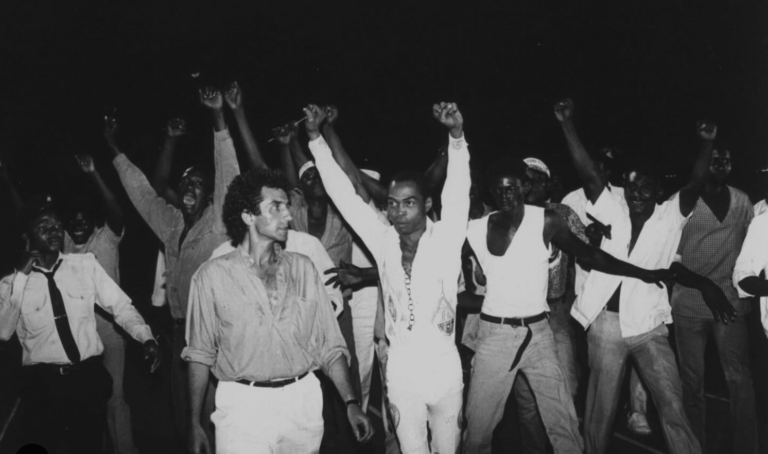
As a music scholar studying the global obsession surrounding Fela Anikulapo-Kuti and the cultural and political contexts that drive it, I was eager to read Stein’s memoirs. A significant portion of Moving Music focuses on his long-standing friendship with Fela and his role as his manager. Stein continues to preserve and promote Fela’s legacy.

He also proves himself to be an astute storyteller as he weaves together a larger narrative about a life of triumphs, tragedies and cautionary tales. From its lush descriptions to its intimate accounts and previously unpublished photos, Stein’s autobiography offers readers a rare insider glimpse into the music business. His writing is rooted in a deep understanding of the industry and the artists who drive it forward.

Who is Rikki Stein?

Rikki Stein was born Eric Stein in 1942 into a modest Jewish family in the London suburb of Ilford – a teenage friend gave him the nickname. Stein’s restless curiosity and disdain for conventional schooling set him on a unique path. He concluded, at an early age, that we are here to:

“Find out. Investigate. Go into things deeply. Change things. Also have a good time.”

Walking out of Ilford County High School on his 16th birthday, Stein immediately set out on a life journey that would take him from the gambling world to opening coffee bars, real estate ventures and, ultimately, his first love – music. His passion for jazz opened the door to his career in music management, at first organising jazz venues.

His world is one of constant motion – moving from country to country, artist to artist, story to story. Stein has toured some of the great artists and bands, including UK and US rock stars Jimi Hendrix, The Grateful Dead, The Kinks, The Animals and The Yardbirds. Stein managed the Moroccan Master Musicians of Joujouka and, of course, the politically outspoken Fela, who drove a new west African music movement called Afrobeat in the 1960s and 1970s.

Despite not knowing what a stereo was or how to differentiate between musical notes A sharp and B flat, he took on the role of producer for French 1960s rock band Les Sunlights. It was the start of his meteoric rise in the industry. Stein later learned the art of recording and mixing, a skill that no doubt shaped his role in the remastering and reissues of Fela’s music catalogues.

As artistic director of French label Barclay Records in the 1960s his job was to find, nurture and record artists. He once travelled from France to the US to meet the parents of a 16-year-old Randy Crawford to sign her. He bungled the deal. Crawford went on to be a star jazz and soul singer at another label. Yet Stein left an indelible mark on the French music industry, the first to ensure that artistic directors receive credits and royalties for their work.

A Screenshot of a post by Rikki on Fela.

Rikki Stein and Fela Kuti

One of Stein’s proudest achievements is his role in ensuring Fela’s rightful place among the most iconic cultural figures of the 20th century. He writes:

“That an artist, 27 years after his death, is able to achieve such results due, in small part, to my efforts on his behalf, serves as a vindication of my dedication to defending and promoting his legacy.”

Stein has earned widespread respect within the industry for his commitment to this legacy. Apart from working on the remastering of the catalogue, he played a vital role in taking Fela, the Musical to Broadway. He also created the UK version of the Felabration events and supports several other projects focused on Fela’s legacy.

British anthropologist Karin Barber concludes, through her studies of west African Yorùbá deities, that gods are made by humans and are kept alive by the attention and partnership of their devotees. In my reading of Fela, I explain how he “created his own myth, and his fans continued to build that mythology over the decades”.

Stein’s efforts have contributed to shaping who Fela has become and how we remember him. His work has helped transform the musician’s posthumous reputation and his emergence as a deity-like, omnipresent figure, ensuring his influence reaches a global audience.

Beyond biography

Biographies are not just life’s story. Music scholars like myself have long used biographical writings as a point of departure for uncovering and exploring broader societal historical events, political economies, and cultural practices.

While Stein’s memoir is rich in stories, it leaves the reader wishing for more primary source material beyond photographs, like letters and newspaper articles. When asked about this in a Zoom call, Stein admitted he had never been much of a collector, a consequence perhaps of his lifelong nomadic tendencies.

For all his years promoting others, Stein has rarely been one to promote himself. Moving Music will undoubtedly shape how posterity remembers him, as he has contributed to shaping how Fela is remembered.The Conversation

Alaba Ilesanmi, PhD candidate, musicology, Florida State University

This article is republished from The Conversation under a Creative Commons license. Read the original article.