Home Blog Page 513

Anambra: underfunding, poor infrastructure trail healthcare scheme implementation

By Alfred AJAYI

THE implementation of the Basic Health Care Provision Fund (BHCPF), a flagship intervention by the Federal Government aimed at improving service delivery at Primary Health Care (PHC) facilities, commenced in 2021 amidst positive reviews from stakeholders in the healthcare sector.  Despite initial successes, BHCPF implementation in Anambra state now faces significant challenges, including an unfriendly economic climate, undue interference by authorities, poor public awareness, and low utilisation rates among enrollees. This report which covers facilities across five local government areas, highlights the urgent need for measures to address these issues.


Virginia Okwunalu clutched a well-worn handbag with a smile stretching into the corners of her eyes. The sexagenarian had trekked to the Ozalla village Primary Health Centre (PHC) in Aguata local government area (LGA) of Anambra state, a familiar path worn smooth by countless visits for her persistent headaches.

This time, though, there was a flicker of hope in her eyes. She is one of the 112 beneficiaries under the Basic Health Care Provision Fund (BHCPF) in the PHC.


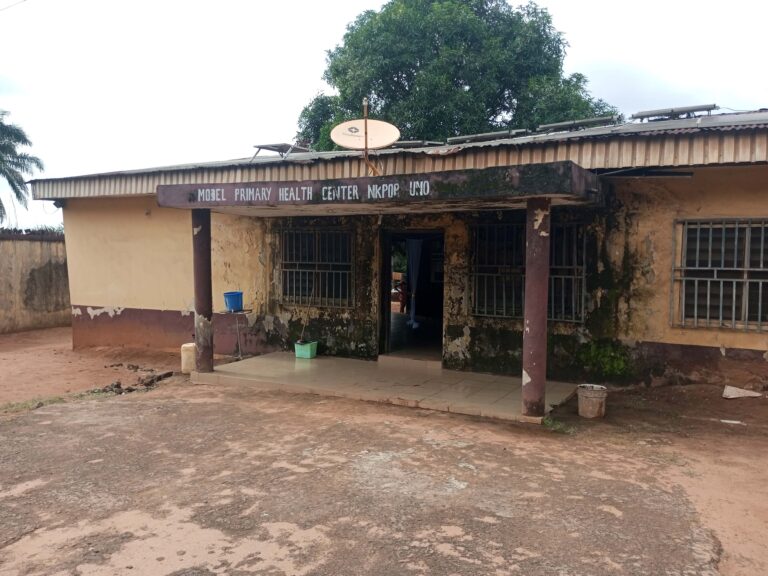
Dilapidated structure at Model PHC Nkpor-Uno, Idemili North LGA

The BHCPF was conceived as a lifeline for Nigerians seeking primary healthcare. In Anambra state, it has brought relief to many, like Okwunalu, who now access the much-needed medical care at her local health centre with ease.

“They diagnosed me with high blood pressure, but thanks to the programme, I finally got the medication and treatment I needed for free,” she said.

However, despite its initial promise, the BHCPF is now facing a multitude of challenges.

Findings by Radio Nigeria revealed that underfunding, persistent shortage of healthcare workers, and dilapidated infrastructure are eroding the gains made thus far. These factors, coupled with undue interference and poor monitoring, threaten to undermine the BHCPF’s potential to deliver quality healthcare to residents of the state.

Economic blow to BHCPF

Established to enhance access to primary health care in Nigeria, the BHCPF derives from an annual grant of at least one per cent of the Federal Government’s Consolidated Revenue Fund, along with contributions from international donors and the private sector. The fund is meant to provide routine daily operational cost of PHCs and ensure access to health care for all, particularly the poor, thus contributing to overall national productivity.

In Anambra, the BHCPF took off in 2021 on showing early signs of success in improving healthcare access. Official data since the programme’s inception shows that it has facilitated 1,407 deliveries, including 99 cesarean sections.

“Since the programme’s inception, we have also recorded 55 deaths, mainly among the elderly, and no maternal deaths among our beneficiaries,” the managing director, Anambra State Health Insurance Agency (ASHIA), Simeon Onyemaechi said.

However, despite these promising statistics, the programme now faces significant obstacles threatening its sustainability. Operated through gateways like the National Health Insurance Scheme (NHIS) and National Primary Health Care Development Agency (NPHCDA), the scheme initially provided N300,000 quarterly disbursement to each PHC, addressing long-standing service delivery issues, according to officers-in-charge (OIC) of facilities visited across five LGAs of the state. However, with inflation soaring to 33.95 per cent as of May 2024, the real value of these disbursements is rapidly diminishing.

The officer -in – charge (OIC) overseeing Model PHC in Nkpor-Uno, Idemili North LGA, Grace Anyaora acknowledged the programme’s benefits but stressed the growing financial strain.

“We used BHCPF funds for crucial upgrades like our incinerator and iron doors,” she explained. “We have not concluded but costs have skyrocketed. For instance, the iron that used to cost N45,000 is now over N100,000. Whatever we can do with the next disbursement, we will do it and use the meagre amount left for other pressing needs.”

Ifeoma Obi is the only government employee at Nise PHC in Awka South LGA. “We managed to do some renovations of our facility with BHCPF funds, but escalating costs mean we can barely cover essential maintenance like painting. For instance, we did the burglary proof in the labour room to provide security and comfort but we couldn’t conclude.

“But when I called the artisan to come to complete the remaining burglary proof left, he said each one would cost N30,000, which is double the initial cost. Not only that, we have an erosion problem that is fast destroying the foundation of the facility and our assessment has shown that N300,000 cannot salvage the situation. Without these repairs, we cannot effectively serve the community.”

At Model PHC Umunna, Odoakpu in Onitsha South LGA, the OIC, Judith Ofomata shared similar concerns. “Our facility’s current state betrays its name, with an uninhabitable kitchen and an exposed roof covered by tarpaulin. There is nothing model about the facility,” she lamented. “The allotted disbursement of N300,000 falls short of addressing our pressing needs. Recently, we went to buy cement and rods for the facility, but the prices were exorbitant.”

Ezeawulu PHC, Nibo, Awka South LGA

The chairperson of the Ward Development Committee (WDC) at St. Monica Health Centre in Woliwo, Onitsha, Ijeoma Okafor, stressed that there is a need for an upward review of the quarterly disbursement. “N300,000 is no longer sufficient for meaningful impact. They should double or triple it, please.”

Ijeoma Okafor, WDC Chairperson, Woliwo Onitsha

Undue interference by authorities

Amidst these challenges, complaints about undue influence from the local government health authorities and the State Primary Health Care Development Agency were widespread among the PHCs visited. This interference has been found to contradict the autonomy that the BHCPF stipulates for OICs and members of the WDCs, particularly the chairperson, in developing appropriate business plans and determining the needs of the PHCs under their wards.

One significant area of concern revolves around the Drug Revolving Fund (DRF) which was designed to ensure a continuous supply of medications at health facilities. While BHCPF guidelines stipulate that State Primary Health Care Development Agencies should directly disburse funds received from the NPHCDA to health facilities, findings show that health facilities in the state are allegedly required to make some payments back to the State Primary Health Care Development Agency (ASPHCDA) for drug procurement after receiving funds from the state agency.

Each facility is required to transfer N50,000 per quarter to the agency’s account, along with additional payments for name tags. These levies, combined with transportation costs to the agency’s headquarters in Awka, further depletes the limited resources of primary healthcare centers (PHCs).

“In June 2024, PHCs under the BHCPF had to transfer N100,000 back to the agency’s account. This covers for the two quarters in 2024. Another N12,802 was paid for name tags,” said Okafor, St Monica Health Centre WDC chairperson.

Healthcare facilities are also obligated to return drug sale proceeds to ASPHCDA. To meet these demands, some facility heads said they sometimes resort to using their personal funds, leading to financial strain.

“I had to reduce the prices and used them (drugs) on the mothers who couldn’t afford them. That’s why I’m still paying off the debt,” Ofomata, Officer-in-Charge at the Model PHC in Umunna, Odoakpu, Onitsha lamented.

The WDC chairperson for Nkpologwu PHC in Aguata LGA, Emmanuel Nwosu said, “Just yesterday (as at interview time), my OIC reduced money for one woman who could not afford the cost of the drugs, but she will have to use her own money to pay the Agency according to the directive.”

For context, if N100,000 was collected from each of the 329 benefitting facilities, the agency would have realised a total of N32.9 million. Additionally, if all facilities paid N12,802 for name tags, the agency would have collected an additional N4.2 million.

The BHCPF guidelines provide opportunity for individual facilities to identify reputable pharmacies close to them where they can procure drugs themselves. But this intended flexibility contrasts sharply with the current procedure in Anambra, where ASPHCDA procures the drugs for facilities, a development which has been blamed for inflating costs and supplying irrelevant medications to healthcare facilities in the state.

Awareness and health insurance utilisation still low

Despite the BHCPF’s aim to expand health insurance coverage, utilisation rate among enrolled beneficiaries is still low. Only 18.1 per cent of residents accessed services under the health insurance component between January and May 2024, according to state data. While this marks a gradual increase from previous years, it remains significantly below the target. The utilisation rate were 14.4 percent in 2021, 18 percent in 2022 and 17.8 percent in 2023.

The health insurance component, which is meant to insure vulnerable residents, has witnessed a slow uptake sparking controversy between authorities at the national level and the State Health Insurance Agency, (ASHIA).

Onyemaechi ASHIA’s managing director explained the challenges. “Health insurance works on the principle that not everyone gets sick at once,” he said. “But with healthcare costs rising, it’s difficult for facilities to handle a sudden influx of patients.”

He also pointed to the financial strain on primary healthcare centers. Each facility serves around 110 people with a government subsidy of N570 per person. “If all patients sought care simultaneously, the funds wouldn’t cover basic services like tests and treatments,” Onyemaechi said.

“Consultation fees, medication costs like paracetamol or anti-malaria drugs, and other related expenses add up quickly. If everyone were to visit the facility every month, the N62,700 paid to each facility wouldn’t cover examinations and other services.”

Delivery couch at Ezeawulu PHC, Nibo purchased with BHCPF

Meanwhile, a cross-section of respondents including civil society activists, who spoke to this medium, attributed the current utilization rate to some factors such as limited awareness, lack of buy-in from critical local stakeholders, lack of engagement and ownership by WDCs.

Other factors are unimpressive state of most PHCs, perennial problem of understaffing and unfriendly attitude of health care workers to beneficiaries, poor road infrastructure, exorbitant transportation cost, and prevailing economic hardship.

However, one notable challenge Onyemaechi emphasized is the requirement for enrollees to have a National Identification Number (NIN).

“Three to four years ago, they insisted that we can only enroll those who had their National Identification Number (NIN). We went to the communities but we couldn’t get people who truly were poor, who had NIN. They pointed us to the National Social Register and most of the names there did not reside in our communities. We ended up using the same register and NIN for registration. But the reality is that most of them did not need the health insurance,” he said.

“So, the CEOs of state health insurance schemes resolved that if the insistence on NIN continues, utilisation will remain poor. We suggested community-based targeting approach and clustered the registration around the health centres. The NHIS accepted that. That is why utilisation rate in Anambra increased to 18.1 per cent.”

PWDs not accessing services

While the scheme has successfully reached children, pregnant women, and the elderly, interviews with OICs suggest a lack of participation among people with disabilities. This is attributed to the disability-unfriendly nature of most facilities and the lack of trained manpower to address their specific needs.

Available data from the Anambra State NPHCDA coordinator, indicates that only 303 out of 37,030 beneficiaries under the scheme are PLWDs, compared to 4,450 pregnant women, 10,091 children under five years, 7,430 aged persons, 1,431 indigent individuals, and 13,325 other beneficiaries.

Reacting to concerns around access for PLWDs, Onyekachi Ololo, programme manager for Justice Development and Peace Caritas (JDPC), Nnewi, said:

“Access for persons with disabilities goes beyond provision of ramps and lifts. How many facilities in Anambra have assistive devices? We cannot achieve Universal Health Coverage if this significant percentage of the population is left out. Any data that excludes them is manipulative, false, and misleading.

“It’s a disservice when citizens are not engaged, and the government portrays a skewed perspective by highlighting only a fraction of interested persons as representative of the entire population. The government should prioritise sensitisation and awareness creation.”

Poor monitoring and supervision

The BHCPF guideline prescribes routine monitoring and periodic evaluation of activities related to the Fund by the respective gateways and their state counterparts. Implementation reports (programmatic and financial) are to include successes, challenges, and limitations for all planned activities in the initial proposals.

The guideline equally charges the National Health Insurance Scheme to conduct quarterly monitoring and evaluation exercises with state health insurance agencies. The Ministerial Oversight Committee (MOC), the State Oversight Committees (SOCs), the Local Government Health Authority (LGHA) Advisory Committee, the Ward Development Committee (WDC), and Primary Health Care Centre (PHC) Management Committees are all provided for to ensure smooth and effective implementation of the program.

However, local government monitoring teams have been accused of not adhering to these protocols.

“We have LGAs imposing the kind of repairs and procurement of equipment and other commodities on the OICs. The WDC chairmen are excluded in the planning and implementation,” said Obiora Agbakwuru, the NPHCDA State Coordinator in Anambra State.

Agbakwuru’s statement was corroborated by Obi, Nise PHC OIC. She said, “I can recollect vividly when I wanted to repair the facility’s faulty borehole with the BHCPF money, they insisted that I must use the money for something else.”

In response, the Head of Planning, Research and Statistics (PRS), ASPHCDA, Casmir Mabia, said that the agency is doing its best in terms of monitoring, adding that the local government health authorities are expected to fill the gap.

“The agency cannot be in every facility. We don’t have adequate manpower to do so. It is the job of the local government health authorities to visit the facilities to see how they function and the challenges they have. They will write their reports to the agency and we will take appropriate decision.”

Health worker sweeping away rain water at the frontage of Ogba-Mbaukwu PHC

Sundry systemic challenges

Other issues affecting BHCPF implementation in Anambra State include inadequate infrastructure and poor staffing. In response, the state executive council recently approved the upgrade of facilities.

Since Governor Chukwuma Soludo assumed office two years ago, the state government has for the first time employed over 480 health workers to cater for the acute manpower shortage in its primary health care system.

Although commendable, this effort is grossly inadequate for a state with 618 functional PHCs and 329 BHCPF facilities, which have suffered serious depletion of their health workforce for decades.

“You hardly see a health centre with two government nurses. The common staff you would see are volunteers, and people are losing confidence. Government should employ more staff including nurses,” said Lawrence Anuruekwe, Ezinifite health centre WDC chairman.

“I also want to advise that government should stop using Officers-in-Charge (OICs) as program managers on too many projects or programs. Because they are often away for programs while their facilities suffer seriously,” he said.

According to Obi, there is an urgent need for massive recruitment of health personnel beyond the recent recruitment of health workers by the state government.

“This is even more important because of the free antenatal and delivery services government is running. More women are coming and the workload in killing.”

Compounding these challenges is the pervasive issue of poor data management and reporting. Inaccurate and incomplete data, delayed reporting, and ineffective data analysis hinders program evaluation and decision-making. Agbakwuru stressed that these deficiencies impede the ability to track program performance and identify areas for improvement.

“In Anambra, implementation is clogged by inaccurate or incomplete data collection, and delays in reporting. These challenges can lead to inefficient tracking of program performance and difficulty in identifying areas for improvement,” he said.

Many people including the commissioner for Health, Afam Obidike, accused some OICs and members of the disbanded WDCs of corruption, an allegation re-echoed by Mabia.

“I approve the business plans for them. Sometimes, they change the approved business plans with correction fluids. I once asked for business plan at a facility and the OIC told me it was at home. There at home, they will clean, rub and change it with the existing items in the facility.

“Some of them have been repairing borehole in their previous business plans. When you see their previous business plans, you will confirm what I am talking about. Some WDC chairmen are bribed to sign cheques for a purpose they don’t know. When we did redeployed staff, some of them went with the cell phone of the facilities, BP apparatus, name them. We started dragging with them before we could recover them.”

Concerning irregularities and corruption of some local government health officials, he said:

“I caught one LGA that is collecting money claiming to be settling some people, directors using my name. I told the OIC to call the person. Immediately she came and saw me, she was shocked.

“Before you know it, a lot of people started calling me. I insisted I am only concerned about the improvement of the place. The OIC actually performed well when I went through their records and performance. Go there today, you will smile.

Agency denies allegations

After a long wait for reactions from the executive director, ASPHCDA, Chisom Uchem, she directed Casmir Mabia to respond to queries from this reporter. Mabia justified the collection of N50,000 per quarter from each PHC.

“During the last assessment, we discovered that some OICs were not buying the drugs they were paid to procure. Some of them didn’t even have common paracetamol and vitamin C.

“We got the state Drug Revolving Fund (DRF) to supply drugs to them so that they have enough drugs to go round. But very soon, the drugs will be supplied by the DMA (Drug Management Agency), which the state is planning to put in place. DMA supplies them the drugs and they pay.”

On the allegation of violating the provision of BHCPF guidelines which empowers only the OICs to purchase drugs for their facilities, Mabia responded, “You cannot call it violation because the guideline provides an option. We do not have a standard registered pharmacy in each of the wards. Many of the pharmacies even in the cities are not registered or qualified.”

Ifeyinwa Ezeibe, OIC of Ozalla Isuofia PHC

The PRS head also responded to concerns about the drugs supplied by the agency. “I am happy that they agreed that the drugs we gave them are quality ones but the price is high. We have a representative of NAFDAC in our DRF committee and we pay to test the drugs. If they do not give their patients quality drugs and adequate treatment, they go to private hospitals and will never return to the PHCs.

“The last time they complained about the prices of some of the drugs, they were asked to return them to the agency. We took them to secondary facilities and they were sold. All we are doing is to make our PHCs busy and active and we direct them to sell the drugs according to the cost.

“They should not add their own because we pay them data money, salary and give some of them accommodation. The state health insurance agency is also giving them monthly capitation. What are they using the money for? When you ask questions, they give you data that is not in existence.”

The commissioner for Health, Afam Obidike, was unavailable for comments regarding the BHCPF programme. On July 16, 2024, he referred inquiries to the executive secretary, ASPHCDA.

The way out?

Addressing the lingering issue bedevilling the healthcare sector in Anambra requires more synergy of purpose between the local, state and the federal government. A good place to start, according to Agbakwuru, is for the state to adhere to the stipulated communication and feedback mechanisms mainstreamed into the BHCPF for easy implementation and collaboration.

“Sticking to the guidelines and other regulations would aid the quick disbursement of funds. The delay last quarter was due to irregularities such as delayed retirement, reports of deductions by some state primary health care boards including Anambra, and reports of procurement of basic needs by the state instead of the facilities’ OICs. If this is resolved, it means we are on the right track.”

The executive director, Civil Right Concern, (CRC),Okay Onyeka, an advocacy group, said the BHCPF will be better implemented if state government commits more financial resources to the fund.

“The government still needs to provide the needed infrastructure for it (BHCPF) to work well effectively. The government has not been able to implement its own budget to complement the N300,000 quarterly disbursement.

“Even the State Primary Health Care Development Agency does not have the budget to build infrastructure. The health ministry does all that. You see that if government does not really devote more funds, it will not work.”

Onyeka also recommended regular training for the Ward Development Committee members to increase BHCPF’s efficiency in their communities.

“Without BHCPF, most of the facilities would have actually collapsed. We must ensure that the WDCs members, who are helping with BHCPF implementation, are trained and their capacity built to mobilize support even from their communities.

Addressing the challenge posed by the DRF, Ehiahuruike advised that PHCs be allowed to purchase their own medicines to reduce costs and ensure that the drugs meet specific standards required.

“I know the agency wants PHCs to get quality drugs. But it should allow the PHCs to buy their drugs while it follows up with proper oversight,” he said.

Meanwhile, Mabia enumerated some steps to improve BHCPF implementation in the state.

“We should change WDCs chairpersons every three years. If the National Primary Health Care Development Agency audit states for sending money to facilities. You also audit all facilities and not a negligible number of them for receipt and utilization.

“Recruit auditor and put one in charge of the local government. After six months, change the auditors. Even the audited report should be verified. That way, corruption at the facilities will end and you get accountability and good performance for BHCPF.

“WDC chairman should not have the final say in anything. Every decision should be taken as a body which comprises of woman leader, youth leader, treasurer, secretary, CSO, and traditional leader in each of the wards. So, how many will the OICs bribe and with how much?”

Commenting on staffing shortages at the facilities, Mabia said, “Each administration is supposed to be recruiting at least 1000 health workers to bridge the gap. But apart from Ngige, Peter Obi and Willie Obiano did not recruit into the PHC sector. But Governor Soludo has broken the jinx as he recruited over 480 health workers. We are hoping that he will do more.

“Those recruited by Ngige will soon leave the service and the gap will become wider. It is the ones that Governor Soludo is recruiting that will remain. If the governor continues, the gap will be closing up gradually.”

This report was made possible with support from the International Budget Partnership (IBP), and the International Centre for Investigative Reporting, (ICIR) under the Strengthening Public Accountability For Results and Knowledge (SPARK 2) project. 
Stakeholders advocate for broadband expansion, public service digitisation ahead of UN summit

CIVIL Society Organizations (CSOs) and other stakeholders have emphasised the urgent need to expand broadband access in Nigeria and digitise public services to drive economic growth and ensure that digital opportunities reach all segments of society, especially low-income and underserved populations.

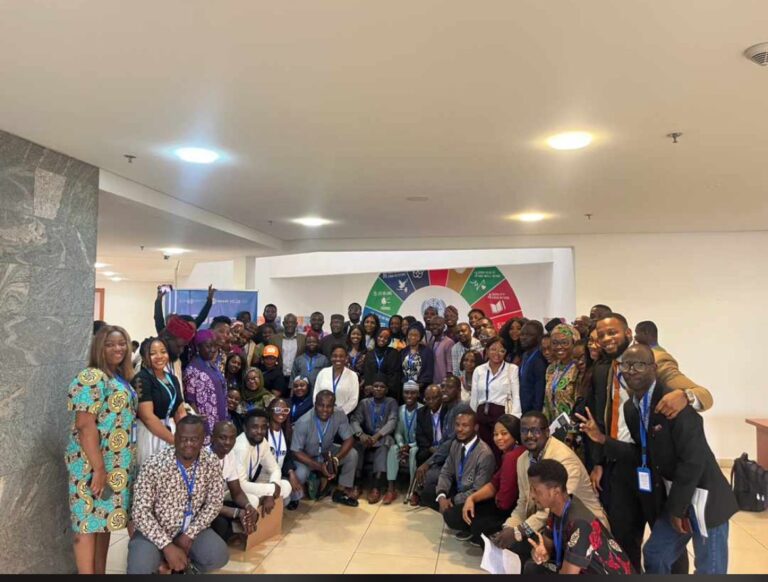
The recommendations were made at a forum held on Thursday, August 15, at the United Nations House in Abuja, organised by the United Nations Nigeria in collaboration with the Federal Ministry of Communication and Digital Economy, the World Impact Development Foundation, and the International Centre for Investigative Reporting.

The forum featured various members of civil society organisations in Nigeria, where they deliberated and made contributions on the current provisions of the Global Digital Compact ahead of the Summit of the Future that will be held in September in New York.

The purpose of the Global Digital Compact is to establish an inclusive global framework, essential for multi-stakeholder action required to overcome digital, data, and innovation divides.

It is expected to outline principles, objectives, and actions for advancing an open, free, secure, and human-centred digital future for all, one that is anchored in universal human rights and that enables the attainment of the Sustainable Development Goals.

In his opening address, Programme Specialist for Culture at the UNESCO Abuja Office, Philippe Delanghe, noted that the forum aimed to provide a vital opportunity to explore how digital transformation efforts could be realised within the framework of the global digital economy.

“UNESCO commends the Global Digital Compact for its role in fostering a safe and inclusive digital environment. We believe the government should prioritise pressing key issues such as digital skills, data privacy, cybersecurity, and the ethical use of technology,” he said.

He also noted that the discussion would be crucial in identifying how Nigerian civil societies could contribute to and benefit from the Global Digital Compact.

The representative of the Ministry of Communication, Salisu Saka, noted that the document was a global guide on how the United Nations wanted the world to move toward digital transformation.

“Largely, what is inside the document is about what we want to achieve; how to do that is left to the jurisdiction and the mandate of the member organisations to come up with their own approach and to manage the goal by implementing the initiatives,” he said.

The Editor of FactCheckHub and coordinator of the Nigeria Fact-checkers Coalition, Opeyemi Kehinde, emphasised the critical role of citizen participation in policy-making.

He said, “It is one thing for the government to pass laws on behalf of citizens; it is another thing for citizens themselves to get involved in how policies are formulated.”

Kehinde expressed his satisfaction with the opportunity given to CSOs to contribute to the Global Digital Compact for the UN General Assembly and emphasised the value of such participation in having a lasting impact on the future.

“We don’t need to be told that in today’s world, we are not only dealing with AI but also with other emerging technologies that are constantly evolving. It is important to recognise that as these technologies emerge almost every day, they are developing tools to innovate globally and make communications easier.”

Kehinde emphasised the necessity for governments to incorporate citizen concerns into their policies, citing this as the reason stakeholders were involved in the forum.

Other suggestions raised by the participants at the forum include the importance of cohesive data governance across government agencies and the establishment of digital governance structures throughout Nigeria’s 774 LGAs to ensure effective and secure data management at all levels of government, further enhancing the efficiency of public services.

Youth empowerment also featured prominently in the discussions, with a strong call for greater support for youth-led initiatives aimed at promoting digital inclusion, particularly in low-income communities. The experts recognised the potential of Nigeria’s young population to drive innovation and growth in the digital economy if given the necessary resources and support.

Moreover, the stakeholders advocated strengthening Nigeria’s position in the global digital economy by promoting digital skills and products within the African Continental Free Trade Area (AfCFTA) and on the international stage.

On Artificial Intelligence, they called for the development of robust frameworks to mitigate potential harms and protect privacy, in alignment with the National Mental Health Act of 2021.

Concerns were also raised about the suppression of press freedom by the authorities and how the Nigeria Cybercrime Act was being used to victimize journalists in Nigeria.

How Akwa Ibom government diverted millions of naira for legislative, judiciary and media projects

By Ekemini SIMON 

NINE months after the nightfall of the Udom Emmanuel administration and the dawn of Governor Umo Eno’s administration, the Government of Akwa Ibom state, in disregard to the state procurement law awarded multi-million-naira contracts across the state judiciary, State Assembly and Ministry of Information. This investigation uncovered gross misconduct in awarding contracts that contravened extant laws and exposed the diversion of funds for some projects.


*Etim (Name changed to protect his identity), a support staff of the Akwa Ibom State Judiciary did not anticipate that his job description would include trekking about a kilometre in search of water to flush toilets at the District Court of Udung Uko local government area (LGA) of Akwa Ibom state. It has now become a recurrent task when a worker or visitor uses the toilets at the courthouse.

Although equipped with functional toilet facilities, the courthouse lacks a functional borehole. According to the court registrar, Uko Uno, this causes discomfort for judges and other court staff. “The court is not faring well at all without water,” he said, adding that the chairman of the court and other staff often rely on support staff to buy water to flush the toilets.

A female staff of the court who requested anonymity for fear of victimisation said she had faced recurrent toilet infections due to poor hygiene, occasioned by the lack of water. “Without running water, a toilet will rarely be clean because people will try to conserve water when using it,” she said, adding, “When I used to use it, I treated toilet infections like twice in six months. I had to stop using the toilet and help myself in the bush anytime I am pressed.”

How funds for borehole projects were diverted

Based on the Budget Performance Report of January – September 2023, the Akwa Ibom state judiciary received the sum of N8 million for the drilling of boreholes at the District Court of Udung Uko LGA. However, in May when this reporter visited the courthouse, he sighted three stanchion tanks, each with boreholes at different locations at the premises.

The Registrar Uko Uno explained that the boreholes and stanchion tanks were old projects constructed between 2007 and 2015. He said the borehole pumps among other accessories, including a solar power provided had been stolen by unknown persons and no new borehole has been provided to the courthouse since then.

The reporter noticed that only one of the tanks was in good condition but Uno said he could not confirm the condition of the borehole and suspects the court could have benefitted from lasting water if the pumps and other accessories as well as security were provided.

Non-functional Boreholes at District Court, Udung Uko.

This investigation reveals that there was no sign of a new borehole for which N8 million was released in 2023. There would equally have been no need for that specific line item if a needs assessment had been conducted before budgeting and subsequent retirement of the funds. The government could have channelled resources to fix and maintenance of the existing boreholes around the Udung Uko court.

Yet again, nine months later, the government of Akwa Ibom state approved another N8 million in the 2024 budget for the same project. This is an indication that the government is aware that the project for which money was retired between January and September 2023 was not implemented.

It was a similar situation at Ikot Akpan Ntebom in Etinan LGA where the Budget Performance Report also showed that between January and September 2023, the state judiciary spent N8 million for the drilling of the solar borehole with a stanchion tank and accessories at the District Court in the area. A visit to the court revealed that although an existing borehole was rehabilitated, solar equipment to run the borehole, as captured in the project description has not been provided by the contractor.

Rehabilitated Borehole without Solar power at District Court, Ikot Akpan Ntebom in Etinan LGA.

Contrary to the project specification of drilling a borehole and providing a stanchion tank, the station staffer, Aniefiok Ekpo, said that the contractor only brought a compressor to flush an already existing borehole provided around 2010 which was no longer in use. He said the contractor also repainted an already existing stanchion tank and bought the necessary accessories to connect it to the toilet.

Water projects for district courts.

At Ikot Abasi LGA, the Budget Performance Report revealed that the state judiciary spent N4 million between January and September 2023 for the drilling of boreholes at Ikpa Ibekwe District Court. Yet, investigation shows that this project was never implemented even though the money was retired as having been spent. Despite this, the state government approved another N8 million in the 2024 approved budget for the same project.

This reporter physically confirmed the 2024 borehole project when he visited the Ikpa Ibekwe District Court and staff of the courthouse, Ekwere Etukafia, clarified that the project was only executed in April 2024. The staff also said no contractor visited the site in 2023. This leaves a question on the whereabouts of the N4 million reported to have been spent in 2023.

Ibekwe-Ikot-Abasi borehole.

Unlike other places, this reporter found that borehole projects awarded at the cost of N4 million each at the Magistrate Court of Urue Offong Oruko, and District Court of Ukana East, Essien Udim, local government areas in 2023 were all executed. A staff of the Magistrate Court of Urue Offong Oruko, Uduak Esin told TheMail that besides improving the sanitary condition of the court, the water project had relieved staff of the stress of trekking long distances to fetch water for the toilet.

However, the registrar of the District Court of Ukana East in Essien Udim LGA,  Eyakeno Inyang said the staff of the court are yet to fully benefit from the water project since there are no toilets in the premises. She called for the provision of toilet facilities so that the water can be reticulated for use and also asked for the renovation of the court as the building was experiencing some cracks.

Executed borehole.
Executed borehole.

Questions over execution of N17.95m worth of court furnishing

According to the Budget Performance Report of 2023, between January and September 2023, the sum of N3 million was spent on the furnishing of Udung Uko District court. When this reporter visited the court in late May, he noticed that there was no new furniture such as seats, windows and door blinds. He, however, noticed a few broken seats while the painting of the court was ongoing on the day of the visit.

The court registrar, Uko Uno, said the contract for the painting was directly carried out by the State Judiciary headquarters in Uyo. He told TheMail Newspaper that in early 2023, a contractor had visited the court claiming to be in charge of the furnishing project. He, however, said the contractor never returned.

Partial furnishing of Udung Uko District Court carried out in 2024. According to the Budget Performance Report of 2023, between January -September 2023, the sum of N3 million was spent on the furnishing of Udung Uko District court. When this reporter visited the court in late May, he noticed that there was no new furniture such as seats, window and door blinds. He, however, noticed a few broken seats while the painting of the court was ongoing on the day of the visit. The Court Registrar, Uko Uno, said the contract for the painting was directly carried out by the State Judiciary headquarters in Uyo. He told TheMail Newspaper that in early 2023, a contractor had visited the court claiming to be in charge of the furnishing project. He, however, said the contractor never returned.
Partial furnishing of Udung Uko District Court carried out in 2024.
Partial furnishing of Efiat Mbo District Court.


In the nearby local government area of Mbo, the Budget Performance Report of January and September 2023 revealed that the sum of N6.95 million was disbursed by the state judiciary for the furnishing of Efiat Mbo District Court. Although painting was carried out in the court, windows and door blinds were not provided. This reporter also sighted seats that had deteriorated in the courthouse.

At Chief Magistrate Court in Nto Edino where N8 million was spent between January and September 2023 on furnishing, this reporter found that the project was not implemented even as the court was under lock.

A staff of another court which shares a fence with the Magistrate Court said the place had been under lock and key for about two years after an incidence of burglary and theft.

N228.3m spent on non-existing high court complexes, generator

Analysis of the 2023 Budget Performance Report shows that between January and September 2023, the government of Akwa Ibom State spent N100 million each for the construction of new-storey buildings at the High Court Complex in Nsit Ibom and Nsit Ubium.

The government had earlier approved a budget of N12.6 million in 2022 for the purchase of a 150KVA generating set for the Magistrate Court Complex, Fulga Street, Uyo.

At Nsit Ibom and Nsit Ubium local government areas, this reporter found that there are no high court complexes and no new buildings provided for these purposes. Nsit Ibom only has a district court at Mbiaso as confirmed by staff of the district court there.

TheMail newspaper had requested information on the location of the project from the Transition Chairman of the Local Government, Oto Aaron but the Transition Chairman failed to respond to calls, text and WhatsApp messages seeking the information. This newspaper had also visited the local government council of Nsit Ubium at Ikot Edibon where local Government staff said they were not aware of any High Court complex in the area.

When Transition Chairman of the Local Government, Mr. Ini Orok was contacted on the location of the project, he said the High Court complex was supposed to be sited on land donated by the local government council at a location close to the Council headquarters in Ikot Edibon.

He explained that the administration before him was the first to give land to the State Judiciary for the High Court complex but the State Judiciary requested for another land because the land provided was a bit remote and far from the main road.

Orok said when he assumed office in late 2023, he obliged the request for the new land and donated a choice land. He however said that it was not his place to explain what had happened to the project after the donated land hence such information should be channelled to the State Judiciary.

TheMail further enquired from the chief registrar of the High Court, Winifred Umohandi on the locations among other contract details of the two projects in the LGAs.  Although she promised to get back to this reporter since July 10, 2024, she has not responded.

While visiting the Magistrate Court Complex in Fulga Street, Uyo, this reporter gathered that the court had a functional N100KVA generating set which serves it and the High Court located within the complex. This, however, did not stop the state government from releasing N8 million (63.5%) from the N12.6 million appropriated for the purchase of a generator in 2022.

However, this investigation found that the generating set was never purchased that year. Again, in 2023, the state government approved N20.3 million for the same purchase. The Budget Performance Report of 2023 shows that between January and September 2023, 100 per cent of the funds voted were released. Yet, when this reporter visited, there was no new generating set besides the old 100kva set.

Old 100KVA Generating set at Magistrate Court Complex, Fulga Street.

State judiciary fails to provide evidence of expenditure

This Newspaper made a Freedom of Information Act (FOIA) request in early June to the Chief Registrar of the High Court of Justice, Winifred Umohandi and Chief Registrar, of the Customary Court of Appeal, Imaobong Essien. The FOI had requested detailed information on the projects. The FOI specifically requested the scope/specification for each project, the contractor, the contract period, the level of completion and remarks for each project. Curiously, in contravention of Section 47 (5) of the Akwa Ibom State Fiscal Responsibility Law which guarantees citizens access to information, the Akwa Ibom State Judiciary failed to accede to the request.

When our reporter contacted the chief registrar of, the Customary Court of Appeal, Imaobong Essien in early June, she told the reporter that all contracts are handled by the Chief Registrar of the High Court of Justice but assured the reporter that the newspaper would get feedback when the request is processed.

Further visits to the office of the chief registrar of the High Court on June 28, and July 2 were futile as she was not on seat. This reporter finally reached the chief registrar of the High Court on phone on July 10. When information on the details and state of the implementation of the projects were requested, she said, “Later on, I will give you details because I have to look through the file.” Reminded that the request was made to her office since early June, Umohandi assured me that she would ask for a copy of the request from her office and respond appropriately. This reporter again shared the details of the request acknowledged by her office through her WhatsApp contact. Further calls, text and WhatsApp messages reminding the chief registrar of the High Court of the need to respond were ignored at the time of filing this report.

N87 Million retired for unexecuted state assembly projects

On July 1, 2024, Governor Umo Eno visited the House of Assembly for an on-the-spot assessment and promised overhaul of some deteriorated facilities which are estimated to gulp millions of naira from the N10.59 billion approved 2024 capital budget of the State Assembly. However, if the millions of naira retired for the assembly projects in the last two years had been put to use, there would have been no need for an overhaul of the deteriorating facilities and thus the funds would be channelled to other pressing needs.

In 2022, when some parts of the roof of the Akwa Ibom State House of Assembly began deteriorating, the state government released the sum of N20 million for the “Re-roofing of the House of Assembly.” Between January and September 2023, it also released N30 million; totalling N50 million in the two fiscal years. Investigations, however, revealed that the project was not executed as the old roof remains in the same condition. Despite the non-implementation of the project, the government in 2024 approved another N350 million for the re-roofing of the Assembly complex.

Water project.
Water project.

The 2023 Budget Performance Report further showed that between January and September, N35 million was retired for tiling of the State House of Assembly Complex. Yet, findings show that tiling work had not been carried out there throughout 2023 to date. Many offices, such as the space used for the Akwa Ibom Legislative Internship Programme and the 13 committee rooms were still fitted with carpets when this reporter visited in May. With the failure to execute the project, again, the Akwa Ibom state government in 2024 approved N50 million for the tiling of the complex.

Within the same period, the Budget Performance Report showed that the sum of N2 million was spent for electrifying the security perimeter fence of the Assembly. When TheMail Newspaper visited in June, there was no provision of an electric perimeter fence, rather the old barbed wire remained. Failure to implement this project has made the State Government to vote another N5m for the project in 2024.

Old barb wire on the fence of the Akwa Ibom State House of Assembly.
Old barbed wire on the fence of the Akwa Ibom State House of Assembly.

State assembly denies implementation of 2023 projects

This newspaper contacted the Chairman of the State Assembly House Services Committee, Effiong Bassey, who handled capital projects at the complex between June 2019 and June 2023 but he said the Assembly did not execute the projects investigated.

“Money was not released for roofing, tiling and the electric fence. The project we executed in 2023 was to re-carpet the chambers, repaint the internal hall and the renovation of the Assembly clinic and ICT Resource Centre,” he said.

Our reporter made attempts to contact Lawrence Udoide, who serves as the chairman of the House Services Committee since June 2023 but he became evasive when asked whether his committee had implemented the projects as shown in the performance report. Udoide promised to reach back to the reporter since July 10 but did not and has not responded to follow-up calls.

Further findings revealed that the projects which Effiong Bassey said the State Assembly had implemented in 2023 had gulped N28 million between January and September, according to the 2023 Budget Performance Report.

Although the projects were captured under the joint item of “Renovation of the Assembly Complex/ Landscaping,” the landscaping aspect of the project was neglected. The landscape of the Assembly has continued to deteriorate with many gallops and stagnant water. Again, the state government has voted another N150 million for a similar joint item captured as “Renovation/Landscaping” in the 2024 appropriation.

Stagnant water on the landscape of the Assembly.

Assembly fails to provide evidence of project execution 

This newspaper wrote an FOI request to the clerk of the Akwa Ibom State Assembly, Nsikak Abasi Orok, in early June requesting details of the project execution. TheMail specifically requested the details of the scope of the projects, procurement method, contract value, identity of the contractor, amount spent and level of completion.

In reply to the letter on June 28 and signed by the Head of Legal Services, Imo Udoh, the Assembly stated: “Be rest assured that we prioritise transparency and adherence to strict legal frameworks in all contractual dealings and are making efforts to provide the requested documents.”

However, more than a month since the reply, the request has not been acceded to. When TheMail reached out to the Clerk on July 3 to remind her that the newspaper was still expecting a response, she said the request was still being processed. With another reminder in early August, the Clerk said she had reminded those concerned to provide the required information. The information and documents are still yet to be provided at press time.

N410 million for government press/billboard not executed 

Hours after the end of former Governor Godswill Akpabio’s administration, on May 28, 2015, the state government installed and inaugurated a $1.5 million rotary press at the state-owned newspaper, known as the Akwa Ibom State Newspaper Corporation. The press consists of a SupraSetter A105 otherwise known as a Computer to Plate (CTP) machine and a God’s Community Press with a web offset press, with the capacity to print 17 colour pages, and 32 black and white pages of newspaper. It also runs 500,000 impression per hour, while the CTP runs a resolution of 2,400 DPI.

Yet, since its inauguration nine years ago, the machine is said to have technical issues, hence not functional while the complex housing it has remained locked. Also, the billboard of the corporation, located at the entrance of the facility provided in April 2018, during the 30th Anniversary of the Corporation, has been torn off.

This, however, did not stop the state government from voting the sum of N150 million in the 2022 approved budget, for a “Government Press/Billboard for Akwa Ibom State Newspaper Corporation.”

According to the Budget Performance Report, between January and June of 2022, the state released N280 million for the two projects, thus making an extra-budgetary expenditure of N130 million from the initial N150 million.

In 2023, the Budget Performance Report also showed another N130 million had been released between January -September 2023. With a total release of N410million, this investigation reveals that neither the Government Press nor the corporation’s billboard have been restored, two years after the first release of funds.

Billboard of the Akwa Ibom State Newspaper Corporation.

When the Secretary of the Corporation, Sarah Nkem, was contacted, she confirmed that the Government Press was yet to be rehabilitated but said the state government had in April 2024 handed over the press to the Akwa Ibom State Investment Corporation for rehabilitation and possible put out for private investment.

Regardless of the funds being retired without implementation, the government of Akwa Ibom State, has in the 2024 approved budget voted N259 million for the same project.


A freedom of information request in March 2024 to the Commissioner for Information, Ini Ememobong, asking for evidence on the implementation of the project was not responded.

However, when contacted, the Commissioner whose ministry supervises the corporation, claimed that the disbursement of N410 million for the project was actually for a digital billboard and may have been wrongly captured as Government Press/Billboard for Akwa Ibom State Newspaper Corporation.

He said: “It is a wrong capturing. While the press is yet to receive a major investment apart from minor maintenance work, the government intends to invest in the purchase of machines or in the alternative, lease it to a credible company to work under the government printer.”

He further said: “What may have likely been misrepresented is the two digital billboards at Ikot Ekpene road by Ikpa road and Nwaniba by Edet Akpan Avenue. They are owned by the state government and operated by the Ministry of Information. They run fully on diesel 12 to 14 hours daily.”

The claim by the Commissioner has been found to be questionable. The approved budgets and the Budget Performance Report for the two fiscal years clearly shows that the projects for the Akwa Ibom State Newspaper Corporation and the ministry were separately budgeted for.

For instance, the 2023 approved budget has a clear line item for the “Fabrication and installation of billboard in the state by the Ministry of Information” for which N30m was approved. Another N15 million was voted for “Billboards, massive jingles, posters and Enlightenment Programmes for the Ministry of Information and Strategy.” N20 million was also approved for “Digital Media Programmes by the Ministry of Information.” This is contrary to the N159m approved budget in 2023 for “Government Press/Billboard” specifically for the Akwa Ibom State Newspaper Corporation.

Assembly found wanting in oversight responsibility 

Although the House of Assembly is empowered with the oversight responsibility in the utilisation of public funds, investigations reveal that the House did not carry out oversight responsibility between January -September 2023 when funds for these projects were diverted.

This newspaper reached out to Hon. Uduak Odudoh who served as the Chairman House Committee on Appropriation and Finance, until June 2023, to enquire on his committee’s discoveries when they monitored the budget implementation of the state’s judiciary, assembly and Ministry of Information. He said since the period fell under electioneering, elections and formation of new government; the committee did not carry out any oversight responsibility.

However, Hon. Itorobong Etim, the committee’s chairman from June 2023 to date said her committee made a documentary review of MDAs performance during the period.

“We invited them to come with their documents and they presented what they said they had done but having to go to the field to see what they have done; you know we cannot really go round. Our appraisal was based on the document that was presented to the House,” she said.

When asked specifically, if the Appropriation and Finance Committee had gone to the field to ascertain the claims of the MDAs together with the money released to them as contained in the Budget Performance Report, Etim said the committee did not need to go to the field.

“What was presented to us did not require that we go to the field. We can’t go around all the projects except there are particular projects which attention has been drawn to my committee and requires that we step out. This can come in the form of a report or a motion that what is being seen is not the same as what is written here, then that is when the committee will move to ascertain it.”

Curiously, the Budget Performance Report shows that between January -September 2023, the State Assembly spent N20 million on “monitoring of budget.” But Hon Etim said she got to the Assembly in June and would therefore not be able to answer how the N20 million was spent.

This reporter then reached out to Hon. Odudoh again but he denied that his committee spent the N20 million. He however said it was possible that other committees or the Appropriation and Finance Committee that succeeded him may have spent the money.

“There were times my successor used to call me for insight on oversight duties. They could have spent the money during their work. Other committees also may have done their oversight during our time. Either case, N20 million is too small for oversight work,” he said.

The claims by Hon. Odudoh have been contentious as investigations reveal that within this period, the House of Assembly did not carry out on-the-spot oversight visits to project sites. House of Assembly correspondents and aides of the assemblymen reached by this newspaper confirmed that field visits for oversight did not take place during the period, as Assembly members were more focused on election and the formation of the new administration. What is more, a review of the official Facebook page of the Akwa Ibom State Assembly shows that within the period, the Assembly did not carry out an on-the-spot oversight duties which could have warranted the N20 million expenses.

However, with both Hon. Uduak Odudoh and Hon. Itorobong Etim, who served as the Chairmen House Committee on Appropriation and Finance, within the period of the release of the N20m for oversight work, denying that their committees spent the money, it raises questions as to the level of transparency and further diversion of funds for works not executed.

Akwa Ibom state procurement law flouted 

Findings reveal that the government of Akwa Ibom State failed to adhere to the provisions of section 16(1a) of the Akwa Ibom State Public Procurement Law (2020) in the award of the contracts considered in this report.

The section provides that “All procurements carried out by all procuring entities in the State shall in all cases, be conducted by open competitive bidding.” TheMail in FOI requests asked for information from the procuring entities on the procurement method that was used in the projects but the requests were not responded to. The Newspaper also, in an FOI request to the Akwa Ibom State Bureau of Public Procurement asked if the Bureau was involved in the procurement.

The Bureau failed to respond to the request, but the executive secretary of the Bureau, Edem Okon when contacted said the Bureau is only a regulatory agency and does not interfere with the contracts of MDAs.

He said the Bureau only come in when the MDAs request for a certificate of no objection. When asked whether the Bureau had given any certificate of no objection for the projects under review, he said he will check and report back to the newspaper. He did not report back at the time of filing this report.

Besides, there are no known information or documents in the media to show that there was a call for bidding on the execution of these projects. This newspaper had also analyzed the functional websites of the Akwa Ibom State Government which are; State Judiciary, Ministry of Finance, Budget OfficeAccountant General Office, and the State Government website for these information but found that they were not available.

The state government, in the procurements also flouted section 54 of the Akwa Ibom Public Procurement law which mandates the State Government in collaboration with procuring entities to promptly and routinely publish procurement information on electronic portal. The procurement portal of Akwa Ibom State has been down since 2022.

Akwa Ibom Fiscal Responsibility Law Flouted

In contravention of the Akwa Ibom State Fiscal Responsibility Law (2020), the Government of Akwa Ibom State has since 2020 failed to publish information on its expenditures on capital projects in its Audited financial statements. It only publishes information on capital projects in its Budget Performance Reports which is not as comprehensive as the Audited Financial Statements. Specifically, section 47(1) has provided that: “The State shall ensure that their fiscal and financial affairs are conducted in a transparent manner and accordingly ensure full and timely disclosure and wide publication of all transactions and decisions involving public revenues and expenditures and their implications for its economy.”

In mid-June, this newspaper had written to the Office of the Accountant General and Commissioner for Finance for the capital expenses in the Audited Financial Statements for 2022 and 2023. This was not responded to despite acknowledgment of the letters.

The newspaper further requested from the Office of the State Auditor General, the Akwa Ibom State Judiciary, Akwa Ibom State House of Assembly and Ministry of Information the Audited Account of the three offices for 2022 and 2023 fiscal years.

The State Auditor General, Isaiah Ntekim in his reply dated June 19, 2024 redirected the newspaper to the three MDAs noting that “Such evidences and documents are domiciled with them.” The State Assembly in their reply dated June 28 had also promised to provide the documents but failed to do so. The Akwa Ibom State Judiciary and the Ministry of Information, despite acknowledgment of the FOI requests failed to respond.

Finance machinery, procuring entities fail to provide evidence of disbursement

The procuring entities and the financial machinery of the government of Akwa Ibom State failed to explain and provide evidence of implementation of the projects despite playing key roles in disbursement of the funds.

In early June, FOIA requests were sent to the Akwa Ibom State Judiciary, as well as Akwa Ibom State House of Assembly, Ministry of Information, Commissioner for Finance and the Accountant General requesting for detailed information and documents of the implementation of the projects.

The Commissioner for Finance, Linus Nkan and the Accountant General, Uwem Andrew-Essien, ignored the requests to their respective offices, which specifically asked for documents on payment requests, approval for payment, amount approved and released.

Although the projects were captured in the books as being spent through the Akwa Ibom State Judiciary, Akwa Ibom State House of Assembly and Ministry of Information, the Accountant General is responsible for disbursing all funds to various government offices under the supervision of the Finance Ministry.

The accountant general is equally mandated with the responsibility of safekeeping account books and ensuring internal control procedures are maintained to safeguard the assets, detect and prevent fraud among other irregularities.

Finance commissioner blames error/ wrong posting

While the Akwa Ibom State Commissioner for Finance, Linus Nkan, failed to respond to a FOIA request, when contacted, he said the millions of naira posted on the projects whose implementation have been controversial were posted in error.

He said not all staff have come to terms with accounting reforms hence they may have made mistakes during postings.

The claim by the Commissioner is, however, questionable as the state started using the International Public-Sector Accounting Standards in 2014 for its accounting. Moreover, the Ministry of Finance, Accountant General’s Office had failed to furnish TheMail with audited financial statements of 2022 and 2023 when requested.

The three MDAs whose projects are considered in this report had also not acceded to the request for their audited accounts when requested.

Breach of Procurement Law short-changes State of Value for money- BudgIT

A civic-tech organisation, BudgIT Foundation, has said the failure of the Akwa Ibom State Government to adhere to its procurement law by making contracts highlighted in this report open means the state will not get value for its money.

The head of Research and Policy Advisory of BudgIT Foundation, Iniobong Usen said, “This is because you did not allow for quality entries that can really provide the goods and services at the least cost possible. A situation where contracts are awarded in breach of clear provisions of the Procurement Law, does not augur well for any system.”

Usen also called on organs of government that have oversight responsibilities over the affairs of government such as the House of Assembly to step up to the plate and conduct real oversight beyond sitting in their comfort zones to securitize documents. He said real oversight responsibility demands comparing documented evidence to checking what is on ground, followed by questions and demand for answers. The head of Research and Policy Advisory explained that relevant laws require that State Auditor General’s office conduct audits to ensure that resources are deployed efficiently and established rules are complied with.

He described the excuse of the Commissioner for Finance that the information posted in the report may have been done erroneously as not tenable. “It is expected that whatever the state publishes as its report should be taken hook, line and sinker as public expenditure,” he said.

Usen however added that audited financial statements remain the final document expected to have gone through all refining processes. He added that the recent trajectory of the government by not making capital expenditures available in its audited report raises questions on government’s intention.

This investigation republished from TheMail is supported by the John D. and Catherine T. MacArthur Foundation and the International Centre for Investigative Reporting under the Open Contract Reporting Project (OCRP). 

FG tightens border controls as Nigeria records 39 mpox confirmed cases

0

AT least 39 confirmed Mpox cases have been recorded across 33 states and the Federal Capital Territory since the beginning of 2024, with no reported deaths.

The Director General of  Nigeria Centre for Disease Control and Prevention (NCDC) Jide Idris, made this known, on Thursday, August 15, at a press conference, in Abuja.

Idris said the centre had been closely monitoring several endemic diseases including Mpox which had been declared a Public Health Emergency of International/Continental Concern (PHEIC/PHECC) by both the WHO and the Africa Centers for Disease Control and Prevention (ACDC).

Mpox is a viral illness caused by the monkeypox virus, with two distinct clades: Clade I and Clade II. The disease can be transmitted through close contact, such as sex, skin-to-skin contact and talking or breathing close to another person. 

Unlike the previous mpox public health emergency, declared in 2022,  caused by the relatively mild Clade 2, the recent outbreak in Congo began with the spread of an endemic strain, known as clade I. 

Meanwhile, the Africa CDC has warned that no fewer than 13 African countries, including previously unaffected nations like Burundi, Kenya, Rwanda, and Uganda, had reported mpox outbreaks. 

Speaking on the cases reported in Nigeria, the NCDC boss noted that the disease was a rare viral zoonotic infectious disease endemic in several African countries including the tropical rainforests of Central and West Africa.

According to him, the exact reservoir of the virus is still unknown although rodents, squirrels and monkeys are suspected to play a part in its transmission.

While noting Nigeria is not exempted in the number of cases reported in the African continent, he added that about 2,863 confirmed cases and 517 deaths across 13 African countries were reported in 2024 alone. 

“So far, about 2,863 confirmed cases and 517 deaths across 13 African countries have been reported in 2024 alone. This alarming increase is linked to a new strain of the Mpox virus which emerged in eastern Congo and has since been detected in Kenya, Rwanda, and Uganda.

“In Nigeria, cumulatively, a total of 39 confirmed cases and zero deaths have been recorded across 33 States + FCT, from the beginning of the year 2024. Bayelsa (5), Cross River (5), Ogun (4), Lagos (4), Ondo (3), and Ebonyi (3) leading the pack,” he said.

Mpox declared global health emergency 

On Wednesday, August 14, the World Health Organization declared mpox a global public health emergency for the second time in two years.

The declaration followed an alarm raised by the Africa CDC on Tuesday, August 8, regarding the alarming spread of the viral infection.

The WHO’s declaration came on the heel of the advice of an Emergency Committee of independent experts who met on Wednesday to review data presented by experts from WHO and affected countries. 

The Committee, according to the WHO, informed the Director-General, Tedros  Ghebreyesus, that it considered the upsurge of mpox to be a public health emergency of international concerns (PHEIC), with potential to spread further across countries in Africa and possibly beyond the continent.

The PHEIC status is WHO’s highest level of alert and aims to accelerate research, funding and international public health measures and cooperation to contain a disease.

FG tightens border control amidst global Mpox outbreak

In response to the Mpox outbreak, the Federal Government said it had intensified monitoring and screening procedures at all entry points in the country.

This was disclosed by the Coordinating Minister of Health and Social Welfare, Muhammad Pate, a professor, in a statement on Thursday.

“This Mpox Clade 1 strain has caused fatalities in up to 10 per cent of individuals who have fallen ill in previous outbreaks,” he said.

He added that the aim was to tackle and mitigate its impact by deploying measures similar to those used during the COVID-19 pandemic.

According to him, the government has implemented a new mandate requiring all travellers to complete an online health declaration form before departing for the country.

“This measure is being introduced alongside the activation of infectious disease centres in all 36 states and the Federal Capital Territory,” he stressed.

The minister further urged the public to practice good hygiene, frequent hand washing with soap and water, or use an alcohol-based hand sanitiser, especially after contact with an infected person or animal.


Tinubu targets gas exploration in new Equatorial Guinea pact

0

NIGERIA President Bola Tinubu has sealed an agreement to develop a gas pipeline across the Gulf of Guinea, as the country naturally stands in an advantageous position where it could exploit gas resources for its benefit.

The President’s spokesperson, Ajuri Ngelale, made this known in a statement on Thursday, August 15 said the new pact will open up more opportunities for gas exploration.

He said Tinubu signed the gas pipeline deal with his counterpart, President Teodoro Mbasogo of Equatorial Guinea.

According to Ajuri, the agreement covers several areas including legislative and regulatory measures for the gas pipeline.

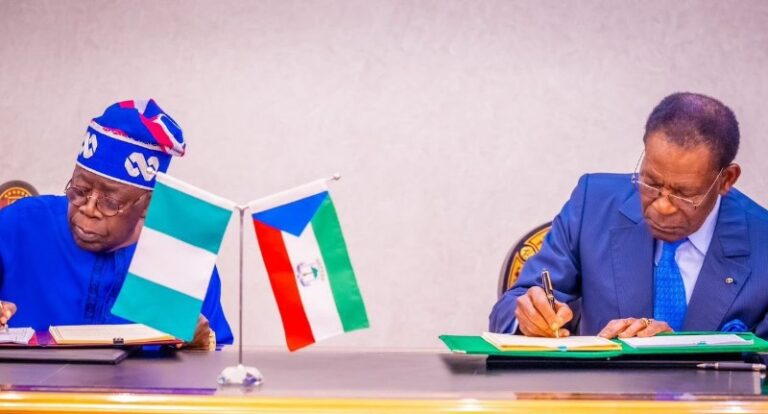
“President Bola Tinubu and Equatorial Guinean President Teodoro Obiang Nguema Mbasogo on Wednesday evening in Malabo signed an agreement on the Gulf of Guinea Pipeline Project, further affirming partnership for mutual development.

“The agreement covered legislative and regulatory measures for the gas pipeline, establishment and operation, transit of natural gas, ownership of the gas pipeline, and general principles,” Ajuri stated.

President Tinubu, who is on a three-day official visit to Equatorial Guinea, remarked that the signing of the agreement will open up new opportunities for gas exploration and employment.

The President hinted at discussing with his Equatorial Guinea counterpart issues related to the creation of employment, food security, multilateral relations, and conflict resolution mechanisms on the continent.

“Concerning Africa, conflicts and conflict resolution were discussed. We discussed various areas of conflict and what we can do to promote peace.

“We talked about the promotion of peace and stability in our countries, and growth and prosperity on our continent,”  Tinubu said.

On his part, the President of Equatorial Guinea was quoted as saying that the signing of the agreement was strategic for Africa’s development.

The global calls for a transition to cleaner energy fuels have continued to grow, The ICIR can report.

In a related development, Nigeria is in an advanced stage of creating a pipeline that will pass through thirteen African countries to Europe.

The Final Investment Decision (FID) on the $25 billion project, Nigeria-Morocco Gas Pipeline (NMGP), will be taken in December 2024, according to the Nigerian National Petroleum Company Limited (NNPC) Limited.

While Nigeria boasts of a staggering 209.5 trillion cubic feet of gas reserves that puts the country at the global top of gas producers and solidified its position as Africa’s natural gas linchpin, however, for years, the country has failed to leverage its vast natural gas reserves

What to know about the ‘Counter subversion bill’ as Ezekwesili, others kick

ON the heels of the recent uproar that greeted the “Counter Subversion Bill”, the ICIR took a deep dive into the bill on what to know about the bill and how it conflicts with relevant sections of the constitution.

The bill has 25 sections with several restrictions on people’s expressive rights.

Already, many Nigerians berated the members and the  Speaker of the Federal House Of Representatives, Tajudeen Abbas for tinkering with such bills when the nation is bedevilled with all manner of problems.

Former Minister of Education and a social critic, Oby Ezekwesili had informed the lawmakers to prepare for her prosecution as she wouldn’t honour the bill if passed.

“Get ready to prosecute me,” Ezekwesili said in reaction to the proposed #CounterSubversionBill which seeks to penalise anyone found guilty of refusing to recite the national anthem, among other rights issues.

A social critique and political affairs analyst, Katch Ononuju, said that the Speaker of the Federal House of Representatives, has realised through the uproar generated by the bill that Nigeria is currently walking through a delicate balance with no room for such kind of “draconian bill”

“The Nigerian nation doesn’t need this type of distraction now. What the government should be talking about now is a quasi-government of national unity that brings everyone together. We just came out of protest and Nigerians are currently going through lots of difficulties already,” he said.

Political analysts and rights activists believe that any bill that is anti-people and doesn’t seek to bring succour to the ordinary man and alleviate people’s sufferings is useless.

A professor of Political Science and International Relations and director of Strategic Partnership at Al-Muhibbah University, Abuja, Muhktar Imam, who reacted to the development told THE ICIR that Democracy is essentially about giving back to society and it’s essentially about good governance and giving back to the downtrodden.

He observed, however, that some sections of the constitution had already dealt with key issues raised in the controversial bill which hitherto, contravenes the bill since the constitution is supreme.

“Democracy is not a draconian system and doesn’t allow you to impose your will on the people, however, good or bad. I don’t see why the bill would have emerged in the first place as Section 34 -41 of the constitution speaks to the issues of treason and treasonable felony and citizens revolt against the state and limits of revolt,” he further said.

A social critique, Ezekiel Zang reacting to the bill said, “Nigeria needs lawmakers who can think outside the box solving intractable problems.

“We don’t need laws creating a box around Nigerians or caging them,” he further said.

Some political analysts believe the  House of Representatives should seek a 10-year prison sentence with hard labour and a N5 million fine for Nigerians who lied under oath, embezzled public funds, or forged certificates to attain public office, not Nigerians who refuse to recite the national anthem.

On Tuesday, August 14, a document titled the Counter Subversion Bill 2024 sparked widespread controversy on social media.

Sponsored by the speaker of the House of Representatives, Tajudeen Abbas, the bill has already passed its first reading but was later withdrawn following public outcry by many Nigerians.

The bill proposes severe penalties for Nigerians who fail to recite the newly approved national anthem or insult politicians and community leaders.

Major provisions of the bill include:

1. Penalty for national anthem violations: Failure to recite the national anthem or pledge could result in a fine of up to N5 million, a prison sentence of five to ten years, or both.

2. Destruction of national symbols: Anyone found guilty of destroying national symbols or defacing a place of worship with intent to incite violence will face a fine of N5 million, a 10-year prison sentence, or both.

3. Unauthorised activities: Setting up illegal roadblocks, performing unauthorised traffic duties, imposing illegal curfews, or organising unlawful processions could lead to a fine of N2 million, five years in prison, or both.

4. Insulting leadership: Insulting, defaming, or bringing disrepute to community, religious, or government leaders carries a fine of N4 million or a two-year prison sentence.

5. Threatening national security: Engaging in activities that foster mistrust, intolerance, or violence threatening Nigeria’s peace and security could result in a fine of N5 million, a 10-year prison term, or both.

6. Illegal occupation of public or private spaces: Forcefully taking over places like worship centres, schools, or public arenas can lead to a fine of N5 million or up to 10 years in prison.

7. Disregarding Nigerian sovereignty: Pledging loyalty to or supporting organisations disregarding Nigeria’s sovereignty could result in a fine of N3 million or a four-year prison sentence.

8. Foreign interference: Receiving financial or political support from foreign entities that conflict with Nigeria’s interests could lead to a fine of N15 million or a 20-year prison term.

9. Undermining national security: Any activities that disrupt community harmony, disturb peaceful coexistence, or undermine national security could result in a fine of N3 million, five years in prison, or both.


READ ALSO:


10. Disobedience to authority: Persistently disobeying or disrespecting constituted authority could lead to a three-year prison sentence on the first offence and seven years for subsequent offences, or a fine of N5 million.

In response to public outcry, Abbas defended the bill, stating that its primary aim is to strengthen Nigeria’s anti-terrorism framework by addressing subversive activities, similar to laws in countries like the United Kingdom, Spain, and Canada.

He emphasised that the House of Representatives, as the “People’s House,” encourages robust public engagement and welcomes input from Nigerians to shape the outcome of the legislation.

‘It is skit,’ says man whose wife tore his passport at airport, begs NIS

0

THE man whose wife tore his international passport at the Murtala Muhammad International Airport (MMIA) in Lagos has claimed that the incident was merely a ‘skit’ gone awry. 

Recall that the couple with three children after arriving in Nigeria,  were involved in a dramatic incident upon arriving in Nigeria.

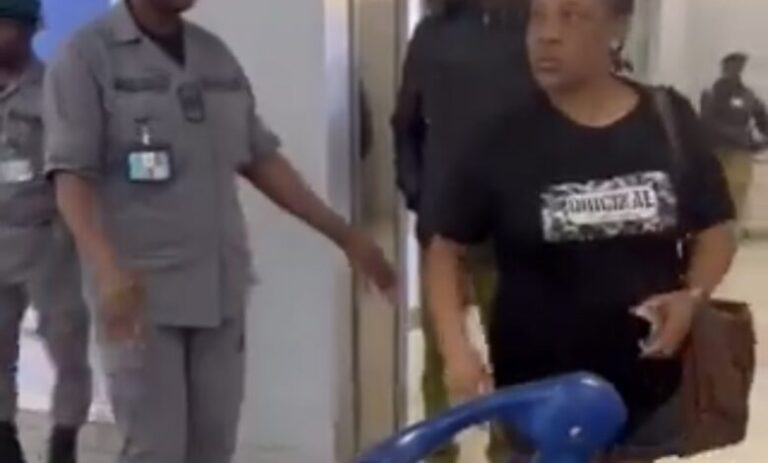
At the Murtala Muhammed International Airport (MMIA), the wife, Favour Igiebor, was seen tearing her husband’s passport and dumping the shreds on the ground before airport staff and fellow passengers.

The incident, which was captured on video, went viral on Saturday, August 10, shortly after the couple arrived in the country.

In the footage, Igiebor was shown shouting at her husband and tearing his passport in a fit of rage.

The commotion at the airport led to widespread reactions from Nigerians on social media, with many expressing their views on the unusual situation.

Consequently, the Nigeria Immigration Service (NIS) on Sunday, August 11, announced that it had launched an investigation into the incident.

The NIS stated that tampering with official documents, particularly international passports, was an offence under Nigerian law and could be a violation of Section 10(b) of the Immigration Act 2015 (as amended), which prohibits the willful destruction of Nigerian travel documents.

However, the husband has since insisted that the entire event was a staged performance meant as a social media skit. 

In a video sighted by The ICIR, via the family channel Jejoja FamilyTV, the man appealed to the NIS and requested forgiveness, explaining that the incident was intended for entertainment purposes and not meant to cause any real disruption

“I am here with my kids to send a message of appeal to the public and the whole world. What my wife tore is (sic) not a passport. She never tore my passport. My passport is intact. It’s a skit of somebody’s story.

“We didn’t know it would turn out this way. I’m begging everybody to forgive us. The immigration has seen my passport,” he said in the video.

However, this was contrary to the response by the wife, Igiebor, in a video circulating on Monday, a few hours after the NIS announced its investigation into the incident.

The ICIR reported that, following the outrage surrounding her actions as shown in a video by @JejojaFamily TV, Igiebor defended herself, citing long-standing marital issues and claiming she acted out of frustration upon returning to Nigeria.

She said she had wanted to tear the passport when they were in Europe but she didn’t want to stress her husband.

Her words: “These issues have been going on for a very long time. I was just dancing to the tune till I arrived (in) my motherland Nigeria which just happened and I did what I did.”

She expressed frustration over social media criticisms that trailed her action and urged the public to consider the underlying reasons behind her action.

She claimed that her husband had been controlling her social media and other aspects of her life, which contributed to her frustration. 

She further challenged those calling for her arrest, demanding to know what offence she committed.

Court seizes three Nigerian presidential jets over Ogun state’s $74.5m debt to Chinese firm

0

A FRENCH court has ordered the seizure of three presidential jets linked to the Federal Government of Nigeria over $74.5 million debt allegedly owed by Ogun State to a Chinese firm.

According to a Premium Times report, the jets to be seized are a Dassault Falcon 7X at Le Bourget airport in Paris, a Boeing 737, and a newly acquired Airbus 330 at Basel-Mulhouse airport valued at over $100 million in Switzerland.

While two of the jets, part of the Nigerian presidential air fleet, are said to have been recently put up for sale, the court order prohibits the movement, sale, or purchase of the jets until the Chinese firm, Zhongshan, receives the awarded $74.5 million.

The French court seized the jets due to the withdrawal of an agreement Ogun State had with Zhongshan.

This followed an application filed by Zhongshan, a Chinese company whose export processing zone management contract with Ogun State was revoked by the state in 2016.

According to the report, an independent arbitral tribunal, chaired by a former President of the UK Supreme Court, awarded Zhongshan approximately $74.5 million in compensation. 

However, the Ogun State government has yet to honour the award.

Consequently, Zhongshan sought enforcement of the award through the French legal system. 

The enforcement judge at the Paris Judicial Court granted the company authority to seize the aircraft, stating in the court order, “This protective seizure will take place to secure and preserve the claim arising from the arbitration award dated 26 March 2021, made by an ad hoc arbitral tribunal.”

The report further indicates that the confiscation of the planes followed a recent UK court-ordered seizure of Nigerian-owned properties in Liverpool, England, related to the same dispute with Zhongshan. 

The properties, for which Zhongshan secured charging orders, are located at 15 Aigburth Hall Road and Beech Lodge, 49 Calderstones Road, in Liverpool, and are estimated by the company to be worth between £1.3 and £1.7 million.

The Ogun State government and Zhongshan have reportedly been in a dispute over the management of an export processing zone since 2016. 

In 2010, Zhongshan’s parent company, Zhuhai Zhongfu, agreed to develop and manage Fucheng Industrial Park within the Ogun Guangdong Free Trade Zone. 

Registered as a free trade zone enterprise in 2011, Zhongfu was later appointed interim manager of the zone. However, in 2016, Zhongfu alleged that the Ogun State government attempted to terminate its appointment and replace it with another manager, leading Zhongfu to initiate arbitration against Nigeria under a bilateral investment treaty with China.

According to the report, on 26 March 2021, an arbitral tribunal issued a final award of $55,675,000, along with interest of $9.4 million and costs of £2,864,445, payable by Nigeria to Zhongshan.

The federal government, including the Minister of Aviation, Festus Keyamo, has yet to comment on this development, as messages sent to the presidential aide, Ajuri Ngelale, and Keyamo have received no response.

Ogun reacts

Meanwhile, reacting to the development, the Ogun State government condemned the seizure of the three Nigerian government-owned aircraft in France by Zhongshan Fucheng Industrial Investment Co. Ltd. (Zhongshan). 

The state government, in a statement posted on its X handle, on Thursday, August 15, revealed that Zhongshan obtained two orders from the Judicial Court of Paris, dated March 7, 2024, and August 12, 2024, without notifying the Federal Government of Nigeria, Ogun State, or their legal representatives.

It further stated that Zhongshan’s actions are part of a pattern of unsuccessful attempts to seize Nigerian assets abroad, noting that Zhongshan misled the Paris court about the nature of these assets and failed to provide necessary disclosures.

The state contended that the aircraft in question were used solely for sovereign purposes and should be protected from attachment under both international and French laws.

The state stressed that it had, alongside the federal government taken swift action to ensure that the ruling on the seizure is lifted without delay.

“It should be recalled that the underlying contract between Ogun State and Zhongshan was executed in 2007, 12 years before the present administration, for the management of a free-trade zone. The parties entered into a dispute in 2015 with arbitration commencing in 2016. 

“By 2019, when the current state administration took office, the hearing at the arbitration had been all but concluded. The arbitral panel awarded over 60 million USD against the Federal Government of Nigeria (FGN) which was a co-defendant, when all Zhongshan had done was to build a perimeter fence around the free-trade zone. Needless to say, this was a bad/unfair decision.

“The present state administration could not in all good conscience allow such an unconscionable and baseless decision, which would dissipate the commonwealth of the good people of Ogun State, to stand.” the statement added.

NJC recommends Kudirat Kekere-Ekun as new Chief Justice of Nigeria

0

THE National Judicial Council (NJC) has recommended Kudirat Kekere-Ekun as the next Chief Justice of Nigeria (CJN).

This followed the end of the tenure of the outgoing CJN, Olukayode Ariwoola.

Having reached the mandatory retirement age of 70, Ariwoola will resign from the bench on August 22.

Kekere-Ekun was recommended as the new CJN during an emergency closed-door meeting originally scheduled for Friday but was moved to Thursday in Abuja.

At the meeting, the NJC also recommended 27 other people as state High Court judges.

If confirmed, Kekere-Ekun will become the second female CJN after Mariam Aloma Mukhtar.

Mukhtar, the first female CJN held the position between July 2012 and November 2014. 

After Ariwoola, the 66-year-old Kekere-Ekun is the Supreme Court’s oldest senior justice in terms of judicial ranking.

Born on May 7, 1958,  Kekere-Ekun has spent 11 years on the bench of the apex court after she was appointed the fifth female Justice of the court on July 8, 2013.

She graduated with an LL. B. from the University of Lagos in 1980 and an LL.M. in November 1983 from the London School of Economics and Political Science. She was called to the Nigerian Bar on July 10, 1981.

Kekere-Ekun was named a judge of the Lagos State High Court on July 19, 1996. From November 1996 to May 1999, she presided over the Robbery and Firearms Tribunal in Zone II, Ikeja, Lagos.

She was promoted to the Court of Appeal on September 22, 2004, where she served in several Divisions before presiding over the appellate court’s Makurdi and Aku Divisions in 2011 and 2012, respectively.

On Monday, July 8, 2013, she was sworn in as the fifth female justice of the Supreme Court, having been promoted to that position.

Kekere-Ekun recommendation came a day after President Bola Tinubu signed into law a bill seeking a new salary structure for judicial officers, including the CJN. 

The bill (now law) substantially increased the annual earnings of the CJN to N64 million, while the President of the Court of Appeal will earn N62.4 million.

The ICIR reports that the upward review of the salary of the judicial workers will also see the justices of the Supreme Court earning N61.4 million annually.

Recall that President Bola Tinubu had in March, transmitted a letter to the Senate to approve a new bill seeking to provide new salaries and allowances for judicial officers in Nigeria.

A breakdown of the bill, as reportedshowed that the CJN would receive a monthly salary of N5.4 million (N5,385,047.26) amounting to N64.8 million per annum.

It also showed that the CJN would receive a monthly basic salary of N1.1 million, and N4.3 million in regular allowances.

Beyond the CJN, the bill outlines salary adjustments for various tiers of the judiciary, with the justices of the Supreme Court earning a total package of N4.2 million, and the President of the Court of Appeal taking home a monthly package of N4.4 million.

Pulitzer Center offers letter-writing contest for students

THE Pulitzer Center is seeking entries to its letter-writing contest, ‘Local Letters for Global Change.’

The contest allows students to practise global citizenship, civic action and persuasive writing while exploring the underreported issues that matter to them through Pulitzer Center news stories.

To enter, students must write a letter to a local elected representative that explains a global issue they want them to prioritise, shows how it connects to their local community and proposes a solution.

Letters may be written in English and/or Spanish.

Students across the globe in high school, middle school or elementary school can enter a writing contest.

First-place winners will receive US$300 and their letters will be published on the Pulitzer Center’s website.

The deadline for the submission of application is November 15, 2024.

Interested applicants can apply here.