Home Blog Page 516

Tinubu signs bill seeking upward review of judicial officers’ salaries into law

0

PRESIDENT Bola Tinubu has signed into law a bill seeking a new salary structure for judicial officers, including the Chief Justice of Nigeria (CJN). 

The bill (now law) substantially increased the annual earnings of the CJN to N64 million, while the President of the Court of Appeal will earn N62.4 million.

A statement on Tuesday, August 13, in Abuja by the Special Adviser to the President on Senate Matters, Basheer Lado, a former senator, described the signing of the bill by the President as a landmark achievement and a manifestation of his unwavering commitment to the welfare of Nigeria’s workforce.

The ICIR reports that the upward review of the salary of the judicial workers will also see the justices of the Supreme Court earning N61.4 million annually.

Recall that President Bola Tinubu had in March, transmitted a letter to the Senate to approve a new bill seeking to provide new salaries and allowances for judicial officers in Nigeria.

Following the transmission, the Senate, on Wednesday, June 5, passed a bill proposing the upward review of the salary.

The Senate President, Godswill Akpabio, declared the bill passed following majority support from senators, who expressed their decision through voice votes.

The Red Chamber passed the bill after deliberation on a report from its Committee on Judiciary, Human Rights, and Legal Matters, which its chairman, Tahir Monguno, presented.

This development came about 10 weeks after the House of Representatives passed the bill which sought to increase judicial officers’ salaries, allowances and benefits. 

Announcing the signing of the bill into law, the federal government urged judicial officers to redouble their efforts to ensure that justice is served speedily.

“This extraordinary move underscores Mr President’s absolute prioritisation of the welfare of Nigerian workers above all else just like he did when he recently put on hold an ongoing Federal Executive Council meeting to assent to the new National Minimum Wage Bill of N70,000,” the statement reads in part.

According to Lado, the new Act “prescribes salaries, allowances, etc. for judicial officers to reflect the changing realities and consequentially amend the provisions of the Certain Political, Public and Judicial Office Holders (Salaries and Allowances, etc.), Act, No.6, 2002 (as amended) to delete the provisions relating to Judicial Office Holders.”

“This landmark decision reflects Mr President’s profound dedication to ensuring that every salary earner in Nigeria, especially those serving in vital and strategic roles, receives the recognition and compensation they deserve.

“By prioritising the financial wellbeing of our judicial officers, Mr. President is not only reinforcing the integrity of our justice system but also setting a new standard for leadership that truly values the hard work and sacrifices of all Nigerian workers,” the statement added.

Breakdown of high-ranking judicial officers’s salaries

A breakdown of the bill, as reported, showed that the CJN would receive a monthly salary of N5.4 million (N5,385,047.26) amounting to N64.8 million per annum.

It also showed that the CJN would receive a monthly basic salary of N1.1 million, and N4.3 million in regular allowances.

Beyond the CJN, the bill outlines salary adjustments for various tiers of the judiciary, with the justices of the Supreme Court earning a total package of N4.2 million, and the President of the Court of Appeal taking home a monthly package of N4.4 million.

The Chief Judge of the Federal High Court, President of the National Industrial Court, Chief Judge of FCT High Court, Grand Kadi FCT Shariah Court of Appeal, President of FCT Customary Court, Chief Judge of State High Court, Grand Kadi State Shariah Court of Appeal, and President, State Customary Court of Appeal are expected to earn N42.3 million as annual regular allowances.

#EndBadGovernance protest: Coalition challenges Tinubu to be accountable to Nigerians

0

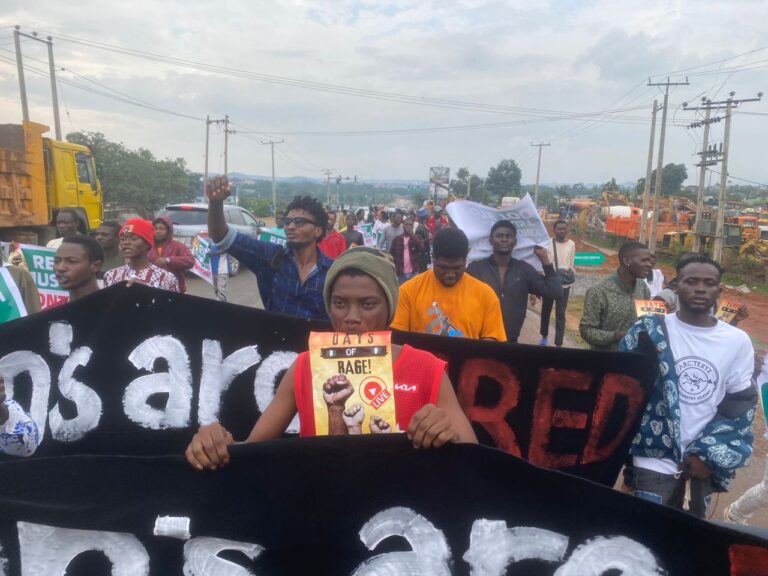
A COALITION of 18 civil society organisations (CSOs) has challenged President Bola Tinubu to be accountable to Nigerians as the #EndBadGovernance protest across the country has been halted. 

In a statement jointly signed by the group, including Accountability Lab Nigeria, Paradigm Initiative, BudgIT Foundation, Global Rights, and Yiaga Africa, the coalition said the President’s speech during the protest failed to address protesters’ demands.

“On Sunday, August 4, Tinubu addressed the nation for the first time amidst the raging nationwide #EndBadGovernance protests. Unfortunately, the President’s address failed to address the core demands of the Nigerian people.

“It is crucial for the government to remember that ‘sovereignty belongs to the people of Nigeria, from whom the government, through this Constitution, derives all its powers and Constitutional & Judicial authority,’ as stated in Section 14(2) of the 1999 Constitution (as amended) which also provides that:

“The security and welfare of the people shall be the primary purpose of government and engagement with citizens based on their articulated needs and demands is imperative if the government is to fulfil one of its most basic functions – ensuring their welfare,” the group said.

It pointed out that despite the President acknowledging some concerns, including investment in agriculture and student loan disbursement, he ignored several key demands.

Some of the demands listed by the coalition include constitutional, judicial, and electoral reforms, the establishment of a living wage, human capital development, protection for farms and farmers, reversing the high cost of living, and making life comfortable.

The ICIR reports that many Nigerians trooped to the streets to protest poor governance and economic hardships caused by Tinubu’s reforms.

The protests were marred with violence, largely caused by the security operatives in places like Lagos and Abuja, where protesters were subjected to tear gas and harassment.

On the fourth day of the protest, the President called on the protest organisers to dialogue with his government, and immediately suspend the demonstration while condemning the attacks on property and lives.

Giving their assessment of each of the protesters’ demands in the manner Tinubu responded to them in his address, the CSOs noted that the citizens had called for measures to reduce the high cost of food through strategies such as food importation, subsidised credits and improvements in logistics and storage.

The coalition said Tinubu in his broadcast claimed that his administration provided incentives to farmers to increase food production at affordable prices, released over 570 billion naira to the 36 states to expand livelihood support, and distributed fertilizers and farming equipment which they said were yet to arrive in the county.

The CSOs noted that the interventions were insufficient as the immediate support needed clarification, adding there was no indication when the impact of such measures would be seen.


READ ALSO:


The citizens also demanded a reduction in fuel prices, electricity tariffs and import taxes. The President in his response said there would be a removal of tariffs and import duties on foods namely rice, wheat, maize, and sorghum for the next six months. which the CSOs described as a partial response.

The coalition called on the President to take immediate action to end the insecurity, hunger, and corruption by cutting down the costs of governance and demanded an explanation of the short, medium and long-term steps taken to address insecurity.

It also urged the government to progress with its pledge to engage with the citizens and address their grievances.

Kwara inaugurates taskforce to tackle indiscriminate refuse dumping

0

By Dare AKOGUN

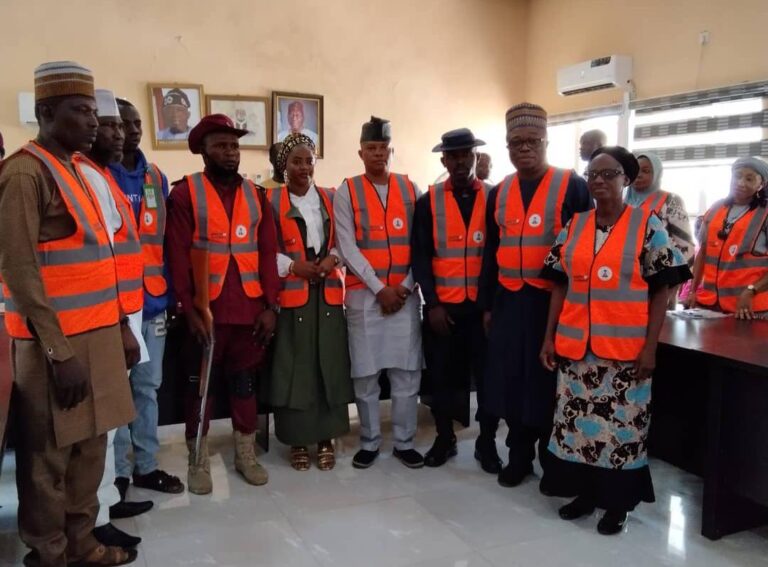
THE Kwara State government has inaugurated a 300-member task force to tackle indiscriminate refuse dumping in the Ilorin metropolis.

Launching the team, the State Commissioner for Environment, Nafisat Musa Buge, emphasised the urgent need to tackle the pervasive problem of improper waste disposal in the state capital.

She said the initiative reflected the state government’s commitment to maintaining a clean, healthy environment and preventing potential disease outbreaks such as cholera and other communicable diseases prevalent in the country.

“Indiscriminate dumping of refuse is a widespread issue that demands immediate intervention,” Buge stated. She added, “Our approach involves both aggressive waste management reforms and public sensitisation on the hazards of improper refuse disposal.”

To effectively, combat the challenge, the ministry outlined several new strategies.

“Dumping refuse on road medians, road dividers, roundabouts, gutters, drainage channels, and waterways is now prohibited. Violators will face penalties.

“Larger roll-roll waste bins previously placed on roadsides and roundabouts will be relocated to secure areas to prevent obstruction of vehicular traffic. Smaller waste bins have been positioned at various collection points for efficient waste evacuation,” Buge noted.

According to her, the ministry has engaged 38 commercial waste consultants assigned to different communities to facilitate refuse collection for a nominal fee.

The government will also collect waste in mobile vans, adding that scavenging in the metropolis has been prohibited.

She directed registered scavengers to conduct their activities at the government-approved dump site at Sokoto-Aiyekale.

Buge said the Ministry would continue its efforts in community engagement and media sensitisation to promote proper waste disposal practices.

She stated that the newly inaugurated task force would operate round the clock to monitor compliance with the regulations.

Chief Magistrate Ibrahim Dansuki, who administered the oath of allegiance to the task force members, underscored the importance of adhering to environmental laws to avoid penalties.

A report by The ICIR revealed how Kwara communities faced epidemics threats from filthy environment.

#EndBadGovernance: Police move protesters flying Russian flag to Abuja

0

THE Kano State Police Command said it had moved about 76 suspects arrested for flying Russian flags during the #EndBadGovernance protest to the Force Headquarters, Abuja.

The command said the suspects, which include a foreigner, would be put through a discreet investigation and charged with sedition.

The Commissioner of Police (CP) in Kano State, Salman Garba, disclosed this on Monday, August 12, while giving an update on the people arrested during the nationwide hunger protest that turned violent in the North.

He said the press conference was to highlight the success made by the command in the areas of crime prevention, management, and control since August 1 when the @EndBadGovernance protest started.

“In line with the directives of the Inspector-General of Police, Kayode Adeolu Egbetokun, to all commands and formations, the Kano Command worked diligently and professionally towards addressing the aftermath of these events, and these efforts resulted in the arrest of 873 suspects and recovery of large quantity of exhibits,the CP stated.

The CP also revealed thearrest and prosecution of 150 suspects for violating the curfew enforced by the Kano State government.”

According to Garba, six people were detained on suspicion of planning the destruction, burning, and looting of the Kano Printing Press.

Besides, he revealed that 600 suspects were arrested and being prosecuted for a variety of offences, including criminal conspiracy, inciting disturbance, riot, theft, mischief, and arson.

He stated that the police found evidence of looting by thugs in areas including the Audu Bako Secretariat NCC Office, High Court Complexes, Kano Printing Press, and Super Markets.

He added that the command recovered two AK-47 rifles and other valuable assets.

Meanwhile, Kano State Governor Abba Yusuf has suspended the curfew imposed on the state.

The State Commissioner for Information, Halilu Dantiye, disclosed on Monday, August 12.

On August 1, the state’s governor enforced a 24-hour curfew after the hunger protest turned violent, resulting in significant damage to both public and private property as well as looting in the state.

The ICIR reported that insecurity, inflation and a hike in the cost of living among others pushed many Nigerians to stage a nationwide protest.

Tinubu had stopped fuel subsidies and devalued the local currency – the naira – thus causing a spiral hike in food and commodity prices and making life unbearing for many citizens. 


Alicia Patterson Foundation offers reporting fellowship

The Alicia Patterson Foundation (APF) is seeking entries to its Alicia Patterson Fellowships, which aim to foster and sustain the best traditions of journalism in the United States.

The fellowships support journalists engaged in rigorous, independent and sceptical work that will benefit the public.

Grants are awarded for both one-year and six-month projects. Fellows receive US$40,000 for the full-year stipend and US$20,000 for the six-month fellowship.

An additional fellow specialising in either science or environmental journalism will be selected as a Cissy Patterson fellow, in honour of publisher Cissy Patterson.

Full-time print journalists and photographers can apply for a fellowship.

Non-U.S. citizens are also eligible but must be working full-time for U.S. print publications, either in the United States or abroad.

The application deadline is October 1, 2024.

Interested applicants can apply here.

Nigeria now selling arms to many African countries – Defence Minister

0

NIGERIA has started selling arms and ammunition through the Defence Industry Corporation of Nigeria (DICON) to many African countries.

The Minister of State for Defence, Bello Matawalle, said this at the ministry’s headquarters, Abuja, on Monday, August 12, while addressing journalists on the activities lined up for the 60th anniversary of DICON and the launch of the maiden edition of the Africa Defence Industries conference.

According to Matawalle, the achievement was made possible through the recently passed DICON Act 2023, which has the potential to greatly increase Nigeria’s foreign exchange profits and contribute to both national security and development.

He assured that DICON could produce arms and ammunition for local and international use.

Additionally, Matawalle emphasised the government’s dedication to strengthening defence capabilities via innovative ideas, strategic alliances, and technical breakthroughs.

He reminded the gathering that the purpose of DICON’s establishment in 1964 was to guarantee that the defence industry contributed substantially to scientific advancement and national security.

“Today, DICON is celebrating 60 years of dedicated service in the production and repair of military hardware and equipment. Since its establishment, DICON has played a crucial role in Nigeria’s defence sector, collaborating with indigenous companies to achieve excellence in military manufacturing,” the minister stated.

He explained further that DICON started as a small organisation, concentrating on the production of small guns and ammunition. Over time, the company increased its capacity and started producing military vehicles, artillery, and other defence equipment.

President Bola Tinubu signed the DICON bill into law in November 2023.

Presidential spokesperson Anjuri Ngelale disclosed Tinubu’s assent to the bill in a statement.

According to Ngelale, the Corporation’s Law was first passed in 1964 and later amended in 2004 to become the DICON Act, included in chapter 94 of the Nigerian Constitution.

The ICIR reports that as claimed by the minister, Nigeria sells arms to other countries, even though it has faced insecurity for over a decade. Military chiefs have blamed inadequate arms, porous borders, arms proliferation, weak intelligence and poor welfare for the security forces as some of the reasons the crisis has lingered.


Anna Politkovskaya-Arman Soldin prize for courage in journalism seeks applications

France Diplomatie launches and seeks entries into the second Anna Politkovskaya-Arman Soldin Prize for Courage in Journalism.

This prize aims to pay homage to two figures who were killed in the line of duty and symbolise journalistic courage: Russian journalist Anna Politkovskaya and French-Bosnian photojournalist for AFP Arman Soldin.

Anna Politkovskaya paid with her life for her investigations published in Novaya Gazeta on corruption, human rights violations and the war in Chechnya.

Arman Soldin was killed in the field on May 9, 2023. His work helped inform the entire world of the reality of Russia’s war of aggression against Ukraine.

Journalists and photojournalists committed to carrying out their essential role of spreading information, particularly in crisis or conflict theatres, are invited to apply.

The prize will be awarded in early November 2024, marking the International Day to End Impunity for Crimes against Journalists.

The winner will receive EUR10,000 (US$10,921) to finance a project.

The deadline for applications is August 30, 2024. Interested applicants can apply here.

Nigeria’s crude oil production slightly above 1.3mbpd in July – OPEC

0

FOR the first time in five months, Nigeria’s crude oil production rose above 1.3 million barrels per day (bpd) in July, according to Organisation of Petroleum Exporting Countries (OPEC) monthly oil market reports.

The report released on Monday, August 12, revealed that Nigeria’s crude oil production rose slightly to 1.307 million bpd in July.

It means Nigeria added 30 thousand bpd to its production in July compared to the production figure of 1.276 million bpd in June.

The ICIR reports that Nigeria’s crude oil production figure has trended below 1.3 million bpd since February.

In February, its crude oil production stood at 1.32 million bpd, it dropped to 1.23 million bpd in March, increased to 1.28 million bpd in April, declined to 1.25 million in May, rose to 1.28 million bpd in June, and up above to 1.307 million bpd in July.

Since the beginning of the year, Nigeria’s crude oil production highest in January at 1.43 million bpd has failed to meet the OPEC quota of 1.5 million bpd and is far from reaching the country’s 2024 budgetary production benchmark of 1.78 million bpd.

According to OPEC, the data on the country’s crude oil production provided above is based on direct communication with the Nigerian authorities.

In the review month, Nigeria maintained its position as Africa’s largest oil producer as Libya, Algeria, and other countries came behind.

Nigeria’s failure to meet the OPEC quota affects the proceeds from the country’s crude oil production expected to boost its foreign reserves and improve liquidity in its foreign exchange market.

Its failure also to meet its budgetary benchmark makes it impossible to execute projects and creates revenue shortfalls for budgetary provisions, leading to the budget deficit the country has experienced over the years.

The Nigerian National Petroleum Company Limited (NNPCL) believes that the country can conveniently produce two million barrels of crude oil per day, but that the major impediment to achieving it lies in the inability of players in the industry to act promptly.

The state-owned oil company has continuously blamed the inability to meet production quota on pipeline vandalism, militancy, and insecurity in the country.

OPEC cuts oil demand growth forecast

On Monday OPEC stated that it would cut its forecast for global oil demand growth in 2024 citing softer expectations for China, and the pace of the world’s transition to cleaner fuels.

The reduction highlights the dilemma faced by the wider OPEC+ group in raising production from October.

This will be the first cut in OPEC’s 2024 forecast since it was made in July 2023 and comes after mounting signs that demand in China has lagged expectations due to slumping diesel consumption.


READ ALSO:


In the monthly report, the OPEC said world oil demand would rise by 2.11 million bpd in 2024, down from growth of 2.25 million bpd expected last month.

“This slight revision reflects actual data received for the first quarter of 2024 and in some cases for the second quarter, as well as softening expectations for China’s oil demand growth in 2024,” OPEC said in the report.

OPEC also cut next year’s demand growth estimate to 1.78 million bpd from 1.85 million bpd previously, also at the top end of what the industry expects.

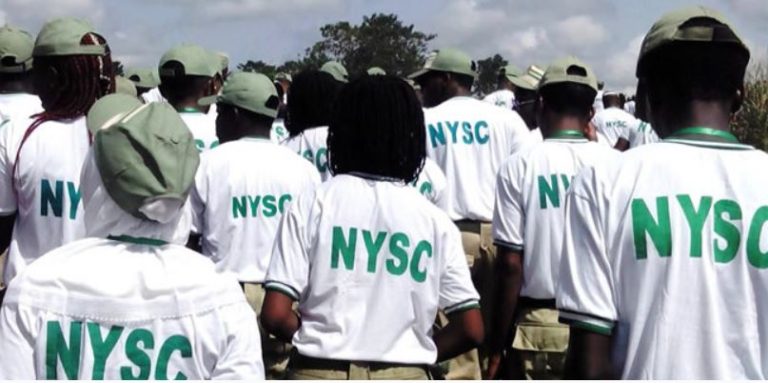
NYSC invalidates certificates of 101 UNICAL graduates

0

THE National Youth Service Corps (NYSC) has invalidated the certificates of 101 graduates fraudulently mobilised by the University of Calabar (UNICAL) during the 2021, 2022 and 2023 service years.

This action, according to a statement by NYSC’s Director of Information and Public Relations, Eddy Megwa, on Monday, August 12, follows the discovery that 99 of the said graduates and two others on exemption were fraudulently mobilised despite being ineligible for the scheme.

Established in 1973, the NYSC is a programme created by the Nigerian government to foster national unity, promote patriotism, and equip young people with self-employment skills, among other objectives.

Every Nigerian graduate under 30 must participate in a one-year service, during which they are deployed to various states to work in different sectors.

The NYSC emphasised its unwavering commitment to maintaining the integrity of the national service programme by ensuring that only qualified graduates from local or foreign universities are recognised and issued certificates of national service. 

The statement reads, “This is to inform members of the public that the under-listed 99 persons and two (2) others on exemption were fraudulently mobilised by the University of Calabar for national service during the 2021, 2022 and 2023 NYSC service years.

“Management of the National Youth Service Corps hereby restates its strong commitment to ensuring that unqualified locally and foreign-trained Nigerian youths, especially those purported to have graduated from unaccredited universities, are not recognised while only qualified persons are issued with NYSC certificates of national service.”

“Arising from the above, the certificates of national service of the under-listed persons have been invalidated forthwith by the NYSC management.”

The NYSC also advised the public to confirm the authenticity of NYSC certificates of national service, exemption, and exclusion letters through the NYSC National Directorate Headquarters in Abuja before accepting them for any official purpose.

“Members of the public, especially corps employers, government ministries, departments and agencies (MDAs), corporate and religious organisations, multi-national companies, corps producing institutions and other critical stakeholders of NYSC are to take note of this advertorial for prompt action,” the statement added.

Court dismisses case aiming to stop #EndBadGovernance protest from continuing

0

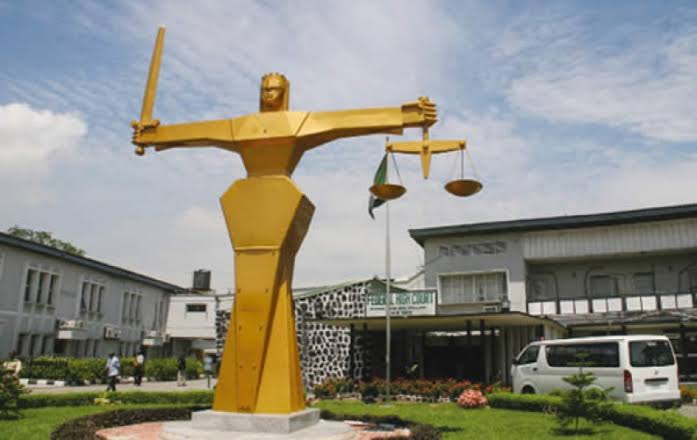
THE Federal High Court (FHC) Abuja has dismissed an application aiming to stop the just concluded #EndBadGovernance protesters from continuing with the demonstration across Nigeria.

The protest with the hashtag #EndBadGovernance was organised from August 1 to 10 across the nation to show displeasure with high inflation, corruption and hunger in the country.

Danladi Goje, Buky Abayomi, Adiza Abbo, and 13 others sought the interim injunction restraining the protesters under different platforms from continuing with the protest.

In the lawsuit filed on August 12, they requested the protection of their fundamental rights against the groups organising the #EndBadGovernance protest.

Organisations mentioned in the case include the Take It Back Movement, Concerned Nigerians, Nigerians Against Hunger, Initiative For Change, Human Rights Co-advocacy Initiative, Nigerian Against Corruption Initiative, Citizens For Change Advocacy Initiative, and Timely Intervention as 1st to 8th respondents.

Others include the Social Democratic Party (SDP), Youths Against Tyranny, Save Nigeria Movement, Active Citizens Group, Students For Change, We Coalition, Total Intervention, Refurbished Nigeria, Tomorrow Today, and Our Future In Our Hands Initiative.

The Attorney General Of The Federation and security agencies were also listed in the suit.

The applicant’s attorney, Tsembelee Sorkaa, claimed in the suit that the protests in Nigeria led by the first through nineteenth respondents, who were using the hashtag #EndBadGovernanc, were likely to violate his clients’ rights to life, personal liberty, private and family life, movement, property, and economic development.

While his motion on notice was being considered, he requested that the court prevent the first through 19th respondents from continuing with the protest.

In addition, he implored the court to require security services to implement any restraining order that may be issued.

Citing urgency, he also asked for an order of substituted service on the first through the 19th respondents through any national publication.

The lawyer claimed that the previous protests in Nigeria in 2020, hashtag #EndSARS, led to the deaths of innocent Nigerians and massive lootings and destruction of property.

The judge, Peter Lifu, dismissed the ex parte motion with the file number FHC/ABS/CS/1149/2024.

The judge ruled that the lawyer did not submit the necessary affidavit to back up his motions for an interim injunction and substituted service, making it improper for him to rush and grant the requests.

In addition, the judge declared that the protest in question came to an end on August 10 and that the lawyer had not shown any proof suggesting that the demonstrators would reassemble later.

The court consequently postponed the motion’s hearing till August 29, 2024.

During the protest, some state governors were forced to implement curfews as a result of violence and looting.

On August 10, the protest came to an end with the organisers promising to return to the streets to keep pushing for a better government.

President Bola Tinubu addressed the nation during the protests, acknowledged the grievances that necessitated the demonstrations and restated his administration’s commitment to rebuilding the economy and enhancing quality of life of Nigerians.