“NIGERIA Go better,” pidgin English translation for “Nigeria will be Great,” was the title of a sermon preached by a pastor *Johnson (not his real name) one Sunday after his daughter, who had no connection or knew anyone in government, was employed into the Delta State education service.
The year was 2019. The Delta State Government had announced the recruitment of teachers who will be posted across secondary schools in the state. Johnson’s daughter was one of the applicants for the job.
On the day slated for the examination, Johnson told his daughter Mary (not her real name) that she was only going to waste her time as nothing good would come out of it. He thought it was going to be business as usual, where merit is often not enough to secure a job.
Mary sat for the examination and after some time, she got an email inviting her for an oral interview. Afterwards, she got another email informing her that she had been offered the job.
When she got home with her appointment letter, her father could not believe his eyes. Mary was only one of over 1,000 people who got jobs in the teaching service in 2019 without any backing or connection. It was purely based on performance and merit.
In 2015, Godwin went on leave of absence from the Federal College of Education Technology, Asaba, where he worked as a senior lecturer after he was appointed Special Adviser to the Commissioner for Basic and Secondary Education in Delta State, Chiedu Ebie.
Four years later, in 2019, he was appointed Senior Special Assistant on Education to the Governor of Delta State, Ifeanyi Okowa, a position he held for another four years. In the same year, he was drafted into a team that was in charge of recruiting teachers for secondary schools. He has also assisted in the recruitment of agricultural officers into the state civil service.
A transparent process
The recruitment was advertised online and interested applicants were given the timeframe to apply and upload relevant documents. On the day of the exam, which was a Computer Based Test (CBT), they underwent biodata verification to curb impersonation and ensure information accuracy.
After the examination, applicants saw their scores before they left the hall; it was also printed for them. Afterwards, oral interviews were conducted for candidates who passed the exam stage.
On the day of the interview, which was held at the Government House, another biodata verification was done to ensure that those invited were the actual people who passed the test. Three professionals in each of the subjects interviewed applicants and rated them individually.
“Before they got in, they presented their letters of invitation, which had their photographs, to security men at the gate to avoid cases of impersonation,” Godwin, who had worked as a civil servant since 1991, said.
According to him, the consultants who managed the application were different from the ones who managed the CBT. Those who collated the results at the end of the exercises were different too. This was to avoid compromise.
“We sent messages and emails to keep them informed about updates,” Godwin said. “Cut-off point of 70 per cent for CBT and 30 per cent for the interview was used to determine qualified candidates that were selected for the job,”.
Changing the status quo
The recruitment process was not based on allocations to local governments but purely on merit and this meant that some of them had over 50 people employed while others had only ten or fewer people given jobs.
“We also got teachers posted to rural areas to sign undertakings that they will work in those areas for five years before they are transferred, he said. “They did and now they are due for transfer to other locations,” Godwin noted.
Before Godwin’s involvement in the process of recruitment, findings by this reporter showed that politicians used to have automatic slots for employment. When he came on board and introduced measures that made the process merit-based, they became uncomfortable.
“But we had the political backing of the governor, who was committed to transforming the education sector in the state,” he said. “We were invited by the house committee on education, who wanted to understand the process.”
Godwin said that he made sure that no applicant could bribe any member of the recruitment team. He adds that efforts were made to ensure that people with disabilities and others who had difficulties writing the exam were taken care of.
“We did 90 per cent purely on merit during the recruitment process and we reserved 10 per cent for people who had difficulties during the exam or interview,” he said.
He said the team also employed a master’s degree holder in English who was visually impaired and could not see the screen of the computer during the CBT exam but did well during the oral interview.
After the expiration of Okowa’s tenure in 2023, Godwin went back to the classroom. But barely a year after he resumed, he was appointed again to serve as Senior Aide to the Chairman of the governing board of the Niger-Delta Commission (NDDC), a testament to his proven integrity. He has now proceeded on another leave of absence.
Godwin’s integrity has earned him awards, nominations, and commendations. He says these recognitions only serve to encourage him to keep doing the good work.
Like Godwin, public servants must be determined to ensure that they always uphold integrity in the discharge of their responsibilities regardless of the oppositions they face from colleagues.
This report is championed by Accountability Lab Nigeria and sponsored by The John D. and Catherine D. MacArthur Foundation and Luminate.
Sixty-three per cent of persons living in Nigeria (133 million people) are multidimensionally poor, according to a report by the National Bureau of Statistics (NBS). To survive, many people in local communities engage in trading, such as the sale of fish, to make ends meet. However, in communities in Taraba State, people involved in the fish business, which the government says comprises 30 per cent of the state’s population, are not finding it easy despite contributing to the revenue through tax payments. This report examines the issues and challenges surrounding the fish business in Jalingo, Taraba state.
Sani Aliyu gets his fish from the Taraba River, one of Nigeria’s tributaries of the Benue River. The Taraba River joins the River Benue on a floodplain 10 km wide and 50 km across, according to the fishery resources of Nigerian inland waters, Food and Agriculture Organisation (FOA).
Along the rivers, you find towns such as Sert-Baruwa, Sarki Ruwa, Karamti, Jamtari, Gangumi, Gayam, and Bali LGA, which make them their source of livelihood. But despite the abundance of fish in Tabara state, fishermen and women involve in fish farming in those communities are struggling for survival—not that they are not catching fish and doing the good business, but support from government has been limited and the effect on their livelihood is serious.
Aliyu, a fish trader, was not happy when the reporter met him on March 13. He sources his fish from rivers and ponds in Lau Local Government Area, LGA, which is about 25 Kilometres to Jalingo, the capital. But he had been unable to sell all the fresh fish he brought to Jalingo Main Market from Lau. He went home without making much profit from his business because he could not sell all the fish he brought to the market and could also not preserve them due to lack of a refrigerators at the market.
Aliyu, who is also the secretary of the Fish Sellers Association at the Jalingo Main Market, is not the only fisherman and trader in Taraba State going through the same challenge.
Fish sellers at Mayo-gwoi market, Jalingo
The Jalingo Main Market houses one of the biggest local fish markets in the state with over 500 people trading in fresh fish every day. It is populated by fish farmers and fish traders.
For traders, their major problem is the lack of cooling systems to preserve local fresh fish. Taraba has the potential to top the chart in terms of fisheries and aqua-cultural activities in Nigeria because it is blessed with many major rivers and different species of fish.
Neglect
However, local fishermen are feeling neglected and frustrated by the lack of support from the government in the fishery sector despite contributing to the state economy.
The chairman of fish traders in Jalingo, Umar Abubakar, said the government is not doing enough for the fishery sector.
“The government is not doing enough. Recently, the government gave us two refrigerators and, honestly speaking, it will not be enough. We have more than 1,000 people selling fish in Jalingo, but we don’t even have any fish market in Jalingo.
“We need a better space to do fish business and a cold room to preserve our produce if we cannot sell all of them that day.
“And also, sometimes the government gives us help, but the help sometimes gets to the wrong hands.
“Also, the cost of transporting this fish too is another challenge. Sometimes the fish gets spoilt on the way.”
He said the fish farmers are also suffering owing to lack of equipment.
“They don’t have enough equipment to catch fish. Sometimes, you see a fisherman in the riverbank, and he doesn’t have boat to go fishing.”
What they pay as tax
Fish farmers pay between N1,500 and N2,500 yearly to the government and N100 on every basket daily transported across the river. For fish traders, who are mostly women, pay N5,000 annually at the market.
A cash receipt.
In Bali Local Government Area, Ayuba Usman, has been a fisherman for more than 10 years and used to be happy with his trade but that is changing.
“It used to be good before,” he said. “But now, fish farmers have to pay a lot to rent boats, nets and get fishing permits,” he told the reporter.
“We in the Bali Local Government Area lack fishing nets. We used to pay N7,000 to N10,000 to hire boats and nets before. Now, we pay N60,0000 to N70,000. Everything is scarce now, unlike before. We don’t even have plenty of people on ground because of lack of an engine to power our boat and keep us up all night”.
Then he brings in a new, scary dimention to the problem of fishermen who have to go far into the sea to catch fish.
“More so, we encounter kidnappers sometimes in the bush.” Rock FM radio was not able to confirm Usman’s claim of fishermen being kidnapped as other fishermen interviewed by our reporter said that they had not experienced any case.
Apart from fish farmers, hundreds of fish traders at the Jalingo Main Market say they lack proper storage facilities where they keep fresh leftovers. This has resulted in losses to robbers running into millions of naira.
Aishatu Yakubu is a fish trader. In an interview, she complained about the tax system, which is not streamlined, she said, “People come to you and say they work for the government and ask you for money. We pay N100 per basket at the riverbank before crossing to sell our produce at the weekly market but they do not provide anything to support us. We have issues such as insecurity and lack of proper fishing tools and equipment.”
Umar Abubakar, chairman of Fish Market Traders Association in Jalingo, said lack of proper storage facilities, adequate market space and transportation are hurting the fish business in the state.
“We rarely get support from the government even though we contribute our part through payment of taxes. The cost of transporting fish is one big challenge we’re facing. At times, before we get good transportation, the fish gets spoilt before reaching our place.”
At Mai Gwoi in Jalingo LGA, a roadside market for fish sellers, traffic congestions have consistently been a problem.
A trader, Umaru Abubakar, said despite paying daily levy of N100, the government has refused to create a market space for them in the area.
Sample receipt
“We pay taxes. People come to collect tax from us and we pay them. The board of internal revenue also collects from us and also state government.
“Every time we cry to the government to give us a space that we can use to sell our fish. Staying by the roadside every day is risky and too dangerous for us. I am begging the government to look into our matter.
“We have all the receipts of the money we’re paying to government, but we cannot show anything for it.”
To operate in Taraba State, a fishman must obtain a fishing permit, which is paid before anyone is allowed to use rivers and ponds in the state. According to them they pay between N2,000 to N5,000 annually. The permit is renewed annually by the Taraba State Ministry of Agriculture.
Investigations showed that the tax collection for fish farmers is controlled by the Department of Fisheries and Aquatic Affairs in the Ministry of Agriculture, although the Taraba State Internal Revenue Service (TIRS), said it is unaware of this as the ministry is not a revenue generating.
An official, who pleaded anonymity, said that for the past three years they have not received any money from the fishery department. The people at the riverbank claimed one Sa’ad Ahmed is the ministry’s official who collects the tax from them. Indeed, further investigations revealed that Sa’ad Ahmed works for the ministry’s of Fisheries and Aquatic Affairs department. When our reporter called him on the phone, Ahmed confirmed that he works for the department.
The Director Fisheries in the agriculture ministry, Ismaila Ahmed, in a phone conversation confirmed that Ahmed works in his department, which he also says is in charge of collecting money from fishermen and fish traders. He also added that they have not remitted money to the board so far.
During a visit to Ibbi Market in Ibi LGA traders, mostly women, who sell fish said they pay an annual tax of N5,000. Also, on every basket of fish sold, local market authorities collect N1,000.
“When we sell a basket, the market people collect N1,000 from us. Our profit is very low, and it takes a long time to sell a basket of fish these days because there’s no money. Before we usually sold about six to eight baskets daily, but now, we hardly sell three says Adama Musa
In Bali, the chairman of fishermen with the name Daniel A. kwararafa said he has over 1,000 fishermen across the council area under his control who pay fishing tax to government officials who come parodically to demand for money.
“We are over one 1,000 fishermen in Bali, but we have no record because the government does not care about us. All the fish traders contribute about 17,000 each for both local government and markets authorities in the state.”
Despite heavy budget for agriculture, fishermen are ‘completely left out’
Since 2007 Taraba state has always allocated a huge chunk of its budget to agriculture. The state says agriculture employs above 60 percent of the working population.
In 2020, the Ministry of Agriculture had a total of N6,625,766,406.70 as its budget and N62,211,344.00 was allocated to the fishery department.
Also in 2023, N16,350,457,788.00 was budget for Agriculture and N297,385,967.00 was allocated to fishery.
In the 2024 budget, N18,853,852,081.45 was allocated to Ministry of Agriculture. Of this amount N842,533,400.36 went to fishery sector and 2,982,835,638.31 to farmers.
In 2009, the then state governor, Danbaba Suntai, donated fishing equipment like nets, boats and hook to fishermen in the state. A source at the state Ministry of Agriculture said that was the last time fishermen received supports from the state government.
“Eighty per cent of the budgets of agriculture goes to the crop production farmers. The government subsidises seedlings, fertilisers and even heavy tractors for them but fishermen who pay daily and annual tax are supported with nothing,” the source stated.
in 2018, the Taraba State government distributed 130 tractors to farmers in pursuance of agricultural mechanization and to boost food production. However, there are no records of such support was given to fish farmers that year.
The Commissioner for Agriculture and Natural Resources, David Ishaya, who said 90 per cent of the people of the state are farmers, noted that the government was determined to support farmers to produce food, enough to check food scarcity.
Ishaya also noted that apart from supporting farmers to produce stable crops, the government was encouraging and supporting farmers to produce cash crops to boost the state’s economy, leaving fishermen out of government intervention.
In addition to these efforts, recently the Taraba State governor, Agbu Kefas, lunched the distribution of 250 tractors to farmers across the 16 local government and two development areas of the state.
The tractors were purchased by the state government through the Ministry of Agriculture and Food Security to ease both rainy and dry season farming activities in the state.
Launching the tractors, Governor Kefas described farmers as the heartbeat of the state’s economy and charged those distributing the tractors to ensure that the tractors get to the desired farmers on time to help them make good use of them.
Just like 2018, the state government has not made any intervention for fish farmers this year.
This report republished from RockFM was made possible with support from the International Budget Partnership (IBP) and the International Centre for Investigative reporting (ICIR) under the Tax Justice, Equity and Transparency Project. Read other stories HERE.
THE federal government has terminated the contract awarded to Dantata & Sawoe Ltd for Section 1 of the Kano-Maiduguri Road project, citing delay.
The Minister of Works, David Umahi, in a statement issued by his special adviser on Media, Uchenna Orji, on Saturday, August 10, said the termination of the contract was due to the expiration of its time frame.
The minister further noted that the President Bola Tinubu-led government would ensure that people awarded contract for any project always take responsibility, adding that the termination was as a result of the project evaluation by the ministry.
“My position as the Minister of Works is that everybody must take responsibility. We will no longer fold our hands and allow the projects we have awarded and even reviewed to continue to linger. Nigerians are suffering on these roads, and President Ahmed Bola Tinubu (GCFR) is doing everything possible, giving the road sector special attention.
“The termination of the contract for Section 1 follows a series of evaluations and reviews by the Ministry of Works, which has been actively monitoring the progress of various road projects under its jurisdiction,” the statement read in parts.
He added that he had directed technicians to look into the Kano-Maiduguri road and see how its work could be fast-tracked..
“The Kano-Maiduguri road is a critical artery in Nigeria’s transport network, linking major cities in the north, and any delays in its completion have significant economic and social repercussions.
“I am directing the Director of Highway Rehabilitation to liaise with the Permanent Secretary of the Ministry of Works to immediately deploy some technical personnel to evaluate what can be done over there,” he added.
The minister vowed the the government would hold the original contractor, Mothercare Ltd, accountable for the failure of the road to withstand flood in the Bauchi State section of the road, despite its completion within the area.
The ICIRreports that in 2023, President Bola Tinubu inherited over six trillion in debts from road projects not completed by his predecessor, Muhammadu Buhari.
An investigation by The ICIR revealed how the Senate slashed or completely removed huge funds meant for road construction in the 2022 supplementary budget while reviewing the budget under its present leadership, headed by Godswill Akpabio.
Nigerian businessman, Tony Elumelu, has revealed how former President Muhammadu Buhari and his late Chief of Staff, Abba Kyari, blocked the oil field he intended to acquire during the former president’s administration.
This is even as he challenged the federal government to fish out Nigeria’s crude oil thieves.
Elumelu who stated these in an interview published by the Financial Times on Friday, August 9, noted that crude oil theft had led to the exit of many international oil companies from Nigeria.
He revealed that his firm, Heirs Holdings, had been pursuing the purchase of an oilfield since 2017, after raising $2.5 billion to acquire a different one.
However, in what he described as a shocking turn of events, Elumelu claimed that Buhari and the late Kyari blocked the deal.
He was told that Nigeria could not allow something of such strategic importance to fall into the hands of a private operator.
“This defied logic,” he added since, according to him, the purchase would have been from a foreign company.
Elumelu stated that his decision to acquire a 45 per cent stake in an oilfield three years ago, when international oil companies like Shell, Total, and Eni were offloading their shallow water assets in Nigeria, was motivated by a desire to secure the country’s energy future amid ongoing power shortages.
“We wanted to become a Fortune 500 company and we estimated what we needed. It’s not naira, it’s huge dollars. Energy security is crucial for a country that doesn’t produce enough electricity for its roughly 200 million citizens,” he added.
Fielding questions on oil theft, he said oil thieves continued to siphon 18 per cent of crude from his field. “42,000 barrels of crude pumped out daily. Theft still takes away about 18 per cent of production,” he stated.
When asked who was responsible for the theft, he responded, “This is oil theft. We’re not talking about stealing a bottle of Coke you can put in your pocket. The government should know, they should tell us. Look at America — Donald Trump was shot at and quickly they knew the background of who shot him. Our security agencies should tell us who is stealing our oil. You bring vessels to our territorial waters and we don’t know?”
He recounted how he discovered firsthand why oil companies operating in Nigeria were partially divesting from onshore assets after criminal gangs began to steal crude from his pipelines.
Speaking on how citizens emigrate from the country in what is known locally as ‘japa’, Elumelu stated, “I support it, totally. I don’t have a problem with people saying ‘I’m going to Canada, UK or US.’
“Joblessness is the betrayal of a generation. You’ve gone to school and come back with your dreams and aspirations and you don’t have the opportunity. For people who decide to find solutions elsewhere, no one should stop them. But for those who decide to stay, they should try to create an impact and build a legacy.”
SOME protesters took to the streets to round off the #EndBadGovernance demonstration in the Apo District of the Federal Capital Territory (FCT) on Saturday, August 10.
This came after the protest, initially scheduled for 10 days, was paused after security operatives swooped on the protesters and journalists covering them and attacked them with tear gas.
The protesters hit the street on Saturday, August 10, as early as 7 am, chanting and raising placards with inscriptions, “End Hunger” and “Reverse Fuel Subsidy Removal,” among others.
The ICIR reported that one of the protest organisers and the National Coordinator of the Take It Back Movement, Sanyaolu Juwon, had said that Saturday, August 10, being the last day of the #EndBadGovernance protest would witness a one million-man march in all the 36 states and the Federal Capital Territory (FCT).
“This event will mark a critical juncture in our nationwide EndBadGovernanceInNigeria campaign, which began on August 1, 2024. It started as a planned 10-day protest but has evolved into a sustained and widespread movement, drawing participants from every corner of Nigeria and the diaspora,” Juwon had said.
Some protesters on August 10 hit Abuja streets to end the #EndBadGovernance protest . Photo credit: Michael Adenola. Director of Mobilization. Take It Back MovementSome protesters protesting on the 10th day in Abuja. Photo credit: Michael Adenola. Director of Mobilization. Take It Back Movement
As observed by The ICIR team, between 9am and 12pm of the same day, there were no protesters in the FCT but some major streets saw a heavy presence of security personnel while people were already back to their normal businesses.
In the Central Area, near the National Mosque, there were no protesters, but police officers were seen searching vehicles, and the roads were barricaded, causing traffic.
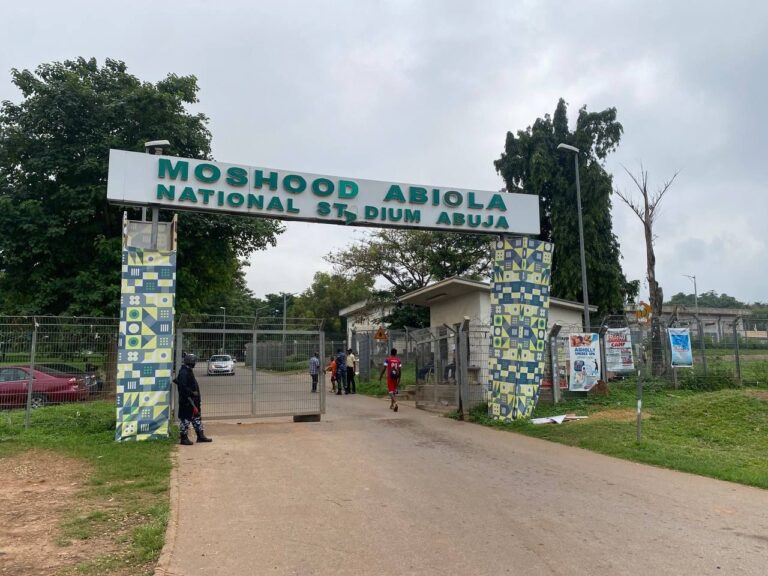
There were also no protesters at the National Stadium but there was a heavy security presence. People were spotted moving in and out of the stadium for their sporting activities.
The Kaduna State Government has warned that it would no longer tolerate any procession not approved by security agencies.
The government also said that criminals masquerading themselves take advantage of the #EndBadGovernance protests to loot, vandalise public and private property, and unleash terror on innocent citizens as witnessed on August 1 and 5 in Kaduna and Zaria metropolis.
In a statement on Saturday, August 10, the Commissioner of Internal Security and Home Affairs, Samuel Aruwan, explained that the state Executive Council had banned unapproved processions due to pressing concerns over public safety and security in the state.
Part of the statement read, “Based on this review, the Security Council hereby announces that criminal elements disguising as protesters, with the intent to generate unrest in the state, will not be spared.
“The Kaduna State Security Council recognises the fundamental rights of citizens to freedom of expression, lawful assembly, and other constitutional rights enshrined in the 1999 Constitution as amended.
“Nevertheless, the security forces cannot permit a situation wherein criminals masquerade as protesters to loot and vandalise public and private properties and unleash terror on innocent citizens, as experienced on the 1st and 5th of August 2024.”
The council noted that this decision followed intelligence reports indicating that criminals were exploiting legitimate protests as a cover to incite terror and loot properties, with the intent of plunging the state into chaos and anarchy.
“Processions not verified and cleared by security agencies therefore remain prohibited in light of the public security considerations highlighted.”
It added, “The ugly events of 1st and 5th August 2024 are clear indicators that criminals are pursuing an agenda to plunge the state into chaos, and are ready to camouflage these designs with otherwise genuine protests.”
The council also urged people in the state to adhere to the 6 pm to 8 am curfew and to report any suspicious activities to the Security Operations Room, emphasising that these measures were essential to maintaining law and order in the state, especially in light of recent violence and unrest.
Kaduna is one of the Nigerian states where the hunger protest turned violent.
The ICIR reported that thousands of Nigerians have taken to the streets to demand economic and political reforms including reversal of some government policies since August 1.
The protests which began peacefully, later turned violent in many states leading to deaths of some Nigerians and destruction of properties.
Themed #EndbadGovernance, the protest has won widespread support with an online campaign that called on the government to reduce fuel prices and tackle the increasing cost of living, among other demands.
THE Plateau State Governor Caleb Muftwang has again ordered the relaxation of the curfew earlier imposed on Jos-Bukuru area of the state.
The development, which followed the improvement of the security situation in the area as well as the conduct of residents, allows movement from 10 am to 6 pm daily.
The order is to take effect from Saturday, August 10, till further notice.
The state governor issued the order on Friday, August 9, in a statement signed by his director of press and public affairs, Guanp Bere, titled, ‘Plateau State Government further relaxes curfew on Jos-Bukuru metropolis’.
This new directive is coming a day after the curfew was relaxed and movements were allowed from 12 noon to 6 pm daily.
Mutfwang said the latest decision was taken after an improved security and commendable conducts of residents in the metropolis.
The statement reads in part, “Effective Saturday, August 10, 2024, residents are now permitted to carry out their lawful activities between the hours of 10 am and 6 pm daily, until further notice.
“This decision was authorised by His Excellency, Governor Caleb Manasseh Mutfwang, following thorough consultations with security agencies. The adjustment is aimed at allowing citizens to continue their economic activities while maintaining public order.
According to the statement, Governor Mutfwang extended his gratitude to citizens for their steadfast patriotism and cooperation during these challenging times.
The governor also thanked security personnel for their dedication and commitment to enforcing the curfew, and urged all residents to continue working closely with security agencies to ensure the safety of lives and property, as well as contribute to the efforts to build a united and prosperous state.
Plateau is one of the Nigerian states where the hunger protest turned violent.
The ICIR reported that thousands of Nigerians have taken to the streets to demand economic and political reforms including reversal of some government policies since August 1.
The protests which began peacefully, later turned violent in many states leading to deaths of some Nigerians and destruction of properties.
Dubbed #EndbadGovernance, the protest has won widespread support with an online campaign that called for the government to reduce fuel prices and tackle the increasing cost of living, among other demands.
THE #EndBadGovernance protest enters its 10th and final day today Saturday, August 10, with no protesters sighted around major protest grounds in Abuja, Nigeria’s capital.
However, the city is flooded with security operatives, with the majority of the officers deployed from the Nigeria Police Force (NPF).
The protest, which began on Thursday, August 1, had large demonstrators in parts of the city namely the National Stadium, Berger, Eagle Square, Unity Fountain, and Nyanya axis of the city on the first and second days.
Observations by The ICIR team on the 10th day show that people are already back to their normal businesses, as the city remains under a security blanket.
In the Central Area, near the National Mosque, there were no protesters, but police officers were seen searching vehicles, and the road were barricaded, causing traffic.
There were also no protesters at the National Stadium but there was a heavy security presence. People were spotted moving in and out of the stadium for their sporting activities.
Meanwhile, one of the organisers of the protest and the National Coordinator of the Take It Back Movement, Sanyaolu Juwon, had said that today, being the tenth day and last day of the #EndBadGovernance protest was scheduled for a one million-man march in all the 36 states and the Federal Capital Territory (FCT).
“This event will mark a critical juncture in our nationwide EndBadGovernanceInNigeria campaign, which began on August 1, 2024. It started as a planned 10-day protest but has evolved into a sustained and widespread movement, drawing participants from every corner of Nigeria and the diaspora,” Juwon had said.
After President Bola Tinubu’s address to the nation on Sunday, August 4, the protest began to lose its steam in some states, as most people only took to social media to share the #EndBadGovernance hashtags.
The President boasted of some strides his administration had made in reforming Nigeria’s economy, despite the hardships many citizens continue to face, adding that the violent protests that erupted in many states would only set the country backwards.
The President’s speech however attracted reactions from Nigerians, including former Vice Presidential candidate Peter Obi, who expressed disappointment over the address, noting that it’s disconnected from the harsh realities faced by Nigerians.
IRRESPECTIVE of size and location, hotels in Cross River state pay up to 21 different taxes annually. Though the amount paid as tax varies from one hotel to another, the tax rate is the same for all the 364 officially recognised hotels in the South-South state. However, the distribution of available incentives seems to favour only select hotels in specific areas of the state such as the recent grant of N10 million given by the state to 10 handpicked hotels in Calabar Municipality. The state government did not explain the criteria used in the selection of beneficiary companies. This unequal treatment highlights the challenges faced by hotels in the state due to government tax policies that benefit only few players. This report looks at how multiple taxation is hurting the hospitality industry in Cross River state.
The 21 taxes
There are 364 registered/operational hotels in Cross River State. All the hotels are mandated to pay a minimum of 21 taxes/levies every year.
First is the Tourism Development Levy (TDL), which is five per cent of each hotel’s income. This is generating a lot of controversies in the state as hoteliers say it is eroding their earnings.
The second type of tax paid by hotels in Cross River is Business Development Rate, which is N10,000 paid annually.
Third is the Signpost/Advert annual renewal, which is N15,000 paid yearly.
Fourth, every hotel is mandated to pay Carbon Emission tax amounting to N50,000 annually.
Fifth is the liquor licence, which is three per cent of drinks stock.
Food and safety tax attracts N40,000 per annum, while fire service levy attracts N20,000 per annum.
Also, general electronic licence (Radio/TV) tax and operational permit are discretionary but the Value Added Tax (VAT) is 7.5 per cent on goods and services consumed.
Moreso, the Waste disposal, Waste Management Tax and Economic Development Levy are discretionary, but they are collected from time to time.
Other taxes paid by all hotels include: Tenement Rate (annual), Environmental Protection Levy (annual), Dislodging of Effluent and Waste Materials Fees (annual), Safety Fees (monthly), Certificate of Hygiene Fees (annual), and Fire Inspection Levy (annual), Federal Inland Revenue Service (monthly) and Business Premises Tax, Economic development levy, PAYE,tourism bureau (standards and licence fee).
List of taxes paid by Hotels in Cross River State[1]
Hospitality industry in Cross River
The hotel industry is quite significant to the development of Cross River state. It contributes to economic growth, provides employment opportunities to people and finances a large portion of the state’s internally generated revenue (IGR).
The state’s IGR has experienced significant growth under the current administration. The revenue has increased from around ₦1.7 billion from the same period last year to over ₦32.4 billion, marking a 101 per cent growth by the end of May 2024, with 6.9 per cent contributed by the hospitality industry.
This revenue growth was credited to the hardwork of the State Internal Revenue Service, which achieved an exceptional budget performance of 108 per cent in the first quarter of 2024.
The United Nations World Tourism Organisation (UNWTO) recommends that 70 to 75 percent of annual tourist expenditure should be spent on hotel services. This confirms the strategic importance of this sector.
Thus, the current government of Cross River state says it is taking tourism seriously to make it a source of revenue and job creation.
The previous administration under Ben Ayade announced the stoppage of the Tourism Development Levy (TDL) from July 2020 to December 31, 2020. The tax relief and incentive package was announced by Cross River Internal Revenue Service (CRIRS) on Monday, July 27, 2020. According to CRIRS, the incentives were one of the many avenues to cushion the impacts of the novel COVID-19 pandemic.
Letter from Hoteliers Association Cross River to Cross River Tourism Bureau
The Ayade administration initiated an executive bill to abolish all forms of taxation on low-income earners in the state, culminating in the creation and subsequent establishment of the Cross River State Anti-Tax Agency in May 2020. This agency was to, among other things, ensure that people with low incomes did not have to pay taxes.
The anti-tax agency exempted small hotels with one to 20 rooms. There was 100 percent abatement on Tourism Development Levy, Business Annual Renewal, Economic Development Levy, Carbon Emission Taxes, On & Off Liquor License and Food Licenses for big and small hotels from February to November 2020. In addition, Business Premises Registration and Sewage/Effluent Discharge had 50 percent abatement for the same period.
However, the hospitality sector did not experience any form of relief from the state government until October 2023 when the new governor, Bassey Otu, announced a N1 million grant each to 10 hotels in Calabar as part of its efforts to boost tourism in the state.
This was, again, similar to what was done during Ayade administration as only a select few benefitted from the programme.
Disbursing the grant, the managing director, Cross River Tourism Bureau, Ojoi Ekpenyong, noted that the grant, which began with hotels in the state’s southern senatorial district, will continue through the first quarter of 2024 in the central senatorial district, then move to the northern district in the third quarter before moving back to south ahead of Calabar Festival 2024.
Multiple taxes hurting players
Hoteliers are concerned about the TDL, which is five per cent of their total income. It is collected monthly by the state government through the CRIRS.
The Chairperson, Cross River State chapter of Hoteliers Association of Nigeria, Charles Ogar, told Nigerian Tribune that multiple taxation is threatening to put several hotels out of business.
“Adding another Economic Development Levy to our list of taxes is absurd because we don’t even know what it’s all about. This is weighing down on the hotel business. It needs to be removed,” Ogar told Nigerian Tribune.
Hoteliers in Ikom Local Government Area said some of them have raised the room rates to meet up with the multiplicity of taxes imposed on them. But this action has led to a decline in hotel visitors as most guests now prefer to stay at the homes of relatives or friends when visiting the area.
Even as the hoteliers contend with these multiple taxes, they still have to grapple with poor or inadequate infrastructure and services by the government.
The manager of Geno Hotel, Ikom, Abel Mgbe, disclosed that there has been no electricity for eight months around the border road where the hotel is situated. To keep the hotel running, he said he uses about 20 litres of petrol in a small generator and about 50 litres of diesel in a big Lister generator to power the air conditioners and other appliances.
One of the major hotels Ikom LGA, Central Senatorial District of Cross River state
“If we can have stable power supply, we won’t have any reason to complain about taxes. But after spending so much on generating power for the smooth running of this hotel, some people still bring huge taxes, not minding your day-to-day expenses,” he said.
Hoteliers in Calabar have their fair share of experience with tax consultants. The manager of E-System Hotel, located in Calabar South LGA of Cross River State, Ubong Ekanem, expressed concerns about the TDL in particular, which is having a negative impact on his business margin.
“I pay all my taxes to the state and Federal Government. I pay VAT to the Federal Government, whereby I remit 7.5 percent of my income every month.
“The question is, why should I pay five per cent of my income as TDL? What happens to my utility bills? What happens to my staff salaries? Where will I get money to buy diesel?” he asked.
“That’s the only thing we are fighting against now because when they see your books on bar and lodgment, they will not want to know your expenses. They only go into calculating the figures without considering your expenses.
Which money will I use for the maintenance of my facility? Which money will I even use to pay for the license registration to the Tourism Bureau or renewal of the fire service registration which is done yearly?”
A hotel manager in Calabar Municipal, who would not want his name in print, said hotels should be allowed to pay all taxes and levies directly to government accounts instead of paying through consultants to prevent corruption and diversion of funds to private individuals.
A major hotel in Ogoja LGA, Central Senatorial District of Cross River State
Another hotelier, who simply gave his name as Esu of Rhema Light Hotel, Calabar South, said several hotels have been converted to a housing estate or private schools, citing Nollywood Homes and Apartments at White House Street in Calabar as an example.
“Because the profit margins were insufficient to cover the 21 different taxes imposed by federal, state, and local governments and agencies, many hoteliers have resorted to selling or leasing of their properties for other forms of businesses,” he observed.
“Due to the heavy burden of paying multiple taxes to various levels of government in Nigeria and the high cost of daily operations, many hoteliers in the state are facing the possibility of shutting down. The current tax system is taking up around 40 percent of our revenue, leaving us with very little capital to keep our business running.
Recently, the Government of Cross River state expressed readiness to meet the 30 per cent counterpart funding requirements of the federal Rural Electrification Agency (REA) to provide mini-grid power supply in rural communities to achieve energy security for the people of Cross River. This in turn will cut the cost of buying diesel to run hotels.
The Managing Director of the Cross River State Tourism Bureau, Ojoi Ekpenyong, stated that the agency is updating regulations to keep pace with the rapid growth in the hospitality industry. He also mentioned that government grants to support the hospitality sector will be distributed on a rotational basis among hotels in different Senatorial Districts.
Dr. Patience Egwu of the Legal Department of the Cross River Internal Revenue Service told our reporter that the state has more than 20 tax consultants. Each tax consultant has a revenue point of collection.
“These consultants are registered with the Corporate Affairs Commission (CAC). The Personal Income Tax Act gives the revenue authority power to engage consultants to collect revenue on her behalf,” she stated.
“However, these consultants are not to assess nor collect these revenues directly. They work with the revenue authorities by assisting in serving assessment and demand notices. They follow up to ensure that tax payers comply. Their payment is based on what they collect and these collections must be in line with the provisions of the law. It is most times based on a percentage, say 10 percent or 20 percent. So as government revenue drops, they get their percentages,” Dr Egwu concluded.
Nigerian Tribune attempted to find some tax consultants mentioned in demand notices sighted but some of them were not found at their given addresses. For example, the revenue consultant for Carbon Emission and Air Pollution Levy, Dragonaires Resources Ltd, with address listed as 101 MCC Road, Calabar Municipal; and De-Cyril Executives Venture collecting Economic Development Levy in Calabar South Local Government Area, with address at 23 Bassey Duke Street, Calabar were not found at the addresses.
Additional research showed that with the exception of Saviour Nyong, who served as a member of the Cross River State House of Assembly for Bakassi State Constituency, the other individuals engaged as consultants are predominantly businessmen and do not have a public profile. The consultants mentioned include Joe Asuquo Tax Consultants, Samuel Martins and Co, John Ndifon and Co, Adedayo Adewale and Co, Dan Anko and Co, and Maroct Consultants Limited, among others.
Nyong, a politician is one of the directors of Dragonaires Resources Ltd, which is registered as a Private Unlimited company and is the revenue consultant appointed by the Cross River Internal Revenue Service for the collection of revenue accruing from Carbon Emission and Air Pollution Levy.
State government reacts
Cross River State Commissioner for Tourism, Arts and Culture, Abubakar Robert Ewa, does not think that there is multiplicity of taxes in the hospitality industry.
“The key mandate of this ministry is to ensure that Cross River State remains the tourism destination of Nigeria as it has always been,” he said.
“Government is doing everything possible to bring in visitors to the state and ensure their safety. Last year, the state government declared its support for the business in the state and also assured of every incentive and support to businesses, including tax holidays. So, we are creating fantastic government policies, regulations, and conducive business environment to rejig the hospitality sector,” he said.
The Director, High Networth Individuals/Digital Economy, Cross River Internal Revenue Service (CRIRS), Okpo Ojah, stated that all persons making use of tourism and leisure services in the state pay a Tourism Development Levy (TDL).
“This levy is used for the development and sustenance of tourism facilities and infrastructure in the state,” he said.
“The enterprises to which this levy applies shall include the following: hotels, guest houses, lodges, resort and leisure parks, tourism camps, travel agents/tour operators, restaurants/bars and eateries.”
In his words, “the enterprises listed above shall keep proper records of account in relation to all their transactions and make the same available for inspection, on demand, by officials of the Board of Internal Revenue or such agents as may be authorised for that purpose.
“The board may, as it deems fit for the effective implementation of the law, appoint some other person other than the proprietor of any particular enterprise, as an agent for the collection of this levy.
“For instance, if the room rate of a hotel is N10,000, they’re expecting to add five percent of that amount, which is N500, to their rooms. Customers will have to pay N10,500. So, at the end of the day, the hotel still gets the normal rate for their room and gives N500 to revenue service. I don’t see how that is affecting their business. So, what if tomorrow we say no TDL? Won’t they still collect their normal N10,000? he asked.
He said his office has told hoteliers to make enquiries whenever tax agents conclude their assessments.
“Not all tax agents that bring demand notices tell you to rush to the bank and pay without asking questions. You need to be sure that it is applicable to your kind of business and the rates differ.”
He also said that there is no disparity in taxes collected from big and small players, noting that even some small players have better liquidity than the big ones.
“There is no disparity in hotels tax administration as such. Most of the so-called small hotels may have higher turnovers than the bigger hotels because many low- and average-income earners tend to patronise small hotels than the bigger ones.
“As a matter of fact, any hotel that is complaining of low patronage may not have been strategically located or have poor management. You don’t expect the government to pity you by not taxing you because you cannot effectively manage your business,” he further said.
Experts speak
So, you can see that the aim is not multiple taxation, but the overall tax volume taken away from the business.
A Sustainability and Policy Guidance Consultant, Richard Inoyo, emphasised that multiple taxation is not the problem, noting that the major issue is the amount of taxes paid.
“For example, three different agencies come and tax you N10 for the same thing and then we choose to have just one tax which expects you to pay N100. I believe more people will prefer paying N30 to three different agencies than paying N100 to one agency.
“So, you can see that the aim is not multiple taxation, but the overall tax volume taken away from the business.
“I know there are illegal taxes that are not connected to the government, but some persons in government back them to go around taking illegal taxes into their own pockets. You can resist it but at a cost. This is because you have to report it to the agency, write to the Nigeria Police Force, probably the EFCC, to help you to fight against those people, but it’s also risky because they might harm you.”
He said businesses are not afraid to pay tax, but they are not seeing value for the money spent.
“My concern is not really about multiple taxation but how we can pay lesser/cheaper tax in order to allow businesses to grow,” he noted.
Inoyo stated that to ensure transparency in tax administration, the government should set up an online portal where people can fill in their business information and pay their taxes.
“Government should also have a downloadable tax guide on how to pay tax. When businesses pay their taxes, everyone should be able to go online and verify the payment. And when the government makes withdrawal from the tax account, they should be able to state clearly what the money is being used for.
“The citizens should be able to see the projects that the government used the tax money to facilitate, so that level of transparency is very vital. The government should also create a tax board that will have representatives of not only those in the tax office, but also people in the business community in Cross River State,” he added.
Another tax consultant in Lagos, Nnenna Ojo, said there is a need to digitise the whole process of tax administration in every state in Nigeria.
“It is unfair that all hotels are paying 21 taxes in Cross River. But it is much more concerning that both small and big players are paying the same number of taxes. The government must change this. Small hotels are small and medium enterprises. You should never compare them with large enterprises,” she said.
This report republished from Nigerian Tribune was made possible with support from the International Budget Partnership (IBP) and the International Centre for Investigative reporting (ICIR) under the Tax Justice, Equity and Transparency Project. Read other stories HERE.
FOLLOWING her withdrawal from the Miss South Africa (Miss SA) pageant competition, the Miss Universe Nigeria (MUN) organisation has invited Chidinma Adetshina to participate at the 2024 Miss Universe Nigeria pageant competition.
This was announced by the organisation’s National Director, Ben Murray-Bruce, in a press statement shared on MUN’s official Instagram page on Friday, August 9.
“We at Miss Universe Nigeria have been closely following the developments regarding your decision to bow out of the Miss South Africa beauty pageant. We acknowledge the circumstances surrounding your withdrawal and understand the challenges you may be facing.
“In light of these events, we want to extend our support and encouragement. We believe that your journey in the world of pageantry is far from over and that there are still numerous opportunities for you to showcase your talent, grace, and beauty.
“As a Nigerian by heritage, we would like to formally invite you to participate in the Miss Universe Nigeria 2024 pageant. This is an opportunity to represent your father’s native land on an international stage, and we believe you would be an outstanding contender,” the statement read in parts.
Murray-Bruce further encouraged her to take up the opportunity to continue her pageant journey.
“We encourage you to consider this opportunity and take part in a competition that celebrates the strength, intelligence, and diversity of Nigerian women. Should you wish to participate, all you need to do is respond to this invitation, and we will be delighted to guide you through the next steps.
“We look forward to hearing from you and hope to see you continue your journey in pageantry with the Miss Universe Nigeria pageant,” he added.
The ICIR reports that the 23-year-old Nigerian-South African beauty queen, withdrew from the Miss South Africa ( Miss SA) pageant after a series of xenophobic attacks after making it to the top 16 at the ongoingpageant.
Adetshina was born in Soweto to a Nigerian father and a South African mother. However, she had beentargeted by some South Africans who claimed she is not South African by birth.
Meanwhile, the Miss Universe Nigeria competition is currently ongoing with 24 young ladies representing different states vying for the coveted crown. The winner will be representing Nigeria at the Miss Universe pageant set to hold in Mexico later this year.









![List of taxes paid by Hotels in Cross River State[1]](https://www.icirnigeria.org/wp-content/uploads/2024/08/List-of-taxes-paid-by-Hotels-in-Cross-River-State1-scaled.jpg)