THE Nigeria Police Force has re-arraigned Mubarak Bello, the whistleblower who exposed a payroll racket at Katsina command, before the Federal High Court in Katsina for alleged unlawful possession of firearms and ammunition.
Bello, a resident of Katsina, was charged by the office of the Inspector-General of Police on March 23, 2026, for allegedly possessing a locally made gun, four rounds of live ammunition, and two expended cartridges without a valid licence.
The ICIR reports that Bello was originally charged in a Katsina magistrate court in October 2025 with possession of a forged police ID, impersonation, unlawful possession of firearms and ammunition, and dealing in ATM cards — charges the accused calls “trumped up”.
On March 3, 2026, the Katsina magistrate court discharged Bello, prompting police to file a fresh charge of unlawful possession of firearms and ammunition at the Federal High Court.
Allegations before the court
The new charge alleges that on September 13, 2025, around 3:00 a.m., Bello was intercepted in Kofar Durbi Quarters while driving a Toyota Corolla. Police stopped and searched him, recovering a firearm and ammunition. Bello allegedly failed to produce a lawful license, leading to his arrest and forensic examination of the items.
He was charged under Sections 3 and 8(1)(2) of the Firearms Act, Cap F28, Laws of the Federation of Nigeria, 2004. The police plan to call three witnesses: the arresting officer, investigating officer, and a forensic expert to verify the weapon’s functionality.
Whistleblower background
Bello’s arraignment came amid longstanding harassment, threats to his life and prosecution for his role as a whistleblower in an alleged multi-million-naira payroll fraud at the Katsina State Police Command.
On September 14, The ICIRreported that the police had issued a statement over the arrest of 38-year-old Bello, accusing him of impersonation, possession of a fake police identity card, and unlawful possession of firearms.
The Katsina State police command claimed Bello’s arrest on September 13, 2025, came after a routine night patrol team intercepted his Toyota Corolla. The state Police Public Relations Officer ( PRO), Abubakar Sadiq Aliyu, said officers recovered a locally made rifle, live cartridges and a ‘fake’ police ID card.
However, Bello and sources familiar with the case alleged that his arrest was aimed at silencing him over his whistleblowing activities.
The ICIR gathered that Bello was first given a contract as a typist in 2009 to assist the finance department (formerly Mechanised Salary Section, MSS). Before then, he ran a shop at Kofar Turpi, doing typing jobs for police.
As a contract worker in the finance department, Bello became well acquainted with the processes through which officers’ salaries were administered across the state.
He alleged that fictitious police officers’ names were added to the salary system, diverting millions of naira monthly to accounts linked to Katsina Command finance officers, including the Finance Officer and an Assistant Finance Officer.
In 2019, Bello petitioned multiple anti-corruption agencies, including the Independent Corrupt Practices and Other Related Offences Commission (ICPC) and the Economic and Financial Crimes Commission (EFCC), over the alleged “ghost workers” scheme within the command.
Documents reviewed by The ICIR showed that Bello also wrote to the Attorney-General of the Federation and the Police Service Commission in 2020 after his earlier complaints failed to yield action.
In a 2020 petition to the Attorney General, Bello said he was initially instructed to process what he believed were legitimate recruitment documents. He noted that he did not suspect any wrongdoing at first, and when he sought clarification, the officers told him it was part of a “new recruitment process.”
He claimed that he was misled by the officers to forge certificates, open bogus accounts, create appointments and confirmation documents, generate fake promotion and transfer letters.
Bello said when the officers returned for a second phase of the exercise, they asked if he had more names to add to the list, but he refused. According to him, they persisted and eventually pressured him to submit his own name and that of an associate, Muhammad Hussaini, even producing police identity cards for both of them.
During the first and second processes, he listed more than a dozen officers for some of the policemen in the finance unit of the Katsina police command.
Retaliation and arrest
Following his allegations, Bello claimed he became a target of intimidation and repeated attacks. He said threats intensified after he insisted on reporting the incident since December 2019.
In 2020, Bello told investigators from ICPC that police officers raided his home in Sabon Unguwa, Katsina, and his office at the command headquarters, seizing documents and equipment.
He was consequently arrested and detained over impersonating a police officer, claims he maintains were false.
A source at the ICPC source had told The ICIR that some of the claims in Bello’s petition had merit, noting that certain payroll entries he flagged corresponded with suspicious records already unearthed by the agency’s investigation.
Attempts by the ICPC to question officers named in Bello’s petition reportedly stalled after the police authorities failed to grant approval for their appearance. It was reliably gathered that the ICPC Chairman, Musa Adamu Aliyu, a Senior Advocate of Nigeria (SAN), wrote to the Inspector General of Police at the time to release the affected police officers under investigation for questioning but this was never done.
‘I was threatened, attacked’
Speaking with The ICIR, Bello alleged that he had faced multiple threats and physical attacks after exposing the alleged fraud. In earlier accounts, he said police officers raided his home and office, confiscating documents and equipment linked to his claims.
He also recounted being beaten by officers at the Katsina Divisional Crime Officer’s office in 2020.
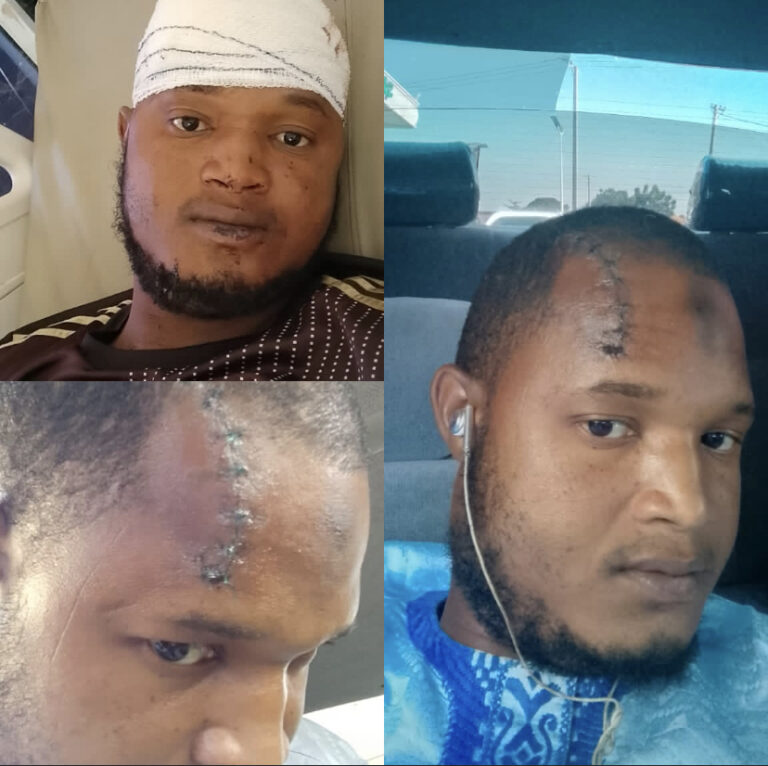
Independent findings by The ICIR show how thugs attacked him with machetes, leaving deep cuts in October 2024. His head was macheted and his hand suffered deep cuts.
In a voice note obtained and reported by The ICIR, he appealed to acquaintances for help, saying he had been ambushed and was receiving treatment at the Federal Medical Centre Katsina.
Sources within the ICPC confirmed that Bello had reported several threats to his life before and after submitting his petition. These circumstances, according to some sources, may lend credence to his claim that he carried a locally made firearm for self-defence.
Bello disputes firearms allegations
Bello rejected the police claims against him, insisting the charges are a deliberate attempt to intimidate, victimise and silence him. He maintained that the firearm found in his possession was for self-defence following repeated attacks on his life after he reported the alleged fraud.
“I had no option than to protect myself after the several attacks,” he said, adding that he had applied for a licence to carry a locally made gun and formally notified police authorities, but received no response.
“I wrote to the Katsina Police command to apply for a gun… I followed the process, but they didn’t issue it to me,” he said. “Even after I got the gun, I informed the DC CID and asked for a licence, but they ignored it.”
Bello also disputed claims that a police identity card found in his possession was fake, stating that he had been issued identification documents during his time working with the police.
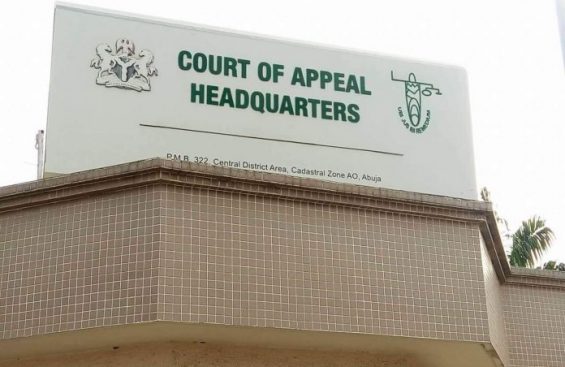
THE Court of Appeal in Abuja has dismissed an appeal by the National Broadcasting Commission (NBC), affirming an earlier ruling that stopped the commission from fining broadcast stations.
In a unanimous judgment delivered on Thursday, April 2, the three-member panel ruled in favour of Media Rights Agenda (MRA), which had challenged the NBC’s powers in court..
The court upheld the May 2023 ruling of the Federal High Court, where one of its judges, James Omotosho, held that only courts, not regulatory agencies, had the power to impose fines for offences.
Omotosho had ruled that fines were sanctions imposed on individuals or organisations found guilty of criminal offences, and that only courts of law in Nigeria had the authority to impose such penalties.
He consequently set aside the fines imposed by the NBC on 45 broadcast stations.
The ICIR reports that the fines, amounting to ₦500,000 each, were announced by the commission on March 1, 2019, for alleged breaches of the Nigeria Broadcasting Code.
Omotosho further ruled that the NBC “is neither a court nor a judicial tribunal to make pronouncements on the guilt of broadcast stations,” adding that the commission’s actions violated the Nigerian Constitution.
The judgment was entered after the NBC failed to appear in court to defend the suit, despite evidence showing it had been duly served with court processes.
In July 2023, the NBC filed a motion asking the same court to set aside the judgment, arguing that the judge lacked jurisdiction and had made his decision without considering relevant facts.
However, on November 23, 2023, Omotosho dismissed the application, describing it as ‘futile’ and “an afterthought,” and noting that the commission had chosen not to defend the case when it had the opportunity.
Dissatisfied with the outcome, the NBC proceeded to the Court of Appeal.
At the hearing of the appeal on February 4, 2026, the NBC’s legal team, including Victor Ogude and Kehinde Wilkey, adopted their written arguments and made additional submissions.
Counsel to MRA, Ezenwa Anumnu, also adopted his brief and responded on behalf of the organisation.
Delivering the lead judgment, Oyejoju Oyewumi, a judge, upheld MRA’s arguments, ruling that the NBC’s appeal lacked merit.
She held that having failed to challenge the case at the Federal High Court, the commission could not raise issues at the appellate stage.
The two other justices on the panel, Abba Bello Mohammed and Donatus Uwaezuoke Okorowo, agreed with the lead judgment.
With this ruling, MRA has secured victory in the first of the two separate appeals involving the NBC over similar judgments of the Federal High Court restraining the commission from imposing fines on broadcast stations.
The second appeal, still pending before the Court of Appeal, stemmed from another Federal High Court judgment delivered on January 17, 2024, by Rita Ofili-Ajumogobia.
In that case, the court also ruled against the NBC in a suit filed by MRA after the commission imposed fines of ₦5 million each on a television station and three pay-TV platforms in 2022.
The fines were issued over allegations that the stations undermined Nigeria’s national security by broadcasting documentaries on banditry.
The Court of Appeal heard arguments in the second appeal on March 25, 2026, and has reserved judgment, which is expected to be delivered at a later date.
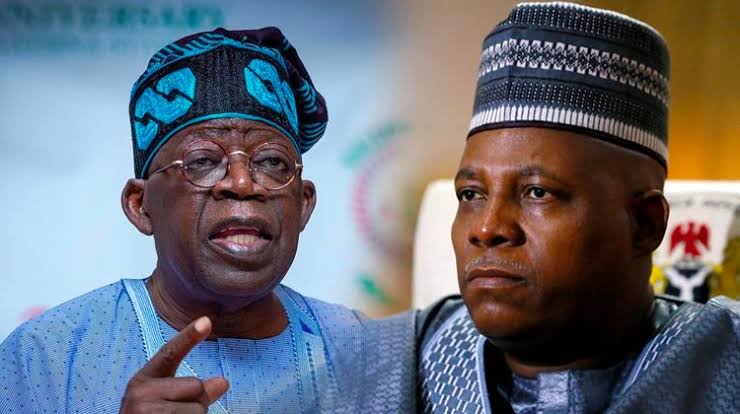
TOP media bodies in Nigeria and globally have raised concerns about Vice President Kashim Shettima’s recent comments that dismissed reports of journalists facing harassment in the country.
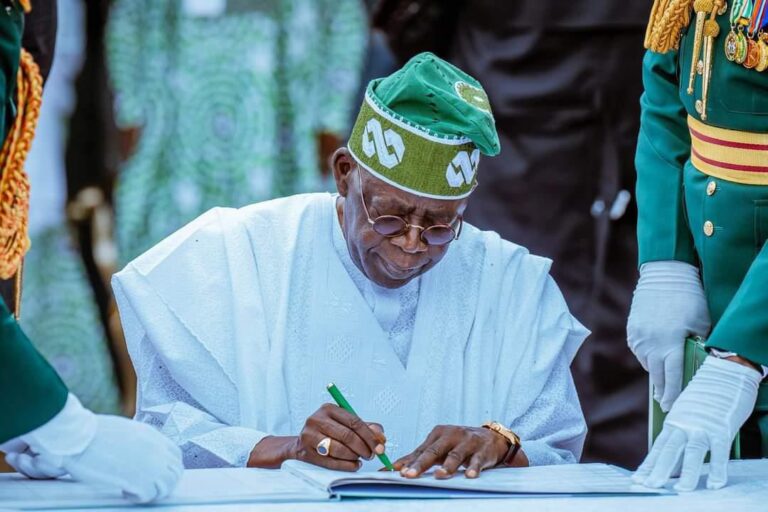
In a letter addressed to President Bola Tinubu, six Nigerian and international media organisations accused his government of ignoring ongoing attacks on journalists.
“Since you assumed office as Nigeria’s president in 2023, the Committee to Protect Journalists (CPJ) has documented Nigerian authorities detaining journalists without warning and mistreating them in custody. Numerous journalists have been arrested and prosecuted over their reporting, including on defamation and cybercrime charges,” the group said.
Comprising the Committee to Protect Journalists, the Centre for Journalism Innovation and Development, the Africa Editors Forum, the Media Rights Agenda, the International Press Centre, and the International Press Institute Nigeria, the group criticised Shettima’s claim of February 27, in which he told members of the Nigerian Press Council that no Nigerian journalist had been harassed in the past three years.
He also lauded President Bola Tinubu for being tolerant and said his government supported press freedom.
“On February 27, a State House press release quoted Vice President Shettima saying to members of the Nigerian Press Council, ‘For the past three years, have you heard of any harassment of journalists? He added that your ‘tolerance threshold is so high.’ The press release also said your administration had promoted ‘an environment that is conducive for journalists to carry out their duties without harassment.”
The coalition said the claims ignored many real and well-documented attacks on journalists under Tinubu’s watch. They asked the president to punish those responsible for such abuses and to change laws that make journalism risky.
Since Tinubu became president in 2023, groups like CPJ have reported several cases where journalists were arrested, attacked, or detained by security forces.
For example, CPJ said at least 56 journalists were attacked or harassed during the #EndBadGovernance protests in August 2024. Security forces were reported to have used bullets and tear gas on journalists covering the protests.
The IPC recorded 65 separate attacks on journalists in 2024, including physical violence, unlawful arrests, and threats. Media Rights Agenda reported 86 violations of press freedom in 2025, while CJID said it had confirmed 231 attacks on journalists since Tinubu assumed office.
The groups said these numbers showed a serious problem and called on the government to take action to stop the violence and intimidation.
They also mentioned past cases that are still unresolved, including the death of Onifade Emmanuel Pelumi, who was found dead in a Lagos mortuary days after being detained while covering protests in October 2020.
According to CPJ, at least 23 journalists have been killed in Nigeria since 1992. Thirteen of those deaths were directly linked to their work, and two other journalists are still missing and believed to be dead.
Call for action ahead of 2027 elections
The coalition warned that the build-up to the 2027 general elections could see increased pressure and violence against the media unless urgent measures are taken.
“We have not seen meaningful efforts to end impunity when journalists are targeted,” the groups said, addng, “Your government must ensure that the periods before, during, and after the coming elections are safe for those who report the news.”
The coalition called on Tinubu to match his “friendship with the media” with bold action: to investigate and prosecute those responsible for media attacks, return Pelumi’s body to his family, and protect journalists as an essential part of Nigeria’s democracy.
The ICIR recently reported that press freedom in Nigeria faced renewed threats following two separate incidents in Bauchi and Niger states.
The attacks, reportedly carried out by government officials, sparked outrage among Nigerian and international media, which called for urgent action to identify and punish those responsible.
ALTHOUGH the March 31st deadline for their recapitalisation was not met, the Central Bank of Nigeria (CBN) has advised depositors with Union, Keystone, and Polaris banks not to panic about their funds.
The apex bank said the banks were still undergoing judicial and regulatory procedures, while assuring depositors about the safety of their funds.
The Director of Banking Supervision at the CBN, Olubukola Akinwunmi, who disclosed this on Thursday, April 2, in Abuja on Arise Television Business Morning Programmes, assured depositors of the safety of their funds.
“It’s important we tell Nigerians that these banks have the capacity to raise the required capital, and they’re in the process of raising the required capital, the likes of Union, Keystone and Polaris banks. However, there are judicial and regulatory processes to be addressed before that can be concluded.
He added, “It’s appropriate as an institution that supports the rule of law that we consider it necessary and the governor, Olayemi Cardoso, has mentioned in the last MPC meeting that these banks have different pathways to recapitalisation.”
He said that Nigerians and depositors with the banks had nothing to panic about and could go in and withdraw their funds without any fear of losing their money.
He noted that the apex bank maintained close watch on these banks until the judicial processes are concluded, noting that “they’ll be back on recapitalisation based on the minimum capital requirements stipulated by the apex bank once the processes are sorted.”
Akinwunmi also informed that banks would undergo occasional “stress tests” to ensure their financial stability without waiting for a long-term recapitalisation.
He emphasised the importance of occasional stress tests for banks to ascertain their risk exposure to businesses and the handling of depositors’ funds.
“We don’t have to wait for another 20 years for another recapitalisation to happen. The stress test framework requires the banks to adequately manage a scenario that could happen when there’s a shock that exposes them to higher risks.
“On an ongoing basis, banks should assess their risk exposure based on a gradual deterioration of their loan books, which is a scenario-based deterioration and the bank’s capacity to raise the required capital while managing their risk exposure,” he explained further.
The focus, he said, was for banks to proactively manage their capital adequacy and, where necessary, raise fresh capital required to maintain a capital base without unexpected risk exposure.
“What that does is to ensure that… the banks can maintain a banking system that is stable, resilient and sound for business,” he added.
The ICIR reports that the apex bank has concluded the recapitalisation programme of Nigeria’s banking sector, an effort aimed at strengthening the resilience of the financial system and enhancing its capacity to support the economy.
The CBN introduced a revised recapitalisation policy in March 2024, giving banks a 24-month window, from 1 April 2024 to 31 March 2026, to strengthen their capital base. The policy requires Nigerian banks to strengthen their capital base, with thresholds of N500 billion (international), N200 billion (national), and N50 billion (regional).
Affirming the conclusion of the exercise on Wednesday, April 1, the CBN stated that 33 banks had met the new minimum capital requirement, while raising a total of N4.65 trillion in fresh capital over 24 months.
It stated that the programme recorded strong participation from both domestic and international investors, with 72.55 per cent of capital sourced locally and 27.45 per cent from international markets, which reflects sustained confidence in the Nigerian banking sector.
The central bank stated that all banks remained fully operational, ensuring continued access to banking services for customers.
It added that the programme had strengthened capital adequacy ratios (CAR), with the sector maintaining levels above international Basel benchmarks.
The bank noted that the minimum CAR thresholds remained at 10 per cent for regional and national banks and 15 per cent for banks with international authorisation.
The recapitalisation exercise, implemented alongside an orderly exit from regulatory forbearance, has improved asset quality, reinforcing balance sheet transparency and overall financial system stability.
THE African Democratic Congress (ADC) has said it would proceed with its planned congresses and national convention despite the Independent National Electoral Commission (INEC) decision to stop recognising the party’s leadership, led by former Senate President, David Mark.
The ICIRreported that citing a recent Appeal Court ruling, INEC removed all ADC leaders from its portal on Wednesday April 1.
Reacting to the decision, the party accused the electoral body of bias and undue interference in its internal affairs.
The ADC National Publicity Secretary, Bolaji Abdullahi, revealed this during an interview on ARISE NEWS on Thursday, April 2, where he maintained that ADC had fulfilled all legal requirements, including notifying INEC ahead of its scheduled activities.
“We have given INEC 21 days’ notice. They have accepted the notice. So, whether they come and continue with our congresses, we’ll continue with our convention,” Abdullahi said.
In its decision on Wednesday, the commission said it would no longer recognise Mark or his team as officials of the party pending the final determination of a case over the party’s leadership, currently before the Federal High Court in Abuja.
Abdullahi, however, argued that INEC’s interpretation of the Appeal Court’s order over the party’s leadership crisis was flawed and politically motivated.
He accused the commission of abandoning neutrality and aligning with external interests to weaken opposition parties ahead of the 2027 general elections.
“Today, INEC has been bamboozled. INEC has been intimidated. INEC has succumbed to intimidation, and they are determined to coronate President Bola Tinubu.”
The ADC spokesperson explained that the party had followed due process in its leadership transition, noting that the former chairman had resigned and that INEC was duly informed.
According to him, the electoral umpire was recognising rival claims and creating confusion within the party.
He stressed that the disputes over party leadership remained internal matters that should not be subject to external interference.
Abdullahi insisted that the Court of Appeal’s directive to maintain the status quo did not justify INEC’s decision to alter the party’s leadership records.
He further alleged that recent developments were part of a broader political strategy to undermine credible opposition ahead of the next general elections.
“The most important point today is that all this is part of an orchestration by the ruling party to destabilise. It is very clear, INEC has shown its hand that it is biased, All this points to INEC trying to create a case. We can see our democracy opening into our very eyes. And we’re asking for proof as if we are foreigners. It is very clear what is going on and it should concern everybody.”
Abdullahi, however, reiterated that the ADC remained focused on its internal processes and would not be deterred.
He stressed that the party’s congresses and convention were critical steps in strengthening its structure and preparing for future elections.
The ICIRreportedearlier on Thursday that lawyers condemned the INEC’s decision. They described the commission’s position on the ADC leadership as a threat to the nation’s democracy and an attempt to ensure only the ruling All Progressives Congress (APC) is the only major political party that will participate in the 2027 general elections.
The ICIR reports that the ADC has been widely seen as the only major opposition to challenge the APC which produced President Bola Tinubu in 2023.
Tinubu is currently gearing up to seek re-election, and many Nigerians believe the ADC is the only viable opposition to the APC, given that 32 of Nigeria’s 36 governors are currently in the APC.
Despite the influx of the Nigeria governors into the APC, prominent politicians, including former vice president Atiku Abubakar, former Labour Party presidential candidate, Peter Obi, former secretary to the government of the federation, Babachir Lawal, former Governor Nasir El-Rufai, former Kano State governor Rabiu Kwankwanso, former minister of justice and attorney-general of the federation, Abubakar Malami, and former minister of transportation, Rotimi Amaechi are among the leading figures in the ADC.
Meanwhile, there are concerns that the ADC may not participate in the 2027 polls should the case in court lingers and INEC refuses to change its position on not recognising any of the party’s leaders.
According to the INEC timetable, political parties are to conduct their primaries between April 23 and May 30, 2026.
The ADC’s failure to resolve its leadership crisis will mean that the APC goes to the poll without a major challenge, as the People’s Democratic Party (PDP), once branded as Africa’s largest political party, has seen its membership depleted by mass defections and currently faces similar leadership crisis.
ON the heels of the US-Iran conflict, several countries across the World are offering economic relief to their citizens to cushion the impact of the higher global energy prices, while Nigeria is borrowing more money despite selling oil at a higher price of $100 per barrel.
Already, there is a growing concern as the Nigerian government expected relief is not forthcoming. Additionally, crude-for-Naira swap deal with Dangote Refinery has not fully insulated the citizens from the effects of the volatile oil prices.
From Australia to Pakistan, India and Egypt, leaders are taking initiatives that help citizens rise out of the economic crisis occasioned by the US-Iran conflict.
Conversely, Nigeria is borrowing more, with the latest $6 billion external loan request approval by the legislature on Tuesday, March 31, an indication that the government has not maximised gains from the oil windfall, selling about $100 per barrel.
The conflict has pushed global oil prices up, benefiting Nigeria’s oil exports but also increasing fuel costs for citizens. Nigerians are bearing the brunt of the cost of transportation and food prices on the rooftops.
Analysts believe that the first quarter inflation figure, when released by the National Bureau of Statistics (NBS), would reach 19 per cent as a result of the US-Iran conflict.
“PMS at N1,370 is the new normal. The impact of this on various levels of economic activities, fertiliser, diesel and aviation fuel is feeding into the global rate of inflation. The government must think of a way of allowing the windfall to favour the people through a structured management plan,” an economist and the CEO of financial derivatives, Bismarck Rewane, said.
Notably, the Nigerian government is benefiting from the windfall, whereas the Nigerian people are taking the heat on inflationary pressure.
“There’s a windfall in income for the government and a shortfall in income for Nigerian consumers. The question is how do we transfer income into the pockets of the people,” Rewane queried.
He suggested to the federal government of Nigeria to liaise with the refiners and give crude at a subsidised rate that will push down the price. It could be a temporary measure.
“This could help to offer transportation relief and avoid rising energy costs, which affect food prices and other logistic costs,” he said.
Countries’ response to the US-Iran conflict
Meanwhile, as the conflict has lasted more than a month now, several countries are rolling out economic relief measures. For instance, India, Australia, the Philippines, and Egypt are among those taking proactive steps.
Australia is currently cutting off fuel taxes and offering transport relief to its citizens.
India had a 30-day emergency waiver from the US Treasury, allowing it to snap up stranded Russian oil cargoes and keep domestic fuel prices stable.
Pakistan’s government has followed suit and slashed energy consumption with a four-day work week and shut schools for two weeks.
In a similar vein, the Philippines has declared a state of emergency, trying to stay ahead of a transport workers’ strike and potential economic disruption.
The World Bank, on its own part, stepped in with financial aid for countries hit hard by the conflict, using its fast-disbursing policy financing tools to help governments cope with the energy cost crunch.
Analysts stressed that the government needs to transmit monies into the pockets of businesses and the working class by paying contractors, offering school grants, and properly concessioning roads to ensure Nigerians are properly shielded.
Remembering how Ya’adua handled a similar situation
The ICIR reports that this wasn’t the first time there has been a global economic crisis. Under former President Umaru Musa Yar’adua, there was a global economic meltdown, and he initiated some programmes and policies to cushion the effect.
His government set up a global economic response strategy that was reviewed after each Federal Executive Council meeting to assess strategies.
At that time, shortly before he died, Ya’ardua set up an economic team and launched a ₦1.3 trillion stimulus package, targeting key sectors like agriculture, manufacturing, and infrastructure to get Nigeria’s economy moving.
The then government increased spending to stimulate growth, while the Central Bank of Nigeria (CBN) cut interest rates to encourage borrowing and boost liquidity.
Analyst suggestions
The Chief Executive Officer (CEO) of CFG Advisory, Tilewa Adebajo, who spoke on the development, said the shocks currently being experienced showed that Nigeria’s economy is more linked to the global economy.
He said that the crisis will expose Nigeria to cost-push inflation and it’s impacting the price of economic activities.
“Nigeria has built its reserves to over $50 billion currently, and we have had some gains, although not maximally as expected. What we expect is that inflation will go up, and there’s going to be cost-push inflation. It’s going to cause a good price hike.
He suggested that a shift in policy could come through structural reforms and ensuring strategic reserves in the oil sector to avoid volatile price shocks.
LEGAL practitioners have criticised the Independent National Electoral Commission (INEC) over its handling of the leadership crisis within the African Democratic Congress (ADC).
They warned that the commission’s actions could undermine Nigeria’s democratic process ahead of the 2027 general elections.
The reactions followed INEC’s decision to remove the names of the party’s leadership, led by former Senate President David Mark, from its official portal.
The commission said the action was based on a Court of Appeal order directing parties to maintain the status quo ante bellum in the party’s leadership crisis.
Reacting to the this, the party rejected the INEC interpretation of the Court of Appeal ruling on the party’s leadership dispute.
The party described the interpretation as inconsistent, saying that the decision was shaped by outside influence.
A statement by its National Spokesperson, Bolaji Abdullahi, said “We reject INEC’s interpretation of the Court of Appeal ruling.
“We knew that INEC was being pressured by a government that has become jittery from the ADC’s rising momentum even in the face of its relentless assault on all opposition parties.”
Several lawyers, however, argued that INEC might have misinterpreted the court’s directive.
Ekemini Udim, in a Facebook post, said his review of the appellate court judgment showed that it did not support INEC’s decision.
He described the commission as “a serious threat to democracy,” insisting that the status quo before litigation was the emergence of Mark and other new leaders.
According to him, reversing that position contradicts the court’s intent and raises concerns about INEC’s role in shaping the political landscape ahead of 2027.
Human rights lawyer Inebehe Effiong also questioned the development, suggesting there were signs of “a well-orchestrated sinister conspiracy” to weaken opposition politics.
Effiong noted that the ADC’s entire executive had reportedly resigned to pave the way for a new leadership, including Mark as National Chairman and former Osun State governor Rauf Aregbesola as National Secretary.
Effiong pointed out that the party’s National Executive Committee (NEC) had already ratified the new leadership.
“The Court of Appeal said the parties should maintain status quo ante bellum. This means the state of affairs before the suit before the Federal High Court was filed by the claimant. Before the suit, who was the chairman of the party? Was it not David Mark? Is this INEC saying that the order of the Court of Appeal implies that there should be leadership vacuum in the ADC until the case is determined by the Federal High Court? Whose script is this INEC playing?” he asked.
Similarly, legal practitioner Festus Ogun, in a series of posts on X, criticised both the courts and INEC, describing the situation as unconstitutional.
He argued that disputes over party leadership fall outside the jurisdiction of Nigerian courts, citing provisions of the Electoral Act which, he said, bar judicial interference in internal party affairs.
According to him, the use of interim or preservatory orders in such matters amounts to an abuse of court process and risks shrinking Nigeria’s political space.
He further questioned how a “status quo” order could justify the removal of names that had been submitted before the suit was filed.
Adding to the debate, another lawyer on social media, with the handle Tunde Adejumo9, argued that INEC’s actions went beyond what the Court of Appeal intended.
He explained that the doctrine generally referred to maintaining the state of affairs before the dispute began, not altering it.
In the ADC case, he said, removing the names of the current National Working Committee members effectively prejudged issues still pending before the Federal High Court, including an application for interlocutory injunction filed by Nafiu Gombe.
Adejumo maintained that INEC, in complying with the court order, ought to have preserved the existing leadership structure on its portal rather than taking steps that could influence the outcome of the case.
“INEC, in compliance with the Court of Appeal’s order of status quo ante bellum, should have simply maintained the existing state of affairs, leaving all names on its portal intact and refraining from any actions that might affect the merits of the pending suit or motion for interlocutory injunction.
“Any order for removal of names is properly within the purview of the trial court, should it grant the motion for interlocutory injunction or the reliefs sought in the substantive suit. It is not for INEC to take such a step independently,” he wrote.
The ICIR reports that the ADC has been widely seen as the only major opposition to challenge the ruling All Progressives Congress (APC) which produced President Bola Tinubu in 2023.
Tinubu is currently gearing up to seek re-election, and many Nigerians believe the ADC is the only viable opposition to the APC, given that 32 of Nigeria’s 36 governors are currently in the APC.
Despite the influx of the Nigeria governors into the APC, prominent politicians, including former vice president Atiku Abubakar, former Labour Party presidential candidate, Peter Obi, former secretary to the government of the federation, Babachir Lawal, former Governor Nasir El-Rufai, former Kano State governor Rabiu Kwankwanso, former minister of justice and attorney-general of the federation, Abubakar Malami, and former minister of transportation, Rotimi Amaechi are among the leading figures in the ADC.
Meanwhile, there are concerns that the ADC may not participate in the 2027 polls should the case in court lingers and INEC refuses to change its position on not recognising any of the party’s leaders.
According to the INEC timetable, political parties are to conduct their primaries between April 23 and May 30, 2026.
The ADC’s failure to resolve its leadership crisis will mean that the APC goes to the poll without a major challenge, as the People’s Democratic Party (PDP), once branded as Africa’s largest political party, has seen its membership depleted by mass defections and currently faces similar leadership crisis.
MANY residents of Kuje community in Nigeria’s capital, Abuja, are currently living in fear over alleged planned attack on the medium correctional facility in town.
The ICIR gathered that the residents of different settlements under the community fled into their homes before 6:pm on Wednesday, April 1, over rumoured curfew allegedly imposed on parts of the town.
A message containing the rumour claimed there would be a restriction of movement from 6:pm to 6:am daily till further notice in areas including Wowo Garage to Chibiri village along Gwagwalada Road, Shadadi, Shetuko, and Kango parts of the town.
The rumour has been widely shared on social media platforms, including Whatsapp groups of religious bodies, namely churches and mosques, as well as other associations.
The ICIR earlier reported that soldiers had continued to occupy the area and conducted searches on uncompleted buildings and other locations since Friday, March 27.
Military personnel armed with whips and weapons were observed preventing motorists from parking along the Pasali/Shedadi Junction opposite the Prison Road.
Residents of Shetuko, a community behind the prison, have since been going through the Freedom Estate, a burden that adds about two kilometres to their journey if they are heading to the centre of Kuje, or going out of the town. Soldiers in trucks, were seen around the junction.
Some residents who spoke with The ICIR said commercial motorcyclists had doubled their fares in response to the situation. Others, who previously opted to walk due to rising petrol prices and increased transport costs, said the new restrictions had made movement significantly more difficult.
By Saturday morning, both motorcycles and vehicle were not allowed to drive through the Prison Road which leads to Shetuko community and surrounding areas around the correctional centre.
However, the Nigerian Correctional Service said the decision was part of the government’s efforts to protect lives and safeguard the critical national infrastructure.
Situation now tougher, residents say
On Wednesday, April 1, residents in Shetuko and Shedadi were seen fleeing into their homes shortly before 6:pm “to avert arrest by soldiers.”
However, all residents who spoke with The ICIR said the military officers had been civil and did not molest law-abiding citizens.
Several gun trucks are positioned in different parts of the area, with fierce-looking, gun-wielding and hooded soldiers keeping vigil day and night.
The correctional centre was previously attacked in 2022, leading to its fortification and remodeling by the Federal Government.
During that incident, the Nigerian Correctional Service reported that 879 inmates escaped, while five people, including an officer of the NSCDC and four inmates, lost their lives. The attackers, suspected to be members of Boko Haram, reportedly freed 64 of their members held at the facility.
Since the 2022 attack on the facility in Kuje, alongside several others across the nation under the late President Muhammadu Buhari administration, military has been deployed to protect correctional centres in the country.
Sources confirmed to The ICIR that the correctional centre is the first target of terrorists in the nation’s capital, as the nation is currently overwhelmed by insecurity, largely orchestrated by terrorists.
Terrorists had attacked the Nigeria Police headquarters, known as Louis Edet House, and the United Nations Building in Federal Capital Territory.
NCoS’ response to invasion
The ICIR contacted the spokesperson for the NCoS, Jane Osuji, last Saturday, over the development. She said the military had been protecting the facility and their presence was normal.
“Security agencies, if you have been covering them, you don’t expect them to give you information about their operations. It is for your protection. It’s not everything that’s supposed to be out there, for the benefit of the people. Because of the current insecurity around the country, we just need to trust and believe that they have our interest at heart. They are working for us; it is for our benefit.
“Kuje Custodial Centre is safe. There is nothing that is unusual about soldiers being in and around the custodial centre. They have been there with us. As far as I am concerned, as I am speaking with you, there is no emergency or security concerns other than the fact that the custodial centre has to be protected as required.”
ON March 19, young girls who stepped out of their homes, some unaware a festival, were sexually harassed in Ozoro, Delta state. While there have been different versions of the events, The ICIR found that the incidents were not entirely new or isolated, with multiple women targeted across the community.
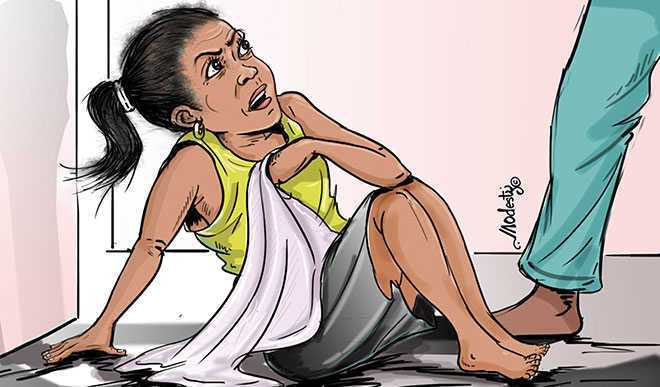
Seventeen-year-old Mercy could still remember the chilling moment a man dragged her by her top. It was well over 10 days but the trauma refused to leave. She could barely sleep and was writhing in pain which she had hidden away from her parents.
Mercy broke down as she recalled the incident that unfolded near the boundary between Etevie and Oramudu in Ozoro in March, where she was caught in a sudden surge of men that left her unable to escape.
Mercy, one of the victims sexually harrassed during a festival in Ozoro. credit: ICIR
She had gone out to see a friend that evening around a popular place called Hospital Road, not far from where a festival was taking place in Oramudu. She said she did not go to the festival site itself and had no expectation of being drawn into the events unfolding.
Within minutes, a young man on a motorcycle singled her out and moved toward her before calling others in the area. The situation quickly escalated as more people converged, forming a crowd she estimated at over 50 individuals.
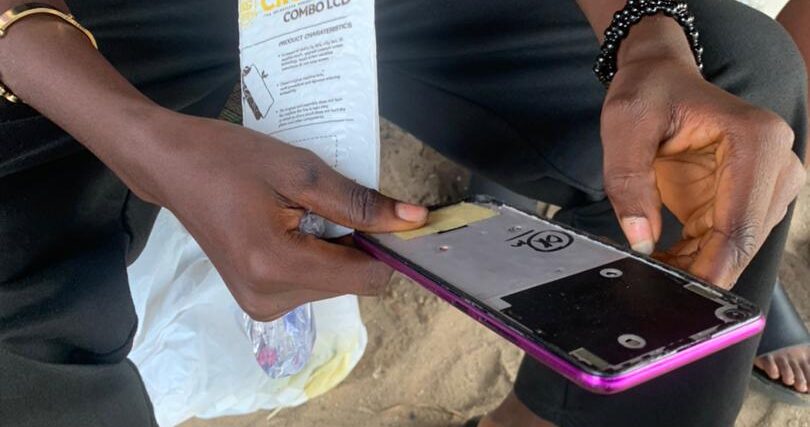
She was forced to the ground as the crowd closed in, leaving her overwhelmed and unable to regain her footing amid the pressure from those around her. During the process, her phone got damaged by the ravaging young men.
“I was so scared and embarrassed. Like 20 people touched my breasts. I felt like crying,” she said, adding that, “I was happy that it happened in the night, because many people in the town didn’t see my face.”
Mercy showing the screen of her phone damaged from the attack she suffered on the night of March 19. PC: Mustapha Usman/ICIR
Mercy eventually escaped the scene when a man pulled her out of the crowd and led her to a corner, from where she managed to flee.
The experience, she narrated, has left her shaken, embarrassed, and unable to return to the area since the incident occurred.
Mercy was not alone.
Across Oramudu that evening, multiple women found themselves caught in similar scenes surrounded, chased, pulled, their bodies turned into targets in a space that had suddenly become unsafe. The community, located just a few kilometres from Southern Delta University campus, where students move in and out daily, made female students at risk of gang violence.
Like Mercy, Peace, a 300-level student at Southern Delta University, had no idea the evening would take a dangerous turn. She had stepped out briefly to retrieve her power bank, hopping on a motorcycle and heading toward her destination.
When she arrived at the shop, she was suddenly pulled off the bike by a group of young men who appeared to be lying in wait for unsuspecting women.
“When I got there, a group of boys started shouting, ‘you people should hold her, she’s a girl.’ Then they started dragging my clothes ensuring that I would go naked,” she said.
“I was screaming for them to let me go. They tore my dress and I lost my things. They forced me, pressing my breast,” she added.
Over the past two weeks, anger and outrage have spread across Nigeria following allegations of gang molestation and sexual violations of women in parts of Ozoro, Delta State, linked to activities surrounding a local fertility festival.
While the incidents have triggered widespread calls on social media for the arrest and prosecution of those responsible, they are far from isolated. Sexual and gender-based violence remains a persistent and deeply rooted challenge across the country, often surfacing in waves of public attention after particularly disturbing cases.
According to findings by the Thomson Reuters Foundation’s 2018 global poll, Nigeria ranked among the most dangerous places in the world for women, largely due to the prevalence of sexual violence, cultural stigma, and weak enforcement of protective laws.
Recent data from the National Bureau of Statistics also suggests that sexual offences remain widespread, though significantly under-reported, with many survivors never formally reporting cases to authorities.
In many communities, incidents are further compounded by silence, fear of stigma, and limited access to justice, leaving survivors to navigate trauma without institutional support.
Backstory
On Thursday March 19, 2026, Oramudu, one of the five quarters that make up Ozoro in Isoko North Local Government Area of Delta State, held its Alue-Do fertility festival. The celebration, according to findings, was rooted in Isoko tradition and centred on prayers and rituals for fertility, childbirth, and family continuity
There was no clear timeline for the ritual, as residents gave conflicting accounts. Some said it is held every five to seven years, while others claimed it takes place every ten years.
“Alue” is understood locally as a spiritual force associated with fruitfulness, and the festival traditionally involves symbolic rites performed by priests for women (or couples) seeking conception.
In practice, women who take part are usually guided through spiritual rites that include prayers and the symbolic use of sand from sacred grounds, believed to carry blessings.
Some of residents who spoke with The ICIR described it as a cultural exercise meant to support women struggling with infertility and to reinforce communal beliefs around fertility.
Usually the priest and some of the residents go to the farm (forest) to make ritual around noon and normally return to the community around 3-4pm. During this time, women experiencing infertility, alongside their couples, join them as they walk down the streets. Elderly women then pour sand on them and offer prayers, seeking divine blessings for fertility.
“It is an age-long tradition that children and women who are married for about 20, 10, 15 years, will be privileged to interface with aged women above 40, 60, 70, that no longer give birth. They will bring sand from the shrine and throw it on their belly, and they will conceive.
“It is principally a festival of fertility for women and to increase the family unit, as it were in the days of old. So, that is the nature of this festival. Single women are not expected to see the chief priest. If a single lady that is not married sees them, there will be infertility all over the place. That is why I said, it is expected that only people who are looking for the fruit of the womb are expected to be out at that time,” one of the sources said.
The ICIR gathered that the long-standing local expectations around the festival include informal social restrictions, particularly around unmarried women being discouraged from moving freely during the period of the rites.
Community accounts, corroborated with viral videos and independent findings show that during the 2026 edition, this informal norm was loosely enforced by groups of young men who took it upon themselves to “monitor” movement around the festival spaces.
It was in this atmosphere that the situation escalated. In many of the situations sighted, several women, including Mercy and Peace were crying for help as a group of men sexually harassed and attacked them in public.
In one of the clips, a male voice was heard claiming that any woman who stepped outside during the period risked being raped. Another clip showed a lady being dragged on the ground, with men attempting to tear her clothes, while manhandling her. She was later seen to be rescued by another person. However, several other ladies were chased down the street by several men.
The price for coming out
Findings by The ICIR show that while the stakeholders have tried to debunk the 2026 incident and dubbed it as work of ‘hijackers’, the targeting of unmarried women during the Alue-Do festival is not entirely new. Residents said that in previous years, enforcement of the “stay indoors” warning often took the form of public harassment rather than organised violence.
Several community members decried a pattern where men took it upon themselves to patrol Oramudu streets during the festival, chasing unmarried women who were seen outside. In some cases, the women were pursued back to their homes amid shouting and ridicule.
Though not as widespread or as chaotic as what unfolded in 2026, according to these residents, they said these actions were a culture of fear and intimidation for young women in the area.
‘I was almost raped in 2015’
In 2015, Esther (real name withheld for protection) had just moved to Ozoro after getting married. Being new to the community, she tried to settle into a routine, opening her small shop and learning the ways of the town.
One of the residents narrating her ordeal in 2015. PC: Mustapha Usman/ICIR
When the festival came around that year, she treated it like any other day but her mother-in-law drew her attention to the possible dangers of not closing her shop.
She remembered being told to close her shop early. At the time, she said, it sounded like one of those things people say about local customs, so she tried to observe from outside. “I didn’t take it seriously,” she admitted.
But by 4pm, the mood in the area began to change. Some group of young men started moving through the streets in clusters.
“When the time came, boys and men started chasing girls. When we saw this, we ran into a shop and watched from behind.”
Esther would later run into a nearby shop and watch from behind, trying to make sense of the chaos outside. She said she could see women being chased from where she stood.
But that was not all. She was later attacked by some young boys on her way home.
“They were like 30 or more,” she said, adding, “They tried to rape me until an elderly woman appealed to them. That year’s festival for me was even harder than this year’s but there was no social media.”
The ICIR could not independently confirm this account. However, The Deputy President General of Ozoro Inonoje Emmanuel, confirmed that although the unmarried women were not to be “sexually harassed,” they were often shouted at and ‘chased’ inside.
“They will pursue them to go inside because they are not expected to see them. Those aged women will shout at them,” he said.
More cases of harassment
Witnesses and victims’ accounts showed that the harassment was not limited to one location, but spread across different parts of the town, with multiple incidents reported within a short period.
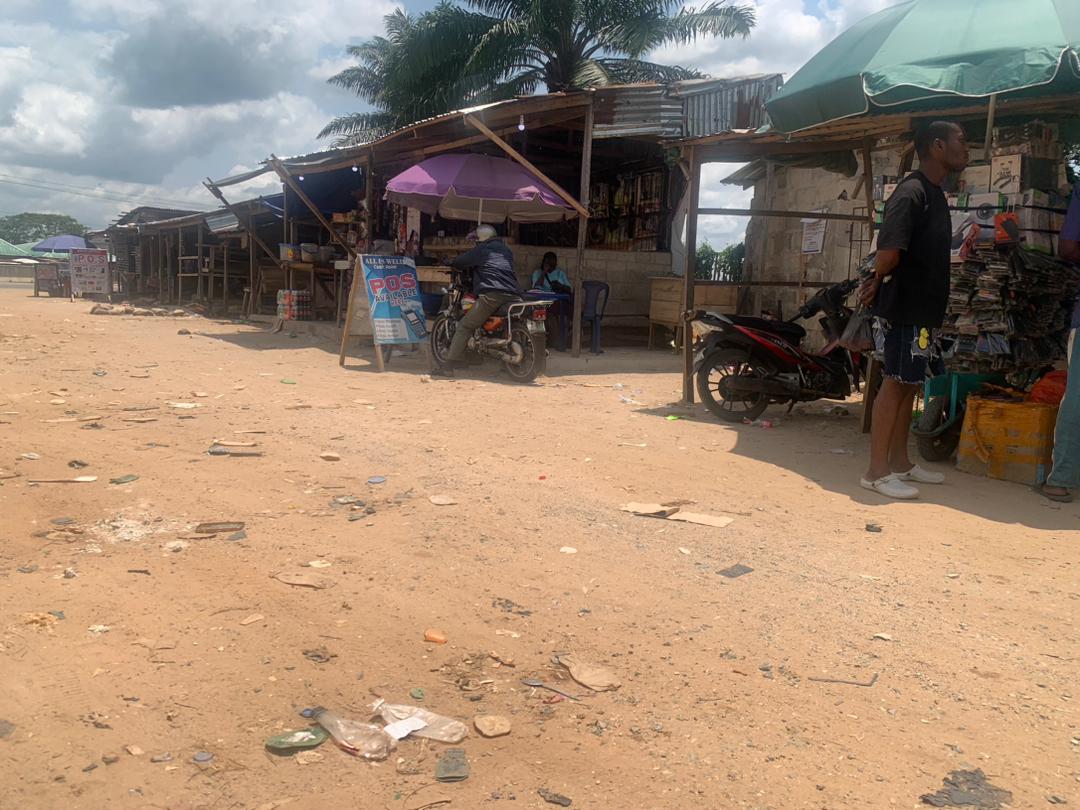
Gwake junction, where about five ladies were said to have been sexually harassed. Mustapha Usman/ICIR
At Gwake, residents alleged that about five women were harassed during the incident. According to accounts, the women were caught in the confusion as groups of young men moved through the area, leaving several people scared and scrambling for safety.
A local phone repairer, who simply introduced himself as Ken, said the situation around Gwake junction, on March 19, began when a bike rider passed through the area carrying a young woman, which appeared to trigger tension among a group of youths already gathered around the festival route.
He dismissed widespread claims of rape in the area and described the harassment as selective, saying only some young women, mostly students, were targeted, while others passed without being disturbed.
He explained that about five girls were touched and chased before being forced to run to safety.
“They mostly targeted fresh students. Any woman they didn’t consider attractive, they didn’t harass. And they would never try to harass someone’s mother, because people would react quickly.
“One of the girls who was harassed was rescued by my neighbour who sells provisions. He allowed the girl into his shop and stopped those boys from disturbing her again,” Ken, who was in his shop when the incident happened, added.
Witnesses further said similar incidents were recorded along the major road, where travellers on motorcycles and unsuspecting passers-by were caught up in the confusion, particularly those who were unaware that the festival was taking place.
Eye witnesses said some women were harassed around the Hospital road. Mustapha Usman/ICIR
The ICIR gathered that at Hospital Road, opposite Stop n’ Chop Restaurant, about five other girls were harassed during the same period.
‘I thought I would die’
“I was so scared. I wasn’t even seeing anything before someone rescued me from the crowd of over 50 people. I thought I would die,” these were the words of Mercy as she continued narrating her ordeal.
Mercy, who is in SS-3 and lives in Oruto, said she was lucky to have been pulled out of the situation by a man she did not know, just as the crowd closed in on her and she struggled to break free.
“I think they would have done something worse than what they did to me, like rape me because they were already dragging my trouser to come down,” she added.
She said the intervention came at a critical moment when she had already been overwhelmed and could barely comprehend what was happening around her.
Mercy said that even after she broke free, she struggled to regain composure, as the shock left her disoriented and unable to understand the full extent of what had happened.
Beyond the physical injuries, she described lasting emotional distress, saying she now feels unsafe passing through the same area where the incident occurred.
“I don’t even like going there again. People laugh when they see me pass,” she said, adding that the stigma and embarrassment from the incident has made it difficult for her to speak openly about it.
Blessing was on a motorcycle when four men grabbed her from behind and pulled her down. Immediately, the four boys started touching her inappropriately.
“As they were touching my body, I told them I was on my period, but they asked how much I could pay to get my freedom. I told them N5,000, but they later forced me to send N10,000” she said.
Like Blessing, Emilia had just returned from a trip and was approaching her hostel when the motorcycle she was on stopped. In seconds, she was pulled down.
According to her, some of the boys began rummaging through her items. It was only when students from her hostel rushed in that she was pulled free.
“I was on my way back from a trip when they attacked me at Aso Rock junction. They dragged me off the bike, tore my clothes, and began touching me inappropriately. They harassed me while others destroyed my belongings.
“It was my hostel boys who eventually came and rescued me. I told my parents what happened, and they asked me to come home or said they would come to meet me. But I told them I should wait since investigations had already started.”
Some of the student hostels off campus deserted due to the March 19 incident. Mustapha Usman/ICIR
A visit to the university environment and nearby hostels showed an unusual stillness. Many rooms were locked, and the surroundings had thinned out. Although The ICIR gathered that the students had just concluded their exams—a period when some typically leave town—students and residents said the level of emptiness was not normal.
Southern Delta University. Mustapha Usman/ICIR
The Students’ Union Government (SUG) President, Oribelua Precious, confirmed that at least six students had reported being harassed, noting that efforts were ongoing to compile a full list of affected persons.
The Dean of Students Affairs of the Southern Delta University, Oghnerukevwe Prosper, declined to speak when contacted.
Sexual violence blamed on ‘hoodlums’, poor communication
Authorities in Ozoro have blamed the wave of sexual harassment during the festival on “hoodlums” who allegedly hijacked the process, while also pointing to poor communication by organisers as a major trigger of the chaos.
The Deputy President General of the community, Inoneje Emmanuel, said the organisers failed to follow established procedures by not informing the central leadership or the monarch ahead of the event.
He said the announcement was made only within the host community and in the Isoko language, excluding the larger population of residents, students, and visitors in the increasingly cosmopolitan town who could not understand the message.
“They were supposed to pass the message through the administrative organ of the kingdom, which would then inform the king, but they did not do it,” he said.
This communication gap, many said, left many residents unaware of the timing, movement, and restrictions tied to the ritual, leading unsuspecting women and passers by to move through affected areas where they became targets.
Emmanuel added that the absence of proper coordination created an opening that was exploited, adding that, “the process was hijacked by some hoodlums and miscreants. People who had no role in the festival took advantage of the situation.”
The Delta State Police command Public Relations Officer (PPRO), Bright Edafe, explained that proper procedures were not followed in organising the festival, noting that key stakeholders, including the traditional ruler, school authorities, student representatives, and the police, were not informed beforehand.
18 suspects arrested, some granted bail
Meanwhile, the Delta state police on March 20, a day after the incident confirmed that it had arrested the chief organiser, Omorede Sunday, and four other suspects.
By March 23, additional arrests had been made following further review of evidence. Police authorities said those arrested were transferred to the State Command Headquarters for investigation by the Criminal Investigation Department.
Edafe, said two more suspects were later apprehended, increasing the total number of arrests to 18. He added that some of the suspects have since been granted bail.
According to him, the offences under investigation are bailable, and the suspects will be formally charged to court upon the conclusion of investigations.
Editor’s note: The real names of some sources, including victims, in this report have been withheld to protect their identities.
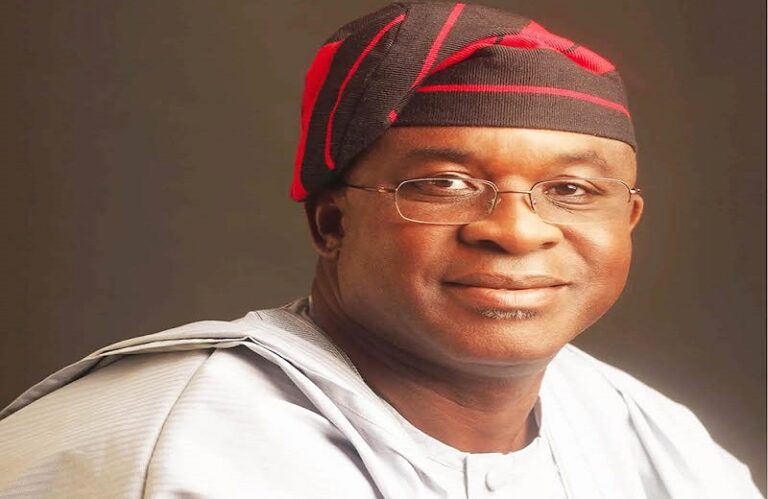
THE Independent National Electoral Commission (INEC) has removed former Senate President, David Mark, as the National Chairman of the African Democratic Congress (ADC), citing a ruling by the Court of Appeal.
The decision was announced on Wednesday, April 1, after the commission said it reviewed the judgment in Appeal No. CA/ABJ/145/2026, which arose from a leadership dispute within the party.
INEC said it would also remove the names of members of the party’s National Working Committee led by Mark from its official portal, in compliance with the court’s directive to maintain the “status quo ante bellum,” the situation before the dispute began.
The commission explained that the decision meant it would no longer recognise Mark or his team as officials of the party pending the final determination of the case before the Federal High Court in Abuja.
The dispute is between Mark and Nafiu Bala Gombe, who claimed he should lead the party as acting national chairman following the resignation of the previous leadership.
Gombe had approached the court to stop Mark’s group from parading themselves as party leaders and to compel INEC to recognise him instead.
However, INEC said it would not recognise either faction for now, adding that it would not accept communications from any of the groups or monitor any meetings, congresses, or conventions organised in the name of the ADC until the case is resolved.
The electoral body also declined Gombe’s request to take over the party’s leadership, insisting it would remain neutral while the matter is still before the court.
INEC noted that although Mark’s leadership emerged after a party meeting in July 2025 and was uploaded to its portal in September 2025, the Court of Appeal ruling requires a return to the status quo before the lawsuit was filed in September 2025.
“Since the names of the current National Working Committee members led by Senator David Mark were uploaded on 9th September, 2025 by INEC (7 days after the suit was instituted), the names would be removed from the INEC portal pursuant to the order of the Court of Appeal to maintain the status quo ante bellum until the matter is decided by the trial court,” the commission argued.
Dismissal of Mark’s appeal
The dispute dates back to July 2025, when a new National Working Committee led by Mark emerged after the resignation of the previous leadership.
However, Gombe, who was the party’s vice-national chairman, rejected the arrangement, insisting he did not resign and should have automatically assumed leadership in line with the party’s constitution
He subsequently filed a suit at the Federal High Court seeking to stop Mark’s group from parading themselves as party leaders and to compel INEC to recognise him instead.
Mark’s camp challenged the case at the Court of Appeal, arguing that the lower court lacked jurisdiction, but the appellate court dismissed the appeal and upheld the continuation of the case at the Federal High Court.
Reacting to this on Wednesday, the electoral umpire said that it would be obeying the Court of Appeal ruling, which dismissed Mark’s appeal challenging the jurisdiction of the Federal High Court and ordered all parties to maintain the status quo to avoid undermining the ongoing case.
“Accordingly, in order to protect the integrity of the proceedings and the eventual determination of the substantive suit pending before the Federal High Court in Suit No. FHC/ABJ/CS/1819/2025,” the commission wrote, adding that parties “are hereby directed to maintain the status quo ante bellum and shall refrain from taking any step or doing any act capable of foisting a fait accompli on the court or otherwise rendering nugatory the proceedings before the trial court.”
The commission urged all political actors to respect judicial processes and avoid actions that could disrupt preparations for the 2027 general elections.
The ICIR reports that the ADC has been widely seen as the only major opposition to challenge the ruling All Progressives Congress (APC) which produced President Bola Tinubu in 2023.
Tinubu is currently gearing up to seek re-election, and many Nigerians believe the ADC is the only viable opposition to the APC, given that 32 of Nigeria’s 36 governors are currently in the APC.
Despite the influx of the Nigeria governors into the APC, prominent politicians, including former vice president Atiku Abubakar, former Labour Party presidential candidate, Peter Obi, former secretary to the government of the federation, Babachir Lawal, former Governor Nasir El-Rufai, former Kano State governor Rabiu Kwankwanso, former minister of justice and attorney-general of the federation, Abubakar Malami, and former minister of transportation, Rotimi Amaechi are among the leading figures in the ADC.
Meanwhile, there are concerns that the ADC may not participate in the 2027 polls should the case in court lingers and INEC refuses to change its position on not recognising any of the party’s leaders.
According to the INEC timetable, political parties are to conduct their primaries between April 23 and May 30, 2026.
The ADC’s failure to resolve its leadership crisis will mean that the APC goes to the poll without a major challenge, as the People’s Democratic Party (PDP), once branded as Africa’s largest political party, has seen its membership depleted by mass defections and currently faces similar leadership crisis.