
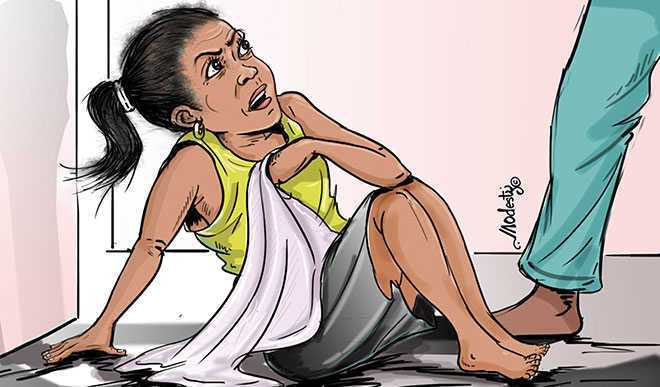
ON March 19, young girls who stepped out of their homes, some unaware a festival, were sexually harassed in Ozoro, Delta state. While there have been different versions of the events, The ICIR found that the incidents were not entirely new or isolated, with multiple women targeted across the community.
Seventeen-year-old Mercy could still remember the chilling moment a man dragged her by her top. It was well over 10 days but the trauma refused to leave. She could barely sleep and was writhing in pain which she had hidden away from her parents.
Mercy broke down as she recalled the incident that unfolded near the boundary between Etevie and Oramudu in Ozoro in March, where she was caught in a sudden surge of men that left her unable to escape.

She had gone out to see a friend that evening around a popular place called Hospital Road, not far from where a festival was taking place in Oramudu. She said she did not go to the festival site itself and had no expectation of being drawn into the events unfolding.
Within minutes, a young man on a motorcycle singled her out and moved toward her before calling others in the area. The situation quickly escalated as more people converged, forming a crowd she estimated at over 50 individuals.
She was forced to the ground as the crowd closed in, leaving her overwhelmed and unable to regain her footing amid the pressure from those around her. During the process, her phone got damaged by the ravaging young men.
“I was so scared and embarrassed. Like 20 people touched my breasts. I felt like crying,” she said, adding that, “I was happy that it happened in the night, because many people in the town didn’t see my face.”
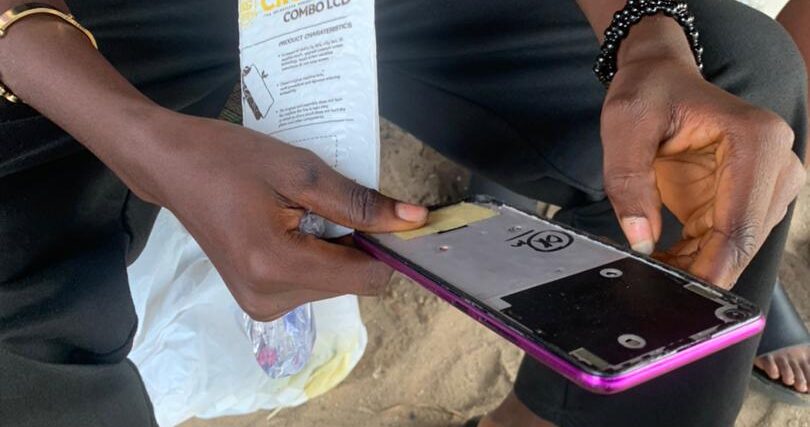
Mercy eventually escaped the scene when a man pulled her out of the crowd and led her to a corner, from where she managed to flee.
The experience, she narrated, has left her shaken, embarrassed, and unable to return to the area since the incident occurred.
Mercy was not alone.
Across Oramudu that evening, multiple women found themselves caught in similar scenes surrounded, chased, pulled, their bodies turned into targets in a space that had suddenly become unsafe. The community, located just a few kilometres from Southern Delta University campus, where students move in and out daily, made female students at risk of gang violence.
Like Mercy, Peace, a 300-level student at Southern Delta University, had no idea the evening would take a dangerous turn. She had stepped out briefly to retrieve her power bank, hopping on a motorcycle and heading toward her destination.
When she arrived at the shop, she was suddenly pulled off the bike by a group of young men who appeared to be lying in wait for unsuspecting women.
“When I got there, a group of boys started shouting, ‘you people should hold her, she’s a girl.’ Then they started dragging my clothes ensuring that I would go naked,” she said.
“I was screaming for them to let me go. They tore my dress and I lost my things. They forced me, pressing my breast,” she added.
Over the past two weeks, anger and outrage have spread across Nigeria following allegations of gang molestation and sexual violations of women in parts of Ozoro, Delta State, linked to activities surrounding a local fertility festival.
While the incidents have triggered widespread calls on social media for the arrest and prosecution of those responsible, they are far from isolated. Sexual and gender-based violence remains a persistent and deeply rooted challenge across the country, often surfacing in waves of public attention after particularly disturbing cases.
According to findings by the Thomson Reuters Foundation’s 2018 global poll, Nigeria ranked among the most dangerous places in the world for women, largely due to the prevalence of sexual violence, cultural stigma, and weak enforcement of protective laws.
Recent data from the National Bureau of Statistics also suggests that sexual offences remain widespread, though significantly under-reported, with many survivors never formally reporting cases to authorities.
In many communities, incidents are further compounded by silence, fear of stigma, and limited access to justice, leaving survivors to navigate trauma without institutional support.
Backstory
On Thursday March 19, 2026, Oramudu, one of the five quarters that make up Ozoro in Isoko North Local Government Area of Delta State, held its Alue-Do fertility festival. The celebration, according to findings, was rooted in Isoko tradition and centred on prayers and rituals for fertility, childbirth, and family continuity
There was no clear timeline for the ritual, as residents gave conflicting accounts. Some said it is held every five to seven years, while others claimed it takes place every ten years.
“Alue” is understood locally as a spiritual force associated with fruitfulness, and the festival traditionally involves symbolic rites performed by priests for women (or couples) seeking conception.
In practice, women who take part are usually guided through spiritual rites that include prayers and the symbolic use of sand from sacred grounds, believed to carry blessings.
Some of residents who spoke with The ICIR described it as a cultural exercise meant to support women struggling with infertility and to reinforce communal beliefs around fertility.
Usually the priest and some of the residents go to the farm (forest) to make ritual around noon and normally return to the community around 3-4pm. During this time, women experiencing infertility, alongside their couples, join them as they walk down the streets. Elderly women then pour sand on them and offer prayers, seeking divine blessings for fertility.
“It is an age-long tradition that children and women who are married for about 20, 10, 15 years, will be privileged to interface with aged women above 40, 60, 70, that no longer give birth. They will bring sand from the shrine and throw it on their belly, and they will conceive.
“It is principally a festival of fertility for women and to increase the family unit, as it were in the days of old. So, that is the nature of this festival. Single women are not expected to see the chief priest. If a single lady that is not married sees them, there will be infertility all over the place. That is why I said, it is expected that only people who are looking for the fruit of the womb are expected to be out at that time,” one of the sources said.
The ICIR gathered that the long-standing local expectations around the festival include informal social restrictions, particularly around unmarried women being discouraged from moving freely during the period of the rites.
Community accounts, corroborated with viral videos and independent findings show that during the 2026 edition, this informal norm was loosely enforced by groups of young men who took it upon themselves to “monitor” movement around the festival spaces.
It was in this atmosphere that the situation escalated. In many of the situations sighted, several women, including Mercy and Peace were crying for help as a group of men sexually harassed and attacked them in public.
In one of the clips, a male voice was heard claiming that any woman who stepped outside during the period risked being raped. Another clip showed a lady being dragged on the ground, with men attempting to tear her clothes, while manhandling her. She was later seen to be rescued by another person. However, several other ladies were chased down the street by several men.
The price for coming out
Findings by The ICIR show that while the stakeholders have tried to debunk the 2026 incident and dubbed it as work of ‘hijackers’, the targeting of unmarried women during the Alue-Do festival is not entirely new. Residents said that in previous years, enforcement of the “stay indoors” warning often took the form of public harassment rather than organised violence.
Several community members decried a pattern where men took it upon themselves to patrol Oramudu streets during the festival, chasing unmarried women who were seen outside. In some cases, the women were pursued back to their homes amid shouting and ridicule.
Though not as widespread or as chaotic as what unfolded in 2026, according to these residents, they said these actions were a culture of fear and intimidation for young women in the area.
‘I was almost raped in 2015’
In 2015, Esther (real name withheld for protection) had just moved to Ozoro after getting married. Being new to the community, she tried to settle into a routine, opening her small shop and learning the ways of the town.

When the festival came around that year, she treated it like any other day but her mother-in-law drew her attention to the possible dangers of not closing her shop.
She remembered being told to close her shop early. At the time, she said, it sounded like one of those things people say about local customs, so she tried to observe from outside. “I didn’t take it seriously,” she admitted.
But by 4pm, the mood in the area began to change. Some group of young men started moving through the streets in clusters.
“When the time came, boys and men started chasing girls. When we saw this, we ran into a shop and watched from behind.”
Esther would later run into a nearby shop and watch from behind, trying to make sense of the chaos outside. She said she could see women being chased from where she stood.
But that was not all. She was later attacked by some young boys on her way home.
“They were like 30 or more,” she said, adding, “They tried to rape me until an elderly woman appealed to them. That year’s festival for me was even harder than this year’s but there was no social media.”
The ICIR could not independently confirm this account. However, The Deputy President General of Ozoro Inonoje Emmanuel, confirmed that although the unmarried women were not to be “sexually harassed,” they were often shouted at and ‘chased’ inside.
“They will pursue them to go inside because they are not expected to see them. Those aged women will shout at them,” he said.
More cases of harassment
Witnesses and victims’ accounts showed that the harassment was not limited to one location, but spread across different parts of the town, with multiple incidents reported within a short period.
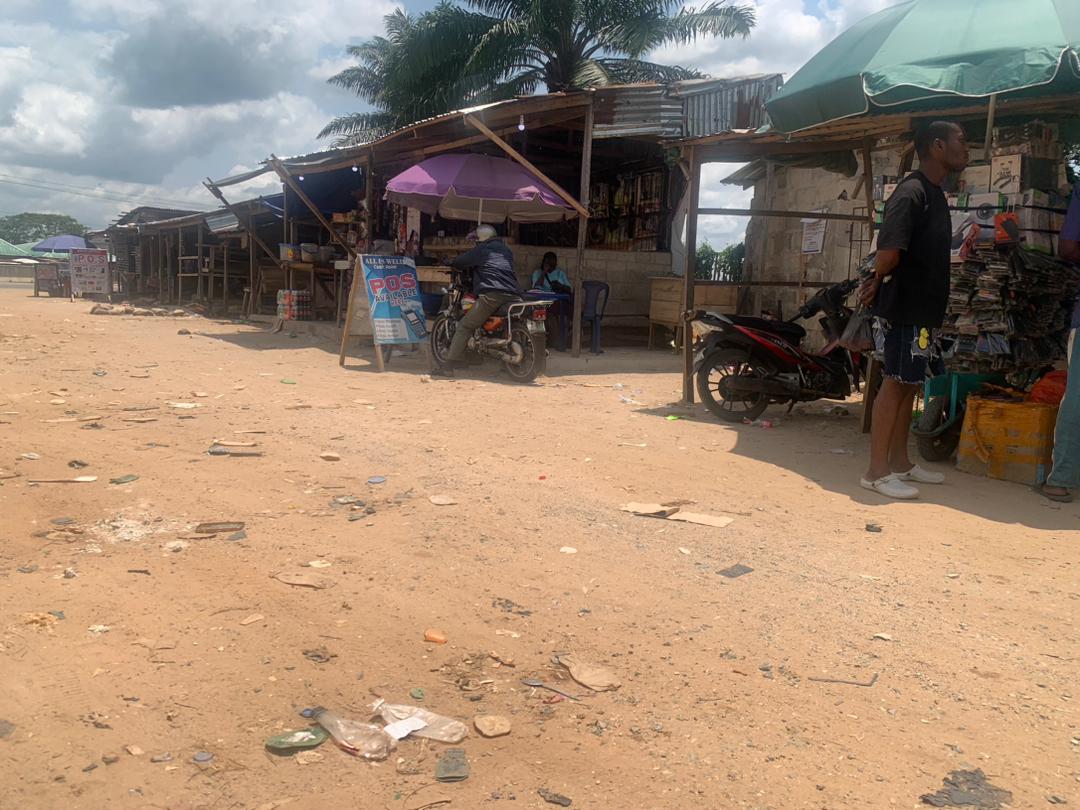
At Gwake, residents alleged that about five women were harassed during the incident. According to accounts, the women were caught in the confusion as groups of young men moved through the area, leaving several people scared and scrambling for safety.
A local phone repairer, who simply introduced himself as Ken, said the situation around Gwake junction, on March 19, began when a bike rider passed through the area carrying a young woman, which appeared to trigger tension among a group of youths already gathered around the festival route.
He dismissed widespread claims of rape in the area and described the harassment as selective, saying only some young women, mostly students, were targeted, while others passed without being disturbed.
He explained that about five girls were touched and chased before being forced to run to safety.
“They mostly targeted fresh students. Any woman they didn’t consider attractive, they didn’t harass. And they would never try to harass someone’s mother, because people would react quickly.
“One of the girls who was harassed was rescued by my neighbour who sells provisions. He allowed the girl into his shop and stopped those boys from disturbing her again,” Ken, who was in his shop when the incident happened, added.
Witnesses further said similar incidents were recorded along the major road, where travellers on motorcycles and unsuspecting passers-by were caught up in the confusion, particularly those who were unaware that the festival was taking place.

The ICIR gathered that at Hospital Road, opposite Stop n’ Chop Restaurant, about five other girls were harassed during the same period.
‘I thought I would die’
“I was so scared. I wasn’t even seeing anything before someone rescued me from the crowd of over 50 people. I thought I would die,” these were the words of Mercy as she continued narrating her ordeal.
Mercy, who is in SS-3 and lives in Oruto, said she was lucky to have been pulled out of the situation by a man she did not know, just as the crowd closed in on her and she struggled to break free.
“I think they would have done something worse than what they did to me, like rape me because they were already dragging my trouser to come down,” she added.
She said the intervention came at a critical moment when she had already been overwhelmed and could barely comprehend what was happening around her.
Mercy said that even after she broke free, she struggled to regain composure, as the shock left her disoriented and unable to understand the full extent of what had happened.
Beyond the physical injuries, she described lasting emotional distress, saying she now feels unsafe passing through the same area where the incident occurred.
“I don’t even like going there again. People laugh when they see me pass,” she said, adding that the stigma and embarrassment from the incident has made it difficult for her to speak openly about it.
Blessing was on a motorcycle when four men grabbed her from behind and pulled her down. Immediately, the four boys started touching her inappropriately.
“As they were touching my body, I told them I was on my period, but they asked how much I could pay to get my freedom. I told them N5,000, but they later forced me to send N10,000” she said.
Like Blessing, Emilia had just returned from a trip and was approaching her hostel when the motorcycle she was on stopped. In seconds, she was pulled down.
According to her, some of the boys began rummaging through her items. It was only when students from her hostel rushed in that she was pulled free.
“I was on my way back from a trip when they attacked me at Aso Rock junction. They dragged me off the bike, tore my clothes, and began touching me inappropriately. They harassed me while others destroyed my belongings.
“It was my hostel boys who eventually came and rescued me. I told my parents what happened, and they asked me to come home or said they would come to meet me. But I told them I should wait since investigations had already started.”

A visit to the university environment and nearby hostels showed an unusual stillness. Many rooms were locked, and the surroundings had thinned out. Although The ICIR gathered that the students had just concluded their exams—a period when some typically leave town—students and residents said the level of emptiness was not normal.

The Students’ Union Government (SUG) President, Oribelua Precious, confirmed that at least six students had reported being harassed, noting that efforts were ongoing to compile a full list of affected persons.
The Dean of Students Affairs of the Southern Delta University, Oghnerukevwe Prosper, declined to speak when contacted.
Sexual violence blamed on ‘hoodlums’, poor communication
Authorities in Ozoro have blamed the wave of sexual harassment during the festival on “hoodlums” who allegedly hijacked the process, while also pointing to poor communication by organisers as a major trigger of the chaos.
The Deputy President General of the community, Inoneje Emmanuel, said the organisers failed to follow established procedures by not informing the central leadership or the monarch ahead of the event.
He said the announcement was made only within the host community and in the Isoko language, excluding the larger population of residents, students, and visitors in the increasingly cosmopolitan town who could not understand the message.
“They were supposed to pass the message through the administrative organ of the kingdom, which would then inform the king, but they did not do it,” he said.
This communication gap, many said, left many residents unaware of the timing, movement, and restrictions tied to the ritual, leading unsuspecting women and passers by to move through affected areas where they became targets.
Emmanuel added that the absence of proper coordination created an opening that was exploited, adding that, “the process was hijacked by some hoodlums and miscreants. People who had no role in the festival took advantage of the situation.”
The Delta State Police command Public Relations Officer (PPRO), Bright Edafe, explained that proper procedures were not followed in organising the festival, noting that key stakeholders, including the traditional ruler, school authorities, student representatives, and the police, were not informed beforehand.
18 suspects arrested, some granted bail
Meanwhile, the Delta state police on March 20, a day after the incident confirmed that it had arrested the chief organiser, Omorede Sunday, and four other suspects.
By March 23, additional arrests had been made following further review of evidence. Police authorities said those arrested were transferred to the State Command Headquarters for investigation by the Criminal Investigation Department.
Edafe, said two more suspects were later apprehended, increasing the total number of arrests to 18. He added that some of the suspects have since been granted bail.
According to him, the offences under investigation are bailable, and the suspects will be formally charged to court upon the conclusion of investigations.
Editor’s note: The real names of some sources, including victims, in this report have been withheld to protect their identities.

Mustapha Usman is an investigative journalist with the International Centre for Investigative Reporting. You can easily reach him via: musman@icirnigeria.com. He tweets @UsmanMustapha_M