Home Blog Page 531

How much did FG disburse to local governments in the last three years?

A recent judgement by the Supreme Court ordered that the 774 local government councils in the country should manage their funds themselves, while adding that it is unconstitutional for state governors to hold funds allocated to the local government which was the norm, against this backdrop The ICIR looked at how much had been disbursed to local governments in the last three years.

Between January 2022 and June 2024, the federal government, through its Federation Account Allocation Committee (FAAC), released a total of N6.92 trillion for the 774 local governments in Nigeria.

The ICIR compiled this disbursement from data released by the National Bureau of Statistics (NBS) monthly report on FAAC allocation. 

The ICIR gathered that in 2022, the total allocation disbursed to the local government was N2.62 trillion, while in 2023, the total disbursement to the local governments was N2.60 trillion. Meanwhile, between January and June 2024, a total of N1.69 trillion has been disbursed to the 774 local governments. 

The data showed that more allocations have been made to the LGAs within the last year after the fuel subsidy was removed in May 2023 when President Bola TInubu assumed office as president of Nigeria. 

The ICIR checks showed that between June 2023 and June 2024, one year under Tinubu’s administration, FAAC distributed a total of N3.34 trillion to the local government.  

Month 2024 2023 2022
January N288.93 billion N221.81 billion N163.88 billion
February N278.04 billion N183.23 billion N131.88 billion
March N267.15 billion N173.94 billion N722.38 billion
April N288.69 billion N171.26 billion N167.91 billion
May N293.82 billion N213.67 billion N149.25 billion
June N282.48 billion N221.79 billion N175.94 billion
July N218.06 billion N182.33 billion
August N236.23 billion N210.62 billion
September N266.54 billion N164.25 billion
October N210.90 billion N172.78 billion
November N225.21 billion N177.09 billion
December N258.81 billion N202.49 billion
Total N1.69 trillion N2.61 trillion N2.62 trillion

Table showing the disbursement to LGAs in three years. Source: NBS

A senior research & policy analyst for BudgIT, Vahyala Kwaga, told The ICIR that the issue with the data on the distribution of local government funds is the uncertainty in precisely how much the local governments actually got at the end of the day.

He said, “It is an open secret that governors “hijack” funds in the Joint Account of the states and the local Government. More worrisome is despite the minimal amount of money received by the local governments, publication of the spending efficiency is nonexistent. This speaks to the lack of transparency even with the little received by the LGAs.”

Supreme court judgment 

A recent judgement by the Supreme Court has ordered that the 774 local government councils in the country should manage their funds themselves, adding that it is unconstitutional for state governors to hold funds allocated to the local government. 

Every month, allocations are disbursed from the revenues generated into the federation accounts. The bulk of the revenue shared at FAAC meetings by the federal, state, and local governments are earnings from oil exports, taxes, and other statutory allocations.

In the current revenue-sharing formula, the Federal Government gets 52.68 per cent of the revenue, states 26.72 per cent, and local governments 20.60 per cent.

The fund, which serves as the primary revenue stream for most states, is designed to facilitate development across various tiers of government, enabling states and local governments to fulfil their financial obligations and deliver essential services to their citizens.

However, up until the recent judgement, allocation to the local government has always been managed or controlled by the state governors. 

LG autonomy

The attorney general of the federation, Lateef Fagbemi, had filed a lawsuit on behalf of the Federal Government, seeking to grant full autonomy and direct funding to all 774 local government councils in the country.

But this suit was counterclaimed by the 36 state governments, arguing that the Supreme Court lacked the jurisdiction to hear the case.

In the lead judgement read by the justice, Emmanuel Agim, the apex court said the AGF has the right to institute the suit and protect the constitution. It also added that Local Government allocations from the FAAC should be paid directly to them henceforth, and not to state government coffers as this is a breach of the 1999 constitution. 

Recall that The ICIR reported that former President Muhammadu Buhari, in May 2020, signed an Executive Order to grant financial autonomy to the judiciary, legislature, and local government councils but analysts said the misappropriation of LGA funds would not end until a proper constitutional amendment is done.

Fidelity Bank extends N127.1bn capital raising deadline amid drop in share price

FIDELITY Bank Plc has extended its capital raising offers earlier scheduled to close on Monday, July 29 to August 12, amid a decline in its share price.

The two-week extension was confirmed by the bank’s media and internal communications team lead, Adebowale Banzi, on Monday, July 29.

The bank also disclosed it had gotten the approval of the Securities and Exchange Commission (SEC) for an extension after the 28-day initial offerings closed on Monday, July 29.

“An application was made to the Securities and Exchange Commission to extend the closing date of the application and acceptance list and this has been approved. The application/ acceptance list will therefore now close on Monday, 12 August 2024,” the bank said in an official notification.

On June 20, Fidelity Bank opened its application for an N127.1 billion combined rights issue for existing investors and a public offer for new investors, The ICIR reported.

The capital raising is to enable the bank to meet the Central Bank of Nigeria’s (CBN) minimum capital base of N500 billion.

The apex bank had in March issued a guideline for banks’ mandatory recapitalisation aimed at repositioning the banking system ahead of the federal government’s dream of achieving a $1 trillion economy by 2030.

Fidelity Bank’s combined offer comprises a rights issue of 3.2 billion ordinary shares of 50 kobo each at N9.25 per share, and 10 billion ordinary shares of 50 kobo each to the general investing public at N9.75 per share.

The rights issue is allocated based on one new ordinary share for every 10 existing ordinary shares held as of the close of business on Friday, January 5 this year.

However, on Monday, July 29, Fidelity Bank’s share price closed at N10.65 from N10.85 when it opened its capital raising offer on June 20. This shows that the share price of Fidelity Bank has lost 0.2k within the 28-day trading offer.

Speaking of the capital raising offers, a capital market operator, David Adonri, told The ICIR that there has been mixed sentiment in the capital market since Fidelity Bank kick-started its offer.

According to him, some investors have been quite enthusiastic and responded positively, especially on shares issued at a discount, while a lot of investors feel uncomfortable with shares offered at higher prices than the market price.

“I think Access Bank is caught up in that web; a little bit for Zenith Bank as well as its share price came below the price in the secondary market. These are some of the challenges that have occurred in the course of this exercise.

“We are already engaging with the regulator to see how a special waiver can be made so that there can be a discount to the secondary market price to serve as an incentive for investment in the primary market,” Adonri, the executive vice chairman of Highcap Securities Limited, said.

He believes that Fidelity Bank has been lucky with its offers because its share price has been higher in the secondary market than in the primary market.

Meanwhile, trading activities closed in the red on Monday as investors lost  N111.77 billion following a decline in the market capitalisation to N55.72 trillion from N55.61 trillion.

Also, the All-Share Index decreased to 98,132.15 basis points from 98,201.49 basis points

Although 22 companies’ stocks appreciated and 21 companies’ stocks declined, it could not rebound the market to close in the green.

Africa Prudential topped the gainers’ list with 10.00 per cent to N10.45, while Caverton Offshore Support Group declined by 10.00 per cent to N1.35 to lead the losers’ chart.

The shares of United Bank for Africa and Seplat traded the most at 69.06 million volume and N2.71 billion value for the day.

“The stock market closed in red, experiencing a dip at the end of the trading day. Market’s trajectory continues in the negative region, extending losses. We anticipate mixed sentiment in the remaining days of the week,” research analysts at GTI said.

Two weeks after ICIR report, Head of Service launches probe into disobedience of deployment orders

0

TWO weeks after The ICIR exposed some top civil servants who ignored their deployment by the Head of Civil Service of the Federation (HCSF), the Head of Service, Folasade Yemi-Esan, has launched a probe into the disobedience.

Read the report: Top civil servants ‘flout’ Head of Service deployment directives six weeks after

In a letter sighted by The ICIR, with reference number HCSF/SDO/CSI/122/1, dated Monday, July 22, and with the title,Compliance Monitoring of Posting Instructions of Officers on SGL 07-17 Under The Pool of The Office of The Head of The Civil Service of The Federation.the HSCF said by her mandate, she had scheduled a compliance monitoring exercise for all MDAs in respect of the posting instructions released by the OHCSF on May 7, 2024.

The letter from the Civil Service Inspectorate Department (CSID) of the office of the Head of Service was addressed to the Directors of Human Resources Management across the federal government’s ministries.

The letter partly reads,You are invited to note that the exercise is part of efforts of OHCSF in ensuring discipline and strict adherence to instructions by officers in line with the ethos of the civil service as encapsulated in FCSSIP25

“Accordingly, I am further directed to inform you that the exercise is scheduled to hold from July 29 to August 9, 2024.”

According to the circular, the Human Resources Management departments in the ministries are to make available to the investigative team all relevant documents that will aid the success of the exercise.

The letter was signed by the Deputy Director, CSI Adenike Iwajomo, on behalf of the Head of the Civil Service of the Federation.

A reliable source within the Ministry of Art, Creative Economy and Tourism who confirmed the development to The ICIR said that the constant flouting of directives in the civil service was due to the ongoing 2024 procurement exercise.

“They are always disobeying lawful orders because some PS (Permanent Secretaries) and top civil servants always want to take part in the procurement activities which are filled with fraudulent exercises,the source said.

Recall that The ICIR in a report on July 8 revealed that more than six weeks after a circular from the office of the HCSF directed some senior servants to move to new ministries, two top civil servants in charge of procurement refused to move to their new places of deployment.

The circular signed by the permanent secretary, career management, Adeleye Adeoye, stated that the posting was with immediate effect and instructed all the deployed officers to be accepted and documented by the respective ministries.

It warned that the office of the HCSF would not condone the rejection of officers.

According to the circular, all handover and taking-over processes must be completed on or before Thursday, May 16, 2024.

However, findings by The ICIR showed that despite the strict instruction on the deadline of May 22 for the resumption of the deployed officers, some affected civil servants refused to move to their new postings.

The two deputy directors (DD) of procurement affected were Ukpong Kufre Joseph of the Ministry of Art, Creative Economy and Tourism and Momodu Jenifer Jeminetu of the Federal Ministry of Information and National Orientation.

In another report in August 2023, The ICIR reported that before the Information Ministry was split, the HCSF directed  that all directors who had spent eight years or above should proceed on retirement in line with the revised Public Service Rules (PSR).

The directive was issued in a memo dated July 27 by the office of the HCSF, Yemi–Esan.

But despite this directive, most of the affected directors in the ministry disobeyed until The ICIR exposed their disobedience which led to their compulsory retirement.

Stakeholders divided over UNODC’s report on bribery in Nigerian health sector

0

STAKEHOLDERS across sectors, including academics, health, media and civil societies are divided over the report by the United Nations Office on Drugs and Crime (UNODC), which revealed that 45 per cent of health service users in Nigeria were asked to pay bribes before accessing healthcare.

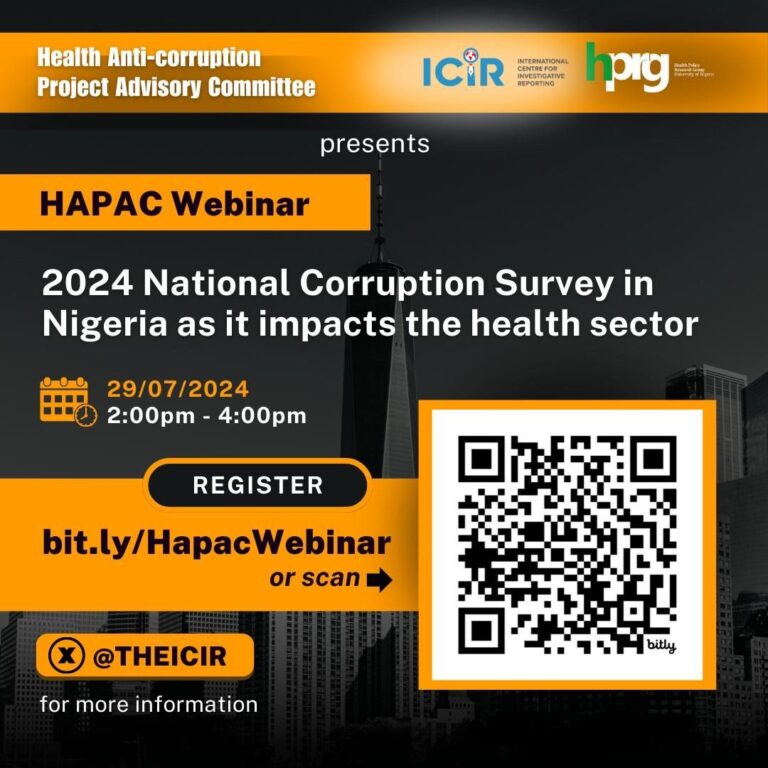
This formed part of the discourse on Monday, July 29, when Health Sector Anti-Corruption Project Advisory Committee (HAPAC), hosted a webinar on the topic, “Reflection from the 2024 corruption in Nigeria survey as it Impacts the health sector”.

The discussion centred on the findings of the UNODC’s third edition of corruption in Nigeria, trends and patterns, focusing on bribery and its extensive implications on the health sector.

Speaking at the webinar, the Chairman of HAPAC, Idris Muhammed, noted that while the report revealed bribery being rampant and deeply entrenched in the sector, some health workers have called for a more critical look at the report.

“Since the report made it to the public domain, health workers from several quarters have continued to react, citing insensitivities and flawed methodology. Some health workers have also called for a more critical look at the report and suggested steps to improve anti-corruption within the health sector,” Muhammad said.

Synopsis into the UNODC report

The survey, which was conducted in partnership with the National Bureau of Statistics (NBS) and the MacArthur Foundation, revealed that nearly half of those seeking medical services in Nigeria encountered demands for bribes, often for services that are supposed to be free or to expedite treatment processes.

The report also showed the health sector as being among the top four homes for bribery in the country.

While presenting the report, Prince Agwu, from the University of Dundee and a member of the Health Policy Research Group NSUKKA, noted a significant increase in bribes paid in the private health facilities, implicating doctors in the private hospitals.

In the report, 70 per cent of Nigerians asked to pay bribes refused.

Meanwhile, generally about 95 per cent of bribes, totaling an N721 billion were paid across sectors, according to the synopsis of the report, representing approximately 0.4 per cent of Nigeria’s GDP.

Stakeholders weigh in

During the webinar, panelists while speaking on the prevalence of bribery as reported by the UNODC, noted that there were several other issues bedeviling the health sector in the country.

The Executive Director, International Centre for Investigative Reporting, ICIR, Dayo Aiyetan, noted the divergence in perspectives between the survey data and real-world experiences as reported by journalists who worked under the organisation’s health reporting project.

Aiyetan argued that investigations in primary healthcare centres across Nigeria showed a range of systemic problems beyond bribery, including misapplication and mismanagement of resources.

He said: “We operated in 12 states before. As we speak, there are journalists on that project operating in seven focal states. And sincerely speaking, our experience, the data we gathered from the field, they are entirely different from the bribery that we’re talking about…”

Meanwhile, speaking on its findings, the UNODC National Programme Officer, Princess Chifiero, highlighted the relevance of SDG Goal 16.5, which targets the reduction of bribery and corruption. 

She explained that the UNODC, in collaboration with the UNDP and other partners, developed a statistical framework to measure bribery, contextualised with guidance from National Statistics Bureau.

According to her, the framework facilitated the collection of robust data, including a substantial sample size of 33,000 respondents, one of the largest in Africa.

Chifiero emphasised that bribery is a measurable form of corruption, making it easier to gather data through direct questions. 

On his part, Muktar Gadanya, a professor, explained that the comprehensive data collection, with a sample size of 30,000 respondents, allowed for detailed sub-national analysis, should any organisation or individual have a problem with the methodology.

Mukhtar argued that while the national index is essential for gauging overall progress, the data’s robustness also supported secondary analysis.

He also addressed misconceptions about gifts and corruption, noting that gifts in the healthcare sector, such as money from patients, should be declared and taxed according to personal income laws.

“The last one on issue of why bribery is a focus. The SDG’s talked specifically about bribery, which is sort of cross cutting, and when you look at bribery, it affects the demand and supply sides. So a person is asking and the person is giving,” Gandaya noted.

In its reaction, the Association of Nigerian Private Medical Practitioners voiced its concerns regarding the UNODC report on bribery being rampant in the private sector.

The president of the private medical practitioners, CN Moses, represented by Chikaike Nnamdi, said the organisation had been at the forefront of combating various vices in the health sector, including bribery and indiscipline among practitioners.

While acknowledging that corruption, including inflation of bills, did exist, he noted that in private practice, bribery was not prevalent.

“This bribery and corruption thing has always been highlighted more as if the private practitioners are very dubious, not really true. We are not,” he added.

Proffering of solutions

The stakeholders therefore highlighted the importance of more transparent data-driven research to combat corruption and proposed several actionable solutions in the health sector. 

They also agreed on the necessity of involving health workers in the reform process to ensure that policies are informed by on-the-ground realities. 

The stakeholders also noted that with corruption in the health sector impacting millions of Nigerians, there was urgent need for transparency, effective policy that would protect users who report bribery and other forms of corruption.

Nigerians paid N721 billion as bribes in 2023 to public officials

0

A recent data on corruption in Nigeria, released by the National Bureau of Statistics (NBS), N721 billion was paid in cash by Nigerians as bribes to public officials in 2023.

The Nigeria Corruption Survey was conducted by NBS in collaboration with the United Nations Office on Drugs and Crime (UNODC), and supported by the MacArthur Foundation and the Kingdom of Denmark

The report showed that in 2023, 27 per cent of Nigerians who had contact with public officials paid a bribe. 

The NBS said this was a slight reduction from 29 per cent recorded in 2019, showing a minor decrease, meanwhile, when accounting for instances where bribes were requested but citizens refused, more than one in every three interactions between citizens and public officials in 2023 involved bribery.

The NBS also said that 70 per cent of Nigerians who were asked to pay a bribe in 2023, refused to do so on at least one occasion adding that the bribery refusal rate was found to be highest in the North-West (at 76 per cent), although all zones recorded refusal rates above 60 per cent.

The report noted that corruption ranked 4th among the most important problems affecting the country in 2023, coming after the cost of living, insecurity and unemployment. Despite this, Nigerians’ confidence in the government’s anti-corruption effort has been declining over time and across regions.

In 2019, more than half of all citizens thought that the government was effective in fighting corruption, but, in 2023, the share declined to less than a third of all citizens. 

According to the report, the top public officials who requested bribes from Nigerians were Police officers, public utility officers, Federal Road Safety Corp (FRSC), doctors, nurses or midwives, teachers or lecturers.

These were followed by Vehicle Inspection Officers (VIO), Other health workers, Customs or immigration service, Tax or revenues officers and local government representatives. 

In 2023 alone, the report said that more than half of all bribes paid to public officials were requested directly by those officials with nine out of 10 of these bribes being paid in cash or money transfers. 

However, the report noted that men are 1.4 times more likely than women to pay or be asked to pay a bribe when interacting with public officials.

The ICIR reported how two former Inspector General of Police, and senior Police officers were accused of bribery in a shady land sale of designated Police Barracks.

Protest: Nigerian CSOs task government to respect citizens’ fundamental rights

0

A coalition of 36 civil society and media organisations in Nigeria have called on the federal government to respect the fundamental right of citizens to hold a peaceful protest.

The call is coming on the heels of a planned ‘Hunger Protest’ scheduled to start on August 1st, 2024, across the country.

The protest aims to draw the government attention to the persistent economic hardship that has characterised President Bola Tinubu’s administration.

Social media posts and tweets on the protest carry different hashtags, ranging from #RevolutionNow, #EndBadGovernanceInNigeria, #TakeItBack, #DaysofRage and #TinubuMustGo.

In a joint press release issued on Monday, July 29, The CSOs said that peaceful protest is a fundamental pillar of democratic governance, adding that the action is a ‘ critical means for citizens to express their dissatisfaction, demand accountability, and advocate for change.’

The statement added, “Protesting is a legitimate form of expression enshrined in international human rights instruments, including the Universal Declaration of Human Rights (UDHR), the International Covenant on Civil and Political Rights, the African Charter on Human and Peoples’ Rights, and Nigeria’s 1999 Constitution (as amended), among others.

“While the right to protest is a fundamental principle of democratic nations, we concede that it must be exercised peacefully and responsibly without violating the rights of others.

“Attempts to suppress demonstrations through intimidation, excessive use of force, or unjust legal actions are unacceptable and counterproductive. Every protest is deemed peaceful, and if intelligence indicates otherwise, it is the role of the appropriate government agencies to identify such saboteurs and arrest them immediately.”

It urged the judiciary and the National Human Rights Commission (NHRC) to uphold the rights of all protesters and establish a mechanism to promptly address and dismiss oppressive charges that might arise from the protests.

It reminded the government that Nigerians demands include reducing the cost of living, curbing insecurity, reducing the cost of governance, electoral reform, judicial reform, and constitutional reform, which it said were all recurring themes in Nigeria’s journey towards a healthy democracy.

The group further called on Nigerians and all stakeholders to actively participate in the protest to demand accountability from the government. 

The ICIR in several reports published reactions from security agencies, and political actors, including former presidential candidates, political parties and other stakeholders to the planned protest . Tinubu has also held closed-door meetings with the traditional rulers and governors over the demonstration.

Below is the list of 36 CSOs that signed the statement’

1.        21st Century Community Empowerment for Youth and Women Initiative

2.       Accountability Lab Nigeria

3.      Africa Institute for Energy Governance (AFIEGO) Uganda

4.      BudgIT Foundation

5.      Centre for Accountability and Inclusive Development (CAAID)

6.      Centre for Inclusive Social Development (CISD)

7.       Centre for Journalism Innovation and Development (CJID)

8.      Civil Society Legislative Advocacy Centre (CISLAC)

9.      Dataphyte Foundation

10.   DigiCivic Initiative

11.     Enough is Enough (EiE) Nigeria

12.    Farnnel Women Foundation

13.    Gee Foundation for Social Justice and Development

14.   Global Rights

15.    Health Education and Human Rights Advocacy Initiative (HEHRAI)

16.   HIFWAC Relief

17.    Hope Behind Bars Africa

18.   Institutional and Sustainable Development Foundation ( ISDF)

19.   International Peace and Civic Responsibility Centre (IPCRC)

20.  International Press Centre (IPC)

21.    Invictus Africa

22.   Kilimanjaro Youth Foundation

23.   Media Rights Agenda (MRA)

24.  Mothers United and Mobilised

25.   Nigeria Network of NGOs

26.  Paradigm Initiative (PIN)

27.   Policy Alert

28.  Public and Private Development Centre (PPDC)

29.  Research Centre for Development Action

30.  Rule of Law and Accountability Advocacy Centre (RULAAC)

31.    Sesor Empowerment Foundation

32.   TechHer NG

33.  The Meluibe Empowerment Foundation

34.  We the People

35.  WikkiTimes

36.  Yiaga Africa

Protest: NYSC bans corps members from wearing uniforms, suspends CDS, others

0

THE National Youth Service Corps (NYSC) has directed corps members nationwide to stop wearing their uniforms pending when it will review order.

It gave the order following the imminent nationwide protest scheduled for August 1-10 over hunger and other ills plaguing Nigeria.

Similarly, the corps suspended the biometric clearance and the weekly community development services (CDS) for the corps members nationwide.

It also prohibited the corps members from participating in the protest.

These were contained in a circular sent to state coordinators, local government inspectors, and zonal inspectors of the NYSC.

It added that the directive was in addition to an earlier memo reminding corps members of the scheme’s policy prohibiting participation in any form of protest.

“The date for the presumption of these activities will be communicated in due course.

“Due to this postponement of all NYSC activities, all corps members are directed not to wear their uniforms for any reason this week,” the NYSC said.

The NYSC had warned corps members against participating in the planned nationwide protest.

This was disclosed in a statement signed by NYSC Lagos coordinator, Yetunde Baderinwa, on Saturday, July 27.

.Baderinwa insisted that corp members must aim to promote national unity.

The statement said NYSC had a policy prohibiting corps members from engaging in protests and insisted that adherence to this policy was mandatory.

It added that corps members found violating this policy “will face serious disciplinary actions” according to NYSC regulations.

The statement reminded all corps members to adhere strictly to the principles of fostering harmony and cohesion within the country.

“Engaging in such activities goes against the very essence of our mission to propagate national unity,” the statement reads.

Nigerians are getting ready to protest against President Bola Tinubu’s administration over a faltering economy and rapidly rising inflation, which have made the country’s cost of living worse since the President assumed office on May 29, 2023.

The ICIR reported that President Bola Tinubu appealed to Nigerians to shelve the protest, promising to ensure its government find solutions to the socio-economic challenges facing the nation.

Meanwhile, the military, SSS and police have threatened the protest organisers, as the citizens warm up for the demonstration.

HEDA writes IGP Egbetokun, requests contact information of lawyers working in police divisions

0

THE Human and Environmental Development Agenda (HEDA Resource Centre) has requested that the Inspector-General of Police (IGP), Kayode Egbetokun, provide contact details of lawyers in police units across Nigeria.

The civil society organisation said that the request was in tandem with its mission to advance human rights, accountability, and transparency in Nigeria.

HEDA in the request stressed that section 66(3a&b) of the Police Act 2020 requires that every police division have at least one person qualified to practice as a lawyer,

According to HEDA, these law officers are responsible for promoting adherence to human rights at the police station.

The organisation noted that it sought the contact numbers of these legal practitioners stationed at police divisions nationwide through the Freedom of Information (FOI) Act, 2011, adding that the information was crucial for educating the public and providing them with the necessary tools to report human rights abuses by police officers.

HEDA’s chairman, Olanrewaju Suraju, emphasised the importance of this request and stated that the presence of legal practitioners in police stations was a critical step towards ensuring human rights compliance within the NPF.

“By making this information accessible, we empower citizens to hold law enforcement accountable and uphold the rule of law,” Suraju stated.

The group said it looked forward to a prompt response from the NPF and remained committed to fostering a culture of transparency and respect for human rights in Nigeria.

HEDA is a non-governmental and non-partisan human rights and development organisation.

The centre conducts research, policy advocacy, training, citizens’ awareness and mobilization on core human development issues, including agriculture, food security, climate change, human rights, public sector accountability and electoral reform processes.

Nigeria spent N13.69trn on oil subsidies in 16 years–NEITI boss

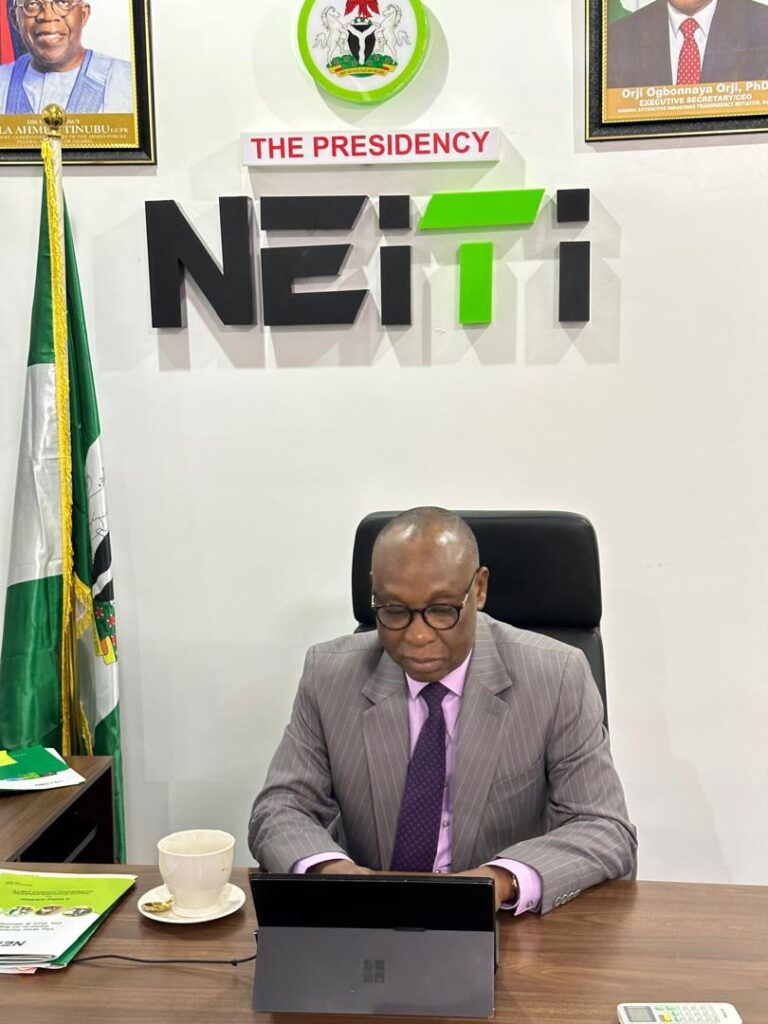
IN this exclusive interview with The ICIR, the Executive Secretary of the Nigeria Extractive Industries Transparency Initiative (NEITI), Orji Ogbonaya Orji, speaks on NEITI’s reports relating to the petroleum, oil and gas industry. Aside from revealing the amount incurred from oil theft, Orji also disclosed that the Nigerian government spent a whopping N13,69 trillion on the payment of fuel subsidies between 2005 and 2021. Excerpts:  


What specific steps has NEITI taken to address the persistent discrepancies in oil revenue reporting by the NNPC?

This is an issue of major concern and our reports have consistently highlighted the need for credibility in the source of data. The industry reports we conduct are evidence-based and NNPC’s submissions are always subjected to interrogations.

If you go through our reports from 1999 till date, you will see that we have highlighted areas of consistency and timeliness in terms of reporting in areas like the Production Sharing contracts (PSCs), the areas of JVs as well as revenue generation and reporting. NEITI and NNPC have reached a common understanding that we must have a meeting point in terms of the credibility of data.

That is why when we design our templates for NNPC, we are specific on the kind of information that we require. We are equally specific about the type of information needed to be provided. We are also open and available for all engagements required for us to streamline the data and come to an agreement.

Our reporting process involves verification and meetings of data verification, and template workshops on the covered entities; one of which is the NNPC. In the past, the NNPC showed less commitment to these processes, but I can tell you that has changed.

We are running fast to ensure that by September 2024 we publish two reports; the 2022 industry report and the 2023 report, to bring our reporting to date. We have set September 24, this year, to release these reports. Also, we have almost commenced the procurement process for 2024 to ensure that by 2025 we are already doing the 2024 report.

To that extent, we wait to see what has changed in the reporting pattern of the NNPC for the 2022 and 2023 reports by the time we release our reports. For now, what has changed is that both NEITI and NNPC have changed their mode of engagement. Before now, if you called for a meeting, the NNPC might not show up or even if they did, they came with somebody who didn’t have the requisite authority to make a decision. All that has changed as NNPC now takes its engagements with NEITI more seriously, more so as a statutory member of our board.

How does NEITI plan to ensure that its audit reports lead to actual reforms and improvements in the extractive industry, rather than just identifying problems?

We have not just been identifying problems; our reports have led to impactful reforms. The Petroleum Industry Act (PIA) which is a fundamental law in the oil and gas industry was recommended by NEITI. It took 18 years to pass it in the National Assembly.

This was outside our scope of influence but that has been passed into law as a product of our report findings. What about the review of the Deep Offshore and Inland Basin Production Sharing Contract (PSCs) Amendment Act of 1993? The Act enacted in 1993 was designed to grant certain incentives in terms of royalty and tax reduction to encourage investments in deep offshore and inland basin.

The Deep Offshore and Inland Basin Production Sharing Contracts Act of 1993 provides for a review of the terms when prices of oil cross $20 in real term, and also a review of the terms 15 years after operation of the agreement and five years subsequently. It is, however, yet to be reviewed since then. The same law also prescribed when, why and how the law should be amended from time to time. But the provisions were never followed as at and when due since 1993.

But NEITI, working with the National Assembly and relevant agencies ensured that the law was amended and now Nigeria earns a lot of revenue from that intervention. The whole issue of the restructuring of the joint venture cash call is a product of NEITI reports.

What about the transition happening after the PIA was passed into law? Where did it come from? In the PIA, we provided that NNPC should be unbundled into a limited liability company. This is also a product of NEITI report. The NNPCL didn’t come easy. Not all our recommendations were implemented but many have scaled through. So, we are not just publishing reports; we are incentivising reforms and these reforms are available.

What about availability of data? Before, you couldn’t get data from the NNPC and any other entities. This question is a shared responsibility and we are doing our own bit. We are also working with the media, the civil society and the companies to also take up their responsibilities. It is the job of NEITI to provide the information in the public domain. But it is also the job of the other stakeholders to take that information and hold government and companies to account.

Have the companies you referenced been cooperating?

Yes, in order to ensure we engage the three stakeholders I mentioned, we have what we call the inter-ministerial task team which was inaugurated last month to look at all the issues we have identified in our reports and ensure that the agencies involved are classified, identified and held accountable to implement them.

It is a forum for government engagement and we have also established the companies’ forum which brings together all the companies that are in the extractive industry, relevant to our mandate. Mind you, we only deal with companies with a particular threshold that pay royalty in excess of USD 5million in the oil and gas industry and, for this year, we are dealing with 69 companies.

What is NEITI’s position on greater transparency in the Niger Delta region and how does it plan to address the ongoing conflict and environmental degradation in that region?

We are engaging with all the institutions in the Niger Delta deliberately created by the government to drive reforms and development in the region, including the Niger Delta Development Commission (NNDC). I must confess, however, that we have challenges relating to the NDDC but we are following this with some caution.

The Ministry of Niger Delta, the NCDMB (Nigeria Content Development Board), the various state governments and the host communities. We are also engaging with the governors within the region to the best that we can. In the same vein, we are engaging with the companies in terms of corporate social responsibility.

That is why I made reference to the PIA which has specific provisions for host communities’ development board. However, our experience has shown that creating many of these institutions does not necessarily drive change or account for development. Individuals who head those institutions and how the institutions function, their structure, character and nature are what can propel development, not the institutions themselves.

If you check the amount of money that has gone into the NNDC and measure the impact, you will be the one to judge. Remember before then, there was OMPADEC, there was also DFRRI and currently, you have NCMB as well as the Ministry of Niger Delta. Despite these, we still have huge challenges in the Niger Delta.

Therefore, NEITI believes that the proliferation of institutions hardly brings the kind of change we want; the character, competence and integrity of the human beings that head these institutions are as important as the structure of governance. Our reports in all these institutions, especially the NNDC, speak for themselves.

However, ours is to provide this information in the public domain. We believe that those institutions could have done better than they are currently doing. That is why we deliberately created what we call physical allocation and statutory audit that follow the money, to see how much of the accruing revenues are accounted for.

These reports target the nine oil-producing communities, and what our findings have done, has been misalignment of revenues, and misplaced priority of needs of the region with projects on the ground.

As I said, NEITI’s job is to provide information in the public domain and we expect citizens from the region to study our reports and use same to ask informed questions about projects lined up for implementation. The Niger Delta has been collecting 13 per cent derivation for several years now; there is no data on how much each state has earned from the derivation. Whether those states are collecting actually what they should get or they should collect more or less.

There is also no data on what specific projects the 13 per cent derivation has earned the states. NEITI has commissioned a report to provide data but we don’t want people to remain docile. The information in our data is not to incite, but to engage the citizens to identify gaps for remedy.

Do you have any collaboration with the anti-corruption agencies?

Yes, we do in terms of communication and MOUs (memoranda of understanding) which we have signed with the EFCC (Economic and Financial Crimes Commission), ICPC (Independent Corrupt Practices and Other Related Offences Commission), and the Nigerian Financial Intelligence Unit. These agencies are working closely with us to the extent that we exchange a lot of information and data.

How has NEITI contributed to overall government revenue generation and domestic resource mobilization?

NEITI has contributed to the government’s domestic resource mobilisation through the unearthing of huge sums of revenue from the oil and gas sector that have not been remitted into government coffers.

For instance, our latest reports for 2021 identified the sum of $8.26 billion as unremitted revenue/liabilities owed to the federation. Of this amount, NUPRC (Nigerian Upstream Petroleum Regulatory Commission) was to collect $ 8.25 billion, the FIRS (Federal Inland Revenue Service) was to collect and remit $13.59 million.

Forty-seven (47) companies account for $1.34 billion of the liabilities with the NNPC alone, accounting for $6.92 billion. The NEITI 2019 and 2020 reports also identified similar liabilities for which the House of Representatives set up an ad-hoc committee during the 9th Assembly to investigate and recover these revenues.

The removal of fuel subsidy by the Tinubu administration has attracted hardship and Nigerians have been groaning. What is NEITI’s position even as the government has confirmed that it has resumed the payment of subsidy which is an admittance that things are not too good?

The NEITI’s independent industry reports over the years have consistently raised red flags that the management of the fuel subsidy regime was anything but open, transparent and accountable and advocated for the removal of subsidy. From our records, we recommended the removal of the subsidy as a result of the huge burden the subsidy has imposed on the economy over the years.

But to remove and replace with robust visible and impactful welfare benefits for the citizens, the poor and the vulnerable in society. Our position remains remove and replace with welfare programme-based revenues that will be freed from subsidy removal.

Other measures we recommended include deliberate policy incentives to encourage private investment in refineries, repair of Nigeria’s four refineries etc. We documented our position in a policy brief we published and shared with the government which we called the Way Forward. The Policy Brief is available on NEITI website.

We think subsidy removal makes sense but we need to replace it with welfare programmes from potential revenues that we expect would accrue from the subsidy removal all things being equal. Data from NEITI reports show that over about $74.38 billion (N13.69 trillion) has been expended in the payment of subsidy between 2005 -2021.

NEITI’s frustration is in the amount of money spent on fuel within these sixteen years.  This amount if available for development was more than enough to address Nigeria’s energy/power sector challenges, repair the refineries, or even build brand new ones to make the country a net exporter of refined petroleum products.

For instance, to accommodate the increase in subsidy expenditure, a whopping sum of N4 trillion appropriated in the year 2022 budget was suddenly slashed from the budgets of health, education, planned investment in infrastructure, intervention budgets in the Niger Delta and from the North-East Development Commissions budgets etc to pay for subsidy.

One major challenge in the oil and gas industry is the issue of oil theft, illegal refineries and pipeline vandalism. What has NEITI done to address these issues?


NEITI in 2018 produced a policy brief on crude oil theft and held a policy dialogue on the issue. On December 6, 2022, former President Muhammadu Buhari set up a panel of investigation on oil theft and losses and I was a member of that panel chaired by Maj. Gen Barry Ndiomu.

The nine-member panel was coordinated by the former National Security Adviser (NSA) and NEITI was the only anti-corruption agency to serve on the panel among other reputable Nigerians carefully selected for the assignment.

The report of the panel with specific, insightful findings and recommendations was presented to the former National Security Adviser Maj General Babagana Mungono (rtd), on March 28, 2023. The report is current and comprehensive in content with specifics on what needs to be done.

NEITI has since in its policy advisory to President Tinubu made a case for the implementation of the findings and recommendations of that report. An assemblage of a dependable team to develop an implementation plan with modalities and timelines to implement the report.

NEITI is available to offer any additional information and data to guide this process. Our legitimate interest in the report is in view of the terrible damage oil theft has done to the country on revenue loss, environment, terrorism financing, stealing of Nigeria’s crude, transparency and accountability in the oil and gas industry.

I therefore use this opportunity to renew our appeal for the implementation of that report. Oil theft has done more damage to the oil and gas industry than any other. NEITI’s audit reports covering 2009-2020, a period of twelve years, show that Nigeria loses an average of more than 140,000 barrels of crude oil per day. Nigeria lost about 619 million barrels valued at $46.16 billion or N16.25 trillion.

The losses are more than the size of Nigeria’s entire foreign reserves and almost 10 times the size of the country’s oil savings (excess crude) account as of 2022. A further analysis shows that on average, Nigeria lost $10.7 million daily, $320 million monthly every year for 12 years between 2009 and 2020.

The average yearly value of crude oil loss is nearly one-fifth of the amount Nigeria earned from the sector in 2020. In fiscal terms, the average annual loss (N1.77 trillion) represents 135% of the total proposed, infrastructure spending on works, housing, power, transport water resources and aviation for 2023.

With the world moving away from fossil fuel to green energy under the energy transition, what would be the hope of countries like Nigeria that depend on oil for sustenance?

President Ahmed Bola Tinubu has just constituted a National Council on Climate Change and focal persons appointed. Nigeria has also developed a plan for ET and identified its transition energy component to be gas.

Nigeria has the largest gas reserves in Africa and the ninth largest in the world. NEITI reports put our country’s gas reserves at over 200 trillion cubic feet (tcf). NEITI’s position is consistent with the provisions of the Petroleum Industry Act (PIA), which provided the most significant progress for the gas sector in strengthening governance and providing fiscal frameworks for the growth of the sector.

We have also advocated that Nigeria’s next steps on ET should be focused on the country’s unique context and reality in terms of sustainability and country specifics. For the gas utilisation policy to work, there is a compelling need for deliberate ambitious investment in its infrastructure.

This includes specific connectivity across upstream facilities to processing and power plants and other end uses. The network code provides a framework through third-party access to resolve some of the connectivity issues but to a large extent, achieving the desired gas expansion will require an estimated $20 billion annually to bridge Nigeria’s gas infrastructure.

The PIA’s midstream and downstream infrastructure fund (MDIF) provides an avenue to fund the gas infrastructure if a robust transparency mechanism can be put in place to closely monitor the process.

Your latest industry reports in the oil and gas and solid minerals industry published last year were for 2021. Why are your reports behind?

We had some challenges but those obstacles have been fixed. Our 2022 and 2023 industry reports are ongoing as we speak. We combined the two years to close the gap. Our National Stakeholders Working Group (NSWG) met in Lagos from the 15th to 19th of this month to discuss and review the extent of work already done. We are hoping to publish the 2022 and 2023 industry reports in the oil, gas and mining sectors on September 24, 2024. We set this date from the onset to underline the need for speed and accuracy.

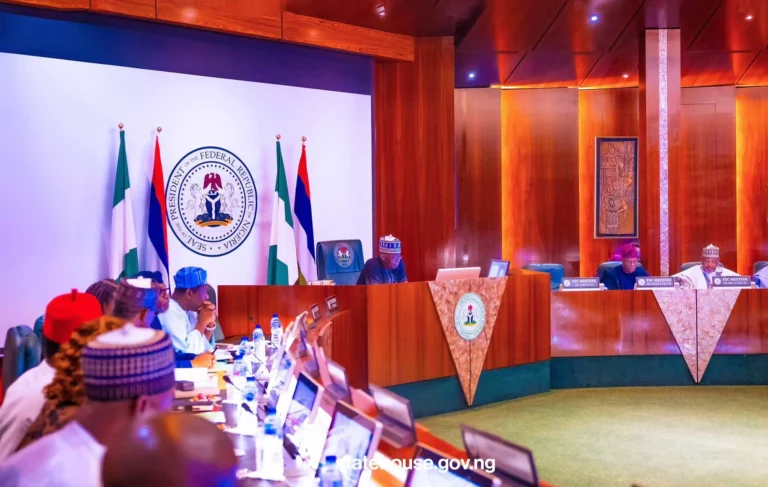


Tinubu directs NNPC to sell crude to Dangote Refinery in naira

0

IN what appears to be a bold move towards curbing long fuel queues and assuaging Nigerians preparing for protest, President Bola Tinubu has directed the Nigerian National Petroleum Company Limited (NNPCL) to sell crude to Dangote Refinery and other upcoming refineries in the nation’s currency – the naira.

The Special Adviser to the President on Information and Publicity, Bayo Onanuga, made this position known in a post via his official X handle on Monday, July 29.

Onanuga said the move, which is to ensure the stability of the pump price of refined fuel and the dollar-naira exchange rate, was adopted by the Federal Executive Council (FEC) on Monday.

According to him, Dangote Refinery requires 15 cargoes of crude for $13.5 billion yearly, and the NNPC has committed to supply four.

However, the FEC has approved that the 450,000 barrels meant for domestic consumption be offered in naira to Nigerian refineries, using the Dangote Refinery as a pilot.

Onanuga added, “The exchange rate will be fixed for the duration of this transaction.

“Afreximbank and other settlement banks in Nigeria will facilitate the trade between Dangote and NNPC Limited. The game-changing intervention will eliminate the need for international letters of credit, further saving the country of dollar payments.”

Nigeria has been experiencing fuel supply glitches running into weeks, particularly in Lagos and Abuja, over supply disruptions in the discharge of operations of some vessels, according to the NNPCL.

The ICIR reported that fuel queues started building up in some filling stations in the FCT on Friday, July 26, as motorists were seen engaging in panic buying.

This latest development is amidst the call for protest against the Nigerian government to improve the living standards of Nigerians and end bad governance.