PRESIDENT Bola Tinubu has approved N70,000 minimum wage for Nigerian workers, a N8,000 increase from the earlier N62,000 proposal.
The Minister of Information Mohammed Idris, announced this at the Presidential Villa in Abuja, on Thursday, July 18.
According to Idris, the President made the announcement at the ongoing meeting with leaders of organised labour.
Tinubu’s N70,000 approval represents over 130 per cent increase from the current minimum wage of N30,000.
Meanwhile, according to a report by Arise TV, the labour leaders, Joe Ajaero, President of Nigeria Labour Congress (NLC), and Festus Usifo, President of the Trade Union Congress (TUC), present at the meeting alongside some members of their unions, have agreed to the new minimum wage.
Also, in a post by Tinubu’s media aide, Bayo Onanuga, on Thursday, the President promised to find ways to assist the private sector and the sub-nationals to pay the minimum wage.
The ICIRreported that governors across Nigeria’s 36 states had earlier opposed the N60,000 minimum wage initially proposed by the federal government.
The governors rejected the proposal in a statement by the director, media and public affairs of the Nigeria Governors’ Forum (NGF), Halimah Salihu Ahmed, on Friday, June 7.
The workers had embarked on a strike on Monday, June 3, and relaxed it the following day, to compel the government to agree on an acceptable minimum wage.
The suspension of the industrial action was at the heel of the resolution reached between the federal government representatives and the labour after a six-hour meeting in the evening of Monday, June 3, in Abuja.
The government agreed to improve the offer beyond the initial N60,000, with President Tinubu ordering the Finance Minister, Wale Edun to prepare a template for the workers’ minimum wage.
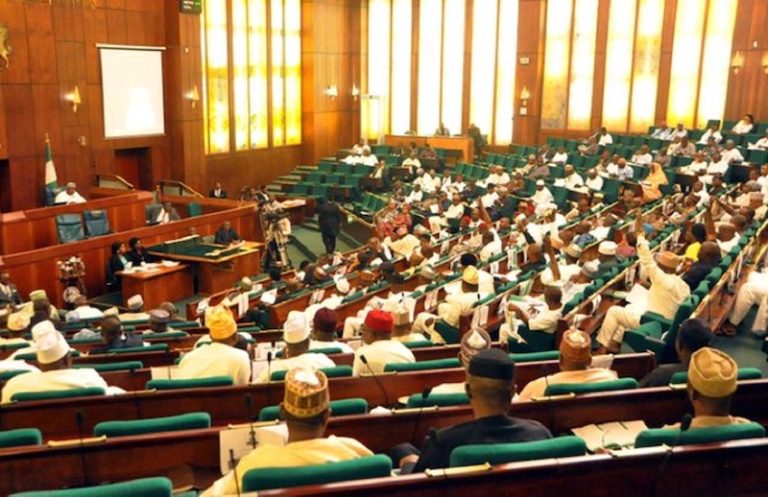
MEMBERS of Nigeria’s House of Representatives have promised to donate N648 million as part of their financial contribution to fight hunger across the country.
The lawmakers will make the donation by slashing 50 per cent of their monthly salaries for six months.
At a session on Thursday, July 18, which was presided over by the Speaker, Tajudeen Abbas, his deputy, Benjamin Kalu, moved a motion, urging his colleagues to make the sacrifice as a gesture to support the country.
“This government is doing its best but one year is not enough to address the challenges of this country. I want to plead with our colleagues to sacrifice 50 per cent for six months.
“Our salary is N600,000 a month. I want to plead that we let go of 50 per cent of our salary for six months,” Kalu said.
Nigeria currently has 360 members of the House of Representatives. If each member of the house pays N300,000 monthly, the legislative chamber will be contributing N108 million monthly, which translates into N648 million for six months.
RMAFC calculation
On the contrary, a report by The ICIR shows that according to the Revenue Mobilisation Allocation and Fiscal Commission (RMAFC), a member of the House of Representatives earns as high as N794,087 monthly.
This is N194,087 higher than the amount declared by the deputy speaker.
These earnings, however, exclude allowances and loans, which are additional entitlements that come with holding such a position.
However, if this calculation is used to determine the salary contribution by the House members, the House should be donating as much as N857.61 million (N857,613,960) in six months.
Nigeria’s linger inflation
The ICIR reported that the latest data from the National Bureau of Statistics (NBS) showed that the country’s headline inflation rose to 34.19 per cent in June from 33.95 per cent in May 2024, increasing by 0.24 per cent points.
Also, the food inflation rose to 40.87 per cent on a year-on-year basis, compared to the 25.25 per cent rate recorded in June 2023.
The increase in the figure has consistently risen since the assumption of President Bola Tinubu in May 2023.
Tinubu met the inflation rate at 22.41 per cent and became the first President under whose administration the rate consistently jumped for 13 months.
THE Minister of Education, Tahir Mamman, a professor, has made u-turn on his earlier directive mandating the Joint Admissions and Matriculation Board (JAMB) and Nigerian tertiary institutions not to admit candidates below 18 years.
This decision came after objections and appeals from stakeholders, including rectors, registrars, vice chancellor and other principal officers, present at the 2024 admission policy meeting organised by JAMB,in Abuja on Thursday, July 18.
The ICIR reports that Mamman directed JAMB and tertiary institutions to stop admitting under-18-year-old candidates into higher education programmes.
Mamman gave the order in the same meeting, decrying the activities of some parents, whom he said pressured their underage wards to get admission into tertiary institutions.
“JAMB is hereby instructed this year to admit only eligible students. That is those who have attained 18 years by our laws,” the minister said.
The minister emphasised that his stance is supported by Nigeria’s law governing admissions into tertiary institutions, noting that admission bodies should recognise this requirement without being directed to obey it.
“Our laws require students to be in school from six years —Yes, there are those who do that from five—, and remain in primary school for six years, basic education for three years, and secondary school for three years… It doesn’t require a statement of the minister… we are only restating what is in the law,” he added.
His announcement sparked mixed reactions among vice-chancellors, rectors and registrars present at the meeting, with some stakeholders present at the meeting protesting the new minimum admission age.
However, during the review of the memorandum for the 2024 policy meeting on this year’s admissions, Mamman later called for the adoption of 16 years.
The minister agreed that candidates aged 16 and above would be admitted, acknowledging that many of these underage candidates had already taken the UTME without prior knowledge of the directive.
“For practical reasons, we will go with that,” Mr Mamman said.
JAMB pegs varsity cut-off mark at 140
Meanwhile, the Joint Admissions and Matriculation Board (JAMB) has pegged the cut-off mark for admission into the nation’s universities 140.
This development was announced by the JAMB Registrar, Professor Ishaq Oloyede, at the meeting.
The board also fixed 100 as the minimum cut-off point mark for admission into polytechnics and colleges of education.
FRENCH energy group TotalEnergies has sold its Nigerian onshore oil assets for $860 million to Mauritius-based Chappal Energies.
The company reportedly disclosed on Wednesday, July 17, that the transaction was expected to be concluded by the end of the year, subject to regulatory approvals.
The sale includes an interest in 15 licences producing mostly oil, with production netting 14,000 barrels of oil equivalent per day in 2023.
Three additional licences produce mostly gas and currently account for 40 per cent of TotalEnergies’ Nigeria Liquified Natural Gas (LNG) gas supply.
With the divestment, TotalEnergies joins other oil giants including Exxon Mobil, Eni and Norway’s Equinor which recently sold their Nigerian oil assets to focus on newer, more profitable operations elsewhere.
The divestments and exit of International Oil Companies (IoCs), energy analysts say, signposts a poor operating environment in Nigeria’s oil sector as deep-pocket investors are exiting and divesting in a more favourable environment.
Notably, the French energy giant had in February hinted at its plans to exit the Nigerian onshore oil joint venture, following Shell’s divestment in January this year.
Earlier this year, Shell also agreed to sell its 30 per cent stake in SPDC to a consortium of five mostly local companies for up to $2.4 billion.
At the time, the chief executive officer of TotalEnergies, Patrick Pouyanne, said the company would exit its 10 per cent stake in Nigeria and divest its share because producing oil in the Niger Delta was no longer in line with its health, security and environmental] policies.
The Shell Petroleum Development Company of Nigeria Limited (SPDC) has been struggling with hundreds of oil spills as a result of theft, sabotage and operational issues that led to costly repairs and high-profile lawsuits.
TotalEnergies, however, said it sold its participatory stake in the gas licences to Chappal Energies, but that the share of production would stay in Total’s portfolio, as well as access to the associated infrastructure and pipelines to supply the Nigeria LNG plant with gas.
“This divestment…allows us to focus our onshore Nigeria presence solely on the integrated gas value chain and is designed to ensure the continuity of feed gas supply to Nigeria LNG in the future,” the President of Exploration and Production at TotalEnergies, Nicolas Terraz, was quoted to have said.
TotalEnergies, which produced a total of 219,000 barrels of oil equivalent per day in 2023 in Nigeria, remains a major operator of offshore fields in the West African country.
Chappal Energies focuses on investments in deep value and distressed brownfield upstream assets in the Niger Delta region.
The ICIR reported in an exclusive interview that International Oil Companies’ exit and divestments are affecting Nigeria’s low oil production of 1.2 million barrels per day, having benchmarked the 2024 budget on 1.7 million barrels per day.
“The IoCs move to where there is better fiscal discipline and enabling environment for their operations.
The defaults in the way we are implementing the Petroleum Industry Act is one of the reasons they are exiting the country,” a former chairman of the major Oil Marketers Association of Nigeria, Olatunji Oyebanji told The ICIR in the interview.
ACCESS Holdings, Guaranty Trust Holding Company (GTCO), and Fidelity Bank have kick-started the banking sector recapitalisation, offering shares worth N878.7 billion to existing and new investors.
The banks are currently in the Nigerian stock market to raise capital to meet the Central Bank of Nigeria’s (CBN) minimum capital base of N500 billion each as the three banks operate with international authorisation.
The Central Bank of Nigeria (CBN) had in March this year issued a guideline for the mandatory recapitalisation of banks to reposition the country’s banking system ahead of the federal government’s dream of achieving a $1 trillion economy by 2023.
Kick-starting the move, Fidelity Bank on Tuesday, June 20, opened its application for N127.2 billion combined rights issue and public offer. The offers are expected to close on Monday, July 29.
According to Fidelity Bank, the capital raising comprises a rights issue of 3.2 billion ordinary shares of 50 kobo each at N9.25 per share, and 10 billion ordinary shares of 50 kobo each to the general investing public at N9.75 per share.
The rights issue is pre-allotted based on one new ordinary share for every 10 existing ordinary shares held as of the close of business on Friday, January 5 this year.
On Monday, July 8, Access Holdings commenced its N351 billion capital raising through a rights issue, scheduled to close on Wednesday, August 14, 2024.
The Access Holding rights issue offer of 17,772,612,811 ordinary shares of N0.50 each at N19.75 per share is based on one new ordinary share for every two existing ordinary shares held as of Friday, 7 June this year.
For GTCO, it is offering a public offer of N400.5 billion. On Monday, 15 July, the bank opened its offer for a subscription of 9,000,000,000 ordinary shares of 50 kobo each at N44.50 per ordinary share.
The public offer allotted 50 per cent, corresponding to 4.5 billion offer shares a piece to both the institutional investors and retail investors, stating that the issuer, however, reserves the right to alter the allocation based on the demand to be expressed by each class of investor.
The ICIR reports that while Fidelity Bank gives old and existing shareholders an opportunity to own their shares on NGX, Access Holdings opted for a rights issue, and GTCO for a public offer.
A look at the banking sector index since Fidelity Bank kick-started the capital-raising at the Nigerian Exchange Limited (NGX) shows that bank stocks have appreciated by 4.68 per cent from 831.3 basis points as of June 20 to 870.22 basis points as of July 17.
The share of Fidelity Bank had gained 0.35k, rising from N10.40 as of June 20 to N10.75 per share as of July 17.
On the contrary, Access Holdings, which opened its rights issue on July 8, had lost 0.25k declining from N19.60 to N19.35 as of July 17, and GTCO likewise lost 0.1k as its share dropped from N45.60 as of July 15 to N45.50 as of July 17.
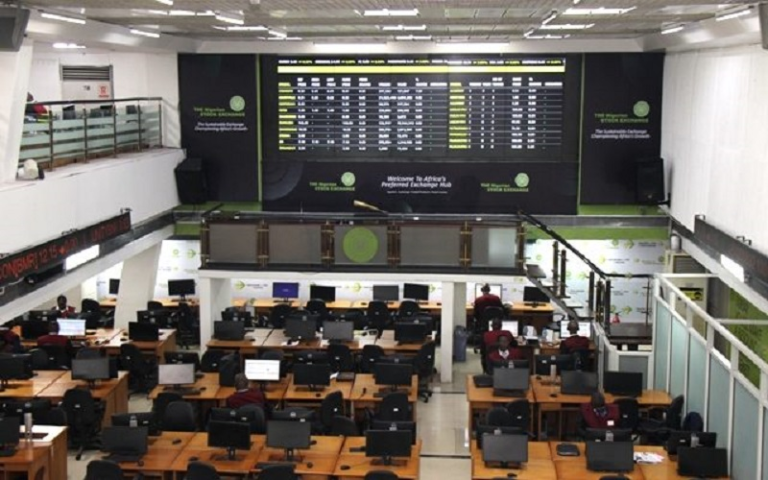
Meanwhile, on Wednesday, July 17, the Nigerian stock market declined by 0.04 per cent as the All-Share Index dropped to 100,032.32 points and the market capitalisation to N56.65 trillion, despite positive trading activity levels by investors.
This, however, did not reflect in the market, as 28 companies’ shares gained, surpassing 15 companies’ shares that declined.
Trading activity was positive as total deals, volume, and value of trading stocks rose.
Performance across the sectors was also in the green as the banking, industrial goods, and oil and gas indices recorded gains. On the contrary, the insurance and consumer goods indices recorded a decline.
The top five gainers were United Capital, Africa Prudential, Cutix, Oando, and Julius Berger shares emerged as the top five gainers for the day.
On the downside, RT Briscoe, FTN Cocoa Processors, Tantalizers, Neimeth International Pharmaceuticals, and Consolidated Hallmark Insurance topped the losers’ chart.
While Jaiz Bank was the most traded stock with a volume of 528.49 million units that exchanged hands in 240 trades, Zenith Bank led in traded value, amounting to N3.11 billion.
NIGERIAN banks would be taxed 50 per cent of their recorded gains in “foreign exchange (FX) revaluation” in 2023, a proposal by the federal government has shown.
Forex revaluation gains occur when there is an increase in the value of a bank’s assets and liabilities denominated in foreign currency due to a change in the exchange rate between the foreign and the local currencies.
This is contained in the proposed amendments to the 2023 Finance Act sent by President Bola Tinubu to the National Assembly for approval on Wednesday, July 17.
Revenues from the proposed FX revaluation termed windfall tax as stated in the letter from the President to the Senate are to be deployed to “Renewed Hope” infrastructure, education, and healthcare projects.
The President’s letter said the Federal Inland Revenue Service (FIRS) shall collect the tax on foreign exchange gains.
It stated, “There shall be levied and paid to the benefit of the Federal Government of Nigeria a tax of 50 per cent on the realised profits from all foreign exchange transactions of banks within the 2023 financial year.
“The Federal Inland Revenue Service – (a) shall assess the realised profits, collect, account and enforce payment of tax payable under section 30 by the powers of the Service under the Federal Inland Revenue Service (Establishment) Act 2007;” it added.
The amendment further disclosed that the failure of banks to remit the recommended sum to the appropriate authority would upon conviction pay the tax withheld and 10 per cent of the withheld tax coupled with interest at the Central Bank of Nigeria (CBN) minimum discount rate or risk imprisonment of key principal officials.
Notably, in the proposed amendment, the President is seeking the Senate’s approval to amend certain provisions of the 2023 Finance Act to collect tax on foreign exchange gains recorded by commercial banks in Nigeria in the full year 2023 according to their financial statement.
In the letter, the President explained that the funds generated from this tax would be used to support capital infrastructure development, education, healthcare access, and public welfare initiatives.
It would be noted that changes in the forex market led to significant losses for businesses in the industrial and consumer goods sectors because of volatile exchange rate problems.
On the other hand, the banking sector experienced substantial gains as a result of foreign exchange revaluation.
Meanwhile, in a lead debate about the proposed amendment in the Senate, the senator representing Bayelsa West, Seriake Dickson, opposed the bill, arguing that the economy is currently depressed to allow for more taxation.
“Let’s step down the taxation of banks for wider consultation. We cannot run our government by continuous taxation. We should be cautious because we are managing a depressed economy, even the banks are still battling with recapitalisation”, he said.
The chairman Senate Committee on Finance, Sani Musa, argued that the bank’s profits had tripled on foreign exchange gains, despite high interest rates.
“If it is a one-off thing, for banks to contribute to infrastructural development, it is a welcome development”, he said.
Notably, the Finance Act amendment Bill was referred to the Senate Committee on Finance, while the increase in the 2024 Appropriation Act earlier reported by the ICIR was referred to the Senate Committee on Appropriation. Both Committees are expected to report back in a week.
DESPITE Dangote Cement‘s rapid expansion since taking over the Gboko Plant in Benue State, the host community is battling extreme water crises and environmental hazards. These have been worsened by a failure to provide basic amenities as part of the company’s Corporate Social Responsibility (CSR), Sinafi Omanga reports.
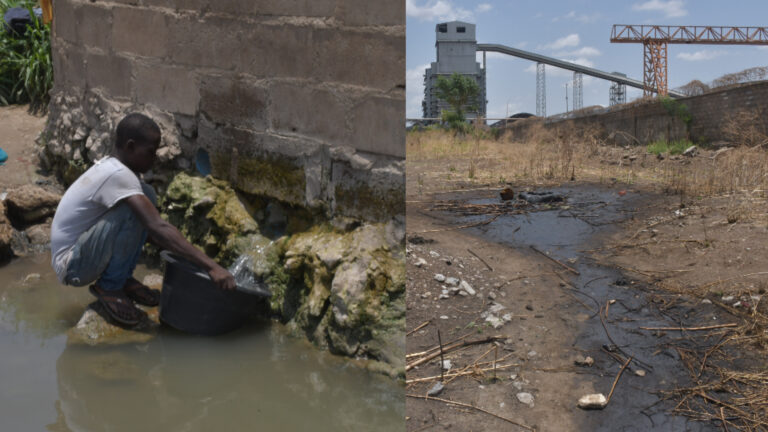
The sweltering temperature saw some residents of the Mbayion district in Gboko Local Government Area (LGA) of Benue State scampering to the Dangote Cement’s trench which overflows wastewater into their streams.
A few steps away from the trench, where women, children, and young adults fetched the water, lies an open pit that spills black oil into the soil, killing all the plants in the surrounding area.
On some occasions, aquatic creatures such as fish and frogs were found dead, floating on top of the brackish water, apparently as a result of the pollution, several sources in the district told The ICIR.
After filling four gallons of 25 litres each, a 23-year-old resident, Terver Sesugh, who should ordinarily be happy for getting water, forlornly declared that the usage of the water would rather add more to his problems.
“This water itches my body. The only clean water around here is inside the Dangote Cement factory, but we don’t have access to it,” Sesugh remarked.
Children and a woman sourcing wastewater.
He added that only people who worked at the factory or had business to transact inside were allowed into the premises.
A visit to the waterside two days later, on April 6, led to another encounter with 28-year-old James Terungwa who collaborated that in addition to itching of the body, he suffered blurriness after bathing with the water.
Even though they know that the water is unhealthy for use, Mbayion residents are forced to utilise the only option (wastewater) available.
With seven council wards, Mbayion district has a population of 361,325, according to Nigeria’s last population census conducted in 2006, which The ICIR obtained from the Gboko office of the National Population Commission (NPC).
Growing water crisis
Orver Yongu, the national president of the Yion Development Association (YIDA), said over five hundred households are affected by the water crisis. YIDA is the community’s socio-cultural group at the forefront of the struggle for environmental remediation.
An environmental activist, Zack Uchir, said it was unfathomable that human beings were forced because of their precarious circumstances to use wastewater, “but this is where we find ourselves.”
Uchir, who claimed to have worked with the Dangote Cement factory as a casual staff for four years, said he witnessed first-hand how pollutants were discharged into surrounding streams without treatment.
Zack Uchir, a Mbayion community environmental activist Credit: Sinafi Omanga / The ICIR
“Once polluted with the black oil, the streams can no longer be used for domestic or even irrigation purposes. Our plants wither away once they have any contact with the water,” he said.
Water harmful on human body, lab analysis show
The ICIR visited three local clinics to investigate common ailments among residents. Two health workers confirmed that skin problems, caused by the wastewater, were the leading ailments.
Another clinic declined to disclose information for fear of victimisation, despite the reporter’s assurance of anonymity. A health worker at one of the clinics stated: “Almost all the patients with skin infections have come in contact with the wastewater.
“Other ailments such as typhoid and high blood pressure are also common here. We usually prescribe some antibiotics for treatment, but the people need to stop using that water,” she said.
To assess the pollution level, the reporter submitted the water sample to the National Agency for Food and Drug Administration and Control (NAFDAC) in Abuja for laboratory analysis.
Water analysis certified by NAFDAC
The result, certified by the monitoring agency, revealed high alkalinity and nitrite levels above acceptable specification, as well as salmonella and particles.
The accumulation of these pollutants renders the wastewater dangerously unsafe for use on the human body, said WaterAid Nigeria’s head of advocacy, policy and communications, Kolawole Banwo.
Banwo stated that consuming nitrite-contaminated water exposes families to methemoglobinemia, also known as blue-baby syndrome, a medical term for a disorder in children which results in too little oxygen being delivered to their cells.
“What we have learned in the course of our work about nitrite is that it compromises the lives and future of children from birth, that is if they live long enough.
“If a whole population is exposed to such water, it means that the heart of the community’s ability to reproduce across generations and live meaningful lives is threatened,” Banwo added, emphasising that alternative water sources should be “provided as soon as possible.”
Warning against nitrite contamination, the World Health Organisation’s (WHO’s) Guidelines for Drinking-water Quality says children below the age of six may become seriously ill and, if untreated, die.
The presence of high alkalinity explains why Mbayion residents experience itchy and chalky skin after coming in contact with the wastewater, according to a health expert at the Federal Ministry of Health who asked to be anonymous because he was not authorised to speak.
The burden of Industrial wastewater in Nigeria
The United Nations International Children’s Emergency Fund -UNICEF, says 70 per cent of water in Nigeria at the point of consumption is contaminated and that “children are the most affected.”
Jane Bevan, UNICEF’s chief of Water, Sanitation and Hygiene (WASH) programme disclosed that 117,000 children die in Nigeria each year due to water-related illnesses – the highest number of any nation.
Bevan also noted that 78 million children in Nigeria were at risk from the convergence of water-related threats such as scarcity and pollution.
Crisis persists in Mbayion despite Dangote’s pledge to tackle waste, climate change
Meanwhile, at the 12th Africa Cement Trade Summit which was held in November 2023, in Abidjan, Côte d’Ivoire, the Group Managing Director of Dangote Cement plc, Arvind Pathak, reportedly said the company waspositioned to tackle Africa’s waste and climate change issuesthrough sustainable production of cement.
“Dangote Cement is dedicated to environmental sustainability and combating climate change. We have implemented a robust climate change policy that aligns our operations with global climate goals.
“The environmental pillars of the company define the ways of entrenching sustainability by identifying, measuring and mitigating actual and potential environmental impacts of operations,” Pathak said.
L-R: Independent Non-Executive, Director Dorothy Udeme Ufot; Chairman Dangote Cement Plc, Aliko Dangote; Non-Executive Director, Abdu Dantata; Group Managing Director, Arvind Pathak; Non-Executive Director, Olakunle Alake; and Non-Executive Director, Devakumar Edwin, at the 15th Annual General Meeting (AGM) of Dangote Cement Plc, in Lagos on Tuesday, May 28, 2024. Credit: Dangote Cement Plc.
“As you can see, the unmitigated environmental degradation in our community, which hosts the company’s oldest plant paints an opposite scenario,” Zach said.
The failure also contradicts the company’s pledge to create sustainable environmental management practices “through a proactive approach to addressing the challenges and opportunities of climate,” as stated on its website.
Twenty years of dashed hopes
Historically, the former Benue Cement Company, (BCC), originally co-owned by the federal and the Benue State governments was bought over by Africa’s richest billionaire, Aliko Dangote, with a net worth of $13.9 billion, according to Forbes’ 2024 ranking.
The acquisition of the factory in 2000 under the government’s privatisation programme was mired in controversy for several years as the host community and the Benue State government were opposed to it.
However, there was a thaw in the disagreement after the management of the cement company allayed the fears of the host community, paving the way for operations in the first quarter of 2004.
The Gboko Plant of the Dangote Cement Company Credit: The ICIR
Speaking at the ceremony that marked the end of the feud, the chairman of the conglomerate, Dangote said: “This is not a joke, I am putting my name into it, you can write it down by February next year, BCC will be producing three million metric tones by the grace of God.”
As promised, Dangote not only renamed but also significantly upgraded its production capacity from 0.9 million metric tonnes annually (Mta) to 2.8 Mta and further to 4 million Mta in 2013.
Surging turnover, profit
This implies that, in twenty years, the Gboko cement factory has produced approximately 70 million tonnes of portland cement for the Dangote Group, a substantial increase from the 21.6 million tonnes produced by the government over the 24 years it operated the plant (1980-2004).
With a production capacity of about three million metric tonnes, the International Cement Review Magazine in 2004 predicted an annual turnover of N40 billion for the cement giant.
Using this prediction, the increased capacity of four million tonnes since 2013 may have seen the profits rise to N53 billion annually. In total, the Gboko plant may have generated over N943 billion ($624.7m at the current exchange rate of N1,509.45/$) since Dangote took over.
While the company publishes its annual profits from the cement business on its website, The ICIR could not find how much it makes from each plant in the ten African countries.
However, the exponential growth of the company has not significantly improved the environment and health of its Benue host community, prompting a series of peaceful and violent protests that have claimed several lives.
Worried about the deplorable condition of the Mbayion community, EnvironewsNigeriareported that the Benue State House of Assembly during a plenary on September 29, 2015, called on Dangote Cement Company to own up to her Corporate Social Responsibility (CSR) and adhere to proper Environmental Impact Assessment (EIA) in the discharge of its duty.
Protests
Nine years later, some men and women in February 2024, camped at the Dangote Cement mining site in another peaceful protest against the company over dust emissions and water pollution.
Mbayion residents protesting against Dangote Cement Credit: The Sun Newspaper
Speaking with The ICIR, one of the protesters, Ave Daniel, said the community could no longer stand the frequency of “stones and dust flying” from the factory and the mining site into their homes.
“We are in danger because of the failure of Dangote to control dust. Water is also a big issue here,” Daniel said.
N943bn profit and 8,996 tonnes of dust emissions in 20 years
According to ScienceDirect, one of the world’s leading scientific, technical, and medical research organisations, a typical cement factory records an average emission of 0.13 kg of dust per ton of produced cement.
With a total production capacity of 2.8 mta from 2004 to 2012 and 4mta from 2013 to 2024, findings by The ICIR showed that the total dust emitted from the cement factory for twenty years is 8,996 tonnes, using ScienceDirect’s methodology.
“If put in 50kg bags of cement as the cement company does, the dust can fill approximately 180,000 bags. It can also fill two Olympic-sized swimming pools,” says Ibukun Akangbe, a data analyst with The ICIR.
Community residents lament
Several residents complained about dust constantly entering their eyes and nostrils, causing eye and respiratory irritations. The reporter also experienced watery eyes and grainy feelings after spending a few hours in the community.
“Once it is evening, the black substances (from the cement factory) begin to fall down like rain. We can’t even sit outside because the substances cause serious itching to our eyes,” said Terhile Kighir, one of the residents.
The Benue State Ministry of Water Resources, Environment, and Climate Change confirmed it received complaints about widespread dust in the Mbayion district during a joint monitoring compliance meeting with the management of the cement factory in 2023.
It however claimed that that had become a thing of the past.
“The only thing the community complained about last year was the fugitive dust during production and vehicular movement. But when we went there sometime in March 2024, we didn’t see the dust again. The factory installed a precipitator to take care of the dust,” the ministry’s senior scientific officer, Deborah Mbakighir, told The ICIR.
While The ICIR could not independently verify whether the precipitator was installed or not, it found that dust emission from the plant continued to choke residents at the time of visit in April 2024.
Studies have confirmed that prolonged exposure to cement dust can lead to a disabling and often fatal lung disease called silicosis.
Also, the emission of dust violates section 3 subsection 1 of the National Environmental (Mining, Ores and Processing Minerals) Regulations 2009, which stipulates that “every facility shall adopt cleaner production processes and pollution prevention measures that would yield both economic and environmental benefits.”
Collapsed school building
Joseph Hilekaan, a 59-year-old teacher, sat in a wooden chair beside a collapsed building, perusing some dusty files when The ICIR arrived at his residence on April 4. The files were official records of the defunct Nomadic Primary School, Mbaav-Mbayion, in the Gboko LGA.
Hilekaan, the head teacher said the school, located about two kilometres from the mining site, collapsed in 2013.
After the school collapsed, he mounted some tents to continue his teaching. But unable to cope after two years, the children were finally dismissed in 2015. Hilekaan blamed the school and its building’s collapse on the Dangote Cement factory’s quarrying activities.
“Eighty-three pupils were moved to other schools. Some immediately dropped out due to long distance,” he recalled.
The collapse of the school was confirmed On August 1, 2022, by the National Personnel Audit Unit of the Universal Basic Education Commission when its officials visited to ascertain the school’s condition.
“The school was captured, but learners are not going to the school because of the collapsed classroom buildings,” the visiting officials noted in the remarks section of the official logbook.
Hilekaan said appeals were made to the Dangote Cement Plc to rebuild the school in another location, “but the company didn’t do anything about it.”
Joseph Hilekaan, the headmaster of the defunct Nomadic Primary School, Mbaav- Mbayion, Gboko Local Government Area. Credit: The ICIR
Unfortunately, the local headmaster said he became more concerned about his deteriorating health condition than the painful interruption of his teaching career.
“I have high blood pressure which my doctor said was caused by the daily explosion from the site. I want to relocate from this place for the sake of my health.”
About four hundred metres from Hilekaan’s compound is a newly built three-bedroom bungalow and another single-unit apartment that had cracks on its walls. They are owned by 71-year-old Peter Uchir.
“The breaking of stones at the mining site causes the whole ground to shake, causing our buildings to break,” the septuagenarian said.
Using heavy machinery to blast limestone is destructive to the earth’s surface, said Afolabi Lukman, an Abuja-based independent exploration geologist.
“Blasting of rocks can cause building collapse in the long term especially those with structural failures,” he noted.
Dangote’s hospital project in a state of dilapidation
Equally disturbing to residents of the Mbayion community is the absence of a functional hospital where they can get proper diagnosis and treatment for using polluted water, inhaling cement dust and living perennially with deafening noise from the factory and the quarry site.
One of the Mbayion community leaders, Vangeryina Kucha, described a community hospital project by Dangote Cement as a ‘scrap.’
“After polluting our community, Dangote built a scrap and called it a hospital. Nothing is working there. No doctors, no medicine, nothing,” Kucha said.
He lamented that members of the community had resorted to using roadside dispensaries to treat undiagnosed ailments due to the absence of accessible healthcare services.
To verify Kucha’s claim, The ICIR visited the site of the hospital project which the company built in 2018 to address the healthcare challenges of the community. The reporter confirmed that although completed, the building which has never been opened to the public was in a dilapidated condition, with torn roofs and crumbling ceilings.
A hospital built by Dangote Cement Plc is in a dilapidated condition after years of disuse. Credit: The ICIR
However, one of the security guards barred the reporter from snapping the torn roofs and crumbling ceilings.
Benue government feigns ignorance of water crisis, FG keeps mum
The Benue State Ministry of Water Resources, Environment and Climate Change was created in July 1999 with the statutory responsibility to attend to issues of water supply, ecological and environmental challenges.
In a telephone interview, the ministry’s senior scientific officer, Mbakighir, who earlier spoke on dust emissions, said the ministry was not aware of the water crisis threatening the Mbayion district but acknowledged environmental hazards posed by the activities of the cement factory.
She disclosed that the ministry and the federal ministry of environment had largely depended on reports presented by the cement company and the community’s stakeholders during annual joint visits to the factory.
“We didn’t get this complaint the last time my ministry and the Federal Ministry of Environment visited the community (in March, 2024) during which we engaged both Dangote Cement and community stakeholders,” Mbakighir noted.
Mbakighir said following the reporter’s findings, the ministry would take steps to ensure that proper environmental remediations are carried out and the company is held accountable for its failures.
“We are not satisfied with the relationship between the cement company and the host community. They should do better than this. That is the community that gives the company a whole lot and it is our duty to protect the people and the environment against exploitation,” she said.
The ICIR sent a Freedom of Information (FOI) request dated June 11, to the Federal Ministry of Environment, seeking a copy of the EIA for the cement factory. However, more than a month after the request was submitted, the ministry has yet to respond.
This contravenes the FOI Act established in 2011, which stipulates that all public institutions must provide information upon request within seven days, or state why such a response would not be made available within seven days.
The struggle for environmental justice
Sebastian Hon, a senior advocate and an indigene of the Mbayion community criticised the Dangote Cement plc for failing to mitigate environmental degradation which has deprived residents of basic amenities.
“Our land is silted, and the air we breathe is toxic as a result of daily production. Talk of the deafening sounds from the mining site and there has never been a functional hospital since Dangote Cement took over the factory from the government.”
During an interview with The ICIR in April, Hon recalled that there was a staff clinic that served both staff and community members, “but that is non-existent since Dangote took over.”
However, restating the community’s resolve to get justice, Hon said: “We will fight, not with force, but with law.”
Some residents of the Mbayion district sourcing wastewater.
Also, YIDA in conjunction with the Supreme Council of Yion Traditional Rulers, has constituted a committee to dialogue with Dangote over the negative impact of its operations on the environment.
The committee alleged that: “For close to 20 years, the cement plant has not dug a single borehole or provided an alternative source of clean water to cushion the harmful effects of the pollution of the streams in the area.”
Yongu, YIDA’s president said: “Aside from a 10 million naira yearly bursary shared among hundreds of students, the cement plant has not done much for the community in terms of Corporate Social Responsibility.
“Among other things, we are asking Dangote Cement company to dig at least two boreholes in each of the seven area councils of Mbayion District,” Yongu said.
Environmental justice means different things to different residents of the Mbayion community. To some, like Kucha, it means provision of basic amenities such as water projects, hospitals and simply managing industrial wastes properly.
Others like Uchir, the environmental activist, said it meant relocating the residents to pave the way for the company’s expansion.
Dangote keeps mum
During a visit to the cement factory on April 4, the community relations manager, Ivase Eugene, said only Jubril Abubakar, the zonal corporate communications manager whose office is in Abuja could respond to the reporter’s findings and questions. Ivase also gave Abubakar’s mobile number.
However, messages sent to the number were not responded to and calls showed the line was unreachable.
On June 10, The ICIR submitted a letter of introduction requesting an interview with Abubakar and his secretary who received the letter said her boss would reach back to this organisation.
She also stamped an acknowledgement copy of the letter.
In a follow-up call two weeks later, the secretary, who simply identified herself as Maureen, disclosed that the letter was delivered to Abubakar and she was no longer in a position to speak further on it.
Also, messages and calls sent to the spokesperson of the Dangote Group, Anthony Chiejina after efforts with Abubakar proved abortive, were also not responded to at the time of filing this report.
PRESIDENT of the United States (US), Joe Biden, has temporarily suspended his campaign ahead of the election to be held in November after testing positive for coronavirus.
On Wednesday, July 17, Biden was set to speak at the 2024 UnidosUS Annual Conference in Las Vegas, Nevada but pulled out after experiencing ‘mild symptoms’ and informed the organisers that he did not want to put attendees at risk.
According to the White House Press Secretary, Karine Jean-Pierre, the President is vaccinated and has mild symptoms of the disease.
“The President presented this afternoon with upper respiratory symptoms, including rhinorrhea (runny nose) and a nonproductive cough, with general malaise.
“He is vaccinated and boosted and he is experiencing mild symptoms. He will be returning to Delaware where he will self-isolate and will continue to carry out all of his duties fully during that time. The White House will provide regular updates on the President’s status as he continues to carry out the full duties of the office while in isolation,” Jean-Pierre stated.
Following the White House’s confirmation was an announcement by the CEO of UnidosUS Janet Murguía after Biden was late by an hour and a half for his speech.
“I was just on the phone with President Biden. And he shared his deep disappointment at not being able to join us this afternoon. The president has been at many events as we all know and he just tested positive for Covid.
“We appreciate very much his wanting to be here – I had a great introduction reminding us of all the actions he’s taken for our community,” Murguía told attendees.
A few hours before he tested positive for the virus, the President had disclosed in an interview that he might reconsider his decision to remain in the presidential race for the upcoming election if he gets diagnosed with any medical condition.
The 81-year-old President has been put under increasing pressure by his party members (the Democrats) to step down from the presidential race after his poor performance at the debate with his opponent, Donald Trump of the Republican party, in June.
THE National Assembly and major stakeholders in Nigeria’s health system have demanded better healthcare delivery for all Nigerians by all tiers of government in the country.
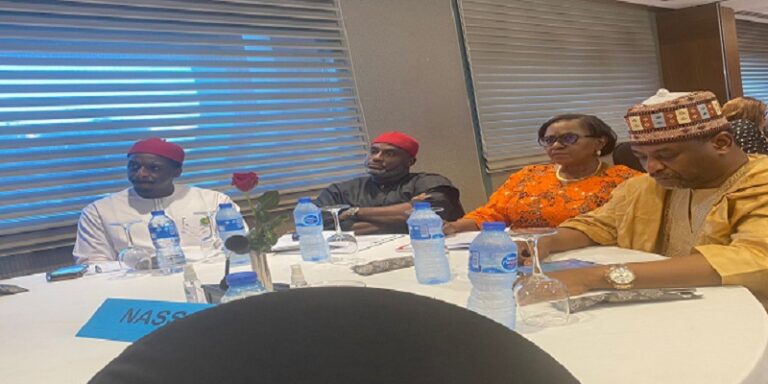
The request was made at the Fifth Annual Legislative Summit on Health with the theme “Improving Legislative Stewardship And Accountability For Universal Health Coverage” on Wednesday, July 17, in Abuja.
In her welcome address at the three-day summit, the Chairman of the Senate Committee on Health, Ipalibo Harry Banigo, informed the participants that indices about Nigeria’s health development were abysmally poor.
She called for urgent measures to address the gaps in the nation’s healthcare delivery system.
“We believe that with this collaboration, this dialogue, this sharing notes, speaking to each other, sharing knowledge, translating knowledge, and in all these ways of putting minds and ideas together, we will be able to work towards the good of our people, improve their health care and make life more meaningful for Nigerians all over this country. No single part of Nigeria should be left out. Everybody is important and our healthcare should reach them.
Banner at the 5th Annual Legislative Summit On Health
“This gathering serves as a reminder of the pivotal role the legislature plays in safeguarding the health and well-being of our fellow citizens. The theme of this summit Improving Legislative Stewardship And Accountability For Universal Health Coverage resonates deeply at this critical juncture, urging us to elevate accountability in healthcare governance,” the senator stated.
According to her, Nigeria’s healthcare landscape stands at a crossroads. She, therefore, called for a significant increase in public funding, especially for the poor and vulnerable populations.
She added that the health budget allocations must not only be adequate but also meticulously managed to ensure that every naira invested translates into measurable health benefits for the people.
She posited that a robust health system hinged on strong financial financing mechanisms.
“The Abuja declaration mandate for 15 per cent of the national budget allocated to health remains unfulfilled. At this summit, we must identify legislative initiatives that provide funding solutions, effective policies as well as sustainable partnerships.
“Such initiatives should also enhance transparency and accountability in the utilisation of available funds,” the former deputy governor of Rivers state emphasised.
According to her, epidemic preparedness is another area of focus in the quest to achieve health security.
She stated that telemedicine serves as a vital lifeline, particularly in remote and underserved regions, bridging healthcare gaps through digital platforms.
The senator also said climate change posed an increasingly urgent health challenge, directly impacting public health through rising temperatures and extreme weather events.
“Legislative interventions must integrate climate resilience into our health policies location for sustainable practises and infrastructure to mitigate these effects,” she added.
Also speaking at the event, the chairman of the House of Representatives Committee on HIV, AIDS, Tuberculosis, Leprosy and Malaria Control, (ATM), Amobi Ogah, disclosed that during the last budget process, there was no allocation to malaria and tuberculosis by the Federal Ministry of Health.
“I wish that the Ministry of Health were here because when we are talking about the issue of health, the legislatures are here talking about policies, our development partners are here and the executors are not here, I don’t think we are helping ourselves because they’re supposed to be here so that we can forge ahead.
“The reason for this is that much of the resources for malaria and tuberculosis come largely from foreign donors and partners. While we remain grateful to them, we must, as a matter of urgency begin to take care of our business and we can only do that by ourselves.
He urged the government to take the lead in providing adequate funding for the health sector to achieve set targets and universal health coverage for people who are currently grappling with the country’s present economic realities.
“We must all be willing to walk the talk and follow through on all the goals as we arrive at it. We must also be willing to partner with the MDAs and non-governmental agencies to ensure synergy in our purpose and directions,” Ogah stated.
In his remarks, the Director of Projects at the development Research and Projects Centre (dRPC), Stanley Ukpai, a doctor, disclosed that investment in the health sector at the federal and state required improvement given the growing challenges facing the sector.
He added that civil society organisations and legislative engagement could improve healthcare delivery, thereby increasing the living standard of Nigerians.
While commending the Legislative Network for the annual gathering, he assured of the dRPC’s commitment to supporting the event.
There were goodwill messages from different organisations, including the World Health Organisation (WHO), Development Health Partners Group (DPG), Health Sector Reform Coalition (HSRC0, UHC 2030, StopTB Partnership Nigeria, and CaywoodBrown Foundation.
Others are Local Health System Sustainability (LHSS), Global Health Advocacy Incubator, PharmAccess, The Challenge Initiative, Lafiya Programme, Development Research And Project Center (DRPC), Development Governance International, Vaccine Network, and LISDEL.
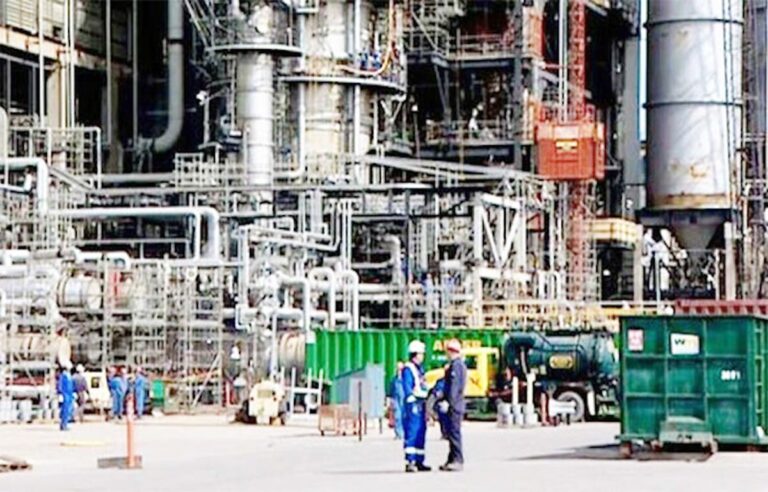
THE management of Dangote Industries Limited (DIL) has insisted that the International Oil Companies (IOCs) operating in Nigeria consistently frustrated the company’s requests for locally-produced crude as feedstock for its refining process.
The company also informed that the IOCs offered a higher price above the market price to the refinery.
The vice president of oil and gas at Dangote Industries, DVG Edwin, made this claim in a statement on Wednesday, July 17.
According to Edwin, the local price of crude oil will continue to increase because of trading arms offer of cargo at $2 to $4 per barrel, above the Nigerian Upstream Petroleum Regulatory Commission’s (NUPRC) official price.
“If the Domestic Crude Supply Obligation (DCSO) guidelines are diligently implemented, this will ensure that we deal directly with the companies producing the crude oil in Nigeria as stipulated by the PIA,” Edwin stated.
He cited that data on platforms like Platts and Argus showed the price offered to the Dangote Refinery was way higher than the market prices tracked by the platforms.
“As an example, we paid $96.23 per barrel for a cargo of Bonga crude grade in April (excluding transport). The price consisted of $90.15 dated Brent price + $5.08 NNPC premium (NSP) + $1 trader premium. In the same month, we were able to buy WTI at a dated Brent price of $90.15 + $0.93 trader premium, including transport.
“When NNPC subsequently lowered its premium based on market feedback that it was too high, some traders then started asking us for a premium of up to $4 million over and above the NSP for a cargo of Bonny Light,” he said
Edwin hinted that the company had recently escalated the challenge to NUPRC, urging the commission to take a second look at the issue of pricing.
Recall, the Chief Executive Officer of NUPRC, Gbenga Komolafe, had in an interview on ARISE News TV said it was ‘erroneous’ for anyone to say that the IOCs were refusing to make crude oil available to domestic refiners, as the Petroleum Industry Act (PIA) has a stipulation that calls for a willing buyer-willing seller relationship, Edwin noted.
He said the NUPRC had intervened at various times to help the Dangote Refinery secure crude supply.
“Aside from Nigerian National Petroleum Corporation Limited (NNPCL), to date, we have only purchased crude directly from one other local producer (Sapetro). All other producers refer us to their international trading arms.
“These international trading arms are non-value adding middlemen who sit abroad and earn margin from crude being produced and consumed in Nigeria. They are not bound by Nigerian laws and do not pay tax in Nigeria on the unjustifiable margin they earn.
“The trading arm of one of the IOCs refused to sell to us directly and asked us to find a middleman who would buy from them and then sell to us at a margin. We dialogued with them for nine months and in the end, we had to escalate to NUPRC who helped resolve the situation,” Edwin said.
He disclosed that when the Dangote Fefinery entered the market to purchase its crude requirement for August, the international trading arms told the company it had entered their Nigerian cargoes into a Pertamina (the Indonesia National Oil Company) tender and that Dangote had to wait for the tender to conclude to see what is still available.
“This is not the first time. In many cases, particular crude grades we wish to buy are sold to Indian or other Asian refiners even before the cargoes are formally allocated in the curtailment meeting chaired by NUPRC,” Edwin said.
Urging the commission to take a second look at the issue of pricing, he added, “It is to avoid the problem of price gouging in an illiquid market that the domestic gas supply obligation specifies volume obligation per producer and a formula for transparently determining pricing. The fact that the domestic crude supply obligation as defined in the PIA has gaps is no reason for wisdom not to prevail,” Edwin added.
The ICIRreported that the Dangote Refinery announced that the production of premium motor spirits (PMS) would start coming out by 10 to 15 July but the company had postponed it to August.
The refinery has been sourcing crude oil from the United States, The ICIR also reported.