PRESIDENT Bola Tinubu has appointed Didi Esther Walson-Jack as Nigeria’s new Head of Civil Service of the Federation.
This was contained in a statement from the Special Adviser to the President on Media and Publicity, Ajuri Ngelale, on Wednesday, July 17.
The appointment will be effective from August 13, according to the statement.
“The new appointee will take over from the incumbent Head of the Civil Service of the Federation, Dr Folasade Yemi-Esan, CFR, who is due to retire on August 13, 2024.
“President Tinubu, while thanking the outgoing Head of Service for her stewardship, tasks the incoming Head of Service to discharge her duties with innovative flair, integrity, and stringent adherence to the extant rules and regulations of the Civil Service of the Federation,” Ngelale noted.
He also disclosed that Walson-Jack was appointed as federal permanent secretary in 2017, and had served in several ministries.
The ICIR reports that Walson-Jack has played significant roles at various levels of government in Nigeria.
In 2013, she was appointed as Chief of Staff, at Government House in Bayelsa.
Before that appointment, she was the state’s commissioner for science, technology, and manpower development.
She has held many other positions at the federal level, including within the Ministries of Water Resources, Niger Delta Affairs and Power.
In January 2024, she was named permanent secretary for the Federal Ministry of Education – a position she occupied till her appointment as Head of Civil Service of the Federation.
She is reportedly one of the pioneer staff at the Bayelsa State Civil Service and was responsible for drafting the edicts proclaimed under the military administration between 1996 and 1999.
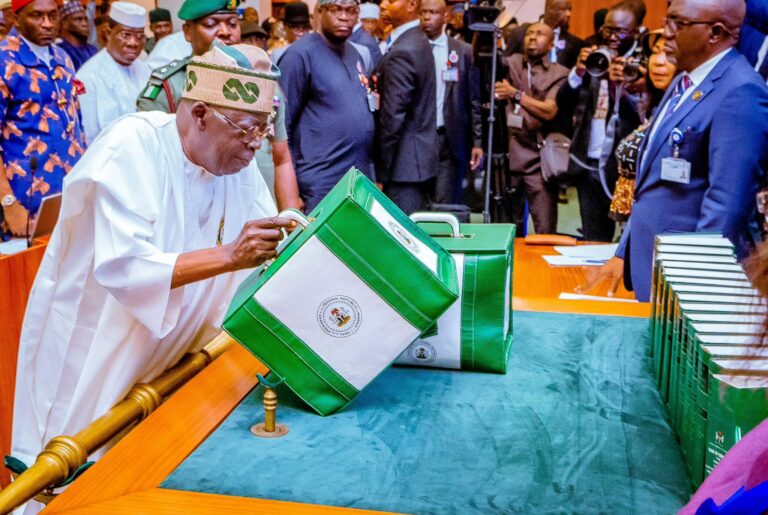
AMID dwindling revenue resources and a huge debt servicing over Nigeria’s rising debt, President Bola has asked the national assembly to increase the 2024 appropriation act by N6.2 trillion.
The latest request would see the 2024 budget increased to N34.9 trillion from an initial N28. 7 trillion budget Tinubu signed into law on January 1.
Tinubu’s request was contained in a letter read by Senate President Godswill Akpabio on the floor of the upper legislative chamber on Wednesday, July 17.
Tinubu is seeking an amendment to the budget to provide for N3.2 trillion for infrastructure projects and N3 trillion for recurrent expenditure.
“Under section 58 (2) of the Constitution of the Federal Republic of Nigeria as amended, I forward herewith the above-named bills for consideration and passage by the Senate,” Tinubu said.
“The appropriation act amendment bill seeks to amend the principal act to provide the sum of N3,200,000,000,000 for Renewed Hope Infrastructure Projects and other critical infrastructure projects to be undertaken across the country and the sum of N3,000,000,000,000 to meet further recurrent expenditure requirements necessary for the proper operation of the federal government.
“They shall be funded by accruing to the federal government of Nigeria,” he further said.
Tinubu also asked the National Assembly to amend the Finance Act of 2023 to tax windfalls gotten by banks owing to “foreign exchange gains”.
“Furthermore, the proposed amendments to the Finance Acts 2023 are required to a one-time windfall tax on the foreign exchange gains realised by banks in their 2023 financial statements to fund capital infrastructure development, education, and healthcare as well as welfare initiatives all of which are components of the Renewed Hope Agenda,” he added.
It would be noted that a large chunk of this extra-budget passage is to be funded by borrowing from multi-lateral lending institutions as Nigeria continues to borrow, amid worries of dwindling revenue resources and inability to meet the 1.7 million barrel of oil in the budget benchmark.
The ICIRreportedthat public debt stock rose from N97.35 trillion in December 2023 to N121.67 trillion in March.
The implication of these rising debt is fiscal strain and huge budget deficit.
“One of the implications is the fiscal strain these excessive debts will put Nigeria into. You look at the servicing costs of these debts which outweigh revenues. It’s already causing a huge budget and fiscal deficit, “a professor of management economics, Emmanuel Abolo, said.
He added that the huge debt would crowd out public investments in critical areas of the economy, which would slow down economic growth and development.
THE Senate has sacked Ali Ndume as the Chief Whip of the Senate following his criticism of Bola Tinubu’s administration
The upper legislative chamber consequently replaced him with another senator, Tahir Monguno.
Before his sack, the national secretary of the All Progressives Congress (APC), Bashir Ajibola, and the national chairman, Umar Ganduje, had in a letter sought Ndume’s removal.
The Senate President, Godswill Akpabio,put the request to a voice vote, and all of the APC senators responded in favour of his removal.
Ndume was accused by the APC of harmful remarks directed at President Bola Tinubu’s administration.
He repeated the claim in an interview with Arise TV on July 12, where he alleged that ex-President Muhammadu Buhari was a more accessible leader.
Ndume accused Tinubu’s aides of “shielding and fencing in” their principal from lawmakers and ministers.
The ICIR reported that Ndume accused Tinubu of being out of touch with some of the issues plaguing the country, including food crisis and insecurity.
According to a report, Ndume told journalists on Wednesday, July 10, 2024, that the President had been “fenced off by plutocrats.”
He also said that poverty, insecurity, hunger and other problems confronting citizens were not being addressed by the President.
“The government is not doing anything about the food scarcity andit needs to do something urgently. We don’t have a food reserve. There is an unavailability of food. Food crisis is the worst crisis that any nation can encounter. If we add that to the security crisis, it will be severe.
“The President should wake up, it seems he isn’t in the picture of what is happening because he has been caged off. He has been fenced off by plutocrats. He should open his doors and meet those who will tell him the truth. Unfortunately, the people who will tell him the truth won’t struggle to meet him,” Ndume stated.
Under Tinubu, Nigeria has faced snowballing prices of food and persistent insecurity.
Despite sweeping reforms that accompanied the suspension of fuel subsidies and unification of exchange rates, most Nigerians have continued to live in hardship.
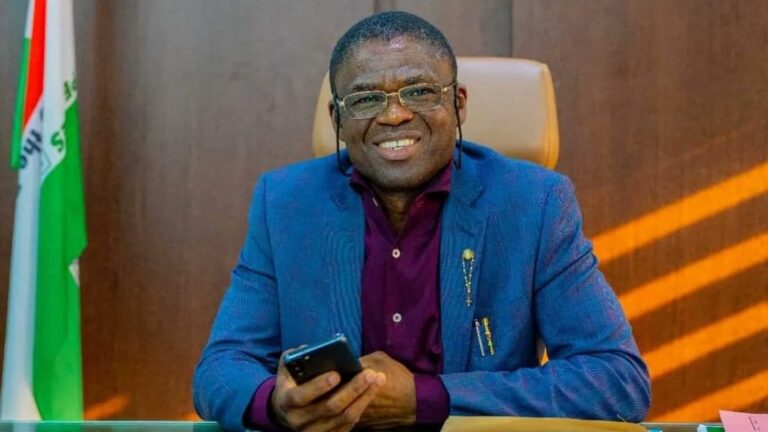
A Federal High Court in Abuja has reinstated Philip Shaibu as Edo State Deputy Governor, three months after he was impeached by the state House of Assembly.
In his ruling, on Wednesday, July 17, the presiding judge, James Omotosho, said the impeachment was in gross violation of the Nigerian Constitution.
The judge held that the allegation on which the House of Assembly based the impeachment proceedings was untenable in law, adding that the impeachment was illegal and unconstitutional.
The court also mandated that his salaries and allowances be paid from April 2024 when he was impeached.
Besides, the judge directed the Inspector General of Police (IGP) Kayode Egbetokun to restore his security details.
Shaibu’s impeachment followed the adoption of the report of the seven-man investigative panel set up by the state’s Chief Judge, Daniel Okungbowa, to probe allegations of misconduct against him.
Of the 20 members present, 18 voted in favour of the impeachment, while one opposed it, cementing the resolution to impeach him.
Shaibu was deemed responsible for the offence of revealing official secrets, based on the investigation conducted by a seven-person panel headed by Stephen Omonua, a retired judge appointed by the state’s Chief Judge.
Recall that Shaibu filed a suit at the Federal High Court seeking to stop his impeachment, but the Abuja High Court refused to grant an ex-parte motion.
In the motion marked FHC/ABJ/CS/321/2024, the state government, governor, House of Assembly, House of Assembly Speaker, Clerk, Chief Judge, the Inspector General of Police and the Director General of the Department of State, Services were listed as first to eight defendants.
In the suit, Shaibu sought an order of the court restraining the third to fifth defendants from commencing any process by issuing a notice of allegation, holding proceedings, or setting up any panel of investigation for his removal pending the hearing of a motion on notice.
He also sought an interim injunction restraining the defendants, whether themselves or their agents, from interfering with the res/subject matter of the originating summons filed in the suit by taking any adverse action about any attempt or process targeted at his removal from office as the deputy governor pending the hearing of the motion on notice.
The ICIR reports that Shuaibu has had a prolonged battle with the state Governor, Godwin Obaseki. His interest in succeeding his principal worsened the feud.
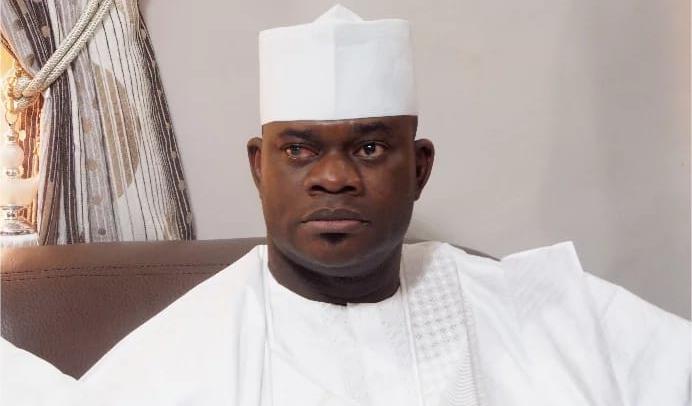
THE former Kogi State governor, Yahaya Bello, and the Economic and Financial Crimes Commission (EFCC) lawyers exchanged hot arguments at the Federal High Court, in Abuja on Wednesday, July 17, on the planned arraignment of the former governor, forcing the judge, Emeka Nwite, to leave in anger.
Bello, who is facing an alleged N82 billion fraud case, was not available at the court to defend the charges brought against him by the EFCC.
However, the case took a different turn when two senior advocates, Abdulwahab Mohammed, representing Bello, and Kemi Pinheiro, representing the EFCC, were involved in a heated argument during the proceedings.
The argument arose when Mohammed declared his appearance for the former governor without including his associate, Adeola Adedipe.
Pinheiro objected to the omission and argued that Adedipe should remain a part of the proceedings until the court released him.
Pinheiro’s argument was interrupted by Adedipe, who insisted he was unprepared to participate in the proceedings.
Mohammed also interjected and said Adedipe had submitted a notice of withdrawal from the lawsuit.
As the judge was about to deliver a ruling on the controversy, Bello’s lawyer stood up and demanded to be allowed to stay outside the proceedings if the court proceeded with the ruling.
Peeved by the demand, Mohammed called Pinheiro a lawyer who takes pleasure in deceiving the court.
Despite efforts to stop him from continuing with the altercation, Mohammed threatened to leave the courtroom if the judge gave the ruling.
Following the hot exchange, the judge abruptly ended the proceedings by going straight to his chamber.
The ICIR reported that Bello lost his bid to transfer the case from Abuja to his state.
The Chief Judge of the Federal High Court, John Tsoho, on Monday, July 8, dismissed Bello’s application seeking the transfer.
Tsoho concurred with the EFCC’s argument that the case should remain in Abuja.
Bello is being prosecuted on 19 counts for allegedly misappropriating public funds, breach of trust, and money laundering.
IN Kano State, the economic capital of northwestern Nigeria, market unions charge N500 tax per week for every piece of cattle transported into any market. But they only issue a receipt for a N200 ticket per cattle. The state government says that nothing from the N500 collected on each cattle goes to its coffers.
Investigations show that local governments collect N200 on each cattle head, leaving the remaining N300 for market unions.
The situation is typical of several markets across Nigeria where accountability and transparency about taxes and levies are low.
Wudil International Cattle Market is a major example. It attracts 5,000 heads of cattle each week, being the largest cattle market in the state. Every Friday, traders come from different parts of the state and beyond to buy or sell cattle, paying N500 for each cattle they bring into the market.
This amounts to N2.5 million each week, N10 million per month and N120 million every year.
Since the state government is not involved in this cattle tax, it leaves the entire money collected to Wudil Local Government Area and the cattle market union.
The director of Budget and Planning Abdulmuminu Ajumawa, who handles revenue-related issues in Kano state, confirmed to the reporter that the state government does not collect cattle tax from any of the market in the state.
“For now, we are not yet looking at that area of taxing cattle herders in the state,” he said.
Based on what is printed on the receipt given to traders and seen by the reporter, Wudil Local Government Area gets N200 per cattle each week, N1 million for 5,000 heads of cattle per week, N4 million each month and N48 million each year.
On the other hand, the market union receives N72 million out of the N120 million collected annually from cattle traders but there is no receipt for this or any form of accountability as the union does not have to answer to anyone, not even the state government for the money so earned.
The head of the Wudil Cattle Market, Kabiru Umar Faruk, said the market survives on the tax, noting that the state government does not provide any support to it. He denied that the market union pockets the money but said the tax is used to maintain the international market.
“The state government does not really give us anything. The extra N300 we collect is meant to be used for the market, which is what we are using the money for.
“We use it to maintain the market, provide security, keep it clean and take care of other emergencies,” he said.
The chairman of Wudil Local Government Area, Bilkisu Yakubu Indabo, declined speaking after the reporter had introduced herself as a journalist. She simply said, “I am busy.”
Same story is replicated in other markets.
It is the same old story for Danbatta Cattle Market.
In 2020, Dambatta Cattle Market, alongside Wudil, got a slice of N300 million allocation by the Kano State government for the development of infrastructure in cattle markets across the state.
The state project coordinator, Ibrahim Garba Muhammad, announced this during the proposal opening for design and supervision consultancy for cattle markets on October 29, 2020, according to BusinessDay.
“The project will invest in infrastructure to provide loading and off-loading ramps, watering facilities, office space for market information, security and veterinary services, lighting for trade and security at night as well as toilet facilities,” Muhammad said.
Also in 2023, the commissioner for Agriculture and Natural Resources, Danjuma Mahmud, said the Kano State government was investing N600 million in cattle markets across the state.
Despite all the huge investments, the state government is curiously not interested in the tax potential in cattle business.
According to market unions, Danbatta Cattle Market plays host to 700 heads of cattle each week. Like in Wudil, traders pay N500 for each cattle brought into Danbatta market though they get a N200 receipt issued by the local council for each cattle. This amounts to N350,000 every week. With 52 weeks in a year, this amounts to N18.2 million every year.
Only N140,000 is returned to the local government area weekly, amounting to N7.38 million each year. This leaves N10.92 million in the hands of the market union.
However, Danbatta Local Government Chairman, Ado Muhammad said, “Yes, cattle tax is being collected here and the money goes into the local government purse, not the state government.”
He said he spoke on behalf of market leaders at Danbatta Cattle Market.
When asked whether he was aware that only N200 out of N500 is ticketed, he said: “All I know is that the market committee submits the money immediately after a day’s market. I am not aware of any other thing.”
The situation is the same at Bichi Cattle Market. Each week, traders bring in 700 heads of cattle into the market.
Like other markets, traders pay N500 for each cattle brought into Bichi Cattle Market. Yet again, only N200 receipt is issued for every piece of cattle brought into the market.
Hence this amounts to N350,000 every week and N18.2 million every year. However, only N140,000 is returned to the local government area weekly, amounting to N7.38 million each year. This leaves N10.92 million in the hands of the market union.
The head of Bichi Cattle Market, Kabir Abubakar Kabiru, denied pocketing the money but said part of the tax goes to the local government while the rest is used to maintain the market.
“The Kano State government is trying to modernise the cattle market. We relocated into a new place and only few heads of cattle are coming into the market square. We hope the market will be crowded as it used to be very soon.
“We collect N500 and send N200 to the local government. The remaining is used to provide security and maintain the market. We only maintain it on day-to-day basis from what we collect from cattle traders,” he said.
The chairman of Bichi Local Government Area, Ahmad Kado Bichi, said the cattle market is no longer as crowded as it used to be due to a recent market relocation but said, “we use all the taxes collected here formally and judiciously.”
At Kura Cattle Market, traders pay N500 for each cattle brought in. This amounts to N350,000 every week and N18.2 million every year. However, only N140,000 is returned to the local government area weekly, amounting to N7.38 million each year. Again, this leaves N10.92 million in the hands of the market union.
A member of the Market Board Committee at Kura Cattle Market, Bala Mai Unguwa, said, “Yes, of course, we collect cattle tax. We use the money to maintain the market and pay the Dustbin Committee. We spend the money on the market.”
The chairman of Kura Local Government, Yahaya Tijani Kura, denied knowledge of the cattle market despite being in the local council that he leads.
In defence of state government
Defending the state government, Kano State Commissioner for Information, Baba Halilu Dantiye, said no rule or law mandates the collection of cattle tax in the state. He said cattle tax is not the state government’s business but local government and market associations or unions.
“Market stakeholders and local governments or chairmen’s offices collect the tax for their personal interest. We do not collect it,” he said.
Cattle traders lament hardship
The cattle business in Nigeria has witnessed a lull due to the dwindling purchasing power of Nigerian consumers caused majorly by inflation. Nigeria’s inflation rate stood at 33.69 percent in April 2024 as against 22.22 percent in the corresponding period of 2023. On the other hand, food inflation stood at 40.53 percent in the same month as against 24.61 percent in April 2023, according to the National Bureau of Statistics (NBS).
This means that the purchasing power of Nigerian consumers has continued to be eroded by inflation.
Umaru Adamu, Sarkin Fulanin Giware at Danbatta Cattle Market, told the reporter that rearing cattle has become a difficult business due to lack of a hygienic environment, insufficient grazing areas and water.
“Cattle owners take a while before responding to us mostly in terms of food provisions to the cattle and their health or medication,” he said, noting that taxes should be much lower for cattle herder to enable them to sell their products.
Babangida Babangida, a cattle trader at Bichi Local Government Area, said a cattle owner can give out over 20 heads to a herder and would not have anything in return for over a year.
“The business is quite slow and players in the market should be supported, not taxed,” he said.
Adamu Badau, a trader at Wudil International Cattles Market, said that the business is becoming tougher, noting that only milk obtained from the cattle gives them hope.
“The only thing we gain from this business is the milk. We sell the milk and use the money as our salary or wages. You can spend over 20 years rearing cattle for the owner, but the owner can put you in jail at every slightest provocation – without considering the difficulties and challenges you face.
“They take us for granted like masters do to slaves. And if we are to told pay tax for the cattle, the owners should be in responsible for that. We keep and saves billions of naira for them but no rewards in return.”
Miyetti Allah speaks
A leader of Miyetti Allah Cattle Breeders Association of Nigeria (MACBAN) in Kano State, Ibrahim Kwaikwai, said in most cases, cattle owners take the herders for granted.
“They take us for granted in terms of attending our meetings or while making relevant rules and regulations. The reason is most of the owners are government stakeholders and politicians,” he said.
He said cattle herders should not be taxed, stressing that the business is becoming tougher by the day due to several reasons ranging from environmental to social issues across Nigeria.
Resistance against herders
Nigerians have resisted herders through laws. Benue State under former Governor Samuel Ortom began the implementation of anti-open-grazing law in 2017.
The law bars herders from moving their cattle from one farm to another. The law gives them an option of ranching to minimize conflicts between herders and crop farmers.
Several states such as Edo, Ekiti, Taraba, Oyo, Bayelsa, and Ondo, among others, have also announced laws to bar open grazing in their domains.
In general, Nigerians vehemently refused former President Muhammadu Buhari’s Rural Grazing Area (RUGA), which was targeted at creating grazing routes in several states.
Due to its resistance, the Federal Government, in 2021, replaced RUGA with the Livestock Intervention Programme with a view to addressing the lingering farmer-herder crisis across the country.
The rationale behind the resistance is the mayhem unleashed on several states in Nigeria by herders under Buhari.
Herdsmen conducted 654 attacks, killed 2,539 and kidnapped 253 people in Nigeria between 2017 and May 2, 2020, according to a research report José Luis Bazán, an independent researcher and analyst, based in Brussels. Another report said over 6,000 people were killed in Benue State by herders between 2015 and 2023. Several farmers and communities were sacked by herders, with many killed under controversial circumstances. This has prompted communities to resist any attempt to cede their land to herders.
“We will not give our land to herders,” said late Ondo state governor, Rotimi Akeredolu, who was vocal about the activities of herders in Nigeria’s South.
Tax experts knock Kano government
A Lagos-based tax expert, Chinelo Adindu, said the Kano State government must take an interest the tax being collected from cattle owners or traders.
According to her, there is often going to be a foul play at the local government and the market union levels once the state government takes no interest in the tax.
“The system should be digitised. Handing them N500 every week for a piece if cattle is a recipe for corruption. Reduce human interference and allow people to pay the money into the bank or just through a digital process,” she noted.
A tax analyst, Ike Ibeabuchi, explained that Kano State government must call for an investigation into the cattle taxes collected from the markets in the last 20 years to identify how much has been lost to the unions.
“The state needs to change its strategy. Leaving millions of naira to market unions does not make any sense. There should be some level of accountability to the state, otherwise it will continue to be a jamboree.”
This report republished from Tozali was made possible with support from the International Budget Partnership (IBP) and the International Centre for Investigative Reporting under the Tax Justice Reporting Project.
KANO State Governor Abba Yusuf has approved the appointment of three second-class Emirs for Rano, Gaya and Karaye emirates.
According to a statement issued by the spokesperson to the governor, Sanusi Bature on Wednesday, July 17, the appointment takes immediate effect.
This came a few hours after Yusuf signed the Kano State Emirate Council Establishment Bill 2024 into law.
The legislation, passed by the State House of Assembly, aims to bridge the gap between the grassroots and the government while sustaining the rich cultural values and norms of the Kano people.
The new law establishes second-class Emirate Councils in Rano, Gaya, and Karaye, each responsible for specific local government areas.
According to the governor, the emirate councils will have powers to advise the Emir of Kano on matters related to the maintenance of public order and boundary disputes within their jurisdictions.
The newly appointed emirs are:
Muhammad Mahraz Karaye, as Emir of Karaye (who until his appointment was the District Head of Rogo)
Muhammad Isa Umar, as Emir of Rano (who until his appointment, was the District Head of Bunkure)
Aliyu Ibrahim Abdulkadir Gaya, as Emir of Gaya (who was the emir of the defunct Gaya emirate)
Yusuf congratulated the new emirs and urged them to be custodians of culture, peace and unity of the people in their respective emirates.
The ICIR reported on Tuesday that the State’s House of Assembly passed the Kano State Emirates Council Establishment Bill 2024 to establish 2nd class emirates in the state.
According to the bill, the Rano Emirate consists of Rano, Bunkure and Kibiya Local Government Areas. Gaya Emirate has Gaya, Albasu and Ajingi LGAs, while the Karaye Emirates comprises Karaye and Rogo LGAs.
According to Section 3 of the bill, the governor, acting through the commissioner for local governments, will approve nominations and actions made by first-class and second-class emirs.
The creation of the first-class Kano emirate and second-class emirates is contained in Section Four (1) of the bill. The second-class emirs of Rano, Gaya, and Karaye are listed in subsection two.
The ICIR reported on May 23, that the Kano State House of Assembly dethroned the state’s five emirs, after repealing the Emirate Council Law of 2019 that created the five emirates.
The new law created by the lawmakers revived the single emirate system in the state, vesting constitutional powers to appoint a new emir in the state governor alone.
Consequently, the governor, on Thursday, May 23, announced the reinstatement of Muhammadu Lamido Sanusi as the Emir of Kano.
The governor made the announcement immediately after assenting to the new Emirate Bill.
Sanusi’s reinstatement has led to crises in the state with the deposed emir, Aminu Ado Bayero refusing to quit.
Backed by conflicting court’ rulings, the two leaders have maintained their stance on holding on to the throne.
The latest of such rulings was from a Kano State High Court which ordered Bayero to stop parading himself as the Emir of Kano.
The court, in a judgement by Amina Aliyu, on Monday, July 15, also barred four other deposed emirs from posing as the emirs of Bichi, Rano, Karaye, and Gaya.
According to the court’s ruling, they should return the government’s moveable and immovable items in their custody.
THE Independent Corrupt Practices and Other Related Offences Commission (ICPC) is investigating allegations of fraudulent employment and improper imposition of one Sunny Ewan Aigbomian, a doctor, as the deputy rector of the National Institute of Construction Technology and Management (NICTM) Uromi, Federal Polytechnic.
The allegations were contained in a petition sent to the commission by a whistleblower in the polytechnic, on March 5, 2024.
The commission’s spokesperson, Demola Bakare, confirmed to The ICIR that the petition had been forwarded to the National Board for Technical Education.
He noted that the case was under investigation and the NBTE was duty-bound to brief the commission on the outcome of its findings.
Meanwhile, The ICIR could confirm that the NBTE was at the Federal Polytechnic Uromi, on April 24 and 25, on the issue and interviewed concerned persons, including our source.
Speaking on the update on the NBTE investigation, Bakare added that: “A request for a status report/brief will be sent” to the board.
Petition details
In the petition, exclusively obtained by The ICIR, the petitioner highlighted a series of alleged irregularities surrounding Aigbomian’s rapid elevation within the academic hierarchy.
The petition, addressed to the ICPC on alleged fraudulent employment, imposition of deputy director at NICTM.
The petition, addressed to the chairman of the ICPC, Musa Adamu Aliyu, noted that Aigbomian was hastily employed and subsequently appointed as Acting Rector without following due process, which includes mandatory advertisement and a proper selection process.
The appointment, according to Okojie, was made towards the end of the tenure of the outgoing Rector, Onohaebi, a professor, to clean his alleged mess after the expiration of his tenure.
The petition, addressed to the ICPC on alleged fraudulent employment, imposition of deputy director at NICTM.
“On the verge of Prof. Onohaebi’s tenure expiration as Rector of the Institute (NICTM Uromi), for eight (8) years, specifically on July 26th, 2022, they hurriedly did a fake interview, and employment without advertisement (negating the due process) in favour of Dr. Sunny Ewan Aigbomian within two days and made him Acting Rector, a position he occupied for six months which the council chairman and our outgone rector used to cover their frauds and he continued on the illicit acts which have affected the school negatively.”
Okojie also alleged that Aigbomian was employed and given a new appointment letter in 2022, placing him at step 9 level 7 instead of step 9 level 1. He noted that ideally, he should have lost steps and levels since he was transferring from a state to a federal polytechnic under the federal civil service of Nigeria.
“Furthermore, he ought to be on probation for two (2) years before holding any office as stipulated in the conditions of service, yet he was imposed to act as Acting Rector just to cover up and extend all their fraudulent activities.”
Photograph of Sunny Ewan Aigbomian. Photo; NICT website
The ICIR gathered that as stipulated in the Polytechnic Act, the appointment of a deputy rector involves the rector nominating a candidate, and or followed by a vote by the academic board constituted for that purpose, and subsequent ratification by the council.
Although Aigbomian was consequently elected by the academic board, defeating his counterpart, a chief lecturer, it was said that he did not qualify for nomination in the first place.
With the initial absence of a governing council due to the dissolution of the existing one by President Bola Tinubu, the emergence of Aigbomian could not be thoroughly checked and investigated.
Furthermore, the petition alleged that Aigbomian’s promotion from Assistant Lecturer to Chief Lecturer occurred within an unprecedented span of 10 years, which he said was shorter than the required 18 years.
The petitioner noted that he lacked the requisite number of publications and academic contributions typically needed to attain such a position.
“Contrary to promotional career progression he unethically rose from assistant lecturer to chief lecturer within 10 years instead of 18 years, he has no mandatory stipulated numbers of publications that earn him the exalted position of the chief lecturer as he is made to claim. Neither does he have the requisite seventeen published journals and authored or co-authored textbooks to merit him chief lecturer,” the petition added.
Concerning Aigbomian’s alleged rise to chief lecturer, The ICIR spoke with a lecturer from a state polytechnic, who claimed that it’s quite impossible for a lecturer who started as an assistant lecturer to make it to chief lecturer within 10 years.
“As we speak the new Rector and some cabals within and outside the school are head-bent on making him the deputy Rector to enable him cover the loophole of all traces of financial impropriety and improper placement of human capital done against the institute and the state, the federal civil service rule and the polytechnic Act of 2019,” the petition added.
The petition, therefore, called for Aigbomian’s dismissal, a refund of all allegedly illegally earned salaries, and an end to his self-declaration as Deputy Rector.
It also urges the ICPC to investigate the roles of principal staff members, including the Rector, Registrar, Bursar, and Librarian, in the matter.
Meanwhile, when The ICIR contacted Aigbomian on WhatsApp regarding the allegations in the petition, he declined to speak, noting that the medium of communication was not proper.
The ICIR had initially tried to reach him via a phone call, but his line was busy, so a message was later sent to him via SMS.
“The message you sent to me l know is an official matter and as such should be communicated in that regard to enable me to respond officially. This medium of communication is not known to Law. Thanks and God bless you. Dr S. E. Aigbomian.”
When The ICIR requested his email address for official communication as he had suggested, he did not respond despite reading the message.
A FORMER chairman of the Major Oil Marketers Association of Nigeria (MOMAN) and the chief executive officer of 11 PLC-formerly Mobil Nigeria PLC, Adetunji Oyebanji, in this exclusive interview with The ICIR, speaks on a wide range of issues affecting Nigeria’s oil and gas sector.
Excerpts:
The ICIR: Do you see the Dangote refinery emergence disrupting the market with the NNPCL price-control regime?
Adetunji Oyebanji: Dangote is a businessman, who has borrowed and invested money to build the refinery. He has to pay back the loans he has taken. He would also try to protect his interests. He’d be selling at the profit and commercial level needed to maximise his returns and liquidate the loans and investments that he has made.
What that translates to by way of pricing I cannot say for now. I can only speak for myself and my association. Business wise, whatever price we buy, would be reflected in the prices we sell at the pump.
The good thing is to know that with the Petroleum Industry Act (PIA), the price has been deregulated. We would sell according to what we buy.
On the Nigeria National Petroleum Company Limited-NNPCL, I won’t want to make any speculation, even though commercially, you look at the price they’re selling and you can judge whether it’s a price that makes economic sense.
Adetunji-Oyebanji-Former MOMAN Chairman
The ICIR: Why is the NNPC seeking to borrow money when they could have gone listed and sourced the fund from the stock market?
Adetunji Oyebanji: Enlisting in the capital market is very important, that’s what I thought they said they wanted to do as spelt out by the Petroleum Industry Act (PIA).
The only thing I worry about in this development is that if local refineries are coming up more and more, and they’re doing crude-for-loan or crude-based loan swaps; then it means more and more of limited crude production in Nigeria.
The only thing I worry about in this development is that if local refineries are coming up more and more, and they’re doing crude-for-loan or crude-based loan swaps; then it means more and more of limited crude production in Nigeria.
It also means that more of our crude will be committed to more and more in servicing those loans at the expense of the refineries that are coming up.
Again, what I would say is that any refinery across the world knows that one of the fundamental things is securing long-term contracts for your crude.
So, these International Oil Companies-(IOCs) ) have long-term contracts that they’ve signed with various refineries across the world. Therefore, when anybody wants to establish a huge refinery in Nigeria, one of the things Perry must do is to secure a long-term contract for your crude supply.
This is because, if Nigeria is producing 1.2 million barrels per day and half of it has been committed by taking loans and using crude to settle such loans, the NNPCL and IoCs own some portion.
The crude is limited and if the IoCs have entered into contracts, they’re fulfilling those contracts and may not have available crude to give.
Commercially, anyone who builds a refinery would know that you have to make arrangements for your crude. That is why some refineries are situated close to the oil field so that they can guarantee their crude.
In Nigeria, we always want to do things based on emotions and that’s why we don’t always have positive results.
The other point you have to note is that across the world, there is a certain number of refineries that exist. Presently, there’s an overcapacity of refineries. Less we forget, some countries are now using electronic vehicles.
The long-term prospects of electronic vehicles are that demand for refined petroleum products in the next 20 years will significantly drop.
Also, as a result of these, many IoCs that based their long-term plans on data and research are downsizing and reducing their capacity so,15 years from now, they won’t be caught in the mix of clean energy.
People need to know all these things and be educated about them so that we’re not all driven by sentiment. We should also ask fundamental economic questions to form opinions about various situations.
Concerning your question, normally, a refinery will sign a 20-year contract to guarantee themselves a steady supply of crude.
Already, many of the IoCs have such contracts and sell their crude as it comes and what quantity the Nigerian state allows it to produce according to the commitments they have already made.
So, the result is that if we harass them, the few remaining in Nigeria could leave and our oil production will drop significantly.
It’s even because of the IoCs that are producing oil at a higher level that we’re able to produce 1.2 million barrels per day. We say it doesn’t matter when the IoCs leave, they left and indigenous people took over and our production is dwindling and this is the main source of our foreign exchange for Nigeria.
When there’s no dollar, nobody should ask where is the dollar because maximum oil production is the building block to make more dollars.
If for instance, we’re doing about 4 million barrels per day, the naira may be exchanging at N300/$. We are producing less and and it’s not helping our foreign exchange earnings. We have been deceiving ourselves for far too long now.
The ICIR: There are concerns that the PIA has not fully served its purpose of reviving the sector. Should it be reviewed?
Adetunji Oyebanji: No law can be perfect. Also, the laws are not always about itself, it’s about how it’s implemented.
The cardinal point that the law envisaged is that prices would be deregulated. So, it seems that we’re not able to achieve that at this point and that’s distorting lots of things.
No law can be perfect. Also, the laws are not always about itself, it’s about how it’s implemented.
If a market is to work efficiently, it means that the real prices have to be reflected. For now, the price is pegged and not the real market price. If we say that prices will be too high and we choose to go the route that we’re going, then we cannot run away from the implications of not following through with the law.
The PIA can always be improved and updated, I know that of a certainty, some people are pushing for amendment now. However, for me, part of the problem was that the PIA was envisaged to work in a particular way, but we’ve not implemented it according to the letters of the law.
What you mentioned about the NNPCL going for an initial public offer at the capital market was part of what was envisaged in the PIA.
Again, I can’t speak on behalf of the NNPCL, they know their internal workings and it could be that there are challenges and they’re working on it.
However, if you pass a law and it’s expected to work in a particular way and that’s not happening, the results you get are not what you’re expecting because you can’t plant beans and expect plantain.
The ICIR: How can the NNPCL leverage its opportunities to enable the oil sector maximise gains?
Adetunji Oyebanji: The first step for me is to implement the PIA, even if it means a slight amendment.
The big deal is that when you make an organisation like NNPCL fully commercial, then it’s the shareholders that will determine what happens. They will be having an annual general meeting, get approval from the board for certain key decisions and run like a business corporation.
The implication of that in our environment is that it doesn’t become an avenue for political appointments. It’s purely based on competence and commercial purposes.
As I said, if we don’t follow those principles, we shouldn’t expect good results.I think the first thing is to implement the law that we have passed fully. All these ‘no more subsidy’ and yet there is a subsidy from the backdoor doesn’t help us.
Let’s discuss with stakeholders and do whatever is necessary to ensure that labour and other parties are carried along so that the system is not disrupted.
It took 20 years to pass that law; all because of politics. The regulators are trying the best they can under some circumstances and we have our constraints as a country.
The ICIR: The IOCs are leaving, what does it mean for our budget since we’re not meeting our quota?
Adetunji Oyebanji: We must bear in mind that the investor, whether IOCs or indigenous firm have their strategy and choice of investing their money.It is like choosing a supermarket or a petrol station to buy your products.
If you go to a particular supermarket and the cashier there is not behaving well, won’t you carry your business and go elsewhere?
All these interactions with agencies and not getting things done unless you push it with some corruption fund are not helping us.
One key fact is that the IoCs are always very keen on cash-call obligations fulfilment with the NNPCL. If they do business in 2022 and don’t get the money now from NNPCL, they may have to go to another country where they will get their returns quickly and with better fiscal incentives for their business.
The ICIR: Why do the IoCs keep leaving divesting?
Adetunji Oyebanji: Some of the IoCs are leaving because of of the defaults and the way we are implementing the PIA.
Some of the IoCs are leaving because of of the defaults and the way we are implementing the PIA.
The indigenous operators are trying but the requirements for upstream activities are humongous. Even our banks don’t have the necessary wherewithal. The only people that our banks are willing to give billions of dollars to are the IoCs that have huge assets and operations globally.
The IoCs when they’re leaving, the indigenous people don’t have the capacity either by manpower or by resources to be able to operate those oil fields at the optimum level like the IoCs- hence production in some cases is falling.
Some of our best indigenous people are doing 50,000, 20 000 barrels per day. However, when you compare them with IoCs running billions of dollars worth of investments, you know that there is no comparison.
Countries that want to partner with such IoCs must make fiscal terms and tax regimes favourable such that big IoCs will be attracted to them.
All these are simple economic and business realities, but in Nigeria, our own is to say God will do everything.
The ICIR: Are there other concerns that you have about crude-for-loan-swap deals?
Adetunji Oyebanji: Well, the more such swap deals, the more you’ve encumbrances and commitments of the crude oil in one way or the other. Most of these things are not also open, we need not also to be speculative in matters like this. I rarely can’t say much because I don’t know the current status.
The ICIR: What are the key benefits of the government facilitating the transition to Compressed Natural Gas-CNG as alternative to PMS?
Adetunji Oyebanji: I think a lot of positive things are happening and NNPCL has used a unique model while working with partners to build the CNG facilities.
You saw recently where several facilities were launched in Abuja and some in Lagos. I think that is a step in the right direction.
A lot still has to be done and we’re still scratching the surface because you have to make the products available at reasonably competitive prices. We started well and the NNPCL needs to continue reading the bar to the level that it becomes a viable alternative to petrol so that people will have an alternative usage from petrol.
The ICIR: Any end in sight to the queues currently being witnessed in several parts of the country?
Adetunji Oyebanji: Based on what we receive from NNPCL, we are doing our best. We can only sell what we receive and we’re doing our best to pump it out. I hope in the coming days, things can normalise. If there are other entities involved in the process, this question of logistics being mentioned every day may not affect all players. Since NNPC is the sole importer, we the marketers are giving what is available.
THE Federation Accounts Allocation Committee (FAAC) shared N1.35 trillion among the three tiers of government in June 2024 out of a gross revenue of N2.48 trillion.
The director of press and public relations at the Office of the Accountant-General of the Federation, Bawa Mokwa, disclosed this in a statement on Tuesday, July 16.
He stated that the revenue was shared at the July 2024 meeting of the FAAC held in Abuja and chaired by the Minister of Finance and Coordinating Minister of the Economy, Wale Edun.
He said a communiqué issued by FAAC contained that the N1.35 trillion allocation comprises N142.51 billion from statutory revenue, N523.97 billion from value-added tax (VAT), N15.69 billion from electronic money transfer levy, N472.19 billion from exchange differences, and an augmentation of N200 billion.
The sum of N92.11 billion was deducted for the cost of collection while N1.03 trillion for transfers, interventions, and refunds.
A gross statutory revenue of N1.43 trillion was received in June, higher than the N1.22 trillion received in May 2024.
Also, a gross revenue of N562.69 billion was available from VAT in June, higher than N497.67 billion in May.
From the N1.35 trillion distributable revenue, the federal government got N459.78 billion, state governments, N461.98 billion, and local government councils, N337.02 billion.
States benefiting from derivation received N95.59 billion, representing 13 per cent of mineral revenue.
FAAC also shared N142.51 billion distributable statutory revenue. The federal government received N48.95 billion, states, N24.83 billion, and LGAs N19.142 billion while N49.59 billion, representing 13 per cent of mineral revenue, was shared to states benefiting from derivation revenue.
From the N523.97 billion distributable VAT revenue, the federal government received N78.59 billion, states N261.99 billion, and LGAs areas N183.39 billion.
The N15.69 billion obtained from the money transfer levy was shared to the federal government N2.35 billion, states N7.85 billion, and LGAs N5.49 billion.
Also, from the N472.19 billion exchange differences, the federal government got N224.51 billion, states N113.88 billion, and LGAs N87.79billion with N46.01 billion representing 13 per cent of mineral revenue going to the mineral derivation benefiting states.
The N200.000 billion augmentation was shared with the federal government N105.36 billion, states N53.44 billion, and LGAs N41.20 billion.
In June 2024, there were significant increases in companies’ income and VAT, with marginal increases in Import and excise duties and EMTL, FAAC disclosed.
Revenues from royalty crude, petroleum profit tax, rentals, and CET levies declined as FAAC added that $473,754.57 is the balance in the Excess Crude Account (ECA).
The June FAAC allocation comes amid the Supreme Court ruling granting local governments autonomy as states had hitherto been interfering with their funds.
In a judgment passed on Thursday, July 11, the apex Court held that funds meant for the LGAs be paid directly into their accounts, ruling that it was unconstitutional for the state governments to manage allocations belonging to the LGAs.