Home Blog Page 549

Aftermath of protests: Kenyan president sacks all ministers, other appointees

0

AFTER weeks of intense protests by Kenyans, President William Ruto fired his entire cabinet including the attorney general on Thursday, July 11.

Ruto announced this while addressing the nation at the State House.

However, the tsunami did not affect the Prime Cabinet Secretary, Cabinet Secretary for Foreign Affairs and Deputy President.

“I have decided to dismiss with immediate effect all cabinet secretaries and attorney general of the Cabinet of Kenya except the Prime Cabinet Secretary and Cabinet Secretary for Foreign Affairs. And of course, the office of the Deputy President is not affected in any way,” Ruto said.

The President also stated that following the dissolution, all the affairs of the ministries would be supervised and managed by Principal Secretaries until a final cabinet is appointed and that a new cabinet will be formed after broad consultations across all sectors.

He further noted that he would immediately consult with various stakeholders and political groups to form a broad-based government focused on implementing radical programmes to address debt, increase domestic resources, expand job opportunities, eliminate waste and unnecessary duplication, and combat corruption, ultimately making the government leaner, less expensive, and more efficient.

The ICIR reported that some protesters in Kenya took to the streets to protest against the controversial Finance Bill which the citizens believed would hike taxes and worsen the already harsh economic realities. The protest however led to the death of many.

Consequently, Ruto bowed to pressure and declined to sign the bill. Despite declining the signed the bill, the protest continued.

Former AGF who allegedly stole N1.6 billion making refund to escape arraignment

0

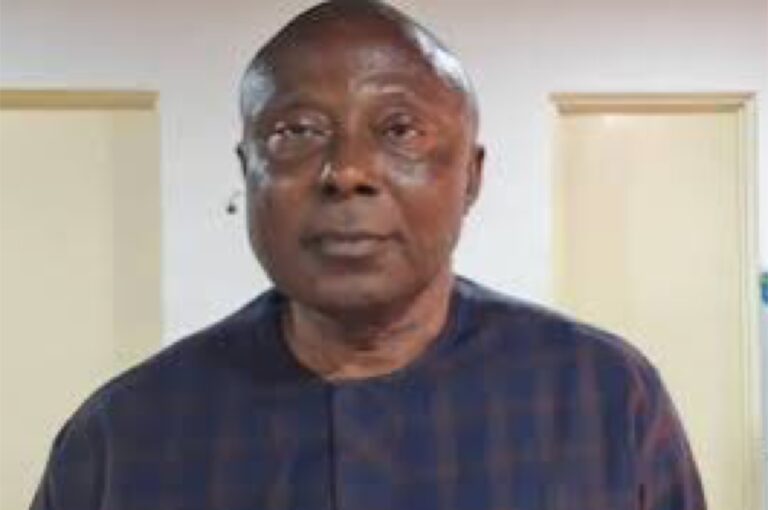
FORMER acting Accountant-General of the Federation (AGF), Anamekwe Nwabuoku, has pleaded with a Federal High Court in Abuja to grant him further time to complete the repayment of the public funds he and his co-defendant allegedly looted.

On Wednesday, June 10, Nwabuoku and his co-defendant, Felix Nweke, a former Deputy Director in the Ministry of Defence, appealed to the judge, James Omotosho, to defer their arraignment until a later time to enable them to finalise the repayment.

They were charged by the Economic and Financial Crimes Commission (EFCC) and are facing 11 counts of money laundering totalling N1.6 billion.

According to the charge sheet, the defendants were charged with perpetrating the offence during Nwabuoku’s tenure as the Ministry of Defence’s Director of Finance and Accounts from 2019 to 2021.

In the charge titled FHC/ABJ/CR/240/24, Nwabuoku is the first defendant while Nweke is the second.

Former President Muhammadu Buhari appointed Nwabuokuas acting AGF On May 20, 2022, following the suspension of Ahmed Idris as the AGF due to an alleged N80 billion fraud he perpetrated in office.

Nwabuoku followed his predecessor’s footprint but was removed in July 2022, a few weeks after assuming office.

At the court on Wednesday, Nweke’s counsel, Emeka Onyeaka, told the judge of a recent development in the case, stating that his client had made efforts to settle the matter out-of-court and had returned a significant amount of the money which the anti-graft agency linked to him.

“The second defendant has taken steps, as there is a communication to the commission via-a-vis the alleged offences on making a refund. The commission is in receipt of the money and promised to communicate to us.

“We communicated with the commission and we were asked to tarry for their administrative procedure,” he said.

He claimed that if his client was arraigned, it would have an impact on the trial because a significant amount had been returned from the money stolen. To allow them to complete the administrative process, he pleaded with the court for an adjournment.

Maduakolam Igwe, who appeared for Nwabuoku, aligned with Onyeaka’s submission. Igwe said his client had equally taken the same steps and that a substantial amount had been repaid.

“We have written to the commission on this. The first defendant has also made some refunds. May I adopt the submission of my learner friend to tidy up the administrative procedure,” he stated.


READ ALSO:


Responding, the EFCC’s counsel, Ogechi Ujam, stated that while the commission had received a proposal letter, “no negotiation has been made, no settlement has been done, and no agreement has been reached by parties.”

She added, “In the circumstances, we urge this honourable court to allow us to arraign the defendants.”

The judge, James Omotosho, however adjourned the case till October 14 for arraignment.

It’s unconstitutional for Governors to hold LG funds, Supreme Court says

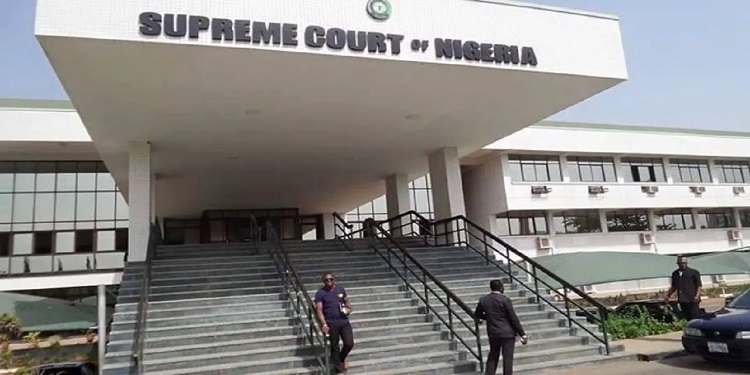
THE Supreme Court of Nigeria has granted the nation’s 774 Local Governments Areas (LGAs) financial autonomy in a judgment passed on Thursday, July 11.

The judgement, read by Justice of the Supreme Court, Emmanuel Agim, held that funds meant for LGAs be paid directly into their accounts.

The court also ruled that it was unconstitutional for the state government to hold on to or manage such allocations and directed the 774 LGAs to commence managing their funds.

The judgment was passed in a suit filed by the Federal Government through the Attorney General of the Federation (AGF) Lateef Fagbemi against the 36 state governors in the counftry, seeking full autonomy for local governments.

The Federal Government sought the court to authorise the direct transfer of funds from the federation account to local governments in line with the provisions of the Constitution against the alleged unlawful joint accounts created by governors.

Fagbemi also requested an injunction to prevent the governors, their agents, and associates from receiving, spending, or interfering with funds disbursed from the federation account meant for the benefit of local governments.

He further sought an order to prohibit governors from establishing caretaker committees to manage local government affairs, noting that the action contradicts the constitutionally recognised and guaranteed democratic system.

He argued that the interference of state governors in the affairs of a democratically elected local government system undermined the 1999 Constitution.

The suit partly read “That all efforts to make the governors comply with the dictates of the 1999 Constitution in terms of putting in place a democratically elected local government system has not yielded any result and that to continue to disburse funds from the Federation Account to governors for non existing democratically elected local government is to undermine the sanctity of the 1999 Constitution.

“That in the face of the violations of the 1999 Constitution, the Federal Government is not obligated under section 162 of the Constitution to pay any state, funds standing to the credit of local governments where no democratically elected local government is in place.”

Calls for local government autonomy in Nigeria have increased in recent years, as interference by the state has been identified as a reason for its underperformance.

Former president Muhammadu Buhari had signed an Executive Order in May 2020, to grant financial autonomy to the judiciary, legislature, and local government councils.

Buhari also attributed the lack of development at the third tier of government to the governors’ questionable actions on LGA funds.

Although the governors were opposed to Fagbemi’s institution of the case, Agim held that the federal government was right in filing the suit to protect the Constitution.

2024 budget: Sanwo-Olu shows no sign of keeping promises on education, health

0

Nigeria’s crude oil production falls to 1.27mbpd in Q2

NIGERIA’s daily crude oil production dropped to 1.27 million barrels per day (bpd) in the second quarter (Q2) of the year compared to 1.33 million bpd production in the first quarter (Q1).

Checks on the Organisation of Petroleum Exporting Countries (OPEC) monthly oil market reports show that Nigeria produced 1.28 million bpd of crude oil in April, 1.25 million bpd in May and 1.28 million bpd in June, averaging 1.27 million barrels in Q2.

In Q1, the country produced 1.43 million bpd in January, 1.32 million bpd in February, and 1.23 million bpd in March, which averaged 1.33 million bpd in Q1.

Nigeria has consistently failed to meet the OPEC quota of 1.5 million bpd despite basing its crude oil production benchmark at 1.78 million bpd in its 2024 budget.

According to OPEC, its monthly data on Nigeria’s crude oil production represent direct communication with the Nigerian authorities.

Meanwhile, OPEC monthly oil market reports released on Tuesday, July 10 revealed that Nigeria’s average daily crude oil production for June rose slightly to 1.28 million bpd from 1.25 million barrels bpd in May.

The ICIR reports that proceeds from crude oil production are the major source of Nigeria’s foreign exchange earnings and buffer for its foreign reserve as many experts have maintained that oil resources must be protected at all costs.

It is the major revenue-earning source but not meeting up with the budgetary benchmark worsens the foreign exchange problems and lead to volatility in the Nigerian currency market.

The Nigerian government and its state-owned oil company, Nigerian National Petroleum Corporation Limited (NNPCL), have continuously blamed the inability to meet production quota on pipeline vandalism, militancy, and insecurity in the country.

Recently, the NNPCL said it had declared a state of emergency in the country’s oil and gas industry to increase crude oil production and grow its reserves but stakeholders anticipate that the NNPLC match words with actions.

The state of emergency was declared by the NNPCL Group Chief Executive Officer, Mele Kyari, on Tuesday, July 2, The ICIR reported.

“We have decided to stop the debate. We have declared war on the challenges affecting our crude oil production. War means war, Kyari said.

A detailed analysis of assets revealed that Nigeria can conveniently produce two million barrels of crude oil per day without deploying new rigs, the NNPCL boss asserted.

He, however, said that the major impediment to achieving it remains in the inability of players to act promptly.

“This is our major source of revenue for now and we need to guard it jealously. Our inability to meet up with our OPEC quota is a major concern. This is a major setback in having a maximum supply of dollars in Nigeria’s foreign exchange market,” Kyari lamented.

A recent analysis of crude oil production, from January to May, by The ICIR showed that Nigeria was losing over N16 billion revenue daily.

Ndume blasts Tinubu over food crisis, insecurity

0

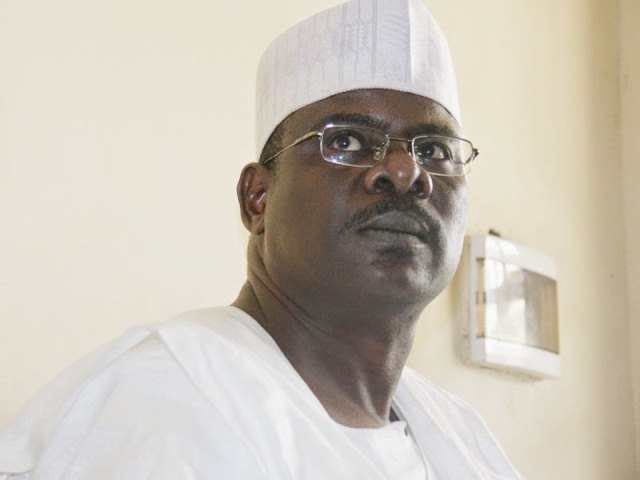
CHIEF Whip of the Nigerian Senate, Mohammed Ndume, has accused President Bola Tinubu of being out of touch with some of the issues plaguing the country, including food crisis and insecurity.

According to a report, Ndume told journalists on Wednesday, July 10, 2024, that the President had been “fenced off by plutocrats.”

He also said that poverty, insecurity, hunger and other problems confronting citizens were not being addressed by the President.

“The government is not doing anything about the food scarcity and it needs to do something urgently. We don’t have food reserve. There is unavailability of food. Food crisis is the worst crisis that any nation can encounter. If we add that to security crisis, it will be severe.

“The President should wake up, it seems he isn’t in the picture of what is happening because he has been caged off. He has been fenced off by plutocrats. He should open his doors and meet those who will tell him the truth. Unfortunately, the people who will tell him the truth won’t struggle to meet him,” Ndume stated

Earlier, Ndume had said during an interview that the President was inaccessible to some of his ministers and lawmakers.

He urged Tinubu to discuss with experts and stakeholders to arrive at possible solutions to the problems bedevilling the country.

“The major problem with this government is that its doors are closed, to the extent that even some ministers cannot see the President. Not to mention members of the National Assembly who do not have the opportunity to meet with him and discuss the issues affecting their constituencies.

“We want to draw the government’s attention to the fact that Nigeria is not only facing a high cost of living but also food scarcity. We want the President to intervene on the issue of high cost of living and food scarcity,” Ndume was quoted as saying.

Under Tinubu, Nigeria has faced snowballing prices of foods and persistent insecurity.

Inflation has also remained unmanageable under his watch.

Despite sweeping reforms that resulted in the suspension of fuel subsidy and unification of exchange rates, most Nigerians have continued to live in hardship.


Defected Rivers lawmakers are gone, Fubara boasts

THE Rivers State Governor Siminalayi Fubara has insisted that the seats of Martin Amaewhule and the 25 other lawmakers who defected to the All Progressives Congress (APC) from the Peoples Democratic Party (PDP) remained vacant..

The governor stated this in a statement issued by his chief press secretary, Nelson Chukwudi, on Wednesday, July 10.

According to the governor, the legislators who defected willingly strayed from the platform on which they were elected and will eventually head back home because that is what they wanted.

The statement said the governor made the clarification on Wednesday at the Government House in Port Harcourt, the state capital, during a solidarity visit by women, youths, and opinion leaders from the Etche and Omuma Local Government Areas of the state.

Fubara pleaded with the legislators to come to terms with reality and see the progress being made by his government.

The governor added that his administration had begun working on the 2025 appropriations bill, emphasising that agriculture, healthcare, and education would take a chunk of the budget.

“Don’t bother about those people who are delusional. They think we are still sleeping. Let me tell you people so that they can hear anywhere they are.

“I wanted to help them, sincerely because I know them. And I have said it before, these are people that I have helped. I paid their children’s school fees. I paid their house rent. So, I wanted to help them.

“We all knew what happened when they crossed, and how did they cross? Because of our God, for them to make that mistake, they crossed! They are gone, and they are gone. Now, let me tell you: when I wanted to help them, I accepted to help them because we are all one. We disagree to agree as it is said,” the governor stated.

He reaffirmed that his government was not in conflict with anyone and would keep appreciating to those who contributed to his success in life.u

But the governor made it clear that remaining loyal does not imply sacrificing one’s freedom, judgment, or sense of right and wrong. Therefore, he would not be a governor who is compelled to submit, he stated..

Fubara reaffirmed his government commitment to delivering quality education, health and others to Rivers people.

He added that children in the state needed to go to quality schools, even if they couldn’t go to private schools.

“Let them go to the public ones that have standards. We need to go to good health facilities owned by the government and get standard healthcare services,” Fubara said.

The ICIR reported on Monday, July 8 that the 26 lawmakers loyal to the state former governor, Nyesom Wike, gave Fubara a seven-day ultimatum to re-present the 2024 budget.

The lawmakers had their first sitting after a Federal High Court in Abuja invalidated their sack by the state High Court for defecting from the PDP to the APC.

They gave the directive while a parallel sitting was taking place by the other faction of the House of Assembly led by Victor Oko-Jumbo.

While the Amaehwule-led team held its session at the House of Assembly Quarters, the pro-Fubara lawmakers sat in an improvised Hallowed Chamber within the Government House.

The ICIR reports that Wike and Fubara have been at loggerheads over who controls the PDP structure and other issues in the state.

Though a PDP member, Wike currently serves in the ruling All Progressives Congress (APC) government.

The feud has degenerated into nearly a physical combat between their loyalists and possible chaos was palpable in the state that President Tinubu had to intervene twice.

Despite the President’s intervention, the feud has festered.



ICPC arraigns staff of 2 ministries over alleged job racketeering

0

THE Independent Corrupt Practices and Other Related Offences (ICPC) has arraigned two staff members of the Federal Ministry of Trade and Investment and the Federal Ministry of Works with charges related to receiving money under pretences and employment racketeering.

The ICPC shared this via its official X handle on Wednesday, June 10.
In a 9-count charge presented before the judge, C.O. Oba of the Federal High Court in Apo, Abuja, the ICPC, in charge No. CR/243/2024, accused the duo, Ndubuisi Joy Cheneme and Godwin Sabo Takat, of defrauding job seekers of over N12 million.

According to ICPC’s counsel, Nura Saidu, the defendants’ activities violated Section 1 of the Advance Fee Fraud and Other Fraud Related Offences Act, 2006, Section 18 (d) of the Corrupt Practices and Other Related Offences Act, 2000, and Section 363 of the Penal Code Act, 1990.

One of the counts read, “That you Godwin Sabo Takat (M) between January and June 2018 or thereabouts at the Federal Capital Territory, Abuja whilst being a staff of the Federal Ministry of Works and Housing, with intent to defraud, did induce by false pretence Ndubuisi Joy Chineme to confer a benefit on you by paying the sum of (N4,530,000.00k) Four Million, Five Hundred and Thirty Thousand Naira only in your First Bank account for securing employment for unsuspecting job seekers in the Federal Civil Service, and you thereby committed an offence contrary to Section 1 (2) and punishable under Section 1 (3) of the Advance Fee Fraud and Other Fraud Related Offences Act, 2006.”

However, the defendants pleaded not guilty to the nine-count charge, and their counsels, E.E. Ogar and I.O. Nweze, presented separate bail applications on their behalf.

The presiding judge granted the defendants N2 million each in bail with two sureties, each of whom must have N20 million in their accounts and two landed properties in the Federal Capital Territory.

The accused were remanded at the Suleja and Kuje Correctional Centres until the bail requirements were met.

Meanwhile, the case was adjourned until January 13, 2025, when the trial was scheduled to begin.

APC lost 3 Rep. members in 13 months

0

AT least three members of the House of Representatives, elected on the platform of the All Progressives Congress (APC), have died since the inauguration of the 10th Assembly in June 2023, The ICIR reports.

The most recent death occurred on Wednesday, July 10, 2024.

The lawmaker representing Ibadan North Federal Constituency, Oyo State, Musiliudeen Akinremi, also known as Jagaban, died, aged 51.

Spokesperson of the House of Representatives, Akin Rotimi, announced his death in a statement on Wednesday, July 10, describing his passing as a loss to the House.

Akinremi was a two-time member of the House.

He won re-election into the House in 2023, after concluding his first tenure, which began in 2019.

Before the 2019 elections that ushered him into the House for the first time, it was reported that a member of his constituency filed a suit asking the court to disqualify him on the allegation that he had been convicted of a crime in the Republic of Liberia in 2013.

Reacting, a local media organisation in Oyo state quoted Akinremi as refuting the allegation, describing it as the handiwork of his opponents.

Akinremi died after a brief illness, a little over a year into his second term as a federal lawmaker.

On May 10, 2024, exactly two months before Akinremi’s death, a lawmaker representing Babura/Garki Federal Constituency in Jigawa State on the All Progressives Congress (APC) platform Isa Dongoyaro died.

Dongoyaro was also said to have died after a brief illness.

He was serving as a lawmaker for the first time. He had worked as a special assistant on security and intelligence to the immediate past Senate President, Ahmad Lawan, before his election.

Dongoyaro was once an official of the Economic and Financial Crimes Commission (EFCC). He was among those summoned to respond to questions on allegations of corruption against former Acting EFCC Chairman, Ibrahim Magu, by the presidential panel carrying out a probe on him.

The ICIR reports that about seven months before Dongoyaro died, the APC lost its lawmaker representing Isa/Sabon Birnin Federal Constituency in Sokoto State, Abdulkadir Danbuga.

Danbuga died at 63 on Wednesday, October 11, 2023, and his death was also attributed to a brief illness.

Meanwhile, the Peoples Democratic Party (PDP) had lost its member, Isma’ila Maihanchi, member-elect of the House of Representatives for the Jalingo/Yorro/Zing Federal Constituency in Taraba State.

He died shortly after the 2023 polls and before the inauguration of the 10th National Assembly.

He was aged 36 and died after a brief illness.

Concerns over NNPCL’s $2bn crude-backed loan despite failing to list in stock market

THERE are concerns over the Nigerian National Petroleum Company Limited’s (NNPCL) quest for another $2 billion crude-backed loan tranche which could have been sourced from the Nigeria stock market.

Despite transiting to a Limited Liability Company on July 19, 2022, with  the signing of the Petroleum Industry Act (PIA), the NNPCL has failed to enlist in Nigeria’s capital market

Nigeria currently struggles to meet up with the Organisation of Petroleum Producing Company of Nigeria (OPEC) quota of  1.7 million dollars per barrel production, with energy experts insisting that earlier crude-loan-backed swap deals are partly responsible, in addition to crude oil theft.

While domestic crude oil refiners are raising concerns over a lack of feedstock as some rely on imports as seen with the Dangote refinery, Reuters reports confirmed that the NNPCL has approached international creditors to enhance NNPC financial inflow.

The group chief executive Officer of NNPCL, Mele Kyari, informed Reuters that the national oil company is discussing with international creditors to raise an oil-backed credit facility.

He, however, did not disclose the international financial body involved in the talks, nor the exact amount planned to be raised.

“We have no problem covering our gasoline payments. This is just money for normal business and not a desperate act,” he stated.

Industry analysts believe that the NNPCL could have raised the money from the capital market if it had gone ahead with the initial public offer as prescribed in the Petroleum Industry Act.

“We have lots of lessons bro learn from Saudi Aramco and the model they have adopted in growing their oil sector and not always doing crude-based swaps. For instance, if they are running the right model and listed in the capital market, there’s no need to take the option of a resources-backed loan to get 2 billion dollars, “a social critique and Lecturer at the Faculty of Law in Baze University, Sam Amadi told The ICIR.

Notably, the ICIR had earlier reported that the NNPCL had resorted to resource-backed loans and had sealed a deal of a $3.3 billion loan swapped with crude oil.

The swap deal will see the NNPCL pay back 900,000 barrels of crude per day, totaling 164.25 million barrels of crude oil.

The 2024, budget had projected a daily oil production of 1.78 million barrels but Nigeria recorded a cumulative shortfall of 88.2 million barrels in the first half of the year.

This shortfall alone stands at $7.2 billion, a figure which is about $2 billion higher than the total crude back loan if the country had improved its production.

This resource-backed swap deal has huge implications as several upcoming refineries would have to source their crude elsewhere.

Findings by The ICIR have shown that Dangote resorted to buying his feedstocks from the United States of America, despite the NNPC owning a 20 per cent share in his company, as they were unable to supply him crude.

Energy analysts told The ICIR that the NNPCL in the long run won’t be able to supply crude to upcoming refineries if they maintain crude-swap agreements.

“I am not a fan of resource-backed loans, and this forward sales agreement that is akin to the financialisation of the future oil and gas assets is an anomaly in statecraft that the National Assembly should tight with all rigour,” a development economist, and the co-founder of Dairy Hills. Kelvin Emmanuel told The ICIR.

Despite the NNPC quest for resource -backed loans ,fuel queues have continued to linger in major cities across the country, with Nigerians wondering the end in sight to the development, with the National oil company citing logistics concerns in its distribution channel.