HEINEKEN International, a global beverage giant, has completed the sale of its 86.5 per cent shareholding stake in the Nigerian Champion Breweries Plc.
Champion Breweries disclosed this in a statement on Wednesday, June 19, signed by its chairman, Imo-Abasi Jacob.
The 100 per cent stake in Champion Breweries, which Heineken held through Raysun Nigeria Limited, was taken over by EnjoyCorp Limited.
“EnjoyCorp Limited has acquired an 86.5 per cent stake in the company.
“EnjoyCorp acquired 100per cent shareholding in The Raysun Nigeria Limited, which in turn holds the 86.5per cent stake in Champion Breweries plc listed on the Nigerian Exchange Group (NGX),” it stated.
According to Champion Breweries, following the approval of the Federal Competition and Consumer Protection Commission (FCCPC), the parties have completed the transaction, and EnjoyCorp has taken full control.
Champion Breweries will remain listed on the NGX as EnjoyCorp commits to building the company and galvanising shareholder value as the acquisition marks EnjoyCorp’s entry into the beverage sector.
With the acquisition, Champion Breweries will be integrated as a cornerstone subsidiary within EnjoyCorp’s expanding portfolio of food, beverage, and hospitality brands.
“EnjoyCorp is welcome aboard Champion Breweries Plc, and we look forward to an exciting new chapter of growth and value creation for all its stakeholders, powered by EnjoyCorp’s vision and resources.
“Champion Breweries plc is confident that this partnership will unlock new opportunities and elevate our brand to greater heights,” the statement signed by Champion Breweries’ chairman further stated.
A cursory look at Champion Breweries’ financial performance for the past year revealed that the company’s profit lines dropped marginally.
Its revenue dropped slightly to N12.70 billion in 2023 from N12.29 billion in 2022; gross profit to N5.07 billion from N5.81 billion.
However, the company’s operating profit significantly declined to N603.97 million from N2.27 billion; profit before tax to N445.34 million from N2.25 billion and profit after tax to N370.56 million from N1.41 billion as it suffered a huge impairment loss on financial assets, selling, distribution, and administrative expenses.
The Champion Breweries’ full acquisition came barely one week after Diageo Plc, the UK-based majority owner of Guinness Nigeria Plc, sold off its over 50 per cent stake to Tolaram Group amid poor financial performances in the last year.
The one year of President Bola Tinubu’s administration has seen many international companies divest their investment, delist, and even exit from the Nigerian business environment due to the reforms the government doggedly introduced.
The ICIRreported that several multinational companies have pulled out of Nigeria, citing unfavourable business environments that have been worsened by foreign exchange problems in the country
GlaxoSmithKline (GSK), Sanofi-Aventis Nigeria Limited, Procter and Gamble (P&G), Jumia Food and Microsoft were among the companies that have exited Nigeria in the past year.
THE Joint Union Congress (JUC) of the Police Service Commission (PSC) has dismissed allegations of fraud and irregularities levelled against the PSC and its staff by the Nigeria Police Force (NPF).
The PSC recently released a list of 10,000 successful applicants for constable and specialist cadre roles in the NPF.
But the NPF in a statement issued on Saturday, June 15, signed by the force spokesperson, Muyiwa Adejobi, rejected the list over alleged corruption and irregularities.
The two organisations have since been at loggerheads over the list.
At a press conference on Wednesday, June 19, chaired by the chairman of the Association of Senior Civil Servants of Nigeria, PSC, Unit Adoyi Adoyi, the union insisted that the 2022/23 police constables recruitment exercise was transparent.
According to Adoyi, who doubles as the JUC’s chairman, the allegations of fraud and several other unwholesome acts levelled against the PSC and its staff are “unfounded, spurious, speculative and most irresponsible, especially by the way the allegations were thrown into the public space, even before official channel of communication for dealing with such a matter was exhaustively explored.”
The union said the PSC and Police were both responsible agencies of the federal government that should demonstrate integrity to inspire public trust and confidence in the discharge of their respective mandates.
The union described the action of the PSC as a “sinister resort to media trial and subterranean plot to achieve a clandestine motive.”
It condemned the Police’s action, describing it is most unwarranted.
“We vehemently reject the allegation of fraud by the Nigeria Police authorities in the recruitment exercise. As public servants committed to due process, we do not take the allegations kindly because we are fully conscious of its implications. We, therefore,wish to address the allegation directly.
“It is now common knowledge that the Nigeria Police Force, which is lacking in personnel and facing serious challenges in combating insecurity in the country today, has chosen to abandon its core mandate and instead seeks to interfere with the constitutional mandate of the Police Service Commission,” the union stated.
According to them, they have been furnished with reliable information indicating that elements within the Police Force attempted to smuggle over 1,000 names into the recruitment list.
The union claimed there had been a leadership vacuum at the Commission its chairman, Solomon Arase was “unceremoniously stripped of office” which it claimed put the Commission in disarray.
It called for a forensic review of the commission’s list and the recruitment list with the Police.
THE chairman of the National Drug Law Enforcement Agency (NDLEA), Mohammed Buba Marwa, has vowed that the agency would continue to go after the assets of drug barons and traffickers aspart of strategies to fight illicit drugs and cartels.
Marwa stated this at a press conference in Abuja on Wednesday, June, 19, while kicking off week-long activities to celebrate the 2024 International Day Against Drugs and Illicit Trafficking.
The event is in conjunction with stakeholders, including the United Nations Office on Drugs and Crime, (UNODC)
The NDLEA boss, represented by the agency’s secretary, Shadrach Haruna, stated, “Our offensive action against drug cartels and traffickers, launched in January 2021, has to date continued to yield the desired result with the arrests and prosecutions of several barons.
“As you are all aware, two serial traffickers got life imprisonment in court in April. Our prosecution efforts have continued to achieve successes in courts given the painstaking investigations and diligence in the prosecution of cases,” Marwa stated.
According to Marwa, case preparations by the agency are strong and have been further strengthened with the passage of the Proceeds of Crime Act (POCA 2022).
He added that apart from conviction, the convicts’ assets used as instruments for crime or the proceeds derived from the crime would be forfeited to the federal government.
Speaking on the drug demand reduction efforts of the agency, Marwa said its flagship programme, War Against Drug Abuse (WADA), which was built on “the whole of society approach” had been a success.
He said the effort was a preventive action against drug abuse and an awareness vehicle for public engagement and collaboration against illicit trafficking and abuse.
He said the effort aligned with the 2024 World Drug Day’s (WDD) theme.
He explained that the WDD, observed on June 26 yearly, “is an important day for the global community and an occasion during which current efforts against illicit drug problems are given policy direction for the next 12 months.”
He added that the theme for this year “The Evidence is Clear: Invest in Prevention”, emphasised the importance of preventing people from falling into the danger of experimenting with illicit drugs and subsequently falling into the trap of dependence on psychoactive substances.
According to him, “Prevention is an important aspect of the effort to curb the menace of abuse of illicit drugs in society. At NDLEA, prevention, as ably anchored in our War Against Drug Abuse (WADA). Social advocacy programme is a priority area for us. Within our modest means and with the support of the Federal Government and our various stakeholders, we have invested in prevention by various means over the past three years as part of the reforms being undertaken in the agency.”
In his remarks, UNODC Country Deputy Representative, Danilo Campisi, called on the government at all levels and other stakeholders in Nigeria to invest in drug use preventive measures.
He said projections showed that by 2030, there will be a 40 per cent rise in the use of drugs in Africa, based on the population of young people.
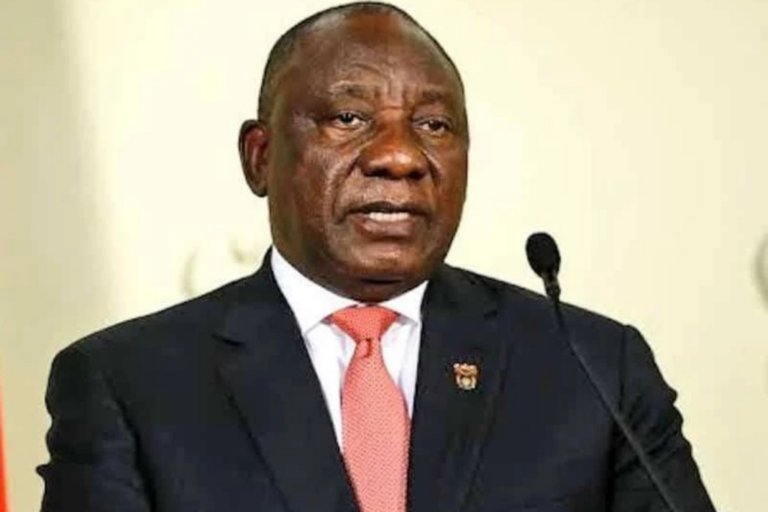
CYRIL Ramaphosa was sworn in for a second term as South African President on Wednesday, June 19 in Pretoria, the country’s capital.
He was sworn in despite his party – the African National Congress (ANC) – inability to win a majority in the country’s elections held in May.
Chief Justice Raymond Zondo presided over the President’s swearing-in ceremony in the presence of legislators, foreign dignitaries, religious and traditional leaders, and supporters at the Government’s House – the Union Buildings.
Several religious leaders gathered for an interfaith prayer before the President was sworn in, offering prayers for him to lead the nation in the right direction.
“In the presence of everyone assembled here, and in full realisation of the high calling I assume as President. I Matamela Cyril Ramaphosa swear that I will be faithful to the Republic of South Africa, I will obey, observe and uphold the Constitution and all other laws of the Republic,” Ramaphosa said during the inauguration.
High-ranking international officials, notable South African politicians, members of civil society and other dignitaries, including Nigeria’s President, Bola Ahmed Tinubu and former President of Nigeria, Olusegun Obasanjo, were present at the event.
Other attendees include Angola’s President Joao Lourenco, Congo Brazzaville’s President Denis Sassou Nguesso and Eswatini’s absolute leader King Mswati III, among others.
However, the uMkhonto weSizwe (MK) party did not attend the inauguration as they had announced on Monday that they would be boycotting Ramaphosa’s inauguration in protest of the ANCs alliance with the Democratic Alliance (DA) party to form a government of National Unity.
After the inauguration, Ramaphosa is expected to form a cabinet consisting of the Democratic Alliance (DA) and three other smaller parties. The coalition won 68 per cent of the parliamentary seats.
Ramaphosa is taking the oath of office as President of South Africa for the third time. He took office for the first time in 2018 following the forced resignation of his predecessor, Jacob Zuma, due to allegations of corruption. He was then re-appointed for a full five-year term in 2019.
RIVERS State Governor Siminalayi Fubara has ordered the audit of all accounts of the state’s 23 local governments.
The audit will cover the past three years when the recently outed chairmen were in charge.
He gave the directive on Wednesday, June 19, while swearing in the caretaker committee chairmen of the council in Port Harcourt.
Fubara disclosed that the audit was to serve as a check for the new chairmen and a means of holding them accountable.
He urged the new chairmen to protect the people’s interest, adding that they would not spend too long in the position, as the local government election process in the state would commence soon.
“Take this opportunity as a call for service,” Fubara said.
The swearing-in occurred less than 24 hours after the governor submitted their names to the Rivers State House of Assembly, led its by factional Speaker, Victor Jumbo.
It also comes on the heels of fresh political tension in the state which saw residents stage protests in different Local Government Areas (LGAs) earlier in the week, as the immediate past chairmen refused to vacate their offices after their tenures expired.
The former LGA chairmen disclosed that they would remain in office beyond Monday, June 17, when their tenures expired, citing the Rivers State Local Government Amendment Law passed by the Martin Amaewhule-led 27 State House of Assembly members.
The development is widely believed to be an escalation of tension between Fubara and Wike, as the law was passed by the lawmakers who are loyal to the former governor, in April.
Some of the former chairmen were, however, forced out of their offices by youths loyal to Fubara on Monday and Tuesday.
The protesters also destroyed Wike’s statue in the Obio Akpor Local Government Area (LGA) of the state where his hometown is situated.
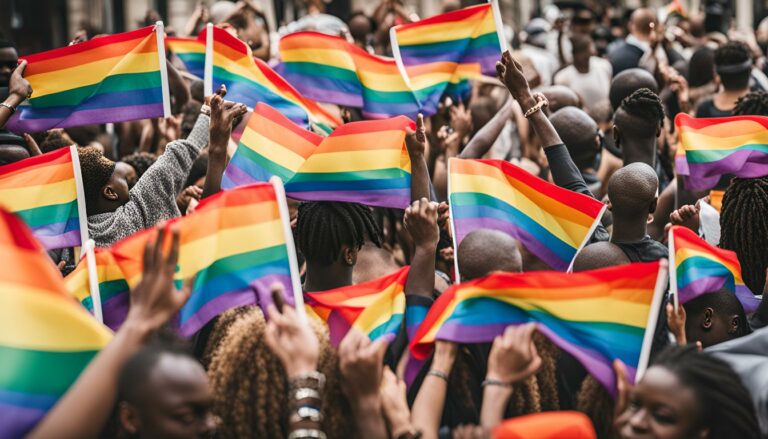
IN Nigeria, discrimination against members of the Lesbian, Gay, Bisexual, Transgender and Queer (LGBTQ+) community exposes them to attacks, abduction, and sometimes leaving them without adequate access to healthcare. This report takes an in-depth look.
By the time Amirah Anderson turned 14, he had begun to admit that he felt more female than male.
Although his mother gave birth to two male children, Amirah tells The ICIR that he was assigned the wrong gender at birth, a situation known as gender dysphoria, where a person feels a disconnection between their biological sex and gender identity.
Such persons usually identify as transgender and may transition to their preferred gender or not. When a person transitions, they identify as transsexual.
As a teenage boy, Amirah loved female clothing, which caused friction in his family. As a young adult, he liked other men.
It did not help that Amirah was born into a deeply religious home in Nigeria to a Pentecostal church pastor as father and a deaconess as mother. Both termed the femininity displayed by him as demonic.
Amirah’s turbulent relationship with his father continued until the latter died eight years ago. The gap between him and his only sibling also widened and he stayed away from home for a long time.
Acceptance is critical to the health and well-being of young adults, but the reverse is a consequence of being queer in Nigeria, alargely homophobic country.
People are considered queer when they have different gender identities or sexual orientations from heterosexual persons.
Sometimes, queer persons are forced into conversion therapies organised by family or friends to “fix” them.
Ogundele Gloria Andrew is a masculine-presenting 20-year-old woman, who resides in Ekiti and identifies as a lesbian.
Since her mother became aware of her sexual orientation, she has made unpleasant attempts to change it.
Gloria recounted to The ICIR that a deliverance session was organised by her mother and religious leader, during which she spent days away from home, fasting and praying to “cast out the spirit of lesbianism.”
But the spirit did not leave Gloria, and when her mother realised this, she subjected her to what the 20-year-old described as the beating of her life.
The experience forced Gloria to withdraw her confessions of being attracted to women. She now pretends to be straight around her mother.
According to astudy, young people who have been rejected by their families are more likely to battle depression.
The difficulties associated with being queer have made Gloria to contemplate suicide. She has no explanation for being attracted to women and cannot comprehend why she faces discrimination for it.
“Sometimes, people just don’t want to talk to me, saying I am going to influence them into lesbianism. I am just a normal girl living a normal life. I’m human too,” she told The ICIR.
Scientists and researchers have not found a comprehensive reason behind same-sex sexual attraction. Previous studies attributed it to a particular gene, but recentresearch shows that there are no single genes responsible, as several factors determine a person’s sexual orientation.
Researchers have continued to swing between genetics and choice as causative factors and queer people remain targets of discrimination.
Emmanuella David-Ette, who is nearly 40 years old, says she is a transgender/intersex woman, though she grew up as a boy. She told The ICIR that she looked feminine as a child, and enjoyed watching people guess if she was male or female.
“But as you grow older, the hate becomes real. And you don’t know why they are hating, because you didn’t create yourself. They look at you and call you ‘homo.’ Then, I didn’t even know the word transgender. I just knew that I was different,” she said.
She said there was feminisation of her body as puberty approached. Even before she began to identify as a woman, Emmnuella knew she was attracted to men, which left her confused and searching for answers.
“I decided to do a series of tests on my own, and they found female hormones higher than male hormones,” she said.
Medical experts say that intersex persons are born with atypical traits which do not conform to the usual male and female sexes. Their sexual anatomy or chromosomes are often different from what is considered normal.
This difference can be noticed at birth due to the presence of ambiguous genitalia or during puberty. Sometimes, intersex persons grow old and die without realising that the make-up of their chromosomes or internal organs places them in this category.
Definition of LGBTQ terms.
Those who find out about this condition in their lifetime, sometimes resort to surgeries or hormonal therapy, which help their bodies conform to whatever gender they identify with.
Questions around gender identity and sexual orientation have led many LGBTQI persons into online spaces in search of answers or expression; a move that proved costly for Janet Chimeziem, who identifies as a queer man. Janet is the name he has adopted and that is what he is known by now.
Quest for justice
Threats and attacks linked to his gender identity are no longer new to Janet. Being queer, he dresses in female clothing, which has constantly exposed him to harassment.
Before he moved to Ibadan for studies, Janet lived in Onitsha, Anambra with his family. He had endured catcalling from people around, but things came to a head when he was abducted in 2019, shortly after he became vocal online about being queer.
On the day of his kidnap, Janet was in a tricycle with other passengers when he lost consciousness. By the time he came to, he found himself in a strange, dilapidated building.
“I think they used some sort of chemical to make me sleep. I was severely beaten and lost some amount of blood.
“That was about the time I was talking about queer rights on my social media platforms. When I was being beaten, they told me the reason was my being queer and all that. I knew perhaps one of them had seen my posts,” he told The ICIR.
Janet stayed in captivity for a day, and his parents were forced to pay a ransom before his release, but he did not seek redress.
For queer people, access to justice in such cases is limited, as they are often faced with threats of being prosecuted under the Same-Sex Marriage (Prohibition) Act (SSMPA), 2013.
The Act criminalises any marriage or public display of amorous relationships between persons of the same sex and punishes supporters of these.
Section 5(1) of the Act reads: “A person who enters into a same sex marriage contract or civil union commits an offence and is liable on conviction to a term of 14 years’ imprisonment.”
According to section 5(2), “a person who registers, operates or participates in gay clubs, societies and organisation, or directly or indirectly makes public show of same sex amorous relationship in Nigeria commits an offence and is liable on conviction to a term of 10 years’ imprisonment.”
Since it was passed, the law has hindered access to justice for some queer Nigerians.
The first sexual encounter Gloria (earlier mentioned) had with a man was when she was drugged and raped in January 2024.
That day, Gloria arrived at the residence of her female friend, where she planned to spend the night ahead of a performance the following day.
She did not know that her host also invited a male friend, who had previously asked for a relationship despite being aware of her sexual orientation, to spend the night in the same room.
While she has no clear memory of the incident, Gloria woke up the next morning to realise she had been raped. A visit to the hospital confirmed that she was drugged.
She relayed the incident to her stepmother who filed a police report.
Although the abuser was arrested and arraigned, he threatened to reveal to the court that Gloria is a lesbian and after being advised by the police to settle out of court, the suit was withdrawn.
“They told me I had to withdraw the case because he would bring it up in court and instead of the guy ending up in prison, I could be the one to end up in prison,” she said.
In August 2018, 57 suspected homosexuals werearrested by the police at a gay club in Lagos.
While being paraded, one of the suspects, now a popular cross-dresser in Nigeria, James Brown, who disclosed that he had tested positive for Human Immunodeficiency Virus (HIV) at birth, said he was denied access to his anti-retroviral medication since the arrest.
In 2023, at least two gay weddings were disrupted during raids by security operatives inDelta andGombe states. About 137 guests were arrested at both scenes.
Amirah (earlier mentioned) told The ICIR that such restrictions push many people into switching genders, despite how lonely the journey can be. Now transwoman, she is less secretive about her relationship with a man. She is also familiar with members of the lover’s family, though they are unaware of her identity.
For Emmanuella, who now presents as a woman, looking feminine played a significant role in the success of her wedding to a man in Nigeria.
“When you look at me, what do you see? A woman. So, I was hoping to use my story as a form of advocacy for others because it’s like saying an intersex person deserves love; a trans person deserves love,” she said.
However, the marriage was short-lived due to domestic violence. While Emmanuella was able to get married, most queer persons hardly take the risk for fear of prosecution.
The American Bar Association (ABA)documented observations during criminal proceedings against 47 Nigerians prosecuted for public displays of same-sex affection under the SSMPA between 2019 and 2020.
Although the case was struck out, the report noted that the process breached international and regional standards, by violating rights to non-discrimination.
In Northern Nigeria, where Islam is a dominant religion and the Shari’a law obtains, prosecution of suspected queer persons is usually more draconian.
An Islamic Shari’a court in Bauchi statecondemned a septuagenarian and two others to death by stoning in 2022.
Religion and the case against queer rights
Speaking on the issue, Islamic cleric and Executive Director of the Al-habibiyyah Islamic Academy, Fuad Adeyemi, told The ICIR that being queer is anti-Islam.
“Islam does not recognise it at all. In fact, if you want to follow Islamic injunction, that person should be killed. But to us, there is nothing like that in Islam. Human opinion does not count in Islam. Where it counts is where Allah has given us the opportunity, but there are some things we don’t do to insult God,” Adeyemi said.
Also speaking on the issue, Christian cleric and Chairman of the Christian Association of Nigeria (CAN) in Mangu local government, Plateau state Timothy Daluk described it as unbiblical.
“The New Testament said it is a taboo. It is unacceptable. It is contrary to the teachings of the bible. These verses have made the church discourage it in totality. The Bible also said in the beginning, God made man and woman. If he chose to make man and a man to get married, he could have made a man for Adam or a woman for Eve,” he said.
In December 2023, the Catholic Pope Francis who is global head of the church said the church can bless same-sex couples, although such blessings should not be taken to mean a validation or acceptance of their marriage.
Reacting to this, Catholic Bishops in Nigeria said there was no possibility of blessing same-sex unions or marriages in the church.
“Homosexual acts are of grave depravity which are intrinsically disordered and, above all, contrary to natural law. In furtherance of our pastoral and prophetic mission, we must also continue to stress that God loves the sinner unconditionally and calls him to repentance so that he might live,” president of the Catholic Bishops Conference of Nigeria (CBCN) Lucious Ugorji wasquoted as saying.
Due to religious sentiments, Amirah was suspended from the choir by his pastor’s wife for “not leading an exemplary life.” He has stayed away from religious institutions since then.
Beyond religion, many heterosexual and cisgender persons have also shared concerns about the community in Nigeria.
An FCT resident, Bibian Anekwe, described the demand for queer rights as an infringement of women and children’s rights.
“When we accept these things as normal, children can grow up to think it is okay to decide to switch genders.
“I am not against them, but we should not be forced to accept this because it is not normal. We should not be forced into accepting transsexuals as real women or men. As a woman, I should not be made to share toilets or private facilities with transwomen, especially since many of them are still in the process and still have male organs. What if I get raped? Changing your body does not automatically make you female,” she said.
Regardless of these concerns, several organisations, including Human Rights Watch have urged the government to repeal the SSMPA.
A Nigerian gay man who fled the country after openly coming out in the early 2000s, Bisi Alimi, now runs a training programme, the Rainbow Academy, where queer Nigerians are trained to challenge homophobia.
Born into a Muslim family, Alimi has alsosworn off religion due to anti-LGBTQI sentiments among other reasons, and has social media platforms where queer Nigerians find community.
Beyond being a platform for community and activism, social media is also a lifeline to access healthcare resources, especially for those negotiating the complex journey of gender transition.
Getting medical help online
Emeka Ogechi Oji, otherwise known as Oge Classic, was a man who found other men attractive. As with most Nigerians in this situation, he has endured attacks from people around him in Lagos, including being pelted with stones, unprovoked.
When he decided to transition into a woman, it was not exactly inspired by the need to escape the attacks.
Oge Classic had two main reasons; the more significant being what he described as special treatment given to women by society.
“For me, the case was gender equality. They treat females different from the way they treat males. Sometimes we go out to places and they say females should go there for free, but males should pay. They pay more attention to the females than males,” he told The ICIR.
The second reason was to fit in with society.
“Let me just be what I am acting as,” he said.
Now, Oge Classic identifies as a transwoman and has been on hormonal medication for about a year. Yet, he has never physically consulted with any medical doctor throughout this time.
His medications are “prescribed” via social media by transsexual friends he met online, who live abroad.
Although he has been on hormonal therapy for about a year, he does not have plans to surgically reconstruct his male genitalia.
Transsexual persons sometimes undergo gender-affirming surgeries such as vaginoplasty, where the penis and testes are removed and the tissues, used to construct a vagina, or phalloplasty, where vaginal or other tissues or tissues are used to create a penis.
This helpsease psychological distress associated with gender dysphoria, but Oge Classic is not bothered by this.
Uncontrolled use of hormones for gender transitioning has been described as a significant health hazard for transsexuals.
According to astudy, the use of these hormones can increase the risk of breast, ovarian and endometrial cancer, and cardiovascular diseases among others, and the risk is higher without adequate supervision.
However, a significant reason for self-prescription in Nigeria is the inadequate access to specialised care and discrimination by medical workers; a situation that Amirah is very familiar with.
Despite the turbulent relationship with the now-deceased father and brother, Amirah embarked on the journey to transitioning into a woman. The journey began two years ago at 27.
He also has no immediate plans to surgically modify his male genitalia.
“I am taking it one step at a time. I just want others see me the way I want them to see me,” Amirah said.
Unlike Oge Classic, Amirah consults and uses medics in Nigeria. But before successfully finding them, he was confronted at different times with discrimination by health workers.
“Back then, I had this medical condition I wanted to treat. When the man was examining me, he almost disgraced me. He started calling the nurses to come and see me. They started preaching, telling me ‘you will have cancer, you will die’” he said.
Amirah initially resorted to reading about hormones and buying medicines based on research. However, this led to complications which forced him to confide in a medical acquaintance.
But there are organisations that provide healthcare services exclusively to queer Nigerians, including the Olive Rights to Health Initiative in Nasarawa.
A nurse at the organisation, Emmanuel Sunday, who spoke on the importance of healthcare for LGBTQI people said there are ailments common with queer persons, especially men and transwomen, which may escalate within and beyond the community and cause an outbreak.
Pointing out that HIV, Hepatitis B and C and syphilis are some of the diseases ravaging the community, Emmanuel said other ailments peculiar to gay, bi-sexual and transsexuals are anal fistula and warts.
However, a shortage of funds is limiting the organisation from providing adequate care.
“We have anal fistula that is ravaging the bi-sexual men and gay men in Nigeria and we don’t provide those services anymore. So we can’t really provide holistic medical care for these people and we are left with no other option than to refer them to general facilities,” he said.
Sunday described anal fistula as a case where a different hole develops close to the anus and discharges pus due to infection of the area.
The pus, usually infectious, can find its way into the penis of a male sexual partner, especially if there are cuts during sexual activity.
“A bisexual man may also have a wife at home, if he goes back and penetrates the wife, she can come down with an infection. It is a concern. If we just look at it as an LGBTQ thing, then it goes down to the general community and still comes back to society,” he said.
Organisations like these sometimes operate quietly to avoid backlash from the government, therefore, some queer persons are unaware of their existence.
Amirah also identified a lack of resources as another factor that makes transsexuals turn to self-prescription.
“Most of us are not working. Most of us in the community are sex workers, it is not something we are proud of but we are just trying to survive,” he said.
One problem with securing employment as a transsexual person in Nigeria is the gender marker. Transsexual Nigerians are usually unable to reflect their new gender identities in documents used before transitioning.
“At the bank, most of us use our birth names and gender. When you go to the court to change it, it’s a whole process. Sometimes, you have to know somebody who knows somebody who can help you and it’s not easy.
“When you go to someone to employ you, they will ask you for your account details and when you bring them and it doesn’t rhyme and that’s an issue,” Amirah said.
Transitioning cost Amirah many relationships, including what he once shared with extended family members.
When extended relatives discovered he was transitioning, he was summoned to several family meetings and berated. He, however, stopped attending upon getting tipped off by a cousin that they were attempting to kill him for bringing disgrace to them.
The chaos that trailed being outed in his hometown, birthed a new cordial relationship between him and his brother, who defended him against attacks by the extended family.
But there were tears in his eyes as he recounted the experience, while fiddling with the nose mask that covered his face, he said: “It really hurts.”
THE Rivers State Governor Siminalayi Fubara has sworn-in caretaker chairmen for the 23 Local Government Areas in the state.
The governor had sent the list to the state House of Assembly, led its by factional Speaker, Victor Jumbo On Tuesday, June 18.
The Clerk of the House, G.M. Gillis-West released a statement Tuesday night on the nomination.
This followed a fresh political crisis in the state, arising from former council chairmen refusing to leave their positions after their terms expired,
The caretaker chairmen sworn in by the governor include:
Madigai Dickson – Abua/Odua LGA
Happy Benneth – Ahoada East LGA
Daddy John Green – Ahoada West LGA
Otonye Briggs – Akuku Toru LGA
Reginald Ekaan – Andoni LGA
Orolosoma Amachree – Asari Toru LGA
Alabota Anengi Barasua – Degema LGA
Anthony Soberekon – Degema LGA
Brain Gokpa – Eleme LGA
David Omereji – Emouha LGA
John Otamiri – Etche LGA –
Kenneth Kpeden – Gokana LGA
Darlington Orji – Ikwerre LGA
Marvin Yobana – Khana LGA
Chijioke Ihunwo – Obia/Akpor LGA
Princewill Ejekwe – Ogba/Egbema/Ndoni LGA
Evans Bipi – Ogu/Bolo LGA
Princess Ogan – Okrika LGA
Promise Reginald – Omuma LGA
Enyiada Cookey-Gam – Opobo/Nkoro LGA
Gogo Philip – Oyigbo LGA – –
Ichemati Ezebunwo – Port Harcourt LGA
Matthew Dike – Tai LGA
The political crisis in Rivers escalated on Tuesday, as chairmen who refused to vacate their offices were forced out by protesting youths loyal to Fubara.
According to reports, a policeman was killed during a fight between the protesters loyal to Fubara and those of his predecessor, currently the minister of the Federal Capital Territory (FCT) Nyesom Wike, at the Eberi-Omuma office in Omuma Local Government Area.
The ICIR reported on Tuesday that Fubara directed heads of administration to take over 23 LGAs.
Fubara gave the order in a statewide broadcast accompanied by a statement by his chief press secretary (CPS), Nelson Chukwudi.
The directive followed the expiration of the three-year tenure of the elected Chairmen on Monday, June 17.
Their actions came after the state’s LGA chairmen disclosed that they would remain in office beyond Monday, citing the Rivers State Local Government Amendment Law passed by the Martin Amaewhule-led 27 State House of Assembly members.
The development was widely believed to be an escalation of tension between Fubara and Wike, as the law was passed by the lawmakers who are loyal to the former governor, in April.
Fubara refused to sign the law when it was sent to him for assent, but the lawmakers overrode him and passed the bill into law.
The protesters on Tuesday destroyed Wike’s statue in the Obio Akpor Local Government Area (LGA) of the state where his hometown is situated.
THE former Chief Executive Officer (CEO) of MTN Nigeria, Adrian Wood has returned to the Nigerian telecoms space as the new CEO of Ntel, a telecommunication company unbundled from NITEL and managed by the National Association of Telecommunications Subscribers (NATCOMS).
Wood led MTN Nigeria from 2001 to 2004 and resumed on January 8, 2024, as the new CEO of Ntel after taking over from the former CEO, Babatunde Omotoba. He has been tasked with raising $550 million in fresh investment to restructure and rebrand ntel.
In a letter sent to all Ntel staff, Wood urged them to hold fast and told them he would bring in new investors and rebrand the company in a few weeks. He also assured them of fulfilling the responsibilities of his new role.
“On 21 May, I visited the EVC/CEO of the Nigerian Communications Commission, Dr. Aminu Maida. We had a very productive session about the forward plan for NATCOMS, our role in industry building, and the prospects for raising equity and debt capital to fund a complete new 4G/5G network design and rollout nationwide.
“When the new financial business plan and offering document is ready soon, there will be a roadshow to raise (estimated) US$500 million to US$550 million, to restructure, rebuild and develop NATCOMS,” the letter read in parts.
He further told them about his meetings with the Asset Management Company of Nigeria (AMCON), which has been managing ntel since last year, and their plans to return ntel to its new investors as well as his meeting with the management of the Nigerian Communications Commission (NCC).
Notably, activities in Information and Communications Technology (ICT) contributed 16.66 per cent to Nigeria’s real Gross Domestic Product (GDP) in the fourth quarter of 2023.
The National Bureau of Statistics (NBS) disclosed this in the fourth-quarter released reports. This shows an increase in contribution when compared to the 16.22 per cent recorded in the same period last year.
AVAILABLE data from the National Pension Commission (PenCom) has revealed that Nigeria’s pension fund assets have increased to N19.787 trillion as of April 30, 2024.
This marks a growth of approximately 0.6 per cent compared to the N19.669 trillion recorded as the net asset value in March 2024.
The figures were disclosed in PenCom’s monthly report for April 2024.
This steady increase highlights the resilience and growth of Nigeria’s pension fund sector despite economic challenges.
According to the report, a detailed analysis of the pension fund portfolio showed a significant allocation to Federal Government of Nigeria (FGN) securities, which continues to dominate the investment landscape.
According to the monthly reports, investments in FGN securities amount to approximately N12.396 trillion, representing 62.65per cent of the total net asset value (NAV).
Additionally, pension funds have allocated N2.095 trillion to corporate debt securities and N1.952 trillion to money market instruments. These allocations reflect a diversified approach to managing pension assets, aimed at balancing risk and returns.
Conversely, the report also highlights a notable decline in investments in ordinary shares of local companies. The value of these investments dropped by 12.39 per cent, from N2.082 trillion in March to N1.822 trillion in April.
Under the Multi-Fund Structure, Fund II, which is the default Retirement Savings Account (RSA) Fund, maintained the largest share of the Active RSA Funds allocation with N8.303 trillion, representing 41.96 per cent of the total fund NAV.
Fund III also saw growth, rising by 0.83per cent from N5.173 trillion in March 2024 to N5.216 trillion in April 2024, maintaining its position as the second-largest allocation.
Fund IV posted N1.447 trillion in April 2024, representing a growth of 1.18 per cent recorded the previous month of March 2024.
In terms of RSA membership, there was a slight increase of 0.33per cent, with the number of members rising from 10,280,956 in March 2024 to 10,315,034 in April 2024.
Pension Funds, Net Asset Values have risen from N14.9 trillion in December 2022 to N19.8 trillion or a whopping N4.8 trillion representing a 32.89 increase.
For context, between 2021 and 2022, Pension Fund Assets rose by just N1.57 trillion from N13.42 trillion to N14.99 trillion
The rise is likely linked to a combination of a surge in pension fund contributions and a rise in portfolio values.
For example, FGN Securities has seen its Net Asset Values rise from N9.64 trillion in 2022 to N12.06 trillion as of April 2024.
It would be noted that the former vice president, Atiku Abubakar recently raised alarm when the federal government purportedly planned to tap into the N20 trillion pension fund for infrastructural development. However, the minister of Finance, Wale Edun debunked the claim and stressed that the legal framework as provided by Pension reform act on such funds won’t allow such moves by the government.
The Pension Reform Act 2004 established the National Pension Commission (PenCom) as the body to regulate, supervise, and ensure the effective administration of pension matters in Nigeria.
PROTESTERS in Rivers State have destroyed the statue of the state’s former governor, and current Minister of the Federal Capital Territory (FCT) Nyesom Wike.
According to a Daily Trust report, the protest occurred on Tuesday, June 18, in the Obio Akpor Local Government Area (LGA) of the state where Wike’s hometown is situated.
The protesters were spotted in a video circulating on social media, pulling down a portrait sculpture of the former governor.
Similar protests have also occurred in other parts of the state since Monday.
Youths in Degema and Asari-Toru LGAs occupied both council headquarters on Monday following the expiration of the chairmen’s tenure.
There were gunshots at the Port Harcourt City Council on Tuesday during a protest.
Protesters alleged that the shots were fired by policemen in the area to scare them away, as they demonstrated against the immediate past local government council chairman, Allwell Ihunda.
The protests followed the LGA chairmen’s refusal to vacate office upon the expiration of their tenure on Monday, June 17.
The chairmen, who were sworn in by Wike during his tenure as governor and are believed to be loyal to him, disclosed that they would remain in office beyond Monday, citing the Rivers State Local Government Amendment Law passed by the Martin Amaewhule-led 27 State House of Assembly members.
This is despite previous warnings by the state Governor Siminalayi Fubara directing them to vacate office upon the expiration of their tenure.
Early on Tuesday morning, Fubara directed the Heads of Local Government Administration in the state’s 23 Local Government Areas (LGAs) to take charge of affairs in the area councils.
“As we move forward in making sure that the Constitution of the Federal Republic of Nigeria is upheld, and that law and order is maintained as we continue to strive to provide leadership and direction for our people, I hereby direct Heads of Local Government Administration to continue to provide leadership in their respective local government areas,” Fubara said.