back to top
Home Blog Page 559

Again, police fire teargas at protesters in Kenya

0

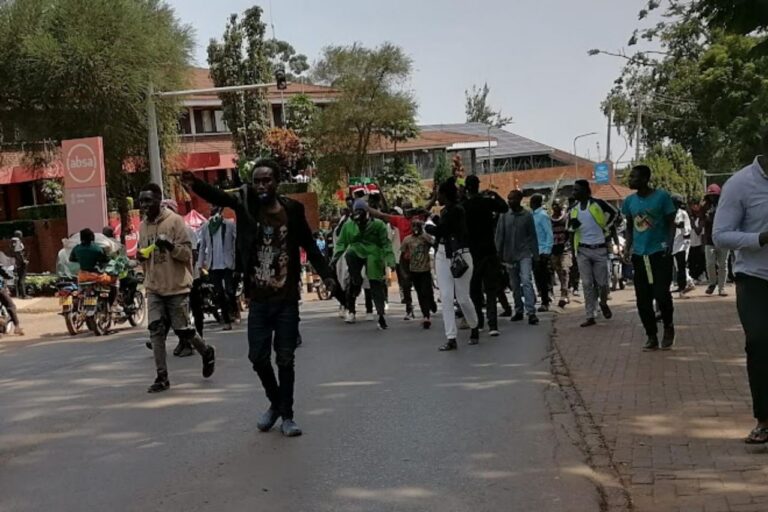
POLICE in Kenya have fired teargas on some citizens who took to the streets to protest despite the country’s President William Ruto bowing to pressure and declining to sign the controversial Finance Bill.

On Thursday, June 27, the protesters returned to the streets demanding that the President and other leaders step down from their positions.

They claimed they no longer believed in the administration and it must quit.

“Forcing down a bad Bill was evil enough for us. It indicts the conduct of the leaders. Let them do us a favour and resign.

“Deploying the Armed Forces to quell riots in the streets marks a significant low for the Kenya Kwanza administration. If they have decided to deploy the Army, let them take over the management of the country and in 90 days we conduct a fresh election,” a protester said, according to Kenyan local media, The Star.

The ICIR reports that the protests in Kenya began about a week ago when citizens demanded Ruto’s resignation over a controversial Finance Bill at the country’s Parliament, which the citizens believed would hike taxes and worsen the already harsh economic realities.

Despite the killing of many citizens as a result of the protest and the President declining to sign the bill into law, the protesters still demanded a peaceful march to be held today, Thursday, in memory of those killed during the protest on Tuesday, June 25.

After the destructions and killings that trailed the protest on Tuesday, June 25, the President addressed the country the following day saying he would not sign the bill into law.

“Having reflected on the continuing conversation regarding the content of the Finance Bill 2024, and listening keenly to the people of Kenya who have said loudly that they want nothing to do with this Finance Bill 2024, I concede, and, therefore, I will not sign the 2024 Finance Bill,” he said.

He added that following the bill’s passage by the Parliament, the country experienced widespread dissatisfaction, regrettably resulting in the loss of lives, the destruction of property, and the desecration of constitutional institutions.

During the nationwide protests on Tuesday, the protesters set a part of the Parliament on fire, while lawmakers were inside passing reviews to increase taxes.

In a chaotic scene, the protesters outnumbered the police, chasing them away as they sought to enter the Parliament premises in Nairobi, the country’s capital.

Several other cities and towns across Kenya witnessed protests and clashes, with many citizens demanding Ruto’s resignation and opposing tax increases.

Addressing the nation, the President noted that the debate on the tax had been “hijacked by dangerous people”, describing the intrusion into Parliament as an act of treason and vowed to take action against the organisers and financiers of the protests.

In Nairobi, police resorted to firing when tear gas and water cannons proved ineffective in dispersing the crowds after they succeeded in driving protesters away from the Parliament Building, and lawmakers were evacuated through an underground tunnel.

Also, the country’s Defence Minister, Aden Duale, stated that the Army had been called in to assist the police in handling a “security emergency” that had led to the “destruction and breaching of critical infrastructure”.

ECOWAS donates $2m to Red Cross, WFP to support flooding, insecurity victims

0

THE Economic Community of West African States (ECOWAS) has donated $2 million to the Red Cross and World Food Programme (WFP).

The fund is to support victims of flooding in Nigeria in 2022, and those who faced violence in 2023.

“The ECOWAS Commission is set to provide financial assistance, including $906,205 for flood disaster relief in Nigeria from 2022 and $1,000,000 to support victims of violence in Nigeria in 2023. These funds aim to help stabilise the affected individuals,” said the ECOWAS Commissioner for Human Development and Social Affairs, Fatou Sarr.

The cheques containing the funds were presented to the WFP and the Nigeria Red Cross Society at a brief ceremony at the Federal Ministry of Humanitarian Affairs and Poverty Alleviation in Abuja recently.

In her remark, Sarr said ECOWAS had reaffirmed its dedication to alleviating the suffering of people impacted by humanitarian crises.

The Nigerian Red Cross which aims to reach 3,500 households in Adamawa, Anambra, Oyo, Kebbi, Kogi and Rivers states got a cheque of $906, 205.

The Red Cross is also expected to provide 12 water boreholes with the fund to ensure access to clean water, thereby reducing the risk of water-borne diseases in selected communities.

According to the director for disaster management of the Nigerian Red Cross, Benson Agbro, the support exemplifies their shared commitment to humanitarian principles and the well-being of citizens.

“It is a testament to what we can achieve through collaboration and solidarity. Together, we are not just responding to a disaster; we are building a foundation for a more resilient and prosperous future for our nation,” he stated.

Sarr also presented a cheque for $1 million to the deputy country director of the WFP, Guy Adoua.

Adoua said the partnership would continue to deliver essential food, nutrition and resilience-building support to the communities in Katsina and Sokoto states and strengthen state government institutions and programmes for greater sustainability.

“ECOWAS and the Government of Nigeria have once again demonstrated their unwavering commitment to the welfare of the people with a generous contribution. Together, we are creating sustainable solutions that will ensure long-term food security and resilience in the region,” Adoua stated.

In the project to be implemented by WFP, over 14,000 people will receive food and nutrition assistance for six months.


Transfer my money laundering case to Kogi, Yahaya Bello tells court

0

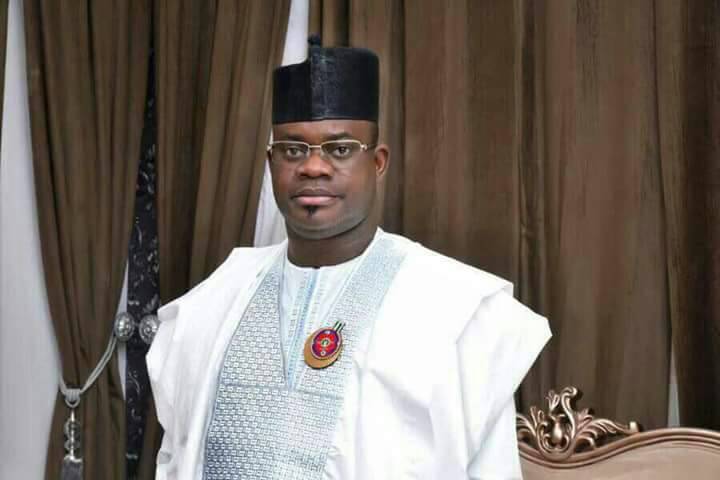
THE former governor of Kogi State, Yahaya Bello, has told a Federal High Court (FHC) sitting in the Federal Capital Territory (FCT) to transfer his case with the Economic and Financial Crimes Commission (EFCC) to Kogi State.

Bello, currently facing a 19-count charge, wrote to the Chief Judge (CJ) of the FHC, John Tsoho, pleading to be allowed to face his trial in Kogi.

The former governor argued that only the Lokoja Division of the High Court had the jurisdiction to consider the accusations made against him by the EFCC.

At the resumed proceeding on Thursday, June 27, Bello, who failed again to appear before the court, sent the letter through his legal team, led by Abdulwahab Mohammed, a senior advocate, as he entered his plea to the charge.

A lawyer who announced his appearance for Bello, Adeola Adedipe called the attention of the trial judge, Emeka Nwite, to the letter his client had sent to the CJ.

“However, I was made to understand that a letter had been written on behalf of the defendant to the honourable Chief Judge of the Federal High Court requesting in substance, that this matter be administratively transferred to the Federal High Court, Lokoja Judicial Division, which we believe has territorial jurisdiction to handle this matter.

“My lord, as of this morning, I am not aware whether there has been a response by the prosecution team in compliance with the directive of the CJ.

“We are also not in receipt of any decision that has been made on this request by the CJ.

“I am also aware that this administrative directive of the CJ has been formally communicated to this court,the lawyer stated.

Responding, the EFCC lawyer, represented by Kemi Pinheiro, a senior advocate, urged the court to order the defence lawyer to explain the defendant’s non-appearance in court despite his assurance on June 13 to guarantee his presence in court for arraignment.

He prayed the court to dismissthe story of the defence lawyer as dilatory and a further attempt to treat this court with scorn.”

Pinheiro claimed that the commitment made by the senior lawyer was not fulfilled by the letter to the CJ.

The counsel for the EFCC further contended that filing of a petition against a judge with the National Judicial Council (NJC) does not halt the judge’s caseload from moving forward.

As a result, he requested that the court invite the two senior lawyers representing Bello to justify not being charged with contempt of court.

The EFCC lawyers insisted that the court dock the defendant’s lawyer for failing to produce the former governor after five sittings and make him a scapegoat.

The ICIR reported that Bello, who governed Kogi State for eight years, is accused of money laundering, breaching trust, and embezzling N80.2 billion worth of public fund.

The EFCC accused the former governor of money laundering allegedly perpetrated in connivance with his nephew, Ali Bello, and two others, Dauda Suleiman and Abdulsalam Hudu.

Bello insisted that when the EFCC filed the allegation against him and requested the issuance of a bench warrant for his arrest, it was acting in violation of an existing ruling from a Kogi State High Court.

The ICIR reported that the Federal High Court Abuja refused to revoke the arrest warrant on Bello’s corruption case filed against him.

The judge, Nwite, gave the ruling on Friday, May 10, after hearing an application by the EFCC that preliminary objections by the former governor should not be heard until he shows up to defend the 19-count charge filed against him.

Bolivia’s President slams coup attempt, orders Army General’s arrest

BOLIVIA’s President Luis Arce has slammed a coup attempt against his government as soldiers and armoured military vehicles pulled away from surrounding government buildings in La Paz.

On Wednesday, June 26, military troops led by the country’s Army Commander, Juan José Zúñiga, gathered around the presidential palace with a tank slammed at the palace doors.

Addressing the country, Arce said his government would be “firm” in its opposition to any coup attempt and urged Bolivians to stand “in favour of democracy”.

Zuñiga, who was earlier stripped of his position as the country’s Army Commander confronted the President and rejected his order that he withdraw the troops.

He told reporters that the military sought to install a new cabinet and “restore democracy.”


Read Also:

Kenyan protests: despite killings, protesters call for march on Thursday

Kenya’s President Ruto declines to sign controversial Finance Bill

Anti-democratic policies in ECOWAS could trigger coups, experts warn


The President, however, appointed new commanders of the Army, Navy and Air Force, who instructed their personnel to return to their units.

The officers retreated from the government palace.

Zuñiga alongside a cabinet member, Eduardo del Castillo, were arrested.

In a news conference, the Bolivian Defence minister, Edmundo Novillo, said the Armed Forces were “under control.”

“We now have total and absolute control over our Armed Forces. Everything is under control now. We urge the population that everything goes back to normal,” he said.

Both the Bolivian government and other world leaders condemned the coup attempt with the Bolivia’s Attorney General’s office stating that Zuñiga and “all the other participants” in the incident were the subject of a criminal investigation.

The recent political clash in Bolivia occurs as hostilities increase over leftist former President Evo Morales’ hopes to challenge former ally Arce in general elections next year.

MDAs owing electricity bill drag power reforms despite N5bn budget approval

MINISTRIES, departments, and Agencies (MDAs) of the government indebted to distribution companies over electricity charges are dragging down Nigeria’s power sector reforms despite the approval of N5bn electricity in the 2023 financial year, findings have shown.

Findings by The ICIR have shown that the federal government approved a total of N5.01 billion for payment of electricity charges for 11 Ministries, Departments, and Agencies (MDAs) in the 2023 fiscal budget.

These debts by the MDAs have huge impacts on Nigeria’s power sector crisis, prompting the  Federal Government’s borrowing of about $1.5 billion from the World Bank to put the power sector on the right trajectory.

These loan facilities would be paid for eventually, despite the ‘payment delinquency’ by the various debtor MDAs, which is already affecting investments in power sector infrastructure.

“I’m worried about the MDA debt to the tune of over N5 billion, because looking at it from the perspective of the policymakers, I mean the policymakers manning various debtor ministries don’t have respect for their policy. In that respect, how would an investor take you seriously?,” the CEO of Sage Consulting and former corporate spokesperson of AEDC, Oyebode Fadipe told The ICIR.

“If the Ministry of Power, or Ministry of Finance is not paying, they don’t have the moral right to tell the man and the woman living in the suburbs to pay. They are not setting a good example. Payment delinquency is affecting the market in a tough way. The over N5 billion fee is an accumulation of several months. It means they have not been paying for months.

“The payment delinquency of MDAs affects Nigeria’s power sector market. How do you want an investor to take us seriously, when there is payment delinquency from the MDAs that should pay? The DisCos are the revenue collector agents of the market. Whatever the Disco collects is shared among the market value chains, “he further said.

He stressed that the over N5 billion debt is affecting the market and investment into the power sector infrastructure.

“If the debts continue like this, how would the other players in the power sector value comprising of the transmission companies  and the gas generation companies won’t have funds to run the sector and invest in electricity infrastructure,” he added.

Many government agencies are indebted to operators in the power sector, a situation energy analysts affirm is negatively impacting the sectoral liquidity flow and operational growth of the power sector.

Notably, most of the support commitments to the Nigerian power sector from the World Bank and the African Development Bank are largely hinged on addressing liquidity concerns and efficient market reforms.

If Nigeria’s power sector continues to incur debts, analysts say Nigeria stands the risk of losing some of the funding support from global lending bodies due to a lack of sustainable reforms.

The debts from the MDAs have also had negative impacts on Discos upgrading their power infrastructure such as transformers and cables because of poor financial records and losses.

“Market reforms are key if we progress in the power sector. MDAs shouldn’t be owing electricity debts, it is not a good sign for the market and the investors, “a power sector governance expert, Chuks Nwani told The ICIR.

The notice for the MDA debts reportedly read, “This is to inform the general that AEDC will disconnect all customers with outstanding electricity bills on June 3, 2024.

“Timely payment of electricity bills is crucial for the continued operation and enhancement of AEDC’s infrastructure, ensuring we can deliver efficient and reliable service to our community.”

Some of the affected MDAs include the Nigeria Army, the Nigeria Airforce, the Defence Headquarters, the Nigeria Police Force (HQ), the Office of the Secretary to the Government of the Federation (SGF), the Ministry of Industry, Trade and Investment, and the Ministry of Women Affairs. 

MDAs with electricity dept
Nigeria Army
Nigeria Airforce
Defence Headquarters (HQ)
Nigeria Police Force HQ
Office of the Secretary to the Government of the Federation
Ministry of Women Affairs
Ministry of Industry, Trade and Investment
Ministry of Interior
Ministry of Water Resources
Ministry of Finance
Ministry of Works

Table showing some of the MDA’s accused of not paying electricity bill.

Others are the Ministry of Interior, the Ministry of Water Resources, the Ministry of Finance, and the Ministry of Works. 

Findings from the 2023 approved budget showed that the security agencies, Army, Police, and Defence HQ, received the highest electricity allocation amidst the 11 MDAs survey. (See the breakdown below).

MDAs Approved electricity bill
Nigeria Army 2,224,024,258
Nigeria Airforce 1,893,758,694
Defence Headquarters (HQ) 236,600,758
Nigeria Police Force HQ 344,375,281
Office of the Secretary to the Government of the Federation 163,239,064
Ministry of Women Affairs 5,000,000
Ministry of Industry, Trade and Investment 548,655
Ministry of Interior 6,504,616
Ministry of Water Resources 1,000,000
Ministry of Finance 121,000,000
Ministry of Works 15,062,356
Total 5,011,113,682

Table showing the breakdown of electricity charges approved in the 2023 budget 

A recurring complaints

Although, the AEDC did not state how much each of these MDAs owed, several media reports have indicated that some MDAs, as far back as 2017, have been notorious for owing electricity charges worth billions, despite the federal government’s yearly allocation. 

In September 2021, The ICIR reported that some MDAs owe distribution companies (DISCOs) up to N202 billion. The MDAs’ debts were classified into N48 billion verified debts and  N61 billion unverified debts. However, the amount did not include the estimated N93 billion owed by Armed Forces and Security Agencies in Nigeria.

In another report, in 2021, the electricity charged owed by the MDAs and para-military was pegged at N90 billion.

Meanwhile, there was a subsequent report that the federal government earmarked N40 billion to clear the electricity bill for these MDAs. But with the recent statement by AEDC, there are concerns about whether the payment has been made with a threat to cut power supply to MDAs.

Recall that in February 2024, AEDC had threatened to disconnect 84 MDAs over an unpaid debt of N47.1 billion. 

Some of the MDAs include the Ministry of Finance, Information, Budget, Works and Housing, barracks, Nigeria Police Force, Presidential Villa, CBN Governor, Economic and Financial Crimes Commission (EFCC), Federal Inland Revenue Service (FIRS), Federal Airports Authority of Nigeria (FAAN), state liaison offices in the Federal Capital Territory (FCT) and others. 

In most cases, rather than pay up, the MDAs have employed a strategy of disputing the debts and calling for audits and reconciliation of bills over several years.

Consequently, the DISCOs owe other power sector stakeholders and have transferred the cost to ordinary citizens through estimated billing and other unfair practices.

Government, AEDC keep silent 

To verify if the allocation was made to the MDAs, The ICIR checked the Budget Implementation Report (BIR) for 2023. Although only the first quarter BIR document has been published, nothing in the documents suggests if the allocation was paid or not.

The ICIR  also checked the Office of the Accountant General of the Federation website for the financial statement of the federal government with respect to recurrent expenditure. The last Consolidated General Purpose Financial Statements published was for 2020.

However, The ICIR  reached  out to the AEDC’s official spokesperson, Adefisayo Adesanya, to verify the total debt owed by the MDAs, whether the disconnection has been effected, and if there has been any response from the MDAs to clear their debts.

Adesanya said, “I am in a meeting and  would get back to the report”. after calling repeatedly, she did not respond to the calls and did not revert on the inquiry about possible disconnection of debtor MDAs.

Dangote confirms fire incident at refinery

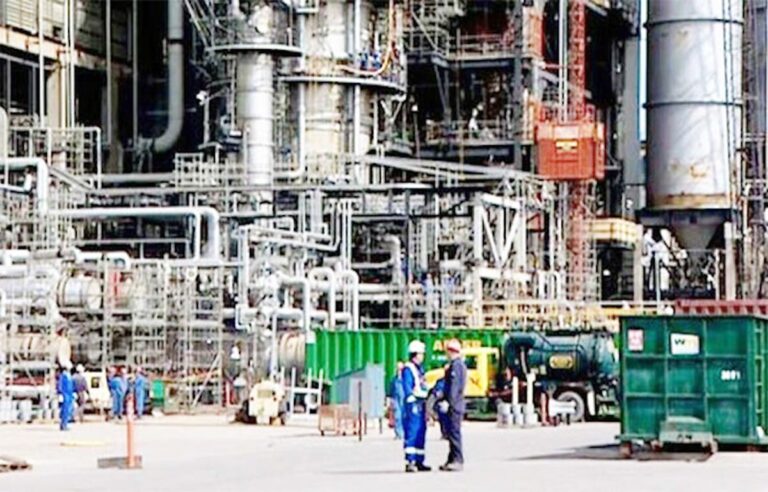
THE Dangote Group has confirmed a fire incident that gutted a section of the Dangote Petroleum Refinery on Wednesday, June 26.

The group chief branding and communications officer at Dangote Industries Limited, Anthony Chiejina, confirmed this in a statement to The ICIR.

He said the incident occurred at the effluent treatment plant (ETP).

An ETP is a type of wastewater treatment method which is specifically designed to purify industrial wastewater for its reuse — to release safe water to the environment from the harmful effects caused by the effluent.

“We have swiftly contained a minor fire incident at our effluent treatment plant (ETP), today Wednesday 26th of June.

“There is no cause for alarm as the refinery is operating and there is no recorded injury or body harm to all our staff on duty,” Chiejina stated.

Dangote refinery commenced production of diesel and aviation fuel in January this year.

The company has also set out plans to commence production and sales of petrol products to Nigerian oil marketers after encountering earlier delays.

While the production of petrol will start from July 10 to 15 July, Dangote refinery said it would keep the product in its tank to ensure it settles before selling it to the marketers.

The company had assured that by the third week of July, it would be begin to take the petrol product to the market.

The ICIR reports that the 650,000 barrels per day (bpd) capacity Dangote refinery was inaugurated by former President Muhammadu Buhari in May 2023.

Climate Peer Network for Journalists seeks entries

The Solutions Journalism Network (SJN) is inviting applications to its Climate Peer Network, a community of practice for journalists who want to learn from and support one another in reporting on the climate crisis through a solutions lens.

This peer network is an open space for members to discuss challenges and opportunities and share best practices in climate solutions journalism.

Journalists reporting on the climate crisis can apply.

Members participate in monthly Zoom sessions with guest speakers and gain access to a variety of trainings, including SJN Climate Primers.

Online meetings will be held on the second Thursday of every month.

The organiser says, “Solutions Journalism Network is leading a global shift in journalism focused on advancing rigorous reporting about how people are trying to solve problems and what we can learn from their successes and failures”.

The application is rolling, kindly apply now here.

Kenya’s President Ruto declines to sign controversial Finance Bill

0

FOLLOWING the nationwide deadly protests in Kenya, the country’s President William Ruto has bowed to pressure, declining to sign the controversial Finance Bill.

While addressing the nation on Wednesday, June 26, the President noted that he had reflected on the conversations regarding the bill and listened to the voices of the people.

“Having reflected on the continuing conversation regarding the content of the Finance Bill 2024, and listening keenly to the people of Kenya who have said loudly that they want nothing to do with this Finance Bill 2024, I concede, and, therefore, I will not sign the 2024 Finance Bill.

“Following the passage of the bill, the country experienced widespread expression of dissatisfaction with the bill as passed, regrettably resulting in the loss of lives, the destruction of property and desecration of constitutional institutions,” he said.

According to a Kenyan news organisation, Star, the bill has also been sent back to the Parliament and the President has proposed a raft of amendments to the bill.

The Parliament may amend the bill in light of the President’s reservations or pass it a second time without amending it.

However, if Parliament members amend the bill and fully accommodate the President’s reservations, the Speaker shall resubmit it to the President for assent.

But if the House does not consider the President’s reservations, it may pass it a second time, without amendment, or with amendments that do not fully accommodate Ruto’s reservations. This must have been supported by two-thirds of the members.

The ICIR reports that some Kenyan citizens protesting against the bill stormed the country’s Parliament on Tuesday, June 25, setting a part ablaze while lawmakers were in session.

The protest, according to Kenya’s medical association, led to the death of 13 persons.

Reports showed that at least 160 people were injured during the nationwide protest.

ACOS Alliance offers safety training course for journalists

THE ACOS Alliance, in partnership with IREX, is inviting applications to its East Africa Safety Training 2024 for local and freelance journalists.

In line with the ACOS Alliance safety principles, the course is designed to help journalists who face risks and safety challenges in their work to be better prepared.

The training will focus on digital security, psychological safety, and first aid, taught by an experienced and qualified medic. The course will be in English.

The course will take place in Nairobi, Kenya from August 7, 2024, to August 9, 2024.

Local freelance journalists based in East Africa can participate in a three-day safety training course.

Twelve participants will be selected for the training. The programme will cover the course fees, meals and accommodation for participants.

A limited number of travel grants are available for participants based outside of Kenya.

The deadline for the submission of application is July 5, 2024.

Interested applicants can apply here.

Highlights of Afrobeats star, Davido’s wedding to Chioma

NIGERIANS are still basking in the euphoria of the fanciful wedding of Afrobeats sensation David Adeleke, popularly known as Davido, and his wife, Chioma.

The ICIR reported that the artiste, on Tuesday, June 25, tied the knot with his longtime lover, Chioma, at Habour Point Centre, Lagos State.

The event was graced with high-profile politicians and businessmen, and prominent figures from the entertainment industry, including fellow musicians, actors, and other socialites.

Among the dignitaries were, former president Olusegun Obasanjo, Osun State Governor Ademola Adeleke, Lagos State governor, Babajide Sanwo-Olu Oni of Ife, Oba Adeyeye Enitan Ogunwusi, Ojaja II, Ogun State Governor, Dapo Abiodun, Abia State Governor, Alex Otti, immediate past governor of Akwa Ibom state, Udom Emmanuel, and a host of many others.


Read Also:

Davido, Ayra Starr congratulate Tyla after Grammy’s win

Obasanjo, Gov Adeleke, other dignitaries arrive Davido, Chioma’s wedding venue

SEC warns Nigerians against high risk of investing in $Davido’s coin


The ceremony was also a meeting point for opposition parties who buried their differences to celebrate with the couple.

Also at the event were top celebrities including Don Jazzy, P-square, Iyanya, Perruzzi, Ini Edo, Ruth Kadiri, Lilian Esoro, Diane Russet, Ebuka Obi-Uchenndu who was also the host at the event, among others.

Highlights of the ceremony were music performances by some artistes including, King Sunny Ade, Olamide, Chike, Fireboy, Mayorkun, Zlatan, Nasboi, Dremo, and Kcee. The event got to its peak after Davido gifted his wife a brand-new car.

During the ceremony, Davido, while chatting with friends shared a vision his father, Adedeji Adeleke, had about his music career.

“In the morning, daddy would say, “Davido, I had a vision about you”, the singer recounted. “What vision?” he said he would ask. “I had a vision that you ended your music as a gospel singer,” he said the father would reply.

Besides, the singer thanked his in-laws for entrusting him with their daughter, vowing to make them proud and honour their trust. “It is a lifetime assurance. Your daughter will be protected, respected, and connected. Mummy and Daddy, I love you, I am happy on this day, and this is the happiest day of my life”, Davido declared.

Other highlights of the wedding have been the trending hashtag #CHIVIDO2024 on social media, while congratulatory messages and video clips from the party have been shared widely on various platforms by fans and well-wishers.