SIX students have reportedly drowned in the Mbang river in Ribang village, Kauru Local Government Area, Kaduna State, while returning from a Junior West African Examinations Council (WAEC) exam.
According to Punch Newspaper, the incident happened on Tuesday at about 5:30 p.m.
The cusualties, who were students at Government Secondary School Fadan Chawaiwere were identified as Manasseh Monday (16), Musa John (16) Monday Ayuba (16), David Danlami (19), Yahuza Audu (16) and Pius David (15).
According to the National Public Relations Officer of the Ribang Development Association, Simon Ishaku, a cleric, who confirmed the tragedy to PUNCH on Wednesday, three dead bodies have already been retrieved and buried amid tears.
He clarified that the three missing victims had yet to be retrieved.
“The Mbang river has been a death trap for our people over the years,” noting that before the community can access any school or any hospital facility, they will travel for about eight kilometres.
“We’re calling on the Federal Government, Governor Uba Sani, Senator Sunday Katung and our House of Representative members as a matter of urgency, to kindly assist us with school, hospital, access road and bridge in order to bring succour to our community,” Simon pleaded.
The Kaduna State Police Public Relations Officer, Mansir Hassan, did not respond to calls and messages sent to him when filing this report.
The ICIR reported in August 2022 that four students of Kuramo Senior College, Lekki, who were celebrating the completion of their exams, drowned in Elegushi Beach in the Lekki area of Lagos State.
The incident occurred when ten secondary school leavers, aged 14 to 15 years, went to the beach to celebrate the completion of their West African Senior School Examination (WASSCE).
THE former Governor of Kaduna State, Nasir El-Rufai, has sued the state House of Assembly over allegations of money laundering and abuse of office against him.
The Assembly accused El-Rufai’s eight-year administration of allegedly siphoning ₦432bn leaving the state with huge debt liabilities.
The former governor filed a fundamental rights suit at the Federal High Court in Kaduna against the Assembly on Wednesday, June 26.
The suit was filed by his lawyer, Abdulhakeem Mustapha, a senior advocate.
El-Rufai in the lawsuit asked the court to declare the Assembly probe report void because he was not given a fair chance to address the accusations the committee made against him and his administration.
He asked the court to assert that by the provisions of Section 36 of the Constitution of the Federal Republic of Nigeria, 1999, the Report of the Ad-Hoc Committee on Investigation of Loans, Financial Transactions, Contractual Liabilities and Other Related Matters of the Government of Kaduna State from 29 May 2015 to 29 May 2023, as ratified by the Kaduna State House of Assembly, is unconstitutional and therefore null and void for violating his right to fair hearing as ensured under the Constitution.
The Kaduna State House of Assembly, the State Attorney General, and the Commissioner of Justice were joined as respondents in the suit.
The ICIR reported that the State House of Assembly recommended that El-Rufai be prosecuted over allegations of money laundering and abuse of office.
According to a report, this occurred on Wednesday, June 5, after an ad-hoc committee set up to investigate the allegations submitted its report.
The committee was led by its chairman, Henry Zacharia.
Its findings revealed that several loans obtained by the Kaduna government under El-Rufai’s administration were not used for intended purposes.
The committee also reported that due process was not followed in securing some of the loans, and in awarding certain contracts.
Some of El-Rufai’s cabinet members were also indicted in the report.
Upon receiving the report, Speaker of the Kaduna House of Assembly, Yusuf Liman, said El-Rufai’s government siphoned N423 billion.
In March, Kaduna Governor Uba Sani blamed El-Rufai for the state’s debt and his government’s inability to pay salaries, despite helping to secure some of the loans that contributed to this while representing the state at the Senate.
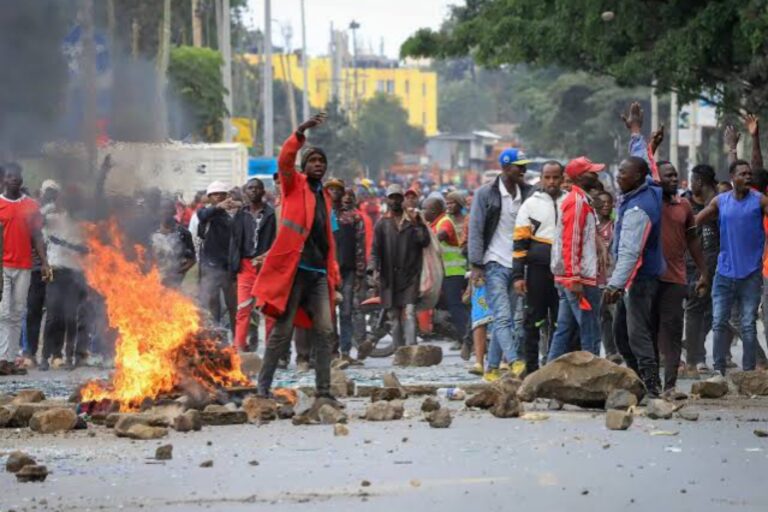
DESPITE the killing of at least 13 persons in the anti-tax protests held in Kenya on Tuesday, June 25, protesters have demanded that a peaceful march be held on Thursday, June 27.
The march is to be held in memory of those killed on Tuesday, according to a post on X by Hanifa Adan, described in a report by Aljazeera as one of the organisers of the demonstration.
“All sovereign power belongs to the people of Kenya. You cannot kill all of us. Tomorrow, we march peacefully again as we wear white, for all our fallen people. You will not be forgotten!!!” Adan posted.
Protests began in Kenya about a week ago when citizens demanded President William Ruto’s resignation over a finance bill at the country’s Parliament, which the citizens believe will hike taxes and worsen the already harsh economic realities.
The police used tear gas and water cannons to disperse the protesters, but the demonstrations turned deadly on Tuesday after youths gained entrance into the Parliament.
A part of the Parliament was set ablaze while lawmakers were in the building. The protesters also outnumbered the police, forced their way into the premises and sent the lawmakers fleeing.
Following the development, the Kenyan police opened fire on the protesters.
The ICIRreported that five people had been killed, but the death toll has risen to 13 according to Kenya’s medical association.
Aljazeera also reported that hospital officials said 160 people were being treated for injuries sustained during the protest.
Apart from the country’s capital, Nairobi, other Kenyan cities and towns witnessed protests and clashes, with many citizens expressing objections to the tax increases.
Ruto reacted to the situation in a broadcast on Tuesday, describing the intrusion into Parliament as an act of treason and vowing to take action against the organisers and financiers of the protests.
“It is not in order, or even conceivable that criminals pretending to be peaceful protesters can reign terror against the people.
“I hereby put on notice the planners, financiers, orchestrators, and abettors of violence and anarchy that the security infrastructure established to protect our Republic and its sovereignty will be deployed to secure the country and restore order and normalcy, Ruto said.
THE Central Bank of Nigeria (CBN) has opened new measures for eligible International Money Transfer Operators (IMTOs) to access naira liquidity to settle diaspora remittances.
This move is expected to increase the dollar supply in Nigeria’s foreign exchange market and solve Nigeria’s currency problems.
The apex bank disclosed this in a circular on Monday, June 24 signed by its Acting Director of Trade and Exchange Department, W.J. Kanya, stating that the measures come immediately.
It said IMTOs would now have direct access to naira liquidity through the CBN’s window via their Authorised Dealer Banks (ADBs) to execute foreign exchange transactions in the market.
The initiative is designed to widen access to local currency liquidity, ensuring smoother and more efficient settlement processes for remittances.
It outlined specific compliance measures to ensure the effective operation of the initiative.
It said transactions executed before noon on a trading date would be settled on the same day and also that pricing on the CBN portal would mirror the Nigerian Autonomous Foreign Exchange Fixing (NAFEX) traded rates, which are based on an acceptable market benchmark.
“The operation of the segment will follow the existing arrangements in place for authorized dealers involved with foreign portfolio investment in primary market securities auctions,” CBN further outlined.
It added that all participants were required to submit daily regulatory returns to the apex bank which must include all relevant information on the sources of funds.
According to the apex bank, the key participants in the segment include the IMTOs, authorized dealer banks, and the CBN.
Earlier in May, the CBN granted 14 new IMTOs approval in principle (AIP) to double foreign currency remittance inflows through formal channels.
The ICIR reports that IMTOs carry out cross-border fund transfer services for individuals and entities residing abroad to recipients in Nigeria while AIP is a conditional acceptance of a proposal subject to meeting other requirements for final approval.
“This will spur liquidity in Nigeria’s Autonomous Foreign Exchange Market (NAFEX), augmenting price discovery to enable a market-driven fair value for the naira,” said Hakama Sidi Ali, CBN’s Acting Director of Corporate Communications, while announcing the new plan in a statement.
In April, the CBN issued specific guidelines on IMTO services, including minimum capital requirements and prompt repatriation of export proceeds, The ICIRreported.
Also, the CBN Governor, Olayemi Cardoso, hinted at the apex bank’s target to double remittance flows into Nigeria within a year.
“We are wasting no time driving progress to remove any bottlenecks hindering flows through formal channels permanently. We have a determined pathway and a sequenced approach to tackling all challenges ahead, working hand in hand with key stakeholders in the remittance industry,” he said.
A check on the CBN website shows that Nigeria recorded $282.61 million in direct foreign exchange (FX) remittances in the first quarter (Q1) of this year, compared to the $301.57 million remittances recorded in Q1 2023, representing a decline of $18.96 million or 6.28 percent.
The ICIR reports that Nigeria’s direct foreign exchange remittance refers to money transfers from Nigerians to family members or other individuals in the country.
ATLEAST five persons have died and many others injured in Kenya following the invasion of the country’s Parliament by protesters.
The protesters on Tuesday, June 25, set a part of the parliament on fire, while lawmakers were inside passing revisions to increase taxes.
In a chaotic scene, the protesters outnumbered the police, chasing them away as they sought to enter the Parliament premises.
Citizen TV (a Kenyan broadcast media) displayed the damage inside the Parliament building, which had been partially engulfed in flames.
Several other cities and towns across Kenya witnessed protests and clashes, with many citizens demanding the resignation of the country’s President, William Ruto, and expressing their objections to the tax increases.
Addressing the nation, the President noted that the debate on the tax had been “hijacked by dangerous people”, describing the intrusion into parliament as an act of treason and vowed to take action against the organisers and financiers of the protests.
“It is not in order, or even conceivable, that criminals pretending to be peaceful protesters can reign terror against the people.
“I hereby put on notice the planners, financiers, orchestrators, and abettors of violence and anarchy that the security infrastructure established to protect our Republic and its sovereignty will be deployed to secure the country and restore order and normalcy, Ruto said.
In Nairobi, police resorted to firing when tear gas and water cannon proved ineffective in dispersing the crowds after they succeeded in driving protesters away from the parliament building, and lawmakers were evacuated through an underground tunnel.
Also, the country’s Defence Minister, Aden Duale, stated that the Army had been called in to assist the police in handling a “security emergency” that had led to the “destruction and breaching of critical infrastructure”.
According to the Kenya Medical Association, at least five people had died while tending to the wounded and 31 people injured while 13 were shot with live bullets and four others with rubber bullets.
The association urged the government to create secure medical lanes and safeguard medical personnel and ambulances.
THE Police Service Commission (PSC) has denied cancelling the recently concluded 2022 recruitment into the constable cadre of the Nigeria Police Force (NPF).
The PSC said the recent hitch arose from a routine maintenance of its portal containing the list of successful candidates for the exercise.
The commission also disassociated itself from a statement circulating in social media alleging that it has surrendered to pressure and cancelled the final list of successful candidates.
This was disclosed in a statement on Tuesday, June 25, signed by the commission’s spokesperson, Ikechukwu Ani.
Ani said the PSC was in control of the situation and had since restored the recruitment portal with its original contents.
He urged successful candidates to ignore what he termed deliberate antics of desperate groups bent on destroying the good work of the commission.
The commission noted that it would continue to ensure that federal character, gender sensitivity and merit are the bedrock of its recruitment process.
“The commission calls on this disgruntled element to desist further from undermining the recruitment exercise as anyone caught will be dealt with.
“The commission restates that the portal is now fully functional and accessible. Candidates can now log in and access all its features without any disruptions. The commission regrets the hitches and assures that it has fully secured the platform.” the statement added.
The PSC and the Nigeria Police Force (NPF) have been in at daggers drawn following the NPF’s accusations that the commission’s recruitment process was marred by irregularities.
The ICIR reported on Friday, June 21, that the PSC challenged the Inspector-General of Police (IGP), Kayode Egbetokun, to provide evidence of allegations that the recruitment exercise was marred by corruption.
Thiswas contained in a press release signed by Ani, on Friday.
Ani also noted that due process was followed during the exercise and demanded that a forensic audit be carried out on the list of successful candidates published by both organisations.
The PSC had released a list of successful candidates recruited into the NPF but the NPF rejected it, arguing that the PSC portal was scrutinised and several names released did not apply for the job and, therefore could not have emerged on the list.
The NPF dissociated itself from the list of candidates and called for a review.
However, the PSC’s Joint Union Congress (JUC) dismissed the allegations at a press briefing on Wednesday, June 19.
The Congress also alleged that elements within the Police Force attempted to smuggle over 1,000 names into the recruitment list.
FORMER President Olusegun Obasanjo and Osun State Governor Ademola Adeleke are among the dignitaries who have arrived at the venue of the wedding ceremony of award-winning singer, David Adeleke, popularly known as Davido, and his wife, Chioma Rowland.
Also honouring the artiste with their presence are the Oni of Ife, Oba Adeyeye Enitan Ogunwusi, Ojaja II, and the former governor of Akwa Ibom state, Udom Emmanuel.
The singer announced his wedding, holding today, Tuesday, June 25, at Habour Point Centre, Lagos State, across social media platforms.
Other celebrities in attendance include popular socialist, Obi Cubana, Ebuka Obi-Uchenndu, Craze Clown, Layi Wasabi, among others.
The wedding has been the talk of the town since the past weekend and much-talked about topic on social media with the hashtag #CHIVIDO2024 since the pre-wedding photos of the couple surfaced online.
Days before the artiste announced his wedding, he had filed a lawsuit against the mother of his first child, Sophia Momodu, seeking custody of their daughter, Imade.
Responding to the lawsuit, Momodu, denied the accusations made by the singer against her, claiming he abandoned their daughter.
Meanwhile, veteran journalist, Dele Momodu, who is also an uncle to Sophia Momodu has taken to his official X account to congratulate Davido and his partner on their big day.
“On behalf of the Momodu family of IHievbe, Edo State, I wish to send our heartiest congratulations to @davido and his lovely wife @chefchioma on this special day of their wedding. May God almighty bless the union and provide you with good health, more prosperity and unlimited happiness.” Momodu, he wrote.
DEPUTY Comptroller of Finance Administration and Technical Service at the Nigerian Customs Service (NCS) Esien Etop Andrew died at the National Assembly on Tuesday, June 25.
Andrew died while responding to questions resulting from the ongoing probe of revenue-generating agencies by the Public Accounts Committee of the House of Representatives.
According to a report, Andrew suddenly began to cough in the course of answering questions and slumped.
A statement by the spokesperson of the House of Representatives, Akin Rotimi, also confirmed the incident, although the the statement didn’t identify the deceased.
The statement disclosed that the official was immediately taken to the National Assembly clinic upon showing signs of distress.
“During the engagement, which occurred around 1.00 pm on Tuesday, June 25, 2024, the official developed sudden health complications. Despite the immediate and diligent efforts of first responders and medical personnel at the National Assembly Clinic, he unfortunately passed away,” Rotimi noted.
He conveyed the condolences of the Speaker of the House l, Tajudeen Abbas, to the deceased family.
“The House of Representatives stands ready to support efforts to understand the circumstances surrounding the incident and is cooperating fully with all relevant authorities to ensure all necessary protocols are followed,” the statement further read.
The ICIR reports that a customs official suddenly slumped and died in 2022 at the Aminu Kano Airport in Kano state, during an official engagement.
The official who was Comptroller, Trade Facilitation Unit of the Nigeria Customs Service, Anthony Ayalogu, suddenly took ill upon arrival at the airport and lost consciousness before his demise.
Recently, an officer of the NCSAbdulwahab Magaji, was found dead in his residence after reportedly committing suicide.
Magaji was reported to have shot himself to death in May 2024, and an alarm raised by members of his family prompted the police to arrive at the scene of the incident.
THE Miles Morland Foundation (MMF) is offering and inviting applications to its Morland Writing Scholarship, with an aim to allow each scholar the time to produce the first draft of a completed book.
Scholars writing fiction will receive a grant of GBP18,000 – paid monthly over the course of 12 months. At the discretion of the foundation, scholars writing nonfiction, who require additional research time, could receive an additional grant, paid over a period of up to 18 months.
African writers working on fiction and nonfiction books can apply for a scholarship.
To qualify for the scholarship, candidates must submit an excerpt from a piece of work of between 2,000 to 5,000 words, written in English that has been published and offered for sale.
The deadline for the submission of application is September 20, 2024.
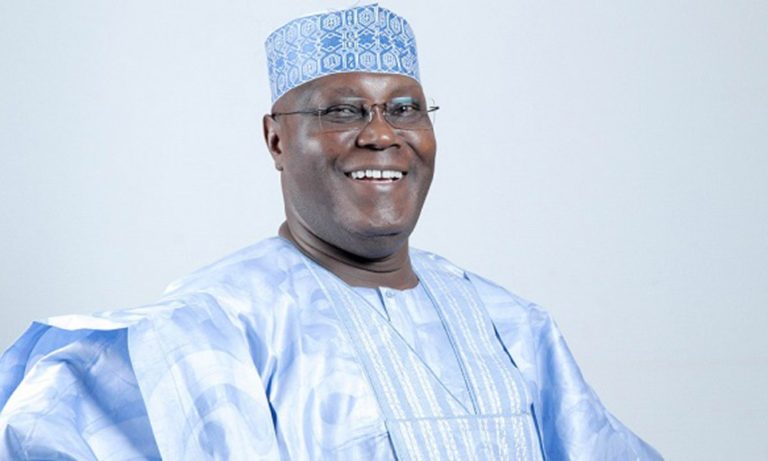
THE recent actions by Nigerian former vice president Atiku Abubakar have generated a lot of buzz in the political space with many asking if he is planning to contest for the presidency again in 2027.
The ICIR reported that Abubakar is the only politician in Nigeria who has sought the presidency the most times and has yet to win it.
The suspicion surrounding his interest in the presidency in 2027 followed his recent visit to three former presidents within the past week.
On Wednesday, June 19, he visited former military heads of state, Ibrahim Babangida and Abdulsalami Abubakar in Minna, the Niger State capital.
In a post on X, the Adamawa state-born politician said he visited the former military leaders at their residences to pay them a “Sallah homage”.
He also visited former President Muhammadu Buhari barely three days after he visited Babangida and Abubakar.
Atiku visited Buhari in Daura
Abubakar was the candidate of the Peoples Democratic Party (PDP) in the 2023 presidential poll.
He came second in the election, behind President Bola Tinubu of the All Progressives Congress (APC) and was trailed by the Labour Party (LP) candidate, Peter Obi.
Obi was his running mate in 2019 when they jointly sought the presidency on the PDP’s platform before parting ways in the build-up to the 2023 election.
In May, Abubakar hosted Obi in Abuja where they had a private discussion.
Also in May, the former vice president said the PDP would determine his fate in 2027, an indication that he is most likely to throw his hat in the ring again!
The ICIR reports that the recent visits have raised questions on Abubakar’s real intention with many suggesting they are part of consultations for the 2027 general election.
His supporters’ reactions on social media whenever he makes these visits are also instructive, with many of them hailing him as their next President.
According to The ICIR’s earlier report, Abubakar has had two more shots at the country’s most exalted office than former President Muhammadu Buhari, who ran four times before winning it.
Abubakar had contested for the top office for 31 years and had had his hopes dashed.
In the election conducted on February 25, 2023, he came second with 6,984,520 votes, behind Tinubu, who polled 8,794,726.
While he has failed in all six times he has contested for the seat since 1992, Tinubu only contested once and won.
It remains unclear if Nigerians will be willing to elect him in 2027, should he contest, because he would be 80 years old by then.
Atiku’s loss in the last election arguably stemmed from his rift with five aggrieved governors in his party and not jointly seeking the office with Obi as he did in 2019.
The ICIR reported how the crisis between Abubakar and the aggrieved governors in the PDP lingered weeks before the poll.
The former Rivers State Governor and current Minister of the Federal Capital Territory (FCT), Nyesom Wike, led the governors, known as G-5. Others were Okezie Ikpeazu (Abia), Samuel Ortom (Benue), Seyi Makinde (Oyo), and Ifeanyi Ugwuanyi (Enugu)
Wike had contested for the PDP’s presidential ticket and lost to Atiku in May 2022.
Since losing the 2023 poll, Atiku has emerged as one of the major critics of Tinubu’s administration.
In January, Atiku advised Tinubu to resign if he could not handle insecurity challenges in Nigeria.
Atiku said this in a post on his X handle, as the nation continued in its insecurity slide under the President.
He decried the numerous incidents of kidnapping and other attacks that had occurred across Nigeria in the past months.
The ICIR reports that Abubakar may ride on the wing of the current hardship, occasioned by the suspension of subsidy on petrol and other harsh economic policies of Tinubu’s government to stand as a major contender for the presidency in 2027 if he seeks the office for the seventh time.
Commenting on Abubakar’s recent moves, a PDP member, Dokun Ojumo, told The ICIR in a chat that he believed the politician’s efforts were geared towards contesting the 2027 presidential election.
According to Ojumo, Atiku’s chances will be very bright in 2027 if he hires a good media team to help him push his agenda.
“In 2023, his manifesto and intentions did not get to most people. He should go big on social media in 2027,” Ojumo stated.