Home Blog Page 564

Amid insecurity, Plateau approves N800m for covid-19, N3.5bn for lawmakers refreshment

1

DESPITE insecurity plaguing Plateau, the state government has appropriated a whooping 3.5 billion naira for the  State Assembly, to set up a refreshment and meals committee.

The government has also budgeted the sum of N800 million for COVID-19 despite the fact that the global pandemic which reared its head in 2020 has abated.

The Plateau State House of Assembly has 24 members representing 17 local government areas. If the N3.5 billion allocated for refreshments and meals is divided per head, it means each lawmaker will get N145.8million per year, their monthly allocation would amount to N12.15 million each while each of them would receive a weekly allocation of N2.8million.

A review of the state’s 2024 appropriation bill by The ICIR shows that the amount budgeted for the refreshments and meals in the approved budget is higher than the one approved in the 2023 budget and represents 1.2 per cent of the total budget.

In the previous budget, N1.05 billion was approved by the assembly for meals and refreshments, representing 0.5 per cent of the total budget.

The ICIR observed that the N295 billion budget, titled: “Budget of Restoration, Infrastructure, Human Capital Development and Promotion of Economic Growth,” consists of N157. 5 billion for recurrent expenditure, which represents 53.33 per cent of the total budget, and N137.8 billion for capital expenditure, representing 46.66 per cent.

The total size of the 2024 budget is N145 billion more than the 2023 approved budget, which was N149. 9 billion.

File Photo : Plateau state governor, Caleb Muftwang
File Photo  Plateau State Governor, Caleb Muftwang

According to the governor, the 2024 budget aimed to restore the state’s past glory in all its ramifications and salvage it from infrastructural decay.

Rising Insecurity in Plateau

Over the years, Plateau state, situated in the north-central region, had been battling insecurity as a result of the activities of bandits and terrorists.

On December 24, 2023, suspected gunmen reportedly killed over 70 people in an attack on several communities in the Barkin-Ladi and Bokkos local government areas (LGAs).

According to reports, the assailants attacked residences, looted farm produce, and set houses ablaze.

Earlier on January 24, it was reported that at least 15 people, mostly children and women, were killed by assailants in Kwahaslalek village, a community in the Mangu LGA of the state.

The ICIR gathered that Killings continued in the LGA despite a 24-hour curfew declared by the state government.


Speaker of the Speaker of the Plateau State House of Assembly, Gabriel Dewan
Speaker of the Plateau State House of Assembly, Gabriel Dewan

Despite all these security challenges bedevilling the state, the house went on to approve over N3.5 billion for refreshment and N800 million for abating COVID-19.

Channel money to insecurity – Budget expert

Many are questioning the appropriateness of these expenditures given the economic challenges facing the state and the nation.

Speaking on the amount allocated for refreshments and meals in 2024, the acting head of Open Government and Institutional Partnership, BudgIT, Iyanu Bolarinwa, called on the Plateau state government to look at areas of insecurity and channel the money into helping vigilantes.

According to the budget expert, because the police infrastructure in the state and across the country cannot currently guarantee adequate security, the money should have been channelled to boost the activities of local vigilantes.

“The entire framework for security across the country is weak, so we need the actions and responsibilities of our state vigilantes. The state must do well to empower them.

“We know that in the south-west right now, we have the Amotekun. In some states in the north, we have heard of different, uniformed local security personnel. I don’t know if we have that in the north central, but for the Plateau, we believe that it will be a welcome idea to have a state apparatus that caters for security,” he said.

On the amount budgeted for COVID-19, Bolarinwa said it sounds like a misplaced priority because, according to him, “At the current phase that we are, COVID-19 is not a priority. Apart from vaccinating people, I don’t think there are any other activities that really should take the attention of the government budgeting a lot of money to that particular area.”

He suggested that the money be directed to the state security outfit to fortify them.

“We should let them have all the equipment they need so they can keep the state secure from the areas of insecurity in the state,” Bolarinwa stated.

First Bank’s board approves Olusegun Alebiosu as CEO, others

THE board of First Bank of Nigeria Limited has approved the appointment of Olusegun Alebiosu as the managing director/chief executive officer (MD/CEO) of the bank subject to final approval from the Central Bank of Nigeria (CBN).

The parent company, FBN Holdings Plc disclosed this in a statement to the Nigerian Exchange Limited (NGX) on Wednesday, June 19.

It said the board of First Bank also approved the appointments of Ini Ebong as the deputy managing director and Omotunde Alao-Olaifa as a non-executive director, respectively.

The statement signed by the Acting Secretary of FBN Holdings, Adewale Arogundade, stated, “The Board approved the appointment of Mr. Olusegun Alebiosu as the substantive Managing Director/Chief Executive Director of FirstBank, subject to the approval of the Central Bank of Nigeria.”

“The Board approved the appointment of Mr. Ini Ebong as the Deputy Managing Director of FirstBank, subject to the approval of the Central Bank of Nigeria. The Board approved the appointment of Mr. Omotunde Alao-Olaifa as Non-Executive Director of FirstBank, subject to the approval of the Central Bank of Nigeria,” it added.

The ICIR reports that Alebiosu was appointed in an acting capacity on April  21 this year following the sudden resignation of the former CEO of FirstBank, Adesola Adeduntan.

Adeduntan resigned eight months before the expiration of his tenure which elicited concerns among stakeholders in the financial sector.

His resignation also raised concern about the adherence to the CBN corporate governance guidelines, The ICIR reported.

Meanwhile, Alebiosu became the group executive/chief risk officer of FirstBank in 2016 before being promoted to the position of executive director, chief risk officer, and executive compliance officer, which he held between January 2022 and April 2024.

Court scraps 33 Ondo LCDAs created by late Akeredolu

0

AN Ondo State High Court has nullified the creation of the 33 Local Government Development Areas (LCDAs) by the late Governor Rotimi Akeredolu.

The judge, Adegboyega Adebusoye, in his ruling, on Thursday, June 20, described the late governor’s action as illegal and unconstitutional.

Some leaders in the four Akoko Local Government Areas in the state – Akoko South-East, Akoko South-West, Akoko North-West, and Akoko North-East – had sued the state government, claiming that the region was marginalised during the formation of the LCDA by Akeredolu’s administration.

In his ruling, Adebusoye declared that Sections Seven and Eight of the 1999 Constitution (as amended) were not followed in creating the LCDAs.

He also ruled that there were no fair boundaries among the LCDAs.

Meanwhile, the leaders who filed the lawsuit on behalf of themselves and the residents of Akoko land under the registered trustees of Akoko Development Initiative (ADI) have applauded the court’s ruling voiding the creation of the LCDAs.

The litigants, including the state’s former House of Assembly Speaker, Bakitta Bello, Matthew Ofosile, and Lawal Rogbitan, signed a statement stating that the court’s ruling reflected the genuine intent of the law and the aspirations of the Ondo people.

They claimed to have observed the imbalance in the state’s Executive Council’s recommendation of July 2023 to the State House of Assembly for the establishment of the 33 LCDAs and petitioned the state Governor and the Attorney-General, requesting that the government address the injustices done to the Local Government Areas and the entire Akoko Land.

They expressed delight that their decision to seek the court’s intervention over the issue was fruitful.

Akeredolu assented to the bill creating 33 LCDAs in the state in September 2023.

He signed the bill a day after he returned from a three-month medical leave.

The state House of Assembly passed the bill for the creation of the 33 LCDAs on August 15 2023 after it passed the third reading.

Akeredolu described the creation of the LCDAs as a step towards fulfilling his campaign promises and addressing the aspirations of the people for enhanced grassroots development.


READ ALSO:


The local councils in the state became 51 when the established LCDAs and the 18 LGAs existed.

The ICIR reported that Akeredolu died in the early hours of Wednesday, December 27, aged 67 years.

His death came barely a year after he buried his mother, Lady Evangelist Grace Akeredolu.

The ICIR reports that Akeredolu battled leukaemia and had been incapacitated for several months, disrupting governance in the state.

Nigeria seeks 18-month extension for World Bank’s $800m palliative loan

THE Nigerian government has requested an 18-month extension for the $800 million World Bank palliative loan scheme as the country battles against rising inflation and other economic challenges.

A restructuring paper document on the project reportedly from the World Bank, revealed that the Nigerian government asked to extend the closing date of the project from June 30 this year to December 31 next year.

The aim is to realign the project timelines and enhance the efficacy of the National Social Safety Net Program-Scale Up (NASSP-SU).

“This paper seeks approval from the Country Director for a Level II restructuring of the National Social Safety Net Program Scale-Up project (NASSP-SU, P176935, Credit No. 7019-NG), an US$800 million Investment Project Financing (IPF).

“The restructuring will extend the project closing date by 18 months from June 30, 2024, to December 31, 2025. The benefit size and duration of the cash transfers under component 1 will also be changed,” the document stated.

It contained further that the Nigerian government also sought to change the chairmanship of the project’s national steering committee from the Minister of Humanitarian Affairs and Poverty Alleviation to the Minister of Finance.

The NASSP-SU project, initiated to provide shock-responsive safety net support to the country’s poor and vulnerable, was approved on December 16, 2021, and became effective on January 30, 2023.

The Federal Government planned to use the scheme to run a monthly cash transfer program for poor and vulnerable Nigerians, badly impacted by fuel subsidy removal and other President Bola Tinubu-led administration reforms.

The cash transfer programme has suffered mistrust,  following a probe of alleged misconduct by the Ministry of Humanitarian Affairs and Poverty Alleviation in management of the scheme.

Part of the mistrust had led to the suspension of the former Ministry of Humanitarian Affairs and Poverty Alleviation, Betta Edu.

So far, about 39 per cent of the entire loan has been released to Nigeria, leaving about  $485 million balance.

The scheme gives N75,000 to each beneficiary household, spread across three months to help mitigate the adverse effects of rising inflation and the government’s economic reforms.

“Since its start, about 30 million beneficiaries have been covered by social safety net programs, and about three million poor and vulnerable households have received shock-responsive cash transfers as of May 2024. Of these beneficiaries, 700 thousand households were from rural areas and about 2.5 million households were from urban areas. 1,652 urban wards have been covered through the targeting system developed under the project,” the document stated.

It added that a planned digital payment delivery mechanism had been implemented, using straight-through processing to deliver transfers directly to beneficiaries’ accounts or wallets while the National Social Register is being integrated with the National Identification Number to further strengthen the targeting system.

The ICIR reported that Tinubu had in July 2023 sought Senate approval for the $800 million palliative loan from the World Bank, which he described as “shock-responsive safety net supports for all and vulnerable Nigerians and the cost of meeting basic needs.”

However there have been worries about the disbursement of the palliative fund to vulnerable Nigerians amid concern about an authentic national social register as the National Economic Council (NEC) discredited the old register and called for a new one.

Nasarawa government declares protesting mining firm illegal

0

THE Nasarawa State government has reacted to allegations of unfair treatment levelled against it by an indigenous mining firm in the state – Timadix Geomin Consult Limited – describing the company as unknown.

At a press briefing on Wednesday, June 19, the government, through the Commissioner of Environment, Kwanta Yakubu, said the state government was unaware of the company’s existence.

“The so-called mining entity claiming to be licensed to carry out mining activities in Amba community is not known to the Nasarawa State Government according to the provisions of the Executive Order No. 02 of 2022 and the mining site remains closed and secured until responsible investors who are trusted by the community and the state, through a proper consenting, are licensed to mine in the area.

“The Nasarawa State Government will continue to watch closely any further development in that mining site, as well as any other place with similar occurrence that is against the interest of peace in the state and deal decisively with any violator,” Yakubu noted.

He also said the Executive Order by the governor led to the closure of several mining  sites, including the one at Amba in April, as the community chief petitioned the ministry over illegal activities being carried out on the sites.

“While the government of Nasarawa State remains committed to promoting investment opportunities and the growth of businesses for economic development and poverty reduction, government would not compromise its determination to rid the state of illegal mining activities that put the life of our people and the safety of communities in danger.

“We are committed to the full enforcement of the Executive Order to ensure that our state is safe and communities are protected from exploitation by mining entities,” the commissioner said.

This is contrary to the claims by the company’s managing director, Tim Eldon, who on Friday, June 14 said its firm possessed a valid mining license.

Eldon noted that the firm’s mining operations were shut down by the government and a Chinese company took over operations on the site without prior information.

He called for the suspension of mining activities by the Chinese company and expressed concern that indigenous institutions were treated unfairly in favour of foreign firms.

Efforts by The ICIR to get the company’s details or Eldon’s contact for clarification on the legality of its operations in the state proved abortive.

This organisation could not trace the company’s website, and attempts to locate it on social media proved abortive.

The ICIR, however, reports that the company was registered to operate in Nasarawa state, where it has its address in the state capital, Lafia.

The firm is a private company limited by shares, and has the Corporate Affairs Commission (CAC) registration number RC-1425447.

Despite claiming medical breakthrough, Nigeria remains world’s most endemic nation with sickle cell disease

0

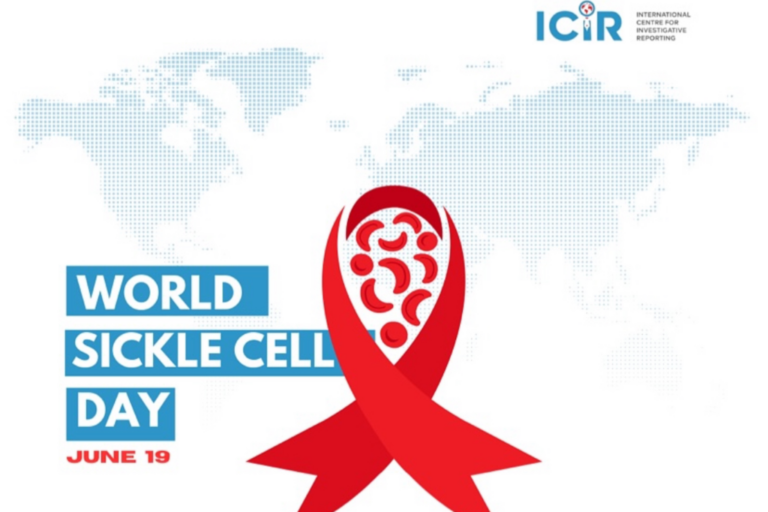
WORLD Sickle Cell Day is observed globally on June 19 to raise public awareness of sickle cell disease (SCD), a significant yet often overlooked global health concern affecting millions worldwide.

With this year’s theme, “Hope through Progress: Advancing Care Globally,” the purpose is to raise awareness about the condition and the challenges faced by patients, their families, and caregivers.

The US Centre for Disease Control (CDC) defined sickle cell as a group of inherited red blood cell disorders. Red blood cells contain haemoglobin, a protein that carries oxygen. Healthy red blood cells are round and move through small blood vessels to carry oxygen to all parts of the body.

“In someone who has SCD, the haemoglobin is abnormal, which causes the red blood cells to become hard and sticky and look like a C-shaped farm tool called a sickle. The sickle cells die early, which causes a constant shortage of red blood cells. Also, when they travel through small blood vessels, sickle cells get stuck and clog the blood flow. This can cause pain and other serious complications (health problems) such as infection, acute chest syndrome, and stroke,” the CDC said.

The SCD symptoms include severe pain episodes also known as sickle cell crises, anaemia, fatigue, swelling in hands and feet, frequent infections, and delayed growth in children.

Treatment focuses on managing symptoms and preventing complications, including pain relief medications, blood transfusions, and hydroxyurea to reduce crises.

Sickle-cell anaemia is particularly common among people whose ancestors come from
sub-Saharan Africa, India, Saudi Arabia and Mediterranean countries, the World Health Organisation said.

The WHO added that migration raised the frequency of the gene in the American continent, stressing that in some areas of sub-Saharan Africa, up to two per cent of all children are born with the condition.

Nigeria has been identified as the global epicentre for people living with SCD, according to the Pan African Medical Journal.

“About 50 million people are living with SCD globally and Nigeria is the epicentre zone with about four to six million people living with the disease (one in every four Nigerians has a sickle cell trait).

The Nigerian government acknowledged this fact while briefing journalists at an event commemorating World Sickle Cell Day in Abuja on Wednesday, June 19.

“Nigeria stands out as the most Sickle Cell Disease endemic country in Africa and globally, ahead of India and Democratic Republic of Congo, with an annual infant death of 100,000 representing eight per cent of infant mortality and those that manage to survive suffer end-organs damage which not only shortens their lifespans but also affects their quality of life across the life course.

“The 2018 NDHS report put the prevalence of the disease in the country at one per cent while 25 per cent of Nigerians are healthy carriers of the disease, said the Minister of Health and Social Welfare, Muhammad Ali Pate.

Pate, who was represented by the Director of Public Health, Chukwuma Anyaike at the event, however, said the government had instituted policies and several strategic interventions to address the challenges posed by the disease and that the government recognised the “huge burden of socio-economic and psychological effects” of SCD.

The government admitted its failure in managing the crisis, citing several hurdles.

“The situation in the (African) region also indicates that national policies and strategic action plans are inadequate; appropriate facilities and trained personnel are scarce; adequate diagnostic tools and treatments are insufficient, as well as synergy amongst various stakeholders and NGOs in the prevention and control of the disease.”

It further explained that the policies and interventions it had in place included the development of the first national guidelines for the prevention and control of the disease, and the Universal Newborn Screening policy adopted to ensure that all children born in Nigeria are screened for SCD, among others.

Nigeria failed to stop SCD despite its claims that it had produced drugs to manage the condition.

In May 2023, the Minister of Science and Technology, Olorunnimbe Mamora, said the ministry had developed diagnostic processes, treatment and drugs for sickle cell, hypertension and others through its agencies.

“Nigeria has a very large population of sickle cell disease patients and carriers. To that effect, I can tell that we have developed products from plants that combat or are anti-sickening in nature and therefore reduce the number of attacks that usually result from sickle cell anaemia.”

The ICIR reports that it remains unclear what has become of the acclaimed breakthroughs.

Speaking with The ICIR on SCD, a consultant haematologist at Maitaima Hospital, Abuja, Stella Madueke, noted that preventing SCD starts with giving pre-marital counselling to intending couples.

Besides, children born to both AS parents are to go through neonatal screening.

She added that people who undergo early screening, diagnosis, and management have better chances to survive.

Heineken sells off 100% stake in Nigerian Champions Breweries

0

HEINEKEN International, a global beverage giant, has completed the sale of its 86.5 per cent shareholding stake in the Nigerian Champion Breweries Plc.

Champion Breweries disclosed this in a statement on Wednesday, June 19, signed by its chairman, Imo-Abasi Jacob.

The 100 per cent stake in Champion Breweries, which Heineken held through Raysun Nigeria Limited, was taken over by EnjoyCorp Limited.

“EnjoyCorp Limited has acquired an 86.5 per cent stake in the company.

“EnjoyCorp acquired 100per cent shareholding in The Raysun Nigeria Limited, which in turn holds the 86.5per cent stake in Champion Breweries plc listed on the Nigerian Exchange Group (NGX),” it stated.

According to Champion Breweries, following the approval of the Federal Competition and Consumer Protection Commission (FCCPC), the parties have completed the transaction, and EnjoyCorp has taken full control.

Champion Breweries will remain listed on the NGX as EnjoyCorp commits to building the company and galvanising shareholder value as the acquisition marks EnjoyCorp’s entry into the beverage sector.

With the acquisition, Champion Breweries will be integrated as a cornerstone subsidiary within EnjoyCorp’s expanding portfolio of food, beverage, and hospitality brands.

“EnjoyCorp is welcome aboard Champion Breweries Plc, and we look forward to an exciting new chapter of growth and value creation for all its stakeholders, powered by EnjoyCorp’s vision and resources.

“Champion Breweries plc is confident that this partnership will unlock new opportunities and elevate our brand to greater heights,” the statement signed by Champion Breweries’ chairman further stated.

A cursory look at Champion Breweries’ financial performance for the past year revealed that the company’s profit lines dropped marginally.

Its revenue dropped slightly to N12.70 billion in 2023 from N12.29 billion in 2022; gross profit to N5.07 billion from N5.81 billion.

However, the company’s operating profit significantly declined to N603.97 million from N2.27 billion; profit before tax to N445.34 million from N2.25 billion and profit after tax to N370.56 million from N1.41 billion as it suffered a huge impairment loss on financial assets, selling, distribution, and administrative expenses.

The Champion Breweries’ full acquisition came barely one week after Diageo Plc, the UK-based majority owner of Guinness Nigeria Plc, sold off its over 50 per cent stake to Tolaram Group amid poor financial performances in the last year.

The one year of President Bola Tinubu’s administration has seen many international companies divest their investment, delist, and even exit from the Nigerian business environment due to the reforms the government doggedly introduced.

The ICIR reported that several multinational companies have pulled out of Nigeria, citing unfavourable business environments that have been worsened by foreign exchange problems in the country

GlaxoSmithKline (GSK), Sanofi-Aventis Nigeria Limited, Procter and Gamble (P&G), Jumia Food and Microsoft were among the companies that have exited Nigeria in the past year.

Police recruitment: union dismisses fraud allegation against PSC

0

THE Joint Union Congress (JUC) of the Police Service Commission (PSC) has dismissed allegations of fraud and irregularities levelled against the PSC and its staff by the Nigeria Police Force (NPF).

The PSC recently released a list of 10,000 successful applicants for constable and specialist cadre roles in the NPF.

But the NPF in a statement issued on Saturday, June 15, signed by the force spokesperson, Muyiwa Adejobi, rejected the list over alleged corruption and irregularities.

The two organisations have since been at loggerheads over the list.

At a press conference on Wednesday, June 19, chaired by the chairman of the Association of Senior Civil Servants of Nigeria, PSC, Unit Adoyi Adoyi, the union insisted that the 2022/23 police constables recruitment exercise was transparent.

According to Adoyi, who doubles as the JUC’s chairman, the allegations of fraud and several other unwholesome acts levelled against the PSC and its staff are “unfounded, spurious, speculative and most irresponsible, especially by the way the allegations were thrown into the public space, even before official channel of communication for dealing with such a matter was exhaustively explored.”

The union said the PSC and Police were both responsible agencies of the federal government that should demonstrate integrity to inspire public trust and confidence in the discharge of their respective mandates.

The union described the action of the PSC as a “sinister resort to media trial and subterranean plot to achieve a clandestine motive.”

It condemned the Police’s action, describing it is most unwarranted.

“We vehemently reject the allegation of fraud by the Nigeria Police authorities in the recruitment exercise. As public servants committed to due process, we do not take the allegations kindly because we are fully conscious of its implications. We, therefore, wish to address the allegation directly.

“It is now common knowledge that the Nigeria Police Force, which is lacking in personnel and facing serious challenges in combating insecurity in the country today, has chosen to abandon its core mandate and instead seeks to interfere with the constitutional mandate of the Police Service Commission,” the union stated.

According to them, they have been furnished with reliable information indicating that elements within the Police Force attempted to smuggle over 1,000 names into the recruitment list.

The union claimed there had been a leadership vacuum at the Commission its chairman, Solomon Arase was “unceremoniously stripped of officewhich it claimed put the Commission in disarray.

It called for a forensic review of the commission’s list and the recruitment list with the Police.

Why NDLEA targets assets of drug barons, traffickers – Marwa

0

THE chairman of the National Drug Law Enforcement Agency (NDLEA), Mohammed Buba Marwa, has vowed that the agency would continue to go after the assets of drug barons and traffickers as part of strategies to fight illicit drugs and cartels.

Marwa stated this at a press conference in Abuja on Wednesday, June, 19, while kicking off week-long activities to celebrate the 2024 International Day Against Drugs and Illicit Trafficking.

The event is in conjunction with stakeholders, including the United Nations Office on Drugs and Crime, (UNODC)

The NDLEA boss, represented by the agency’s secretary, Shadrach Haruna, stated, “Our offensive action against drug cartels and traffickers, launched in January 2021, has to date continued to yield the desired result with the arrests and prosecutions of several barons.

“As you are all aware, two serial traffickers got life imprisonment in court in April. Our prosecution efforts have continued to achieve successes in courts given the painstaking investigations and diligence in the prosecution of cases,” Marwa stated.

According to Marwa, case preparations by the agency are strong and have been further strengthened with the passage of the Proceeds of Crime Act (POCA 2022).

He added that apart from conviction, the convicts’ assets used as instruments for crime or the proceeds derived from the crime would be forfeited to the federal government.

Speaking on the drug demand reduction efforts of the agency, Marwa said its flagship programme, War Against Drug Abuse (WADA), which was built on “the whole of society approach” had been a success.

He said the effort was a preventive action against drug abuse and an awareness vehicle for public engagement and collaboration against illicit trafficking and abuse.

He said the effort aligned with the 2024 World Drug Day’s (WDD) theme.

He explained that the WDD, observed on June 26 yearly, “is an important day for the global community and an occasion during which current efforts against illicit drug problems are given policy direction for the next 12 months.”

He added that the theme for this year “The Evidence is Clear: Invest in Prevention”, emphasised the importance of preventing people from falling into the danger of experimenting with illicit drugs and subsequently falling into the trap of dependence on psychoactive substances.

According to him, “Prevention is an important aspect of the effort to curb the menace of abuse of illicit drugs in society. At NDLEA, prevention, as ably anchored in our War Against Drug Abuse (WADA). Social advocacy programme is a priority area for us. Within our modest means and with the support of the Federal Government and our various stakeholders, we have invested in prevention by various means over the past three years as part of the reforms being undertaken in the agency.”

In his remarks, UNODC Country Deputy Representative, Danilo Campisi, called on the government at all levels and other stakeholders in Nigeria to invest in drug use preventive measures.

He said projections showed that by 2030, there will be a 40 per cent rise in the use of drugs in Africa, based on the population of young people.


Ramaphosa sworn in for 2nd term as South Africa’s President

0

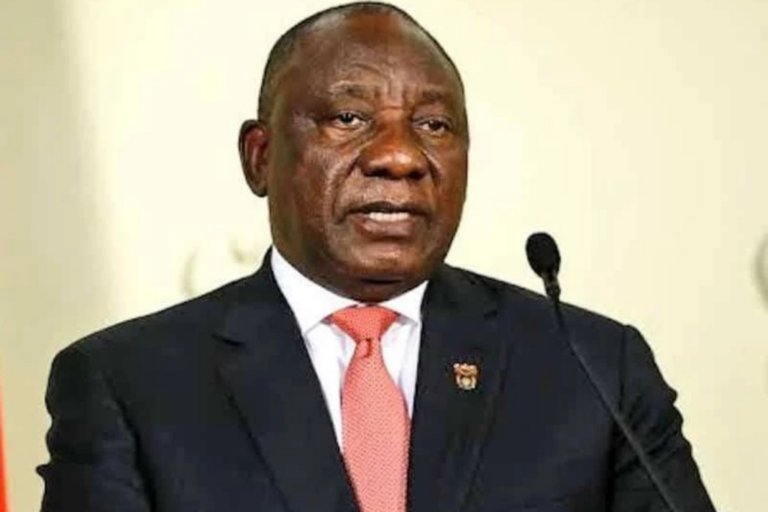
CYRIL Ramaphosa was sworn in for a second term as South African President on Wednesday, June 19 in Pretoria, the country’s capital.

He was sworn in despite his party – the African National Congress (ANC) – inability to win a majority in the country’s elections held in May.

Chief Justice Raymond Zondo presided over the President’s swearing-in ceremony in the presence of legislators, foreign dignitaries, religious and traditional leaders, and supporters at the Government’s House – the Union Buildings.

Several religious leaders gathered for an interfaith prayer before the President was sworn in, offering prayers for him to lead the nation in the right direction.

“In the presence of everyone assembled here, and in full realisation of the high calling I assume as President. I Matamela Cyril Ramaphosa swear that I will be faithful to the Republic of South Africa, I will obey, observe and uphold the Constitution and all other laws of the Republic,” Ramaphosa said during the inauguration.

Read also:

June 16 uprising: how a massacre in South Africa led to Africa’s boycott of the 1976 Olympics

Iran President Ebrahim Raisi confirmed dead in helicopter crash

Malawi’s VP, nine others die in plane crash

High-ranking international officials, notable South African politicians, members of civil society and other dignitaries, including Nigeria’s President, Bola Ahmed Tinubu and former President of Nigeria, Olusegun Obasanjo, were present at the event.

Other attendees include Angola’s President Joao Lourenco, Congo Brazzaville’s President Denis Sassou Nguesso and Eswatini’s absolute leader King Mswati III, among others.

However, the uMkhonto weSizwe (MK) party did not attend the inauguration as they had announced on Monday that they would be boycotting Ramaphosa’s inauguration in protest of the ANCs alliance with the Democratic Alliance (DA) party to form a government of National Unity.


READ ALSO:


After the inauguration, Ramaphosa is expected to form a cabinet consisting of the Democratic Alliance (DA) and three other smaller parties. The coalition won 68 per cent of the parliamentary seats.

Ramaphosa is taking the oath of office as President of South Africa for the third time. He took office for the first time in 2018 following the forced resignation of his predecessor, Jacob Zuma, due to allegations of corruption. He was then re-appointed for a full five-year term in 2019.