Home Blog Page 566

Fubara directs heads of administration to take over 23 Rivers LGAs

0

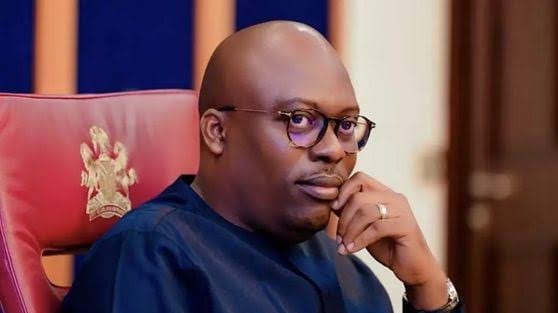
RIVERS State Governor Siminalayi Fubara directed the Heads of Local Government Administration in the state’s 23 Local Government Areas (LGAs) to take charge of the area councils on Tuesday, June 18.

The governor gave the order in a statewide broadcast accompanied by a statement by his chief press secretary (CPS), Nelson Chukwudi.

The directive follows the expiration of the three-year tenure of the elected Chairmen on Monday, June 17.

“As we move forward in making sure that the Constitution of the Federal Republic of Nigeria is upheld, and that law and order is maintained as we continue to strive to provide leadership and direction for our people, I hereby direct Heads of Local Government Administration to continue to provide leadership in their respective local government areas.

“Heads of Local Government Administration (HLGAs) are hereby directed to immediately take charge of the councils with renewed vigour and readiness to serve and await further directives as we navigate towards even greater accomplishments together,” the governor said.

Youths in Degema and Asari-Toru LGAs occupied both council headquarters on Monday following the expiration of the chairmen’s tenure.

Their actions came after the state’s LGA chairmen disclosed that they would remain in office beyond Monday, citing the Rivers State Local Government Amendment Law passed by the Martin Amaewhule-led 27 State House of Assembly members.

This development is believed to be an offshoot of the tension between Fubara and his predecessor, Nyesom Wike, as the law was passed by the lawmakers, most of whom are loyal to the former governor, in April.

Fubara refused to sign the law when it was sent to him for assent, but the lawmakers overrode him and passed the bill into law.

The governor had warned the chairmen after the law was passed to vacate office upon the expiration of their tenure, and there was heavy security presence in the state capital, Port Harcourt, on Monday.

Landslide kills 6 in Ecuador, 30 missing

0

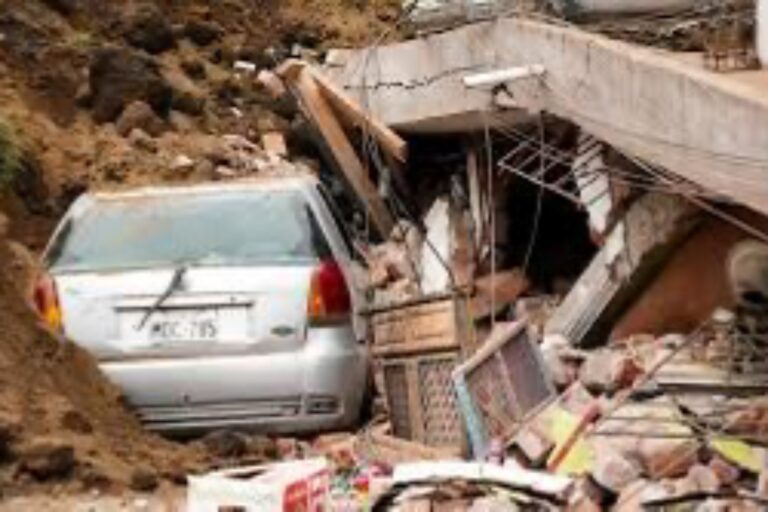
AT least six people have died and 19 injured, while 30 others are reportedly missing after a landslide triggered by heavy rains swept through Ecuador’s central region on Sunday, June 16.

The landslide occurred on a highway near the popular tourist town of Baños, burying three cars, two houses, and a bus under debris and mud.

Rescue efforts have been on but difficult due to continued rainfall and overflowing rivers, which have caused widespread flooding and damage to roads and streets.

The country’s minister of public works, Roberto Luque, via an X post, said emergency protocols and reinforced response teams had been activated to address the crisis while consoling the affected families.

“We are attending to the emergencies that occurred in Baños de Agua Santa early on and reinforcing the MTOP contingent with local governments. My solidarity with all the families who have been affected,” he said.

He added that “the national government is in Baños to verify with the local authorities all the affected points and make decisions to solve the emergencies that have been registered not only here, but in the other cantons of the province”.

The mayor of Baños, Miguel Guevara, also warned residents to avoid dangerous roads and announced that authorities were working ‘expeditiously’ to clear the northern coastal area, search for additional victims and restore safety to the region.

The resort town of Baños, known for its access to the Amazon jungle and volcanic attractions, has been severely impacted, with officials urging residents to avoid dangerous roads and stay safe.

Emergency workers in the country had said that several landslides had blocked or damaged the streets, posing a severe challenge to the rescue operations as rains continued to flood the nation.

The heavy downpours have affected neighbouring regions, including El Salvador, which experienced a fatal landslide earlier last week. Ecuador’s national government has pledged support to affected areas and is working to resolve the crisis.

The ICIR reported several cases of flood resulting from heavy rains this year in some African countries including Kenya, Tanzania, among others, leading to scores of deaths.

How CBN’s interest rate hike threatens recapitalisation – Analysts

Experts have raised  concerns that the Central Bank of Nigeria’s (CBN) bid to sustain interest rate hikes may throw the banks into troubled waters with regards to raising funds from the equities market to meet the minimum recapitalisation requirement

According to them the that CBN’s orthodox monetary policy, if not checked, could dampen investors’ appetite towards banks’ intending offers to raise funds from the stock market to meet the minimum requirement.

The ICIR reports that the CBN Governor, Olayemi Cardoso, had repeatedly said the apex bank would continue to use orthodox methods to tame inflation. This means that, as inflation rises, the apex bank would react by raising the monetary policy rate (interest rate).

Already, the apex bank  has  set March 31, 2026, as the deadline for all the categories of banks to meet the minimum capital requirement effective from April 1, 2024, pegging the capital requirement at N500 billion for commercial banks with international exposure.

It put the minimum capital base for commercial banks with national authorisation at N200 billion, N50 billion for regional banks and merchant banks, N20 billion and N10 billion for non-interest banks with national and regional operations, respectively.

With two months underway, the banks are already initiating moves on how to raise funds through the capital market.

Access Holdings, Zenith Bank, United Bank for Africa, and other banks have passed resolutions at their Annual General Meetings (AGM) to raise their capital base through the stock market.

For instance, Access Holdings had resolved to raise capital of up to N365 billion by way of a rights issue subject to the approval of relevant regulatory authorities.

Reasons for recapitalisation

According to analysts, recapitalising has become necessary as it helps to measure banks’ financial soundness, ensures the safety of depositors’ funds, deepens financial intermediation, and enhances the banks’ capacity to support economic growth through investment funding.

The last major review of the banks’ minimum capital base was carried out in 2005, under President Olusegun Obasanjo, with Chukwuma Soludo as thevthen CBN governor.

Since then, the value of banks’ minimum capital has significantly been eroded by inflation and exchange rate valuation.

The real issue, which financial experts have pointed out, is that inflation has weakened money’s value over time, making re-capitalisation imperative and inevitable.

By increasing the minimum capital requirements, the CBN is aiming to ensure banks have a robust capital base to absorb unexpected shocks, and losses and the capacity to contribute to the growth and development of the Nigerian economy

It is also aimed to engender the emergence of stronger, healthier and more resilient banks to support the achievement of  President Bola Tinubu-led administration’s dream of a $1 trillion economy by the year 2030.

The concerns

Financial experts have  expressed worries about the banks attracting investors’ confidence bearing in mind the negative sentiment the CBN’s rate hike has brought to the equities side of the Nigerian stock market.

According to analysts, the stock market is best for raising long-term funds for its operations. However, they note that that market had been hard hit by the apex bank’s orthodox monetary policy, albeit continuous interest rate tightening by the apex bank.

Since the beginning of this year, specifically between February and May, the apex bank has tightened the MPR by 750 basis points, dipping the stock market performance.

The All-Share Index, a benchmark index that reflects the performance of the Nigerian stock market, had dipped to 99,276.03 basis points as of May 30 from 101,995.53 basis points as of February 26.

The banking index of the Nigerian Stock Exchange also reflects the sentiment the CBN rate hike has created among investors as the index has fallen from 889.47 basis points to 797.81 basis points between February 26 and May 30.

SEC proposes framework for banks

The Securities and Exchange Commission (SEC) has said it would soon issue a framework that will guide the capital market in the proposed recapitalisation exercise by banks.

The Acting Director General of the SEC, Emomotimi Agama, hinted at a meeting with the Institute of Capital Market Registrars on Friday, May 24.

“We are on top of the issues around the recapitalisation exercise, and very soon we will come up with a framework to guide the market,” Agama said

Policy will strain investors’ confidence – experts

The national president of New Dimension Shareholders, Patrick Ajudua, said if not checked, the apex bank’s monetary policy will likely dampen investors’ appetite towards offers to raise funds from the stock market to meet the minimum requirement.

“We acknowledge the use of monetary policy tools by the CBN in controlling inflation but such have not appeased investors’ sentiments in the capital market,” said the national president of New Dimension Shareholders, Patrick Ajudua.

He anticipates that most banks will rather raise funds via foreign investors where the cost of funds is minimal compared to Nigeria and also through bonds, equity participation and private placement.

“It will be difficult to raise such funds within our economy which is bedevilled with numerous macro-economic challenges and a difficult operating environment.

“The bank may also create a space for retail shareholders via the right issues. Though the outcome is better to imagine than envisage where the purchasing power of average citizens has been eroded,” Ajudua said.

To mitigate the seemingly impending negative sentiment, the banks need to assure investors of commitment to appreciable returns on investment, improve transparency and corporate governance structure and assurance of improved risk management framework, he suggested.

Similarly, the head of Financial Institutions Rating at Agusto&Co, Ayokunle Olubunmi, noted that the CBN has been in a tightening mode since this year and would continue hiking the rate if inflation further.

He said reflecting on the orthodox policy, it was expected that it would cause a reversal in the equities market performance

Returns on investment in the equities market are variable and also depend on the underlying performance of the companies, he said.

“As for the fixed income market one variable that depends on the return is the prevailing benchmark interest rate. That is why we are seeing investors gradually moving away from equities to fixed-income securities.

“We expect that trend to continue in the near term as more investors move from equities to fixed income market. The rate hike has seen the banking index drop in recent months.”

So, for banks that want to raise rights issue, it then means that they have to do a bit more work to convince investors as the equities do not look attractive now,” he said.

Olubunmi added that the banks might have to issue more than rights issues, and sought for foreign investors.

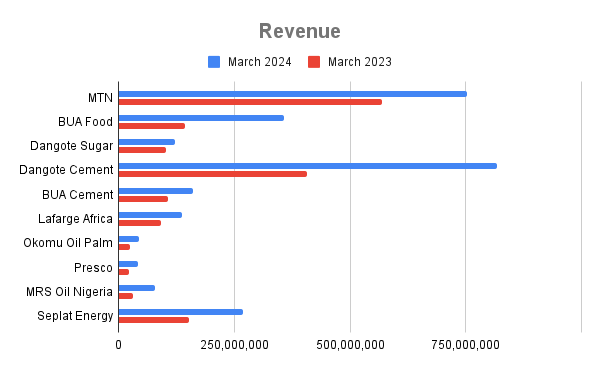
Analysis: Why companies’ profit margins shrank in Q1

Edo 2024: former deputy governor Shaibu shuns PDP, backs APC

A former deputy governor of Edo State, Philip Shaibu, has declared support for the All Progressives Congress (APC) candidate, Monday Okpebholo, in the state’s forthcoming governorship election slated for September 21.

Shaibu claimed that Okpebholo, the Labour Party (LP) candidate, Olumide Akpata, and himself were the “three homeboys” who entered the governorship contest.

He said he would support ahomeboy’ to emerge as the governor because he wanted the best for the state.

Shaibu made his position known on the sidelines of the 2024 Father’s Day celebration at Saint Paul’s Catholic Church in Benin City, the Edo State capital.

He said the state Governor Godwin Obaseki has said that everyone could support the candidate of their choice, giving him the freedom to publicly back the APC governorship candidate despite belonging to the PDP.

We don’t want outsiders, we have experimented, with outsiders and it’s not working, so this time around, we want homeboy.

“Today I came in as a homeboy, we have only two homeboys in the major political parties in Edo State. One is in labour, and one is in APC, and I choose to follow another homeboy in the APC. The man they are parading in the PDP is an outsider, and we have also agreed that no more godfatherism in Edo.

“So the man the PDP is trying to portray in Edo now is the godson of Obaseki,  and there is no way godsons will now be governor of Edo.he stated.

Following an unresolved crisis between Shaibu and Obaseki over the former’s decision to succeed the latter, Shaibu was recently impeached by the Edo State House of Assembly.

The impeachment followed the adoption of the report of the seven-man investigative panel set up by the state’s Chief Judge, Daniel Okungbowa, to probe allegations of misconduct against him.

Of the 20 members present, 18 voted in favour of the impeachment, while one opposed it.

Shaibu had filed a suit at the Federal High Court seeking to stop his impeachment, but the Abuja High Court refused to grant an ex-parte motion.


Minimum wage: Tripartite committee appeals to labour to reconsider demands

0

THE Tripartite Committee set up by the Federal Government (FG) to negotiate a new minimum wage has urged the labour unions to consider economic realities during their negotiations and discussions.

The tripartite committee was established by the federal government to review the minimum wage and urged labour unions to reassess their demands. 

The chairman of the Committee, Bukar Aji, who spoke on Sunday, June 16 in Abuja appealed to labour to rethink their position based on economic factors and the non-monetary inducements provided by the government.

Aji urged labour to consider several government initiatives, such as the N35,000 wage award for all federal employees paid by the Treasury, the N100 billion conditional grant for gas-fueled buses and gas kit conversions, the N125 billion financial inclusion grant for small and medium-sized businesses, and the N25,000 monthly stipend for 15 million households spread over three months.

Along with other initiatives, he mentioned the N185 billion in palliative loans to states to lessen the impact of the elimination of gasoline subsidies, the N200 billion to increase agricultural productivity, the N75 billion to bolster the manufacturing sector, and the N1 trillion for student loans.

Aji urged the labour unions to think about taking the federal government’s N62,000 minimum wage offer.

He stated that given how many firms are currently having difficulty, the committee is attempting to prevent a situation where raising the minimum wage will result in additional job losses.

The Trade Union Congress (TUC) and Nigeria Labour Congress (NLC) launched a nationwide strike on June 3 in protest of the federal government’s refusal to accommodate their demands.

The labour unions “relaxed” the strike for one week after twenty-four hours.

On June 7 the federal government raised its offer from N60,000 to N62,000 but the labour unions insisted on N250,000.

Meanwhile, President Bola Tinubu said his administration would only pay what it could afford as minimum wage.

Tinubu reportedly said this during the 25th Democracy Day Dinner at the State House Conference Centre in Abuja on Wednesday, June 12.

He told the leadership of the National Assembly, who were present at the dinner, that an executive bill would sent to the lawmakers soon.

Nigerian Airlines to commence direct flights to America route, says Keyamo

TWO months after Nigeria’s Air Peace flight commenced its direct flight to the United Kingdom en-route, the Minister of Aviation and Aerospace Development, Festus Keyamo, has announced that local airlines will soon launch direct flights to America and South America.

This would be the first-ever direct flight between Nigeria and South America.

Keyamo gave the information in a monitored interview with the Senior Special Assistant to President Bola Tinubu, Otega Ogra, during which he provided an update on developments following Air Peace’s approval to fly the Lagos-Gatwick route.

He said that the planned expansion of local airlines’ routes to these countries is part of the federal government’s strategy to enhance Nigerian private airlines’ competitiveness on international routes, which have long been dominated by foreign airlines, aiming to drive down airfare prices.

According to Keyamo, this initiative aims to increase competition, ultimately driving down airfare prices and making air travel more accessible.

“We used Airpeace as an example to show what we want to do with private airlines that it is not about bailout funds but government firm support to make it happen for them. We are just eight months in office, you will begin to see results as time goes on,” the minister said.

The ICIR reported that the International Air Transport Association (IATA) said Nigeria has cleared 98 per cent of foreign airlines’ trapped funds, urging the country to clear the remaining two per cent of the residual $19 million funds.

Keyamo also informed that the Bilateral Air Service Agreements (BASAs) with other sovereign nations are being enforced as well as amendment of local laws to encourage aircraft lessors to lease their assets to Nigerian operators

He mentioned ongoing discussions with the Attorney General of the Federation and Justices of the Supreme Court to revise laws that permit private airlines in Nigeria to secure court injunctions in cases where they fail to meet their lease obligations to international creditors.

The ICIR reported that the Central Bank of Nigeria (CBN) has confirmed the conclusion of the verified backlog owed foreign airlines with an additional $64.44 million release.

Kano peaceful, without threats at Eid celebrations-Police

THE Police Command in Kano State has stated that the Eid celebration is peaceful with no threats to lives or property.

The Police Command expressed satisfaction with the calm and orderly conduct of Eid prayers across the state.

According to the News Agency of Nigeria (NAN), the state commissioner of police, Hussaini Gumel said on Sunday, June 16 that he was happy with the peaceful and orderly behaviour of all Kano residents.

Gumel praised the residents for their calm conduct at various prayer grounds, both within and outside the Kano metropolis.

“Reports from all the 44 Local Government Areas have indicated a peaceful atmosphere with no threats to lives or property,” Gumel who has just been promoted to Assistant Inspector-General (AIG) said.

There had been concerns about potential confrontations in the Northwest state of Kano amidst the ongoing struggle for the emirship seat, which began when the state administration led by Abba Yusuf deposed the five emirs and restored Sanusi Lamido Sanusi as the Substantive Emir.

The Abdullahi Ganduje administration had earlier deposed Sanusi and named Aminu Ado Bayero as the 15th Emir.

Ganduje increased the number of Emirates to five by creating four more.

However, Sanusi was allowed to return as the head of the reunited Kano Emirate on May 23 when the State House of Assembly overturned the Emirates Council Law and removed all five emirs.

Since then the two leaders Bayero and Sanusi have taken the issue to court, each claiming the throne.

The matter has been pending in court, as both the state High Court and a Federal High Court in the state have issued conflicting orders on the matter.

The impasse has remained unresolved for nearly four weeks after.

To prevent a fight between their respective supporters, Gumel declared on Friday, June 14 that the rival emirs should pray at different mosques.

The ICIR reported that the current emirship crisis in Kano has made many residents wonder which of the two embattled emirs will lead the Durbar festival.

The ICIR also reported that the Police Command on Thursday, June 13, banned durbar activities in the state as the Muslim faithful celebrate Eid.

A statement issued by the state commissioner of police, Gumel, stated that the ban became necessary to sustain peace in the state.

According to reports, the deposed emir of the Kano emirate, Bayero, had on June 10, invited district heads for the forthcoming durbar, which Muslims often celebrate after every Eid.


READ ALSO:


The ICIR reports that the durbar festival is usually held twice yearly in Kano and some other ancient towns in Northern Nigeria, to mark the Eid-el-Fitr and Eid-el-Kabir celebrations.

It is a colourful event that often lasts for three or four days, with the festival characterised by processions through the city, led by the emir, a key player in the event.

The police, however, advised the faithful to conduct their normal Eid prayers at the various designated praying grounds as done in the past

Nigerians speak on celebrating Eid

AS Muslims around the world commence grand celebrations of one of the most significant festivals in Islam, Eid, the spotlight often falls on the different activities done to celebrate the occasion.

Eid celebration is a prominent festival celebrated by Muslims all over the world to commemorate the willingness of the Prophet Ibrahim to sacrifice his son, Ismail as an act of obedience to God.

The period falls on the tenth day of Dhu-al-Hijjah, the 12th and final month of the Islamic lunar calendar. The exact date of the celebration depends on the official moon sighting and follows the conclusion of the annual Hajj pilgrimage, which is a mandatory act of worship for Muslims who meet certain conditions.

It symbolises faith, devotion, and obedience to God’s commands, emphasising the importance of sacrifice in the form of an animal (typically a sheep, goat, cow, or camel).

These feasts not only bring families and friends together but also serve as a vibrant expression of cultural and religious heritage.

They partake in various activities during this period, including Eid prayer, a ritual cleansing of the body and soul symbolising readiness to approach Allah with humility, and exchange of gifts, and food. In some Muslim-dominated areas, local officials participate in a procession to greet the Emir, among other activities.

Other activities that most Muslims look out for include the slaughtering of animals (ram, cow, goat, and camel) which is shared among friends and families as well as the self-adornments in new clothes and henna for the females.

The ICIR had earlier reported how many Muslim women adorn their hands and feet with exquisite henna patterns as a means to enhance their inherent beauty and express their cultural heritage.

The ICIR spoke with some Muslim faithful who shared their expectations ahead of the Sallah celebrations. Amina Ibrahim from Kebbi state said she looks forward to the food and partying among families.

“What I look forward to in Eid celebrations is to see different people coming to slaughter and roast their animals in the same place, the exchange of meat and food between families and neighbours and wearing of new clothes,” she said.

She added that the major highlight of the celebration is the slaughtering of animals.

“This Eid festival is not about cooking food but slaughtering either camel, Cow, ram, or goat. But majorly in the society that I am in, the north, during Eid we cook, masa and miyan taushe and also Tuwo shinkafa da miyan kuka and man shanu.

“And of course, the Muslims who are capable, go to hajj(pilgrimage) to worship,” she added.

Another Muslim, Adeyinka Adeyemi from Kwara state spoke about the uniqueness of the Eid day (popularly referred to as Sallah day in Nigeria) but how many families will not be celebrating it like they do in previous years due to the high cost of things in the country.

“Majorly every household loves to eat something unique which they hardly eat on ordinary days just to make the Sallah day unique. These foods have no major cultural significance as such.

“Even at that, many families cook pounded yam and rice but this year has it different, many households can hardly afford the yam or rice now. This year’s Sallah celebration will be different. People are just managing their lives and as such cannot afford to make the sallah day unique as it used to be in the past,” he said.

Although there may not be a particular universal food made to celebrate the Sallah, the celebration, however, is mostly celebrated with in the slaughtering of animals together and sharing of food among family and friends.