Home Blog Page 571

Minister petitions Head of Service over allegations of sexual harassment against Perm. Sec.

0

MINISTER of Foreign Affairs, Yusuf Tuggar, has petitioned the Head of Service of the Federation, Folasade Yemi-Esan, over allegations of sexual harassment levelled against the ministry’s Permanent Secretary, Ibrahim Lamuwa.

According to a Punch report, the petition followed complaints by the ministry,’s employee, Simisola Fajemirokun Ajayi, that Lamuwa had made sexual advances towards her.

The minister urged Yemi-Esan to commence investigations into the allegations made by the employee.

“I am compelled to write to inform you of a formal complaint against the permanent secretary, Ministry of Foreign Affairs, Ambassador Ibrahim Adamu Lamuwa, on allegations of sexual harassment.

“Bearing in mind the gravity of the matter, I feel it necessary to draw your attention to it and ask that you handle it accordingly,” Tuggar noted.

Ajayi had lodged an official complaint through her lawyer, Femi Falana, a senior advocate.

In her letter of complaint, written by her legal representatives, Ajayi alleged that the harassment by Lamuwa had persisted for a while.

“October 7, 2023, during the first policy retreat to review President Tinubu’s 4D policy, Amb. Ibrahim Lamuwa approached our client to inquire as to why she did not sleep at the hotel and informed her that he would want her to come to his room after the event. Our client explained that she was a nursing mother and needed to go home to care for her baby.

“Dissatisfied with this, he reiterated his sexual advancement to our client by saying “Is it a big baby or small baby – he suspected it’s a big baby and would like to find out so he can join”.

He, however, continued this line of inappropriate anecdotes throughout the retreat,” the letter of complaint read.

Ajayi also disclosed that the permanent secretary earlier requested that she embark on a journey to Hong Kong with him and had consistently demanded tight hugs from her.

According to the letter of complaint, the issue had been raised previously with the minister, but the harassment persisted.

“The honourable minister would recall that sometime in March 2024, our client discussed with you concerning her safety for fear of not being raped by Amb. Ibrahim Lamuwa resulting from the consistent sexual harassment reported even as a married woman.


READ ALSO:


“Upon her unfortunate predicament with the permanent secretary, the honourable minister assured our client of a change of behavior as he had confronted him,” the letter read in part.

It also disclosed that many other female employees had been sexually harassed by Lamuwa on various occasions in the past.

“In the circumstances, we humbly request you to use your revered office to cause a detailed investigation to be carried out into the facts presented in this petition against Amb. Ibrahim Lamuwa and if found liable, appropriate disciplinary actions should be meted against him as this will serve as a deterrent against future reccurrence of such infractions,” the letter further read.
Malawi’s VP, nine others die in plane crash

0

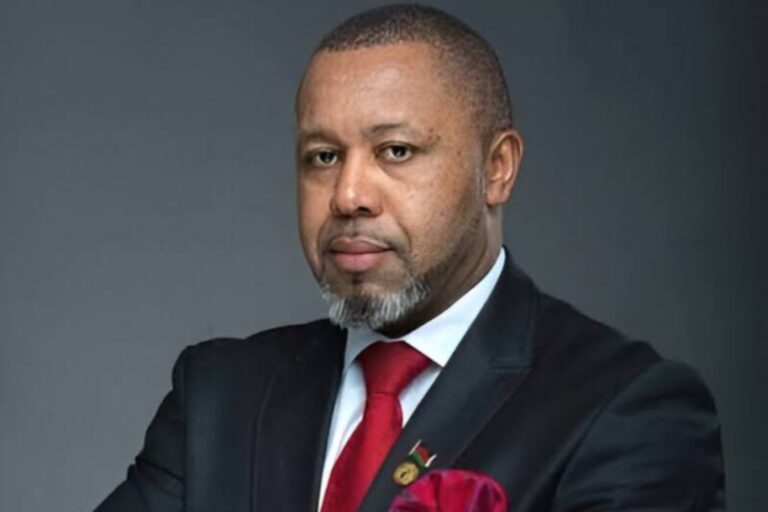
MALAWI’s Vice President, Saulos Chilima, and nine others have been confirmed dead after a military plane carrying them crashed in a mountainous region in the country’s North on Monday, June 10.

President Lazarus Chakwera announced this at a press conference on Tuesday, June 11.

Chakwera noted that the aircraft carrying his deputy went missing after it was unable to land at Mzuzu International Airport, situated approximately 380 kilometres (240 miles) north of Lilongwe, the country’s capital, adding that the wreckage of the plane had been found with no survivors.

“The search and rescue operation I ordered to find the missing plane that carried our Vice President and nine others has been completed.

“The plane has been found. And I am deeply saddened and sorry to inform you that it has turned out to be a terrible tragedy,” he said.

A statement from the President on Monday stated that a Malawi Defence Force aircraft carrying his deputy and nine others went off the radar after it left the capital, Lilongwe, in the morning.

The statement added that soldiers were sent to search with strict orders that the operation should continue until the plane is found. He expressed hope that the survivors would be found.

Also on the plane was the country’s former first lady, Shanil Dzimbiri. There were seven passengers and three military crew members onboard travelling to Mzuzu to attend the funeral of a former government minister, Ralph Kasambara.

Chilima was 51. He was serving his second term as vice president.

In May, The ICIR reported that Iran’s President Ebrahim Raisi died after involving in a helicopter crash.

The helicopter in a convoy was carrying the late President, Foreign Affairs Minister, Hossein Amir Abdollahian, and seven others while they were returning from a ceremony to mark the opening of a dam on Iran’s border with Azerbaijan in the Varzaqan area.


ACDJ’s 2024 Inequalities Reporting Fellowship seeks entries

THE Africa Centre for Development Journalism (ACDJ) is receiving applications from qualified and eligible Nigerian journalists for its Inequalities Reporting Fellowship.

The fellowship aims to build journalists’ capacity to report on different inequality themes at sub-national levels across Nigeria.

Successful applicants will participate in the fellowship programme that commences with an intensive two-full-day training workshop in Lagos, followed by the commissioning of special fellowship reports by the participants under the mentorship of an experienced and skilful faculty of journalists on a range of inequality themes.


Read AlsoICIR trains 20 journalists for Open Contract Reporting Fellowship’s final phase

Dart Center offers Early Childhood Reporting Fellowship

AFYMP seeks applications for media fellowships


Organisers say preference will be given to journalists with proven records of reporting on inequality issues including those listed above and census, development, population and demography-related issues.

The fellowship is an activity under ACDJ’s Sub-national Development Data Accountability Reporting Project focused on inequality, underdevelopment, policy and governance. The project is part of the Wole Soyinka Centre for Investigative Journalism’s Collaborative Media (CMEDIA) initiative supported by the MacArthur Foundation.

The deadline for the submission of applications is Sunday, June 23, 2024, by 20:59 West African Time (WAT) and only shortlisted applicants will be contacted.

Interested applicants can apply here.

Budget: Citizens allocated N524 monthly for healthcare

ORDINARY Nigerians may continue to bear the brunt with respect to medication as each citizen has been allocated the paltry sum of 524 naira for healthcare, a review of the Nigerian 2024 budget has shown.

In January, President Bola Tinubu approved N28.78 trillion as fiscal appropriation for 2024 of which N1.34 trillion was allocated to the Federal Ministry of Health and Social Welfare, representing 4.64 per cent of the budget.

When broken down, the ministry has a personnel expenditure of N771.56 billion,  N121.76 billion for overhead, and N542.95 billion for capital expenditure.

The ICIR analysed the health budget on per capita expenditure across the current population in Nigeria, which stands at N212.47 million according to the National Bureau of Statistics (NBS) projection.

By implication, if the health budget is shared with all Nigerians, each person will be entitled to N6,288.97 for 2024.

When divided by the 12 months in a year, it amounts to N524.

In the real term, the general public only benefits from capital expenditure, as the overhead and recurrent allocations are for running offices and salary payments to a small portion of the population.

A review of Nigeria’s health budgets

Over the years, Nigeria has struggled to provide good health for its citizens, as funding for the sector has often been much lower than expected.

In 2001, the African Union (AU) member states met in the nation’s capital, Abuja, and agreed to devote 15 per cent of their yearly budgets to health. 

The objective was to use the augmented budget in the respective countries to bridge the gaps in health funding, thereby drastically reducing unfavourable health data on the continent.

The ICIR sifted through the Nigeria budget in the last four years and observed that the allocations for the health sector have persistently hovered around four per cent of the nation’s budget. 

Year Health budget Total budget
Per centage difference
2021 549,825,721,085 13,588,027,886,175 4.05%
2022 724,924,440,307 17,126,873,917,692 4.23%
2023 1,071,800,452,250 21,830,000,000,000 4.91%
2024 1,336,263,783,101 28,777,404,073,861 4.64%

Table showing the proportion of health in Nigeria’s budget

In 2023, the allocation to healthcare was N1.17 trillion, representing 4.91 of the total 421.8 trillion naira budget. Also in 2022 with a total expenditure of N17.14 trillion, only 4.23 per cent of the total budget was allocated to health, while in 2021, the sector got 4.05 per cent of the budget. 

A report shows how Nigeria has failed to fulfil its pledge since it signed the agreement to allocate 15 percent of its budget to the sector.

The development is coming despite the President’s promise to increase allocation to the sector. 

Nigeria’s growing health challenges

Some health challenges the country confronts, as at various times reported by The ICIR, include having the second-lowest life expectancy rate worldwide, female genitile mutilation, parading some of the world’s largest cases of malaria,  tuberculosis, malnutrition, and Lassa fever, among others.

Health challenges have been made worse in Nigeria by citizens paying out-of-pocket for their treatments.

The ICIR reported that the minister of health and social welfare, Muhammad Pate, said that over 90 per cent of Nigerians were not enrolled in the Nationl Health Insurance Scheme, NHIS, as of 2024.

“The financing of healthcare in Nigeria and affordability has been a longstanding issue for more than 40 years. Less than 10 per cent of Nigerians have no health insurance or any insurance to speak of, which means most of them are paying out-of-pocket,” Pate said.

The Center for Social Justice (CSJ), proposed attracting non-budgetary funds through private sector incentives and tapping into other public resources, such as constituency project funds, to increase the sector’s funding.

This report looks at the national budget only and it’s part of the ICIR budget series, read other reports here.

Enyimba forfeit three points to Rangers over misconduct

0

ENYIMBA International FC have forfeited three points and three goals to Rangers International FC due to misconduct by their players and fans. 

The Nigerian Professional Football League (NPFL) announced this decision following a review of the incidents that occurred during their recent match.

This was confirmed in a letter to Enyimba, dated June 10 and shared by the NPFL News via its X handle.

According to the letter, signed by the NPFL chief operating officer, Davidson Owumi, Enyimba was also sanctioned with N10 million for offences bordering on five different charges by the league federation.

The league further outlined multiple breaches of its rules committed by Enyimba during the Oriental Derby on Sunday, June 9.

Backstory

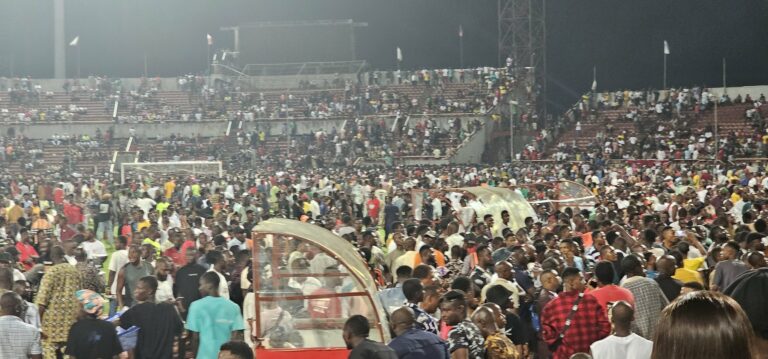
The ICIR reports that the week 35 NPFL match between Rangers and Enyimba, held at Ranger’s home ground, Nnamdi Azikiwe Stadium, Enugu, was marred with several disruptions, including unruly behaviour from players and supporters. 

The game was a title decider with Rangers topping the league table with 60 points and Enyimba trailing them by two points.

The match was abandoned after the referee awarded a late penalty to Rangers FC, at the 90+7 minute of the game. 

The decision led Enyimba FC players to protest to the referee, eventually resulting in a walkout while fans invaded the pitch and disrupted the match.

Initially, it was unclear which of the team’s fans encroached on the pitch, but a statement released by the NPFL confirmed that it was Enyimba supporters.

According to pictures and videos posted by a media practitioner, who covers Nigerian football matches, Suleiman Adebayo, best known as Pooja, the fans were seen throwing objects at the players while thousands of them invaded the pitch.

“Enyimba players failed to return to the pitch after the security restored calmness and the ref put the ball on the pitch.

They walked off the pitch and then, the fans encroached and everyone ran for their lives,” Pooja wrote on X.

Sanctions 

Besides the three-point forfeiture, the NPFL, in its verdict, pointed out that Enyimba failed to control their fans, who engaged in acts of violence and intimidation.

The order to forfeit three points and three goals in favour of Rangers was due to Enyimba’s failure to allow the penalty awarded against them to be taken.

The NPFL also noted that Enyimba contravened Rule B13.18 as its team and supporters threw objects and encroached on the field of play.

Letter addressed to Enyimba FC. Credit: NPFL News

The League also ruled that the club breached Rule C1.1 by refusing to “continue with the match in protest against the penalty awarded in favour of your opponents, and act that goes against the principles of fair play, sportsmanship, the league rules, and, is capable of bringing the game to disrepute.”

Other rules said to have been violated include Rule C9, Rule B6.23 and B13.24 of the Frameworks and Rules of the Nigeria Premier Football League.

Consequently, the NPFL imposed one million naira fine on Eyimba for failing to ensure the proper conduct of the team, while also fining the club an additional five million naira for disrupting a live broadcast.

Other fines are one million naira for throwing objects onto the field of play, one million naira for encroachment into the field of play and two million naira for causing the disruption and discontinuation of the match.

“An order for Enyimba to identify and produce for further investigation and appropriate sanctions, other players and officials complicit in the disruptive conducts (particularly against the match officials) that led to a discontinuation of the game, in addition to the following identified players; Eze Ekwutoziam (Jersey No.6), Chibuike Nwaiwu (Jersey No.27), and Akanni Elijah (Jersey No. 10),” the NPFL added.

The NPFL gave Enyimba 48 hours to either submit to the summary jurisdiction and the prescribed sanctions or elect to be dealt with by a disciplinary panel, noting that failure to comply or a frivolous appeal may result in additional sanctions.

Letter addressed to Rangers FC: Credit NPFL News/X

Meanwhile, Rangers International, the home team, was fined five million naira for five offences related to over-ticketing, inadequate security, and poor crowd control measures.

Customs admits reinstatement of fuel subsidy influencing smuggling in West Africa

0

THE Nigeria Customs Service (NCS)  on Monday, has  raised concerns
over the renewed smuggling of Premium Motor Spirit (PMS) among Nigeria’s West African neighbours, following the reinstatement of fuel subsidy by the Nigerian government.

The Customs also revealed that intelligence findings showed a massive hike in the pump price of the commodity in neighbouring West African countries, following the restoration of PMS subsidy in Nigeria.

While attesting further to this development, the service revealed that while the average price of petrol in Nigeria was about N701/litre, the average cost of the product in neighbouring countries was N1,787/litre, a development that heightened PMS smuggling out of Nigeria in the past two weeks.

The Comptroller-General of the NCS,Adewale Adeniyi, who disclosed this at a press conference in Yola, on Monday, June 10, said the NCS had to join forces with the Office of the National Security Adviser to tackle the menace.

He said, “Today, we are here to update members of the public on the strategic efforts of the Nigeria Customs Service in addressing the critical issue of fuel smuggling through the recently launched Operation Whirlwind, under the auspices of the Office of the National Security Adviser.

“About a year ago, the Federal Government made the bold strategic decision to remove the fuel subsidy. This crucial step was aimed at freeing up substantial funds that could be redirected to other productive sectors of the economy, reducing pressure on our foreign exchange reserves, and diversifying economic growth.

“The immediate impact was an upward adjustment in fuel prices to reflect current realities. Despite the inflationary pressures and financial strain on households, particularly those with lower incomes, comparative studies still show that fuel prices in Nigeria remain the cheapest compared to other countries in the West and Central African region,” he stated.

Speaking further, Adeniyi said, “While PMS is sold at an average of N701.99 in Nigeria, it is sold at an average of N1,672.05 in the Republic of Benin and N2,061.55 in Cameroon. In other countries around the region, the price of PMS ranges from N1,427.68 in Liberia to N2,128.20 in Mali, averaging N1,787.57, according to the fuel price data obtained from opensource.”

The customs boss said this comparative price advantage, though beneficial to Nigerian citizens, unfortunately, created a lucrative incentive for smuggling PMS out of Nigeria, where prices were two to three times higher.

He said this is substantiated by the report on the average daily evacuation of PMS to various states in Nigeria, obtained from the Nigeria National Midstream and Downstream Petroleum Regulatory Authority.

In his speech, which was made available to our correspondent in Abuja, he said, “The (NMDPRA) report shows significant changes in evacuation patterns that are not justified by corresponding economic and demographic changes, particularly in border states that share contiguous borders with our neighbours.

“Between April and May 2024, Borno and Kebbi states recorded 76 and 59 per cent increases in evacuations, ranking among the top three states. On a year-on-year basis (May 2023 and May 2024), Sokoto and Taraba states recorded the most substantial increases in evacuations, with 247 and 234 per cent increases, respectively.

“Border states like Katsina and Kebbi also recorded more than 50 per cent increases in evacuation. These discrepancies, along with the price disparity between domestic PMS (N701.99) and neighbouring countries (N1,787.57), raise concerns about the actual delivery of PMS and the potential for smuggling.”

Adeniyi said credible intelligence on activities around border areas corroborated these suspicions.

“In response to the alarming increase in fuel smuggling, the NCS in close collaboration with the NSA initiated Operation Whirlwind. This nationwide operation aims to ensure that Nigerians enjoy the full benefits of fuel price deregulation in line with the vision of President Bola Tinubu.

“Defend the national currency and reduce pressures that may be attributed to the activities of smugglers. c. Identify, dismantle and disrupt cartels of smugglers operating within the ecosystem. d. Raise awareness of the local communities and solicit their support to achieve these objectives,” he stated.

He said the operations, which were guided by credible intelligence and empowered by the new Customs Act 2023, target illegal exportation, particularly of petroleum products, ensuring their availability within the country and conserving government resources.

The ICIR has earlier reported that the government has sustained a price-peg(a regulatory price control regime) of fuel products at filling stations, a step analysts said signposts fuel subsidy return.

Although President Bola Tinubu at his inauguration on May 29 announced a “no more subsidy” regime which triggered over 200 per cent price increase, the International Monetary Fund-IMF later accused the government of bringing the subsidy through the backdoor.

“Nigeria has missed the opportunity to reform the oil sector and learn from its counterparts like Petrobrass and Saudi Aramco, which are reaping the benefits of such reforms. It has also lost the goodwill of the Nigerian people with a poor approach to social intervention programmes,” Lead Director of the Centre for Social Justice, Eze Onyekpere, told The ICIR.

Democracy Day: FG declares Wednesday public holiday

0

THE Federal Government has declared Wednesday, June 12, as a public holiday to mark Nigeria’s 2024 Democracy Day.

A statement on Tuesday, June 11, by the Permanent Secretary, Ministry of Interior, Aishetu Ndayako, said the minister, Olubunmi Tunji-Ojo, on behalf of the Federal Government, congratulated Nigerians on the occasion.

The statement partly read, “As we mark another Democracy Day in the history of our dear country, let us all reflect on the efforts of our founding fathers and ensure that Nigeria remains a united, secured, peaceful and indivisible entity.”

He urged Nigerians to remain steadfast on the tenets of democratic governance.

Tunji-Ojo reiterated President Bola Tinubu’s commitment to positive reforms to revive the nation’s economy and enhance security.

He appealed to Nigerians to look forward to a better future for the country.

“The minister also called on Nigerians and friends of Nigeria to appreciate the progress that has been made, and look forward to a better future for Nigeria’s Democracy,” the statement added.

Until 2019, Nigeria celebrated Democracy Day on May 29.

Former President Muhammadu Buhari directed that the celebration be marked on June 12 in honour of Moshood Abiola, acclaimed winner of the 1993 presidential election, held on the same date.

June 12 has always been significant to Nigerians, many of whom refer to the 1993 election as the most peaceful and credible poll ever held in the country.

An estimated 14 million Nigerians showed up at polling units, defying poor weather to elect Abiola in an election they hoped would put an end to military putsches and dictatorship.

Although data from the poll showed that Abiola won the election, he was never formally declared the winner.

Abiola was also never sworn in by the military government under the administration of Ibrahim Babangida, an Army General.

While struggling to reclaim his mandate, Abiola was imprisoned by the then Head of State, Sani Abacha, another Army General who took over from Babangida. Abiola died while still in detention, in 1998.

Buhari conferred Abiola with a posthumous award of the Grand Commander of the Federal Republic (GCFR), the highest national honour exclusively reserved for presidents and former presidents.

NNPCL refutes inflating fuel subsidy payments by N3.3trn

0

THE Nigerian National Petroleum Company Limited (NNPCL) has refuted a media report that alleged it inflated the fuel subsidy payments between 2015 to 2021 by N3.3 trillion.

In a statement on Monday, June 10, NNPCL’s chief corporate communications officer, Olufemi Soneye, said the company was not aware of any audit of its subsidy claims and has not at any time, inflated its subsidy claims with the Federal government.

He said, “The Nigerian National Petroleum Company Limited (NNPC Ltd.) notes with dismay a report in a section of the media alleging that it inflated subsidy claims by N3.3 trillion.”

A report credited to iWitnessLive reportedly claimed that a forensic audit covering 2015 to 2021, conducted by KPMG uncovered that the NNPC inflated its fuel subsidy payments by N3.3 trillion.

“All previous subsidy claims by the Company are verifiable, as relevant records and documents have been sent to relevant authorities and agencies.

“NNPC Ltd. is neither aware of any audit of its subsidy claims nor the probe ensuing therefrom and wishes to state categorically that both ridiculous claims are products of the febrile imagination of the reporters and their respective media houses,” Soneye said.

According to him, the Nigerian state-owned oil company will resist any attempt to drag it into the apparent politics of fuel subsidy as it currently operates on a commercial basis and the express provisions of the Petroleum Industry Act (PIA).

“It is on record that, in line with its Transparency, Accountability & Performance Excellence (TAPE) mantra, NNPC Ltd. has, on several occasions, independently invited external auditors to review its books,” he added.

However, controversies have continued to trail the Federal government and NNPCL’s position on fuel subsidy payments, projected to hit N5.4 trillion this year.

The ICIR reported on June 5 that the Nigerian government officially acknowledged that it is still subsidising the downstream consumption.

A report,  ‘Accelerated Stabilisation and Advancement Plan (ASAP),’ presented by the Minister of Finance Wale Edun to the Nigerian President Bola Tinubu, further disclosed that N3.6 trillion was paid by the government as fuel subsidy in 2023 and N2.0 trillion in 2022.

Senate pledges legislative support for Dangote Refinery

0

THE Nigerian Senate has pledged to support the Dangote Petroleum Refinery with necessary legislation that would preserve it from possible “detractors” asserting that the completion of the refinery has shamed past governments.

Senate President Godswill Akpabio, who led the leadership of the National Assembly on a tour of the 650,000 barrels per day (bpd) refinery built by Africa’s richest man, Aliko Dangote, gave the assurance.

According to a statement on Sunday, June 9 by the group head of corporation communications at Dangote Industries Limited, Anthony Chiejina, he said, “The Senate and the entire National Assembly would come up with a robust legislation that would protect the project and others like it.

“Mr. Dangote, I pity you a lot because even your friends will envy you simply because they will keep wondering how can you succeed when nations and continents have failed. Now that we have seen for ourselves, we are here to announce our endorsement of this major project. It is also shocking to see that we produce sufficient fertilizers for Nigeria and enough to be exported.”

On May 22, 2023, former President Muhammadu Buhari commissioned the $18.5 billion largest single-train refinery in the world built in Nigeria’s commercial city,  Lagos State, The ICIR reported.

The refinery is expected to help reduce petroleum imports in Nigeria and Africa broadly and improve foreign exchange earnings for the country, among other benefits.

According to the Senate president, the National Assembly will come up with a report and speak to President Bola Tinubu to stop fertilizer import to the country.

“You will hear from us soon,” Akpabio assured Dangote.

Akpabio maintained that detractors of the refinery have been silenced and previous governments put to shame with the completion of the project.

The National Assembly will use its position to protect the refinery because it is one project that Nigeria and Africa should take ownership of and jealously protect, he said.

Commending Dangote further on the timely completion of the refinery, he said the “ordinary” residence of Nigeria’s Vice-President could not be completed until after 14 years.

“They told us in Abuja that Dangote Refinery is farce but we have come here and see for ourselves that the refinery is alive and running. Dangote has put to shame a lot of people. They are wondering how it will be possible for a single individual to accomplish what a whole nation could not accomplish; what 240 million people could not maintain; what a continent could not do and then one person will build a 650,000bpd project.

“They keep wondering how one person can succeed where nations have failed; where continents have failed. But Dangote has done it. It is highly commendable. We came to see the refinery because we in the current senate believe in the Nigerian dream. We didn’t come as a doubting Thomas but we came because we believe the project, we came to rekindle the hope of Nigerians and the Nigerian’s can do spirit,” he said.

Akpabio lamented that the country could not make the refineries in Kaduna, Port Harcourt and Warri function but that Dangote and his team have proven that it was possible to dream and achieve the dream in the country.

“The shame that came with the discovery of oil in Nigeria in 1958 has been removed by Dangote, alluding to a report that India does not have oil but refineries where the country exports refined products.


READ ALSO:


“The inability of the nation to refine its oil has brought untold hardship on Nigerians so much so that Belgian government recently ban the exportation of dirty and condemned fuel to the country to West African country just because we can’t refine our own products,” Akpabio added.

In a remark, Dangote’s Chairman said supporting the refinery secures the benefits.

“It will ensure energy security. As co-creators of value, we appreciate and acknowledge your consistent efforts in ensuring the enactment of vital laws promoting a conducive business environment in the nation,” he said.

FG considers to crash food prices, pharmaceuticals, other products by 18%

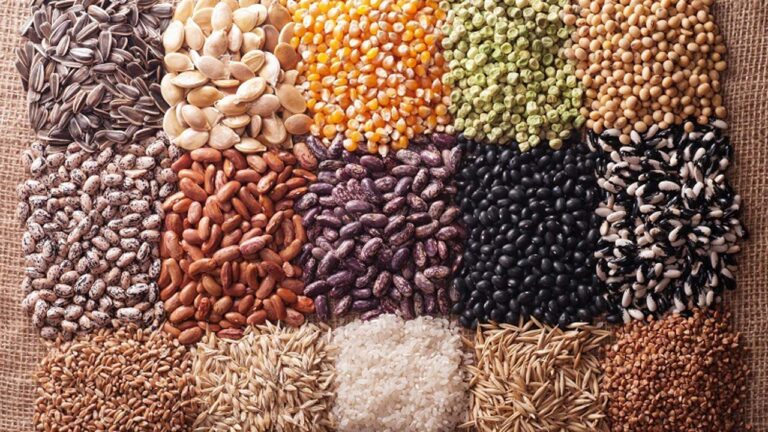
THE Federal Government could crash the prices of food items, pharmaceuticals, and other products by an average of 18 per cent if it goes ahead with suspending tariffs on certain consumables, an analysis by The ICIR shows.

On Wednesday, June 5, Bloomberg reported that the federal government of Nigeria was considering a six-month suspension of import duties on staple food items, drugs, and other essential items to curb inflation.

The government is also considering waiving levies on fertilisers, poultry feed, flour, and grains, according to a document sent to Nigerian President Bola Tinubu.

The basic and semi-processed staple foods and other items highlighted in the document included raw materials and other direct inputs used for manufacturing; inputs for agriculture production including fertilisers, seedlings, and chemicals; pharmaceutical products; and poultry feeds, flour, and grains.

The document, ‘Inflation Reduction and Price Stability Order’ will mandate the Ministry of Finance and the Central Bank of Nigeria (CBN) to devise a plan for offering low-interest loans to the agriculture, pharmaceutical, and manufacturing sectors.

“This productive deployment will ultimately improve outputs and reduce inflation,” the document reportedly stated.

It further stated that the government would likely suspend value-added tax (VAT) on automotive gas oil.

Nigeria, largely an import-dependent economy with much of the finished products imported from overseas, imposes different import tariffs amid surging inflation figures and naira devaluation.

The citizens face persistent high inflation which has risen to 33.7 percent in April this year, the highest in almost three decades, and food inflation to 40.5 per cent, the highest since 1996.

The CBN’s monetary policy rate (MPR) tool, which it uses to curb inflation, has surged to 26.25 percent, making it difficult for businesses to borrow funds.

Worse still, the country’s exchange rate market has remained volatile, peaking at over N1,900 to a dollar earlier this year, disrupting economic activities.

In what seems a desperate move by President Tinubu-led administration to curb rising inflation and tame other economic headwinds, the fiscal authority proposed to suspend import duty and VAT on certain commodities.

The ICIR analysis shows that the prices of the proposed items could drop by an average of 18 percent, a gesture that could relieve Nigerians from the hardship faced in the country.

Findings from the Nigeria Customs Service (NCS) website shows that tariffs on imported goods range from five percent to 35 percent, categorised into five, 10, 20, 30, and 35 percent rates for different items, and a 7.5 percent VAT rate on some of the items.

On the average, the import duty rates and the VAT amounts to 18.44 percent, The ICIR can report.

According to Financial Derivatives Company Limited (FDC) in its commodities price index report released on June 6, the suspension of import levies will lower input costs and improve the cost of living.

The FDC’s statistics put the price of 50 kilograms (kg) of flour and rice at N59,000 and N80,000 respectively. It puts a carton of indomie at N7,800; bread loaf, N1,600; and wheat flour (10kg), N12,700.

If the Nigeria government goes ahead with its proposed  import duty and VAT suspension of certain food items and pharmaceuticals, it then means that the prices of those products could decline by about 18 percent.

For instance, the price of flour could drop by 18 percent or N10,620; rice by N14,400; indomie by N1,404; bread loaf by N288; and wheat flour by N2,286, all things being equal.

A similar reduction of N174.4 could be applied for cooking gas which currently sells for about N980/kg.

Speaking on Channels Television on Thursday, June 6, Desola Sunmoni, a senior analyst at FDC, said the proposed suspension was a positive one as import duty adds to input costs of production.

He said, “Since last year we have seen that the efforts by the government have not yielded the fruits and so this is a welcome development, particularly on plan removal of levies of staple foods and fertiliser.

“I think it will help reduce the landing costs of these commodities and reduce the pressure of prices and boost domestic production of some of these commodities.”

The hardship Nigerians are going through is also captured in another report, ‘Accelerated Stabilisation and Advancement Plan (ASAP),’ presented to the Nigerian President by the minister of finance and coordinating minister of the economy, Wale Edun, on Wednesday, June 5.

It shows that by August this year, 31 million Nigerians will be in ‘crisis’ of food security. This is even as The ICIR has severally referenced that over 63 percent or 133 million Nigerians are faced with multidimensional poverty.