Home Blog Page 885

Female lawyers call for gender balance in NBA leadership

0

THE Institute of African Women in Law (IAWL) has called for a gender balance in leadership positions within the legal profession, including in the Nigerian Bar Association (NBA).

This is contained in the Institute’s 2023 Women in Law and Leadership Reports.

According to the report, a study on the trends and progress of African women in law and leadership showed that though there had been an increase in the number of women in the legal profession, certain obstacles had been hindering them from ascending to leadership positions.

These obstacles include unspoken gender biases and stereotypes against women, burden of childcare and family responsibilities, and debilitating patriarchal cultures.

“Female lawyers’ ascension to leadership in the Nigerian bar has been almost negligible. Women have successfully broken the glass ceilings of certain positions. However, biases, stereotypes, and subtle discrimination have often deterred others from reaching positions they are qualified to occupy.

“Some women could overcome these barriers to achieve their goals, but others have not been as fortunate, and stagnate or exit the profession. Several factors contribute to this, and the attrition points differ in each sector,” the report stated.

The IAWL noted that only one woman has ever been president of the NBA since 1960, despite the significant increase in the number of female lawyers over the years.

The report also stated that inadequate representation of women in legal leadership would make female lawyers continue to suffer from institutional and structural challenges due to marginalization.

“Women are vastly under-represented in the rank of SAN, with a dismal ratio of 26:1. This also applies to leadership positions in the executive committee of NBA branches, particularly chair and secretaries. Borno State is the exception, as it has a sitting female chair of a branch, the first in the state,” the report added.

The report also noted that younger female lawyers were more likely to face sexual harassment and gender-based intimidation at work.

The IAWL recommended formal mentoring programmes and workshops to aid career growth. It also recommended that men join the quest for gender equality to achieve systemic and effective change.

The report also recommended creating and enforcing policies that protect women lawyers and facilitate the ascent, promotion and recognition of female lawyers, and adequate support for research and data gathering on women’s representation at the bar, which it said would facilitate evidence-based interventions.

Supportive family structures were also described as critical to women’s ascent in the legal profession, as the report identified balancing marital responsibilities and work demands as one of the cultural challenges female lawyers face.

In 2022, The ICIR reported that marriage affected the rise of female judges in Nigeria.

Despite the many achievements of female judges in Nigeria, a major stumbling block in attaining leadership positions in the judiciary is the issue of state as it relates to Nigerian women upon marriage.

Many women who transfer service to their husbands’ states after marriage often encounter problems when they attempt to become judges or assume other leadership positions at the bar.

The petitions are mostly based on state of origin, regardless of years of service.

One such case occurred in 2012, when High Court judge, Ifeoma Jumbo-Ofo, was recommended for the Justice of the Court of Appeal position in Abia state.

A petition was written against her to the CJN at the time, Aloma Mukhtar, pointing out that though she had been married into the state, she was not an indigene and could not assume the position.

CBN releases official guidelines for forex rates unification 

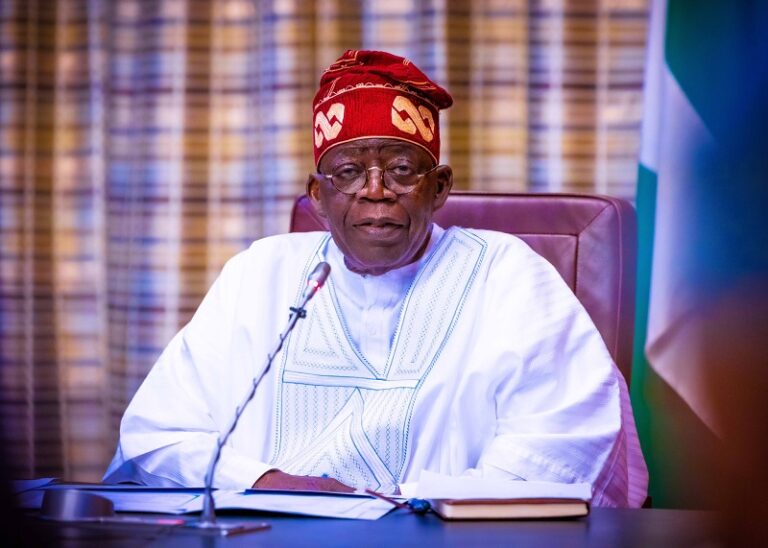
THE Central Bank of Nigeria (CBN) has released new operational changes to the foreign exchange market in line with the rates unification stance of President Bola Ahmed Tinubu. 

The apex bank, in the new changes, abolished all segments of the foreign exchange market and collapsed them into the investors and exporters (I&E) window.

The I&E window is regarded as the official window for foreign exchange transactions.

The ICIR had reported that banks are now quoting a market rate based on a willing buyer and a willing seller, according to the emails that they sent to some customers earlier today.

Buyers and sellers of foreign currency in the official foreign exchange market now qoute rates they find comfortable in the market, as against the previous practice where rates were dictated by the Central Bank of Nigeria (CBN), a system some economic analysts condemned as characterised by arbitrage and corruption.

Read also:

 Amid President Tinubu’s rates unification, CBN allows banks to trade forex freely 

According to the guidelines signed by the CBN Director, Financial Markets, Angela Sere-Ejembi, applications for medicals, school fees, business travel allowance (BTA)/personal travel allowance (PTA), and small and medium-scale enterprises would continue to be processed through deposit money banks.

The CBN stated that operations in this window would be guided by the extant circular on the establishment of the window, dated April 21, 2017 and referenced FMD/DIR/CIR/GEN/08/007.

It added that all eligible transactions are permitted to access foreign exchange at this window.

The CBN stated that the operational rate for all government-related transactions shall be the weighted average rate of the preceding day’s executed transactions at the I&E window, calculated to two decimal places.

It also announced the proscription of trading limits on oversold foreign exchange positions with permission to hedge short positions with over-the-counter (OTC) futures, adding that the limits on overbought positions shall be zero.

Also, the Order Book was reintroduced to ensure transparency of orders and seamless execution of trades.

The bank also announced the cessation of RT200 Rebate Scheme and the Naira4Dollar Remittance Scheme, with effect from 30 June 2023.

Informed analysts believe the new policy would favour banks with positive net foreign exchange exposure, although they admitted it would take some time before it positively impacts on the economy.

An economic analyst, Bode Ososami, posited that the development would remove arbitrage and corruption that had characterised Nigeria’s forex exchange market, adding that the markets would begin to respond to Nigeria in the new direction.

Ososami said, “Sincere investors would come into the market and there is a lot of funds in the market looking for investment direction.

“While this new exchange rate favours banks with positive net FX exposure, as they would book exchange rate gains on this major depreciation of the naira, I would expect many of the banks to raise new equity capital to shore up their capital base soon.”

Also, an economist and Head, Investor Relations at the United Bank for Africa, Abiola Rasaq, said, “Notably, over 40 per cent of Nigerian banks risk-asset base is dollarised, and that means that the risk-weighted asset increases significantly on the back of this depreciation of the naira, and that would put pressure on the capital adequacy ratios of banks.”

Amid President Tinubu’s rates unification, CBN allows banks to trade forex freely

UPDATE:

THE Central Bank of Nigeria (CBN) has confirmed the abolishment of the segmentation in the foreign exchange market. 

This was contained in a statement on Wednesday night from the Director, Financial Markets, Angela Sere-Ejembi.

The statement reads  “The Central Bank of Nigeria (CBN) wishes to inform all authorized dealers and the general public of the following immediate changes to operations in the Nigerian Foreign Exchange (FX) Market: Abolishment of segmentation. All segments are now collapsed into the Investors and Exporters (I&E) window. Applications for medicals, school fees, BTA/PTA, and SMES would continue to be processed through deposit money banks.”


READ ALSO:

Court asks CBN to pay N1m to MRA for denying FoI request

Board Chairman accuses ‘CBN cabals’ of doctoring new NDIC Act, risking depositors funds

Major controversies that trailed Emefiele’s tenure as CBN Governor

Tinubu suspends CBN governor Emefiele


“Re-introduction of the “Willing Buyer, Willing Seller” model at the I&E Window. Operations in this window shall be guided by the extant circular on the establishment of the window, dated 21 April 2017 and referenced FMD/DIR/CIR/GEN/08/007. All eligible transactions are permitted to access foreign exchange at this window.

***

NIGERIA has officially floated its naira currency after years of a regulated foreign exchange market that economic experts believe demotivated investors from doing business.

An official of the Central Bank of Nigeria (CBN), who said he was not authorised to speak to the media, confirmed the foreign exchange development to The ICIR, although there has not been any official statement to this effect.

“A discussion has been held to that effect, although there has not been any official statement to that effect,” the official said.

To further affirm this development, a market rate based on a willing buyer and a willing seller is currently being quoted by banks who sent out emails to some customers this morning.

The suspended Central Bank of Nigeria’s (CBN) Governor, Godwin Emefiele, had prioritised a multiple rates regime and capital controls, which analysts say bred uncertainty among investors in the Nigerian business and economic space.

Multiple global lending agencies like the World Bank and the International Monetary Fund had kicked against the multiple exchange rate regime.

Both global lending agencies persistently called for the unification of exchange rates, saying this would give a direction to Africa’s largest economy.

In many instances, foreign airlines and international oil companies struggled to repatriate their funds as the CBN enforced capital controls that did not allow for easy repatriation.

Economic watchers and some bankers say the exchange rate could go as high as between N800 and N1,000 by the end of today, and advised the CBN to prioritise supply of dollars to support the naira float.

“The policy announcements are good. We should also wait for other reforms to complement this. Markets are already applauding the move, but more needed to be done on capital control reforms so that investors will know how to bring in, and how to take their funds,” a research analyst with Arise Television,” Bode Ososami, said.

Ososami further pointed out the need for an economic team by the President Bola Tinubu administration that would work at preventing policy flip-flops and have a clear path for investors.

“The convergence of the rates is only the first step. The next step is the most crucial, and that is to boost supply into the market and ensure proper management of capital controls to grow investors’ confidence.

“No foreign investor will come without a hedge, and that can only come when there is assurance of supply. That’s the hard work,” he said.

Another expert and chief executive of Cowry Assets Plc, Johnson Chukwu, is of the view that the willing buyer/willing seller arrangement that has now been adopted is only the first of six steps to fixing Nigeria’s broken foreign exchange market.

“The focus is to grow supply and be strategic in implementing these reforms,” Chukwu said.

Expectations have become high after the announcement on fixing Nigeria’s broken foreign exchange market, analysts insist.

A fund manager at Stanbic IBTC Pension Managers Ltd, Chidi Uzo, described the move as “a bold step in the right direction.”

Uzo said, “However, this should go in tandem with the lifting of capital restrictions for investors waiting on the sidelines to repatriate their funds. We expect foreign investor participation to be swayed by the extent to which capital is allowed to flow freely.

“Overall, the effective harmonisation of Nigeria’s multiple exchange rates by allowing market forces to determine the fair value of the naira should immediately reverse the multi-year widening spreads between the official exchange rate and the parallel market exchange rates.”

FG begins disbursement of students loan September – Education ministry

THE Federal government will begin the disbursement of students’ loan from September this year, the Federal Ministry of Education has disclosed.

Fielding questions from journalists on Wednesday, June 14 in Abuja, the Permanent Secretary at the ministry, David Adejo, said the ministry received a marching order from President Bola Tinubu on the policy.

On Monday, June 12, The ICIR reported how Tinubu signed the Education Loan Bill into law, which will allow indigent students to apply for loans through a Federal government bank to enable them complete their tertiary education.

The Act also proposes a two-year jail term, a fine of N500,000 or both for students who default in repayment of the loan.

The interest-free loan is repayable two years after the beneficiary completes the mandatory National Youth Service Corps (NYSC).

The former Speaker of the House of Representatives, and now Chief of Staff to the President, Femi Gbajabiamila, sponsored the bill

Some stakeholders, including the Academic Staff Union of Universities (ASUU), had criticised the Act, saying it would make the government shift attention from adequately funding education.

Speaking through its president, Emmanuel Osodeke, ASUU said students who took the loan might not have a job two years after completing the NYSC, which he argued could make them unable to repay the loan.

Addressing journalists on Wednesday, Adejo said, “As I speak with you today, the president has approved the committee made up of the ministries and agencies, and their meeting will be coming up on June 20.

“The president has also directed that by September to October of this 2023/2024 academic session, he wants to see recipients of these loans. So, it is a very serious march for us. So between now and then, we have to start the process for people to get the loan.”

He added that the Nigerian Education Bank to be created by the government for the disbursement of the loan would be carrying out normal banking services.

“Learning from past mistakes, the bank is not going to be the type that will sit down and be collecting application loans.

“It will also perform normal banking functions and make sure loans are given because we had cases of loan recovery in the past,” he added.

Tinubu suspends Bawa as EFCC boss

0

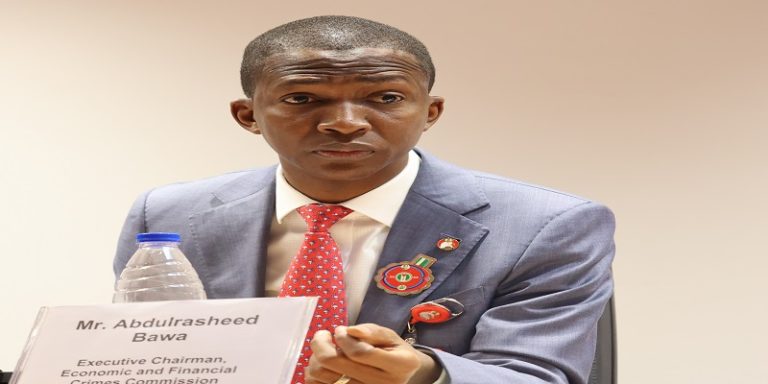
NIGERIAN President Bola Tinubu has suspended Chairman of the Economic and Financial Crimes Commission (EFCC) Abdulrasheed Bawa, indefinitely.

Director of Information, Office of the Secretary to the Government of the Federation Willie Bassey disclosed this in a statement on Wednesday, June 14.

“President Bola Ahmed Tinubu,GCFR, has approved the indefinite suspension from office of Mr AbdulRasheed Bawa, CON,  as the Chairman, Economic and Financial Crimes Commission (EFCC) to allow for proper investigation into his conduct while in office.

“This follows weighty allegations of abuse of office levelled against him. Mr Bawa has been directed to immediately handover the affairs of his office to the Director, Operations in the Commission, who will oversee the affairs of the Office of the Chairman of the Commission pending the conclusion of the investigation,” the statement read.

In May, it was reported that Bawa sent out invitations to all outgoing governors in the country as part of steps to probe their activities and question commissioners who served under them.

The invitation generated some reactions, especially from former Zamfara state governor Bello Matawalle, who was then preparing to leave office, having lost his re-election bid.

Matawalle called for Bawa’s resignation and probe, accusing him of corruption and abuse of power.

He also challenged the EFCC boss to extend its investigations to the presidency and cabinet members in the fight against corruption, adding that he had evidence of corrupt practices against Bawa.

“He needs to explain, among others, how seized assets by the EFCC are being sold without adherence to due process.

“He should explain, for instance, how he has assumed the role of the plaintiff, prosecutor and jury and how he has executed his brand of plea bargaining with suspected criminals and saboteurs of the Nigerian economy and agenda who, instead of being put on trial, are walking freely all over Nigeria,” Matawalle noted in a statement.

Weeks after his outburst, Matawalle was accused by his successor of stealing government property, and more than 40 state-owned vehicles were recovered from his residence during a police raid.

I am not desperate for a world record – Chef Dammy

Damilola Adeparusi, popularly known as Chef Dammy, has reached the 120-hour mark she set for herself at the commencement of her cooking marathon four days ago.

Dammy finished cooking in the early hours of Wednesday, June 14.

Dammy, who is a 300-level student at the Federal University, Oye Ekiti (FUOYE), embarked on this feat on Friday, June 9.

It remains uncertain whether Dammy’s endeavour will be officially noticed by the Guinness World Records (GWR), as it did just yesterday with Hilda Baci, who achieved a 100-hour target three weeks ago.

Chef Dammy

Dammy’s attempt has sparked varied reactions from Nigerians on social media. Many are intrigued by her determination, while others have questioned the significance of her achievement, particularly in the light of Baci’s quest for confirmation and certification from GWR.

Interestingly, Baci’s record attempt was validated and certified on Tuesday, June 13.

Dammy has clarified that her pursuit was not aimed at overshadowing Baci, who she “deeply respects and holds in high esteem.”

She said she was seeking to push her own culinary boundaries and welcomes any constructive criticism that may arise from the endeavour.

“I am here to test my capabilities and prove that I can excel in this culinary marathon,” Dammy declared, adding, “I want to emphasise that I am not desperate for a world record; rather, my goal is to showcase my skills and determination.”

During a visit by The ICIR on Tuesday to Ilupeju-Ekiti, location of Dammy’s cook-a-thon, when the she had already accumulated cooking time of 109 hours, both the chef and her team declined to provide comments when approached.

For Illustration

Some of the community leaders, including her fellow students, who volunteered to speak to The ICIR, commended her efforts despite some of the backlashes that greeted her resolve.

Foluyi Ope, one of the friends of the chef and a church member, commended her for being courageous to live out her dreams despite the discouragement they encountered at the planning stage of the cooking marathon.

“We started planning this together. I want to commend her for the boldness to live her dreams despite all the discouragement. I am very happy for her,” Ope said.

The wife of the Ekiti state governor, Olayemi Oyebanji, had, in a Twitter statement on Monday, June 12, commended Dammy for her boldness and courage to stand for something positive through her gift of cooking.

“The last 70 hours have been about Chef Dammy @dammypas, a determined Ekiti undergraduate, who is making a bold attempt to break the Guinness World record for the longest cooking marathon,” she wrote.

“For me, it’s her courage and determination to stand for something positive, using her God-given talent to make a statement.

“Miss Damilola Adeparusi, surely, has our love and support as she forges ahead to make this bold statement.

“I salute your courage Chef Dammy, for your decision to run your own race. Congratulations,” she added.

Dammy has also received support from a former Osun Commissioner for Works and Transport, Remi Omowaiye, and indigenes of Ekiti state in the United States of America and Canada.

She also caught the attention of a Nigerian doctor, Ayo Arojo, who gifted her N500,000 and a two-week cooking tour of the US.

Arojo, who announced the offers via his Facebook page on Monday, also drummed up support for the chef.

“Chef Dammy will be invited for a two-week cooking tour in the United States. I can’t wait for her to start the process!

“Let us continue to support her,” Arojo said.


Don’t tax employees earning below N200k, CPPE urges govt

0

THE Centre for the Promotion of Private Enterprise (CPPE) has called  on government  to exempt any employee earning a gross salary of N200,000 and below from payment of personal income tax, known as Pay As You Earn (PAYE).

The CPPE’s Director/Chief Executive Officer (CEO), Muda Yusuf, made the call in a statement he issued on ‘Fuel Subsidy Removal: Ensuring Inclusive, Impactful and Sustainable Palliative Measures.’

Yusuf urged, “Gross monthly salaries of N200,000 and below should be exempted from payment of Personal Income Tax [PAYE]. This will give the low-income earners some room to improve their spending capacity and reduce poverty.

“Employers, especially thriving medium and large enterprises, should be persuaded by government to provide buses for their employees, if they are not already doing so. This will complement the intervention of government in this respect. Where possible, employers should provide lunch vouchers for their staff.”

The ICIR had reported how transportation fares surged, within and across the states, since May 29 after President Bola Tinubu declared fuel subsidy “is gone”, and how the Nigerian National Petroleum Company Limited (NNPC) raised the pump price of fuel to as high as N550 from N185 per litre.

According to the CPPE boss, the pains inflicted on the citizens by the sudden fuel subsidy removal, especially the vulnerable segments of society, were severe.

He, thereby, appealed for Federal and state governments, and private sector interventions.

“The sufferings are real and affecting the citizens across all segments of our society – public service, private sector, informal sector, artisans, students, SMEs, the unemployed, the aged, pensioners etc.

“There is, therefore, a need for urgent responsive actions from all tiers of government. The mitigating measures should be holistic and inclusive, and should be driven by a combination of direct interventions, fiscal policy measures and monetary policy actions,” Yusuf said.

He also stressed the need to reduce the number of days workers are required to be physically present at work.

He said, “We need to entrench remote working culture in the public and private sectors, where practicable. Employers should leverage technology in their operations as the nature of work is changing globally.”

The CPPE boss asserted that the private sector has a responsibility to provide palliatives for their employees.

“Government should prevail on private sector employers, especially the medium to large enterprises, to complement the efforts of government in the introduction of measures to cushion the negative social effects of the subsidy removal outcomes.  It should be a call to give capitalism a human face,” he said.

Yusuf, likewise, called for an upward revision of wages in the private sector to reflect current inflationary pressures.

“They should provide mass transit buses for their employees, ensure the provision of health insurance and, possibly, provide lunch vouchers for their low cadre staff,” he said.

He also called on the government to leverage monetary policy measures to provide soft loans for small businesses as a critical component of the palliatives.

“The microfinance banks should be incorporated into such a scheme in order to deepen inclusion. This would facilitate output growth and job creation in this very important segment of the economy,” he said.

Yusuf further called on the government to cut its cost of governance.

He submitted, “The sacrifices of the moment should not be limited to the working class and ordinary citizens.  The political leadership at all levels must commit to reduction in the cost of governance.

“Number of political appointees, advisers, salaries and allowances, foreign trips, etc., should be trimmed to reflect the current mood of the nation.  In addition to the symbolic significance, this would support the fiscal consolidation agenda of the government.”

CPPE advises NNPCLtd to adjust own price to cushion economic impact

AS the removal of petrol subsidy continues to take its toll on Nigerians economically, the Centre for Promotion of Private Enterprise (CPPE) has suggested that the Nigerian National Petroleum Company Limited (NNPCLtd) should reconsider price adjustments. 

The chief executive officer of the Centre, Muda Yusuf, told The ICIR that the national oil company should consider selling petroleum products at a price which is 10 per cent less than that of other private sector marketers.

He argued that the NNPC, being the sole importer of petroleum products, would have easier access to the dollar.

He believed such intervention by the national oil company should be able to lessen the economic burden on Nigerians and demonstrate the desired social sensitivity by the government.

Yusuf further said that government must be seen to be concerned about the social outcomes of its reform, without prejudice to the new status of the NNPCLtd as a public limited liability company.

He said government should immediately entrench competition in the importation and refining of petroleum products to put an end to the current monopoly structure of supply of petroleum products in the country.

He said that the NNPCLtd’s monopoly as supplier of petroleum products was partly responsible for exploitative pricing of petroleum products – diesel, aviation fuel and petrol – pointing out that the best strategy to protect consumers in any economy is to create a good and sustainable competition framework.

He also said that since the new policy is affecting operators in the transportation industry, there is the urgent need for government to consider introduction and immediate implementation of key fiscal measures.

He suggested that import duty, value added tax, and other port charges on semi-knocked down parts for the assembly of mass transit buses should be waived.

This, he explained, would not only make mass transit buses cheaper, it would also enhance industrial capacity utilisation of the vehicle assembly plants in the country.

He suggested, “Import duty on passenger buses of 15-passenger capacity and above should be reduced by 50 per cent for the next one year.

“Import duty on fairly used cars of engine capacity of 2000cc and below should be reduced by 30 per cent.This will enhance access of the middle class to vehicle ownership in the light of the high deficit in the provision of public transportation.”

PSC chairman Arase denies opposing IGP’s tenure extension

0

THE Chairman of the Police Service Commission (PSC), Solomon Arase, has denied reports of his opposition to the tenure extension of the Inspector General of Police (IGP), Usman Baba.

Arase, a former IGP, also clarified that the appointment and extension of the tenure of the IGP was solely at the discretion of the President, with the endorsement of the police council.

This statement comes amid controversies regarding the tenure of Baba.

According to Number 229 of the police service rules, Baba is subject to mandatory retirement upon reaching the age of 60 or completing 35 years of service, whichever comes first. In his case, the age criterion takes precedence, as he turned 60 on March 1, indicating that he should have stepped down.

On May 28, a Federal High Court in Anambra state issued an order prohibiting Baba from continuing to hold the position of Nigeria’s IGP.

The presiding judge, Fatun Riman, deemed Baba’s continued tenure beyond the retirement age of 60 as both illegal and unconstitutional.

The Force headquarters had dismissed the court ruling, saying that the IGP had the right to appeal the judgment.

Arase was quoted as stating that any potential waiver by the President to grant a tenure extension to the IGP would fundamentally undermine the law.

However, in a statement on Wednesday, June 8, the PSC spokesperson, Ikechukwu Ani, dismissed the report as fictitious and misleading.

Ani clarified that the PSC chairman had neither given an interview to the reporter nor authorised anyone to speak on his behalf regarding the matter.

He emphasised that Arase was well aware of the established communication channels pertaining to his advice and contributions to the appointment of an IGP.

“He has always been clear that the appointment of an IG, with the endorsement of the police council chaired by the President, is solely the prerogative of Mr. President,” he said.

No, video does not show ‘Sweden’s sex competition’ broadcast on DSTV

A claim that a rumoured sex competition has commenced in Sweden and can be viewed on Channel 206 on Digital Satellite Television  (DSTV) has surfaced online.

The claim is accompanied by a short 12-second footage that appears to depict a sexually explicit sports exhibition.

The video is circulating online, especially in Nigeria, following the rumour that Sweden has officially declared sex as a sport and is set to launch its maiden sex tournament on Thursday, June 8, 2023.

A Twitter user, @cleverlydey4u tweeted a screenshot from the footage with a caption that read: “Check channel 206 on DSTV, The sex competition in Sweden has started.”

The tweet has garnered over 1.3 million views, with over 3,000 retweets and more than 12,000 likes.

Another Twitter user, @Oladapomikky tweeted the same footage with a similar caption that read: “The sex competition in Sweden has started. DStv users check channel 206.”

The tweet has garnered over 700,000 views, over 900 retweets and over 6,000 likes as of June 8, 2023.

CLAIM

Video clip shows sex competition in Sweden broadcast on DSTV.

THE FINDINGS

Findings by The FactCheckHub show that the claim is FALSE.

A Google search using the video’s thumbnail shows that the footage has been online since at least 14 years ago. The earlier versions of the footage are archived here.

Screenshot of the viral tweet. INSERT: False verdict.

According to the commentator in one of the earlier versions of the video, the two athletes are Jackson and Weinberger, representing the United States of America at a gymnastics game in Bucharest, Romania.

The claim about Sweden holding a sex competition has been fact-checked and found to be false by media organisations such as Reuters.

A Swedish publication Goteborgs-Posten had reported that Dragan Bratic, a man who formed “The Swedish Sex Federation,” submitted an application for the organisation to become a part of the Swedish Sports Confederation (RF) in January 2023.

However, the Swedish Sports Confederation rejected the application, according to a press release published on April 26, 2023.

In an email response to Reuters, Anna Setzman, a spokesperson of the Swedish Sports Confederation, debunked the viral reports saying, “it is false information with the aim of smearing Swedish sports and Sweden.”

“The Swedish Sports Confederation has drawn attention to the fact that in some parts of the international media news is currently being spread that a Sex federation has become member of the Swedish Sports Confederation,” she added.

THE VERDICT

The claim that the video shows a sex competition in Sweden on DSTV Channel 206 is FALSE; findings show that the video has been online since 2008.

This is republished from the FactCheckHub, read the original here