Home Blog Page 946

Workers’ Day: Labour unions demand extension of retirement age

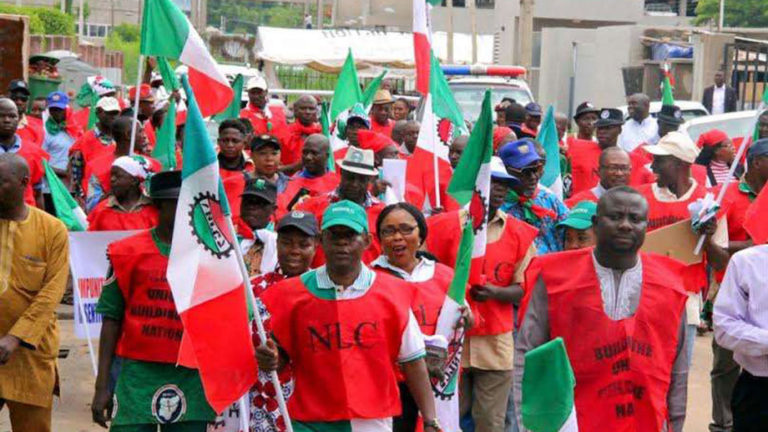
THE Nigeria Labour Congress (NLC) and the Trade Union Congress (TUC) have demanded an extensive review of the retirement age for all civil servants and public workers by five years.

The organised labour unions asked the Federal Government to elongate the age of serving public servants from 60 to 65 years old and the years of service from 35 to 40 years of service.

NLC chairman Joe Ajaero made the demands during the commemoration of the 2023 Workers’ Day with the theme, ‘Workers’ Rights and Socioeconomic Justice’, on Monday, May 1, in Abuja.

Past and present leaders of the NLC and the TUC as well as those of other affiliate unions converged on the Eagle Square, in Abuja, for an event held to mark the 2023 May Day Celebration.

This year’s May Day celebration will be the last to be held under President Muhammadu Buhari led administration.

In an address at the event, Ajaero noted that equity, fairness and justice underpins the survival of societies and creates resilience for nations in the midst of upheavals and turbulence.

He stressed that poor wages, abuse of workplace rights and privileges and unpaid salaries have stripped workers of their fundamental rights.

Ajaero pointed that Nigeria would not develop as a nation if workers refused to contribute their quotas.

“Nigeria and other nations will become dysfunctional if we (workers) don’t work. We are ashamed by the way we are treated, the government must be prepared to treat us better, workers right are human rights,” he said.

The NLC chairman further demanded the immediate setting up of an arbitrary panel to investigate the Chairman of the Independent National Electoral Commission (INEC), Mahmood Yakubu and his team over their conduct in the 2023 general elections.

He further demanded an investigation into the spending of N12 billion by the Ministry of Aviation to buy ten fire trucks.

Also speaking at the event, TUC President, Festus Osifo decried the state of Nigeria’s economy.

According to Osifo, Nigeria’s economy is on auto pilot and it is struggling to survive while those engaged to manage it have kept “throwing filth and injecting toxins into it”.

The TUC chairman however urged the Federal Government to rescind some policies that are detrimental to the progress of the nation.

Those in attendance at the event include the Secretary to the Government of the Federation, Boss Mustapha, Minister of Labour and Employment, Chris Ngige, Minister of the Federal Capital Territory, Mohammed Bello, and the Minister of Women Affairs, Pauline Tallen.

The candidate of the Labour Party in the 2023 presidential election, Peter Obi was also in attendance.

The ICIR reported that the NLC earlier warned that Nigerians may take laws into their hands if results declared by the Independent National Electoral Commission (INEC) in the 2023 general elections does reflect the will of the people.

The union warned of mass protests by Nigerians.

Ohanaeze appeals for Nnamdi Kanu’s release before May 29

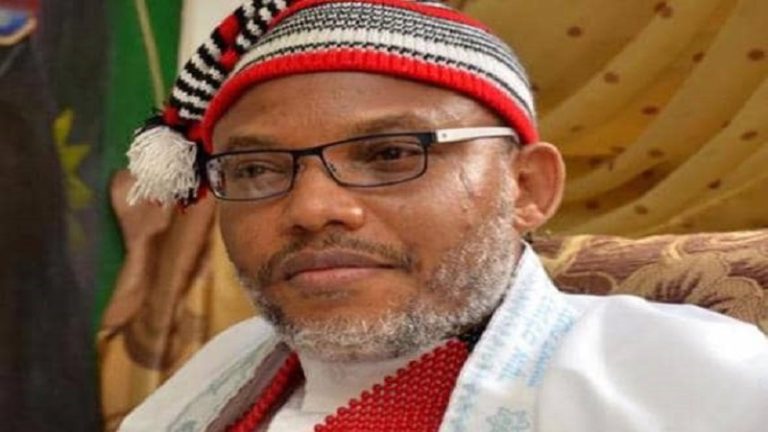
THE newly installed President-General of the Ohanaeze Ndigbo, Emmanuel Iwuanyanwu, has urged President Muhammadu Buhari to free Nnamdi Kanu, the leader of the Indigenous People of Biafra (IPOB), before he leaves office on May 29.

Iwuanyanwu, who spoke in Enugu on Monday, May 1, said Kanu should be released so he could get medical care for his failing health.

According to Iwuanyanwu, Kanu’s release will help to addres security concerns in the South-East.

According to him, the Federal Government and leaders of the zone cannot negotiate peace while Kanu is still being held in custody.

He also emphasised how Kanu’s continuing confinement worries many Nigerians despite the judiciary releasing him.

“It will be the joy of many Igbo and Nigerians to see Kanu released from detention.

“There is also a report that his health is deteriorating. I feel it is important that he is released to have access to his medical doctors so that he does not die in detention,” Iwuanyanwu said.

Kanu has been in the custody of the Department of State Services (DSS) since his arrest and repatriation to Nigeria from Kenya in 2022.

On Thursday, April 27, the Supreme Court adjourned a hearing in Kanu’s appeal to challenge his continued detention.

Kanu, leader of the Indigenous People of Biafra, had on November 3, 2022, filed an appeal at the Supreme Court against a ruling of the Court of Appeal which halted his release from the custody of the Department of State Service (DSS).

The Court of Appeal had on October 28, 2022, following a motion by the Federal Government, stayed the execution of its earlier order acquitting Kanu of all charges and directing his release from the custody of the DSS.

The IPOB leader is challenging the Court of Appeal decision at the Supreme Court.

At the hearing of the appeal on Thursday, before adjourning proceedings, the apex court granted leave to the Federal Government to bring nine new grounds of appeal against Kanu.

A five-member panel led by Justice John Okoro granted the leave for the government to bring the nine new grounds while ruling on the request made by Tijani Gadzali, the Federal Government’s lawyer.

Kanu’s lawyer, Mike Ozekhome, urged the court to grant bail to his client and transfer him to the Kuje Correctional Centre for proper medical care due to the deterioration of his health in DSS custody.

He also prayed that the motion be heard quickly.

In October 2022, the Abuja Division of the Court of Appeal discharged and acquitted Kanu.

Kanu, who the Federal Government is trying on charges bordering on terrorism, was freed by a three-member panel of the court.

The appellate court set aside the judgment of an Abuja Federal High Court, which ordered Kanu to answer seven out of the 15 counts of terrorism filed against him.

Justice Binta Nyako had, in a judgment in April 2022, struck out eight of the 15 counts in the charge preferred against the IPOB leader.

The judge, however, held that Kanu had some questions to answer in counts 1, 2, 3, 4, 5, 8 and 15 of the charge.

But Kanu, through his team of lawyers led by Mike Ozekhome, filed an appeal to quash the remaining seven counts for lack of merit.

In its ruling in October 2022, the Court of Appeal agreed with Kanu’s counsel that the IPOB leader was illegally abducted and extra-ordinarily renditioned from Kenya to Nigeria, against international and local laws.

The panel led by Justice Jummai Hanatu also held that the trial court lacked jurisdiction to handle the charges against Kanu, as he was not adequately arraigned before the court.

The Court of Appeal further held that Kanu’s alleged offences happened in Kenya and not in Nigeria. The court ordered Kanu’s release from custody.

But in a new twist, on October 28, 2022, the Court of Appeal stayed the execution of its earlier order acquitting Kanu of all charges and directing his release from custody. This development forced the IPOB leader to file an appeal at the Supreme Court.

Cancer: NAFDAC begins tests on Indomie noodles

THE National Agency for Food and Drug Administration and Control (NAFDAC) will begin the test on Indomie noodles products on Tuesday, May 2, to ascertain the authenticity of claims by the Taiwan and Malaysian governments that a variety of the products contains ethylene oxide (“EtO”), a cancer-causing chemical linked to lymphoma and leukaemia.

On Saturday, April 29, The ICIR reported that Taiwan and Malaysia recalled the ‘chicken flavour’ variety of Indomie noodles for allegedly containing ethylene oxide after random tests were carried out on several packs.

But INDOFOOD, Indomie noodles producer, debunked the claims and argued that its products were safe for consumption.

The company said in a statement signed by its director, Taufik Wiraatmadja, that “all instant noodles produced by ICBP in Indonesia are processed in compliance with the food safety standards from the Codex Standard for Instant Noodles and standards set by the Indonesian National Agency for Drug and Food Control (“BPOM RI”).

“Our instant noodles have received Indonesian National Standard Certification (SNI) and are produced in certified production facilities based on international standards.”

Similarly, health authorities in Indonesia, where INDOFOOD is headquartered, agreed that the chemical existed in the product but at a minimal and acceptable level safe for consumption.

The Indonesian National Agency of Drug and Food Control, known as the BPOM, in a statement issued on April 27, said the standard for food products manufactured in the nation could contain up to 85 parts per million (ppm) of Ethylene oxide.

The ICIR reports that Indomie noodles is a staple food in many homes in Nigeria, cherished by children and adults.

Because of its popularity, many people in the country identify all noodle products as ‘Indomie’.

The product became popular in Nigeria in the ’90s, though it was first produced in Indonesian, the current headquarters of its manufacturer, in 1972.

Indofood is one of the largest instant noodles manufacturers worldwide. The products are in over 100 countries, including Australia, New Zealand, the USA, Canada, Asia, Africa, Europe and the Middle East.

The product comes in many varieties, from classic soup flavours such as chicken, vegetable, and curry to its most popular flavour indomie mi goreng. 

Its manufacturer claims it produces 19 billion packs annually.

Speaking with The Punch on Monday, NAFDAC’s Director-General said, “Tomorrow, May 2, 2023, NAFDAC’s Food Safety and Applied Nutrition Directorate will randomly sample Indomie noodles (including the seasoning) from the production facilities while Post Marketing Surveillance Directorate samples from the markets. The compound of interest is ethylene oxide, so the Director Food Lab Services Directorate has been engaged. He is working on the methodology for the analysis.

“It should be noted that Indomie noodles have been banned from being imported into the country for many years. It is one of the foods on the government prohibition list. It is not allowed in Nigeria and, therefore, not registered by NAFDAC. What we are doing is an extra caution to ensure that the product is not smuggled in, and if so, our post-marketing surveillance would detect it.”

She explained that the agency would ensure that the spices used for the Indomie and other noodles in Nigeria are tested. 

Sudan crisis: Four days later, Nigerians still stranded at Egyptian border

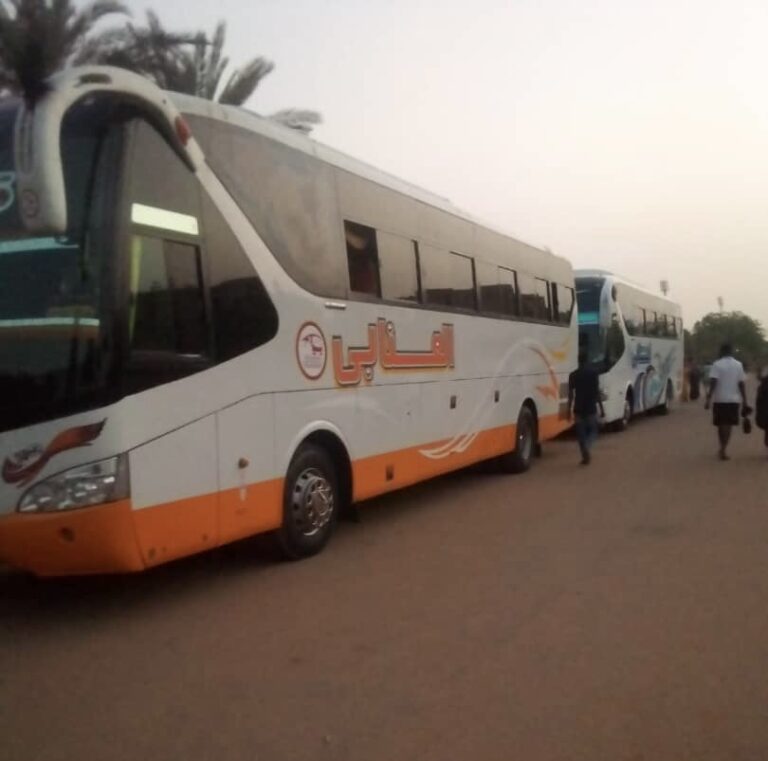
FOUR days after arriving at the Egyptian border, Nigerians being evacuated from Khartroum, Sudan, are still unable to gain access into the country.

This is despite the arrival of aircrafts of the Nigeria Airforce (NAF) in Egypt to evacuate the students.

The Nigerians in Diaspora Commission (NIDCOM) confirmed this in a Twitter post on Monday, May 1.

“The Egyptian border still not opened for our students, but the Nigeria Air Force is ready, the NAF C 130 landed in Aswan Airport, and they say ‘We will not leave without our students,’ ” the tweet partly read.

On Friday, April 28, NIDCOM Chairman Abike Dabiri-Erewa said about 7,000 people, including Nigerians, are stranded at the border, as Egyptian authorities were demanding visa fees before granting them entry.

A source within the National Emergency Management Authority (NEMA) confirmed to The ICIR that the Egyptian authorities are also insisting on admitting the students in small batches based on the number that can be airlifted at a time.

“They are asking for visa processing fees before they allow them in. Secondly, despite the long distance between the border and Aswan, they want a situation where only the people the aircraft will carry will go.

“They do not want anybody to go and be redundant, they are not open to our people going to wait at the airport, though the NAF C130 is already in Aswan to airlift them,” the source said.

The ICIR also learnt that the Federal Government was considering changing the route through which Nigerians are evacuated from Sudan due to the hassles experienced at the Egyptian border.

“Because of that, we are exploring the possibility of changing course, by moving those in Khartoum through Port Sudan, which is by the Red Sea,” the source added.

He noted that the journey through Port Sudan would be more dangerous, as it required moving further through the war-torn country, putting the travellers at risk of attack from the warring parties.

However, he pointed out that Nigerian President Muhammadu Buhari was in talks with Egyptian President Abdel Fattah El-Sisi, adding that if a productive conclusion was reached, the risky alternative of moving through Port Sudan would be abandoned.

Nigerians in Sudan had left Khartoum, the country’s capital, by road for Aswan, Egypt, early on Wednesday, April 28.

The Sudan crisis had frustrated the Nigerian government’s efforts to airlift the stranded students directly from Khartoum.

Kwara CP orders arrest of drunk officer in viral video

0

THE Commissioner of Police in Kwara state Paul Osama has ordered the arrest of a policeman, identified as Stephen Yohana, who was captured, in a viral video, drunk while he was on duty.

In a statement on Sunday, April 30, the public relations officer (PRO) of the command Okasanmi Ajayi disclosed that Yohana is an officer under the Sare Division, Ifelodun Local Government Area (LGA) of Kwara state.

“After viewing the video, the Commissioner of Police, Paul Odama, swiftly directed that the policeman be identified and arrested.


READ ALSO:

Police arrest suspects over murder of its officers in Imo

NPF partners Hungary Police to arrest suspected cyber criminal in PH

Police to demolish gunmen’s hideouts in Anambra

Tanker explosion kills 13 people in Jos – Police


”The command wishes to state that the police inspector, who is attached to Sare Division in Irepodun LGA of Kwara State, has been identified and discovered to be currently undergoing medical examination in the police clinic, to ascertain the state of his mental health,” Ajayi noted.

Yohana was captured in the video urinating and excreting in his uniform while being guided by two of his colleagues.

“He claimed his salary is not enough for him to do anything. I want the whole world to see you and wait to see what the authorities would do about the issue,” a voice was heard saying in the video.

Stating that Yohana’s behaviour was observed to be more medical than alcoholic, the PPRO

said the result of the officer’s medical examination would determine the command’s next line of action.

“Consequently, the CP has directed that the inspector be put under close observation by his immediate supervisor, the Divisional Police Officer of Sare Division pending the conclusion of his treatment,” Ajayi noted.

AMCON shrinks seven banks’ profits by N95.68bn amid concern to scrap agency

SEVEN commercial banks paid a total of N95.68 billion in the first quarter (Q1) of this year as a levy to the Asset Management Corporation of Nigeria (AMCON) amid concern over the continued existence of the agency, The ICIR can report.

This was reported in the unaudited financial statements of Access Holdings, FCMB Group, Guaranty Trust Holding, Stanbic IBTC Holdings, Union Bank of Nigeria, Wema Bank and Zenith Bank for the period ended March 31, 2023.

The cumulative figure represents the 0.5 per cent AMCON charges on banks’ preceding year’s total assets and contingent exposures.

Established under the AMCON Act 2010 and started operations on July 11, 2011, AMCON was premised on a 10-year mandate to save the Nigerian banking industry from imminent collapse by efficiently resolving their non-performing loans (NPL), following the 2007–2008 financial crisis.

Following the expiration of 10 years, concerns have been mounting over the legality of the continued existence of the corporation.

“AMCON was set up as a special purpose vehicle (SPV) with a time frame to resolve the bad loans crisis of Nigerian banks which arose from the impact of the global meltdown in 2008. The timeframe set for the existence of AMCON has since passed, yet the SPV has not been wound up. It has now become a permanent crisis resolution mechanism,” David Adonri, the executive vice chairman of Highcap Securities Limited, shared his thoughts with The ICIR.

Adonri noted that from the onset, it was agreed banks would contribute a certain percentage of their income to a sinking fund created by AMCON to offset the liabilities attendant to the mopping up of the bad loans.

“As long as AMCON remains in existence, banks will continue to contribute to the sinking fund.

“The status of AMCON now in respect of the implementation of its assignment is not known. If AMCON can be more transparent in disclosing its state of affairs, it will be seen whether there is any compelling reason for its continued existence,” he said.

According to the national chairman of the Progressive Shareholders Association of Nigeria (PSAN), Boniface Okezie, the government of the day seems unconcerned about the continued operations of AMCON.

AMCON gulps N95.68bn from seven banks in Q1 2023

“We have been calling on the so-called AMCON to wind up its operations, but it has fallen on deaf ears. Nobody is listening,” he told The ICIR.

Shareholders are concerned as the AMCON levy lowers shareholders’ funds meant to take up investments.

He questioned, “How much have the governments committed to AMCON to fund its operations since its creation? All the money they have been milking from the same banks and companies they confiscated their access to, have they been accounted for once? Has AMCON ever published its accounts since inception? If it has, where is it? Have they been into profits or losses?”

Okezie stressed that the banks AMCON came to rescue had been the one funding its operations.

“This is sad for the country as AMCON has ended up putting some banks in a mess through the AMCON levy, which runs into trillions of naira.

“But at the same time, there is nothing to show for all these huge amounts of money. In fact, AMCON has outlived its usefulness. It is high time it called it quits to allow banks to live healthy financially as its continuous existence will further kill the banks to the point of no return,” he said.

However, findings by The ICIR showed the total profit before tax (PBT) for the seven banks rose to N308.57 billion in Q1 from N223.19 billion in the corresponding period of 2022, while the AMCON levy, an operating expense on the banks’ financial books, lowered their profitability by 22.54 per cent from N95.68 billion, from N78.08 billion in Q1 2022.

The managing director and chief executive of AMCON, Ahmed Kuru, had said banks’ contributions to the sinking fund in recent years had been low and not enough to pay out its debt.

If the bank’s debt owed to the CBN was not fully repaid before the sunset date of 2023, banks would continue to pay into the fund, which would then be with the CBN, Kuru said.

He noted that the funding arrangement of the corporation was that commercial banks provide 70 per cent, while AMCON would take care of 30 per cent.

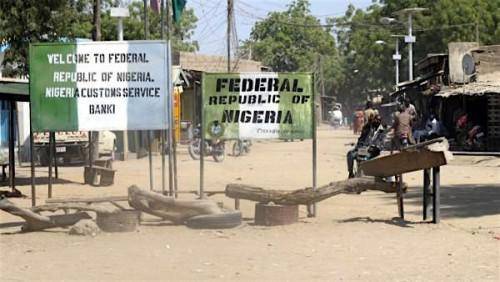
Four years after, Nigeria E-border surveillance project remains incomplete

IN 2019, the Federal Executive Council (FEC) approved N52 billion to purchase E-border surveillance systems for the country.

The project was part of efforts to ensure effective monitoring of the nation’s borders through technology. Once fully implemented, the system would monitor and provide real-time information from major border posts in the country. 

Ultimately, it was an effort to check the age-long porous border crisis bedevilling the country for years due to inadequate manpower.

“You will recall that when we came, I made the observation that our borders are very porous and diverse and that it is impossible to man these borders physically,” Abdulrahman Dambazzau, the former Minister of Interior, told the FEC members in 2019.

He identified 1, 400 illegal routes which had become access ways for cross-border criminal activities. 

Mohammed Babandede, the former Comptroller-General of the Nigeria Immigration Service (NIS), also at a public function, lamented the inability of the immigration officials to man the 140 border points in the country effectively.

He also admitted to the porosity of the borders, alluding to the same argument that the nation’s borders cannot be effectively managed without a comprehensive surveillance system at the border points.  

“Therefore, there is the need for modern technology to be able to monitor our borders,” Dambazzau, said, “We also thought of the capacity to respond to emergencies at the borders.” 

As such, the federal government opted for technological surveillance to improve the protection of the porous borders — which the president, Mohammed Buhari, once said can only be done by God. 

The project is handled by the National Immigration Service (NIS) and supervised by the Ministry of Interiors. 

The NIS indicated that the borders would be equipped with tech devices like high-definition video surveillance for pedestrians, observable thermal and optical bi-spectrum for low visibility environment, unified internet protocol telephony and videoconferencing facilities and advanced eLTE multi-media walkie-talkie communication.

Dambazzau said it was to be completed in two years. That is, 2021 as the NIS  earlier launched a pilot project which turned out successful.

“This project will cover 86 border posts and monitor 1,400 illegal routes used for smuggling and all kinds of cross-border criminal activities.

“The Nigeria Immigration Service will work very closely with the air force, the army units deployed near the borders, and the customs regarding smuggling,” the former minister added.

However, The ICIR can confirm that it is yet to be completed four years after the project approval. The electronic border surveillance systems project has been footdragging, thus, contributing to the influx of people from the unmanned areas. 

Why the project was delayed

In the course of this finding, The ICIR found that going by Dambazzau’s statement, the project should have been completed by 2021, but the project did not even commence in that year – 2019. 

It started in 2022, about three years after approval. The Federal Ministry of Interior blamed it on the lack of funds. FG said it failed to implement the project because it could not get the N52 billion loan it sought from the Chinese Exim Bank. 

The ICIR sought to find out the loan status from interior ministry officials, but it proved abortive. This reporter contacted the interior ministry’s spokesperson, Shola Fasure, but he referred to the NIS spokesperson, Tony Akuneme.

The ICIR later contacted Akuneme, but he would not provide details of the project over the phone call. He asked that the inquiry be sent to the short message mobile application – WhatsApp. This reporter did as directed, seeking the opportunity to ask all relevant questions, but he did not respond. He later referred this reporter to the Acting PRO, Kenneth Kure of the NIS, two weeks later after a reminder. 

Still, as of the time of filing this report, Kure is yet to respond.

Nigeria has a long debt history with China. Experts have argued that the debt profile could seriously threaten its economy.

In 2021, the federal government spent about $598.59 million on debt servicing to the World Bank and the Exim Bank of China. An estimated $207 million was paid to the Exim Bank of China for different projects which the loan was used for, which included Airport Terminals, communication systems, water & electricity distribution, railways, etc.

Even after the clearance of this amount, Nigeria still owes about $3.67 billion to China.

Insecurity and Porous Border – the siamese twin

Reports have shown that poor border axis management is a prolonged challenge that has fueled Nigeria’s security challenges. As a result, it also crippled business activities in border communities due to the insecurity situations.

Nigeria occupies an area of 923,768 square kilometres, with about 1,409 illegal entry points- 1,406 more than the approved legal routes into the country.

Most borders are poorly managed; they have become conduits for illegal and notorious crimes such as illegal migration, illicit transactions, hideouts for insurgents and bandits and the trafficking of small arms and light weapons and drugs.

In 2022, 4,545 people were killed by non-state actors, and 4,611 others were kidnapped. Currently, there are 2.182 million internally displaced Nigerians.

Actors responsible for the violent attacks differ in regions but are all aided by access to ammunition smuggled into the country. The bulk of small weapons in Nigeria is illegally possessed.

A report by SMB Intelligence puts small arms in the hands of civilian non-state actors at 6,145,000. This number represents 8.71 per cent of the total small arms and firearms circulation.

The northeast has the highest concentration of border communities and the worst border-related crimes; the northwest has some of the most notorious borders in the country—the country also has boundaries with Benin and Togo in the Southwest area where smuggling is rife. 

According to the chief of defence staff, Lucky Irabor,  the illegal border routes in Nigeria are impeding the fight against terrorism. Because they are unmanned and easily penetrable, the borders are a key source of criminality and violent crimes and will continue to be if security is not improved.

Budgets for surveillance equipment

Though the e-border project commenced much later in 2021. The ICIR findings revealed the ministry had budgeted over N1.78 billion for the provision of surveillance and communications equipment at the border in the last six years. 

The ministry began to budget for the project in 2018, a year before it’s approval. 

That year, the Ministry of Interior budgeted N900 million for the equipment, then N147.4 million the following year. In 2020, it budgeted N95 million, then N140.3 million in 2021 and almost N333.6 million in 2022.

Also, in its 2023 proposed budget, the ministry allotted N166.8 million for the project.

Checks by The ICIR also showed that the ministry began to budget for E-border installation consultancy in 2021. 

For the same consultancy, it budgeted N200 million in 2021, N90 million in 2022 and N40 million in 2023. 

When The ICIR reached out to the interior ministry’s spokesperson, Fasure, he said he has little knowledge about the state of the project and is not in the best position to address the subject. 

Limited resources 

In October 2022, the interior ministry eventually awarded the e-border contract to the Chinese tech giant Huawei. This was after repeated efforts to shield the contractor from public knowledge. 

A former prosecutor with the Special Presidential Panel on Recovery of Public Property, Tosin Ojaomo, 2021, requested the list of companies involved in the multi-billion naira project, but the ministry declined.

Akuneme subsequently told The ICIR that the equipment had been installed in 17 of the 86 legal border routes in the country. This figure, however, differs from the number of border points earlier announced. 

The NIS spokesperson disclosed that none of the e-border equipment would be installed at illegal border routes, as against what Dambazzau, the former interior minister, had said in 2019.

According to him, illegal borders are difficult to monitor, and the resources are limited, thus, illegal borders are excluded from the project.

“There are so many routes, and we do not have the resources to manage all the routes, including unapproved routes, so we are concentrating on approved routes, and we still need more resources if we can cover them all.

“But we will continue expanding our scope according to the available resources.

“Yes, we would like to police the entire country, but I don’t think we are capable; even America, with all their workforce, has been unable to stop Mexicans from trooping in,” he said.

Focusing solely on the approved land borders for the project implementation would possibly mean that crimes carried out at illegal borders might continue unabated.                                    

 Implication of excluding unmanned borders from e-border initiative 

A Security Analyst with the SBM Intelligence, Confidence McHarry, while reacting to the project execution approach, said the government’s decision to focus on approved borders considering its financial pool and workforce is understandable. However, he disclosed it would adequately affect its ability to protect the unmanned border areas scattered across the nation.

He expressed concerns that the focus on just legal routes meant the crimes carried out in porous areas would continue to thrive.

MacHarry said, “the government does not have enough workforce to man all its borders, including areas rife with insecurity.

“There are so many illegal entry points. The initiative to focus on what they can man is understandable, but the impact can be grim as border porosity will continue to be a problem.”

To solve the challenge, McHarry said the government needs to look for the requisite resources to protect the borders.

Another security analyst, Timothy Avele, believes installing technological equipment at the approved border areas would reduce the crime rate at border areas. 

Avele, the managing director of Agent-X Security Group, a security startup in Nigeria, described the initiative as a move in the right direction.

He however notes that if there is no strong political will and corruption is not addressed, even the equipped borders will function at a minimal rate. 

“Despite the good intention behind the e-border project, the major drawback is the political will to implement it wholeheartedly without reading any negative meaning into its implementation by states.

“Another negative and perhaps the greatest hindrance will be corruption by the security agents and officials who will mount and monitor these projects. 

“Regardless of the equipment quality; if corruption is not prioritised, the government will only be wasting funds,” he said.

Stanbic IBTC battles 423 court cases amounting to N266.48bn

STANBIC IBTC Holdings Plc says it is contesting a total of 423 court cases arising from alleged errors, omissions and breaches, which amounted to N266.48 billion claims against the bank as at March 31, 2023.

The bank disclosed this in its unaudited financial statements for the period ended March 31, 2023.

The bank further stated that there were no other events that could have a material effect on its financial position after this date that had not been recognised or disclosed.


READ ALSO:
UBA, Jaiz, FCMB, Stanbic IBTC pay N1.38bn fine for money laundering, other offences

Diamond, Zenith, Stanbic IBTC, others top list of banks owing N1.6 billion stamp duty — Reps

Investors lose over N856bn in March as market cap falls below N30trn mark

Currency Redesign: Cash crunch eases slightly, as PoS operators reduce transaction charges


“The Group’s total litigation as at 31 March 2023 consisted of 423 cases with an aggregate value of monetary claims against the Stanbic IBTC Group, and was N266,482,898,483.15; USD$4,468,675.78 and GBP£75,840.71,” it said

The Group considered the claims against it as generally having a low likelihood of success.

It said, “In the ordinary course of business, the Group is exposed to various actual and potential claims, lawsuits and other proceedings that relate to alleged errors, omissions, and breaches.

“The directors are satisfied, based on present information and the assessed probability of such existing claims crystallising that the Group has adequate insurance cover and/or provisions in place to meet such claims.”

The bank maintained that the ultimate resolution of any of the proceedings would not significantly affect the group.

However, it said, “Where the group envisages that there is a more than average chance that a claim against it will succeed, adequate provisions are raised in respect of such claim.”

Stanbic IBTC disclosed it was also involved in litigation against the Asset Management Corporation of Nigeria (AMCON), a body established to take over banks’ non-performing loans (NPL)

The bank had in December 2012 entered into an agreement with AMCON to purchase what it called “Eligible Assets” (non-performing loan) of a client, which the bank had classified as “doubtful”, The ICIR can report.

It stated, “AMCON confirmed its willingness to purchase the proposed Eligible Assets (used as collateral in monetary policy operations) at a total consideration of about N10 billion, which sale/purchase was concluded in December of 2012.

“As a precondition for the sale, AMCON unequivocally stated that the pricing of the Eligible Bank Assets was subject to adjustment within twelve (12) months in line with AMCON guidelines after due diligence on information the Bank had supplied to AMCON.”

AMCON had by a letter dated October 4, 2017 informed the bank of its intention to re-price the loan and claw back the sum of N5.7 billion, being what was alleged to be excess overpaid consideration, as a result of what was felt was an overvaluation.

In its response to the allegation, the bank said it “emphatically” denied the allegations and provided evidence to AMCON to the contrary.

“The Bank noted that AMCON’s attempt to re-price the sold assets was outside the 12-month claw-back period provided in AMCON’s guidelines.

“Notwithstanding all the clarifications made by the bank, AMCON proceeded to apply to the Central Bank of Nigeria (CBN) to debit the bank’s account with the sum requested to be clawed back, plus possible accrued interest,” Stanbic IBTC said.

On July 31, 2019, the apex bank wrote to Stanbic IBTC, informing it of AMCON’s request to debit its account.


READ ALSO:


Following this, the bank said it instructed its lawyers to institute a legal action against AMCON, pursuant to which it obtained an interim injunction (ex-parte), restraining AMCON and the CBN from debiting its account for the alleged claw-back sum.

“However, the Bank subsequently discovered that AMCON had earlier filed a suit at the Federal High Court, Lagos Division, on the same subject matter. Consequently, the Bank discontinued its suit against AMCON and filed a counter-claim against AMCON in its suit,” it added.

We have no plan to phase out redesigned naira notes – CBN

THE Central Bank of Nigeria (CBN) has said it does not have any intention of phasing out the redesigned naira notes from circulation.

The CBN had redesigned the N200, N500 and N1,000 notes, and introduced the new notes into circulation on December 15, 2022. The new notes are now existing with the old ones, which the Supreme Court mandated the CBN to retain as legal tender till December 31, 2023.

The redesigned notes have, however, been scarce in circulation, and there have even been talks in some quarters that the apex bank might be thinking of phasing them out entirely.

But the Acting Director, Corporate Communications Department of the CBN, Isa AbdulMumin, said in a statement he issued today in Abuja that such an intention did not exist.

AbdulMumin said that the new and old currency notes have been circulating side by side, although checks across some cities across the country showed the new notes circulating sparingly.

“The CBN has been taking delivery of a good quantity of the redesigned banknotes from the Nigeria Security Printing and Minting Company Limited,” he said, adding that the apex bank was committed to supplying the “approved indent” for the smooth running of the economy.


READ ALSO:


“We, therefore, urge members of the public to disregard any report suggesting a phase-out of the redesigned currency.

“For the avoidance of doubt, the redesigned and old notes will continue to be accepted as legal tender.

“They will circulate side-by-side for transactions ahead of the December 31 deadline, when the old N1,000, N500 and N200 banknotes will eventually be phased out,” he said.

Adamawa Election: Suspended REC breaks silence, claims his action lawful

THE suspended Resident Electoral Commissioner (REC) of Adamawa State, Hudu Ari, has said that his action during the April 15 supplementary election was lawful.

Ari stressed that he announced the results of 69 polling units in the April 15 supplementary election due to security pressure.

The embattled REC made the claim a week after The ICIR reported that INEC was confused over his whereabouts.

In a letter signed by Ari to the Inspector-General of Police, the chairman of the Independent National Electoral Commission (INEC) and the director-general of the Department of State Services (DSS), he explained his role in the controversial declaration of the governorship election.

He stated that he acted within the ambit of the law to avert impending danger of the delay in announcing the results.

According to Ari, “the results brought by the presiding officers from the 69 polling units, which he did not sign, differed from those uploaded on the INEC Result Viewing (IReV) portal.”

He pointed out that attempts had been made to replace him as the collation officer with the administrative secretary.

He further alleged that he was threatened by contesting candidates, and his residential home was surrounded by policemen from the Government House.

“It was based on this that I compiled all the polling unit results and declared the winner of the election based on the highest number of valid votes scored by the candidate of the APC.

“I had the breakdown of the valid votes scored by the two leading candidates in the supplementary election, using the results from the polling units as collated into all relevant forms EC8B, C, D and E respectively by properly and legally appointed and recognised collation officers and my humble self as the Adamawa State Chief Collation Officer and Resident Electoral Commissioner (REC).

“Prior to the declaration, there was an intelligence report made available to me that the two national commissioners were at the Government House, Yola at 8:31pm on April 15, 2023 and held a meeting with Governor Ahmadu Umaru Fintiri.”

He accused some PDP supporters of attacking two INEC commissioners and the returning officer because of Fintiri’s defeat.

“It was alleged that the people beaten in the purported video wanted to subvert the rerun election in Adamawa State and undermine the will of the people as expressed through the ballot,” he said.

The ICIR reported that President Muhammadu Buhari approved the suspension of the Adamawa REC on Thursday, April 20.

The development was disclosed in a statement signed by the Director of Information in the Office of the Secretary to the Government of the Federation, Willie Bassey.

The statement noted that the Adamawa State Police Commissioner, Directorate of State Services (DSS) officials and their counterparts from the Nigeria Security and Civil Defence Corps (NSCDC), who allegedly aided Ari’s declaration,  would be investigated alongside the suspended INEC official.

Buhari ordered the Director-General of the DSS and Commandant-General of the NSCDC to probe their officials who were involved in the illegal act.

Controversial declaration of election result

The ICIR also reported that the Peoples Democratic Party (PDP), whose candidate and incumbent governor, Ahmadu Fintiri, was leading in the results already announced by the electoral body, protested the declaration of the APC flagbearer as the winner of the Adamawa poll.

The suspended REC illegally declared the winner while the collation of results had yet to conclude.

According to the Electoral Act (2022), the Returning Officer for the election, rather than the REC, has the power to declare the winner of an election.

Fintiri had the highest number of votes cast in the governorship election held on March 18, but some votes were cancelled, and the election could not hold in some parts of the state, compelling INEC to declare the exercise inconclusive.

Fintiri polled 421,524, while Binani secured 390, 275 in the March 18 election.

The incumbent governor won 13 of Adamawa’s 21 local government areas, while Binani won eight LGAs in the first round of the exercise on March 18.

Similarly, Fintiri was leading in the supplementary votes counted in 10 out of the 20 local government areas when the REC made his pronouncement.

The ICIR also reported that INEC declared Fintiri the winner on Tuesday, April 18, after polling 430,861 votes to beat Binani, who got 398,788 votes.