Home Blog Page 964

Excitement at Immigration as FG directs Acting CG to proceed on retirement

THE Governing Board of the Nigeria Immigration Service (NIS) has asked the Acting Comptroller-General (CG) of Immigration, Isah Jere Idris, to proceed on retirement on or before April 24, 2023.

The Punch reported that the Board gave the directive in a memo dated Monday, April 17.

The memo was signed by the secretary of the Civil Defence, Correctional, Fire and Immigration Services Board, Obasi Edmond, on the orders of the Board Chairman and Interior Minister, Rauf Aregbesola.

It was titled, “Notification of expiration of one-year extension in office as acting Comptroller-General, Nigeria Immigration Service.”

In the memo dated April 17, 2023, with code number CDCFIB/APPT.CG&DCG/61/VOL.IV/74, the Board advised the CG to hand over to the most senior officer in the organisation. 

Part of the memo reads, “I write to draw your attention to the end of one-year extension in office granted to you by Mr President via letter no. SH/COS/42/3/3/A128 date April 22, 2022, and which would be expiring on April 24, 2023.

“Consequently, you are directed to hand over to the most senior Deputy Comptroller-General on or before Monday, April 24, 2023, pending Mr President’s appointment of a substantive Comptroller-General of the Service.

“The Board is grateful to you for your immense contributions to the Nigeria Immigration Service and to the country and wishes you success in your future endeavours.”

President Muhammadu Buhari had, last year, extended the service of the acting CG, who was due to retire on April 17, 2022, when he clocked 60 years, according to the civil service rule.

Buhari had appointed Idris to replace Muhammed Babandede, whose tenure ended in 2021. He was in office for five years.

His appointment was frowned at by some Nigerians who accused the President of picking people of Northern extraction to head all the country’s paramilitary agencies throughout his two terms in office, totalling eight years.

The President leaves office on May 29.

Idris was in charge of Finance and Accounts in the Immigration Service when he was appointed.

Meanwhile, sources at the Immigration Service told The ICIR on Wednesday, April 19, that Idris was not ready to leave until the Board asked him to quit.

During a visit to the NIS headquarters on Wednesday, The ICIR reporter observed that many Immigration staff were excited about the government’s decision to retire the acting CG.

The ICIR reporter spoke to a number of Immigration personnel, who expressed happiness at the development.

“Don’t mind him. He was supposed to go last year in April. He was looking for an extension. He was not ready to go until Aregbesola (interior minister) told him to go,” a staff who did not want to be named said.

Other staff who spoke with The ICIR reporter expressed similar views. It was gathered that many personnel of the Immigration Service were not happy with the extension of the acting CG’s service last year.

Another staff urged the Federal Government to appoint the most senior official of the agency as the substantive CG.

“The government should look at the year of entry of the two most senior (people in the organisation). Aregbesola must put a CG there before quitting because he (the minister) is leaving with the President. Let’s see how it goes between now and next week.”

Checks by The ICIR revealed that the most senior official in the institution is due to retire next month (May).


Reuters Institute hosts seminar series

THE Reuters Institute for the Study of Journalism will host a series of weekly seminars on global journalism from April to June on Zoom as part of its Journalist Fellowship Program.

Guests will discuss some of the most pressing issues in journalism including climate reporting and the environment, the intersection between AI and journalism, and crowdfunding.

They will also share how to use tools like TikTok and how to deal with online hate and harassment.

The weekly sessions will run from April 26, 2023, to June 21, 2023. Anyone can attend this free program.

Registration is ongoing but required. Interested persons should apply here.

NCoS blames govs as number of prisoners on death row rise to 3,298

THE Nigerian Correctional Service (NCoS) has said there are about 3,298 inmates on death row in Nigerian prisons.

NCos public relations officer, Abubakar Umar, said this in an interview with NAN on Wednesday, April 19.

The prisons spokesman blamed the high number of death row inmates on the hesitation of state governors to sign death warrants.


READ ALSO:

NCoS destroys prohibited items worth over N150m

Key issues in Judiciary, NDLEA, NCoS in 2022

NCoS dismisses nine officers, retires 25 others over misconduct

Only two per cent of inmates in Nigeria are female – NCoS


According to him, death sentences are not always carried out due to the governors’ reluctance to sign warrants for execution of condemned prisoners.

“As of today, we have a total of 3,298 inmates on death row. They constitute about 4.5 per cent of the total number of inmates in our various custodial centres nationwide,” he said.

“They are awaiting the hangman’s noose in our custodial centres after being found guilty of capital offences.”

However, Umar further explained that sometimes execution of condemned prisoners is delayed because the concerned cases are still being appealed at higher courts.

“There are often long periods of uncertainty for the convicted prisoners while their cases are being appealed at higher levels.

“Some offenders have not been executed more than 15 years after their convictions.”

He noted that some inmates on death row committed capital offences like culpable homicide, armed robbery and terrorism.

The NCoS spokesman noted that, although they have been condemned, the inmates are given the opportunity to turn a new leaf.

“The good thing is that we engage all of them in activities that will reform and modify their behaviours.

“The goal is to make them better citizens of the nation.

“We also make them undergo personal development programmes like anger management, civic education, as well as entrepreneurship.”

Although the death sentence is legal in Nigeria, executions are a rarity.

While state governments rarely approve the execution of the death penalty, judges continue to pronounce the capital punishment for offences like treason, kidnapping, murder, armed robbery and involvement with militia groups.

The Federal Government has repeatedly called on state governors to exercise their constitutional responsibility of signing death warrants of criminals on death row.

In a report released in 2018, the human rights group, Amnesty International noted that Nigeria has the highest death row population in sub-Saharan Africa.

The group disclosed that between 2007 and 2017, there were seven executions in the country, with the last in 2016.

However, Amnesty International has also called for the abolition of the death sentence in Nigeria.

Biophilia Award recognises environmental communication

THE BBVA Foundation is accepting entries for the Biophilia Award for Environmental Communication.

The award aims to recognise contributions in any aspect of environmental communication, especially in the areas of biodiversity conservation and climate change, characterised by a particularly innovative approach.

These contributions may encompass a wide spectrum of formats, styles, and channels, including articles, monographs, multimedia materials and books, the preparation, editing, and presentation of reports and documentaries, the design and curatorship of exhibitions, and projects in any medium (press, radio, television, film, documentary or Internet).


READ ALSO:


The winner will receive EUR100,000 (US$109,278), a diploma, and a commemorative artwork during a public ceremony.

Journalists, filmmakers, and documentarians can compete for a cash prize.

The deadline for submission of entries is May 31, 2023. Interested applicants can apply here.

Nikon, others offer grants for visual photographers

WOMEN PhotographLeica USAMPB and Nikon are inviting emerging visual journalists to apply for documentary grants.

Grants, which vary from US$5,000 to US$10,000, can support either new or in-progress documentary projects.

Applicants are invited to submit a photo story, rather than singles, as part of the application. Multimedia projects are welcome.

Additional consideration will be given to applicants who are engaged with the communities they cover beyond traditional journalistic documentation.

The organisers say funding should primarily be used to support the production of new work, including the hard costs of reporting, and photographers’ creative fees, but may also partially fund community engagement programming.

Women and non-binary documentary photographers of any nationality can apply for grants.

The deadline for the submission of application is May 15, 2023. Interested applicants can apply here.

Video does not show INEC REC for Adamawa brutalised

A video showing a lynched man inside a vehicle has surfaced online with a claim that it shows the INEC Resident Electoral Commissioner (REC) in Adamawa State, Hudu Ari, who declared Aisha Dahiru, popularly called Binani, as the winner of the governorship election in the state.

The video is circulated while collation of the results of the governorship supplementary election in Adamawa state was ongoing. 

Ari made the declaration on Sunday morning amidst chaos at the collation centre in Yola, the state capital, Daily Trust reported earlier.

A video of Ari announcing Binani as the winner of Adamawa governorship election had stirred controversies both online and offline.

The Independent National Electoral Commission (INEC) has, however rejected the announcement and suspended the process till further notice, Channels TV and Premium Times reported.

A Twitter user, Bulama tweeted the video with a caption that read:

Adamawa INEC commissioner, after declaration of Binani this is what happened to him.” 

The tweet has garnered over 200 retweets and 400 likes as of Sunday evening on April 16, 2023.

The video has also gone viral on multiple social media platforms.

THE CLAIM

Video shows INEC REC brutalised in Adamawa state.

Screenshot of the viral social media post

THE FINDINGS 

Findings by The FactCheckHub show that the claim is FALSE.

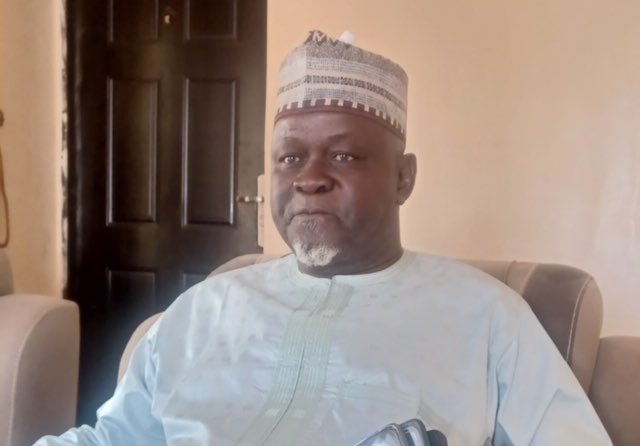
While the context of the video is yet to be ascertained, The FactCheckHub found out that the man in the video is not the INEC Resident Electoral Commissioner (REC) in Adamawa State but the INEC national commissioner and chairman, board of the Electoral Institute, Abdullahi Abdul Zuru.

INEC national commissioner and chairman, board of the Electoral Institute, Abdullahi Zuru.

Zuru is a former vice-chancellor at Usmanu Danfodiyo University, Sokoto.

However, the controversial INEC Resident Electoral Commissioner (REC) in Adamawa State is Hudu Ari.

Hudu Ari, INEC Resident Electoral Commissioner for Adamawa state.

THE VERDICT

The claim that the video shows the INEC resident electoral commissioner for Adamawa is FALSE; findings revealed that the man in the video is Abdullahi Abdul Zuru, INEC national commissioner and chairman board of the Electoral Institute.

This report was republished from the FactCheckHub. Read the original HERE

Scam website circulates as FG plans to distribute fuel subsidy removal palliative

3

A claim that the Nigerian government has started distributing fuel subsidy removal palliative to fifty million Nigerians has been circulating on WhatsApp.

The claim was contained in a broadcast message sent to various contacts in a WhatsApp group.

The message asked individuals to check if they are eligible to receive fuel subsidy palliative from the federal government.

The WhatsApp broadcast read:

Welcome to Fuel Subsidy Removal Palliative.

Check now if you are among the 50 Million Nigerians to receive Fuel Subsidy Palliative from the Federal Government of Nigeria.

CHECK NOW

https://shtnar.com/Fuel-Subsidy-Palliative

THE CLAIM

The federal government is distributing fuel subsidy removal palliative to Nigerians.

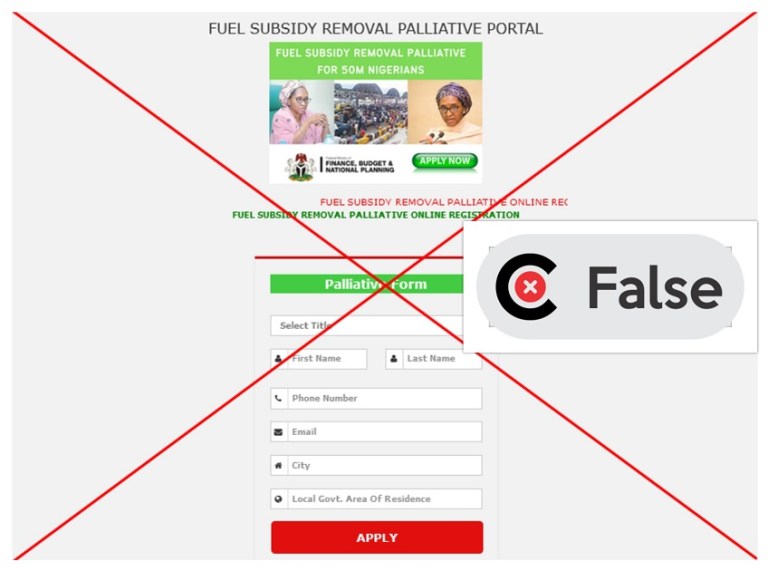
A screenshot of the page from the website.

THE FINDINGS

Findings by The FactCheckHub  show that the claim is FALSE as of Sunday, April 16, 2023.

Earlier in April 2023, Nigeria’s Minister of Finance, Budget and National Planning, Zainab Shamsuna Ahmed Zainab Shamsuna Ahmed, said the federal government borrowed $800 million from the World Bank to use as palliative ahead of the total removal of petrol subsidy in June 2023, Daily Trust reported.

According to her, the fund will be disbursed to the 10 million households (equivalent to about 50 million Nigerians) considered most vulnerable already captured by the National Social Register (NSR) to cushion the effect of the subsidy removal.

Following that announcement, many phishing websites and online scams have surfaced, alleging that the palliative distribution by the Nigerian government has started.

Findings by THE ICIR revealed that no credible media platform published any report on the commencement of the distribution of the fuel subsidy removal palliative as of Sunday, April 16, 2023.

However, a careful look at the website link shows that the domain name is a phishing website, used by scammers to collect the personal details of online users.

Phishing is a form of fraud in which an attacker masquerades as a reputable entity or person in email or other forms of communication.

Whenever users click the web link stated in the WhatsApp broadcast, it neither directs them to the official web page of the State House or National Social Register

Rather, it asks them to fill in personal details like name and bank details. Thereafter, users are asked to share to groups and their phone contacts till a ‘green bar is full.’ This is a typical modus operandi of most phishing websites and online scams.

To avoid falling victim to click baits by scammers, learn how to identify phishing scams and websites here.

You can also read our tutorial on how to verify viral WhatsApp messages here.

THE VERDICT

The claim that the federal government is distributing fuel subsidy removal palliative to Nigerians is FALSE; findings revealed that it is a phishing website.

Cover image by Freepik 

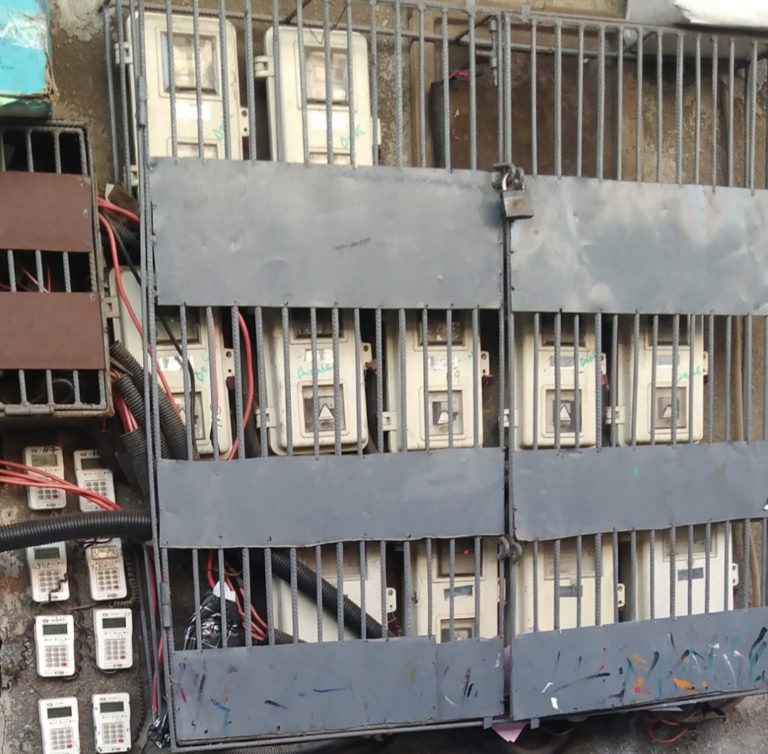
DisCos grow profit from estimated billing, amid FG’s slow pace on mass metering

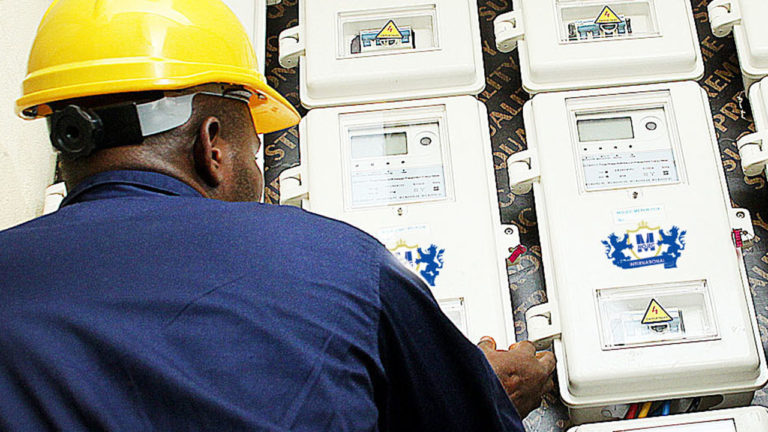
NIGERIA’S 11 electricity distribution companies (DisCos) rely on unmetered customers to earn profits, with the Federal government’s mass metering intervention moving at snail’s speed.

Data from the National Bureau of Statistics (NBS) revealed that estimated electricity customers stood at 5.91 million in the third quarter of 2022, higher by 1.09 per cent on the 5.85 million figure recorded in the second quarter of the year.

Although the NBS report stated that on a year-on-year basis estimated customers declined by 6.38 per cent in the third quarter of 2022 from 6.32 million recorded in the third quarter of 2021, revenue collected by the DisCos during the period stood at N202.62 billion in the third quarter of 2022, from N188.41 billion in the second quarter, indicating a rise of 7.54 per cent.

The Federal government had in 2020 commenced a mass metering initiative to put an end to the estimated electricity billing regime.

Under the initiative, the government planned to distribute over six million electricity meters free to Nigerians.

But data for the electricity sector, which was prepared by the NBS, showed that instead, the number of estimated customers has been on an upward trend.

Some industry watchers knowledgeable about the sector told The ICIR that the Federal government’s mass metering policy has so far posted poor results despite World Bank facility support for metering in millions of dollars.

“Everyone is confused about the progress of the National Mass Metering Programme (NMMP), and it’s a shame we cannot muster the resources – even after taking the World Bank loan – to complete a simple project like the NMMP.

“The last serious thing I heard was in late December 2022 that contract offers were given to meter manufacturers, but the prices quoted were ridiculously low. So, manufacturers and vendors were writing and asking for the review of the awarded prices,” the executive director of PowerUp Nigeria, Adetayo Adegbemle, told The ICIR.

Another power sector governance expert, Chuks Nwani, told The ICIR that the government must explore every opportunity to close metering gaps to help address the liquidity shortfall in the power sector.

“Government must explore options of even importing meters and not rely solely on indigenous meter manufacturers to close the metering gap. Every day, new houses are being erected and connected to the grid. We need to close the gap soonest,” Adegbemle said.

The NBS report revealed that on a year-on-year basis, revenue generated rose by 5.56 per cent from N191.95 billion in the quarter of 2021.

It further said electricity supply in the third quarter of 2022 stood at 5,024 gigawatt-hour (a unit of energy representing one billion watt hours) from 5,227 gigawatts on the second quarter of 2022.

The report also revealed that electricity supply declined by 8.53 per cent on a year-on-year basis, compared to 5,493 Gigawatt reported in the third quarter of 2021.

The NBS stated that the total customer numbers in the fourth quarter of 2022 stood at 11.06 million, from 10.94 million recorded in the third quarter of 2022, thus showing an increase of 1.10 per cent.

The report stated, “On a year-on-year basis, the number of customers in the fourth quarter of 2022 increased by 5.17 per cent from the fourth quarter of 2021 recorded at 10.51 million.”

The report said metered customers in the fourth quarter of 2022 stood at 5.13 million from the 5.02 million customers recorded in the quarter of 2022, indicating a 2 per cent growth rate.

Nevertheless, on a year-on-year basis, this grew by 7.37 per cent from the 4.77 million customers recorded in  2021.

The report said the number of estimated billing customers was 5.93 million in the fourth quarter of 2022, which was higher by 0.34 per cent from the 5.91 million reported in the third quarter of 2022.

On a year-on-year basis, this rose by 3.34 per cent in the fourth quarter of 2022, from the figure reported in the fourth quarter of 2021.

The report said N232.32 billion was generated by the DisCos in the fourth quarter of 2022, compared to N202.62 billion recorded in the third quarter of 2022.

It said on a year-on-year basis, revenue collected rose by 16.02 per cent from N200.23 billion in the fourth quarter of 2021.

The NBS said the number of DisCos’ customers in Nigeria increased from 10.81 million in the second quarter of 2022 to 10.94 million in the third quarter of 2022.

Accordingly, the NBS Nigeria Electricity Report for the third and fourth quarters of 2022 released in Abuja on Monday, the figure showed an increase of 1.20 per cent.

The report focused mainly on billed energy, revenue generated and DisCos customers under the reviewed period.

The report said that on a year-on-year basis, customer numbers in the third quarter of 2022 declined by 1.19 per cent, from the number recorded in the third quarter of 2021.

“In the third quarter of 2022, the number of metered customers stood at 5.02 million, from 4.96 million in the second quarter of 2022, indicating a 1.33 per cent increase.

“However, on a year-on-year basis, this grew by 5.71 per cent from the figure reported in the third quarter of 2021 at 4.75 million,” the report stated.

Amid concerns of poor implementation, Buhari says PIA his greatest achievement

0

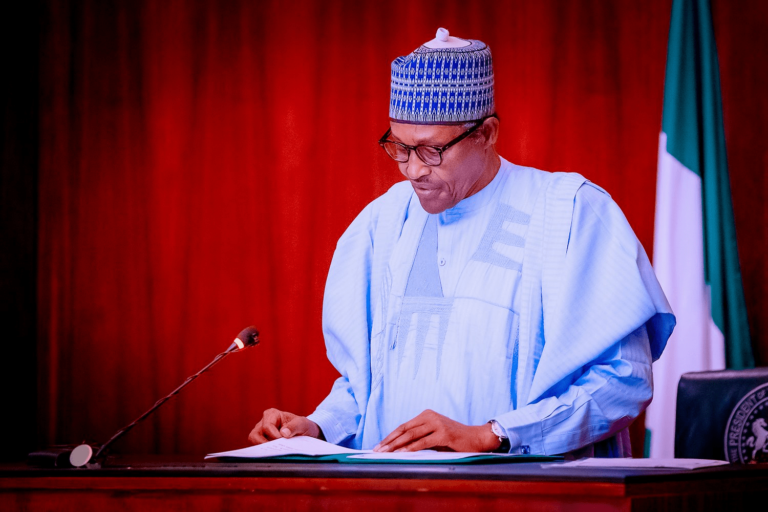
PRESIDENT Muhammadu Buhari has said the Petroleum Industry Act (PIA) remains his administration’s greatest achievement in the energy sector, amid criticisms of slow implementation of the goals of the Act.

The President spoke today at the ongoing Nigerian International Energy Summit (NIES) in Abuja.

He was represented at the event by the Secretary to the Government of the Federation, Boss Mustapha.

The Act, which President Buhari signed into law in 2021, aims at overhauling the petroleum sector in Nigeria by providing legal, governance, regulatory, and fiscal framework for the Nigerian petroleum industry.

“The PIA remains our biggest achievement in the energy sector. For decades, we were told that because of the various vested interests, it would be near impossible to pass the Bill.

“But we made it happen. What we did with the PIA, you will all agree with me, was simply revolutionary. And we did not rest on our oars with the enactment of the Act. We moved swiftly into action, scrapped the existing agencies and replaced them with new regulators – the Nigerian Upstream Petroleum Regulatory Commission (NUPRC) and the Nigerian Midstream and Downstream Petroleum Regulatory Authority (NMDPRA).

“The Nigerian National Petroleum Company (NNPC) was immediately transformed to a limited liability, the NNPC Ltd., with a new brand identity, and it is on course to becoming the biggest, most capitalised and most profitable company in the whole of Africa,” the President said.

Despite signing of the agreement, investors are worried that there is still no proper transition plan that spells out a clear implementation strategy that could win investors’ confidence.

Already, some investors are divesting their stake in Nigeria’s oil business over worries of an unfriendly business climate and regulatory inconsistency.

For instance, ExxonMobil, a foremost international oil company with a huge stake in Nigeria’s oil industry, had informed in a statement that it would embark on a force majeur.

The company declared, in a statement it issued yesterday, that it would be doing a force majeure on oil lifting from several ports in Nigeria, which would further weaken the country’s declining oil export potential.

The company cited industrial action by its workers’ union as a reason for its intention.

The government has also been going back and forth on the issue of the removal of fuel subsidy, which has seen the country spend trillions that could have been spent on health, education, agriculture and other infrastructure.

Prior to the coming in place of the PIA, lack of a fiscal framework to drive Nigeria’s oil and gas sector had seen the oil industry lose investments worth billions of dollars to neighbouring African countries with better fiscal management strategies.

Analysts said the government must learn from power sector failures and ensure there is no repeat of the same thing in PIA implementation.

“Government must ensure swift transition and avoid issues of carrying over any legacy debt to facilitate the swift transition,” a professor of Energy Economics at the University of Ibadan, Adeola Adenikinju, told The ICIR.

But Buhari has highlighted the reason for making the sector a priority of his government.

“Energy was, and will remain a top priority of my administration till my last day in the office. That is the reason we paid close attention and birthed a lot of reforms in the sector.

“We embarked on all these reforms not just because the move is good for the energy industry, but because it is also good for the overall economy. Our efforts, indeed, helped grow our economy and created a lot of jobs,” he said.

Speaking on his interest in economic diversification, the President said the gas sector was a viable means of the transition from crude oil.

“In the natural gas sector, we made a lot of progress. The agenda was the gas revolution. We pushed for the diversification of Nigeria’s economy and drive industrialization through domestic gas utilization. We officially declared Natural Gas as the transition fuel for Nigeria. We launched many initiatives to ensure that natural gas optimization and utilization are a reality.

“The National Gas Policy of 2017 articulated the policy goals, strategies, and implementation plan to reposition Nigeria as an attractive gas-based industrialized nation through the prioritization of local gas demand requirements and we put in place a strategic framework to achieve the set objectives.”

“We launched the National Gas Transportation Network Code (NGTNC) which was on the drawing table for several years. The network code is a set of rules guiding the use of a gas transportation system, a contractual framework between the network operator and the shippers which provide open and competitive access to gas transportation infrastructure.”

AEDC customers to enjoy improved power with completion, installation of additional 33kv feeders

CUSTOMERS of the Abuja Electricity Distribution Plc (AED Plc) are set to enjoy improved electricity supply with the completion of the construction of three 33 kilovolt (kv) feeders and installation of auto reclosers at the Dawaki 2×60 megavolt (MVA), 132/33kv transmission station.

The transmission station was commissioned on November 27, 2022 at Dawaki, but commenced initial load evacuation from 5pm on  April 17, 2023, on two feeders. The

With this development, customers in Gwarinpa, Life Camp and Kubwa areas of the Federal Capital Territory are expected to experience improved service delivery of power supplies.

Commenting on this development, the AEDC Plc chief marketing officer, Donald Etim, explained that the constructed 33kv feeders would de-load Gwarinpa and Life Camp 33kv feeders from AT2 Katampe, as well as Dawaki and Bwari 33kv feeders from AT4 Kubwa TS.

Etim assured that the project would improve power supply availability within Gwarinpa, Dawaki, Katampe, Life Camp, Kubwa, Bwari, and environs.

He quoted the AEDC managing director/CEO, Adeoye Fadeyibi, as saying, ‘‘We are thrilled to announce the successful commissioning of our new 33kv feeders, which is a proof of our commitment to meeting the growing electricity needs of our customers.

“These feeders will not only help de-load the existing infrastructure, but also improve the overall performance of our distribution network, ensuring reliable and uninterrupted power supply to our valued customers in Gwarinpa, Life Camp and other locations.”

Further, he said that the two AEDC 33kv feeders would evacuate power from the 132/33kv GIS transmission station at Dawaki as follows: 33kv feeder H02 will feed Gwarinpa 1st-5th Avenue, Setraco, and Citec Estate, while 33kv feeder H03 will feed 6th & 7th Avenue, Adkan Estate, and Grand Products in Dawaki.

Also covered are Urban Shelter, Charly Boy, News Engineering, and the environs.


READ ALSO:


Etim added, “As a customer-centric company, we are constantly investing in our infrastructure to enhance service quality and customer experience.

“The commissioning of these new feeders is a strategic move to address the increased demand for electricity in these areas, and ensure an efficient and reliable power supply to our customers.

“As the load evacuation phase unfolds in the next few weeks, load may be adjusted gradually as we observe the feeder performances.”