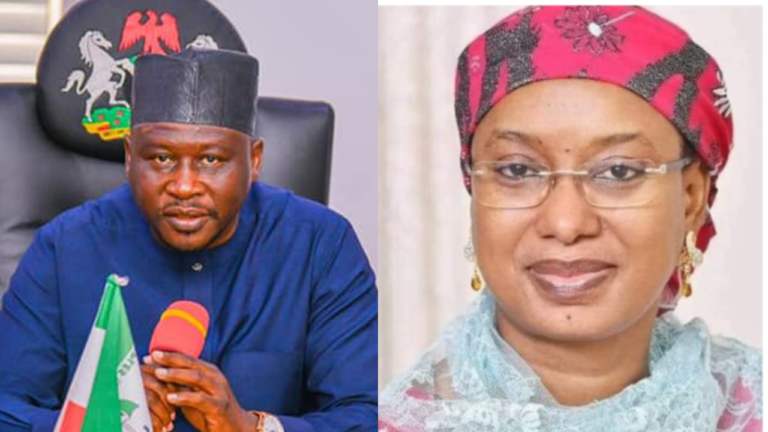
Home Blog Page 965

Video does not show INEC REC for Adamawa brutalised

A video showing a lynched man inside a vehicle has surfaced online with a claim that it shows the INEC Resident Electoral Commissioner (REC) in Adamawa State, Hudu Ari, who declared Aisha Dahiru, popularly called Binani, as the winner of the governorship election in the state.

The video is circulated while collation of the results of the governorship supplementary election in Adamawa state was ongoing. 

Ari made the declaration on Sunday morning amidst chaos at the collation centre in Yola, the state capital, Daily Trust reported earlier.

A video of Ari announcing Binani as the winner of Adamawa governorship election had stirred controversies both online and offline.

The Independent National Electoral Commission (INEC) has, however rejected the announcement and suspended the process till further notice, Channels TV and Premium Times reported.

A Twitter user, Bulama tweeted the video with a caption that read:

Adamawa INEC commissioner, after declaration of Binani this is what happened to him.” 

The tweet has garnered over 200 retweets and 400 likes as of Sunday evening on April 16, 2023.

The video has also gone viral on multiple social media platforms.

THE CLAIM

Video shows INEC REC brutalised in Adamawa state.

Screenshot of the viral social media post

THE FINDINGS 

Findings by The FactCheckHub show that the claim is FALSE.

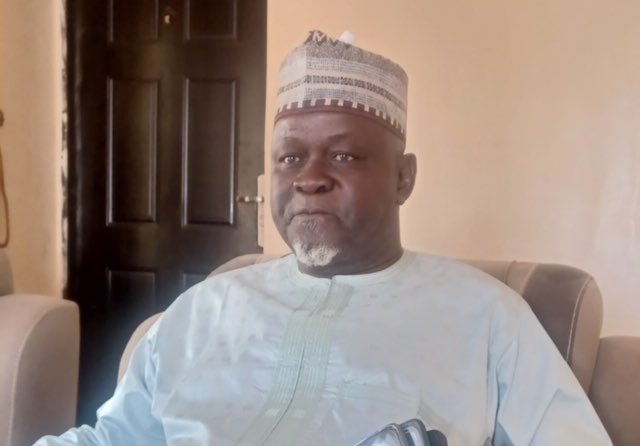
While the context of the video is yet to be ascertained, The FactCheckHub found out that the man in the video is not the INEC Resident Electoral Commissioner (REC) in Adamawa State but the INEC national commissioner and chairman, board of the Electoral Institute, Abdullahi Abdul Zuru.

INEC national commissioner and chairman, board of the Electoral Institute, Abdullahi Zuru.

Zuru is a former vice-chancellor at Usmanu Danfodiyo University, Sokoto.

However, the controversial INEC Resident Electoral Commissioner (REC) in Adamawa State is Hudu Ari.

Hudu Ari, INEC Resident Electoral Commissioner for Adamawa state.

THE VERDICT

The claim that the video shows the INEC resident electoral commissioner for Adamawa is FALSE; findings revealed that the man in the video is Abdullahi Abdul Zuru, INEC national commissioner and chairman board of the Electoral Institute.

This report was republished from the FactCheckHub. Read the original HERE

Scam website circulates as FG plans to distribute fuel subsidy removal palliative

3

A claim that the Nigerian government has started distributing fuel subsidy removal palliative to fifty million Nigerians has been circulating on WhatsApp.

The claim was contained in a broadcast message sent to various contacts in a WhatsApp group.

The message asked individuals to check if they are eligible to receive fuel subsidy palliative from the federal government.

The WhatsApp broadcast read:

Welcome to Fuel Subsidy Removal Palliative.

Check now if you are among the 50 Million Nigerians to receive Fuel Subsidy Palliative from the Federal Government of Nigeria.

CHECK NOW

https://shtnar.com/Fuel-Subsidy-Palliative

THE CLAIM

The federal government is distributing fuel subsidy removal palliative to Nigerians.

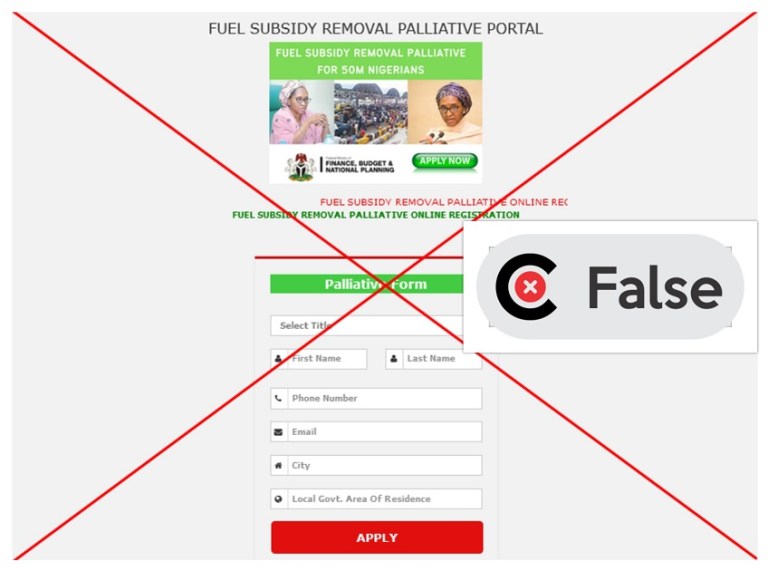
A screenshot of the page from the website.

THE FINDINGS

Findings by The FactCheckHub  show that the claim is FALSE as of Sunday, April 16, 2023.

Earlier in April 2023, Nigeria’s Minister of Finance, Budget and National Planning, Zainab Shamsuna Ahmed Zainab Shamsuna Ahmed, said the federal government borrowed $800 million from the World Bank to use as palliative ahead of the total removal of petrol subsidy in June 2023, Daily Trust reported.

According to her, the fund will be disbursed to the 10 million households (equivalent to about 50 million Nigerians) considered most vulnerable already captured by the National Social Register (NSR) to cushion the effect of the subsidy removal.

Following that announcement, many phishing websites and online scams have surfaced, alleging that the palliative distribution by the Nigerian government has started.

Findings by THE ICIR revealed that no credible media platform published any report on the commencement of the distribution of the fuel subsidy removal palliative as of Sunday, April 16, 2023.

However, a careful look at the website link shows that the domain name is a phishing website, used by scammers to collect the personal details of online users.

Phishing is a form of fraud in which an attacker masquerades as a reputable entity or person in email or other forms of communication.

Whenever users click the web link stated in the WhatsApp broadcast, it neither directs them to the official web page of the State House or National Social Register

Rather, it asks them to fill in personal details like name and bank details. Thereafter, users are asked to share to groups and their phone contacts till a ‘green bar is full.’ This is a typical modus operandi of most phishing websites and online scams.

To avoid falling victim to click baits by scammers, learn how to identify phishing scams and websites here.

You can also read our tutorial on how to verify viral WhatsApp messages here.

THE VERDICT

The claim that the federal government is distributing fuel subsidy removal palliative to Nigerians is FALSE; findings revealed that it is a phishing website.

Cover image by Freepik 

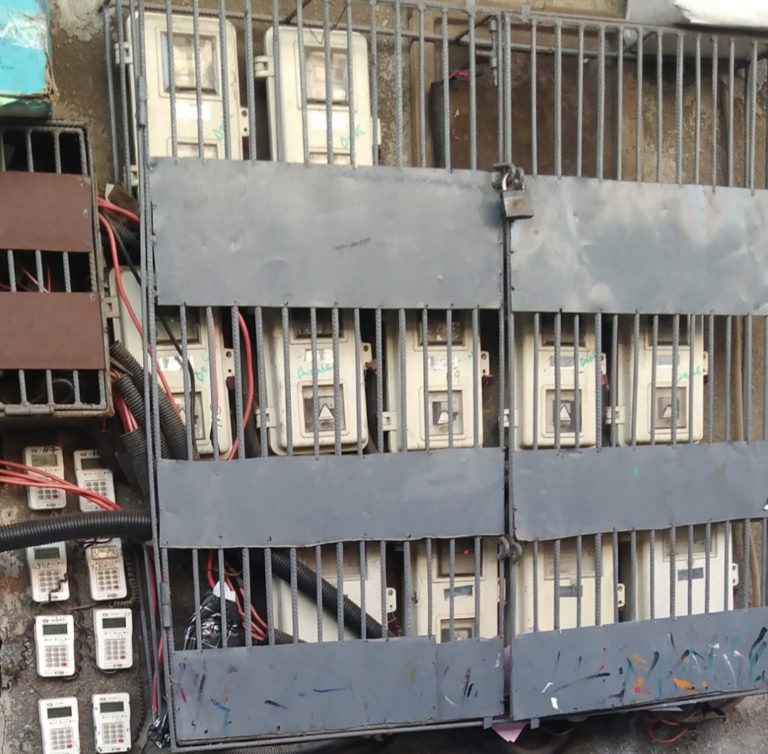
DisCos grow profit from estimated billing, amid FG’s slow pace on mass metering

NIGERIA’S 11 electricity distribution companies (DisCos) rely on unmetered customers to earn profits, with the Federal government’s mass metering intervention moving at snail’s speed.

Data from the National Bureau of Statistics (NBS) revealed that estimated electricity customers stood at 5.91 million in the third quarter of 2022, higher by 1.09 per cent on the 5.85 million figure recorded in the second quarter of the year.

Although the NBS report stated that on a year-on-year basis estimated customers declined by 6.38 per cent in the third quarter of 2022 from 6.32 million recorded in the third quarter of 2021, revenue collected by the DisCos during the period stood at N202.62 billion in the third quarter of 2022, from N188.41 billion in the second quarter, indicating a rise of 7.54 per cent.

The Federal government had in 2020 commenced a mass metering initiative to put an end to the estimated electricity billing regime.

Under the initiative, the government planned to distribute over six million electricity meters free to Nigerians.

But data for the electricity sector, which was prepared by the NBS, showed that instead, the number of estimated customers has been on an upward trend.

Some industry watchers knowledgeable about the sector told The ICIR that the Federal government’s mass metering policy has so far posted poor results despite World Bank facility support for metering in millions of dollars.

“Everyone is confused about the progress of the National Mass Metering Programme (NMMP), and it’s a shame we cannot muster the resources – even after taking the World Bank loan – to complete a simple project like the NMMP.

“The last serious thing I heard was in late December 2022 that contract offers were given to meter manufacturers, but the prices quoted were ridiculously low. So, manufacturers and vendors were writing and asking for the review of the awarded prices,” the executive director of PowerUp Nigeria, Adetayo Adegbemle, told The ICIR.

Another power sector governance expert, Chuks Nwani, told The ICIR that the government must explore every opportunity to close metering gaps to help address the liquidity shortfall in the power sector.

“Government must explore options of even importing meters and not rely solely on indigenous meter manufacturers to close the metering gap. Every day, new houses are being erected and connected to the grid. We need to close the gap soonest,” Adegbemle said.

The NBS report revealed that on a year-on-year basis, revenue generated rose by 5.56 per cent from N191.95 billion in the quarter of 2021.

It further said electricity supply in the third quarter of 2022 stood at 5,024 gigawatt-hour (a unit of energy representing one billion watt hours) from 5,227 gigawatts on the second quarter of 2022.

The report also revealed that electricity supply declined by 8.53 per cent on a year-on-year basis, compared to 5,493 Gigawatt reported in the third quarter of 2021.

The NBS stated that the total customer numbers in the fourth quarter of 2022 stood at 11.06 million, from 10.94 million recorded in the third quarter of 2022, thus showing an increase of 1.10 per cent.

The report stated, “On a year-on-year basis, the number of customers in the fourth quarter of 2022 increased by 5.17 per cent from the fourth quarter of 2021 recorded at 10.51 million.”

The report said metered customers in the fourth quarter of 2022 stood at 5.13 million from the 5.02 million customers recorded in the quarter of 2022, indicating a 2 per cent growth rate.

Nevertheless, on a year-on-year basis, this grew by 7.37 per cent from the 4.77 million customers recorded in  2021.

The report said the number of estimated billing customers was 5.93 million in the fourth quarter of 2022, which was higher by 0.34 per cent from the 5.91 million reported in the third quarter of 2022.

On a year-on-year basis, this rose by 3.34 per cent in the fourth quarter of 2022, from the figure reported in the fourth quarter of 2021.

The report said N232.32 billion was generated by the DisCos in the fourth quarter of 2022, compared to N202.62 billion recorded in the third quarter of 2022.

It said on a year-on-year basis, revenue collected rose by 16.02 per cent from N200.23 billion in the fourth quarter of 2021.

The NBS said the number of DisCos’ customers in Nigeria increased from 10.81 million in the second quarter of 2022 to 10.94 million in the third quarter of 2022.

Accordingly, the NBS Nigeria Electricity Report for the third and fourth quarters of 2022 released in Abuja on Monday, the figure showed an increase of 1.20 per cent.

The report focused mainly on billed energy, revenue generated and DisCos customers under the reviewed period.

The report said that on a year-on-year basis, customer numbers in the third quarter of 2022 declined by 1.19 per cent, from the number recorded in the third quarter of 2021.

“In the third quarter of 2022, the number of metered customers stood at 5.02 million, from 4.96 million in the second quarter of 2022, indicating a 1.33 per cent increase.

“However, on a year-on-year basis, this grew by 5.71 per cent from the figure reported in the third quarter of 2021 at 4.75 million,” the report stated.

Amid concerns of poor implementation, Buhari says PIA his greatest achievement

0

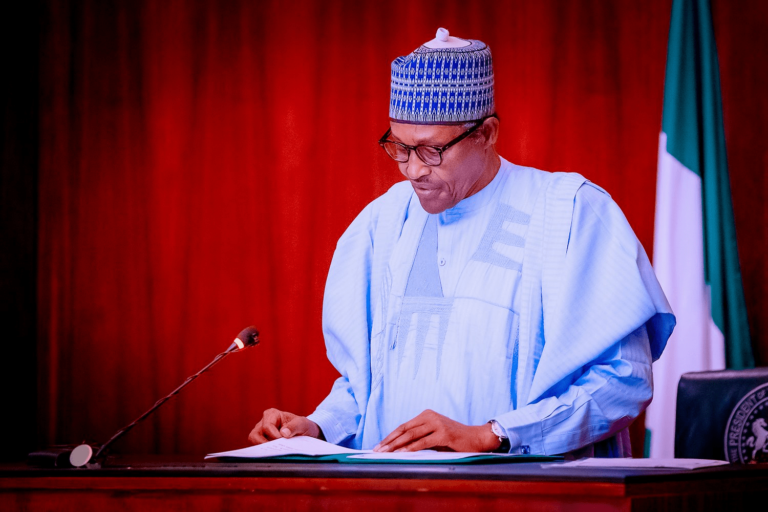
PRESIDENT Muhammadu Buhari has said the Petroleum Industry Act (PIA) remains his administration’s greatest achievement in the energy sector, amid criticisms of slow implementation of the goals of the Act.

The President spoke today at the ongoing Nigerian International Energy Summit (NIES) in Abuja.

He was represented at the event by the Secretary to the Government of the Federation, Boss Mustapha.

The Act, which President Buhari signed into law in 2021, aims at overhauling the petroleum sector in Nigeria by providing legal, governance, regulatory, and fiscal framework for the Nigerian petroleum industry.

“The PIA remains our biggest achievement in the energy sector. For decades, we were told that because of the various vested interests, it would be near impossible to pass the Bill.

“But we made it happen. What we did with the PIA, you will all agree with me, was simply revolutionary. And we did not rest on our oars with the enactment of the Act. We moved swiftly into action, scrapped the existing agencies and replaced them with new regulators – the Nigerian Upstream Petroleum Regulatory Commission (NUPRC) and the Nigerian Midstream and Downstream Petroleum Regulatory Authority (NMDPRA).

“The Nigerian National Petroleum Company (NNPC) was immediately transformed to a limited liability, the NNPC Ltd., with a new brand identity, and it is on course to becoming the biggest, most capitalised and most profitable company in the whole of Africa,” the President said.

Despite signing of the agreement, investors are worried that there is still no proper transition plan that spells out a clear implementation strategy that could win investors’ confidence.

Already, some investors are divesting their stake in Nigeria’s oil business over worries of an unfriendly business climate and regulatory inconsistency.

For instance, ExxonMobil, a foremost international oil company with a huge stake in Nigeria’s oil industry, had informed in a statement that it would embark on a force majeur.

The company declared, in a statement it issued yesterday, that it would be doing a force majeure on oil lifting from several ports in Nigeria, which would further weaken the country’s declining oil export potential.

The company cited industrial action by its workers’ union as a reason for its intention.

The government has also been going back and forth on the issue of the removal of fuel subsidy, which has seen the country spend trillions that could have been spent on health, education, agriculture and other infrastructure.

Prior to the coming in place of the PIA, lack of a fiscal framework to drive Nigeria’s oil and gas sector had seen the oil industry lose investments worth billions of dollars to neighbouring African countries with better fiscal management strategies.

Analysts said the government must learn from power sector failures and ensure there is no repeat of the same thing in PIA implementation.

“Government must ensure swift transition and avoid issues of carrying over any legacy debt to facilitate the swift transition,” a professor of Energy Economics at the University of Ibadan, Adeola Adenikinju, told The ICIR.

But Buhari has highlighted the reason for making the sector a priority of his government.

“Energy was, and will remain a top priority of my administration till my last day in the office. That is the reason we paid close attention and birthed a lot of reforms in the sector.

“We embarked on all these reforms not just because the move is good for the energy industry, but because it is also good for the overall economy. Our efforts, indeed, helped grow our economy and created a lot of jobs,” he said.

Speaking on his interest in economic diversification, the President said the gas sector was a viable means of the transition from crude oil.

“In the natural gas sector, we made a lot of progress. The agenda was the gas revolution. We pushed for the diversification of Nigeria’s economy and drive industrialization through domestic gas utilization. We officially declared Natural Gas as the transition fuel for Nigeria. We launched many initiatives to ensure that natural gas optimization and utilization are a reality.

“The National Gas Policy of 2017 articulated the policy goals, strategies, and implementation plan to reposition Nigeria as an attractive gas-based industrialized nation through the prioritization of local gas demand requirements and we put in place a strategic framework to achieve the set objectives.”

“We launched the National Gas Transportation Network Code (NGTNC) which was on the drawing table for several years. The network code is a set of rules guiding the use of a gas transportation system, a contractual framework between the network operator and the shippers which provide open and competitive access to gas transportation infrastructure.”

AEDC customers to enjoy improved power with completion, installation of additional 33kv feeders

CUSTOMERS of the Abuja Electricity Distribution Plc (AED Plc) are set to enjoy improved electricity supply with the completion of the construction of three 33 kilovolt (kv) feeders and installation of auto reclosers at the Dawaki 2×60 megavolt (MVA), 132/33kv transmission station.

The transmission station was commissioned on November 27, 2022 at Dawaki, but commenced initial load evacuation from 5pm on  April 17, 2023, on two feeders. The

With this development, customers in Gwarinpa, Life Camp and Kubwa areas of the Federal Capital Territory are expected to experience improved service delivery of power supplies.

Commenting on this development, the AEDC Plc chief marketing officer, Donald Etim, explained that the constructed 33kv feeders would de-load Gwarinpa and Life Camp 33kv feeders from AT2 Katampe, as well as Dawaki and Bwari 33kv feeders from AT4 Kubwa TS.

Etim assured that the project would improve power supply availability within Gwarinpa, Dawaki, Katampe, Life Camp, Kubwa, Bwari, and environs.

He quoted the AEDC managing director/CEO, Adeoye Fadeyibi, as saying, ‘‘We are thrilled to announce the successful commissioning of our new 33kv feeders, which is a proof of our commitment to meeting the growing electricity needs of our customers.

“These feeders will not only help de-load the existing infrastructure, but also improve the overall performance of our distribution network, ensuring reliable and uninterrupted power supply to our valued customers in Gwarinpa, Life Camp and other locations.”

Further, he said that the two AEDC 33kv feeders would evacuate power from the 132/33kv GIS transmission station at Dawaki as follows: 33kv feeder H02 will feed Gwarinpa 1st-5th Avenue, Setraco, and Citec Estate, while 33kv feeder H03 will feed 6th & 7th Avenue, Adkan Estate, and Grand Products in Dawaki.

Also covered are Urban Shelter, Charly Boy, News Engineering, and the environs.


READ ALSO:


Etim added, “As a customer-centric company, we are constantly investing in our infrastructure to enhance service quality and customer experience.

“The commissioning of these new feeders is a strategic move to address the increased demand for electricity in these areas, and ensure an efficient and reliable power supply to our customers.

“As the load evacuation phase unfolds in the next few weeks, load may be adjusted gradually as we observe the feeder performances.”

UNODC launches ICCWC toolkit to combat wildlife, forest crime in Nigeria

0

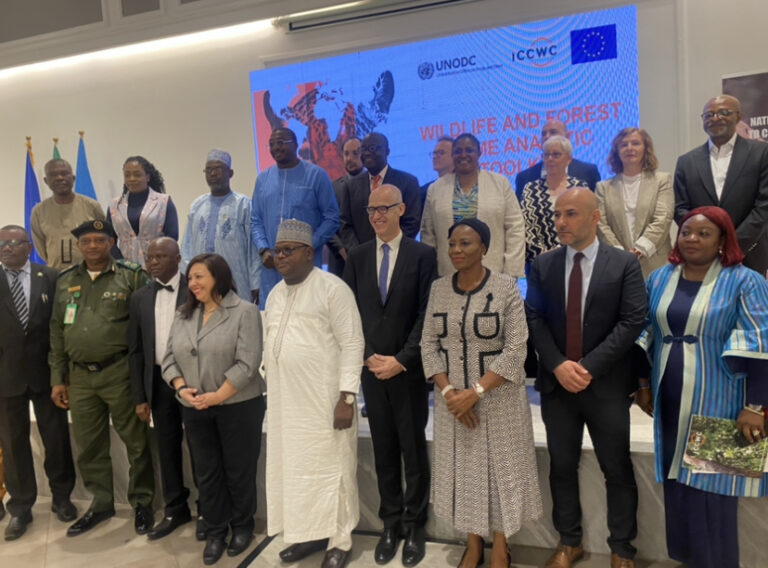
THE United Nations Office on Drugs and Crime (UNODC) has launched the International Consortium on Combating Wildlife Crime (ICCWC) Assessment in Nigeria. 

The event, which held in Abuja on Tuesday, April 18, was attended by the UNODC Country Representative on the occasion of the ICCWC Toolkit High-level Launch, the Minister of Environment, Head of UNODC Global programme on Crimes that Affect the Environment, Representatives from United Kingdom, the United States and Germany, among others.

Speaking at the event, UNODC country representative Oliver Stope explained that environmental degradation has reached alarming levels in Nigeria.

He noted that Nigeria has one of the highest rates of deforestation in the world, adding that the country lost 141kha of humid primary forest, equivalent of 14 per cent of its total tree cover, between 2002 and 2023.

“Excessive, unsustainable and mostly illegal extraction threatens the livelihoods of local communities as well as of species who called these woods their home. Wildlife is not only threatened by the continuous shrinking of their habitat but also by professional poachers as well as local hunters,” he said.

According to him, organised criminal trade of wildlife and forest products through Nigerian ports has created a threat to biodiversity across the entire region.

Stope also affirmed that none of the challenges have gone unobserved by the Nigeria government and the international community, stressing that “the 2018 CITES ban on the international trade of Nigerian Rosewood constitutes the most prominent measure taken at the international level, the Government of Nigeria has taken several steps in particular since 2020 to counter this trend”.

“The adoption of the first National Strategy to Combat Wildlife and Forest Crime, the recent establishment of the Wildlife Enforcement Task Force as well as the ongoing efforts to review the legislative framework and to build the capacity of the criminal justice system to tackle wildlife and forest crime – all constitute important initiatives.”

Stope further stated that all the efforts have started to bear some fruits, in particular as concerns the ability of Nigerian law enforcement to seize illegally traded wildlife and forest products.

“However, these efforts have not yet been able to reverse the trend of excessive illegal extraction or to put an end to the role of Nigeria as a regional hub for the illegal trade in wildlife and forest products.

“International cooperation with both source and destination countries would seem to constitute another largely untapped potential game changer. At present, it remains difficult to avoid the general impression that wildlife and forest crime are a low risk high reward criminal market. So exactly the kind of criminal market that organized crime is scouting for.”

The UNODC Country representative noted that “a much more thorough analysis is required in order to provide the Government as well as its international partners with the necessary insights to understand the most relevant shortcomings and to address them.”

“At UNODC, we are therefore particularly pleased to be joining you today for the launch of the ICCWC Toolkit Assessment. We do so together with our partners in the International Consortium on Combating Wildlife Crime, composed of the CITES Secretariat, INTERPOL, the World Customs Organization, and the World Bank, as well as with the supporters of our ongoing work in Nigeria, namely the Governments of Germany, the United States and the European Union. 

“To date, this Toolkit has assisted 20 governments around the globe in conducting comprehensive analysis of the strengths and weaknesses of their national preventive and criminal justice responses to wildlife and forest crime,” he added.

Also speaking at the event, the Minister of Environment Mohammed H. Abdullahi said the toolkit represents a complete tool needed to drive and achieve Nigeria’s vision, mission, and goals as well as a global deal for nature.

He added that it will directly contribute to what is needed to reverse the negative trend in the country.

“The reverberating but appalling warning in the landmark InterGovernmental Science-Policy Platform on Biodiversity and Ecosystem Services (IPBES), 2019 Global Assessment Report that about one million species are threatened with extinction, and many within decades, is instructive. The political will and the collaborative actions that are being taken today are galvanized by this IPBES warning.

“Let me commend the International Consortium on Combating Wildlife Crime (ICCWC) in its collaborative effort via its five inter-governmental organizations in strengthening criminal justice systems and providing coordinated support at national, regional, and international levels to combat wildlife and forest crime.”

He, therefore, applauded the partner agencies for coming together to help Nigeria end wildlife crime..

Eight abducted students escape captivity in Kaduna

0

EIGHT female students who were abducted in the Kachia Local Government Area of Kaduna State have escaped from captivity.

Commissioner for Internal Security and Home Affairs Samuel Aruwan disclosed this in a statement on Tuesday, April 18.

Aruwan said the students were now being kept in a military facility where they are receiving medical treatment.

“The eight female students of Government Secondary School, Awon, who were kidnapped by terrorists on Monday, April 3, 2023, in the Awon general area of Kachia LGA – have escaped from the terrorists’ den.

“The students, according to preliminary briefings, escaped from a thick forest around the Kaduna-Niger interstate boundaries, and walked for days before arriving at a location (kept undisclosed for security reasons) where they were harboured. Human intelligence sources subsequently alerted the Kaduna State Government for immediate evacuation,” Aruwan noted.

Terrorists had abducted the students along with other residents of the area on Monday, April 3.

Confirming the incident, Aruwan said the girls were on their way home from school when they were abducted.

“The Government can confirm that eight students of the Government Secondary School, Awon in Kachia LGA were kidnapped on Monday in the general area, along with other citizens. Furthermore, it was verified that the students were not kidnapped within the school premises, but on their way home from school when they came in contact with the bandits, who had abducted other residents,” Aruwan disclosed.

There has been a rising spate of terrorism and abductions in Nigeria, especially in the Northern region.

Students have been targets of these abductions since over 200 girls were abducted from the Government Girls Secondary School, Chibok, Borno State, in 2014, a situation that had an adverse effect on education in the country where about 20 million children are out of school.

Nine years after the abduction of the Chibok students, more than 90 girls are still in captivity, according to the United Nations Children’s Fund (UNICEF).

Adamawa guber poll: INEC declares PDP’s Fintiri winner

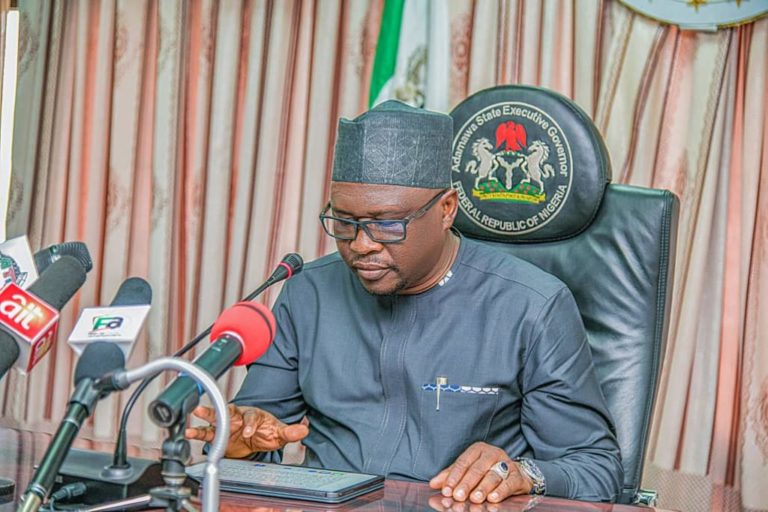
ADAMAWA State governor, Ahmadu Fintiri, has been reelected for a second term in office after the Independent National Electoral Commission (INEC) declared him winner of the controversial gubernatorial poll in the state.

Fintiri, candidate of the Peoples Democratic Party (PDP) was declared winner of the election on Tuesday, April 18, by the Returning Officer, Muhammed Melee.


READ ALSO:
Fintiri says Adamawa REC’s action on governorship supplementary election provocative

Fintiri vs Binani: INEC promises credible supplementary poll in Adamawa

Adamawa: APC senator says INEC can’t nullify result declared by REC

Atiku alleges plot to provoke violence in Adamawa


Melee said Fintiri secured a total of 430,861 votes, surpassing his main opponent Aishatu Ahmed Dahiru (Binani) of the All Progressives Congress (APC), who got 398,788 votes.

The governorship election, which was earlier declared inconclusive on March 18, was concluded with a supplementary poll last Saturday.

INEC declared the final result days after the Resident Electoral Commission (REC) Hudu Ari ‘illegally” declared APC candidate Binani the winner of the election even while collation was ongoing.

The result declared by the REC was swiftly nullified by INEC.

Earlier on April 18, a Federal High Court in Abuja on Tuesday had refused to hear an ex-parte motion filed by the APC and Binani to stop INEC from further collation and announcement of the governorship election result.

Court refuses to hear Binani’s motion against INEC, PDP

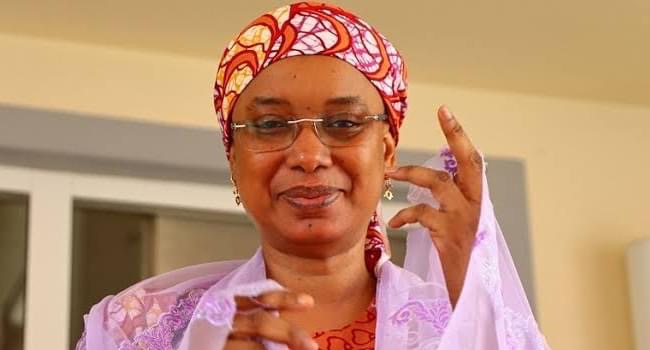
A FEDERAL High Court in Abuja on Tuesday, April 18, refused to hear an ex-parte motion filed against the Independent National Electoral Commission (INEC) by All Progressives Congress (APC) candidate in the Adamawa governorship election, Aishatu Dahiru Ahmed (Binani).

Binani had asked the court to stop INEC from declaring any other result in the Adamawa governorship poll, after the Commission nullified her declaration as winner of the election by the Resident Electoral Commissioner, Ari.


READ ALSO:
INEC to write IGP, seeks prosecution of Adamawa REC

INEC suspends Adamawa REC

Adamawa: APC senator says INEC can’t nullify result declared by REC

Fintiri says Adamawa REC’s action on governorship supplementary election provocative


When the ex-parte motion came up on Tuesday, the judge, Justice Inyang Ekwo, refused to hear the application and instead ordered the APC candidate’s counsel, Mohammed Sheriff, to address the court on the issue of jurisdiction before the substantive motion can be heard.

Afeez Matomi appeared for Peoples Democratic Party (PDP) candidate Governor Ahmadu Fintiri, the third respondent in the suit.

Justice Ekwo asked Matomi if he had been served with the motion, to which the lawyer responded that he had not been served but had filed a motion to counter part of Binani’s prayers.

Matomi said his client got the hint about the ex-parte motion through the social media, hence, they decided to file a motion.

Thereafter, Binani’s lawyer, Sheriff, said the ex-parte motion was filed on April 17, adding that he was ready to move it.

However, the judge said though he was ready to hear Sheriff, he would not do so until the lawyer addresses the court on the issue of jurisdiction.

Justice Ekwo held that the motion would be taken together with the issue of jurisdiction on the next adjourned date and consequently adjourned the matter until April 26 for hearing of the motion and an address on jurisdiction.

Binani and the APC, in the motion ex-parte marked: FHC/ABJ/CS/510/2023, had sued INEC, the Peoples Democratic Party and its candidate, Fintiri, as 1st, 2nd and 3rd respondents, respectively.

The APC candidate is seeking a judicial review of the decision of INEC on April 16 in respect of her declaration as the winner of the governorship election held on March 18 and the supplementary poll of April 15.

She is also seeking an order preventing INEC and its agents from taking any further steps towards the declaration of the winner of the election pending the determination of her application for judicial review.

The application was brought pursuant to Order 34 Rules 1a, Order 3(1) & 3(2) a, b, c, Order 6 of the Federal High Court (Civil Procedure Rules), 2019 and Section 251 (1)q & r of the 1999 Constitution, as well as Section 149 & 152 of the Electoral Act, 2022.

Stating grounds as to why the motion should be granted, Binani noted that after the collation of results, INEC declared her as the winner of the elections but the PDP and its candidate resorted to fighting and causing a public disturbance which led to the beating and manhandling of an INEC staff.

The crisis, she said, led INEC to cancel the initial declaration. Binani argued that INEC had no power to cancel the declaration as only the election petition tribunal was vested with such powers.

Binani contended that by cancelling her declaration, INEC usurped the powers of the election petition tribunal which was the only court vested with powers on a declaration from the conduct of an election.

She averred that a judicial review existed to enable the superior court to checkmate the actions and decisions of inferior courts as well as the legislative and administrative arm of government including agencies and public officers.

The applicant further submitted that INEC, being an agency of the government, could have its actions, records and decisions checked by the court and only a court could nullify the actions of an INEC official and not INEC itself.

Collation of governorship election results resumes in Adamawa

THE Independent National Electoral Commission (INEC) has resumed collating results of the supplementary poll for the Adamawa State governorship election.

The development came two days after the Commission’s Resident Electoral Commissioner (REC) in the state, Hudu Yunusa Ari, a lawyer, illegally declared the governorship candidate of the All Progressives Congress (APC), Aisha Dahiru (also known as Binani), the winner of the election.

INEC headquarters fumed at Ari’s action, which sparked protests in parts of the state, especially by the Peoples Democratic Party (PDP), whose candidate and incumbent Governor Ahmadu Fintiri was leading before the declaration.

The ICIR reported how the INEC headquarters in Abuja summoned Ari minutes after he declared Binani the winner.

The Commission also invited its other staff involved in the declaration to Abuja and consequently suspended the collation of results of the supplementary poll.

On Monday, April 17, The ICIR reported how the Commission suspended the REC from office.

Hours later, on Tuesday, April 18, the election umpire resolved to write the Inspector-General of Police, Usman Baba, for immediate arrest and prosecution of the erring REC.

While the drama played out, Binani approached a Federal High Court in Abuja to stop the Commission from halting her ‘victory.’

The ICIR reports that Ari declared Binani winner while the collation of results is yet to be concluded. According to Electoral Act (2022), the Returning Officer for the election, rather than the REC, has the power to declare the winner of an election.

Fintiri had the highest number of votes cast in the governorship election held on March 18, but some votes were cancelled, and the election could not hold in some parts of the state, forcing INEC to declare the exercise inconclusive.

Fintiri polled 421,524, while Binani secured 390, 275 in the March 18 election.

The incumbent governor won 13 of Adamawa’s 21 local government areas, while Binani won eight LGAs in the first round of the exercise on March 18.

Similarly, Fintiri was leading in the supplementary votes counted in 10 out of the 20 local government areas before the REC made his pronouncement.