THE All Progressives Congress (APC) has accused the Nigerian Police Force of failing to investigate attacks on its members by the ruling Peoples Democratic Party (PDP) in Rivers State.
Reacting to the Monday, April 3, attack on its governorship candidate, Tonye Cole, and other party stalwarts at the Independent National Electoral Commission (INEC) office in Port Harcourt, the Rivers State capital, the APC, in a statement signed by its National Publicity Secretary, Felix Morka, expressed concern over what it described as the ‘orgy of violence’ on its members in the state by the PDP.
Describing the attacks as barbaric, the party said the violence fell short of democratic tenets.
The ICIRreported how thugs pounced on Cole and other Rivers’ APC chieftains and supporters while attempting to gain entrance into the INEC office in the state capital.
“This barbaric and unprovoked attack occurred during a visit to the Independent National Electoral Commission’s office by Mr. Tonye Cole, APC Governorship Candidate, Dr. Innocent Barikor, Deputy Governorship Candidate, Mr. Emeka Beke, State Chairman of the Party and three other party officials to obtain the Certified True Copies (CTC) of vital documents in the March 18 Governorship and House of Assembly elections.
“Without warning, thugs and supporters of the PDP descended on our party officials, inflicting severe and life-threatening injuries on them and damaging personal and party properties.
“This premeditated attack by PDP thugs and operatives on our officials and members in Port Harcourt is yet another in what has now become an orgy of violence carried out with mind-boggling audacity and with absolutely no serious investigation by the police or repercussions for the instigators and perpetrators of this serial violence,” part of the party’s statement reads.
The APC said Monday’s attack was aimed at frustrating its governorship candidate’s efforts to obtain vital documents to exercise his constitutional right to challenge the declared result of the governorship election in the state.
It added that the decision of the PDP, declared the election winner by INEC, to resort to violence by blocking a legitimate legal challenge smacks off “a party sitting precariously on needles and pins in the face of prospects of a legal challenge by our governorship candidate.”
Despite accusing the Police of not doing enough to apprehend those attacking its members in the state, the party commended the Police and other security agencies, including the Nigerian Army, for swiftly restoring peace and order in the wake of the attack.
It called on the Inspector General of Police to order an urgent and thorough investigation into the last attack and previous violent attacks on its leaders and members and to bring the sponsors and perpetrators to book.
Cole lost the governorship election to PDP’s Siminalayi Fubara, who won with 302,614 votes. The APC candidate got 95,274 votes but rejected the result declared by INEC.
Cole insists he won and has vowed to reclaim his mandate at the tribunal.
On election day, Cole alleged that voters in certain areas of the state were intimidated by the ruling PDP.
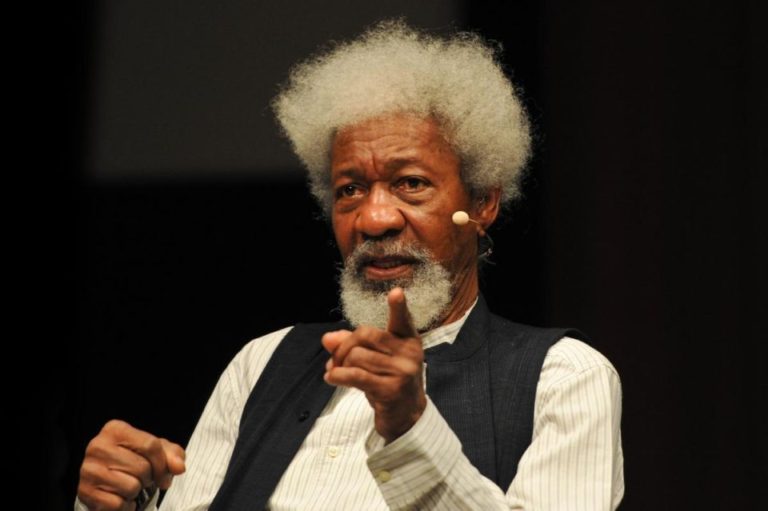
“I am talking about decentralization that is all I want from the incoming government and whatever it is let us have a genuine not rhetorical but practical and detailed devolution of power. More power to the various arms and tiers of government. States, local governments, the reinforcement of civic entities, civil societies.
“You can summarize it in one word – decentralization.”
Soyinka condemned the attacks of Igbo in Lagos and the level of ethnic bigotry displayed by Nigerians during the presidential election.
“You asked about what happened during the election but remember I am relying on reports and news items sent to me.
“Something happened during the election especially during the governorship election which for me is distasting and distressing. This was the targeting of non-state people especially those who are considered strangers and their community.
“There was a real targeting of certain parts of Lagos where the Igbo population was prominent and I think that is disgraceful and should be condemned by every serious thinking person.”
Soyinka however, condemned the fake news and quotations that have been attributed to him
“Beware of fake news, a lot of damage is being done by it.
“I want to use this opportunity to announce a reward of a thousand dollars to anyone who can finger successfully at the author of some utterances which have been attributed to me over the past six months.
“I will really go further to raise additional funds for anyone who can nail the authors of fake news.”
In the same vein, he condemned comments by the vice presidential candidate of the Labour Party, Datti Ahmed as provocative.
THE Federal Government has declared Friday, April 7, and Monday, April 10, as Public holidays to mark this year’s Easter celebration.
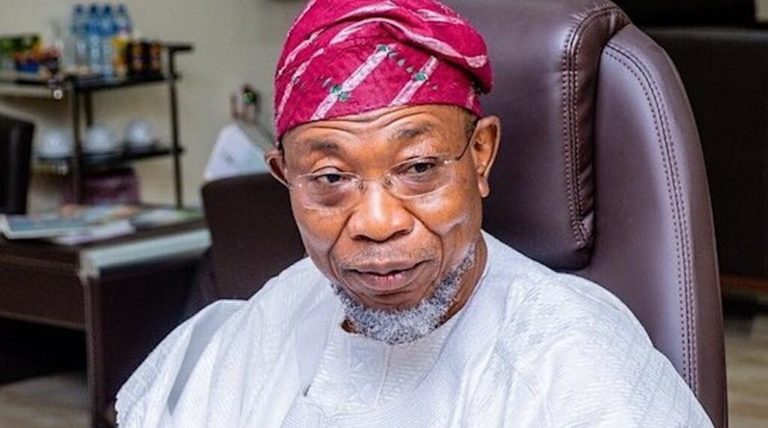
The Minister of Interior, Rauf Aregbesola, announced this in Abuja on Wednesday, April 5.
In a statement signed by the Ministry’s Permanent Secretary, Shuaib Begore, on Wednesday, April 5, Aregbesola urged Christians to emulate the qualities of selflessness, camaraderie, forgiveness, kindness, love, peace and patience that Jesus Christ demonstrated through His earthly ministry.
The minister urged Christians and other Nigerians to use this year’s Easter season to pray for an end to the country’s security challenges.
“Security is everybody’s business. I, therefore, urge Nigerians and foreigners resident in our country to display a high sense of citizenship and public spiritedness by supporting the efforts of all security agencies in bringing peace and security of lives and property of the citizenry,” Aregbesola said.
The minister assured that the Federal Government was taking all necessary steps to guarantee a peaceful transfer of power following the conclusion of the election process.
While wishing Christians a peaceful Easter celebration, he also urged them to love their neighbours by performing acts of kindness and showing charity, with the wealthy sharing their possessions with the less fortunate nearby.
Aregbesola reassured Nigerians that the country was on the route to greatness and urged everyone to use their creative energies constructively to fully realise the impending prosperity.
THE Ohanaeze Ndigbo has condemned the alleged killing of South-East youths by security agents.
The apex Igbo socio-cultural organisation called on President Muhammadu Buhari to sanction the Chief of Army Staff Faruk Yahaya and Police Commissioners in the South-East over the alleged killings.
In a statement issued on Tuesday, April 4, by the National Publicity Secretary, Alex Ogbonnia, Ohanaeze said the killings are unjustified.
According to the group, those killed were Indigenous People of Biafra (IPOB) members who were peacefully protesting Mazi Nnamdi Kanu’s detention in defiance of court rulings and pronouncements by the United Nations Committee on Arbitrary Detention.
Ohanaeze condemned the killing of unarmed Igbo youths by soldiers and policemen in the South-East in a quest to put an end to agitation for Biafra.
“The attention of the Ohaneze Ndigbo Worldwide has been drawn to the remarks made by the Chief of Army Staff of the Nigerian Army, Lt. Gen. Faruk Yahaya, with the heading: ‘Don’t threaten Nigeria’s integrity – COAS warns IPOB, ESN’.
“Yahaya is quoted to have warned that ‘the Indigenous People of Biafra, IPOB, Eastern Security Network, ESN, or any other group or individuals have no constitutional backing to threaten Nigeria’s integrity.
“Yahaya emphasised that ‘elections or no elections, neither IPOB, ESN nor any other group or individuals should threaten the integrity of this nation as enshrined in the Constitution of Nigeria. Yahaya issued the warning at an Army event in Abuja on Monday, April 3, 2023.
“On Friday, March 31, 2023, five members of the IPOB were shot dead in Osusu, Aba, Abia State, while they were on a procession.
“Confirming the incident, the Abia State Commissioner of Police, Mr Mustapha Mohammed Bala, a Katsina-born well-educated police officer, claimed that “On 31/03/2023 at about 11:45hours, policemen on confidence building patrol/show of force within Aba metropolis came under attack by the proscribed IPOB/ESN members. They were armed with petrol bombs, machetes, battle axes and other dangerous weapons. Bala added that “the attack was repelled by the Police operatives with minimal casualties while the majority of the hoodlums scampered for safety.”
Ohanaeze claimed that its investigations showed that certain locals, armed with video proof, had reported that the group had been peacefully protesting against Mazi Nnamdi Kanu’s detention before they were fired at.
The group criticised the Abia State Commissioner of Police, Mustapha Mohammed Bala, for calling the IPOB men “hoodlums” and considering the deaths of five IPOB members “minor casualties.”
Ohanaeze observed that the quest for peace, progress and development in Nigeria will only be achievable with justice and equity.
“Nigeria, at the moment, is at a critical juncture with two significant options: truth and progress on one hand or falsity and backwardness, poverty and political travails on the other,” it noted.
Attempts by The ICIR to speak to the Abia State Command Public Relations Officer, Geoffrey Ogbonna, were unsuccessful as he did not pick up his call nor respond to messages sent to his phone.
FORMER Governor of the Central Bank of Nigeria (CBN) Muhammed Sanusi has expressed fears over the division caused by the outcome of the 2023 presidential election.
Speaking on Tuesday, April 4 at the Nigerian Leadership Colloquium in Lagos, on ‘A new Nigeria: Leadership imperatives for radical growth and transformation’, Sanusi said the country is at the brink of collapse.
The former CBN boss noted that Nigeria has never been this divided since the Civil War of 1967 to 1970.
Sanusi noted that the presidential election has dangerously divided Nigerians across ethnic and religious lines.
He further observed that the present situation in the country had put the integrity of public institutions in question.
“The people now have suspicions about policies, policing, judiciary and the election umpire,” he said.
Sanusi also expressed his disappointment at the challenges of nation building and the condition of Nigeria’s economy.
According to Sanusi, “In October 2022, speaking at the Kaduna Investment Forum, I told Nigerians that if anyone told them that dealing with Nigeria post-2023 would be easy, they should not vote for that person. I meant it.
“We have a country that has been divided dangerously along ethnic and religious lines.
“We have an economy that is in the doldrums, and unfortunately, we seem to be having a dearth of leadership.”
Sanusi noted that Nigeria needs to look critically at the process through which the political office holders are elected.
“No process is perfect. We have seen so in the United Kingdom and the United States. At the very least, the people should know who they are voting for. I think we need to begin to look at the Electoral Act, 2022, much more earlier than elections. We need to have a system where one cannot just go to participate in party primaries without being exposed to public scrutiny. This is what happens everywhere. People need to know what they are voting for. In other climes, they are compelled by law to participate in public debates to discuss issues of policy.
“This is the only country I know where we elect a President first before knowing if he knows what he is doing or whether he understands what the job is,” he added.
He however, stressed the need for a more transparent system for chosing candidates for elective and appointive positions.
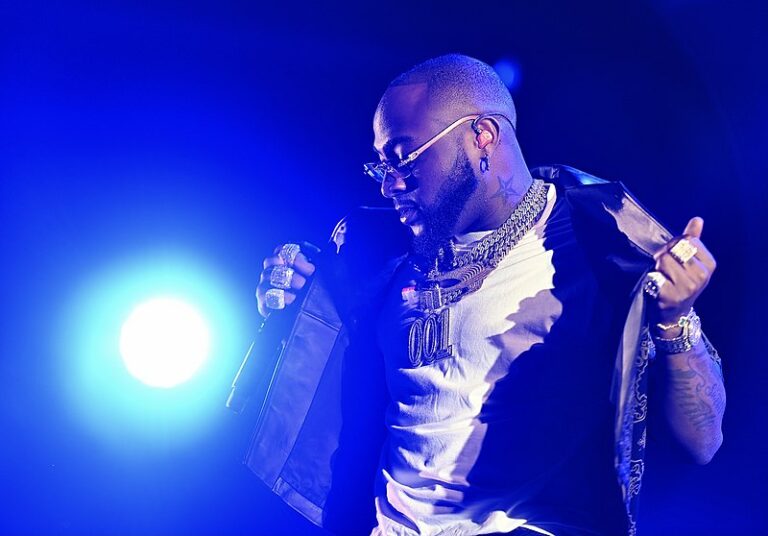
NIGERIAN Afrobeats star Davido (David Adeleke) has demonstrated himself to be a master of showboating. He is able to milk every situation to the maximum. And he did not disappoint with the recent trailer for his fourth studio album, Timeless, released on 31 March.
It’s drenched with signifiers of the tragic loss of his three-year-old son in a drowning accident last year. The trailer is clear as to his resolve to get over grief and dance again, and it leaves no one in doubt about his battle readiness:
If dem wan turn Goliath, I be David for life!
Davido Music Worldwide/Columbia Records
Davido sold his previous album, A Better Time as a better album than the preceding A Good Time. There’s barely any suggestion, in my opinion as a scholar of Nigerian music, that this is necessarily true.
Again, Davido has mobilised this kind of language in promoting Timeless. This is all in the spirit of good publicity, but the impression is that his albums are by and large equals. They do well commercially owing to the colourful and likeable stature of the Davido persona. As he has noted, Timeless will also add to his catalogue and substantially extend his performance schedule at concerts.
But despite the barrage of overly friendly and praise-singingreviews, the unremarkable Timeless is no exception to the rule of Davido’s output: he clearly has a propensity for form over content.
Who is Davido?
Born in the US city of Atlanta, the 30-year-old artist identifies as an American-Nigerian singer-songwriter and record producer. He studied business management before turning to music.
Davido began to dominate the African airwaves soon after his debut single Dami Duro in 2011. His production capacities endeared him to many and he represents one of the triggers for the naming of Afrobeats, which has become an umbrella term for Nigerian popular music. He was assured a place among the biggest names in Afrobeats, alongside the likes of Wizkid and Burna Boy. Many in fact refer to the trio as the big three of Afrobeats.
Following his debut album Omo Baba Olowo in 2012, Davido enjoyed his more significant years. He released his second studio album A Good Time in 2019. Singles like Skelewu (2013), If (2017) and Fall (2017) cemented his place as a trailblazer of contemporary Afrobeats. If and Fall made it into the 2019 album. The inclusion of the 2021 single Champion Sound in 2023’s Timeless thus somewhat derives from the artist’s tradition. Another undeniable tradition is Davido’s seeming obsession with 17 – each of his studio albums has 17 tracks. This superficial disposition is central to why his has been a career of numerous great singles but no great single albums.
What’s on the album?
Even before its release, Timeless was bound to draw on listeners’ sympathies rather than a fair hearing due to the much-publicised death of his child. And Davido isn’t one to pass up on such leeway. Add to that the tedious terrain that is an increasingly youthful Afrobeats ecosystem where Davido’s age is already a negating factor – consider the steeply dwindling numbers for Nigerian pacesetters like 2Baba and D’banj – and a comprehension of his choice of features on the album materialises.
Over Dem, the opening track, centres on bragging, his seeming invincibility, on his uncle’s success at the Osun State gubernatorial polls, and on the creator’s faithfulness to him. Davido casts himself as a biblical David who slayed the giant Goliath. There is a brief deviation to sensuality and love on track 3, In the Garden, which features a new signee to his label, singer-songwriter Morravey. He returns to first base, proclaiming himself Godfather on track 4.
South African amapiano artist Musa Keys does a great job of salvaging track 5, Unavailable. While Over Dem makes for a good album opener with its tempered and groovy percussion, it is largely synonymous with track 8, Away.
With some further tweaking to Godfather and E Pain Me, the opening seven tracks could have done with being only four. In truth, the album only takes off on track 8, Away, suggesting the album could have been better if tracks 8 to 17 had been tracks 1 to 10 on a 10-track album. The bulk of the material in tracks 1 to 7 robs the album of cogent musicality. And the lean subject matter – bragging, love/sensuality/heartbreak, more bragging – doesn’t help the listening experience.
This may seem to suggest that tracks 8 to 17 are in perfect shape, which is not the case. They contain several needless inclusions which the passable four from the first seven tracks could have replaced. The now old outro Champion Sound and, to some extent, For the Road and LCND come across as album fillers, all in the name of 17.
To sum it up
On Timeless, Davido keeps it simple and resists any temptation to reinvent his own wheel. He has never been a socially conscious artist and never pretended to be. The lack of range of topics addressed in the album reveals his contentment with the level he’s always maintained and a stark lack of ambition to push beyond his boundaries.
On Over Dem, Davido admonishes his enemies:
If dem dey wait make dem see me flop, dem go wait till thy kingdom come!
Well, probably not.
By the standards he has set and those his loyal audiences expect of him, Timeless is not a critically great body of work.
Nevertheless, Davido ought to be commended for drafting a heavyweight like Beninese singer-songwriter Angelique Kidjo onto the album (but exploits her famous vocal capacities in a rather rushed verse on Na Money). By a mile the best vocal performance on Timeless comes from Nigerian singer-songwriter FAVE on the track Kante, which is also arguably the best work on the album.
This underscores Davido’s status as an OG (original gangster) whose template serves as a platform for younger stars to maximise their advantage and flourish. He, after all, rises by lifting others.
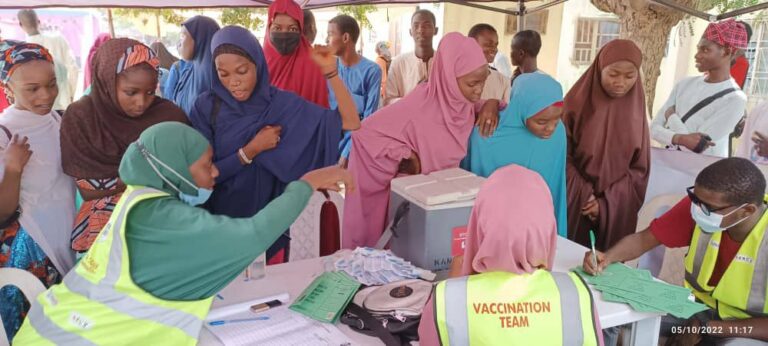
THE nationally-promoted COVID-19 vaccination campaign in Kano had initially suffered a setback due to an ugly experience with a failed Pfizer vaccine trial in the state and a deluge of misinformation. Today, data shows that Kano has vaccinated 100 per cent of its targeted residents.
In this report, Nurudeen Akewushola examines how religious clerics who were once against the coronavirus vaccine helped to drive high vaccination in the state.
Musa Muhammad, a 25-year-old resident of Kano state, vowed in 2021 to avoid the COVID-19 vaccine after hearing a rumour that someone passed away a week after taking a jab. However, following the sermon of a cleric in the community of Dawakin Kudu, where he lives, Muhammad changed his mind. The cleric, Ismaila Haruna took the vaccine during a community vaccination exercise in May 2022, and in his sermons, he began encouraging worshippers also to take their jabs to fortify themselves against the coronavirus.
“I took the vaccine because my cleric was a testimony that it wasn’t harmful,” Muhammad said. “Our cleric, Ismail Haruna, talks about the vaccine in the mosque. He told us how important the vaccine is and how it will protect us against contracting the virus. He also received his vaccine without anything happening to him. I have received two doses of the vaccine.
Musa Muhammad.
“I heard that anybody who received the vaccination would die. But the people I knew who took the vaccine did not die. So, I don’t believe the rumour anymore. I have taken the vaccine, and I’m healthy,” he said.
At the onset of a nationally-promoted COVID-19 vaccination campaign in Kano, a predominantly conservative Muslim state, there was a notable rejection by the residents of the state. Some religious leaders even propagated misinformation and conspiracy theories, further fueling the mistrust.
Today, though, Kano has witnessed a dramatic transformation. Muslim clerics who previously opposed the vaccine campaign are playing a pivotal role in driving a relatively high vaccination rate in the state.
The influential clerics changed their stance on COVID-19 vaccines after realising the gravity of the pandemic and receiving engagement and sensitisation from community health workers and mobilisers in the state.
The clerics’ efforts have helped to counter misinformation and achieve increased public trust, leading Kano to become one of the best-performing states in Nigeria in terms of COVID-19 vaccination.
Involving religious clerics
Public appeals were an important step in this process. On May 21, 2021, Kano State Governor, Abdullahi Ganduje, received the second dose of the AstraZeneca vaccine in public, at Government House in Kano. The governor urged the medical personnel, community leaders and religious clerics to make the immunisation campaign a success.
Abdullahi Ganduje, the Governor of Kano State receiving the second jab of COVID-19 vaccine. SOURCE: Kano State Ministry of Health.
He pleaded with community and religious leaders to be steadfast in the fight against COVID-19, adding that vaccination was very important and that they needed to work together against the pandemic.
“Your continued intervention in creating awareness among your people will go a long way in making the exercise a success. So also our scholars and other community leaders. You have an important role to play in this exercise and beyond,” he informed them.
The governor’s remarks were rooted in a vaccine controversy that erupted in Kano in 2003. That’s when rumours about the Polio vaccine causing infertility and HIV led to residents boycotting the vaccine. To counter the boycott, a coalition of traditional and religious leaders joined hands with government officials to initiate how to gain public trust and best implement government health policies. The platform serves as an avenue where government health policies are discussed.
Harnessing that 20-year-old coalition structure, the National Primary Health Care Development Agency, which is responsible for developing basic health care programmes and policies in Nigeria, solicited the support of traditional rulers and religious leaders to mobilize people at the community level.
Several symposiums and sensitisation programmes were organised for Muslim clerics and influential Imams of Juma’at mosques to help clear the misconceptions attributed to the vaccine and gain public trust.
The Imams were enjoined to engage their followers and constantly encourage them after daily prayers, Juma’at sermons and at public gatherings such as naming and wedding ceremonies.
In 2021, a crucial gathering organised by the Islamic Forum of Nigeria brought together hundreds of Imams from mosques for a one-day symposium on the COVID-19 vaccine. The chief Imam of Al-Furqan Juma’at Mosque in Kano, Bashir Aliyu Umar, addressed the large gathering of clerics and told them that Islam urges people to take preventive steps, including vaccines, to stop the spread of disease.
He cited prophetic traditions recommending taking seven pieces of Ajwa dates daily as a shield against diseases.
The campaign also enjoyed the backing of the first-class Emir in the state, Aminu Ado Bayero, a Muslim spiritual leader in Nigeria who also wields a strong influence on the Muslim community in the state. He also issued a special call to mobilise the people to support the vaccination campaign, as the emir urged the residents to avail themselves of vaccination against the coronavirus.
Emir of Kano receiving COVID-19 vaccine. Source: Kano state ministry of Health.
In his speech, which was broadcast across social media platforms and radio stations, Emir Bayero reiterated that the vaccine is real, informing the residents that he has been vaccinated. He publicly displayed his vaccination card to clear people’s doubts.
By late 2021, the Imams of Juma’at mosques started emphasizing the significance of the vaccination in their Friday sermons, everyday conversations, and on radio stations. Consequently, the vaccination rate began to increase. As of March 2022, Kano climbed to the fifth position among the top-performing states in Nigeria, with 1.6 million individuals fully vaccinated and 1.8 million residents partially vaccinated.
Some residents of Kano State, who spoke with The ICIR, explained how their decision to take the vaccine was influenced by their religious leaders during religious gatherings.
Saratu Abdulmalik.
Saratu Abdulmalik, 46, a resident of Gaida Cikin Gari, heard when the vaccine first became available that it could cause infertility. However, after community health mobilisers visited her adult Islamic school, Madarasatul Ulumul Dunniya, Abdulmalik said she shed her fears and felt comfortable enough to get vaccinated.
“I took one dose of the vaccine in November but I haven’t been able to receive the second dose because I was ill. But I’m looking forward to taking the second dose this month,” Saratu said. “I heard a lot of rumours about people getting various forms of ailments when they took the vaccine, but since when I received the vaccine I have been healthy, so I don’t actually believe the rumours again. All my children are also vaccinated.”
Jafar Aliyu, 68, the Chief Imam of Masjid Ansarul Mikdad Albasu, Kano Municipal, took two doses of the AstraZeneca vaccine together with his family to serve as an example for his followers. Aliyu leads hundreds of community members for daily prayer.
“My lectures have influenced my followers to accept the vaccine,” Aliyu said. “I even brought health workers to vaccinate those who accepted it during the mass vaccination. Though there were rumours regarding the vaccine, people who took the vaccination are living fine without any health complications. Many of them have thanked me for the impact I have made.”
Islamic Cleric, Jafar Aliyu.
Sani Salihu, 30, from Gaida Tsakuwa, Kumbotso LGA of Kano, said his Imam, Mallam Aminu Ibrahim, also influenced him to get vaccinated.
“He told us that we need to take the vaccine to reduce the spread of the virus,” he shared.
“There were so many rumours that I heard initially. I heard that the vaccine can cause diarrhea, stroke, blindness or disability. But after the talks from my Imam, I was convinced to disregard them.”
Salihu also said that his desire to comply with Islamic tradition also played a role.
“I received two doses of the vaccine around March last year,” he said. “I wanted to perform Hajj last year and it was part of the requirements.”
Sani Salihu.
COVID-19 misinformation in Kano
Still, once they accepted the vaccine as safe, Muslim clerics faced a challenge because some of them and others had already spread so many false claims at the peak of the COVID-19 pandemic.
Inaccurate information about the virus’s origins, transmission, and potential treatments, promoted by influential politicians, local music celebrities and social media influencers, had significantly influenced people’s perceptions about coronavirus. Besides religious clerics, these actors were also responsible for spreading false information about the pandemic.
To further reach local audiences, some of these misleading messages were even translated into Hausa, a widely spoken local language in Kano. Unfortunately, due to a lack of media literacy, many Kano residents opted to believe the misinformation rather than factual information provided by healthcare professionals regarding the vaccine. The Muslim Rights Concern (MURIC), an Islamic Human Rights organization in Nigeria even alleged that it is “a deliberate attempt” at decimating the population of Muslims in Nigeria.
In Kano, over 90 per cent of residents are Muslims, and Muslim clerics are highly respected and revered. Their words are held in high esteem in the state. They strongly influence public opinions and, in many cases, government policies.
The hindrance of community acceptance towards vaccines in Nigeria was not limited to Kano and Muslim clerics alone. Nigerian Christian leaders also shared misinformation during religious gatherings.
Some Muslim clerics in Kano who spoke to The ICIR confessed that they had opposed the vaccines because they had heard false information that Westerners developed the vaccine to induce infertility in women and, consequently, reduce Africa’s population.
Abubakar Abdulsalam, a Juma’at Imam in the Kano metropolis and a top member of the Jama’atil Izalatil Bid’a wa Ikamatu Sunnah (JIBWIS or IZALA), the largest Sunni group in Northern Nigeria, admitted that he and other IZALA clerics changed their views when they realised the truth about the virus’ origins and vaccines’ effectiveness.
“Our stance about the COVID-19 vaccine was not consistent,” Abdulsalam said.
“Initially, when it first started, there were wild opinions and analyses suggesting that COVID-19 is more of a biological war among powerful countries in the world, especially between the Eastern part of the world and certain Western countries. We heard that some powerful countries created the virus in order to reduce our population.”
Islamic Cleric, Abubakar Abdulsalam.
He said it took some clerics suffering through the virus themselves or losing relatives to COVID-19 to persuade them to think differently.
Abdulsalam’s view is that Islam encourages prevention against viruses and diseases.
According to him, the religious clerics were excited when they learned about the arrival of the vaccine. But that excitement was dampened by unsettling conspiracy theories that soon followed and were spread on social media clerics read.
“There are allegations that some powerful countries in the western part of the world are trying to use the vaccine to inject some scientific instruments into us so as to collect some essential data that would enable them to control us. That inspired some fears in our minds,” Abdulsalam explained.
He said his views started to shift after government health workers launched their campaigns promoting the vaccination.
Abdulrahman Ishaq, an Imam in Gaidan Cikin Gari in Kano, revealed that he also initially heard that the vaccine could cause death and severe diseases. However, the 65-year-old clergy decided more quickly to trust in what medical workers were urging people to do.
“I have been fully vaccinated, alongside my children,” he said. “ I took the vaccination with my family so we can protect ourselves against the virus.”
Abdulrahman said as a result of his words of encouragement during Friday sermons, most of his followers have taken the vaccine. “I even invited health workers to administer vaccines for most of them,” he said.
The Genesis of vaccine hesitancy in Kano
Part of the history of vaccine hesitancy in Kano can be traced back to 1996 when the state experienced one of Africa’s worst Meningitis outbreaks ever. On April 3, 1996, a six-member research team from one of the world’s biggest research-based pharmaceutical companies in the United States, Pfizer, arrived in Nigeria. They pledged to tackle the outbreak by testing the efficacy of its new antibiotic, ‘Trovan.’ The drug was tested on 200 young meningitis patients in Kano State.
Among these patients, 99 were treated with Trovafloxacin/Alatrofloxacin, while 101 received Ceftriaxone, the standard treatment for meningitis.
Barely a month later, five of the children given Trovafloxacin died, along with six others who were given Ceftriaxone. Others and many suffered brain damage, were partly paralysed, became deaf or suffered slurred speech.
Even though Pfizer claimed the children’s death was not a result of the drugs, investigations found the company guilty of conducting human trials without informed consent. Questions were also raised over the documentation of the trial.
The devastating result led to a long legal tussle involving Pfizer, the Kano State Government and the parents of the deceased. In 2009, the case was settled out of court. $75 million was paid to the state government and $175,000 each to the families of four of the children.
Today, 26 years after, the incident still haunts some Kano residents and continues to threaten genuine measures towards addressing public health in the state. The incident has made many residents of the state remain sceptical about any form of vaccination – including the polio vaccination in 2003 and in recent times, the COVID-19 vaccine.
As COVID-19 spread globally and vaccine development began, health experts in Kano state knew they would have to contend with more than patients. Because of a legacy of vaccine hesitancy, residents were inclined to be sceptical of COVID-19 vaccines – one of which was produced by Pfizer.
Ibrahim Musa, a Kano-based public health expert who specialises in epidemiology, believes that memory of the Pfizer vaccine trial in 1996 was one of the main reasons that Kano residents hesitated to trust the COVID-19 vaccine.
“I believe the whole issue of COVID-19 was misconstrued and misunderstood basically because it’s a new disease,” Musa said.
“Even the world had not have much information about the disease when it came out. Nobody knew the clinical cause of the disease. Nobody knew exactly how the disease evolved and that’s why many people think it’s just a creation in the laboratory. And that’s the major misconception about the disease.”
Musa, who is also a medical doctor at the Aminu Kano Teaching Hospital in Kano, explained that conspiracy theories were also fueled by a few expected side effects that can follow vaccinations.
But he said that health workers have had success in explaining that side effects are normal. He also said that having senior government officials get vaccinated publicly has helped gain trust. “That’s a way of reinforcing the public’s confidence that the vaccine is safe,” he said. “They were able to show that if there’s anything that’s wrong with the vaccine, they wouldn’t have taken it.”
He added that Muslim clerics’ decision to urge people to get vaccinated has also been crucial. “Since the time when polio vaccination was resisted, there’s been a mechanism,” he said. “There are forums where community and religious leaders and government officials come together, where issues of vaccinations are properly addressed so that people can benefit from the vaccination. I think that strategy has been working.”
Increase in vaccine uptake
Data show that Musa’s hunch about Kano’s strategy working is right. The state, which is the most populous state in Northern Nigeria, is now ranked among Nigeria’s best-performing states when it comes to COVID-19 vaccination rates. It has vaccinated 100 per cent of its targeted residents, according to recent data by the NPHCDA.
According to the agency, about 7.9 million people in the state have been fully vaccinated against the virus, with over 3 million partially vaccinated. Experts say that Kano’s vaccination campaigns demonstrably surged after Saudi Arabia required that anyone entering the Hajj, must have a proof that they have been vaccinated.
A community mobiliser and vaccinator at Gwagwarwa Primary Health Care Centre in Kano Municipal, Abdullahi Bakin Ruwa Gawuna, said, “During our house-to-house vaccination campaign, we vaccinated the leaders and Imams of the communities first to assure the residents that the vaccine is safe.”
The Director of Disease Control and Epidemiology, Kano State Primary Health Care Management Board, Idris Wada, disclosed the state’s COVID-19 Vaccination Operation Team reeled in community and religious leaders across the 44 Local Government Areas in the state to gain public trust.
“We mapped and engaged all community and religious leaders,” Wada said. “We worked with religious leaders to clear misconceptions during Jumaat sermons to increase uptake of the vaccine.”
“We also paid advocacy visits to five Emirate councils in Kano. We engaged social media influencers on COVID-19 vaccination and we developed short video clips to sensitise people on COVID-19 vaccination.”
Infographic showing number of vaccinated residents per targeted population. Source: NPHCDAInfographic showing number of vaccinated residents per targeted population. Source: NPHCDA
Wada confirmed that the team vaccinated thousands of residents during a special vaccination to serve intending pilgrims to Mecca. The team also organized announcements about vaccines on media platforms, including radio and TV stations.
He also explained that beyond vaccination at health centres, the team also took the opportunity to get jabs directly to people involved in daily life. Health workers took the vaccine to strategic places such as schools, markets, malls, churches and mosques.
As they played a role in the spread of misinformation about the vaccine, religious clerics have been very key to the success of the nationally-promoted COVID-19 vaccine campaign in Kano. This has helped the state to vaccinate 100 per cent of its targeted residents and achieve herd immunity.
THE Coalition of Whistleblowers Protection and Press Freedom (CWPPF) has condemned the attack on an International Centre for Investigative Reporting’s (ICIR) journalist Sinafi Omanga by a mob led by a man in military uniform.
In a statement released on Tuesday, April 4, the Coalition said attacks on journalists pose serious threats to press freedom and democracy in Nigeria.
The journalist was attacked by a mob for about two hours while trying to record an incident of jungle justice against two men accused of stealing a mobile phone.
The attack was led by a man and a woman who identified themselves as soldiers in the Nigerian Army, with the man wearing an army uniform. Omanga was physically assaulted, threatened with death, and forced to pay N4,000 into a third party’s account before his phone was returned to him.
Reacting to the development, the Coalition stressed that journalists should be able to do their job without fear of arrack.
“The CWPPF is deeply concerned about this attack on Omanga and the implications it has for press freedom in Nigeria. Journalists must be able to carry out their professional duties of reporting on issues of public interest without fear of violence or reprisals and the government has an obligation to protect them,” the statement said.
The Coalition called on the Nigerian government to take immediate action to investigate this incident and bring the perpetrators to justice.
“We also urge the government to take steps to ensure the safety and protection of journalists in the country, as attacks on journalists are becoming all too common and are a threat to press freedom and democracy,” the Coalition added.
The Coalition, in the same vein, pledged solidarity to Omanga and all journalists who are risking their lives to report the truth and hold those in power accountable, adding that it will continue to advocate for press freedom and the protection of whistleblowers in Nigeria and around the world.
The ICIR had reported how Sinafi Omanga was attacked by a mob in Abuja on Thursday, March 30.
The attack which lasted for about two hours caused bodily harm to the journalist and also led to damage of his spectacles.
According to the report, the horror happened at Mombasa Street, Wuse Zone 5, in the Abuja Municipal Area Council (AMAC) District of the Federal Capital Territory (FCT), Abuja when Omanga picked up his phone to record an incident of jungle justice.
Narrating his ordeal, Omanga, a co-host of The ICIR’s Eye On The Street, a weekly vox-pop programme, said two men who dressed as military personnel were part of the mob that attacked him.
“One of those who identified themselves as soldiers wore an Army uniform though I couldn’t get his name.
“They tortured me mercilessly, which caused parts of my head to swell up after threatening severally to kill me,” he said, adding that a member of the mob, the tallest and most brutal of them that others called Dogo, was bent on hitting him with a big rod that could have ended his life.
“He told me I was lucky there was no broken bottle nearby,” he said.
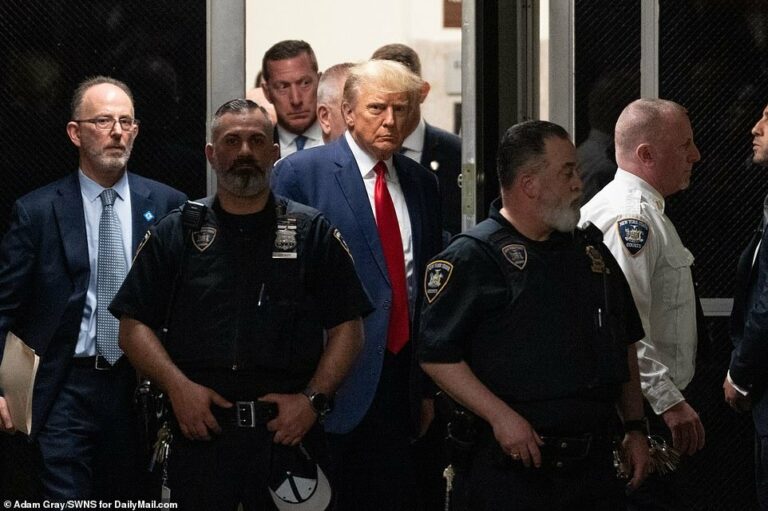
FORMER United States President and front-runner for the 2024 Republican nomination, Donald Trump, pleaded not guilty Tuesday to 34 felony counts.
The charges include falsifying business records related to his alleged role in hush money payments towards the end of his 2016 presidential campaign — the first time a former President has had to plead to criminal charges.
Trump was flanked by his lawyers inside the courtroom as the indictment was unsealed in a brief proceeding before Judge Juan Merchan.
“Not guilty,” the former President said when asked how he pleaded.
Earlier, he arrived at the courthouse at 100 Centre Street in lower Manhattan in a presidential-style motorcade from Trump Tower in midtown, where he had stayed overnight.
He was informed he was under arrest, fingerprinted and processed ahead of his arraignment.
“Seems so SURREAL — WOW, they are going to ARREST ME. Can’t believe this is happening in America,” he said in a post on his social media platform Truth Social that published as he was arriving at the courthouse.
While falsifying business records in New York on its own is a misdemeanor punishable by no more than one year in prison, it is elevated to a felony punishable by up to four years in prison when done to advance or conceal another crime.
However, taken together, the charges against the former President is said to carry a maximum sentence of 136 years in prison under New York law but an actual prison sentence if he is convicted at a trial is expected to be far less than that.
Trump was indicted by a Manhattan grand jury last week in a case stemming from a 2016 hush-money payment to porn star Stormy Daniels.
PEOPLES Gazette, a Nigerian online newspaper, has suspended one of its reporters, Ayoola Babalola for one month without pay for violating the newspaper’s social media policy.
Babalola is on the political desk of Peoples Gazette and has previously worked with Sahara Reporters.
According to a statement issued by Peoples Gazette, his suspension was disclosed in a memo sent to all reporters and signed by Deputy Managing Editor, Boladale Adekoya, on Tuesday, April 4.
The development is coming few days after the newspaper published a report authored by Babalola alleging that the presidential candidate of Labour Party, Peter Obi, in a phone call sought the support of David Oyedepo to secure Christians’ votes a day to the just concluded presidential election.
According to Peoples Gazette, the management made the decision after carefully reviewing the reporter’s responses to online trolls and concluded that he did not act with decorum and professionalism expected of the medium’s employees.
“Ayoola Babalola met with the HR, where he was directed to proceed on suspension for one month without pay,” the online newspaper stated in the memo.
“Mr Babalola is a vibrant and respected member of the organisation’s editorial team,” the statement noted, but stressed the reporter’s “conduct on social media, both from months past and as recently as last weekend, grossly violated the organisation’s guideline on personnel conduct.”
“Still, while the organization sympathises and stands strongly with Mr Babalola and all staff members who come frequently under social media onslaught, the manner with which colleagues handle online trolls is what distinguishes us as professionals.”
The statement added that the reporter would undergo counseling during the one month suspension and will be reinstated afterwards.